Downloaded 11 times


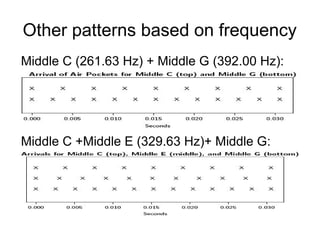




This document explores why humans like music through examining what music is, its origins, and the mathematical patterns underlying musical notes and scales. Music is defined as an arrangement of sounds producing rhythmic patterns and structures. It is suggested that music emerged 30,000-60,000 years ago in human culture and may have brought people together, though its origins are still debated. Music is based on mathematical frequency patterns that the brain finds pleasing, such as octaves having a ratio of 2:1 and triads having ratios of 4:5:6. These patterns release dopamine and cause anticipation, contributing to why humans enjoy music.


