Why AI is Taking Over the
World?
Discover the reasons behind the immense popularity of Artificial Intelligence!
by Saba Ghazan
SG
What is AI?
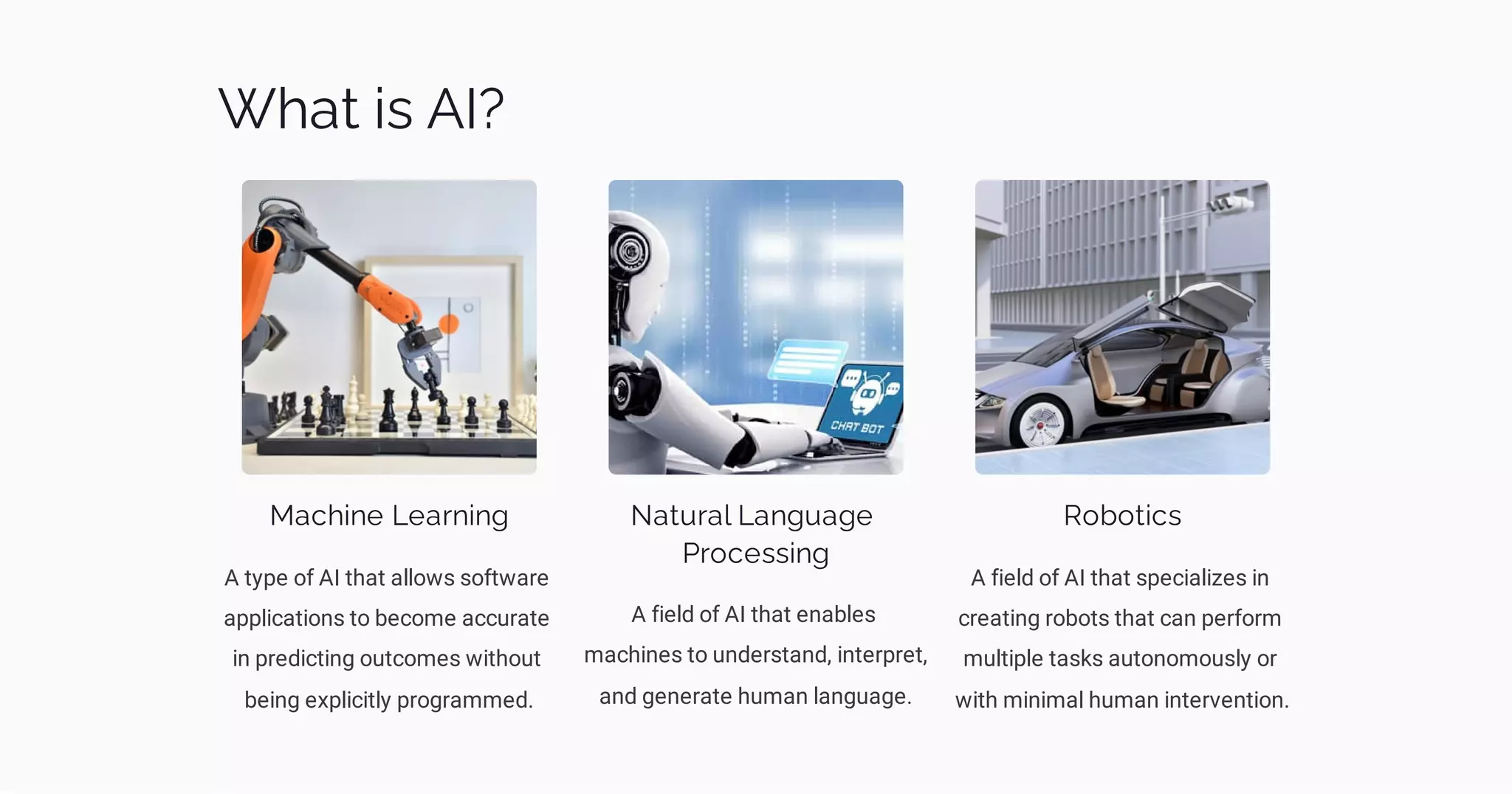
Machine Learning
A type of AI that allows software
applications to become accurate
in predicting outcomes without
being explicitly programmed.
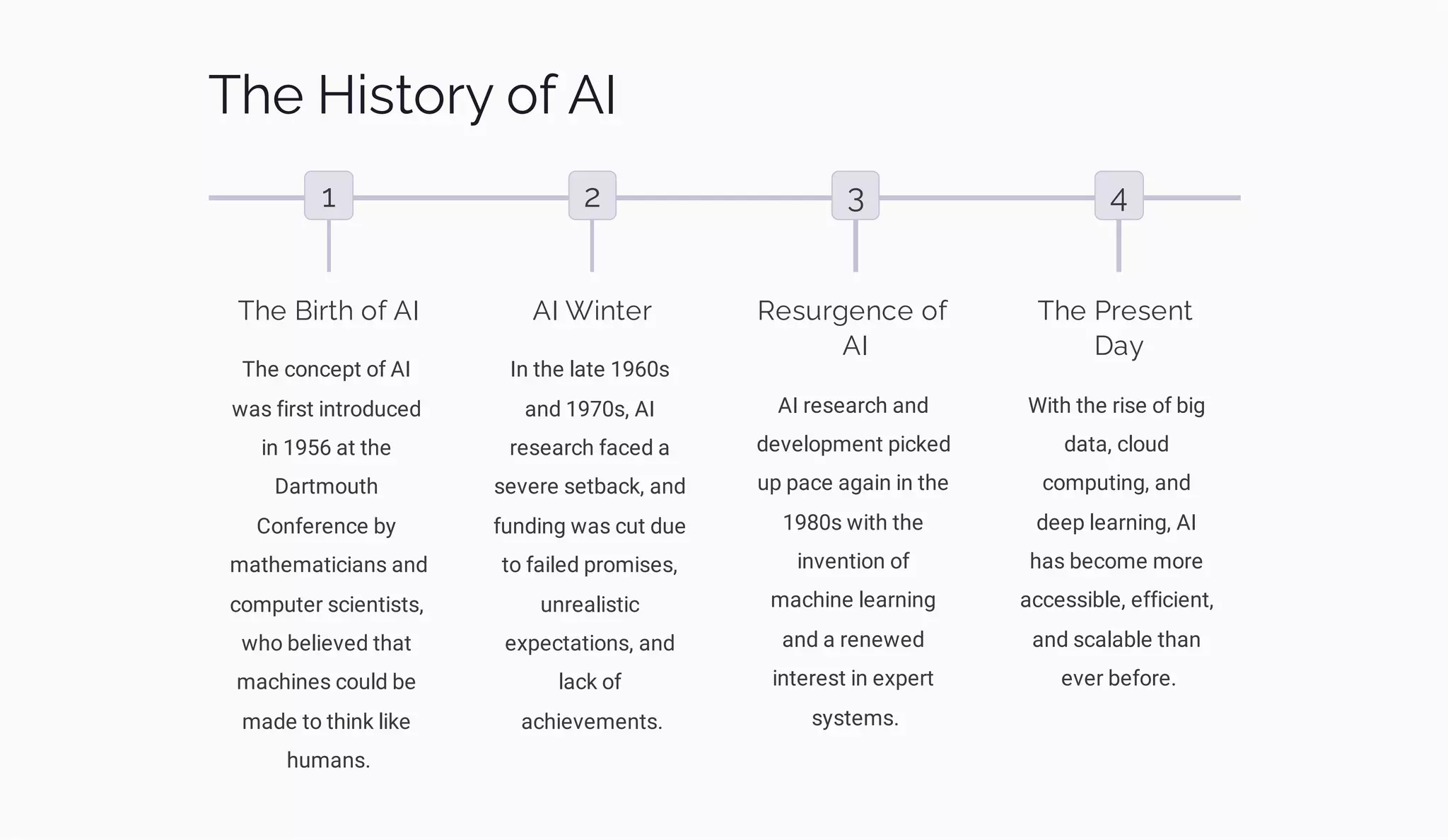
Natural Language
Processing
A field of AI that enables
machines to understand, interpret,
and generate human language.
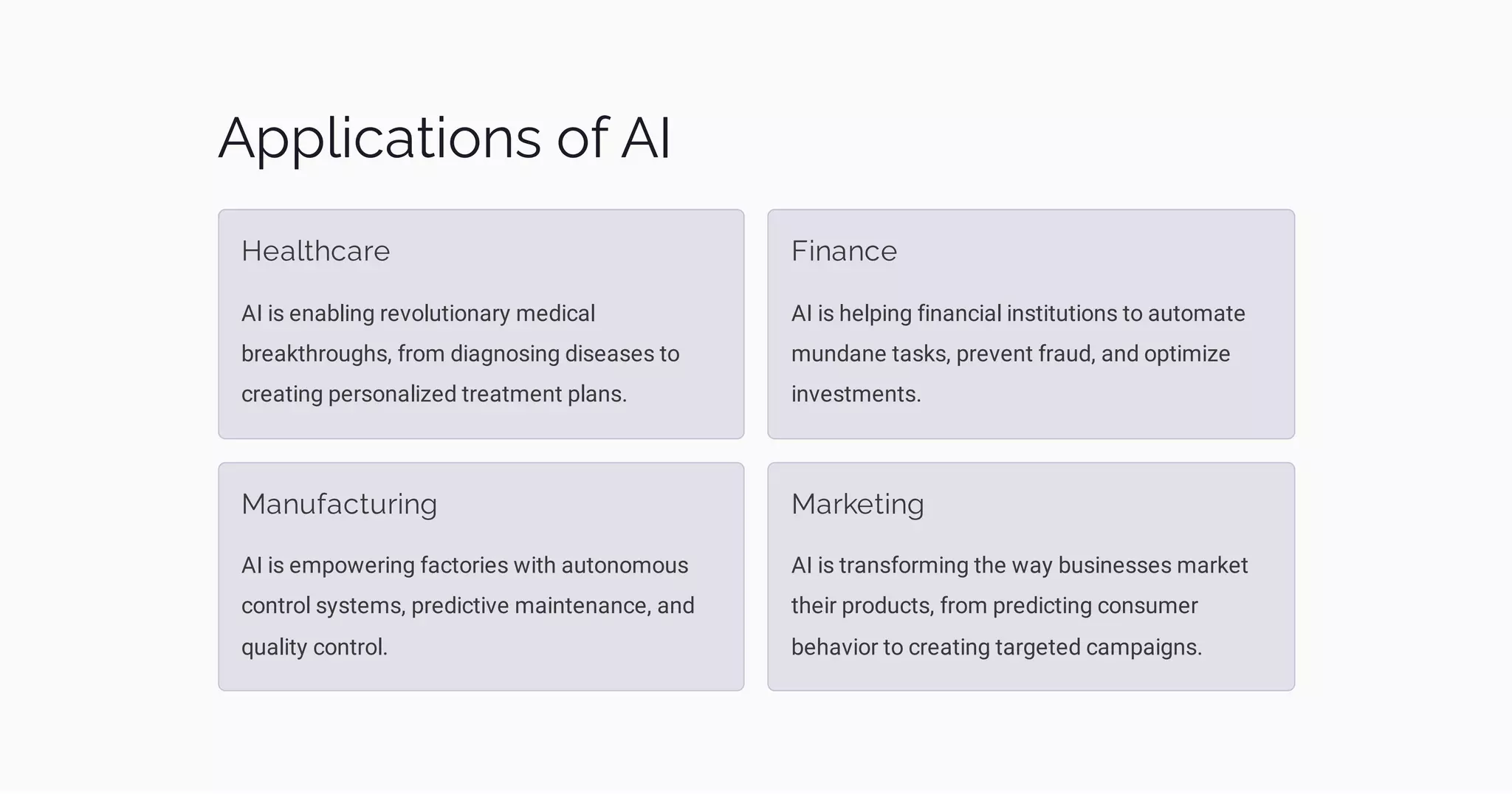
Robotics
A field of AI that specializes in
creating robots that can perform
multiple tasks autonomously or
with minimal human intervention.
The History of AI
1
The Birth of AI
The concept of AI
was first introduced
in 1956 at the
Dartmouth
Conference by
mathematicians and
computer scientists,
who believed that
machines could be
made to think like
humans.
2
AI Winter
In the late 1960s
and 1970s, AI
research faced a
severe setback, and
funding was cut due
to failed promises,
unrealistic
expectations, and
lack of
achievements.
3
Resurgence of
AI
AI research and
development picked
up pace again in the
1980s with the
invention of
machine learning
and a renewed
interest in expert
systems.
4
The Present
Day
With the rise of big
data, cloud
computing, and
deep learning, AI
has become more
accessible, efficient,
and scalable than
ever before.
Applications of AI
Healthcare
AI is enabling revolutionary medical
breakthroughs, from diagnosing diseases to
creating personalized treatment plans.
Finance
AI is helping financial institutions to automate
mundane tasks, prevent fraud, and optimize
investments.
Manufacturing
AI is empowering factories with autonomous
control systems, predictive maintenance, and
quality control.
Marketing
AI is transforming the way businesses market
their products, from predicting consumer
behavior to creating targeted campaigns.
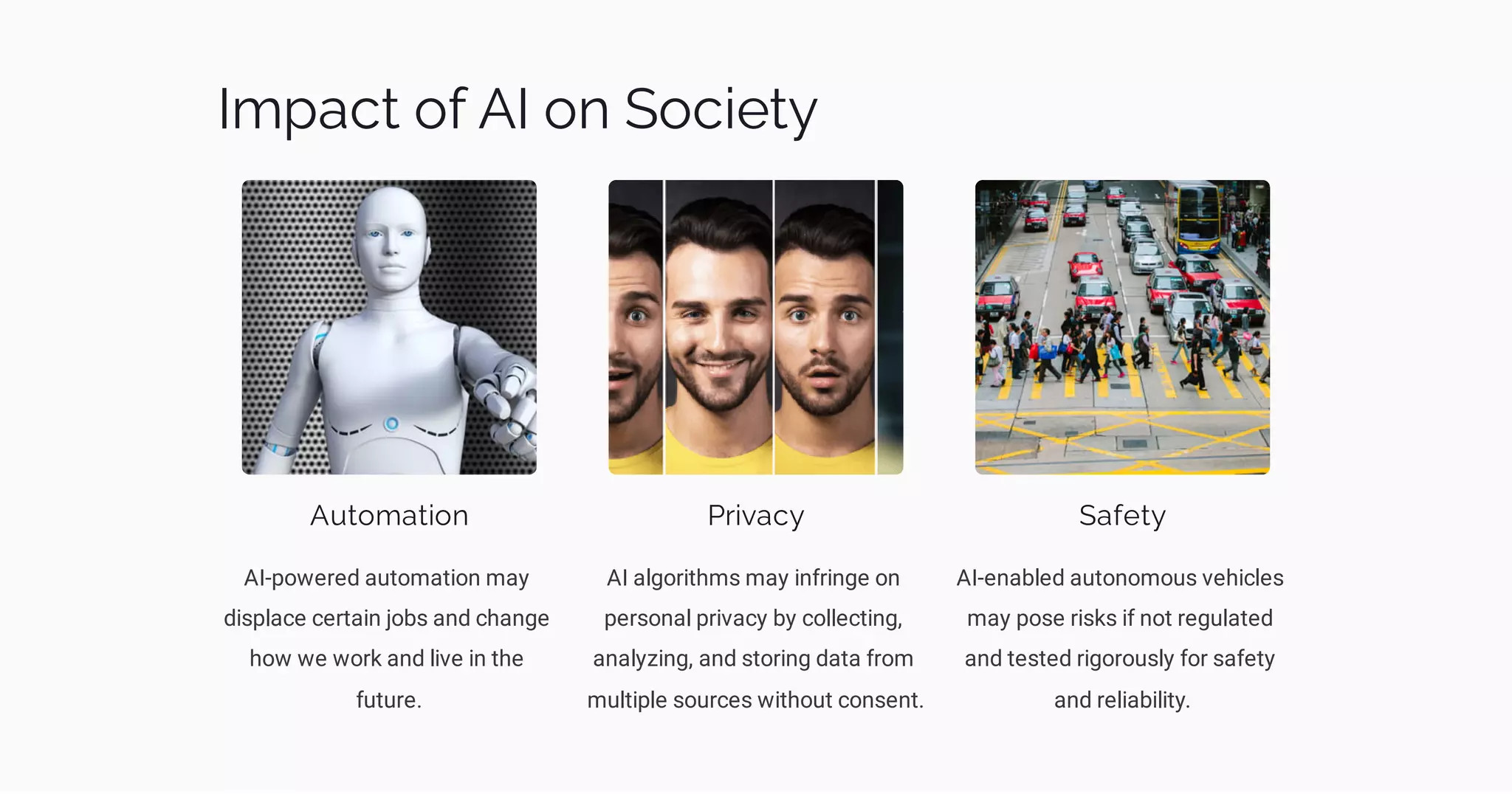
Impact of AI on Society
Automation
AI-powered automation may
displace certain jobs and change
how we work and live in the
future.
Privacy
AI algorithms may infringe on
personal privacy by collecting,
analyzing, and storing data from
multiple sources without consent.
Safety
AI-enabled autonomous vehicles
may pose risks if not regulated
and tested rigorously for safety
and reliability.
Advantages of AI
1 Automation
AI can automate time-
consuming and repetitive
tasks, freeing up humans for
more creative and higher
value activities.
2 Prediction
AI can analyze vast amounts
of data and predict outcomes
with higher accuracy and
speed than humans.
3 Personalization
AI can personalize products, services, and experiences based on
individual preferences and needs.
Disadvantages of AI
Job Displacement
AI may replace human workers
in some industries, leading to
job loss and social inequality.
Algorithm Bias
AI algorithms may be biased
against certain groups,
perpetuating unfair and
discriminatory practices.
Security Risks
AI systems may be vulnerable
to hacking, data breaches, and
cyber attacks, leading to loss of
privacy and financial damage.
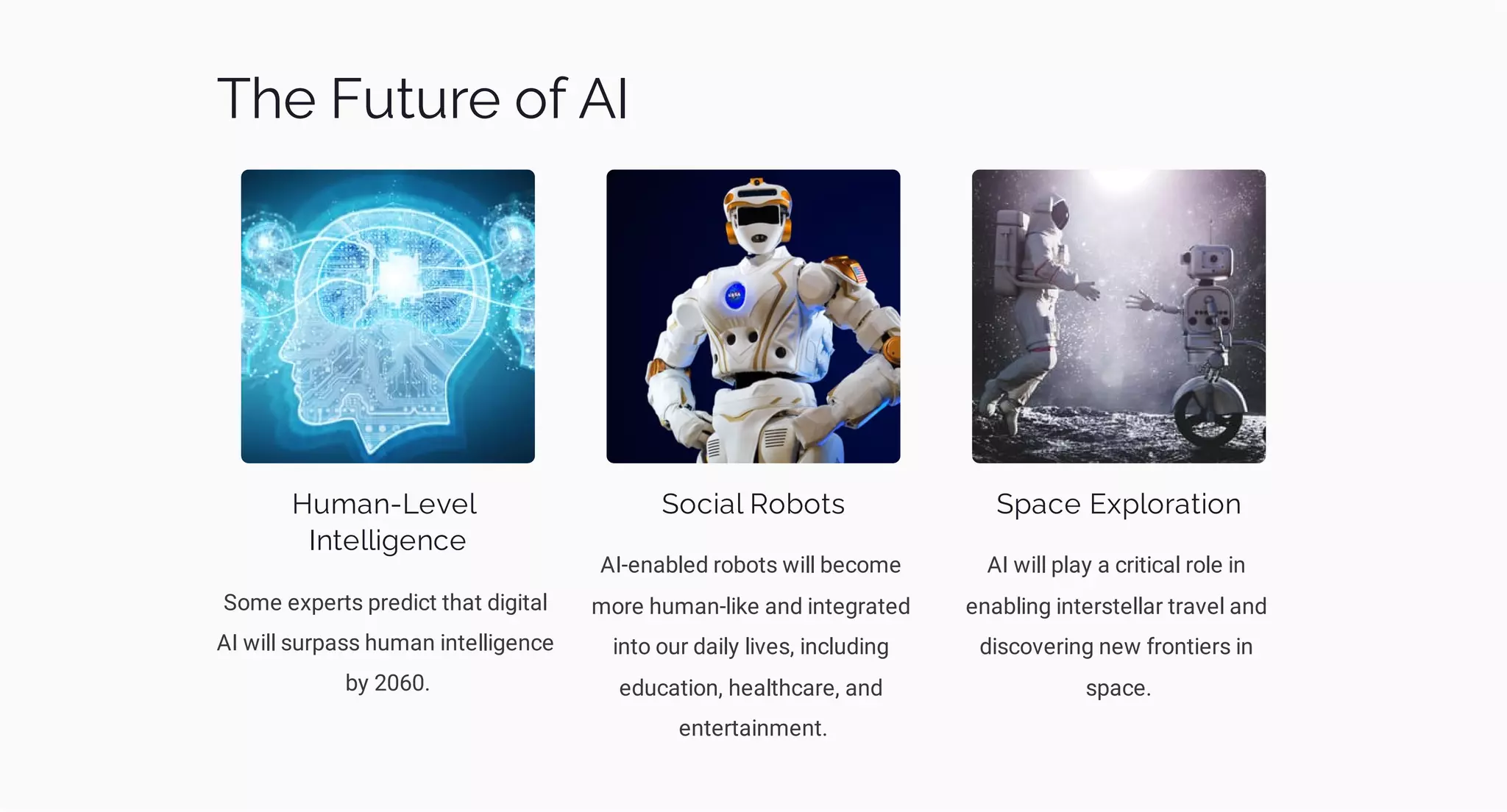
The Future of AI
Human-Level
Intelligence
Some experts predict that digital
AI will surpass human intelligence
by 2060.
Social Robots
AI-enabled robots will become
more human-like and integrated
into our daily lives, including
education, healthcare, and
entertainment.
Space Exploration
AI will play a critical role in
enabling interstellar travel and
discovering new frontiers in
space.

Why AI is Taking Over the World?

  • 1.
    Why AI isTaking Over the World? Discover the reasons behind the immense popularity of Artificial Intelligence! by Saba Ghazan SG
  • 2.
    What is AI? MachineLearning A type of AI that allows software applications to become accurate in predicting outcomes without being explicitly programmed. Natural Language Processing A field of AI that enables machines to understand, interpret, and generate human language. Robotics A field of AI that specializes in creating robots that can perform multiple tasks autonomously or with minimal human intervention.
  • 3.
    The History ofAI 1 The Birth of AI The concept of AI was first introduced in 1956 at the Dartmouth Conference by mathematicians and computer scientists, who believed that machines could be made to think like humans. 2 AI Winter In the late 1960s and 1970s, AI research faced a severe setback, and funding was cut due to failed promises, unrealistic expectations, and lack of achievements. 3 Resurgence of AI AI research and development picked up pace again in the 1980s with the invention of machine learning and a renewed interest in expert systems. 4 The Present Day With the rise of big data, cloud computing, and deep learning, AI has become more accessible, efficient, and scalable than ever before.
  • 4.
    Applications of AI Healthcare AIis enabling revolutionary medical breakthroughs, from diagnosing diseases to creating personalized treatment plans. Finance AI is helping financial institutions to automate mundane tasks, prevent fraud, and optimize investments. Manufacturing AI is empowering factories with autonomous control systems, predictive maintenance, and quality control. Marketing AI is transforming the way businesses market their products, from predicting consumer behavior to creating targeted campaigns.
  • 5.
    Impact of AIon Society Automation AI-powered automation may displace certain jobs and change how we work and live in the future. Privacy AI algorithms may infringe on personal privacy by collecting, analyzing, and storing data from multiple sources without consent. Safety AI-enabled autonomous vehicles may pose risks if not regulated and tested rigorously for safety and reliability.
  • 6.
    Advantages of AI 1Automation AI can automate time- consuming and repetitive tasks, freeing up humans for more creative and higher value activities. 2 Prediction AI can analyze vast amounts of data and predict outcomes with higher accuracy and speed than humans. 3 Personalization AI can personalize products, services, and experiences based on individual preferences and needs.
  • 7.
    Disadvantages of AI JobDisplacement AI may replace human workers in some industries, leading to job loss and social inequality. Algorithm Bias AI algorithms may be biased against certain groups, perpetuating unfair and discriminatory practices. Security Risks AI systems may be vulnerable to hacking, data breaches, and cyber attacks, leading to loss of privacy and financial damage.
  • 8.
    The Future ofAI Human-Level Intelligence Some experts predict that digital AI will surpass human intelligence by 2060. Social Robots AI-enabled robots will become more human-like and integrated into our daily lives, including education, healthcare, and entertainment. Space Exploration AI will play a critical role in enabling interstellar travel and discovering new frontiers in space.