WHO strategic
communication
framework.
TABLE OF CONTENTS
• About WHO
• Purpose and background
• Goal and key audiences
• WHO principles for effective
communications.
• Evaluation
• Communication functions at WHO
World Health Organization
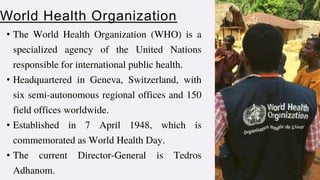
• The World Health Organization (WHO) is a
specialized agency of the United Nations
responsible for international public health.
• Headquartered in Geneva, Switzerland, with
six semi-autonomous regional offices and 150
field offices worldwide.
• Established in 7 April 1948, which is
commemorated as World Health Day.
• The current Director-General is Tedros
Adhanom.
Purpose & Background
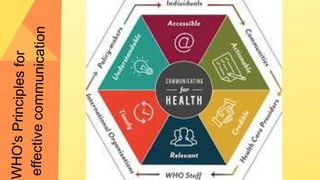
• To describe a strategic approach for effectively communicating.
• To achieve programmatic goals.
• To make a review.
• To develop specific strategies to make communications more
actionable, accessible, relevant, timely, understandable and
credible.
• To provide information, advice, and guidance
to decision-makers (key audiences).
• To prompt action that will protect the health
of individuals, families, communities and
nations.
GOAL & KEY AUDIENCE
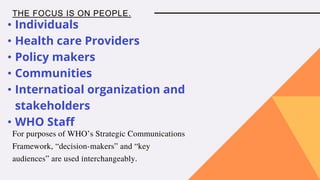
For purposes of WHO’s Strategic Communications
Framework, “decision-makers” and “key
audiences” are used interchangeably.
THE FOCUS IS ON PEOPLE.
• Individuals
• Health care Providers
• Policy makers
• Communities
• Internatioal organization and
stakeholders
• WHO Staff
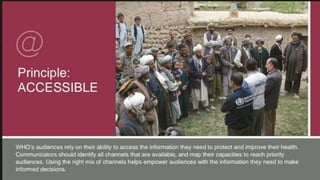
• Use global channels to reach abroad audience- Like international
• news media, website, social media platforms.
• Use regional and country office channels to reach targeted audience with
tailored messages.
• Use partner channels
• Consider non-traditionalchannels
Continue
Communicators starts planning effective mapping of
communication channels that are accessible to majority people.
• Place information consistently and purposely.
• Consider how audiences use the website
• Create emergency specific webpages
Make information available online
Presentations are communication tools that can
be demonstrations, lectures, reports, and more.
DESIGN WITH USERS IN MIND
Consider disabled people while conveying information
• Design compatible content.
• Consider individuals with low vision.
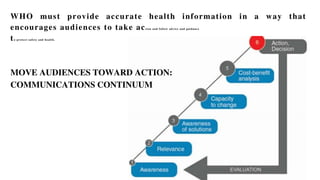
WHO must provide accurate health information in a way that
encourages audiences to take action and follow advice and guidance
to protect safety and health.
MOVE AUDIENCES TOWARD ACTION:
COMMUNICATIONS CONTINUUM
• Consider the communication environment and emphasize what is being done
to control the emergency.
• Use a consistent planning process that incorporates effective risk
communication principles.
• Coordinate messages with partner organizations.
• Use the WHO emergency communications network (ECN).
• Support community engagement.
Design a behavioural change campaign
Encourage actions during health
emergency
A health effective campaign follows a specific sequence that moves the
target audience from awareness of an issue towards a behaviour resulting in a
specific health outcome.
WHO works with the growing number of organizations,
including non-State actors, and hosted partnerships, that
respond to health threats and develop public health policies.
• Make information Available quickly.
• Acknowledge uncertainty.
• Address errors.
• Communicate with non state actors.
Coordinate with partners:
• Clear & cross-check content.
• Keep facts sheet up to date.
• Maintain version control.
Be Transparent:
Ensure Technical accuracy:
• Share core messages across all programs & levels.
• Meet with technical department regularly.
• Communicate with regional teams regularly.
• Coordinate during emergencies.
• Maintain a global editorial calendar.
• Protect the WHO brand & intellectual property.
• Amplify WHO messages.
• Prepare & support spokesperson.
Using the WHO brand for maximum impact:
SPEAK AS "ONE WHO":
UNDERSTAND
SOCIO
DEMOGRAPHIC
& CULTURAL
Presentations are tools
that can be reports.
IDEATION
Presentations are tools
that can be reports.
IMPLEMENT
Presentations are tools
that can be reports.
Know Audience:
• Understand socio- demographic & cultural characteristics.
• Determine communication preferences.
• Recognize attitudes towards the risk.
Listen to the audience:
• Learn by listening.
• Listen to the public opinion.
• Listen to the enquiries.
• listen to the conversations.
• Listen to the partners.
TAILOR THE MESSAGE:
• Customize the
messages.
• Focus on the outcome.
Motivate the audience:
• Build awareness.
• Explain or increase personal
relevance.
• Promote knowledge of solutions.
• Instil confidence.
• Use news media, social media.
• Enhance emergency conversations.
• Leverage partners
Communicate what WHO knows early:
Communication at the right time:
• Leverage health awareness days.
• Plan timing of the message to the risk.
Use plain language:
• Use familiar words.
• Practice good writing.
• Ensure facts sheet are clear.
• Adapt content for the web.
Tell Real stories:
• Use real stories to help audiences relate to the health information provided.
• Include anecdotes in presentations.
Make it visual: Leverage YouTube access, graphics & infographics use,
enhance storytelling with photos, and B-roll footage etc.
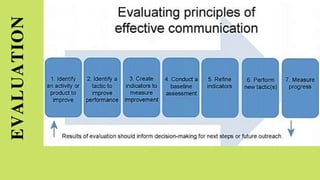
EVALUATION
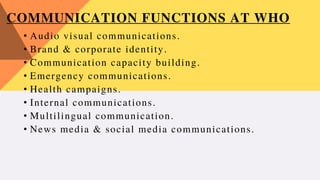
COMMUNICATION FUNCTIONS AT WHO
• Audio visual communications.
• Brand & corporate identity.
• Communication capacity building.
• Emergency communications.
• Health campaigns.
• Internal communications.
• Multilingual communication.
• News media & social media communications.
Who strategic communication framework

Who strategic communication framework

  • 1.
  • 2.
    TABLE OF CONTENTS •About WHO • Purpose and background • Goal and key audiences • WHO principles for effective communications. • Evaluation • Communication functions at WHO
  • 3.
    World Health Organization •The World Health Organization (WHO) is a specialized agency of the United Nations responsible for international public health. • Headquartered in Geneva, Switzerland, with six semi-autonomous regional offices and 150 field offices worldwide. • Established in 7 April 1948, which is commemorated as World Health Day. • The current Director-General is Tedros Adhanom.
  • 4.
    Purpose & Background •To describe a strategic approach for effectively communicating. • To achieve programmatic goals. • To make a review. • To develop specific strategies to make communications more actionable, accessible, relevant, timely, understandable and credible.
  • 5.
    • To provideinformation, advice, and guidance to decision-makers (key audiences). • To prompt action that will protect the health of individuals, families, communities and nations. GOAL & KEY AUDIENCE
  • 6.
    For purposes ofWHO’s Strategic Communications Framework, “decision-makers” and “key audiences” are used interchangeably. THE FOCUS IS ON PEOPLE. • Individuals • Health care Providers • Policy makers • Communities • Internatioal organization and stakeholders • WHO Staff
  • 9.
    • Use globalchannels to reach abroad audience- Like international • news media, website, social media platforms. • Use regional and country office channels to reach targeted audience with tailored messages. • Use partner channels • Consider non-traditionalchannels Continue Communicators starts planning effective mapping of communication channels that are accessible to majority people.
  • 10.
    • Place informationconsistently and purposely. • Consider how audiences use the website • Create emergency specific webpages Make information available online Presentations are communication tools that can be demonstrations, lectures, reports, and more. DESIGN WITH USERS IN MIND Consider disabled people while conveying information • Design compatible content. • Consider individuals with low vision.
  • 12.
    WHO must provideaccurate health information in a way that encourages audiences to take action and follow advice and guidance to protect safety and health. MOVE AUDIENCES TOWARD ACTION: COMMUNICATIONS CONTINUUM
  • 13.
    • Consider thecommunication environment and emphasize what is being done to control the emergency. • Use a consistent planning process that incorporates effective risk communication principles. • Coordinate messages with partner organizations. • Use the WHO emergency communications network (ECN). • Support community engagement. Design a behavioural change campaign Encourage actions during health emergency A health effective campaign follows a specific sequence that moves the target audience from awareness of an issue towards a behaviour resulting in a specific health outcome.
  • 15.
    WHO works withthe growing number of organizations, including non-State actors, and hosted partnerships, that respond to health threats and develop public health policies. • Make information Available quickly. • Acknowledge uncertainty. • Address errors. • Communicate with non state actors. Coordinate with partners: • Clear & cross-check content. • Keep facts sheet up to date. • Maintain version control. Be Transparent: Ensure Technical accuracy:
  • 16.
    • Share coremessages across all programs & levels. • Meet with technical department regularly. • Communicate with regional teams regularly. • Coordinate during emergencies. • Maintain a global editorial calendar. • Protect the WHO brand & intellectual property. • Amplify WHO messages. • Prepare & support spokesperson. Using the WHO brand for maximum impact: SPEAK AS "ONE WHO":
  • 18.
    UNDERSTAND SOCIO DEMOGRAPHIC & CULTURAL Presentations aretools that can be reports. IDEATION Presentations are tools that can be reports. IMPLEMENT Presentations are tools that can be reports. Know Audience: • Understand socio- demographic & cultural characteristics. • Determine communication preferences. • Recognize attitudes towards the risk. Listen to the audience: • Learn by listening. • Listen to the public opinion. • Listen to the enquiries. • listen to the conversations. • Listen to the partners.
  • 19.
    TAILOR THE MESSAGE: •Customize the messages. • Focus on the outcome. Motivate the audience: • Build awareness. • Explain or increase personal relevance. • Promote knowledge of solutions. • Instil confidence.
  • 21.
    • Use newsmedia, social media. • Enhance emergency conversations. • Leverage partners Communicate what WHO knows early: Communication at the right time: • Leverage health awareness days. • Plan timing of the message to the risk.
  • 23.
    Use plain language: •Use familiar words. • Practice good writing. • Ensure facts sheet are clear. • Adapt content for the web. Tell Real stories: • Use real stories to help audiences relate to the health information provided. • Include anecdotes in presentations. Make it visual: Leverage YouTube access, graphics & infographics use, enhance storytelling with photos, and B-roll footage etc.
  • 24.
  • 25.
    COMMUNICATION FUNCTIONS ATWHO • Audio visual communications. • Brand & corporate identity. • Communication capacity building. • Emergency communications. • Health campaigns. • Internal communications. • Multilingual communication. • News media & social media communications.