What next for Lean?
Daniel T Jones
Two Challenges
Expert-designed Lean programmes help catch-up
but fail to fulfil the potential of Lean
rely on compliance & static optimisation rather than learning
Seeing Lean through traditional management thinking
will only get traditional results
rule-based bureaucracies & silos resist change
financial metrics can’t see problems or improvements
The Potential of Lean
Pioneering CEOs experienced that active leadership is essential
see Lean as their strategy to do things they can’t do today
leading by finding the right problems
developing the capabilities to solve them
translating learning to the bottom-line
Saw superior results from a people-centric system
engaging everyone in mastering the work
collaborating & cumulative learning
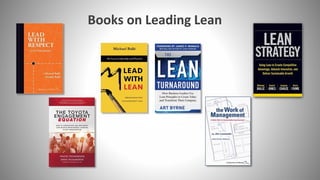
Books on Leading Lean
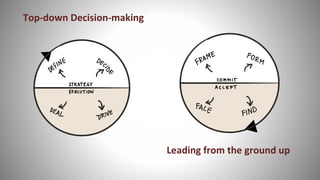
Top-down Decision-making
Leading from the ground up
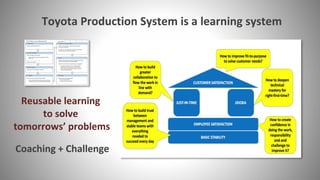
Toyota Production System is a learning system
Reusable learning
to solve
tomorrows’ problems
Coaching + Challenge
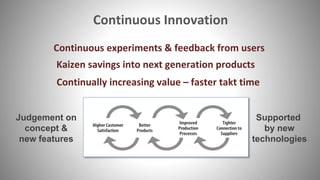
Continuous Innovation
Continuous experiments & feedback from users
Kaizen savings into next generation products
Continually increasing value – faster takt time
Judgement on
concept &
new features
Supported
by new
technologies
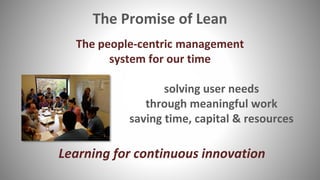
The Promise of Lean
The people-centric management
system for our time
solving user needs
through meaningful work
saving time, capital & resources
Learning for continuous innovation
Challenge mental models
One-best-way
Reliance on experts
Bureaucracy
Traditional leaders
Traditional change management
Challenge assumptions
Big technology leaps drive change
Lean is learning to do new things
Automation is the answer to complexity
Addressing frictions makes complexity work
Automating routine work kills jobs
But needs more problem solvers to work
Champion
Lean software and IT
Beyond platforms - DIY Apps
Lean approaches to the Environment
Inspiring the next generation
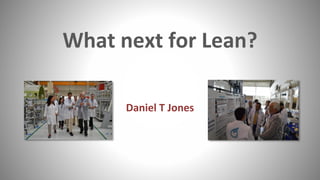
What next for Lean?
Daniel T Jones

What Next For Lean? par Daniel T.Jones

  • 1.
    What next forLean? Daniel T Jones
  • 2.
    Two Challenges Expert-designed Leanprogrammes help catch-up but fail to fulfil the potential of Lean rely on compliance & static optimisation rather than learning Seeing Lean through traditional management thinking will only get traditional results rule-based bureaucracies & silos resist change financial metrics can’t see problems or improvements
  • 3.
    The Potential ofLean Pioneering CEOs experienced that active leadership is essential see Lean as their strategy to do things they can’t do today leading by finding the right problems developing the capabilities to solve them translating learning to the bottom-line Saw superior results from a people-centric system engaging everyone in mastering the work collaborating & cumulative learning
  • 4.
  • 5.
  • 6.
    Toyota Production Systemis a learning system Reusable learning to solve tomorrows’ problems Coaching + Challenge
  • 7.
    Continuous Innovation Continuous experiments& feedback from users Kaizen savings into next generation products Continually increasing value – faster takt time Judgement on concept & new features Supported by new technologies
  • 8.
    The Promise ofLean The people-centric management system for our time solving user needs through meaningful work saving time, capital & resources Learning for continuous innovation
  • 9.
    Challenge mental models One-best-way Relianceon experts Bureaucracy Traditional leaders Traditional change management
  • 10.
    Challenge assumptions Big technologyleaps drive change Lean is learning to do new things Automation is the answer to complexity Addressing frictions makes complexity work Automating routine work kills jobs But needs more problem solvers to work
  • 11.
    Champion Lean software andIT Beyond platforms - DIY Apps Lean approaches to the Environment Inspiring the next generation
  • 12.
    What next forLean? Daniel T Jones