Download to read offline
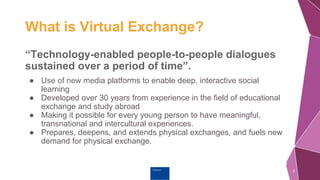
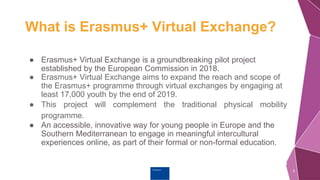
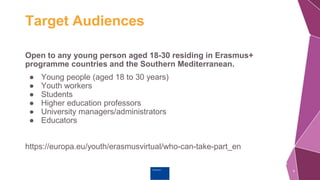

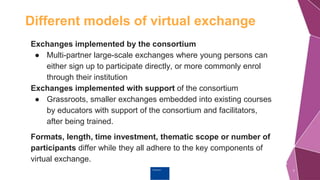
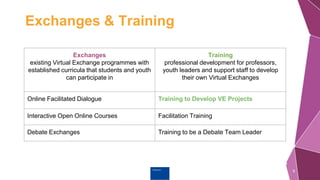
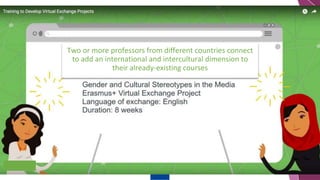
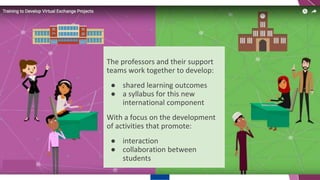
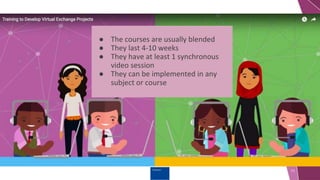
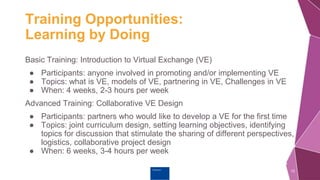

The document discusses Erasmus+ Virtual Exchange, a pilot project established by the European Commission in 2018. The project aims to expand the traditional Erasmus+ mobility program through virtual exchanges, engaging at least 17,000 youth by the end of 2019. Virtual exchange involves technology-enabled intercultural dialogues between people to foster deep social learning. The target audience is young people aged 18-30 in Europe and Southern Mediterranean countries. The project offers different models of virtual exchange, including courses where students from different countries collaborate online as part of their studies. It also provides training to help educators develop and implement virtual exchange programs.


![[OOFHEC2018] Day 3 George Ubachs: Internationalisation of HE extended by a Vi...](https://cdn.slidesharecdn.com/ss_thumbnails/2018-virtualmobilityoofhec2018automatischopgeslagen-181018144510-thumbnail.jpg?width=640&height=640&fit=bounds)
![[EADTU OPEN VM WEBINAR] Presentation George Ubachs EADTU](https://cdn.slidesharecdn.com/ss_thumbnails/thursday18june10201040georgeubachsvm-webinareadtug-200618163211-thumbnail.jpg?width=640&height=640&fit=bounds)


