Education
and Training
Erasmus+
Virtual
Exchange
EADTU Peer Learning Activity
- Virtual mobility
Maastricht, 12 December 2018
José DIEZ VERDEJO
DG Education, Youth, Sport and Culture
European Commission
jose.diez-verdejo@ec.europa.eu
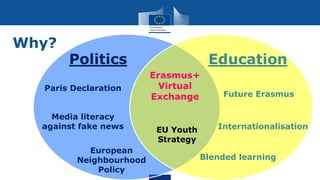
Politics Education
Erasmus+
Virtual
Exchange
Paris Declaration
Blended learning
Internationalisation
Future Erasmus
Media literacy
against fake news
European
Neighbourhood
Policy
Why?
EU Youth
Strategy
Education
and Training
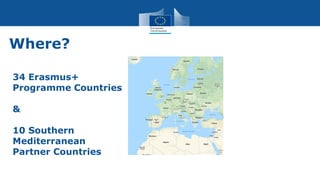
34 Erasmus+
Programme Countries
&
10 Southern
Mediterranean
Partner Countries
Where?
Education
and Training
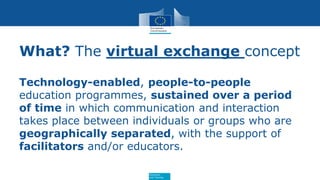
What? The virtual exchange concept
Technology-enabled, people-to-people
education programmes, sustained over a period
of time in which communication and interaction
takes place between individuals or groups who are
geographically separated, with the support of
facilitators and/or educators.
Erasmus+
5
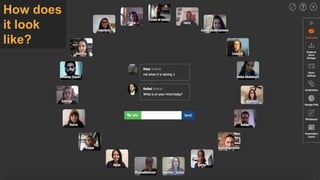
How does
it look
like?
Education
and Training
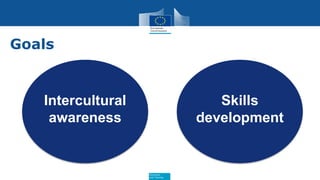
Goals
Intercultural
awareness
Skills
development
Education
and Training
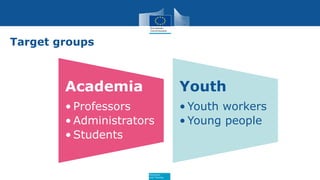
Academia
• Professors
• Administrators
• Students
Youth
• Youth workers
• Young people
Target groups
Education
and Training
How?
Training
• For anybody to become
facilitator
• For educators to develop
their own virtual exchanges
Exchanges
• Online Facilitated Dialogues
• Interactive Open Online Courses
Education
and Training
Training to become a facilitator
Skills: active listening, summarising and reframing
Hands-on practice and feedback from trainers
Individualised coaching
Education
and Training
Training to develop international
projects
• Professors take the initiative
• Goal: to develop an international
virtual exchange project
• Integration of the virtual
exchange into existing courses
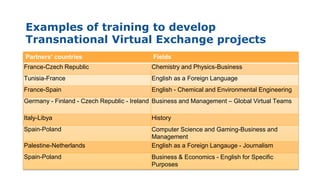
Examples of training to develop
Transnational Virtual Exchange projects
Partners’ countries Fields
France-Czech Republic Chemistry and Physics-Business
Tunisia-France English as a Foreign Language
France-Spain English - Chemical and Environmental Engineering
Germany - Finland - Czech Republic - Ireland Business and Management – Global Virtual Teams
Italy-Libya History
Spain-Poland Computer Science and Gaming-Business and
Management
Palestine-Netherlands English as a Foreign Langauge - Journalism
Spain-Poland Business & Economics - English for Specific
Purposes
Education
and Training
Online facilitated
dialogues
• Endorsement by professors
• Participants from various countries in small groups
• Non-formal discussions but readings and papers
• Promotion by universities’ international units
• Great impact as first international experience
Education
and Training
Interactive open online courses
Previous IOOCs:
Introduction to Dialogue Facilitation
Countering Hate Speech
Refugees in Europe
Gender In/Equality in Media and Journalism
Culture and Politics in Europe
Newcomers and Nationalism
Option: incorporate interactive
activities to existing MOOCs
Education
and Training
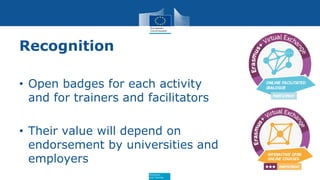
Recognition
• Open badges for each activity
and for trainers and facilitators
• Their value will depend on
endorsement by universities and
employers
Education
and Training
Stories of virtual exchanges
Syrine Ayachi, Tunisia, 22 years old: “We all know that young
people are the future leaders. So, if we help them through the virtual
exchange to become more open-minded and give them the
opportunity to see the world through new eyes away from the
propaganda, we can have a better, more peaceful world”.
• Skills : active listening, critical thinking, asking good questions, open-
mindedness
• Different cultures : their religion, traditional food, marriage, major festivals in
each country, values
• Global issues : poverty, women rights, educational system, the negative
effect of social media, immigration
Education
and Training
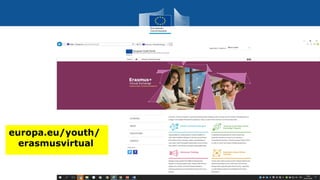
europa.eu/youth/
erasmusvirtual

Erasmus+ Virtual Exchange

  • 1.
    Education and Training Erasmus+ Virtual Exchange EADTU PeerLearning Activity - Virtual mobility Maastricht, 12 December 2018 José DIEZ VERDEJO DG Education, Youth, Sport and Culture European Commission jose.diez-verdejo@ec.europa.eu
  • 2.
    Politics Education Erasmus+ Virtual Exchange Paris Declaration Blendedlearning Internationalisation Future Erasmus Media literacy against fake news European Neighbourhood Policy Why? EU Youth Strategy
  • 3.
    Education and Training 34 Erasmus+ ProgrammeCountries & 10 Southern Mediterranean Partner Countries Where?
  • 4.
    Education and Training What? Thevirtual exchange concept Technology-enabled, people-to-people education programmes, sustained over a period of time in which communication and interaction takes place between individuals or groups who are geographically separated, with the support of facilitators and/or educators.
  • 5.
  • 6.
  • 7.
    Education and Training Academia • Professors •Administrators • Students Youth • Youth workers • Young people Target groups
  • 8.
    Education and Training How? Training • Foranybody to become facilitator • For educators to develop their own virtual exchanges Exchanges • Online Facilitated Dialogues • Interactive Open Online Courses
  • 9.
    Education and Training Training tobecome a facilitator Skills: active listening, summarising and reframing Hands-on practice and feedback from trainers Individualised coaching
  • 10.
    Education and Training Training todevelop international projects • Professors take the initiative • Goal: to develop an international virtual exchange project • Integration of the virtual exchange into existing courses
  • 11.
    Examples of trainingto develop Transnational Virtual Exchange projects Partners’ countries Fields France-Czech Republic Chemistry and Physics-Business Tunisia-France English as a Foreign Language France-Spain English - Chemical and Environmental Engineering Germany - Finland - Czech Republic - Ireland Business and Management – Global Virtual Teams Italy-Libya History Spain-Poland Computer Science and Gaming-Business and Management Palestine-Netherlands English as a Foreign Langauge - Journalism Spain-Poland Business & Economics - English for Specific Purposes
  • 12.
    Education and Training Online facilitated dialogues •Endorsement by professors • Participants from various countries in small groups • Non-formal discussions but readings and papers • Promotion by universities’ international units • Great impact as first international experience
  • 13.
    Education and Training Interactive openonline courses Previous IOOCs: Introduction to Dialogue Facilitation Countering Hate Speech Refugees in Europe Gender In/Equality in Media and Journalism Culture and Politics in Europe Newcomers and Nationalism Option: incorporate interactive activities to existing MOOCs
  • 14.
    Education and Training Recognition • Openbadges for each activity and for trainers and facilitators • Their value will depend on endorsement by universities and employers
  • 15.
    Education and Training Stories ofvirtual exchanges Syrine Ayachi, Tunisia, 22 years old: “We all know that young people are the future leaders. So, if we help them through the virtual exchange to become more open-minded and give them the opportunity to see the world through new eyes away from the propaganda, we can have a better, more peaceful world”. • Skills : active listening, critical thinking, asking good questions, open- mindedness • Different cultures : their religion, traditional food, marriage, major festivals in each country, values • Global issues : poverty, women rights, educational system, the negative effect of social media, immigration
  • 16.