



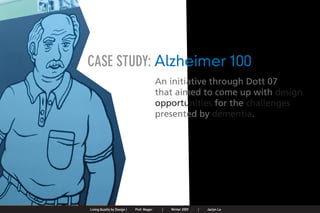

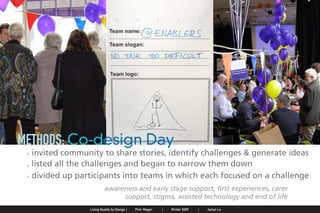
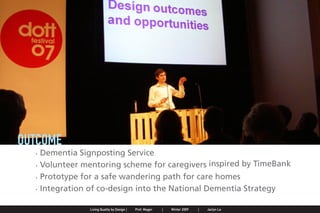

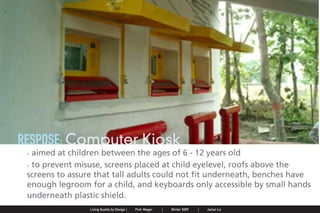


The document discusses social design as a participatory approach aimed at improving living quality for marginalized communities through design activism. It highlights case studies such as the Alzheimer 100 initiative, which utilized storytelling and co-design methods to develop solutions for dementia-related challenges, and the Hole-in-the-Wall experiment that enabled children to learn computer skills independently. The outcomes of these initiatives demonstrate the effectiveness of social design in addressing diverse societal issues.


