Alison Owen
Head of PR at BDB
International business-to-business PR specialist
www. bdb.co.uk @bdbmarketing @alisonmowen


Presentation at PRCA ‘Breaking into PR’ conference
11 February 2013
Manchester Metropolitan University
Summary
   What is PR – the classic definition
   Different career opportunities
   PR vs advertising
   Is it for me?
   A typical day
   The changing media landscape
   The career choice of the future?
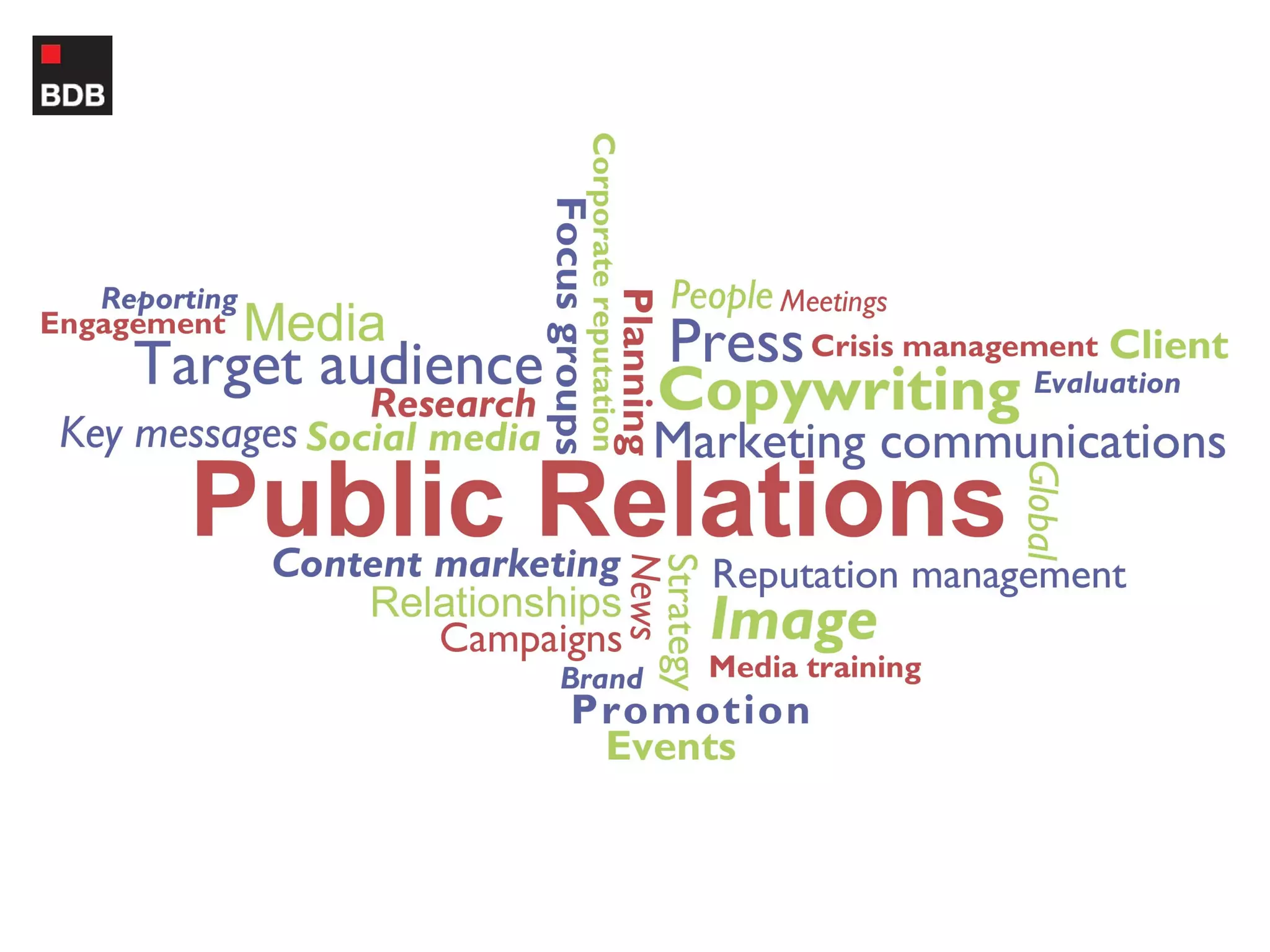
What is PR?
 Reputation management
   – what you do
   – what you say
   – what others say about you
 Planned and sustained effort to establish and maintain
  goodwill and understanding between an organisation and its
  publics
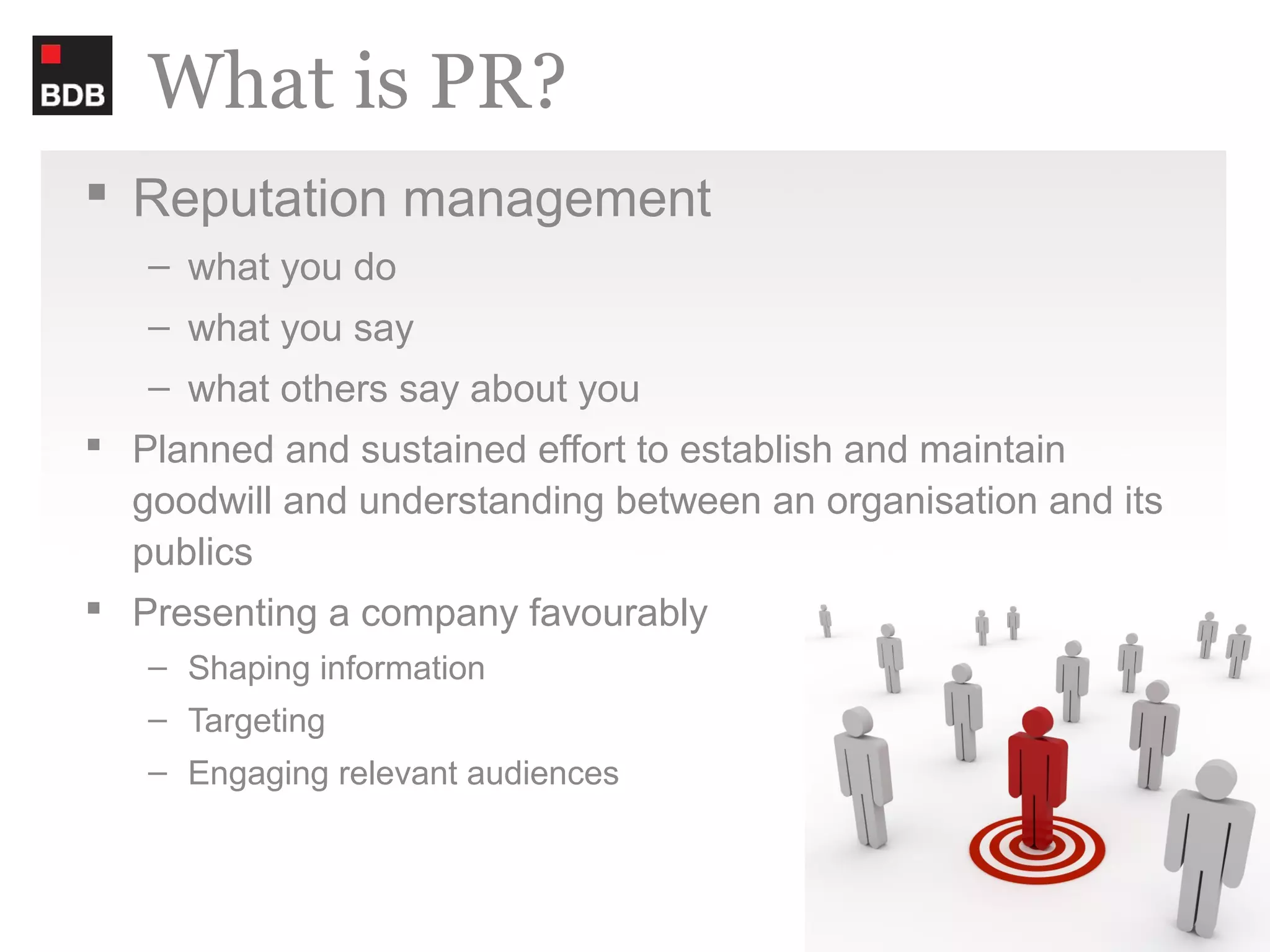
 Presenting a company favourably
   – Shaping information
   – Targeting
   – Engaging relevant audiences
Different career opportunities
Agency vs in-house
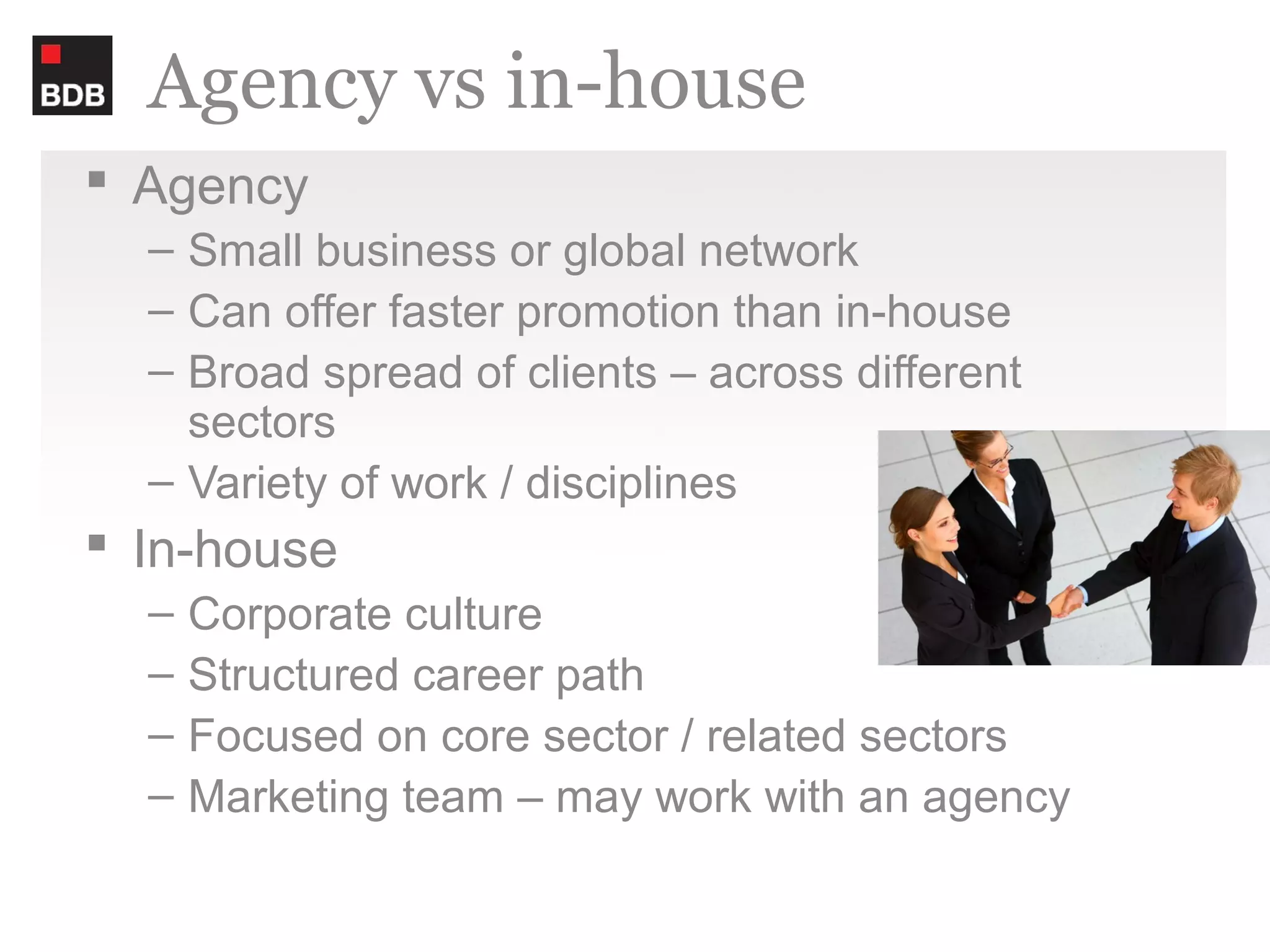
 Agency
  – Small business or global network
  – Can offer faster promotion than in-house
  – Broad spread of clients – across different
    sectors
  – Variety of work / disciplines
 In-house
  –   Corporate culture
  –   Structured career path
  –   Focused on core sector / related sectors
  –   Marketing team – may work with an agency
Consumer vs B2B
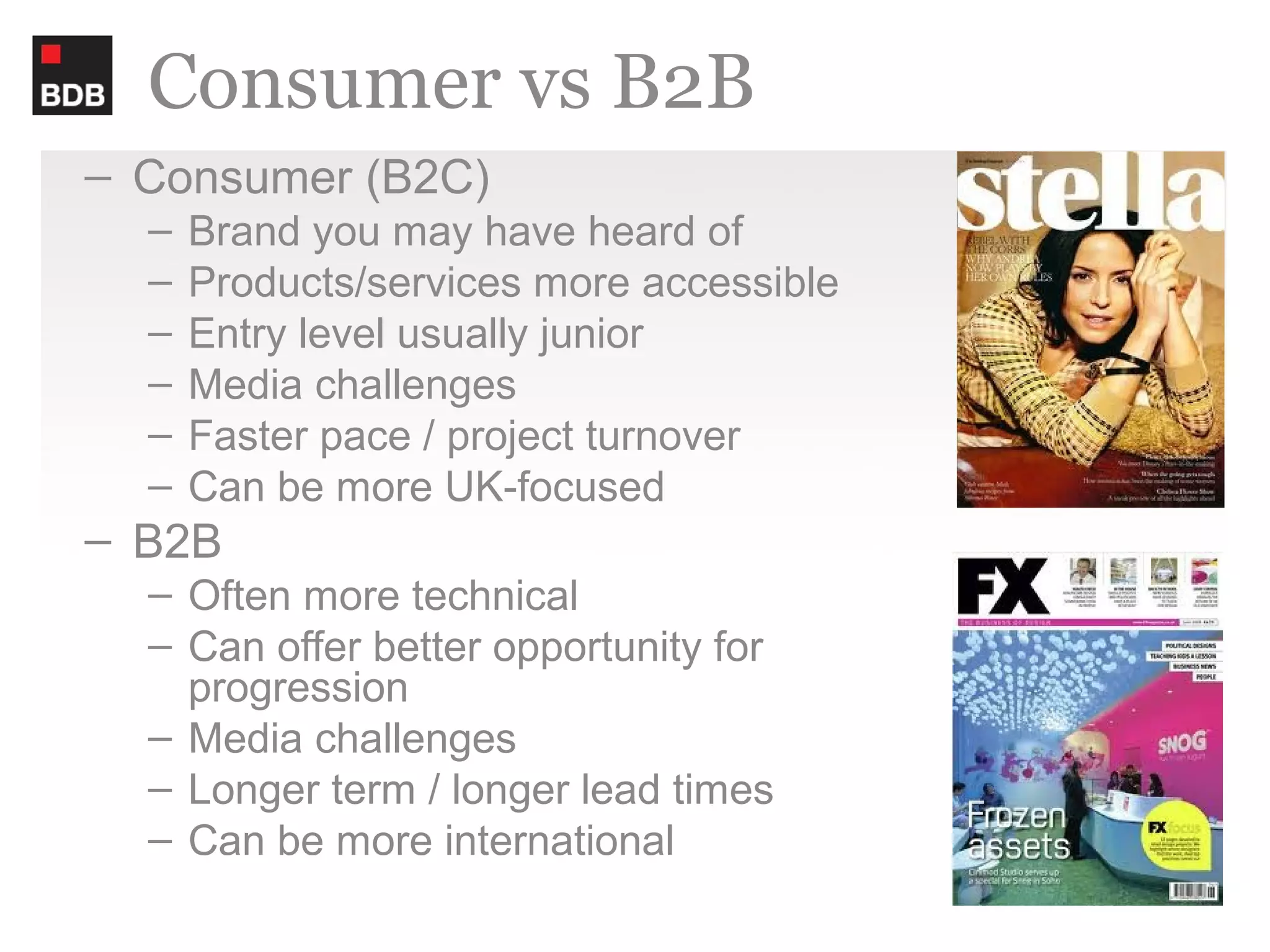
– Consumer (B2C)
  –   Brand you may have heard of
  –   Products/services more accessible
  –   Entry level usually junior
  –   Media challenges
  –   Faster pace / project turnover
  –   Can be more UK-focused
– B2B
  – Often more technical
  – Can offer better opportunity for
    progression
  – Media challenges
  – Longer term / longer lead times
  – Can be more international
PR vs advertising
 “News is what somebody somewhere wants to
  suppress. Everything else is advertising.” Lord Northcliffe
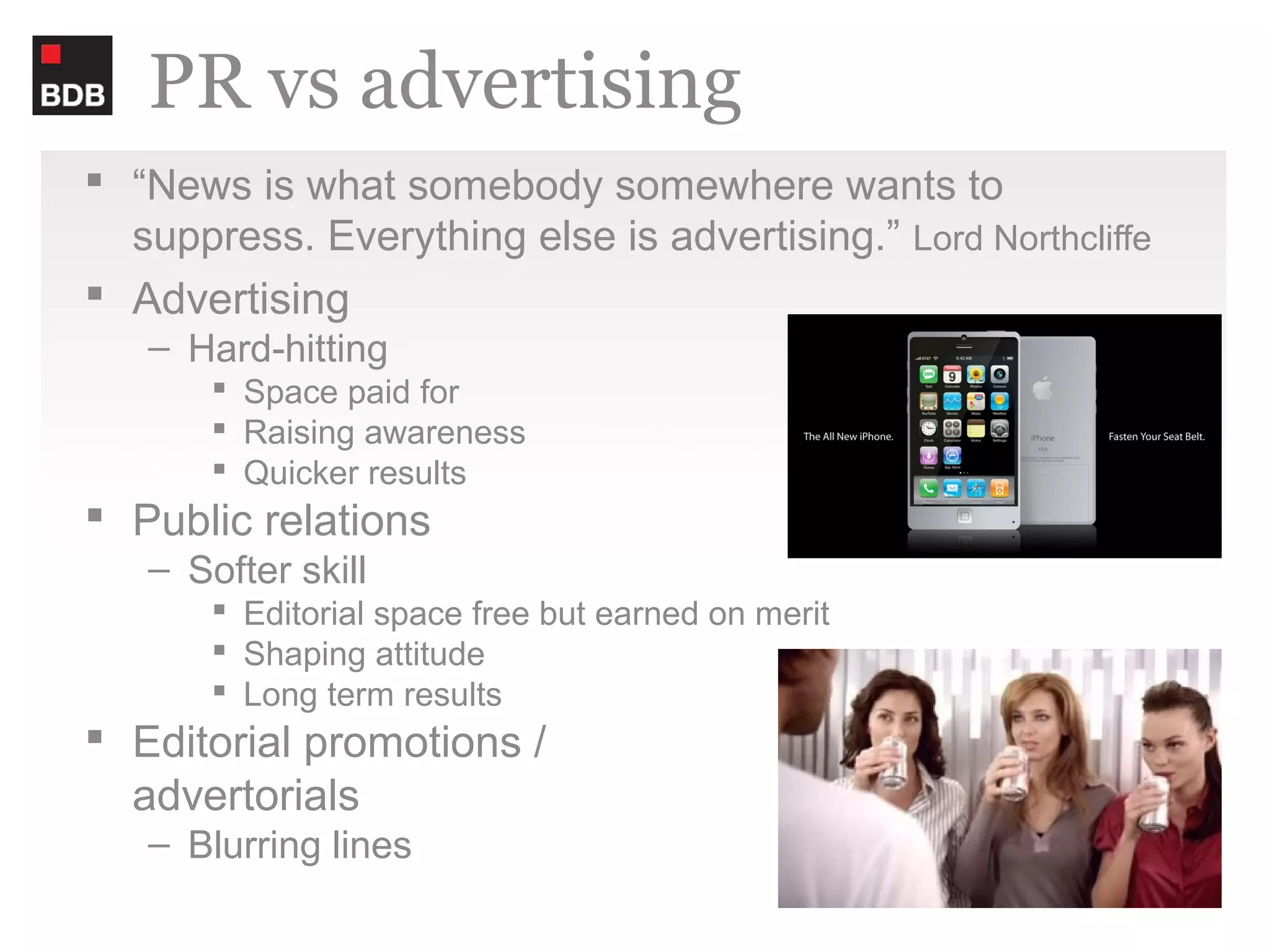
 Advertising
   – Hard-hitting
        Space paid for
        Raising awareness
        Quicker results
 Public relations
   – Softer skill
        Editorial space free but earned on merit
        Shaping attitude
        Long term results
 Editorial promotions /
  advertorials
   – Blurring lines
Is it for me?
 Personable
    – Build relationships
 Good copywriter
    – Variety of material
 Organised
    – Good time management / deadlines
 Good memory
    – Lots of projects ongoing
    – Eye for detail
 Flexible
    – Late nights / travel
 Initiative
    – Self starter
 Creative
 ‘Passion           for PR’
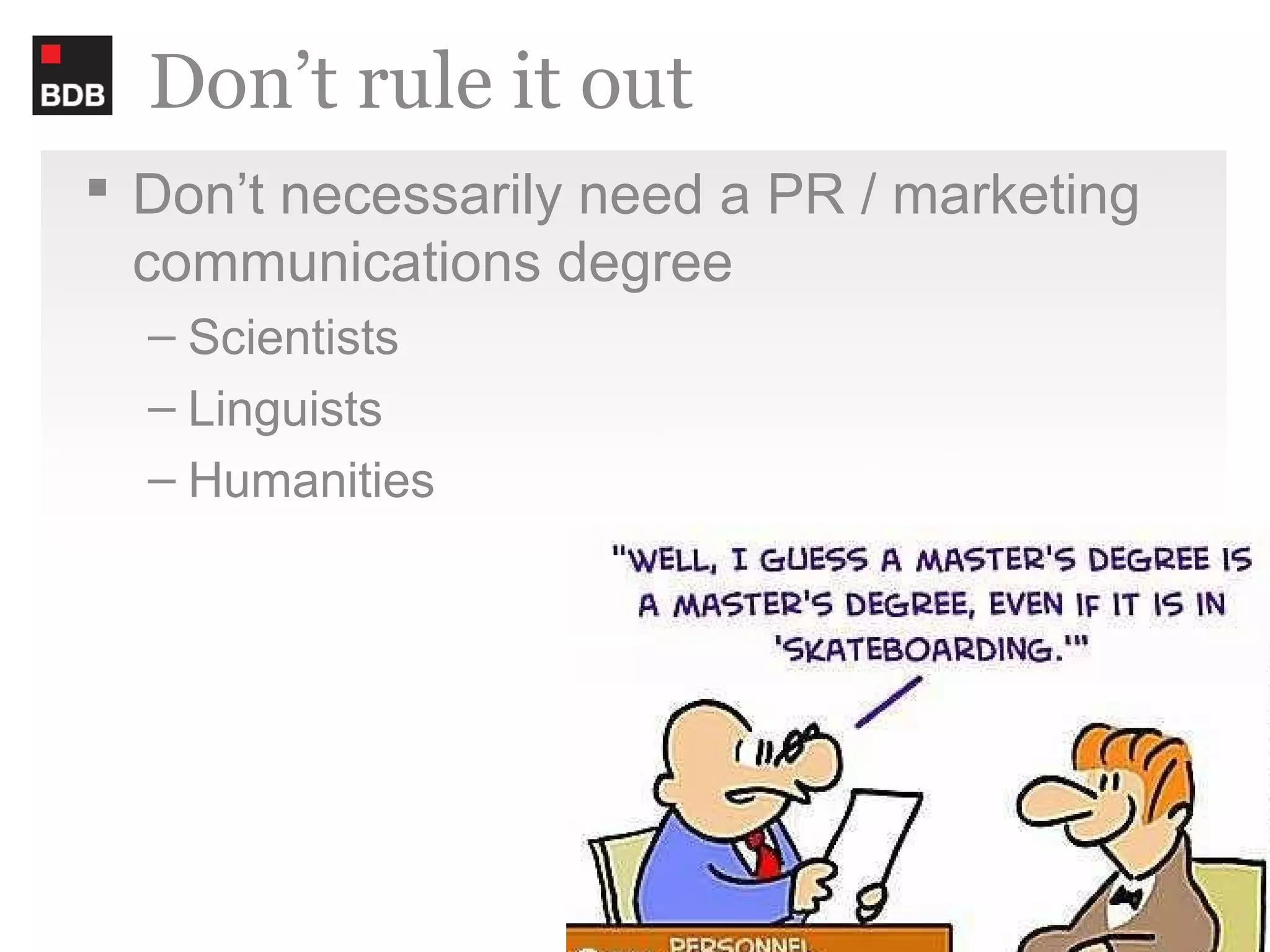
Don’t rule it out
 Don’t necessarily need a PR / marketing
  communications degree
  – Scientists
  – Linguists
  – Humanities
A typical day?
 No such thing!
 Maybe
  – Editor ring-round to ‘sell-in’ a story
  – Client meeting about a forthcoming event
  – Compile and evaluate a clippings report
  – Research for a new business pitch
  – Attend an exhibition to represent a client
  – Take part in a brainstorming session for
    future project
  – Put together press lists for new product
    launch
  – Research / draft press release
  – ...
The changing media landscape
Safeguarding reputation
 Transparent environment
  – Instant / global
 No reputation is bulletproof
  – “When everyone has a blog or Facebook entry,
    everyone is a publisher
  – “Your reputation is going to get set in stone so
    much earlier…a digital fingerprint that never gets
    erased”
                           Thomas Friedman, New York Times
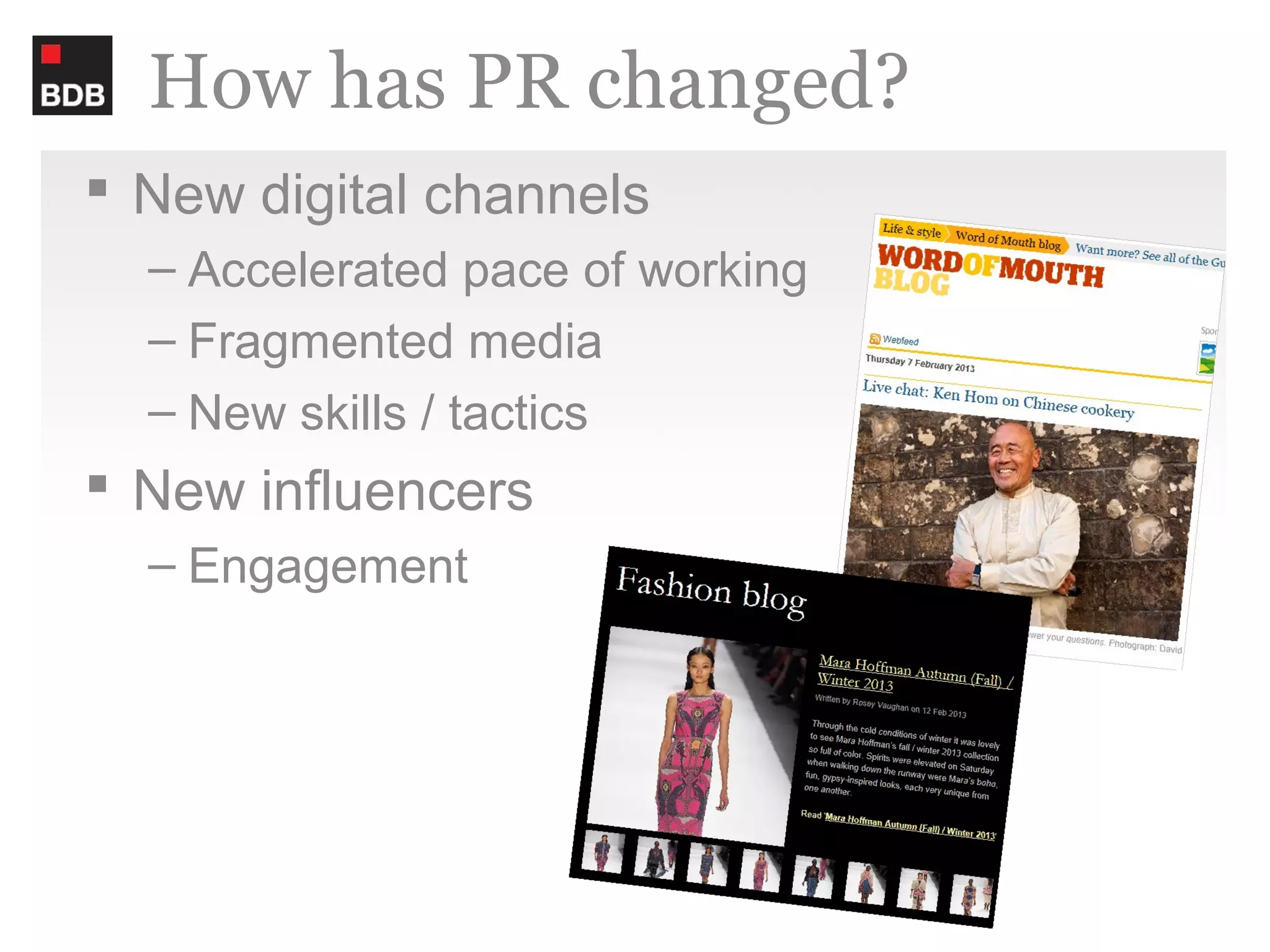
How has PR changed?
 New digital channels
  – Accelerated pace of working
  – Fragmented media
  – New skills / tactics
 New influencers
  – Engagement
It’s all in the story
 Discipline of PR remains the same
 Creating a consistent message thread
  – Across fragmented media
 Engages audience
  – Relevant message
 Create and protect
  corporate reputation
  / brand loyalty
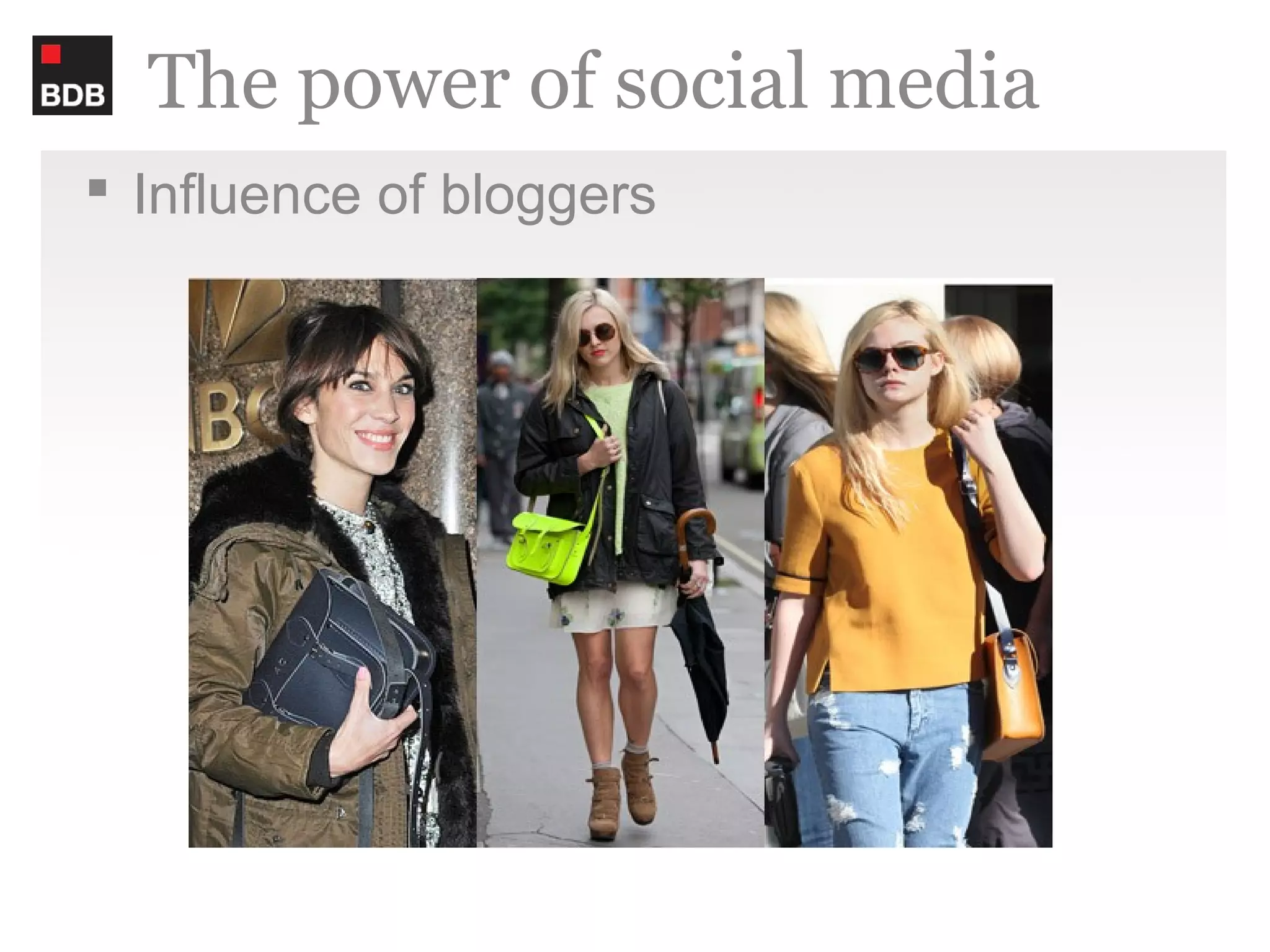
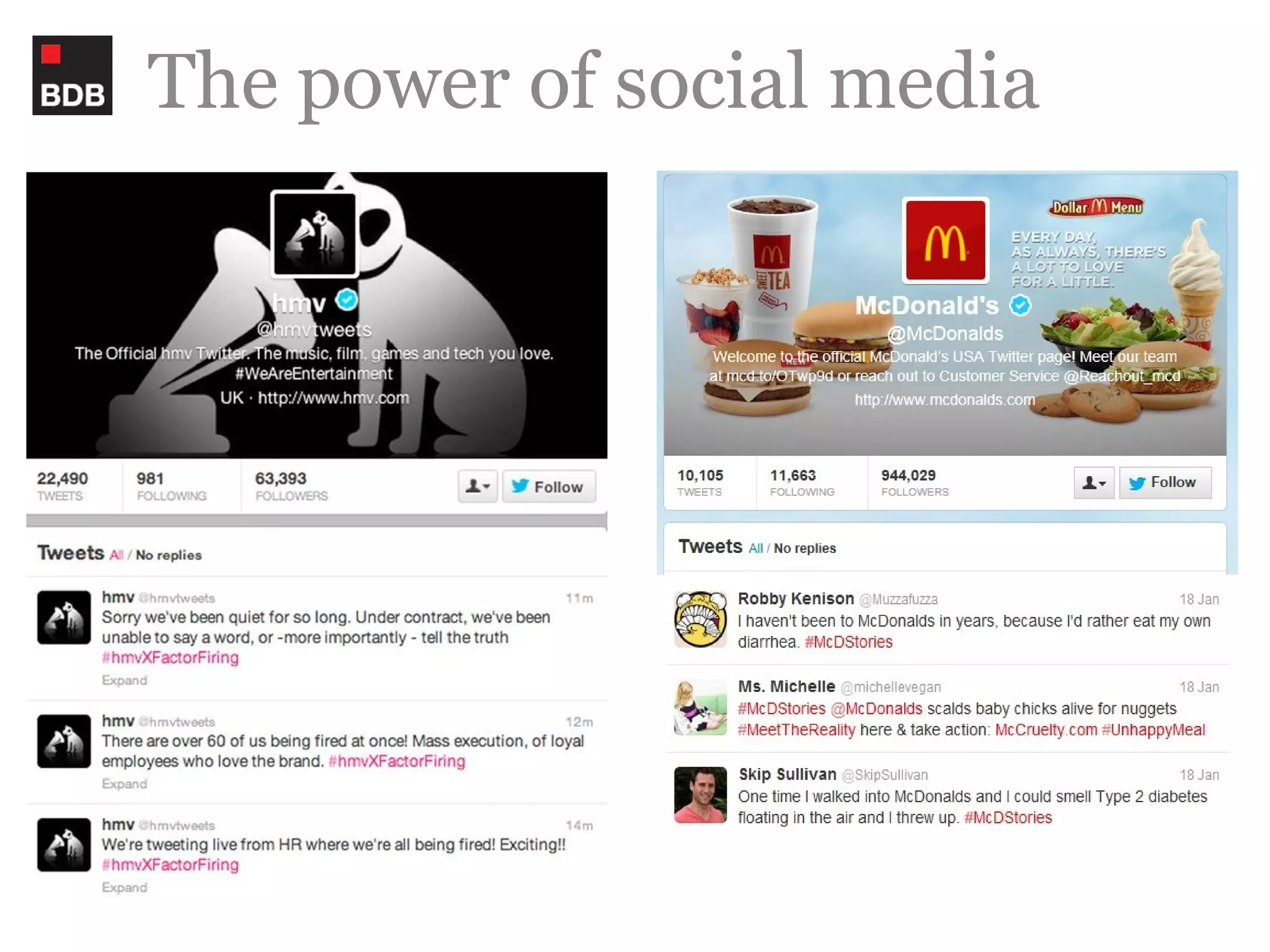
The power of social media
 Influence of bloggers
The power of social media
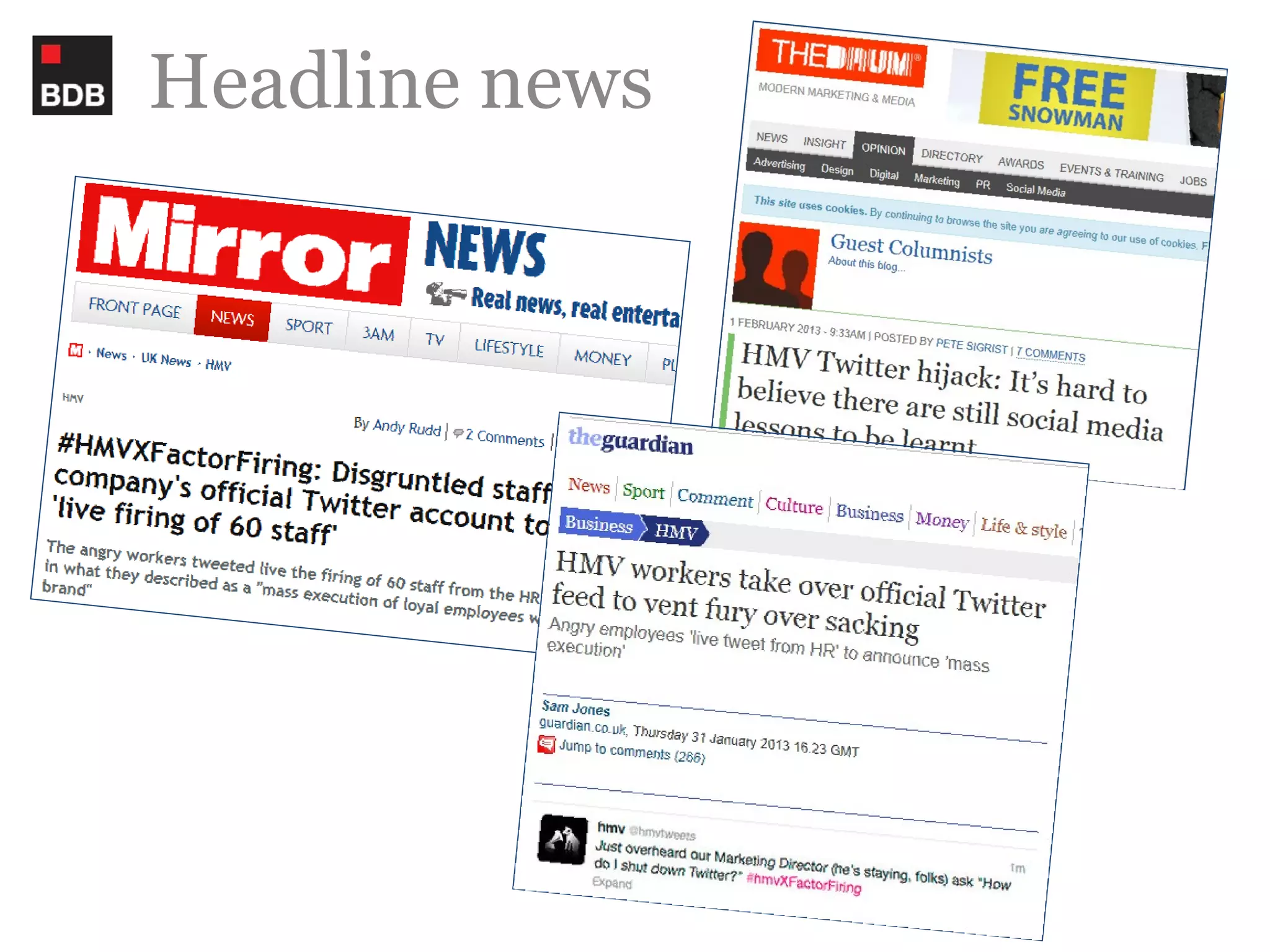
Headline news
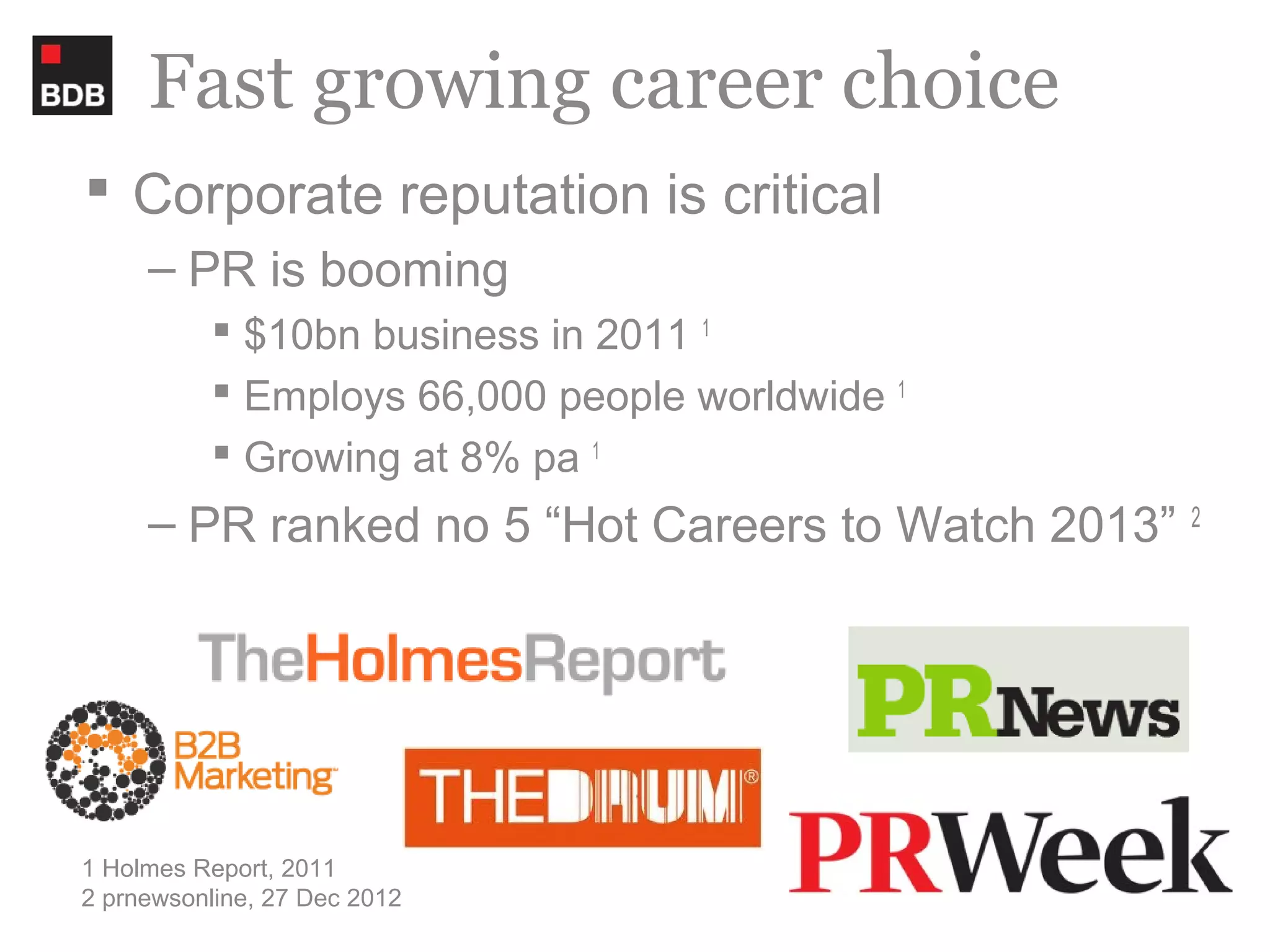
Fast growing career choice
 Corporate reputation is critical
     – PR is booming
           $10bn business in 2011 1
           Employs 66,000 people worldwide 1
           Growing at 8% pa 1
     – PR ranked no 5 “Hot Careers to Watch 2013”   2


1 Holmes Report, 2011
2 prnewsonline, 27 Dec 2012
Any questions?

Breaking into public relations - a presentation for undergraduates looking to work in public relations

  • 1.
    Alison Owen Head ofPR at BDB International business-to-business PR specialist www. bdb.co.uk @bdbmarketing @alisonmowen Presentation at PRCA ‘Breaking into PR’ conference 11 February 2013 Manchester Metropolitan University
  • 2.
    Summary  What is PR – the classic definition  Different career opportunities  PR vs advertising  Is it for me?  A typical day  The changing media landscape  The career choice of the future?
  • 5.
    What is PR? Reputation management – what you do – what you say – what others say about you  Planned and sustained effort to establish and maintain goodwill and understanding between an organisation and its publics  Presenting a company favourably – Shaping information – Targeting – Engaging relevant audiences
  • 6.
  • 7.
    Agency vs in-house Agency – Small business or global network – Can offer faster promotion than in-house – Broad spread of clients – across different sectors – Variety of work / disciplines  In-house – Corporate culture – Structured career path – Focused on core sector / related sectors – Marketing team – may work with an agency
  • 8.
    Consumer vs B2B –Consumer (B2C) – Brand you may have heard of – Products/services more accessible – Entry level usually junior – Media challenges – Faster pace / project turnover – Can be more UK-focused – B2B – Often more technical – Can offer better opportunity for progression – Media challenges – Longer term / longer lead times – Can be more international
  • 9.
    PR vs advertising “News is what somebody somewhere wants to suppress. Everything else is advertising.” Lord Northcliffe  Advertising – Hard-hitting  Space paid for  Raising awareness  Quicker results  Public relations – Softer skill  Editorial space free but earned on merit  Shaping attitude  Long term results  Editorial promotions / advertorials – Blurring lines
  • 10.
    Is it forme?  Personable – Build relationships  Good copywriter – Variety of material  Organised – Good time management / deadlines  Good memory – Lots of projects ongoing – Eye for detail  Flexible – Late nights / travel  Initiative – Self starter  Creative  ‘Passion for PR’
  • 11.
    Don’t rule itout  Don’t necessarily need a PR / marketing communications degree – Scientists – Linguists – Humanities
  • 12.
    A typical day? No such thing!  Maybe – Editor ring-round to ‘sell-in’ a story – Client meeting about a forthcoming event – Compile and evaluate a clippings report – Research for a new business pitch – Attend an exhibition to represent a client – Take part in a brainstorming session for future project – Put together press lists for new product launch – Research / draft press release – ...
  • 13.
  • 14.
    Safeguarding reputation  Transparentenvironment – Instant / global  No reputation is bulletproof – “When everyone has a blog or Facebook entry, everyone is a publisher – “Your reputation is going to get set in stone so much earlier…a digital fingerprint that never gets erased” Thomas Friedman, New York Times
  • 15.
    How has PRchanged?  New digital channels – Accelerated pace of working – Fragmented media – New skills / tactics  New influencers – Engagement
  • 16.
    It’s all inthe story  Discipline of PR remains the same  Creating a consistent message thread – Across fragmented media  Engages audience – Relevant message  Create and protect corporate reputation / brand loyalty
  • 17.
    The power ofsocial media  Influence of bloggers
  • 18.
    The power ofsocial media
  • 19.
  • 20.
    Fast growing careerchoice  Corporate reputation is critical – PR is booming  $10bn business in 2011 1  Employs 66,000 people worldwide 1  Growing at 8% pa 1 – PR ranked no 5 “Hot Careers to Watch 2013” 2 1 Holmes Report, 2011 2 prnewsonline, 27 Dec 2012
  • 21.

Editor's Notes

  • #5 Planning, strategy development, Ties in other strands – research, networking, copywriting, evaluating success to feedback into planning Hugely varied All comes down to reputation management – building, evolving and maintaining a positive corporate reputation
  • #6 Competitive advantage: opening new markets attracting high-calibre employees giving more access to funding and investors creating a high value for products and services protecting businesses in a crisis
  • #15 Transparent – used to moan about things in the pub. Now we tweet it.
  • #16 Communications biggest area of change
  • #17 So many channels – audiences fragmenting – need a compelling narrative
  • #18 Campaigns go viral quickly Eg Cambridge satchel company
  • #19 HMV marketing director: 'How do I shut down Twitter?'