







Rik Willi
a
ms, UX Architect, Moor
f
ields Eye Hospit
a
l


rikwilli
a
ms.net
WhatisInformation
Architecture?
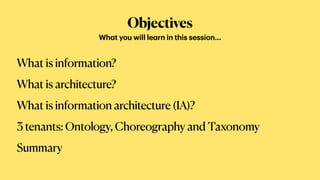
Objectives
What is information?


What is architecture?


What is information architecture (IA)?


3 tenants: Ontology, Choreography and Taxonomy


Summary
Wh
a
t you will le
a
rn in this session…
‘Information + Architecture’
What is Information?
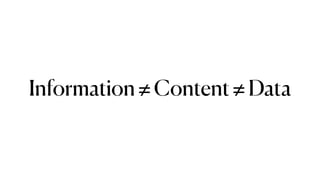
Information ≠ Content ≠ Data
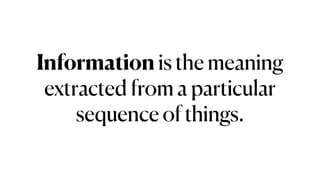
Information is the meaning
extracted from a particular
sequence of things.
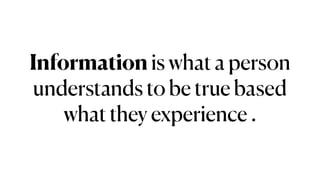
Information is what a person
understands to be true based
what they experience .
Content is whatever is being
arranged or sequenced for a
person to interpret.
Data are the facts, observations
and questions that a user has
about a thing.
We cannot create information. Instead we
make content that is able to be perceived
in a way that we hope will be based on what
users know.
Without thinking about how your content
is perceived and the data users might have
available, you might not be creating the
information intended.
What is Architecture?
Architecture is the the complex
or carefully designed structure of
something.
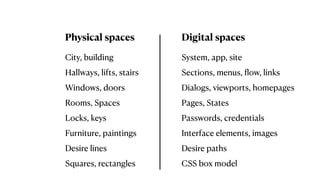
Physical spaces Digital spaces
Rooms, Spaces Pages, States
Hallways, lifts, stairs Sections, menus,
fl
ow, links
Windows, doors Dialogs, viewports, homepages
Locks, keys Passwords, credentials
Furniture, paintings Interface elements, images
Desire lines Desire paths
Squares, rectangles CSS box model
City, building System, app, site
Thinking about architecture is
optional, but architecture
always exists.
S
a
r
a
h R. B
a
rrett
“You may not have an information architect
on your team, but you de
fi
nitely have
information architecture in your experience.”
If we don’t think about it we are letting
it grow organically which usually means
that it’s hard for people to use.
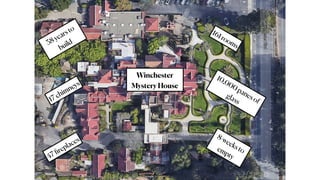
38yearsto
build
161rooms
8-weeksto
empty
17chimneys
10,000panesof
glass
47
fi
replaces
Winchester
Mystery House
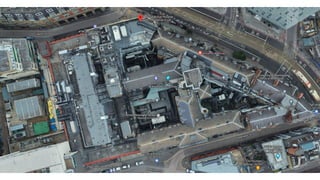
Source: content inventories
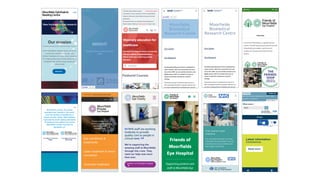
16 websites
Source: content inventories
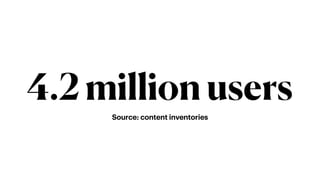
4.2 million users
Source: content inventories
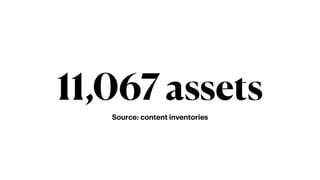
11,067 assets
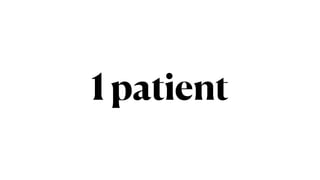
1 patient
What is Information
Architecture?
Abby Covert
“Information architecture makes
sense of mess.”
IA Institute
“If you’ve ever tried to use something and thought, ‘where
am I supposed to go next?’ or ‘this doesn’t make any sense’,
you are encountering an issue with an information
architecture.”
IA Institute
“Information architecture is the practice of
deciding how to arrange the parts of something
to be understandable.”
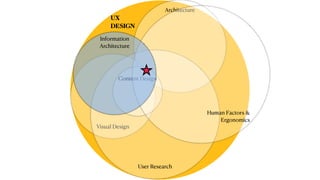
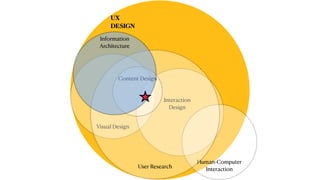
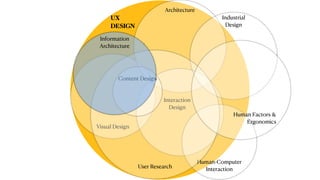
IA is a critical discipline for user
experience (UX) design
User experience (UX) design is a
process to create products and services
that provide meaningful and relevant
outcomes for people.
UX involves the design of the entire
process of acquiring and integrating the
product or service, including aspects of
branding, design, usability and function.
UX


DESIGN
Visual Design
Architecture
Interaction
Design
Human-Computer
Interaction
Industrial
Design
User Research
Content Design
Human Factors &
Ergonomics
Information
Architecture
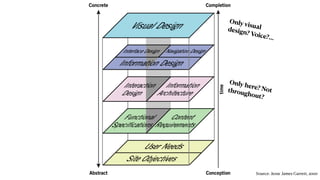
Only visual
design? Voice?…
Source: Jesse James Garrett, 2000
Only here? Not
throughout?
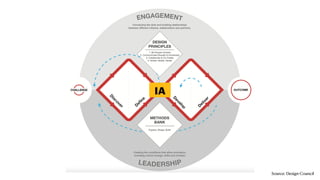
Source: Design Council
IA
Source: Havana Nguyen
Information architecture focuses
on the organisation of data and
objects into structure in a system.
IA de
fi
nes what types of content and
functions will be available for people under
what labels, sequences and hierarchies.
Why is information
architecture important?
An e
ff
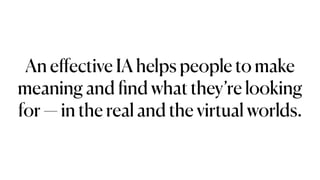
ective IA helps people to make
meaning and
fi
nd what they’re looking
for — in the real and the virtual worlds.
Sophi
a
Pr
a
ter
“[IA] takes user research insights and
synthesises them into structure.”
Abby Covert
“Information architecture provides actionable
blueprints for what's being designed and built.”
Linds
a
y Eryn
“Well-de
fi
ned leads to well-
designed.”
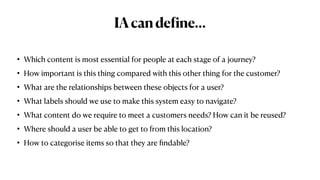
IAcande
f
ine…
• Which content is most essential for people at each stage of a journey?


• How important is this thing compared with this other thing for the customer?


• What are the relationships between these objects for a user?


• What labels should we use to make this system easy to navigate?


• What content do we require to meet a customers needs? How can it be reused?


• Where should a user be able to get to from this location?


• How to categorise items so that they are
fi
ndable?
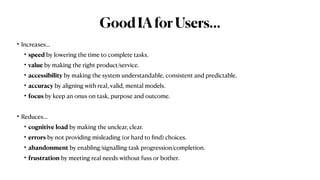
GoodIAforUsers…
• Increases…


• speed by lowering the time to complete tasks.


• value by making the right product/service.


• accessibility by making the system understandable, consistent and predictable.


• accuracy by aligning with real, valid, mental models.


• focus by keep an onus on task, purpose and outcome.


• Reduces…


• cognitive load by making the unclear, clear.


• errors by not providing misleading (or hard to
fi
nd) choices.


• abandonment by enabling/signalling task progression/completion.


• frustration by meeting real needs without fuss or bother.
GoodIAforOrganisations…
• Increases revenue by:


• increasing likelihood of conversions / sales.


• reduces risk of abandonment to a competitor.


• reduces costs of contacting customer support.


• Reduces content duplication.


• Creates competitive advantage.
Examples of Information
Architecture
UX


DESIGN
Visual Design
Architecture
User Research
Content Design
Human Factors &
Ergonomics
Information
Architecture
UX


DESIGN
Visual Design
Interaction
Design
Human-Computer
Interaction
User Research
Content Design
Information
Architecture
1. Ontology
D
a
n Klyn
“What we mean when we say what we say.”
Ontology is a declaration of
meaning in a speci
fi
c context
— but meaning is slippery!
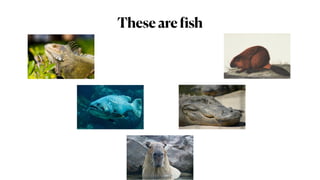
Theseare
f
ish
The meaning behind a label/term
can be completely di
ff
erent between
organisations and their users.
Meaningis…
Subjective


Sociopolitical


Psychographic


Lost in translation


Nottalkedaboutenough
Poorly de
fi
ned ontology causes
fi
ndability issues, user errors and
retention problems.
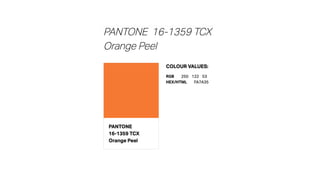
“Orange”
“Make the website orange
orange”
Live example
2. Taxonomy
Ashley K
a
y
“The arrangement of the parts to accomplish
speci
fi
c goals with and across contexts”
How content is grouped,
classi
fi
ed and labelled within a
shared environment.
Classi
f
ication
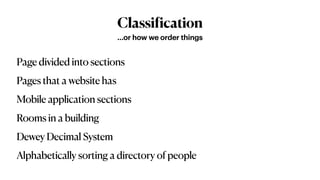
Page divided into sections


Pages that a website has


Mobile application sections


Rooms in a building


Dewey Decimal System


Alphabetically sorting a directory of people
…or how we order things
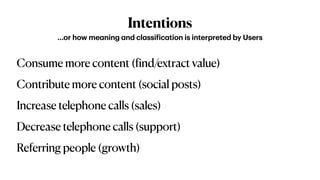
Intentions
Consume more content (
f
ind/extract value)


Contribute more content (social posts)


Increase telephone calls (sales)


Decrease telephone calls (support)


Referring people (growth)
…or how me
a
ning
a
nd cl
a
ssi
f
ic
a
tion is interpreted by Users
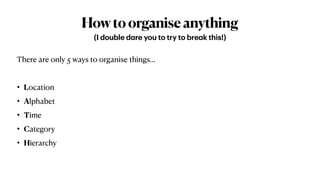
Howtoorganiseanything
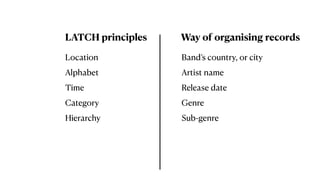
There are only 5 ways to organise things…


• Location


• Alphabet


• Time


• Category


• Hierarchy
(I double d
a
re you to try to bre
a
k this!)
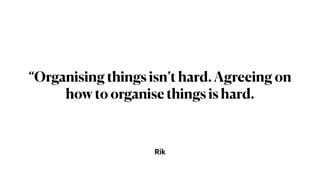
Rik
“Organising things isn’t hard. Agreeing on
how to organise things is hard.
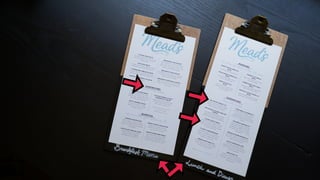
LATCH principles Way of organising records
Category Genre
Alphabet Artist name
Time Release date
Hierarchy Sub-genre
Location Band’s country, or city
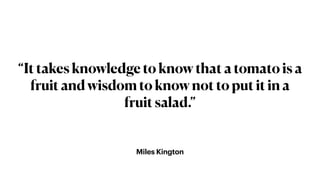
Miles Kington
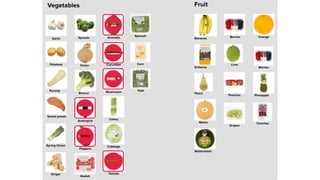
“It takes knowledge to know that a tomato is a
fruit and wisdom to know not to put it in a
fruit salad.”
3. Choreography
Choreography comes together when
meaning (ontology) and categorisation
(taxonomy) interact with each other to
create an experience.
Choreography is the sequence
of steps a user can take, across
contexts/channels.
ExamplesofChoreographyinIA
• The di
ff
erence in features between a desktop and a mobile experiences (Insta)


• A limitation of functionality based on the role of a user (free/paid plan)


• The change of interface for a
fi
rst-time user vs. long-time user (Facebook).
Ontological Choreography Taxonomical Choreography
Label changes Navigation schema changes
How does the language you are
using change in certain contexts
or channels?
How does the structure you are
using change in certain contexts
of channels?
Icon substitution Content hierarchy changes
Meaning changes Limitation of features
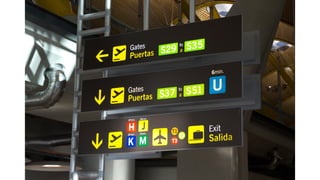
Placemaking — the act of determining
how to communicate the intended
purpose of a place to its users.
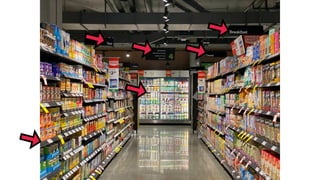
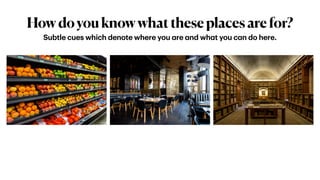
Howdoyouknowwhattheseplacesarefor?
Subtle cues which denote where you
a
re
a
nd wh
a
t you c
a
n do here.
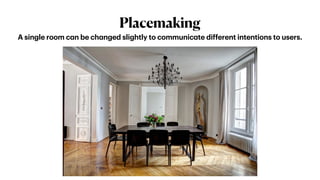
Placemaking
A single room c
a
n be ch
a
nged slightly to communic
a
te different intentions to users.
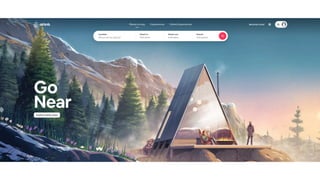
We have to decide how we want
our users to move
The interplay of ontology, taxonomy
and choreography can’t simply be
designed: it needs to be architected
fi
rst.
Summary
Information architecture is all about
organising content or things, describing
them clearly and providing ways for people
to get to them.
Good information architecture helps
people to
fi
nd information they need. It
can also help them learn and make better
decisions.
A lot of information architecture work relates to
websites and intranets, but is just as relevant for
music and movies, a computer
fi
le system, your paper
fi
les at home or even groceries on supermarket
shelves.
Discussion

What is IA?