An Introduction to
GSM (Global System for Mobile Communications, originally Groupe
Spécial Mobile), is a standard set developed by the European

Telecommunications Standards Institute (ETSI) to describe protocols for
second generation (2G) digital cellular networks used by mobile phones. It
became the de facto global standard for mobile communications with over
80% market share.
The GSM standard was developed as a replacement for first

generation (1G) analog cellular networks, and originally
described a digital, circuit-switched network optimized for full

duplex voice telephony.
This was expanded over time to include data

communications, first by circuit-switched transport,
then packet data transport via GPRS (General Packet Radio
Services) and EDGE (Enhanced Data rates for GSM Evolution
or EGPRS).
Subsequently, the 3GPP developed third generation

(3G) UMTS standards followed by fourth generation (4G) LTE
Advanced standards, which are not part of the ETSI GSM

standard.
"GSM" is a trademark owned by the GSM
Association. It may also refer to the initially most
common voice codec used, Full Rate.
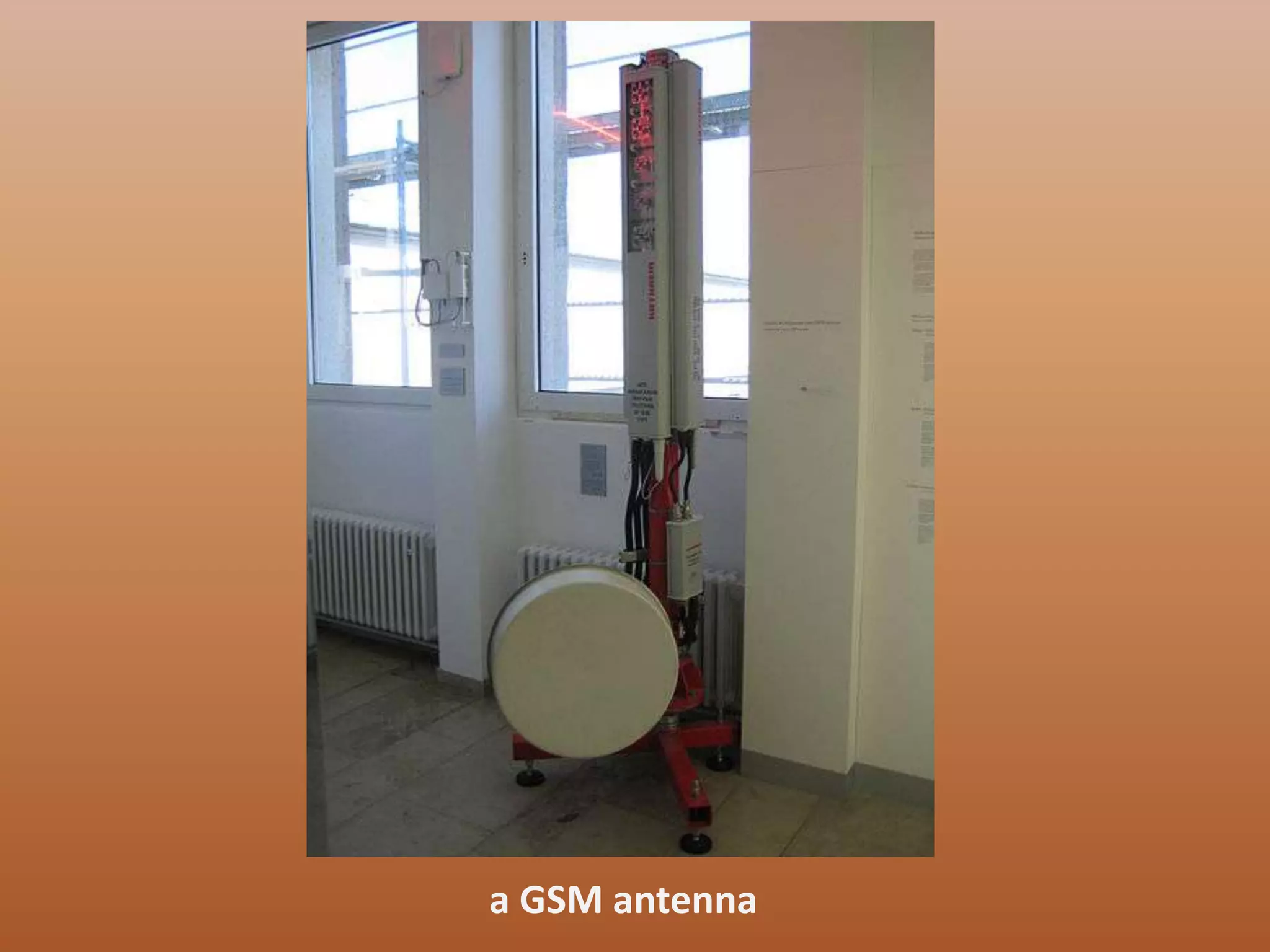
a GSM antenna

What is GSM ?

  • 1.
  • 2.
    GSM (Global Systemfor Mobile Communications, originally Groupe Spécial Mobile), is a standard set developed by the European Telecommunications Standards Institute (ETSI) to describe protocols for second generation (2G) digital cellular networks used by mobile phones. It became the de facto global standard for mobile communications with over 80% market share.
  • 3.
    The GSM standardwas developed as a replacement for first generation (1G) analog cellular networks, and originally described a digital, circuit-switched network optimized for full duplex voice telephony.
  • 4.
    This was expandedover time to include data communications, first by circuit-switched transport, then packet data transport via GPRS (General Packet Radio Services) and EDGE (Enhanced Data rates for GSM Evolution or EGPRS).
  • 5.
    Subsequently, the 3GPPdeveloped third generation (3G) UMTS standards followed by fourth generation (4G) LTE Advanced standards, which are not part of the ETSI GSM standard.
  • 6.
    "GSM" is atrademark owned by the GSM Association. It may also refer to the initially most common voice codec used, Full Rate.
  • 7.