KNOW HERE
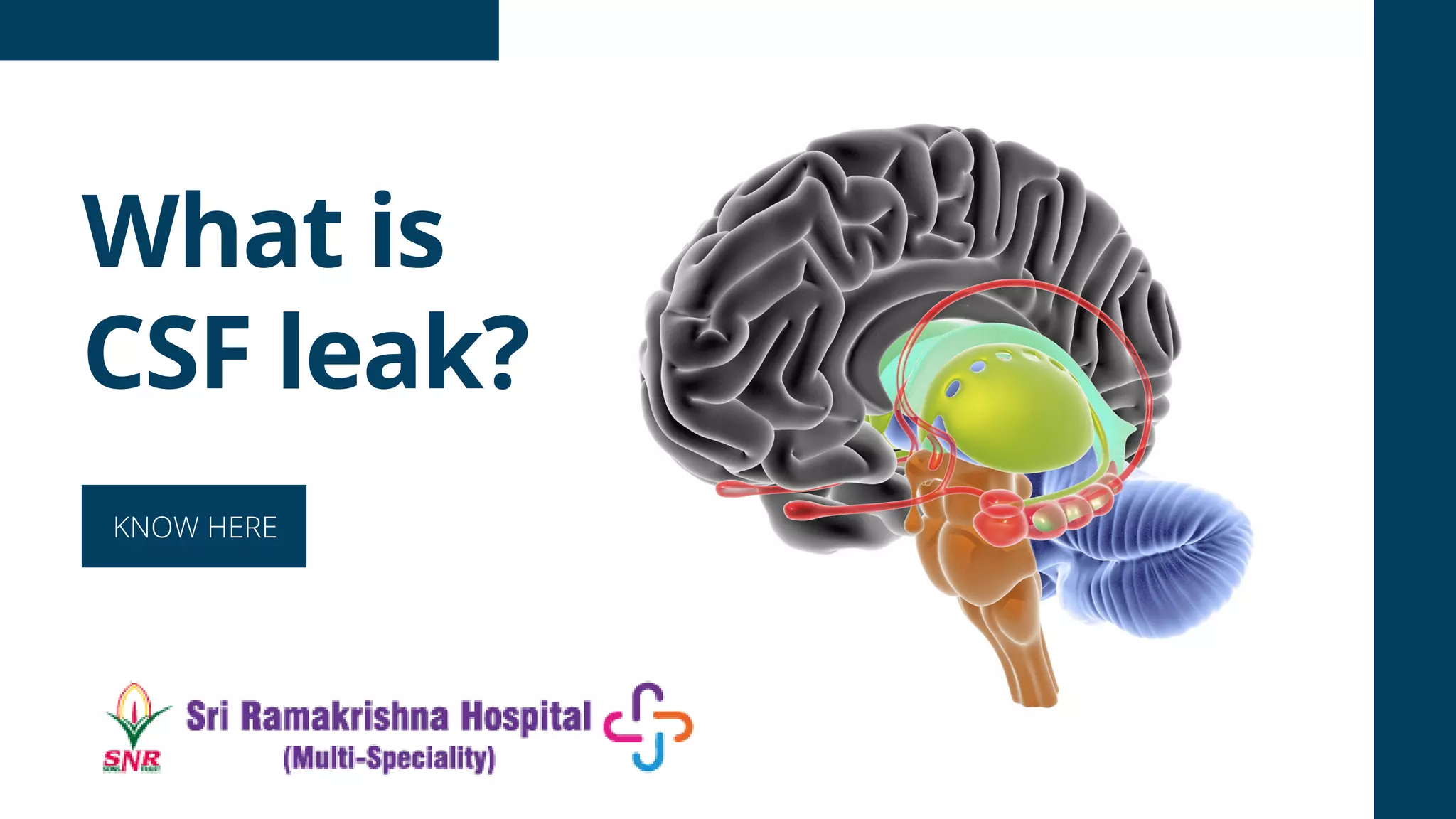
What is
CSF leak?
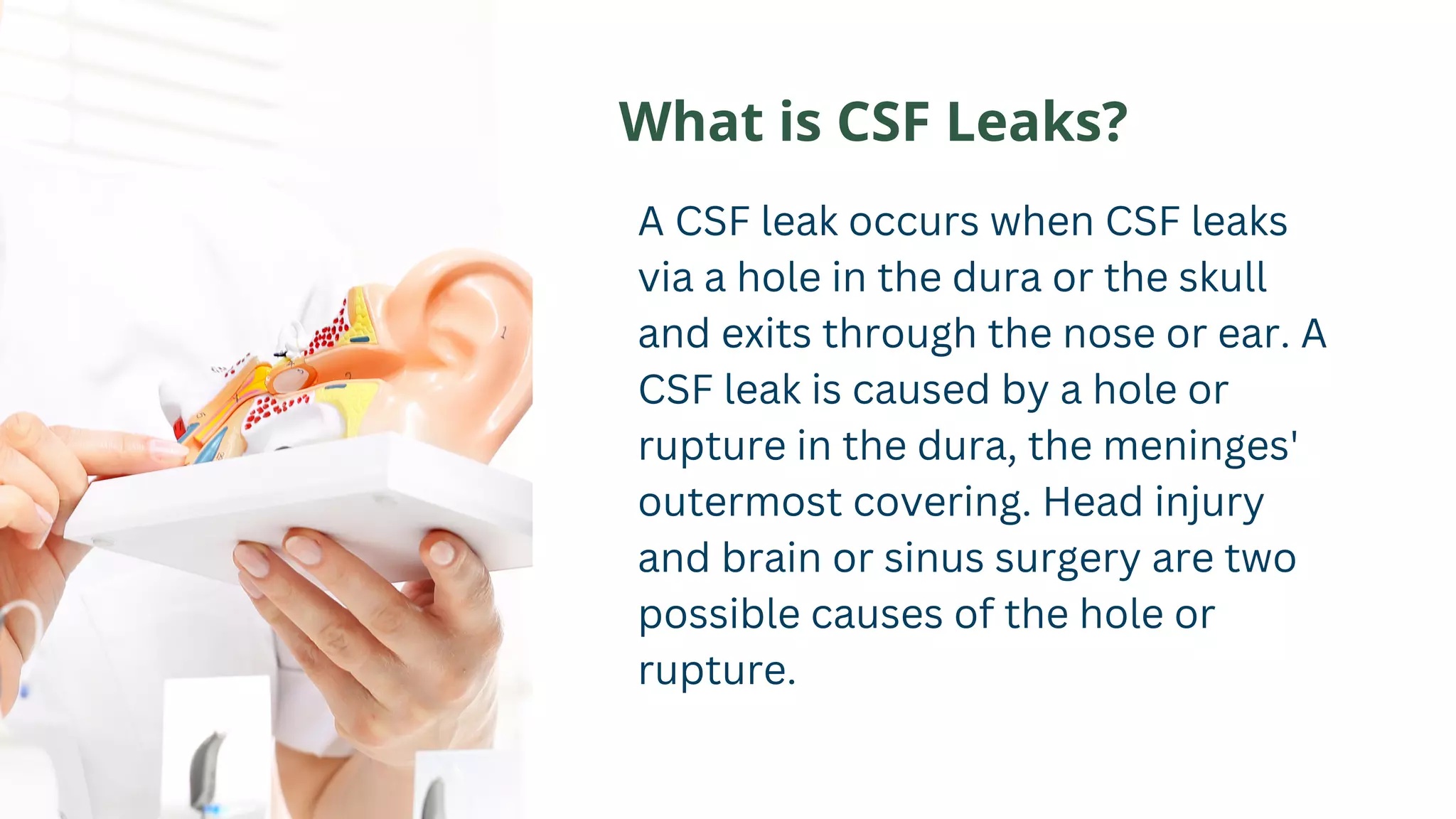
What is CSF Leaks?
A CSF leak occurs when CSF leaks
via a hole in the dura or the skull
and exits through the nose or ear. A
CSF leak is caused by a hole or
rupture in the dura, the meninges'
outermost covering. Head injury
and brain or sinus surgery are two
possible causes of the hole or
rupture.
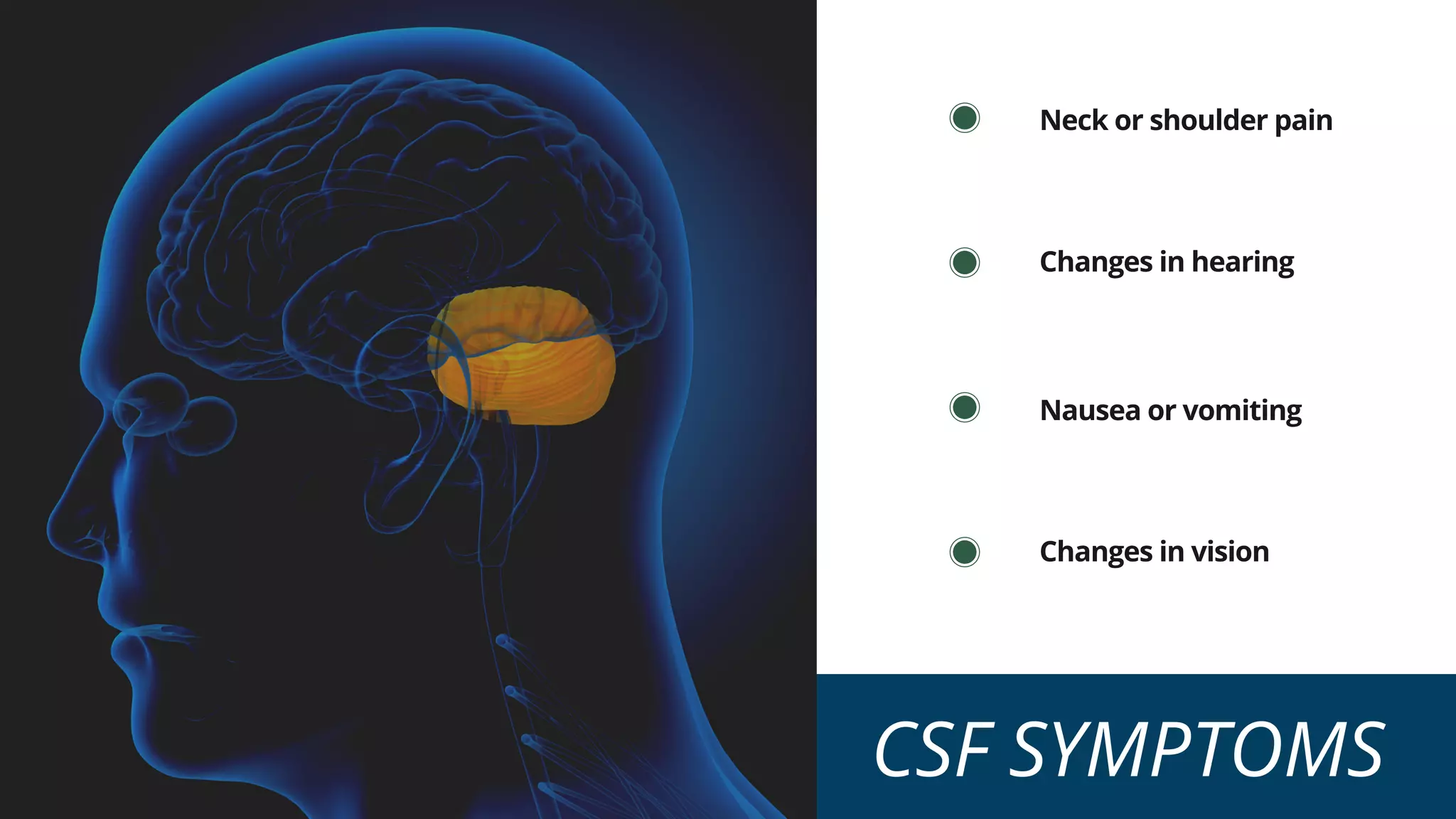
CSF SYMPTOMS
Neck or shoulder pain
Changes in hearing
Nausea or vomiting
Changes in vision
Diagnosis
This test is widely regarded
as the gold standard for
detecting and finding CSF
leaks. It employs a CT scan
and a contrast dye to
pinpoint CSF leaks in the
skull base. It pinpoints the
exact location of a CSF leak
and assists in determining
the best treatment option.
Nasal endoscopy is
frequently used when a
traumatic cranial CSF leak
is suspected. This approach
may narrow down the
side/location of the leak
and may occasionally
detect current leaks,
although the results are
frequently non-specific.
Magnetic resonance
imaging (MRI) has
been demonstrated to
be effective in
locating CSF leaks in
patients suffering
from spontaneous
intracranial
hypotension (SIH).
CT myelography Nasal Endoscopy MR Myelography
Epidural blood patch may be used to
treat spinal CSF leakage. This procedure
includes drawing a sample of your own
blood and putting it into your spinal
canal. The blood cells clot, forming a
patch to cover the location where the
CSF is leaking.
CSF Leak Treatment
Contact Us!
7970 108 108

What is CSF leak?

  • 1.
  • 2.
    What is CSFLeaks? A CSF leak occurs when CSF leaks via a hole in the dura or the skull and exits through the nose or ear. A CSF leak is caused by a hole or rupture in the dura, the meninges' outermost covering. Head injury and brain or sinus surgery are two possible causes of the hole or rupture.
  • 3.
    CSF SYMPTOMS Neck orshoulder pain Changes in hearing Nausea or vomiting Changes in vision
  • 4.
    Diagnosis This test iswidely regarded as the gold standard for detecting and finding CSF leaks. It employs a CT scan and a contrast dye to pinpoint CSF leaks in the skull base. It pinpoints the exact location of a CSF leak and assists in determining the best treatment option. Nasal endoscopy is frequently used when a traumatic cranial CSF leak is suspected. This approach may narrow down the side/location of the leak and may occasionally detect current leaks, although the results are frequently non-specific. Magnetic resonance imaging (MRI) has been demonstrated to be effective in locating CSF leaks in patients suffering from spontaneous intracranial hypotension (SIH). CT myelography Nasal Endoscopy MR Myelography
  • 5.
    Epidural blood patchmay be used to treat spinal CSF leakage. This procedure includes drawing a sample of your own blood and putting it into your spinal canal. The blood cells clot, forming a patch to cover the location where the CSF is leaking. CSF Leak Treatment
  • 6.