WHAT IS CLOUD?
AGENDA
 Public, private & hybrid cloud
 Best practices in cloud
 Cloud cost optimization
 Future technology trends
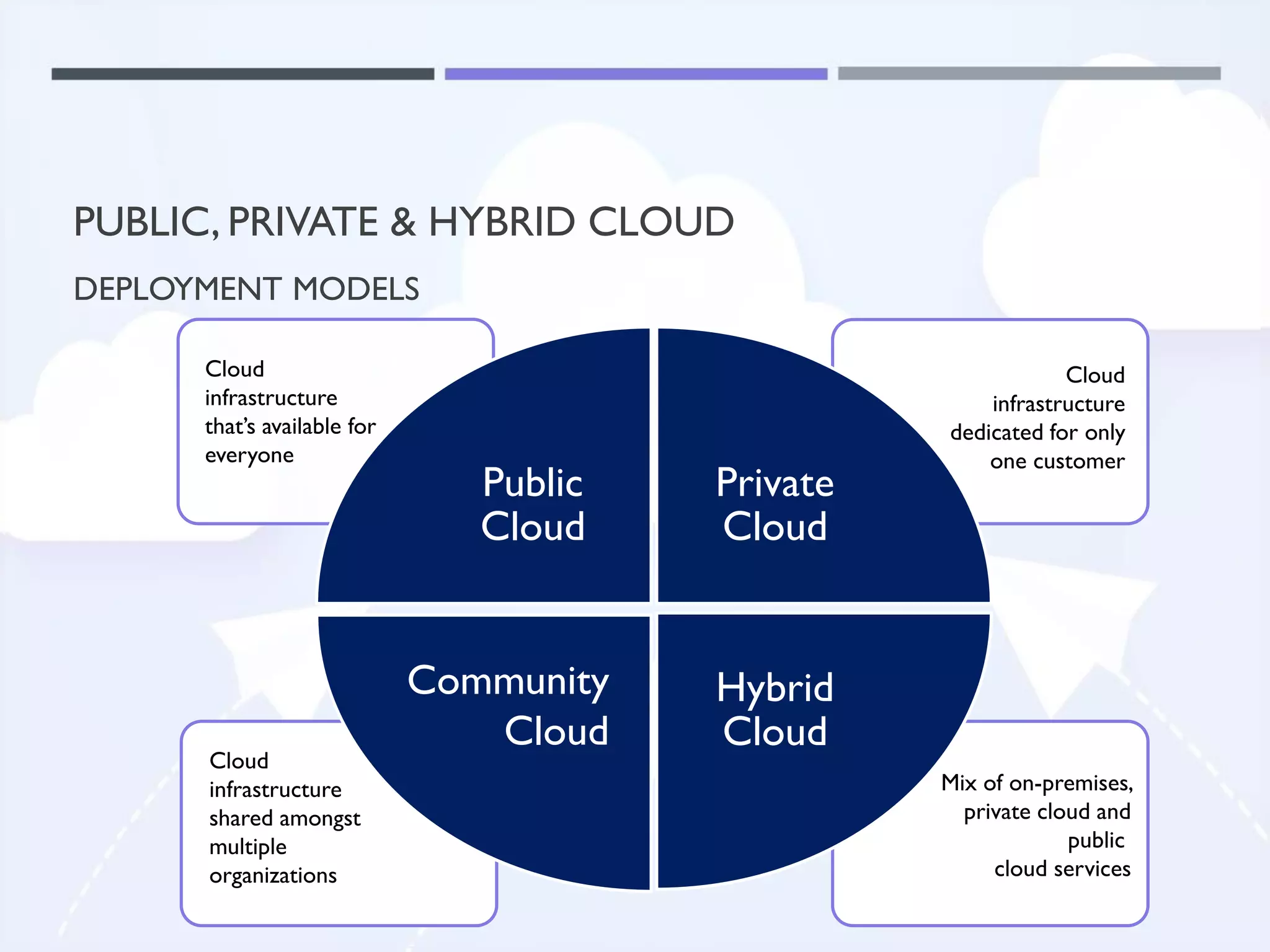
PUBLIC, PRIVATE & HYBRID CLOUD
DEPLOYMENT MODELS
Public
Cloud
Private
Cloud
Hybrid
Cloud
Community
Cloud
Mix of on-premises,
private cloud and
public
cloud services
Cloud
infrastructure
dedicated for only
one customer
Cloud
infrastructure
that’s available for
everyone
Cloud
infrastructure
shared amongst
multiple
organizations
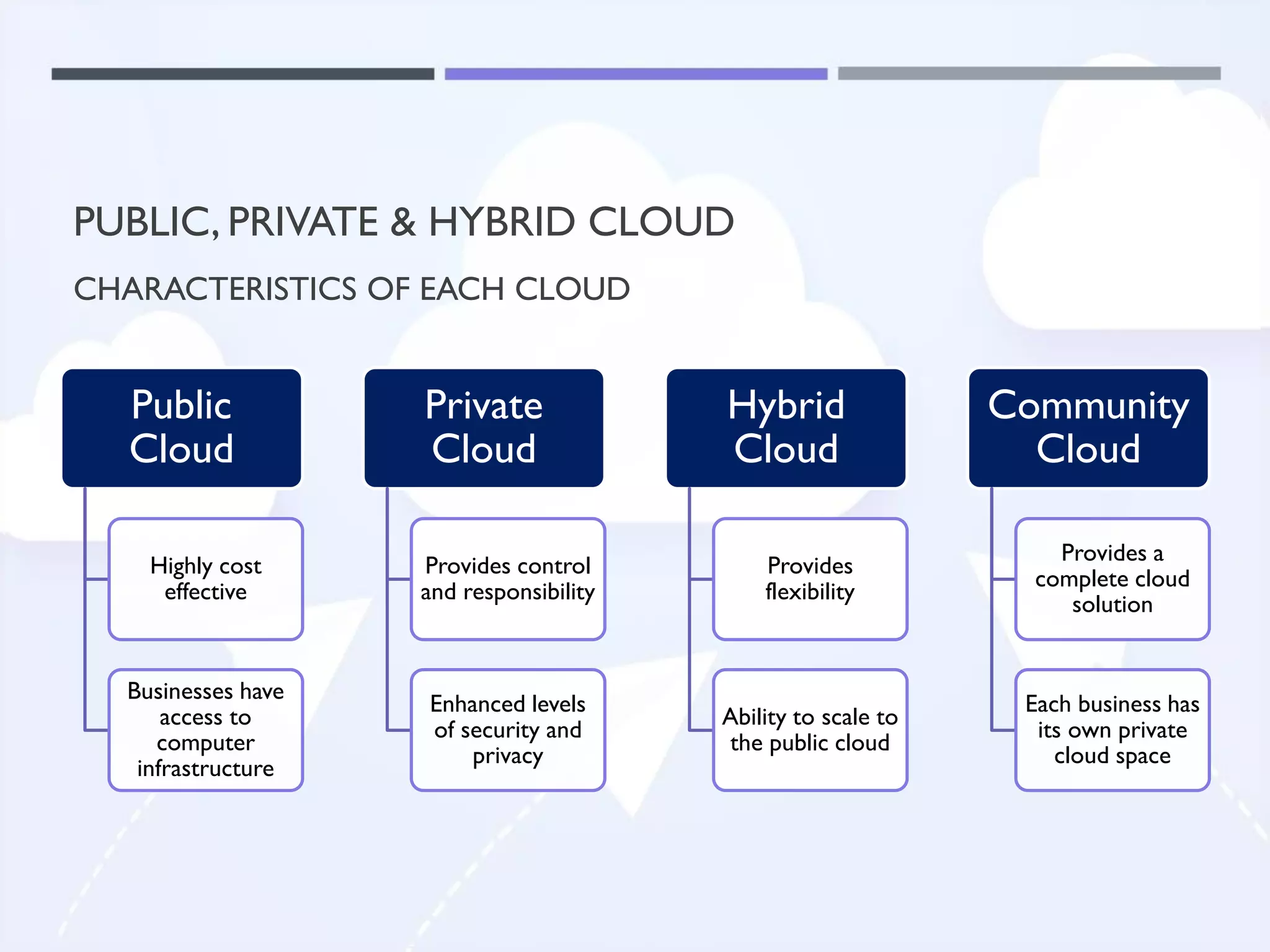
Public
Cloud
Highly cost
effective
Businesses have
access to
computer
infrastructure
Private
Cloud
Provides control
and responsibility
Enhanced levels
of security and
privacy
Hybrid
Cloud
Provides
flexibility
Ability to scale to
the public cloud
Community
Cloud
Provides a
complete cloud
solution
Each business has
its own private
cloud space
PUBLIC, PRIVATE & HYBRID CLOUD
CHARACTERISTICS OF EACH CLOUD
PUBLIC, PRIVATE & HYBRID CLOUD
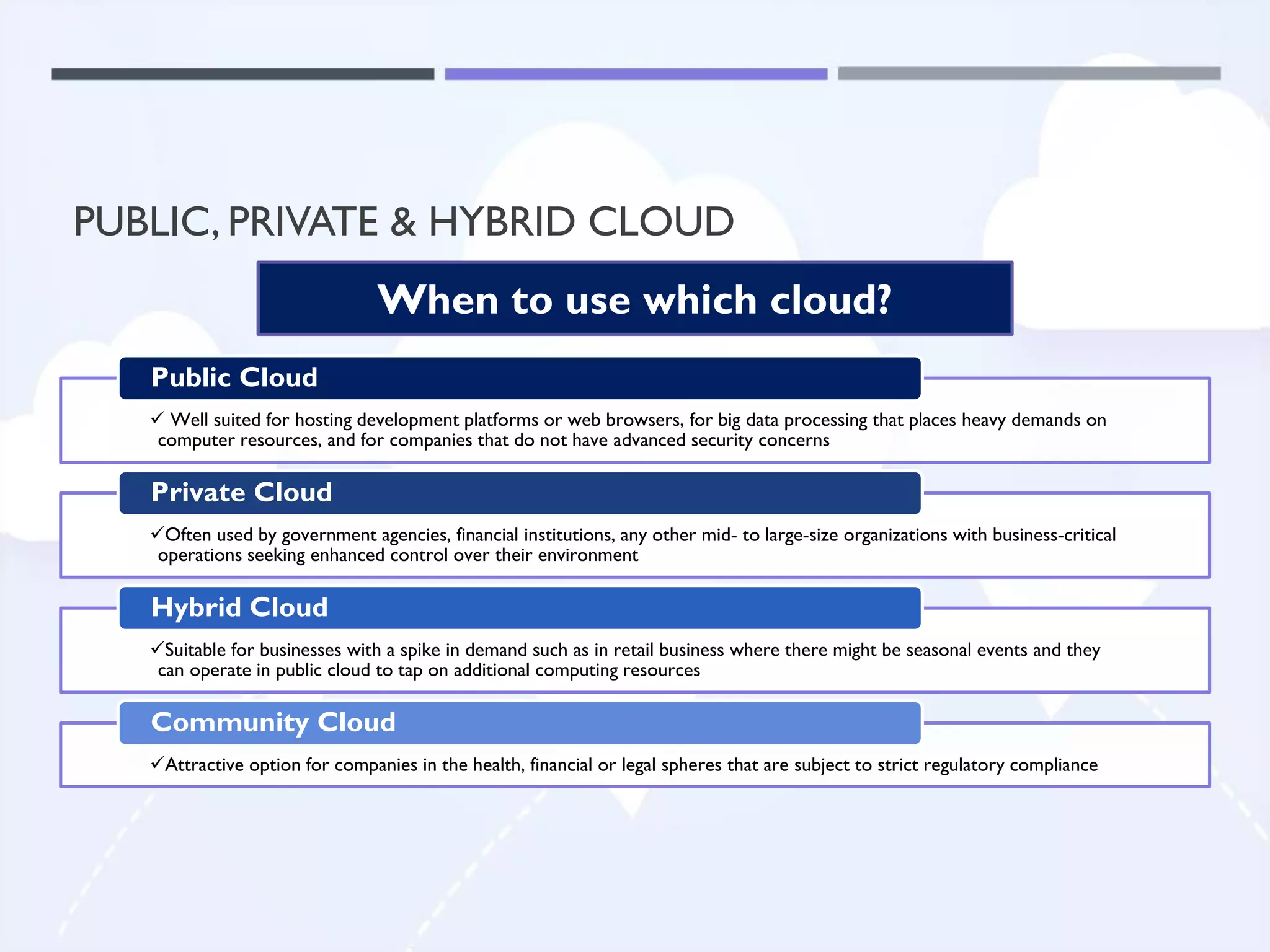
✓ Well suited for hosting development platforms or web browsers, for big data processing that places heavy demands on
computer resources, and for companies that do not have advanced security concerns
Public Cloud
✓Often used by government agencies, financial institutions, any other mid- to large-size organizations with business-critical
operations seeking enhanced control over their environment
Private Cloud
✓Suitable for businesses with a spike in demand such as in retail business where there might be seasonal events and they
can operate in public cloud to tap on additional computing resources
Hybrid Cloud
✓Attractive option for companies in the health, financial or legal spheres that are subject to strict regulatory compliance
Community Cloud
When to use which cloud?
BEST PRACTICES IN CLOUD
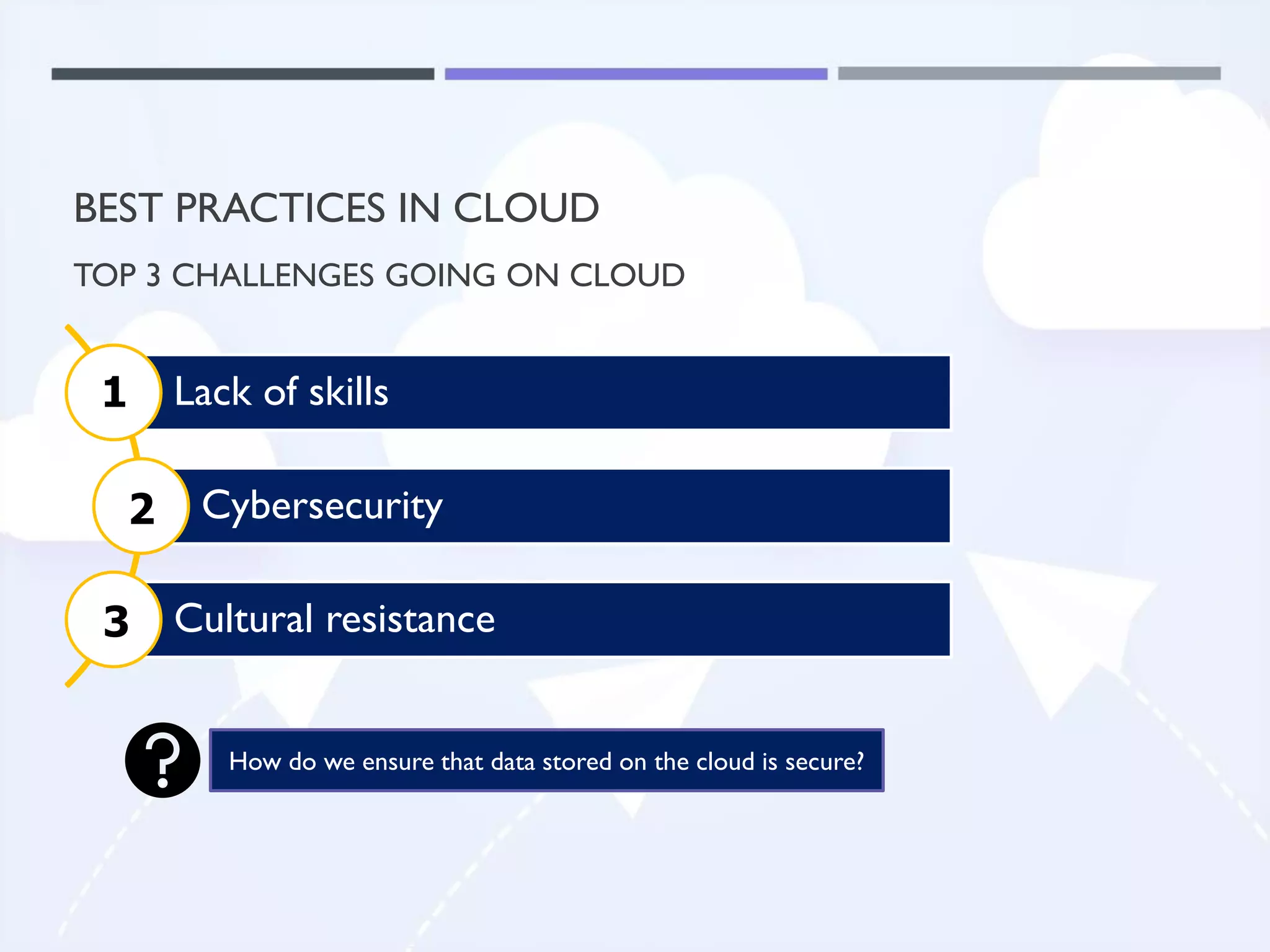
TOP 3 CHALLENGES GOING ON CLOUD
Lack of skills
Cybersecurity
Cultural resistance
1
2
3
How do we ensure that data stored on the cloud is secure?
BEST PRACTICES IN CLOUD
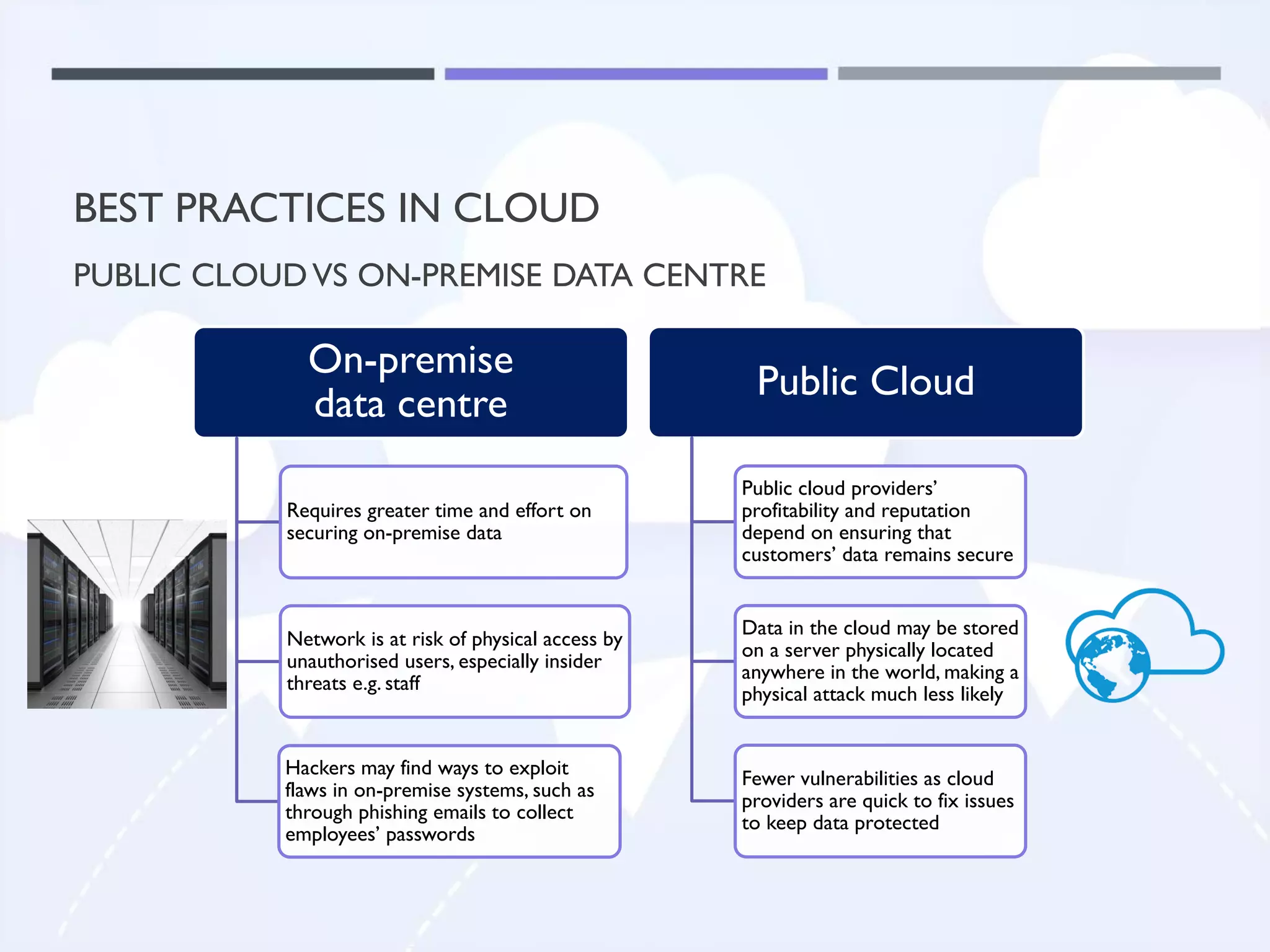
PUBLIC CLOUDVS ON-PREMISE DATA CENTRE
On-premise
data centre
Requires greater time and effort on
securing on-premise data
Network is at risk of physical access by
unauthorised users, especially insider
threats e.g. staff
Hackers may find ways to exploit
flaws in on-premise systems, such as
through phishing emails to collect
employees’ passwords
Public Cloud
Public cloud providers’
profitability and reputation
depend on ensuring that
customers’ data remains secure
Data in the cloud may be stored
on a server physically located
anywhere in the world, making a
physical attack much less likely
Fewer vulnerabilities as cloud
providers are quick to fix issues
to keep data protected
BEST PRACTICES IN CLOUD-
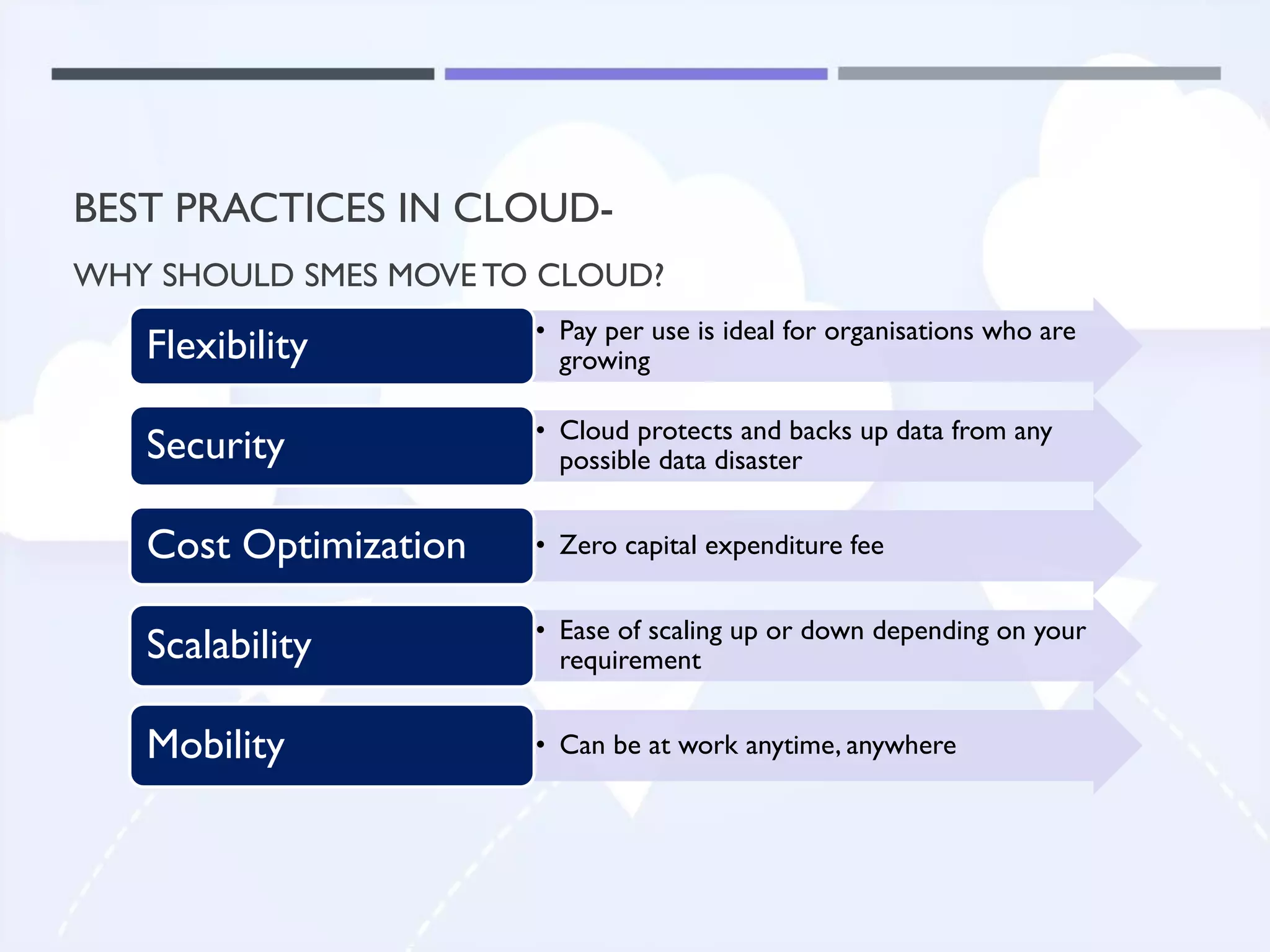
WHY SHOULD SMES MOVE TO CLOUD?
• Pay per use is ideal for organisations who are
growingFlexibility
• Cloud protects and backs up data from any
possible data disasterSecurity
• Zero capital expenditure feeCost Optimization
• Ease of scaling up or down depending on your
requirementScalability
• Can be at work anytime, anywhereMobility
BEST PRACTICES IN CLOUD
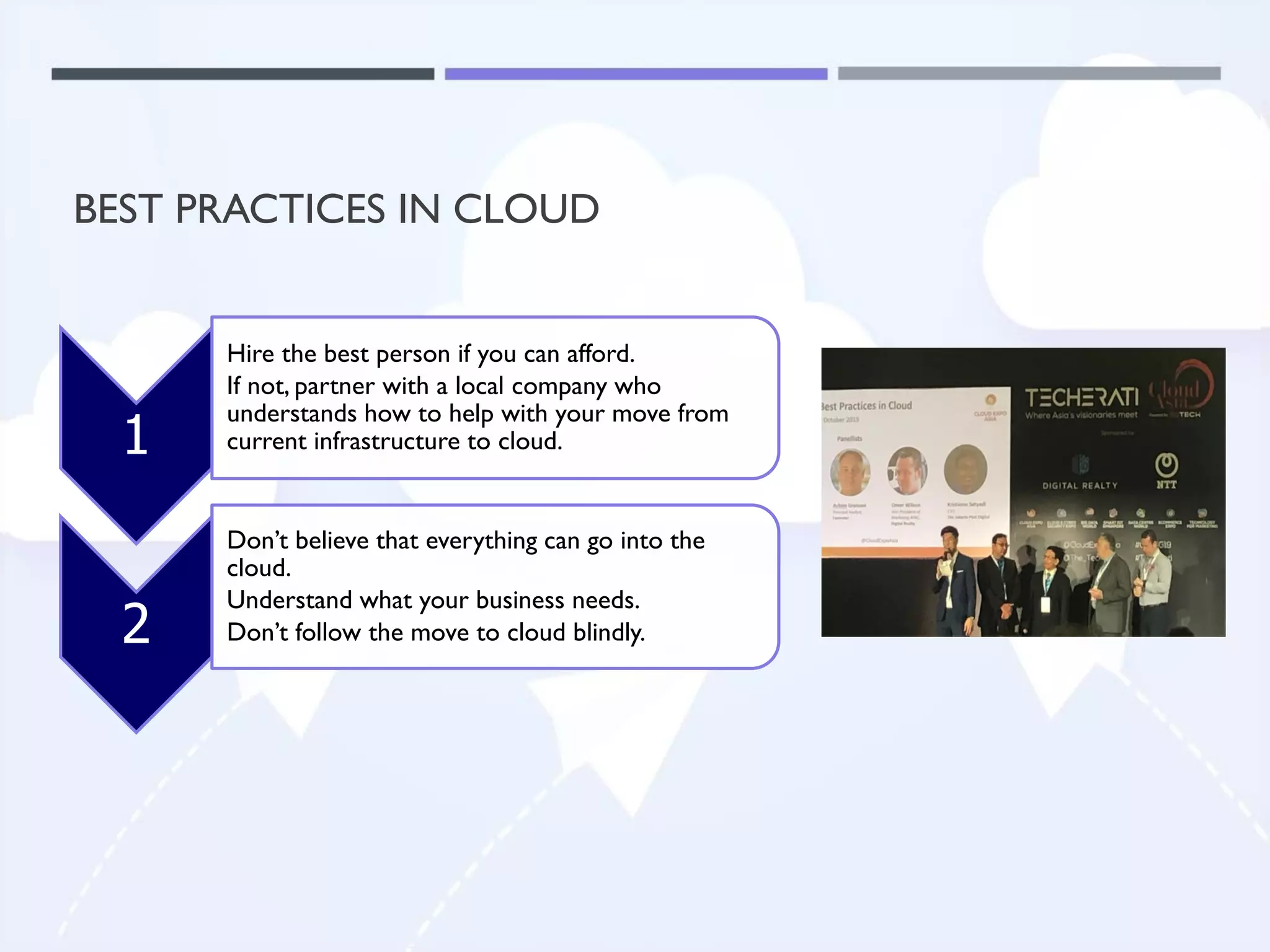
1
Hire the best person if you can afford.
If not, partner with a local company who
understands how to help with your move from
current infrastructure to cloud.
2
Don’t believe that everything can go into the
cloud.
Understand what your business needs.
Don’t follow the move to cloud blindly.
CLOUD COST OPTIMIZATION
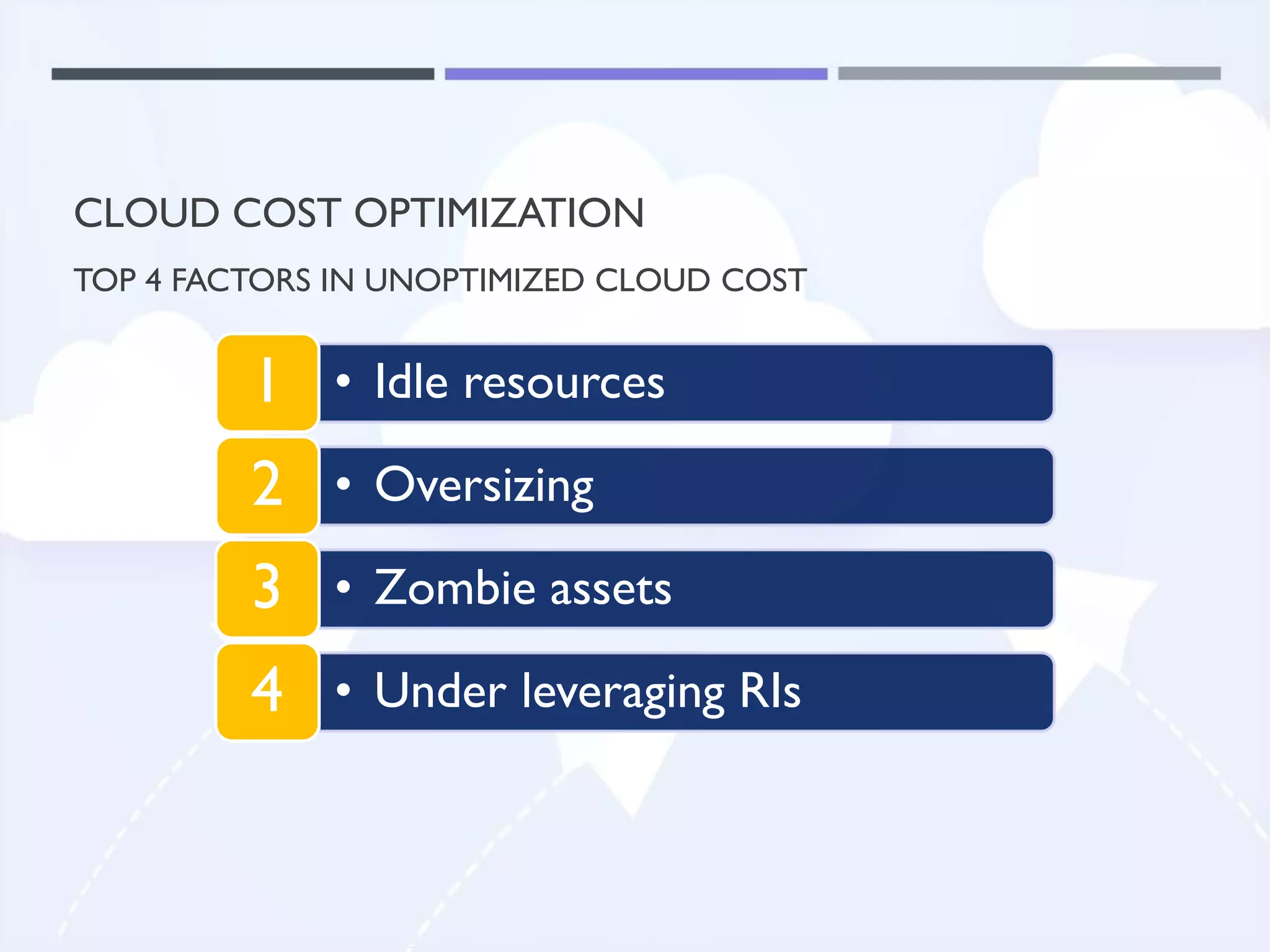
TOP 4 FACTORS IN UNOPTIMIZED CLOUD COST
• Idle resources1
• Oversizing2
• Zombie assets3
• Under leveraging RIs4
CLOUD COST OPTIMIZATION
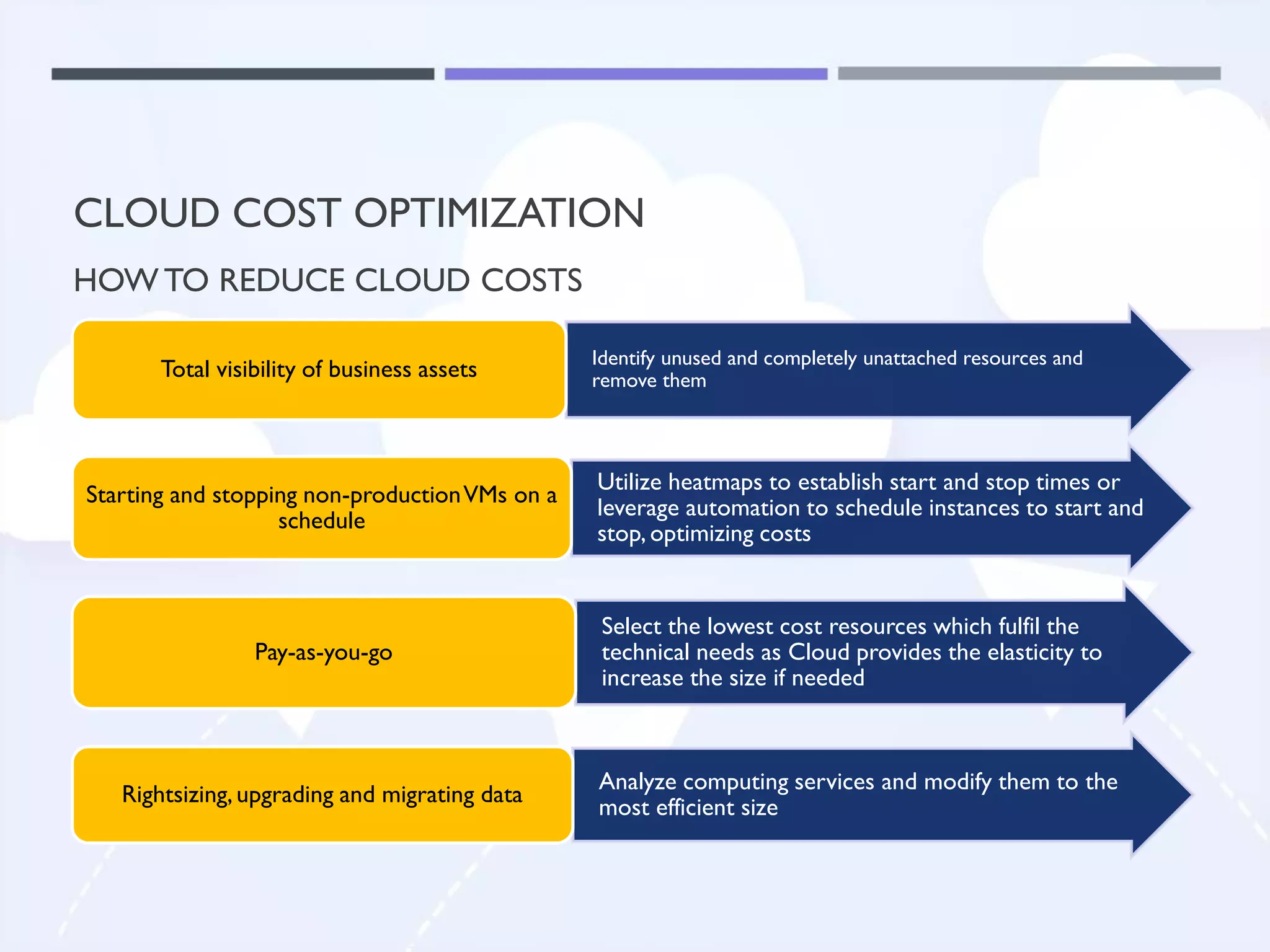
HOW TO REDUCE CLOUD COSTS
Identify unused and completely unattached resources and
remove themTotal visibility of business assets
Utilize heatmaps to establish start and stop times or
leverage automation to schedule instances to start and
stop, optimizing costs
Starting and stopping non-productionVMs on a
schedule
Select the lowest cost resources which fulfil the
technical needs as Cloud provides the elasticity to
increase the size if needed
Pay-as-you-go
Analyze computing services and modify them to the
most efficient size
Rightsizing,upgrading and migrating data
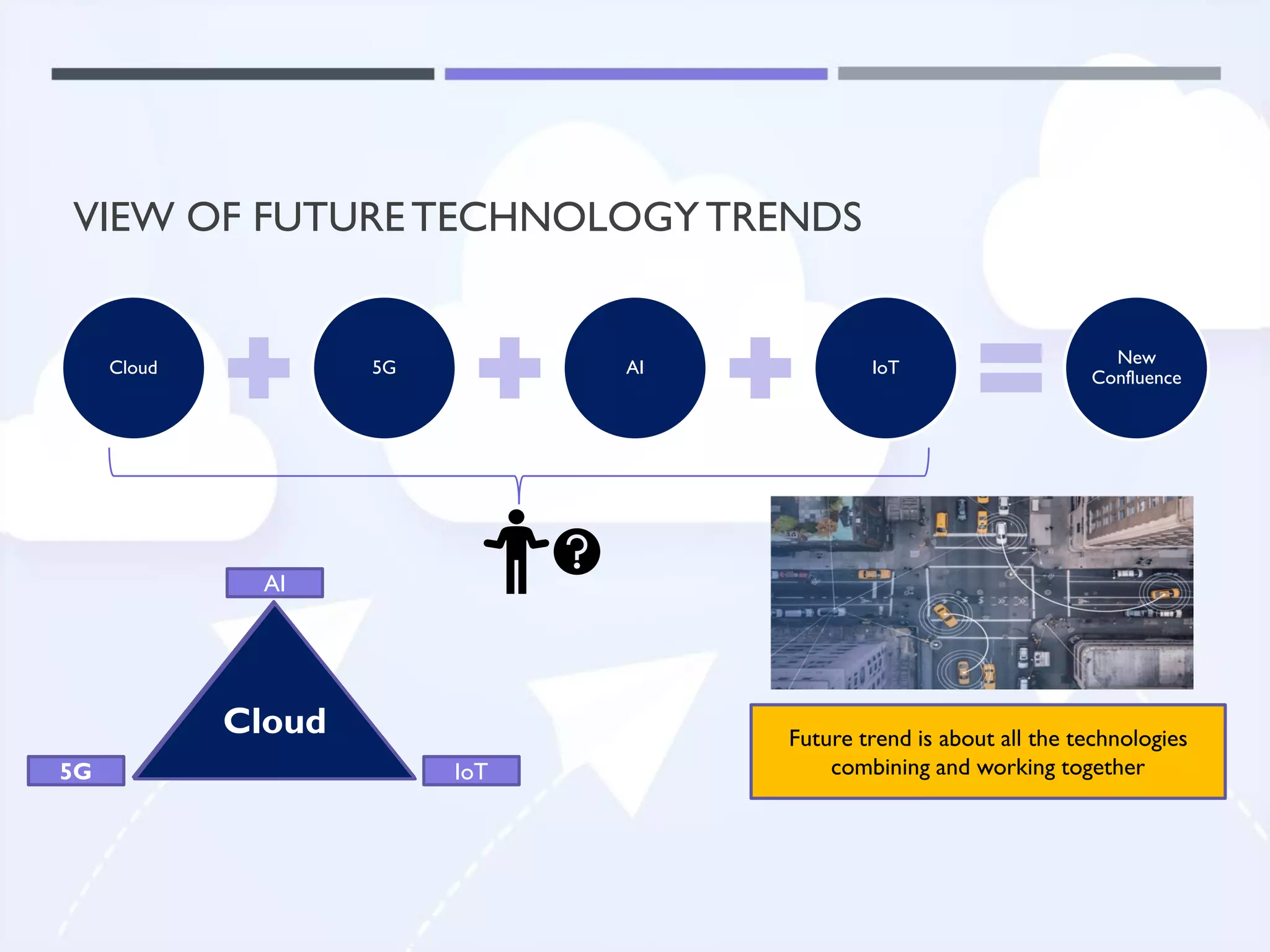
VIEW OF FUTURETECHNOLOGYTRENDS
Cloud 5G AI IoT
New
Confluence
Future trend is about all the technologies
combining and working together
Cloud
AI
5G IoT
Cloud
5G
NOTES AND RESOURCES
Acknowledgements:
Parts of this presentation was adapted from the conferences at Cloud Asia Expo 2019:Fireside Chat:
Best Practices in Cloud, by Raju C.,Achim Granzen, OmerWilson, and Kristiono Setyadi
Other useful links:
 https://iot-analytics.com/how-5g-ai-and-iot-enable-intelligent-connectivity/
 https://www.geospatialworld.net/news/huawei-cloud-gains-ground-in-global-markets-through-cloud-ai-5g-iot/
 https://www.huawei.com/fr/about-huawei/publications/winwin-magazine/33/cloud-and-59-bring-the-reality-to-arvr
PRESENTED BY:
CONTACT US:
enquiry@indsights.sg
Email us
@indsightsresearch
Follow for more articles
& presentations
https://indsights.sg
Read about our research
summaries
https://indsights.sg/subscribe
Subscribe to weekly technology
news articles from Singapore &
around the world

What is Cloud and what are the best practices?

  • 1.
  • 2.
    AGENDA  Public, private& hybrid cloud  Best practices in cloud  Cloud cost optimization  Future technology trends
  • 3.
    PUBLIC, PRIVATE &HYBRID CLOUD DEPLOYMENT MODELS Public Cloud Private Cloud Hybrid Cloud Community Cloud Mix of on-premises, private cloud and public cloud services Cloud infrastructure dedicated for only one customer Cloud infrastructure that’s available for everyone Cloud infrastructure shared amongst multiple organizations
  • 4.
    Public Cloud Highly cost effective Businesses have accessto computer infrastructure Private Cloud Provides control and responsibility Enhanced levels of security and privacy Hybrid Cloud Provides flexibility Ability to scale to the public cloud Community Cloud Provides a complete cloud solution Each business has its own private cloud space PUBLIC, PRIVATE & HYBRID CLOUD CHARACTERISTICS OF EACH CLOUD
  • 5.
    PUBLIC, PRIVATE &HYBRID CLOUD ✓ Well suited for hosting development platforms or web browsers, for big data processing that places heavy demands on computer resources, and for companies that do not have advanced security concerns Public Cloud ✓Often used by government agencies, financial institutions, any other mid- to large-size organizations with business-critical operations seeking enhanced control over their environment Private Cloud ✓Suitable for businesses with a spike in demand such as in retail business where there might be seasonal events and they can operate in public cloud to tap on additional computing resources Hybrid Cloud ✓Attractive option for companies in the health, financial or legal spheres that are subject to strict regulatory compliance Community Cloud When to use which cloud?
  • 6.
    BEST PRACTICES INCLOUD TOP 3 CHALLENGES GOING ON CLOUD Lack of skills Cybersecurity Cultural resistance 1 2 3 How do we ensure that data stored on the cloud is secure?
  • 7.
    BEST PRACTICES INCLOUD PUBLIC CLOUDVS ON-PREMISE DATA CENTRE On-premise data centre Requires greater time and effort on securing on-premise data Network is at risk of physical access by unauthorised users, especially insider threats e.g. staff Hackers may find ways to exploit flaws in on-premise systems, such as through phishing emails to collect employees’ passwords Public Cloud Public cloud providers’ profitability and reputation depend on ensuring that customers’ data remains secure Data in the cloud may be stored on a server physically located anywhere in the world, making a physical attack much less likely Fewer vulnerabilities as cloud providers are quick to fix issues to keep data protected
  • 8.
    BEST PRACTICES INCLOUD- WHY SHOULD SMES MOVE TO CLOUD? • Pay per use is ideal for organisations who are growingFlexibility • Cloud protects and backs up data from any possible data disasterSecurity • Zero capital expenditure feeCost Optimization • Ease of scaling up or down depending on your requirementScalability • Can be at work anytime, anywhereMobility
  • 9.
    BEST PRACTICES INCLOUD 1 Hire the best person if you can afford. If not, partner with a local company who understands how to help with your move from current infrastructure to cloud. 2 Don’t believe that everything can go into the cloud. Understand what your business needs. Don’t follow the move to cloud blindly.
  • 10.
    CLOUD COST OPTIMIZATION TOP4 FACTORS IN UNOPTIMIZED CLOUD COST • Idle resources1 • Oversizing2 • Zombie assets3 • Under leveraging RIs4
  • 11.
    CLOUD COST OPTIMIZATION HOWTO REDUCE CLOUD COSTS Identify unused and completely unattached resources and remove themTotal visibility of business assets Utilize heatmaps to establish start and stop times or leverage automation to schedule instances to start and stop, optimizing costs Starting and stopping non-productionVMs on a schedule Select the lowest cost resources which fulfil the technical needs as Cloud provides the elasticity to increase the size if needed Pay-as-you-go Analyze computing services and modify them to the most efficient size Rightsizing,upgrading and migrating data
  • 12.
    VIEW OF FUTURETECHNOLOGYTRENDS Cloud5G AI IoT New Confluence Future trend is about all the technologies combining and working together Cloud AI 5G IoT Cloud 5G
  • 13.
    NOTES AND RESOURCES Acknowledgements: Partsof this presentation was adapted from the conferences at Cloud Asia Expo 2019:Fireside Chat: Best Practices in Cloud, by Raju C.,Achim Granzen, OmerWilson, and Kristiono Setyadi Other useful links:  https://iot-analytics.com/how-5g-ai-and-iot-enable-intelligent-connectivity/  https://www.geospatialworld.net/news/huawei-cloud-gains-ground-in-global-markets-through-cloud-ai-5g-iot/  https://www.huawei.com/fr/about-huawei/publications/winwin-magazine/33/cloud-and-59-bring-the-reality-to-arvr
  • 14.
  • 15.
    CONTACT US: enquiry@indsights.sg Email us @indsightsresearch Followfor more articles & presentations https://indsights.sg Read about our research summaries https://indsights.sg/subscribe Subscribe to weekly technology news articles from Singapore & around the world