Fourth Plain Transit Improvement ProjectWhat is Bus Rapid Transit?Draft 8/5/2011
Bus Rapid Transit (BRT)is a different kind of bus
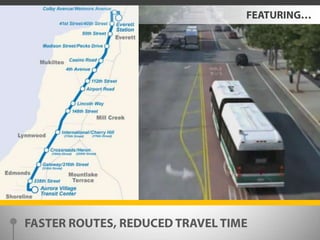
FEATURING…FASTER ROUTES, REDUCED TRAVEL TIME
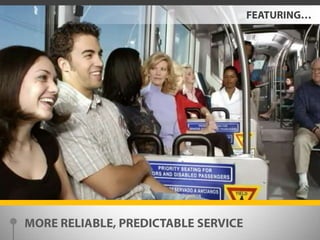
FEATURING…MORE RELIABLE, PREDICTABLE SERVICE
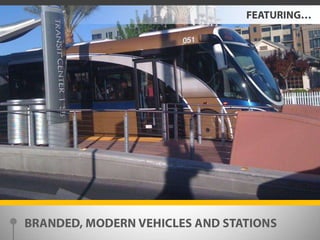
FEATURING…BRANDED, MODERN VEHICLES AND STATIONS
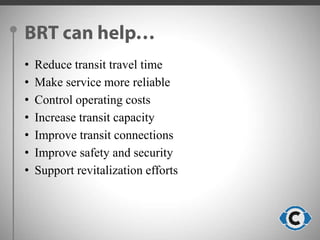
BRT is …Attractive, more efficient transit service to meet ridership demand
What makes BRT different?RUNNING WAYSVEHICLESSTATIONSTECHNOLOGY
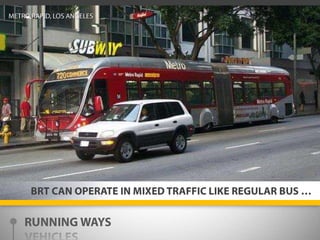
METRO RAPID, LOS ANGELESBRT CAN OPERATE IN MIXED TRAFFIC LIKE REGULAR BUS …RUNNING WAYSVEHICLESSTATIONSTECHNOLOGY
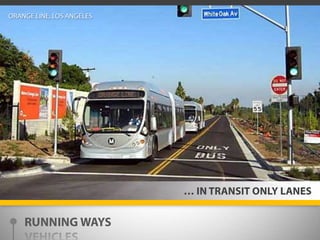
ORANGE LINE, LOS ANGELES… IN TRANSIT ONLY LANESRUNNING WAYSVEHICLESSTATIONSTECHNOLOGY
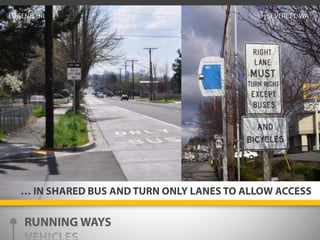
EVERETT, WAEUGENE, OR… IN SHARED BUS AND TURN ONLY LANES TO ALLOW ACCESSRUNNING WAYSVEHICLESSTATIONSTECHNOLOGY
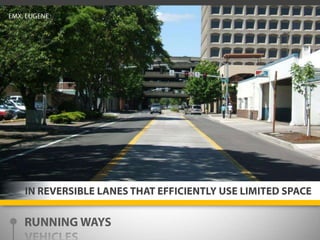
EMX, EUGENEIN REVERSIBLE LANES THAT EFFICIENTLY USE LIMITED SPACERUNNING WAYSVEHICLESSTATIONSTECHNOLOGY
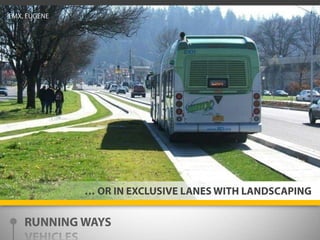
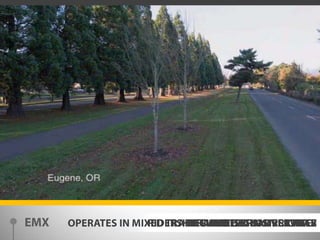
EMX, EUGENE… OR IN EXCLUSIVE LANES WITH LANDSCAPINGRUNNING WAYSVEHICLESSTATIONSTECHNOLOGY
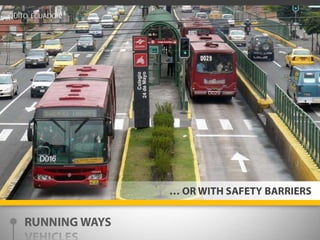
QUITO, ECUADOR… OR WITH SAFETY BARRIERSRUNNING WAYSVEHICLESSTATIONSTECHNOLOGY
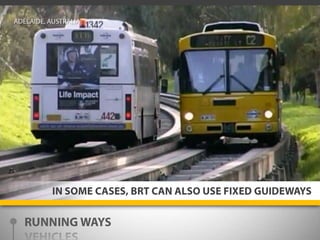
ADELAIDE, AUSTRALIAADELAIDE, AUSTRALIAIN SOME CASES, BRT CAN ALSO USE FIXED GUIDEWAYSRUNNING WAYSVEHICLESSTATIONSTECHNOLOGY
VehiclesRUNNING WAYSVEHICLESSTATIONSTECHNOLOGYRUNNING WAYSVEHICLESSTATIONSTECHNOLOGY
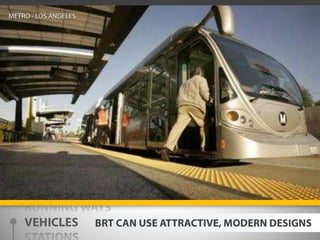
METRO - LOS ANGELESRUNNING WAYSVEHICLESSTATIONSSYSTEMSBRT CAN USE ATTRACTIVE, MODERN DESIGNS
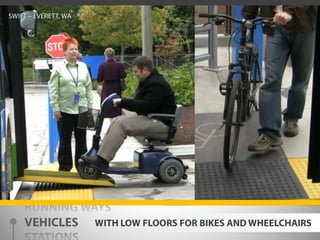
SWIFT – EVERETT, WARUNNING WAYSVEHICLESSTATIONSSYSTEMSWITH LOW FLOORS FOR BIKES AND WHEELCHAIRS
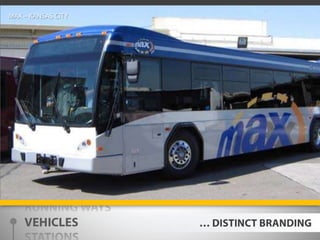
MAX – KANSAS CITYRUNNING WAYSVEHICLESSTATIONSSYSTEMS… DISTINCT BRANDING
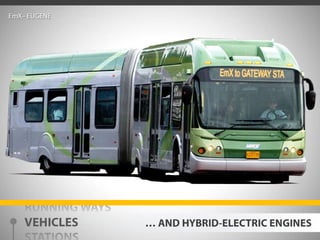
EmX– EUGENERUNNING WAYSVEHICLESSTATIONSSYSTEMS… AND HYBRID-ELECTRIC ENGINES
RUNNING WAYSVEHICLESSTATIONSTECHNOLOGYStationsRUNNING WAYSVEHICLESSTATIONSTECHNOLOGY
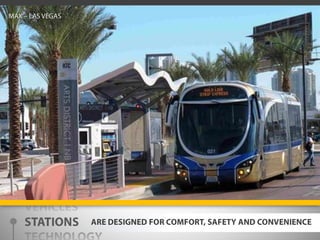
MAX – LAS VEGASVEHICLESSTATIONSTECHNOLOGYARE DESIGNED FOR COMFORT, SAFETY AND CONVENIENCE
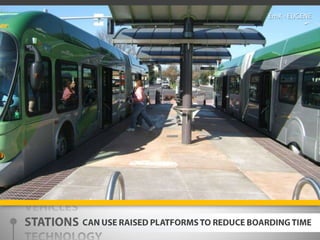
EmX - EUGENEVEHICLESSTATIONSTECHNOLOGYCAN USE RAISED PLATFORMS TO REDUCE BOARDING TIME
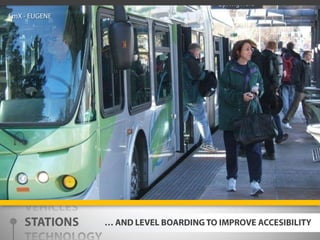
EmX - EUGENEVEHICLESSTATIONSTECHNOLOGY… AND LEVEL BOARDING TO IMPROVE ACCESIBILITY
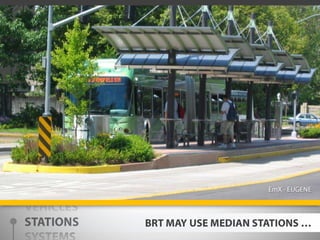
EmX - EUGENEVEHICLESSTATIONSSYSTEMSBRT MAY USE MEDIAN STATIONS …
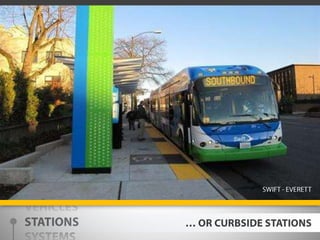
SWIFT - EVERETTVEHICLESSTATIONSSYSTEMS… OR CURBSIDE STATIONS
TechnologyRUNNING WAYSVEHICLESSTATIONSTECHNOLOGYRUNNING WAYSVEHICLESSTATIONSTECHNOLOGY
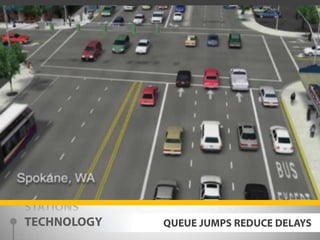
STATIONSTECHNOLOGYQUEUE JUMPS REDUCE DELAYS
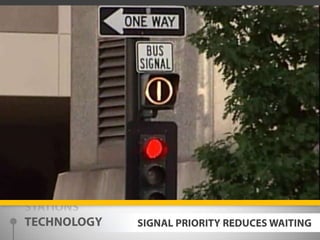
STATIONSTECHNOLOGYSIGNAL PRIORITY REDUCES WAITING
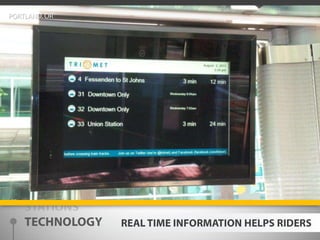
PORTLAND, ORSTATIONSTECHNOLOGYREAL TIME INFORMATION HELPS RIDERS
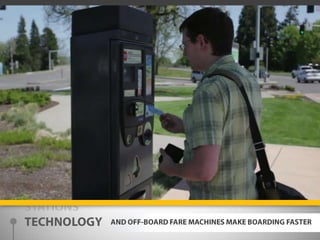
STATIONSTECHNOLOGYAND OFF-BOARD FARE MACHINES MAKE BOARDING FASTER
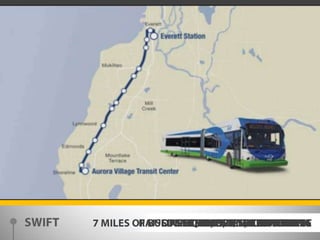
Case Study:Swift – Everett, Washington17 Mile CorridorStations 1-2 Miles ApartOpened 2009
SWIFT7 MILES OF BUSINESS ACCESS/TRANSIT LANES10 MILES IN MIXED TRAFFICRETAINED LOCAL SERVICEOFF-BOARD FARE, STATION ARTUNIQUE, BRANDED VEHICLESRAISED STATIONS, LEVEL BOARDING
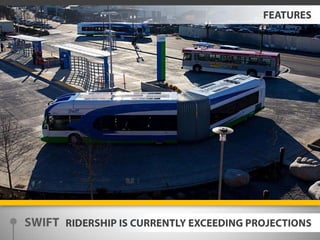
FEATURESSWIFTRIDERSHIP IS CURRENTLY EXCEEDING PROJECTIONS
Case Study:EmX – Eugene, OregonTwo Corridors, 10 MilesStations 1/3 Miles ApartOpened 2007, 2011
EMXREPLACED PRIOR SERVICEOPERATES IN MIXED TRAFFIC AND EXCLUSIVE LANESRIDERSHIP DOUBLED IN FIRST YEARTRANSIT SIGNAL PRIORITY
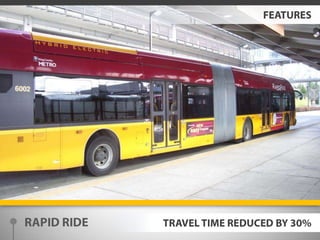
Case Study:Rapid Ride – Seattle, WA11 Mile Corridor26 StationsOpened 2010
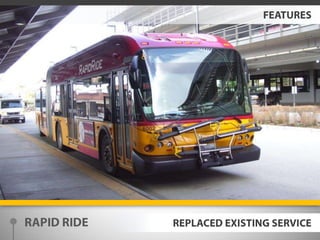
FEATURESRAPID RIDEREPLACED EXISTING SERVICE
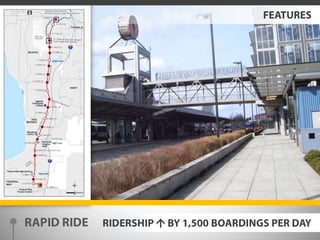
FEATURESRAPID RIDERIDERSHIP  BY 1,500 BOARDINGS PER DAY
FEATURESRAPID RIDETRAVEL TIME REDUCED BY 30%
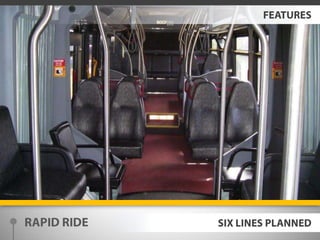
FEATURESRAPID RIDESIX LINES PLANNED
Case Study:Healthline – Cleveland, Ohio7 Mile CorridorStations ¼ Mile ApartOpened 2008
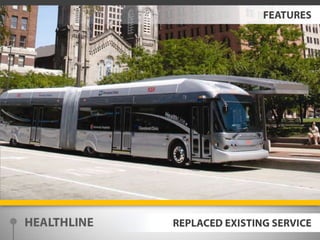
FEATURESHEALTHLINEREPLACED EXISTING SERVICE
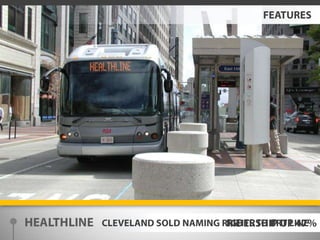
FEATURESHEALTHLINERIDERSHIP UP 47%CLEVELAND SOLD NAMING RIGHTS TO BRT LINE
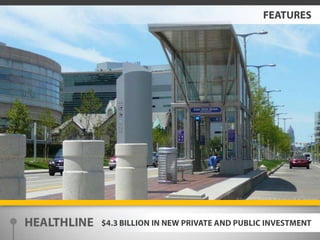
FEATURESHEALTHLINE$4.3 BILLION IN NEW PRIVATE AND PUBLIC INVESTMENT
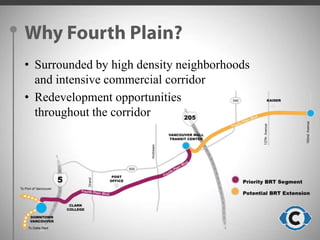
Possible BRT Alignment:Fourth Plain, VancouverPlanning begins 2011
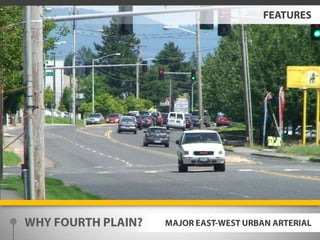
FEATURESWHY FOURTH PLAIN?MAJOR EAST-WEST URBAN ARTERIAL
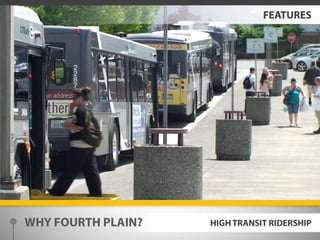
FEATURESWHY FOURTH PLAIN?HIGH TRANSIT RIDERSHIP
Why Fourth Plain?Surrounded by high density neighborhoods and intensive commercial corridor
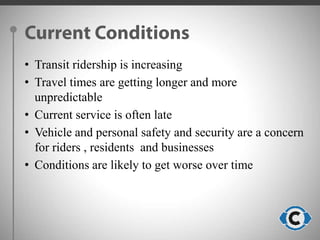
Redevelopment opportunities  throughout the corridorCurrent ConditionsTransit ridership is increasing
Travel times are getting longer and more unpredictable
Current service is often late
Vehicle and personal safety and security are a concern for riders , residents  and businesses

What is bus rapid transit?

Editor's Notes

  • #28 VIDEO - Transit signal priority is an important element of BRT system since it can reduce delay created by traffic signals. Transit signal priority is different than transit signal preemption that is available to emergency vehicles. Transit signal priority does not guarantee a green light for transit, but would hold the green for a few seconds longer if a bus is approaching the signal. If done carefully, transit signal priority will have minimal impact on overall traffic delay and is often not even noticed by auto drivers.
  • #29 Transit signal priority is an important element of BRT system since it can reduce delay created by traffic signals. Transit signal priority is different than transit signal preemption that is available to emergency vehicles. Transit signal priority does not guarantee a green light for transit, but would hold the green for a few seconds longer if a bus is approaching the signal. If done carefully, transit signal priority will have minimal impact on overall traffic delay and is often not even noticed by auto drivers.
  • #30 Real-time passenger information tells passengers waiting at stops and stations how long before the next bus is arriving. This information is based on the actual location of the bus (using GPS or other similar vehicle locator system) and an estimate of travel time to reach the stop from that location. Studies have shown that this type of information is very helpful to riders and encourages ridership.
  • #31 On most buses fares are paid upon entering the front door of the bus. Many BRT systems have adopted the light rail approach to fares that requires riders to purchase their fare before entering the vehicle. This allows passengers to board any door and greatly reduces the time spent at stops and stations. Fare checkers randomly check passengers to verify fare payment.
  • #32 Points:Service started in 200917 mile corridor between Everett and Shorelines (north of Seattle)7 miles as BAT lanes; 10 miles in mixed trafficTransit signal priorityRaised station platformsOff-board fare collectionStations 1-2 miles apart; local service retainedUnique, branded vehiclesRidership exceeding projections.
  • #35 Points:FeaturesCombination of mixed traffic and exclusive lanesTransit signal priorityOff-board fare collectionRaised passenger platformsUnique vehicles (doors on both sides)EmX replaced previous serviceStations about 1/3 mile apartTwo lines in operationFranklin corridor opened 2007First BRT corridor in communityAbout 60% of line uses transit lanesFirst year ridership exceeded 20-year projectionGateway corridor opened 2011About 70 percent of corridor uses transit lanesMeeting ridership projectionsSeveral additional corridors plannedWest Eugene expected to open in 2017Additional corridor every 4-6 years
  • #37 Six lines planned; one in operationPacific Highway South opened October 201011 miles; 26 stations Replaced existing serviceRidership increased 1,500 boardings per dayReduced travel time by 30 percentUses HOV lanesOff-Board fare collection (for pass holders)Transit Signal priorityReal Time Passenger InformationSlogan: New. Easy. Frequent
  • #42 Points:Service started in 20087 mile line with stations about every ¼ mileReplaced existing serviceRidership up 47%There has been $4.3 billion of investment along the corridorFeaturesExclusive median lanes along about half the routeTransit signal priorityRaised station platformsOff-board fare collectionUnique vehicles with doors on both sides