What is a Thriller/Horror? The analysis of conventions used in Horror or Thrillers.
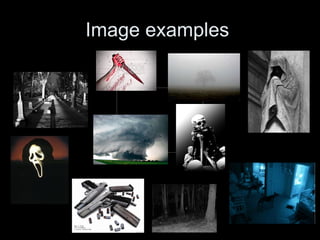
Genre Genre is the term for any category of literature as well as various other forms of art or culture, e.g., music, film, based on some loose set of stylistic criteria. Genres are formed by conventions that change over time as new genres are invented and the use of old ones are discontinued. Often, works fit into multiple genres by way of borrowing and recombining these conventions  In class we were each given a set of images that belonged in horror and thriller films. By analyzing the denotations and connotations of the image it was easy to tell that they belonged to the two types of genre that we have been looking at; horror and thriller.
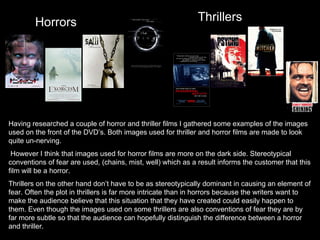
Horrors Thrillers Having researched a couple of horror and thriller films I gathered some examples of the images used on the front of the DVD’s. Both images used for thriller and horror films are made to look quite un-nerving.  However I think that images used for horror films are more on the dark side. Stereotypical conventions of fear are used, (chains, mist, well) which as a result informs the customer that this film will be a horror.  Thrillers on the other hand don’t have to be as stereotypically dominant in causing an element of fear. Often the plot in thrillers is far more intricate than in horrors because the writers want to make the audience believe that this situation that they have created could easily happen to them. Even though the images used on some thrillers are also conventions of fear they are by far more subtle so that the audience can hopefully distinguish the difference between a horror and thriller.
Codes and Conventions In horror/thriller movies similar codes and conventions are used with the sole intention to have an effect on the audience. In a thriller conventions are used to cause tension and suspense, perhaps also fear, however in horror films conventions are used to cause fear as its main purpose.  Many conventions are used in these genre’s of film which are often rather similar. We were told to write down all the conventions that we could think of that would appear in these genres of film; Blood, death, violence, dark, cold, guns, knives, weapons, evil, monsters, forests, shadows, paranormal encounters, gore, chasing, screaming, haunting, masks, unrecognizable sounds etc. On the subject of sound I think this is one of the most powerful conventions that can be used to create a specific type of mood or reactions from the audience. When music is played that has a tone of suspense or fear the audience will be anticipating something bad about to happen in the film, hence causing suspense and thrill.
Image examples

What is a thriller oj

  • 1.
    What is aThriller/Horror? The analysis of conventions used in Horror or Thrillers.
  • 2.
    Genre Genre isthe term for any category of literature as well as various other forms of art or culture, e.g., music, film, based on some loose set of stylistic criteria. Genres are formed by conventions that change over time as new genres are invented and the use of old ones are discontinued. Often, works fit into multiple genres by way of borrowing and recombining these conventions In class we were each given a set of images that belonged in horror and thriller films. By analyzing the denotations and connotations of the image it was easy to tell that they belonged to the two types of genre that we have been looking at; horror and thriller.
  • 3.
    Horrors Thrillers Havingresearched a couple of horror and thriller films I gathered some examples of the images used on the front of the DVD’s. Both images used for thriller and horror films are made to look quite un-nerving. However I think that images used for horror films are more on the dark side. Stereotypical conventions of fear are used, (chains, mist, well) which as a result informs the customer that this film will be a horror. Thrillers on the other hand don’t have to be as stereotypically dominant in causing an element of fear. Often the plot in thrillers is far more intricate than in horrors because the writers want to make the audience believe that this situation that they have created could easily happen to them. Even though the images used on some thrillers are also conventions of fear they are by far more subtle so that the audience can hopefully distinguish the difference between a horror and thriller.
  • 4.
    Codes and ConventionsIn horror/thriller movies similar codes and conventions are used with the sole intention to have an effect on the audience. In a thriller conventions are used to cause tension and suspense, perhaps also fear, however in horror films conventions are used to cause fear as its main purpose. Many conventions are used in these genre’s of film which are often rather similar. We were told to write down all the conventions that we could think of that would appear in these genres of film; Blood, death, violence, dark, cold, guns, knives, weapons, evil, monsters, forests, shadows, paranormal encounters, gore, chasing, screaming, haunting, masks, unrecognizable sounds etc. On the subject of sound I think this is one of the most powerful conventions that can be used to create a specific type of mood or reactions from the audience. When music is played that has a tone of suspense or fear the audience will be anticipating something bad about to happen in the film, hence causing suspense and thrill.
  • 5.