 Horror is a genre of film. the aim of horror films are to gain a negative
  emotional reaction from the audience by subjecting them to their fears
  and using scenes that startle the them. the horror film genre has many
  subgenre which are created to give a more specific specification of what
  scares the viewer and what horror films are more likely to scare them the
  most.
 Some horror films are not one of these subgenre but they are a hybrid of
  two or more of the genres combined for example 28 days later is a hybrid
  of the zombies and slasher sub genres because it contains
  paradigms/aspects of both the sub genres.
   action horror - uses the paradigms of a evil force or event with the paradigms of an action film such as dramatic
    fights, gunfights and out of control chases and usually contains gore. an example of this is resident evil & the
    blade trilogy.
   body horror - uses deconstruction of the body usually to create evil some use the reconstruction of limbs to
    create a monster, an example of this sub genre is teeth and Frankenstein.
   comedy horror - uses paradigms of comedy horror can easily be mistaken for parody however comedy horrors
    unlike parody's have got some parts that will scare the audience. an example of this is Shaun of the dead.
   gothic horror - horror movies that contain aspects of Goth usually portrayed thought the Mis en scene of the
    costumes and props used, many gothic horrors contain romance. an example of this is Dracula and underworld.
   natural horror - a sub genre which turns natural things into evil many natural horror use disease or an outbreak
    of a new plant or animal. an example of a natural horror is 28 days later.
   psychological horror - uses the audiences beliefs such as religion and emotions such as guilt to create tension and
    anxiety within the viewers. an example of this is the exorcist and the devil inside.
   supernatural horror - uses supernatural aspects many supernatural horrors use ghost as it is a large fear in many
    people. an example of this is paranormal activity.
   sci-fi horror - uses a lot made up creatures such as aliens and many uses evils like mad scientist although most
    sci-fi horror use these they usually are not restricted and use other things. an example of this is alien and doom.
   slasher horror - usually uses a psycho killer and a lot of gore to seek reaction from the audience the killer usually
    use stabbing or cutting weapons like knives. a lot of slasher films are teenage horrors an example of this is Friday
    the 13th and Texas chainsaw massacre.
   splatter horror - the goriest of all the sub genres. focuses on gore and graphic violence. they use excess blood
    and gore to startle an shock the audience. not all splatter films are slasher because some don't include a killer
    and usually contain more gore. an example of this is hostel and final destination.
   zombie horror - uses the typical zombies evil that are usual half dead humans and a lot of the time is a result of
    an outbreak of an illness. zombies films usually combine with other subgenres. an example of this is 28 days later
    & dawn of the dead.
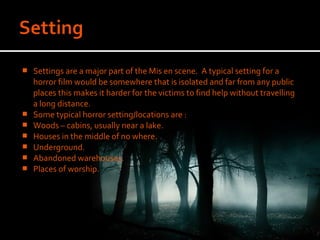
   Settings are a major part of the Mis en scene. A typical setting for a
    horror film would be somewhere that is isolated and far from any public
    places this makes it harder for the victims to find help without travelling
    a long distance.
   Some typical horror setting/locations are :
   Woods – cabins, usually near a lake.
   Houses in the middle of no where.
   Underground.
   Abandoned warehouses.
   Places of worship.
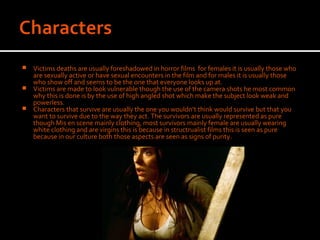
 Victims deaths are usually foreshadowed in horror films for females it is usually those who
  are sexually active or have sexual encounters in the film and for males it is usually those
  who show off and seems to be the one that everyone looks up at.
 Victims are made to look vulnerable though the use of the camera shots he most common
  why this is done is by the use of high angled shot which make the subject look weak and
  powerless.
 Characters that survive are usually the one you wouldn’t think would survive but that you
  want to survive due to the way they act. The survivors are usually represented as pure
  though Mis en scene mainly clothing, most survivors mainly female are usually wearing
  white clothing and are virgins this is because in structrualist films this is seen as pure
  because in our culture both those aspects are seen as signs of purity.
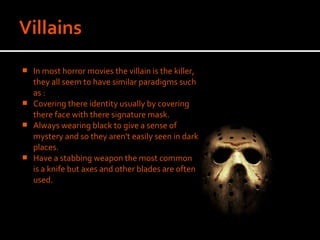
 In most horror movies the villain is the killer,
  they all seem to have similar paradigms such
  as :
 Covering there identity usually by covering
  there face with there signature mask.
 Always wearing black to give a sense of
  mystery and so they aren't easily seen in dark
  places.
 Have a stabbing weapon the most common
  is a knife but axes and other blades are often
  used.
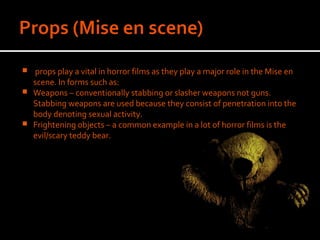
 props play a vital in horror films as they play a major role in the Mise en
  scene. In forms such as:
 Weapons – conventionally stabbing or slasher weapons not guns.
  Stabbing weapons are used because they consist of penetration into the
  body denoting sexual activity.
 Frightening objects – a common example in a lot of horror films is the
  evil/scary teddy bear.
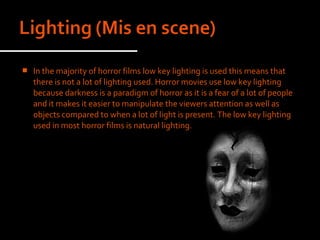
   In the majority of horror films low key lighting is used this means that
    there is not a lot of lighting used. Horror movies use low key lighting
    because darkness is a paradigm of horror as it is a fear of a lot of people
    and it makes it easier to manipulate the viewers attention as well as
    objects compared to when a lot of light is present. The low key lighting
    used in most horror films is natural lighting.

What is horror

  • 2.
     Horror isa genre of film. the aim of horror films are to gain a negative emotional reaction from the audience by subjecting them to their fears and using scenes that startle the them. the horror film genre has many subgenre which are created to give a more specific specification of what scares the viewer and what horror films are more likely to scare them the most.  Some horror films are not one of these subgenre but they are a hybrid of two or more of the genres combined for example 28 days later is a hybrid of the zombies and slasher sub genres because it contains paradigms/aspects of both the sub genres.
  • 3.
     action horror - uses the paradigms of a evil force or event with the paradigms of an action film such as dramatic fights, gunfights and out of control chases and usually contains gore. an example of this is resident evil & the blade trilogy.  body horror - uses deconstruction of the body usually to create evil some use the reconstruction of limbs to create a monster, an example of this sub genre is teeth and Frankenstein.  comedy horror - uses paradigms of comedy horror can easily be mistaken for parody however comedy horrors unlike parody's have got some parts that will scare the audience. an example of this is Shaun of the dead.  gothic horror - horror movies that contain aspects of Goth usually portrayed thought the Mis en scene of the costumes and props used, many gothic horrors contain romance. an example of this is Dracula and underworld.  natural horror - a sub genre which turns natural things into evil many natural horror use disease or an outbreak of a new plant or animal. an example of a natural horror is 28 days later.  psychological horror - uses the audiences beliefs such as religion and emotions such as guilt to create tension and anxiety within the viewers. an example of this is the exorcist and the devil inside.  supernatural horror - uses supernatural aspects many supernatural horrors use ghost as it is a large fear in many people. an example of this is paranormal activity.  sci-fi horror - uses a lot made up creatures such as aliens and many uses evils like mad scientist although most sci-fi horror use these they usually are not restricted and use other things. an example of this is alien and doom.  slasher horror - usually uses a psycho killer and a lot of gore to seek reaction from the audience the killer usually use stabbing or cutting weapons like knives. a lot of slasher films are teenage horrors an example of this is Friday the 13th and Texas chainsaw massacre.  splatter horror - the goriest of all the sub genres. focuses on gore and graphic violence. they use excess blood and gore to startle an shock the audience. not all splatter films are slasher because some don't include a killer and usually contain more gore. an example of this is hostel and final destination.  zombie horror - uses the typical zombies evil that are usual half dead humans and a lot of the time is a result of an outbreak of an illness. zombies films usually combine with other subgenres. an example of this is 28 days later & dawn of the dead.
  • 4.
     Settings are a major part of the Mis en scene. A typical setting for a horror film would be somewhere that is isolated and far from any public places this makes it harder for the victims to find help without travelling a long distance.  Some typical horror setting/locations are :  Woods – cabins, usually near a lake.  Houses in the middle of no where.  Underground.  Abandoned warehouses.  Places of worship.
  • 5.
     Victims deathsare usually foreshadowed in horror films for females it is usually those who are sexually active or have sexual encounters in the film and for males it is usually those who show off and seems to be the one that everyone looks up at.  Victims are made to look vulnerable though the use of the camera shots he most common why this is done is by the use of high angled shot which make the subject look weak and powerless.  Characters that survive are usually the one you wouldn’t think would survive but that you want to survive due to the way they act. The survivors are usually represented as pure though Mis en scene mainly clothing, most survivors mainly female are usually wearing white clothing and are virgins this is because in structrualist films this is seen as pure because in our culture both those aspects are seen as signs of purity.
  • 6.
     In mosthorror movies the villain is the killer, they all seem to have similar paradigms such as :  Covering there identity usually by covering there face with there signature mask.  Always wearing black to give a sense of mystery and so they aren't easily seen in dark places.  Have a stabbing weapon the most common is a knife but axes and other blades are often used.
  • 7.
     props playa vital in horror films as they play a major role in the Mise en scene. In forms such as:  Weapons – conventionally stabbing or slasher weapons not guns. Stabbing weapons are used because they consist of penetration into the body denoting sexual activity.  Frightening objects – a common example in a lot of horror films is the evil/scary teddy bear.
  • 8.
     In the majority of horror films low key lighting is used this means that there is not a lot of lighting used. Horror movies use low key lighting because darkness is a paradigm of horror as it is a fear of a lot of people and it makes it easier to manipulate the viewers attention as well as objects compared to when a lot of light is present. The low key lighting used in most horror films is natural lighting.