ns 
Of Horror 
Genre
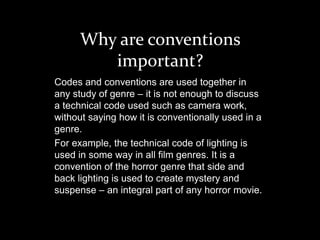
Why are conventions 
important? 
Codes and conventions are used together in 
any study of genre – it is not enough to discuss 
a technical code used such as camera work, 
without saying how it is conventionally used in a 
genre. 
For example, the technical code of lighting is 
used in some way in all film genres. It is a 
convention of the horror genre that side and 
back lighting is used to create mystery and 
suspense – an integral part of any horror movie.
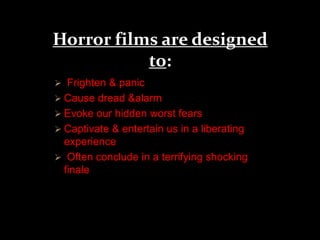
Horror films are designed 
to: 
 Frighten & panic 
 Cause dread &alarm 
 Evoke our hidden worst fears 
 Captivate & entertain us in a liberating 
experience 
 Often conclude in a terrifying shocking 
finale
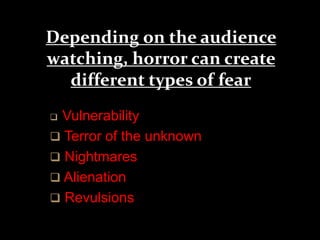
Depending on the audience 
watching, horror can create 
different types of fear 
 Vulnerability 
 Terror of the unknown 
 Nightmares 
 Alienation 
 Revulsions
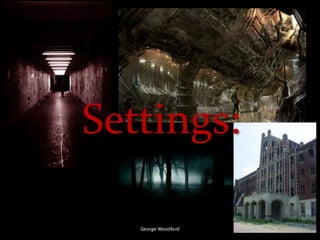
Settings:
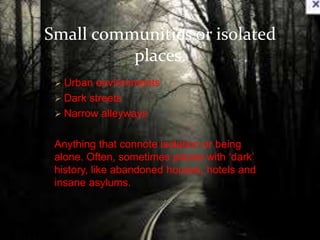
Small communities or isolated 
places. 
 Urban environments 
 Dark streets 
 Narrow alleyways 
Anything that connote isolation or being 
alone. Often, sometimes places with ‘dark’ 
history, like abandoned houses, hotels and 
insane asylums.
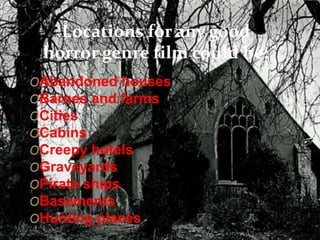
Locations for any good 
horror genre film could be: 
OAbandoned houses 
OBarnes and farms 
OCities 
OCabins 
OCreepy hotels 
OGraveyards 
OPirate ships 
OBasements 
OHunting places
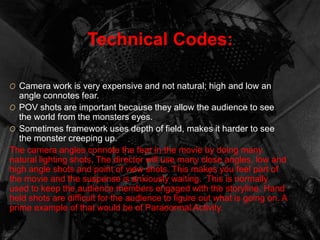
Technical Codes: 
O Camera work is very expensive and not natural; high and low an 
angle connotes fear. 
O POV shots are important because they allow the audience to see 
the world from the monsters eyes. 
O Sometimes framework uses depth of field, makes it harder to see 
the monster creeping up. 
The camera angles connote the fear in the movie by doing many 
natural lighting shots. The director will use many close angles, low and 
high angle shots and point of view shots. This makes you feel part of 
the movie and the suspense is anxiously waiting. This is normally 
used to keep the audience members engaged with the storyline. Hand 
held shots are difficult for the audience to figure out what is going on. A 
prime example of that would be of Paranormal Activity.
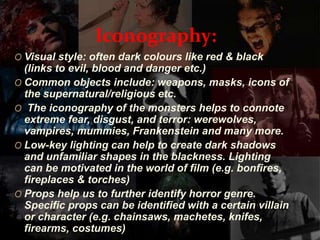
Iconography: 
O Visual style: often dark colours like red & black 
(links to evil, blood and danger etc.) 
O Common objects include: weapons, masks, icons of 
the supernatural/religious etc. 
O The iconography of the monsters helps to connote 
extreme fear, disgust, and terror: werewolves, 
vampires, mummies, Frankenstein and many more. 
O Low-key lighting can help to create dark shadows 
and unfamiliar shapes in the blackness. Lighting 
can be motivated in the world of film (e.g. bonfires, 
fireplaces & torches) 
O Props help us to further identify horror genre. 
Specific props can be identified with a certain villain 
or character (e.g. chainsaws, machetes, knifes, 
firearms, costumes)
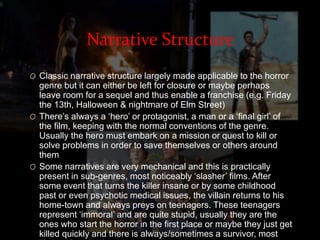
Narrative Structure 
O Classic narrative structure largely made applicable to the horror 
genre but it can either be left for closure or maybe perhaps 
leave room for a sequel and thus enable a franchise (e.g. Friday 
the 13th, Halloween & nightmare of Elm Street) 
O There’s always a ‘hero’ or protagonist, a man or a ‘final girl’ of 
the film, keeping with the normal conventions of the genre. 
Usually the hero must embark on a mission or quest to kill or 
solve problems in order to save themselves or others around 
them 
O Some narratives are very mechanical and this is practically 
present in sub-genres, most noticeably ‘slasher’ films. After 
some event that turns the killer insane or by some childhood 
past or even psychotic medical issues, the villain returns to his 
home-town and always preys on teenagers. These teenagers 
represent ‘immoral’ and are quite stupid, usually they are the 
ones who start the horror in the first place or maybe they just get 
killed quickly and there is always/sometimes a survivor, most 
likely a female character.
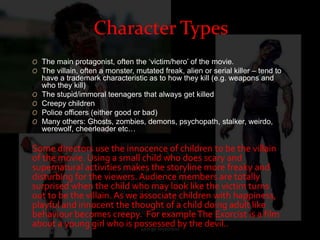
Character Types 
O The main protagonist, often the ‘victim/hero’ of the movie. 
O The villain, often a monster, mutated freak, alien or serial killer – tend to 
have a trademark characteristic as to how they kill (e.g. weapons and 
who they kill) 
O The stupid/immoral teenagers that always get killed 
O Creepy children 
O Police officers (either good or bad) 
O Many others: Ghosts, zombies, demons, psychopath, stalker, weirdo, 
werewolf, cheerleader etc… 
Some directors use the innocence of children to be the villain 
of the movie. Using a small child who does scary and 
supernatural activities makes the storyline more freaky and 
disturbing for the viewers. Audience members are totally 
surprised when the child who may look like the victim turns 
out to be the villain. As we associate children with happiness, 
playful and innocent the thought of a child doing adult like 
behaviour becomes creepy. For example The Exorcist is a film 
about a young girl who is possessed by the devil..
Themes 
O Good vs Evil 
O Depression 
O Religion 
O Childhood issues 
O Revenge 
O ·Supernatural 
O Beyond death 
O Science gone bad 
O Madness 
O Insanity 
O Lust 
O Envy 
O Suicide 
O ‘self-consciousness’ – making you question what is real and not.

Convention

  • 1.
  • 2.
    Why are conventions important? Codes and conventions are used together in any study of genre – it is not enough to discuss a technical code used such as camera work, without saying how it is conventionally used in a genre. For example, the technical code of lighting is used in some way in all film genres. It is a convention of the horror genre that side and back lighting is used to create mystery and suspense – an integral part of any horror movie.
  • 3.
    Horror films aredesigned to:  Frighten & panic  Cause dread &alarm  Evoke our hidden worst fears  Captivate & entertain us in a liberating experience  Often conclude in a terrifying shocking finale
  • 4.
    Depending on theaudience watching, horror can create different types of fear  Vulnerability  Terror of the unknown  Nightmares  Alienation  Revulsions
  • 5.
  • 6.
    Small communities orisolated places.  Urban environments  Dark streets  Narrow alleyways Anything that connote isolation or being alone. Often, sometimes places with ‘dark’ history, like abandoned houses, hotels and insane asylums.
  • 7.
    Locations for anygood horror genre film could be: OAbandoned houses OBarnes and farms OCities OCabins OCreepy hotels OGraveyards OPirate ships OBasements OHunting places
  • 8.
    Technical Codes: OCamera work is very expensive and not natural; high and low an angle connotes fear. O POV shots are important because they allow the audience to see the world from the monsters eyes. O Sometimes framework uses depth of field, makes it harder to see the monster creeping up. The camera angles connote the fear in the movie by doing many natural lighting shots. The director will use many close angles, low and high angle shots and point of view shots. This makes you feel part of the movie and the suspense is anxiously waiting. This is normally used to keep the audience members engaged with the storyline. Hand held shots are difficult for the audience to figure out what is going on. A prime example of that would be of Paranormal Activity.
  • 9.
    Iconography: O Visualstyle: often dark colours like red & black (links to evil, blood and danger etc.) O Common objects include: weapons, masks, icons of the supernatural/religious etc. O The iconography of the monsters helps to connote extreme fear, disgust, and terror: werewolves, vampires, mummies, Frankenstein and many more. O Low-key lighting can help to create dark shadows and unfamiliar shapes in the blackness. Lighting can be motivated in the world of film (e.g. bonfires, fireplaces & torches) O Props help us to further identify horror genre. Specific props can be identified with a certain villain or character (e.g. chainsaws, machetes, knifes, firearms, costumes)
  • 10.
    Narrative Structure OClassic narrative structure largely made applicable to the horror genre but it can either be left for closure or maybe perhaps leave room for a sequel and thus enable a franchise (e.g. Friday the 13th, Halloween & nightmare of Elm Street) O There’s always a ‘hero’ or protagonist, a man or a ‘final girl’ of the film, keeping with the normal conventions of the genre. Usually the hero must embark on a mission or quest to kill or solve problems in order to save themselves or others around them O Some narratives are very mechanical and this is practically present in sub-genres, most noticeably ‘slasher’ films. After some event that turns the killer insane or by some childhood past or even psychotic medical issues, the villain returns to his home-town and always preys on teenagers. These teenagers represent ‘immoral’ and are quite stupid, usually they are the ones who start the horror in the first place or maybe they just get killed quickly and there is always/sometimes a survivor, most likely a female character.
  • 11.
    Character Types OThe main protagonist, often the ‘victim/hero’ of the movie. O The villain, often a monster, mutated freak, alien or serial killer – tend to have a trademark characteristic as to how they kill (e.g. weapons and who they kill) O The stupid/immoral teenagers that always get killed O Creepy children O Police officers (either good or bad) O Many others: Ghosts, zombies, demons, psychopath, stalker, weirdo, werewolf, cheerleader etc… Some directors use the innocence of children to be the villain of the movie. Using a small child who does scary and supernatural activities makes the storyline more freaky and disturbing for the viewers. Audience members are totally surprised when the child who may look like the victim turns out to be the villain. As we associate children with happiness, playful and innocent the thought of a child doing adult like behaviour becomes creepy. For example The Exorcist is a film about a young girl who is possessed by the devil..
  • 12.
    Themes O Goodvs Evil O Depression O Religion O Childhood issues O Revenge O ·Supernatural O Beyond death O Science gone bad O Madness O Insanity O Lust O Envy O Suicide O ‘self-consciousness’ – making you question what is real and not.