Stripping of Liners From
Pipes Using HDD Technology
Harry Baum, President, W.S.U. Inc., Breckenridge, Colorado
Kwigs Bowen, Area Manager, Team Fishel, Chandler, Arizona
Factory Installed Liners


During the 1980s, an HDPE lining was
factory installed on ductile iron pipe to avoid
corrosion from hydrogen sulfide gas (a
normal byproduct of decomposition in
sanitary systems). These pipes were
installed throughout the country.
De-lamination of Liners


In the Pima County Project, damage to the
HDPE liner around the bell and spigot
occurred at some time during installation or
afterwards which caused the liner to de-
laminate from the pipe it was supposed to
protect.
Inspection Results

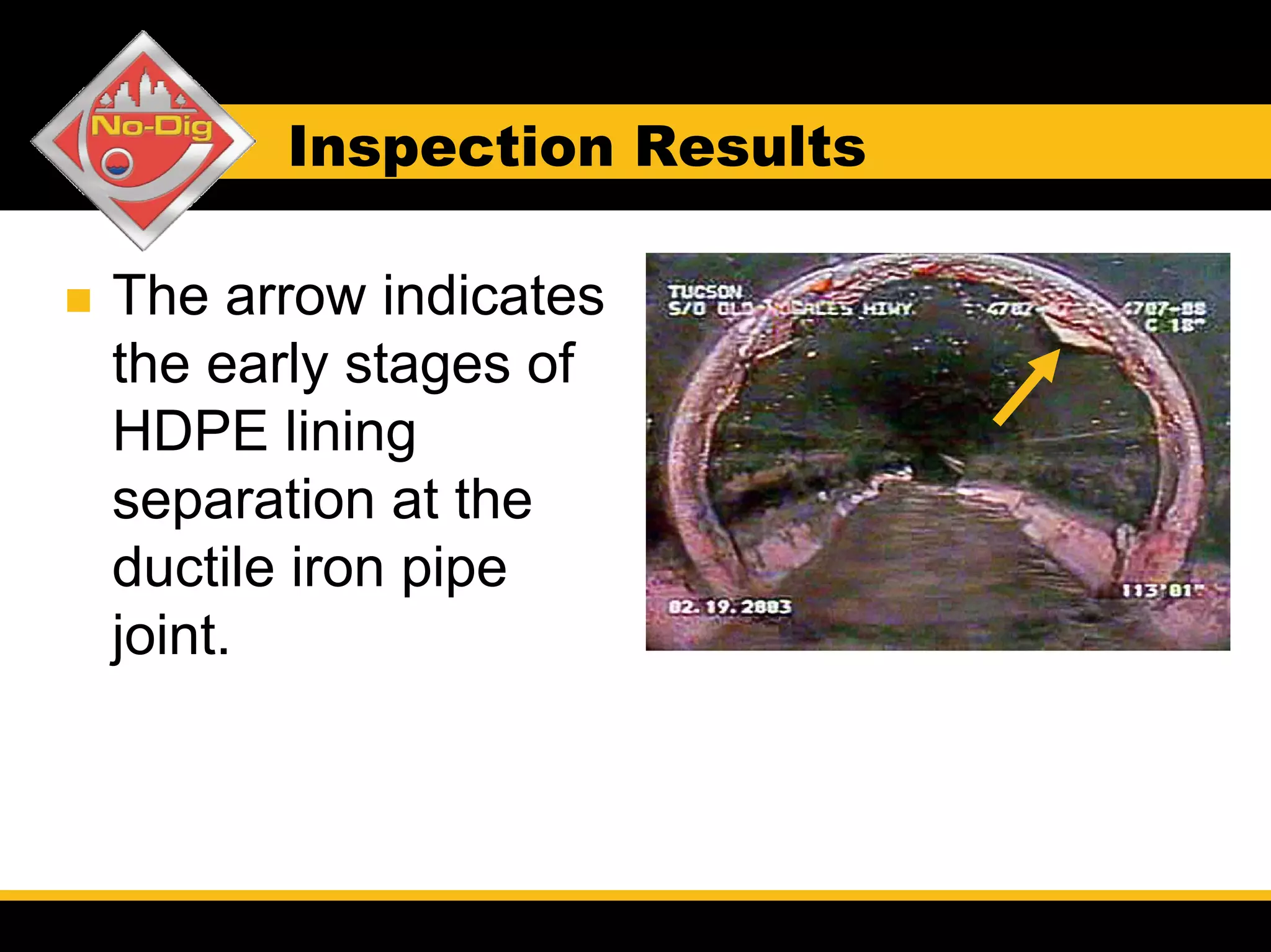
The arrow indicates
the early stages of
HDPE lining
separation at the
ductile iron pipe
joint.
Inspection Results


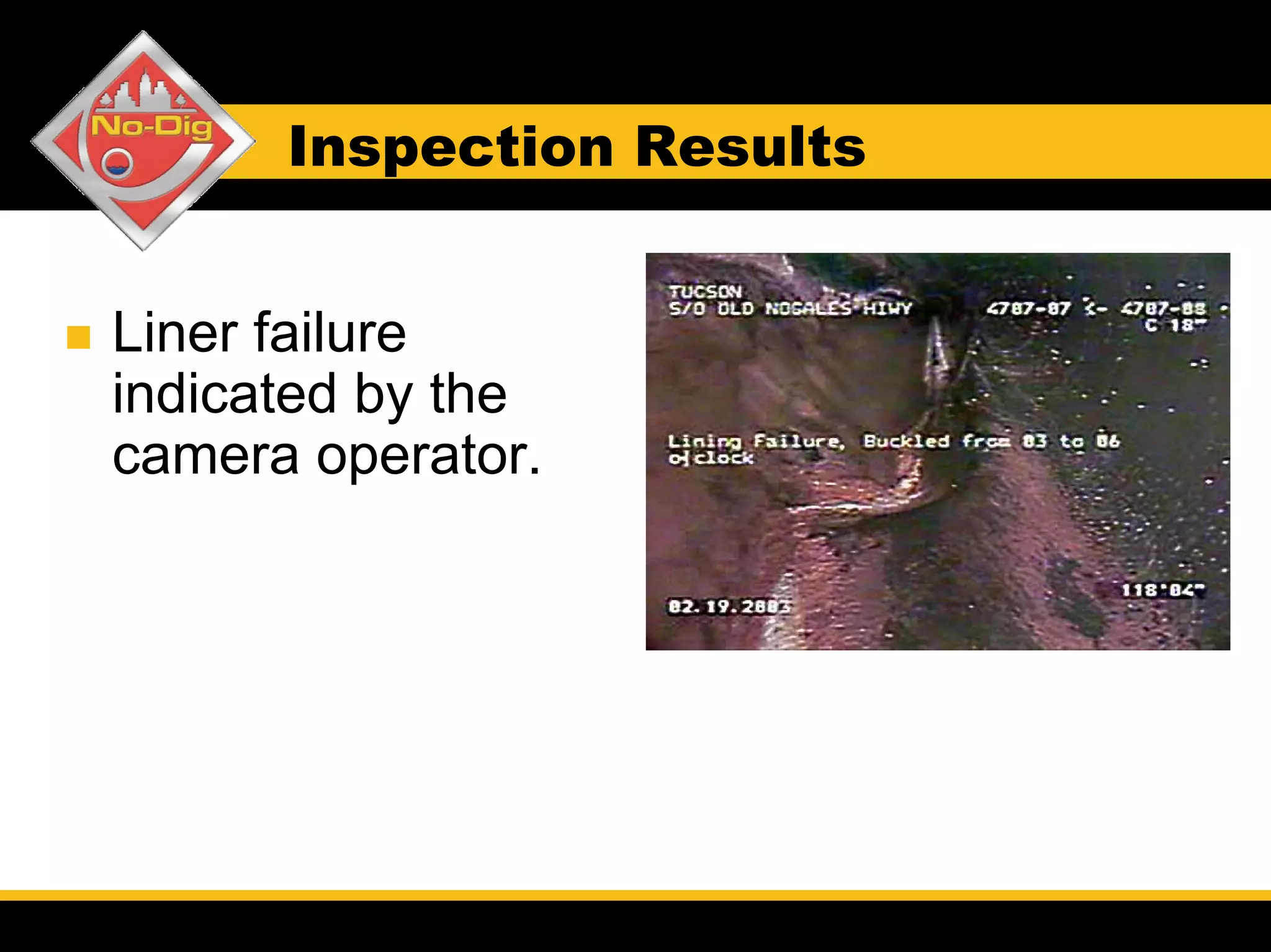
Liner failure
indicated by the
camera operator.
Inspection Results

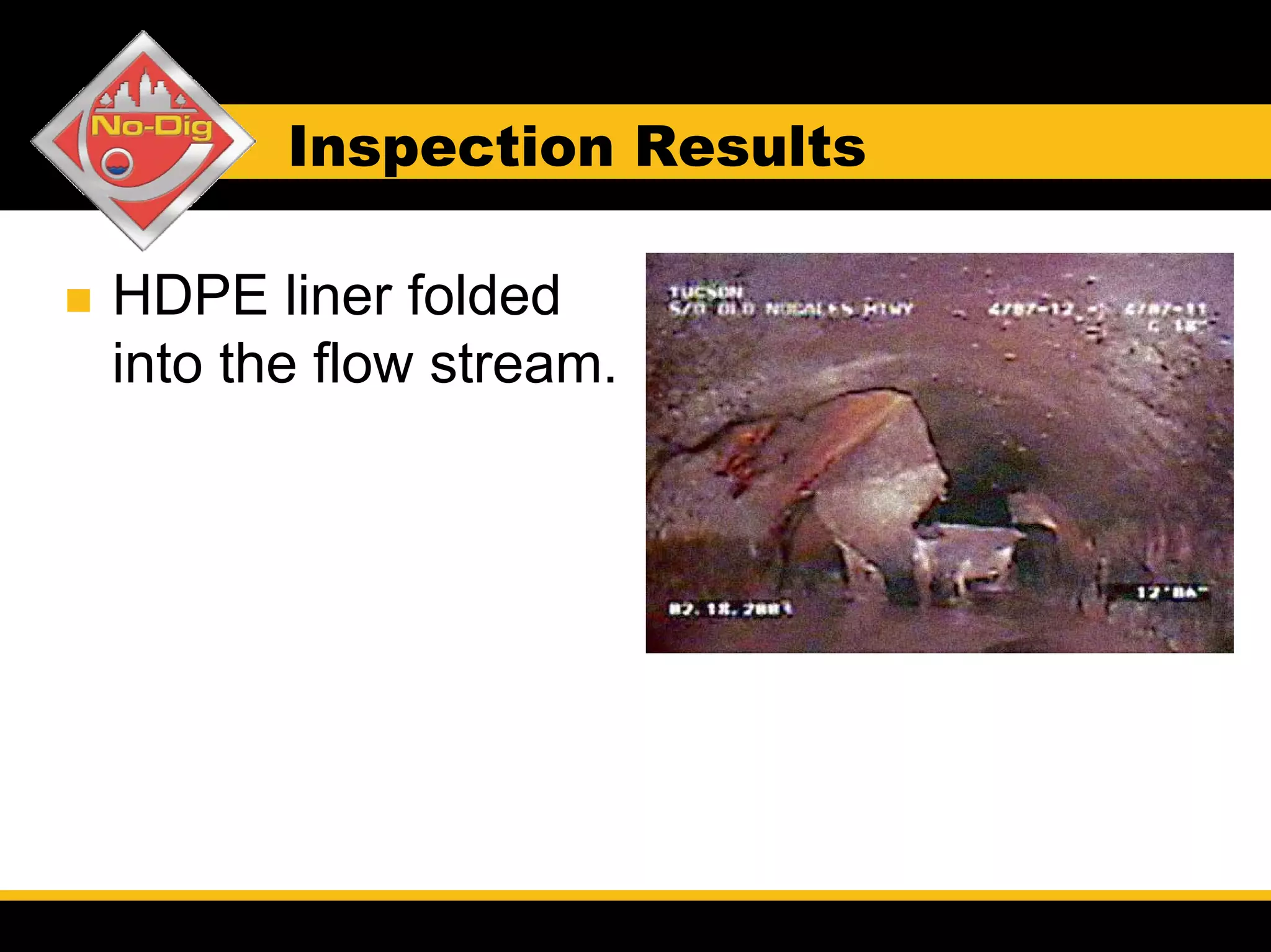
HDPE liner folded
into the flow stream.
Inspection Results

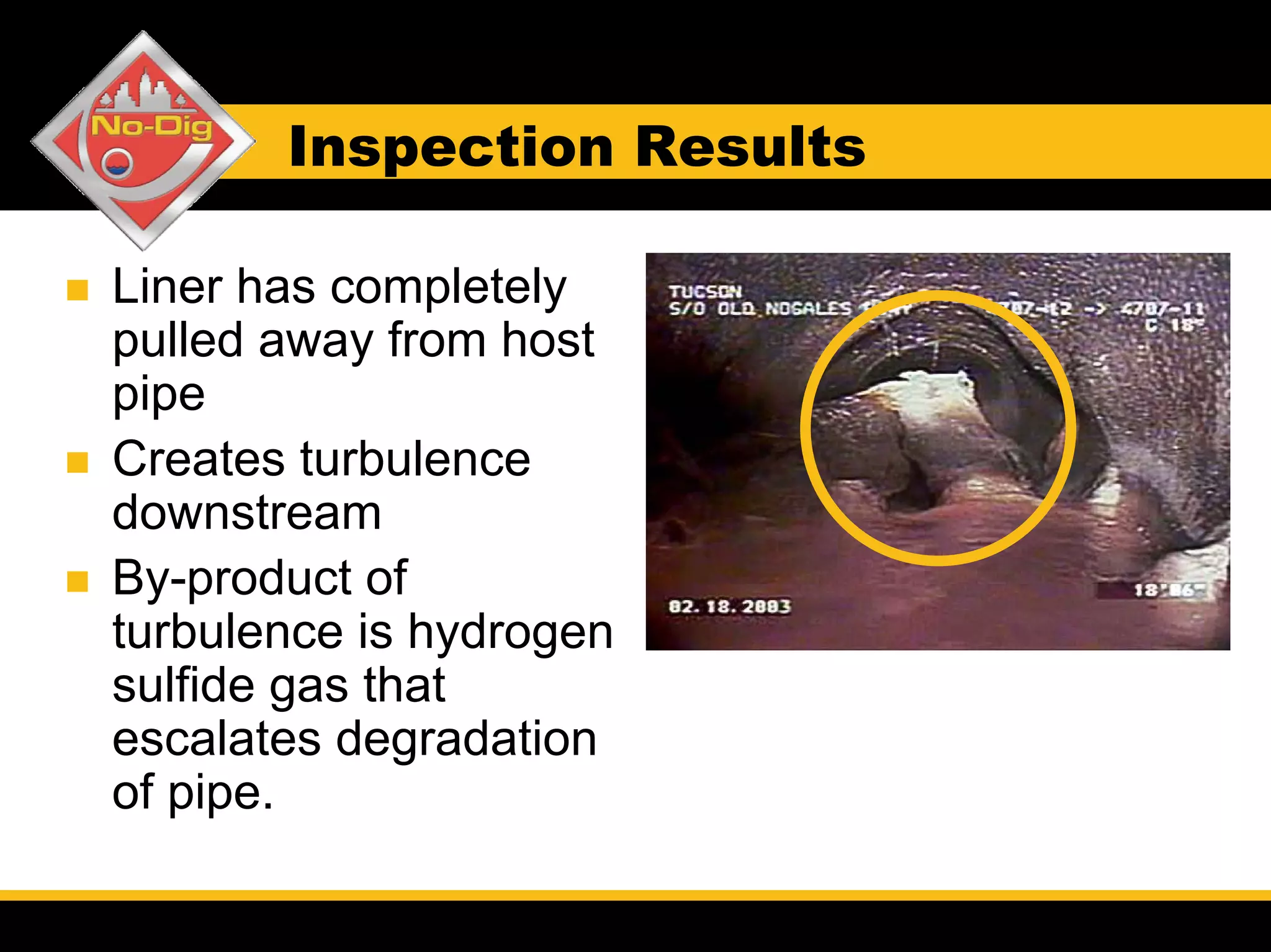
Liner has completely
pulled away from host
pipe
Creates turbulence
downstream
By-product of
turbulence is hydrogen
sulfide gas that
escalates degradation
of pipe.
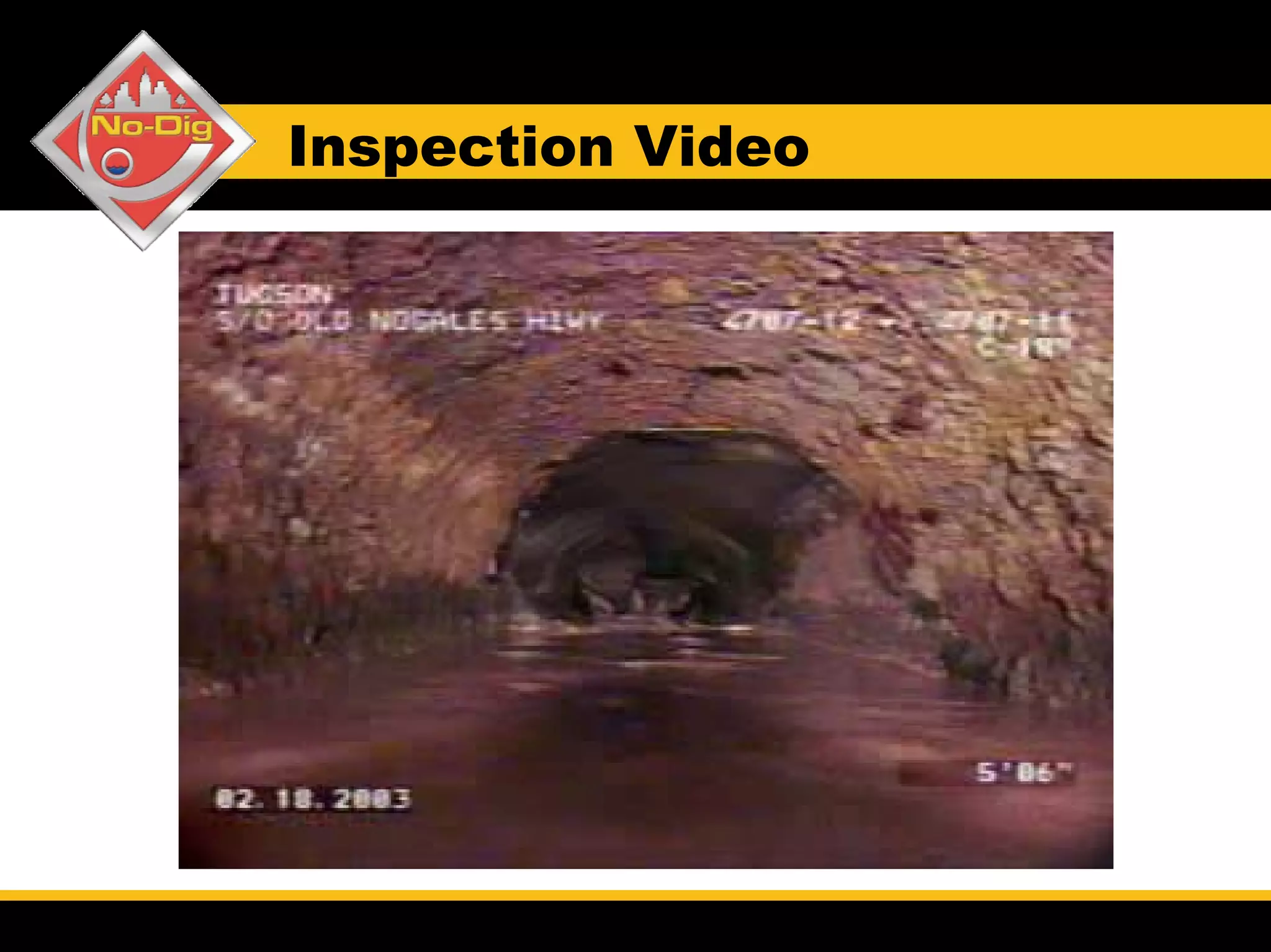
Inspection Video
Problems in Pima County

De-lamination disrupted flow.
Caused back ups
In Pima County, fine granular soil is
susceptible to erosion.
  Backups lead to ground erosion
  Sinkholes follow
Emergency repairs were required
Methods of Repair


Efficient methods did not exist to
remove the liner from the existing pipe
for installation of new liners.
Conversations between WSU and
HammerHead began to design a new
trenchless methodology
Methodology
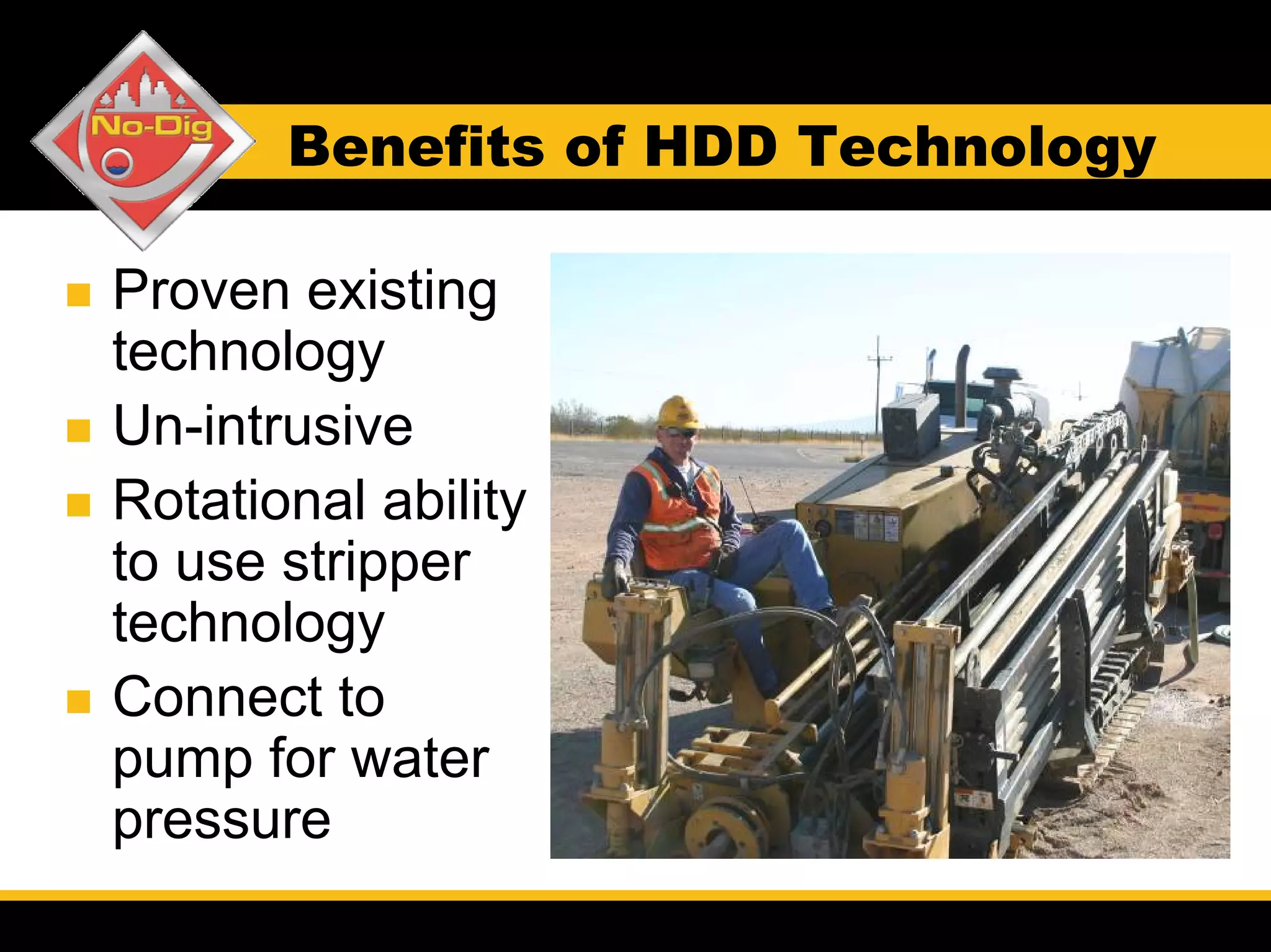
Benefits of HDD Technology

Proven existing
technology
Un-intrusive
Rotational ability
to use stripper
technology
Connect to
pump for water
pressure
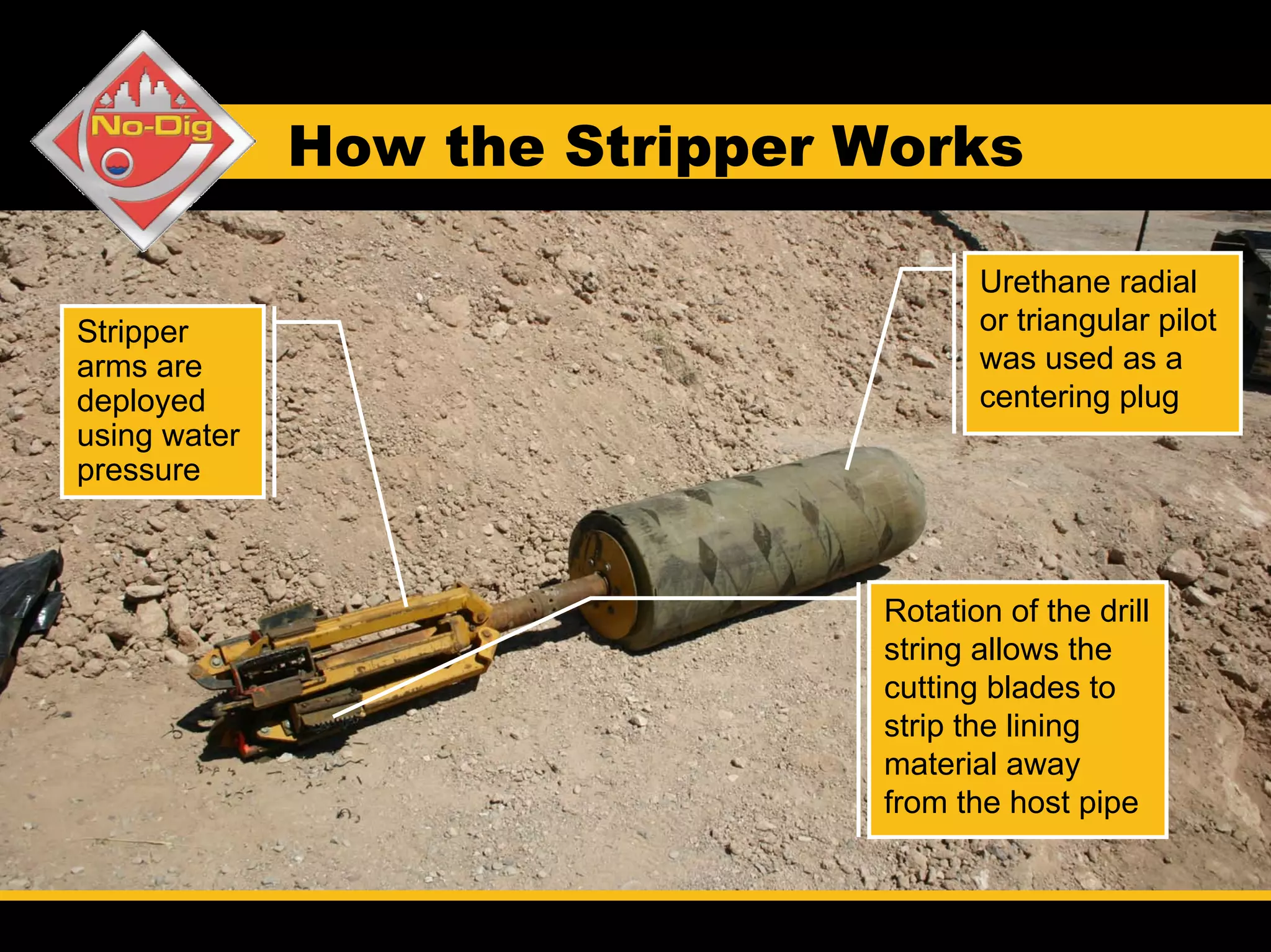
How the Stripper Works

                                      Urethane radial
Stripper                              or triangular pilot
arms are                              was used as a
deployed                              centering plug
using water
pressure


                               Rotation of the drill
                               string allows the
                               cutting blades to
                               strip the lining
                               material away
                               from the host pipe
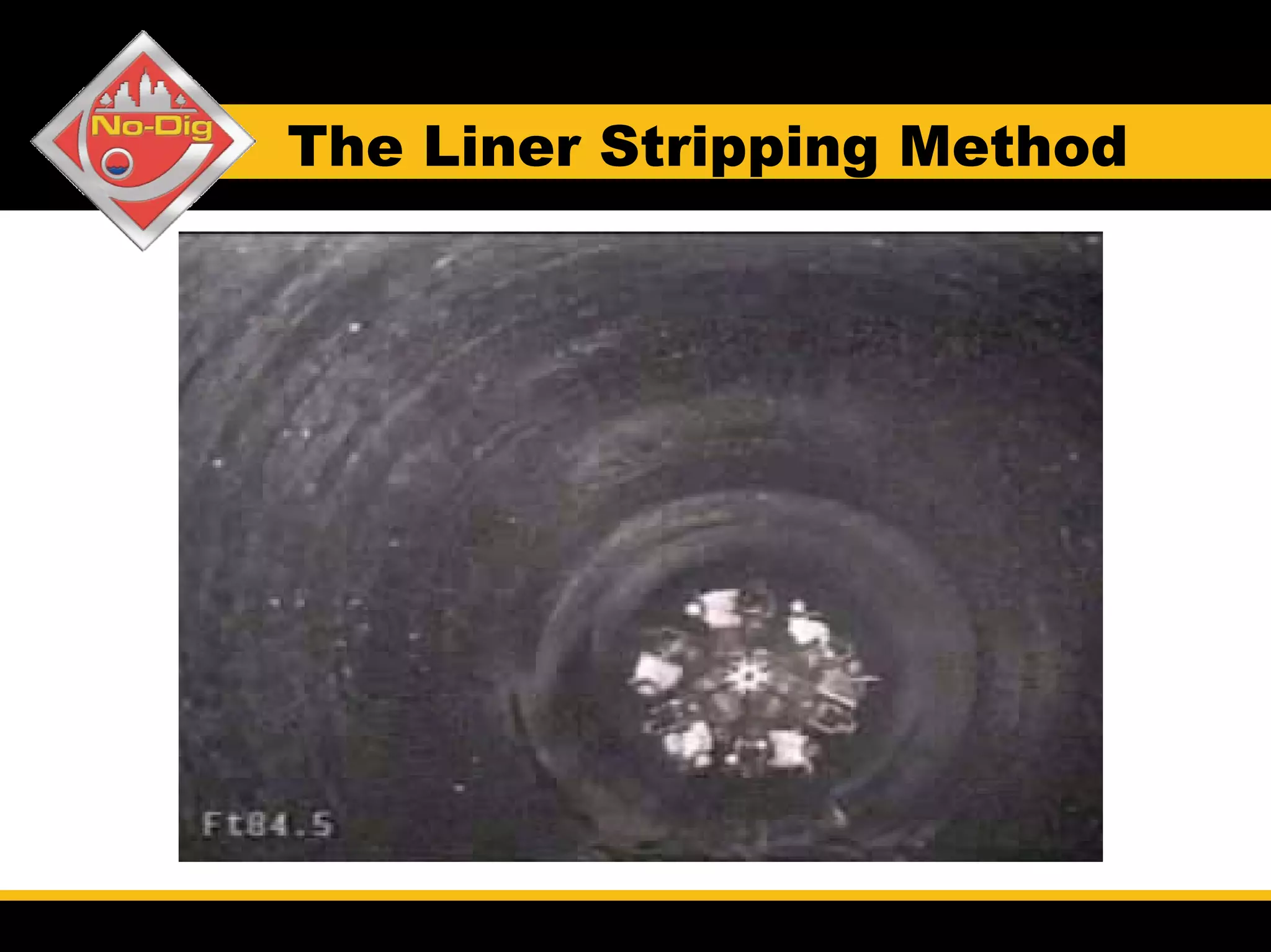
The Liner Stripping Method
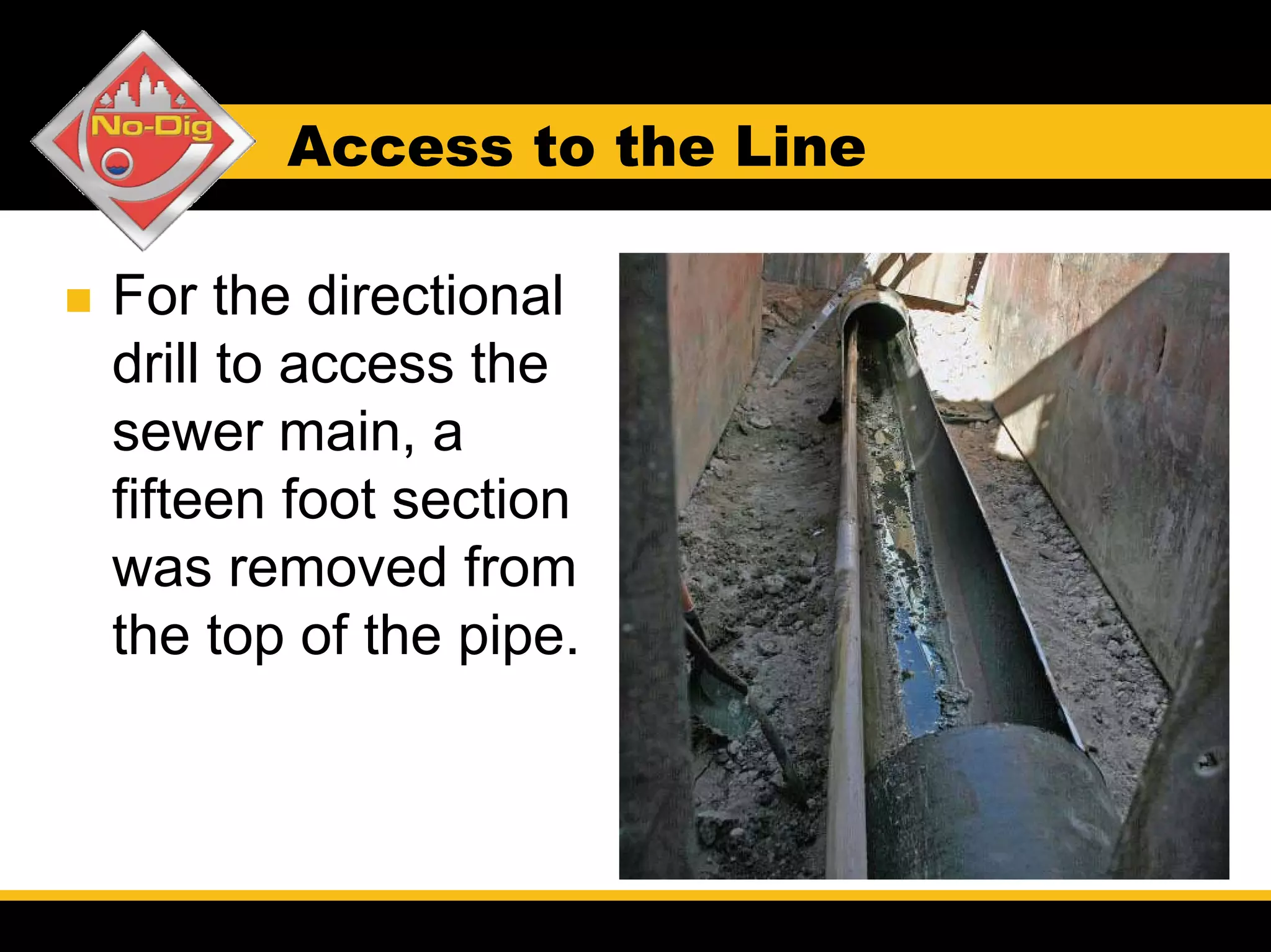
Access to the Line

For the directional
drill to access the
sewer main, a
fifteen foot section
was removed from
the top of the pipe.
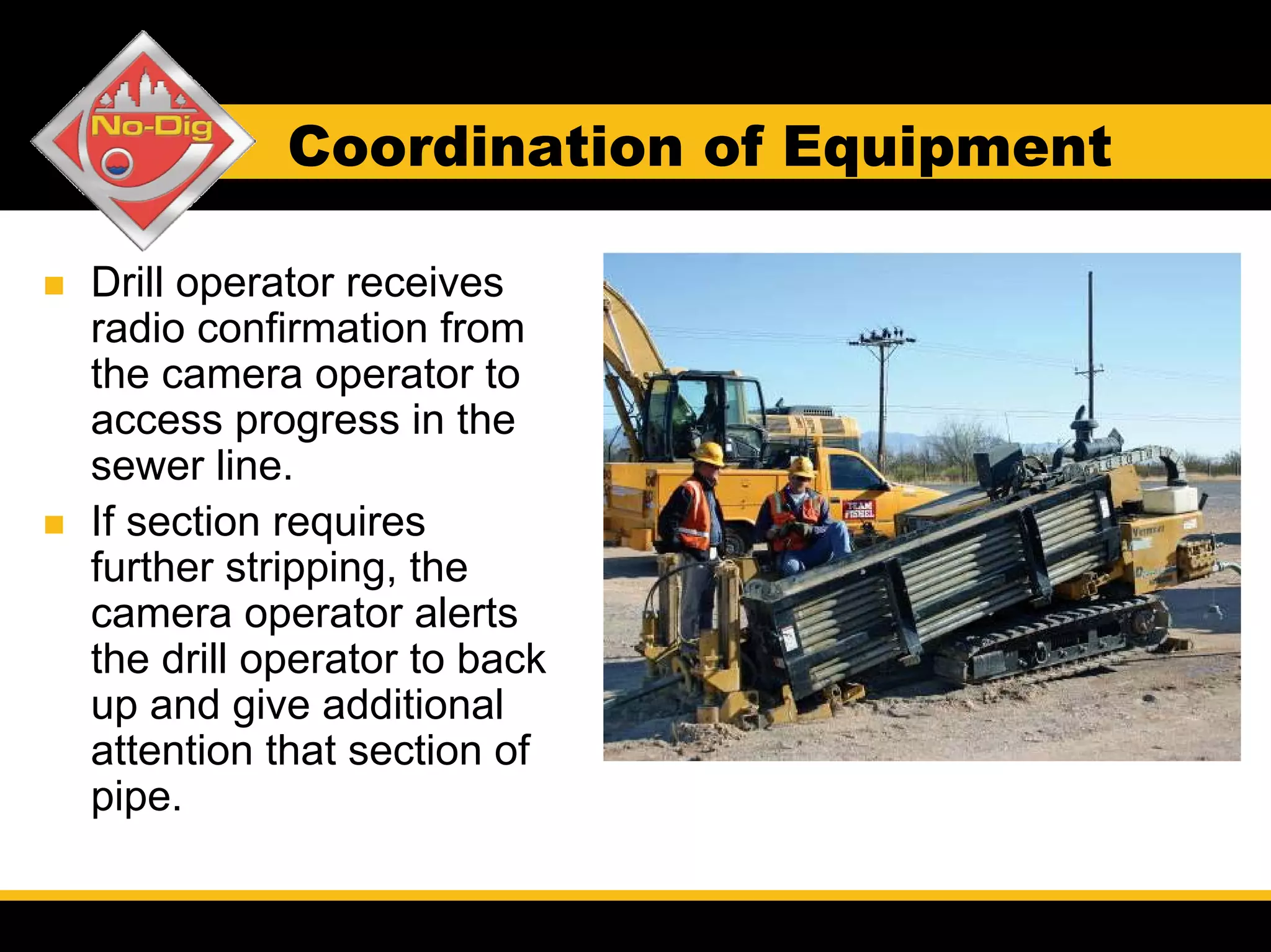
Coordination of Equipment

Drill operator receives
radio confirmation from
the camera operator to
access progress in the
sewer line.
If section requires
further stripping, the
camera operator alerts
the drill operator to back
up and give additional
attention that section of
pipe.
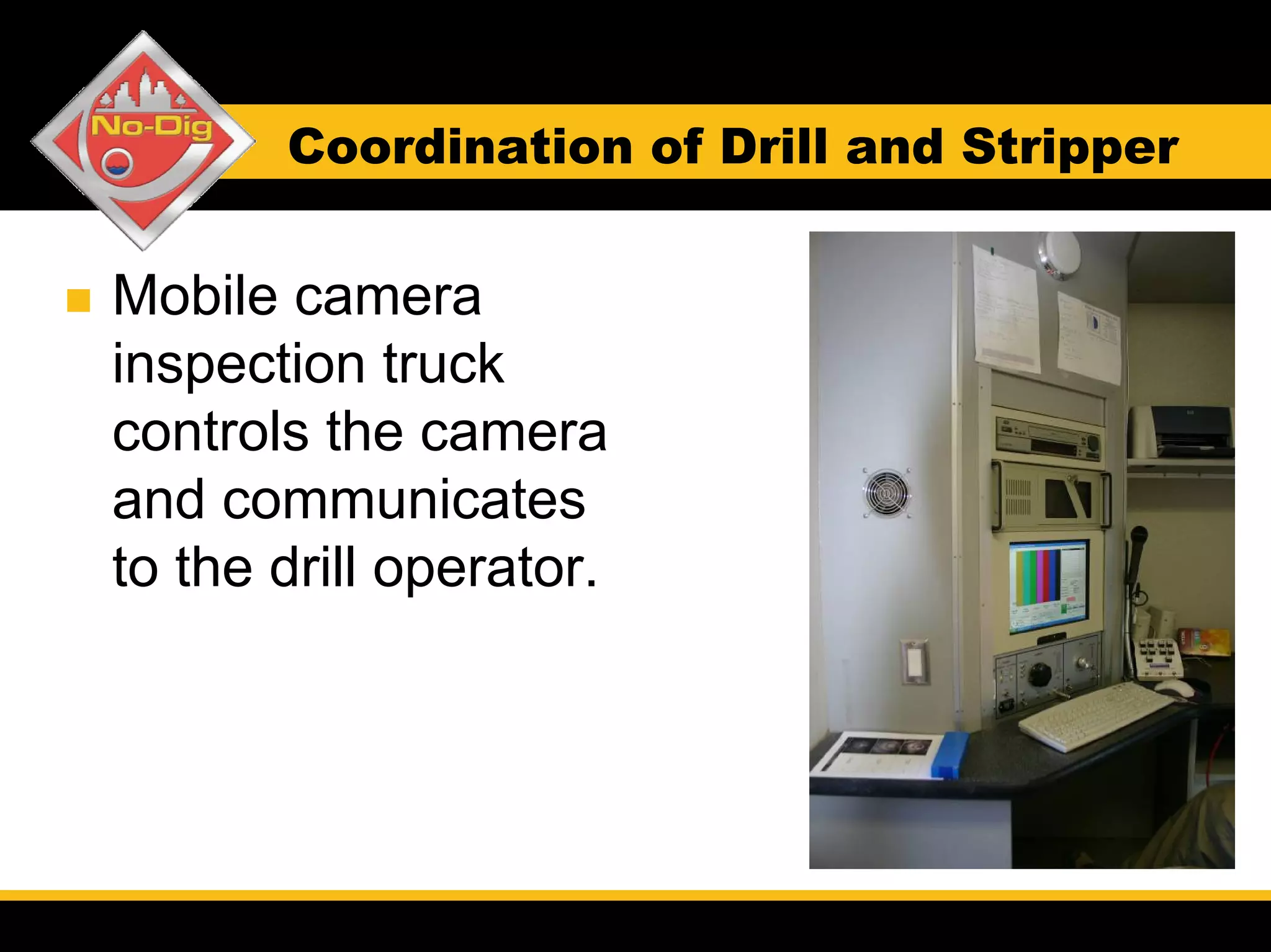
Coordination of Drill and Stripper


Mobile camera
inspection truck
controls the camera
and communicates
to the drill operator.
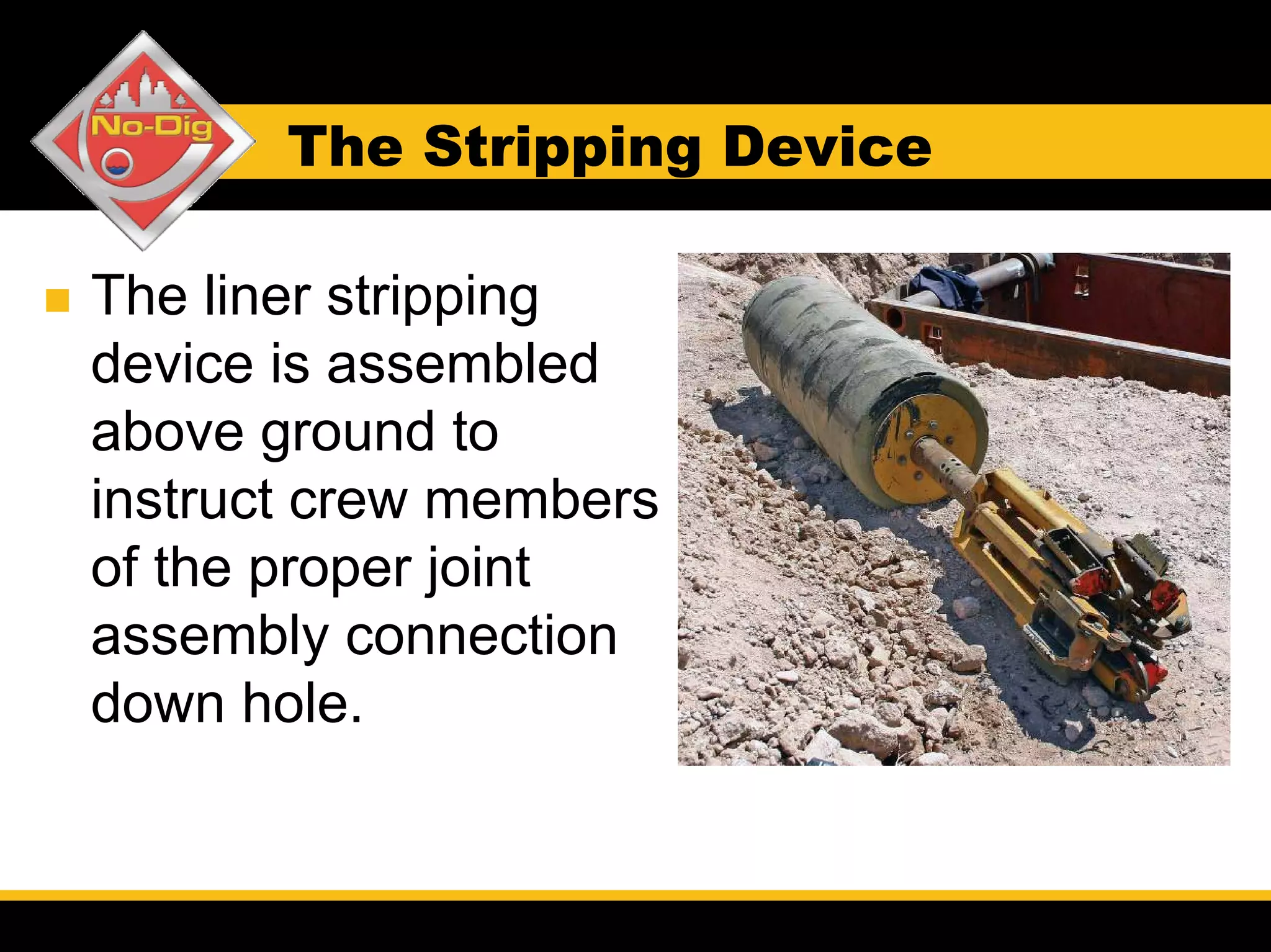
The Stripping Device

The liner stripping
device is assembled
above ground to
instruct crew members
of the proper joint
assembly connection
down hole.
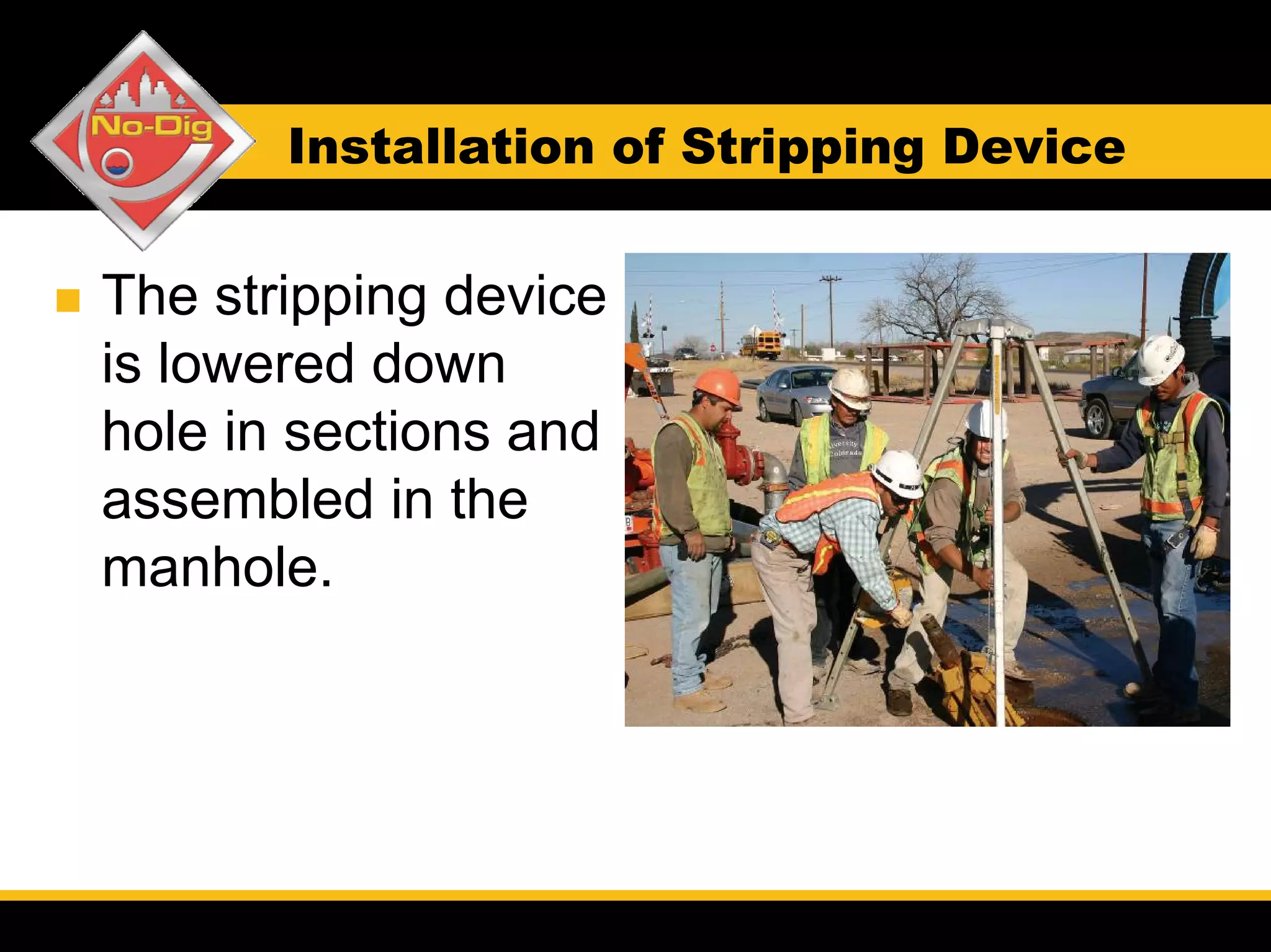
Installation of Stripping Device


The stripping device
is lowered down
hole in sections and
assembled in the
manhole.
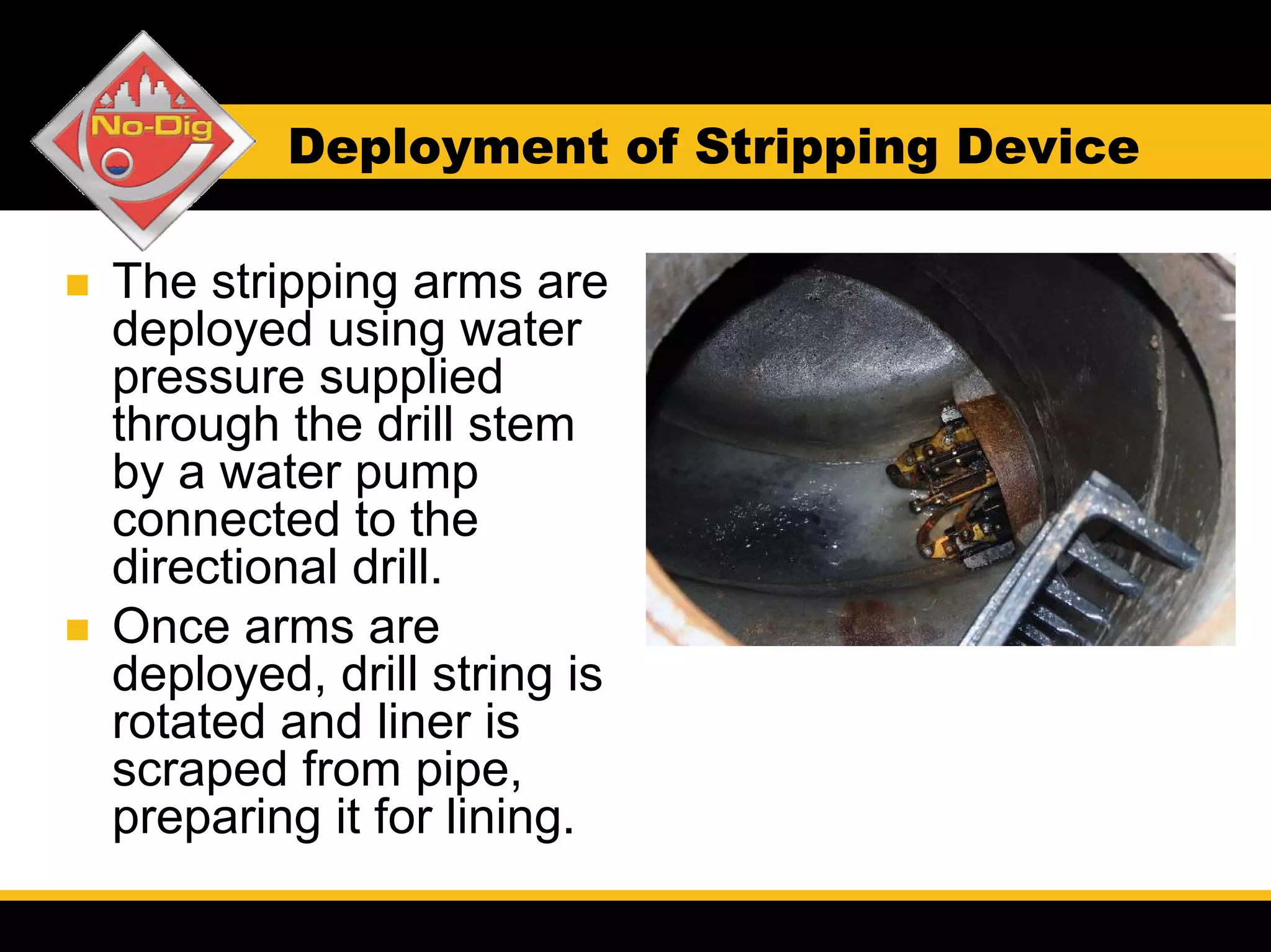
Deployment of Stripping Device

The stripping arms are
deployed using water
pressure supplied
through the drill stem
by a water pump
connected to the
directional drill.
Once arms are
deployed, drill string is
rotated and liner is
scraped from pipe,
preparing it for lining.
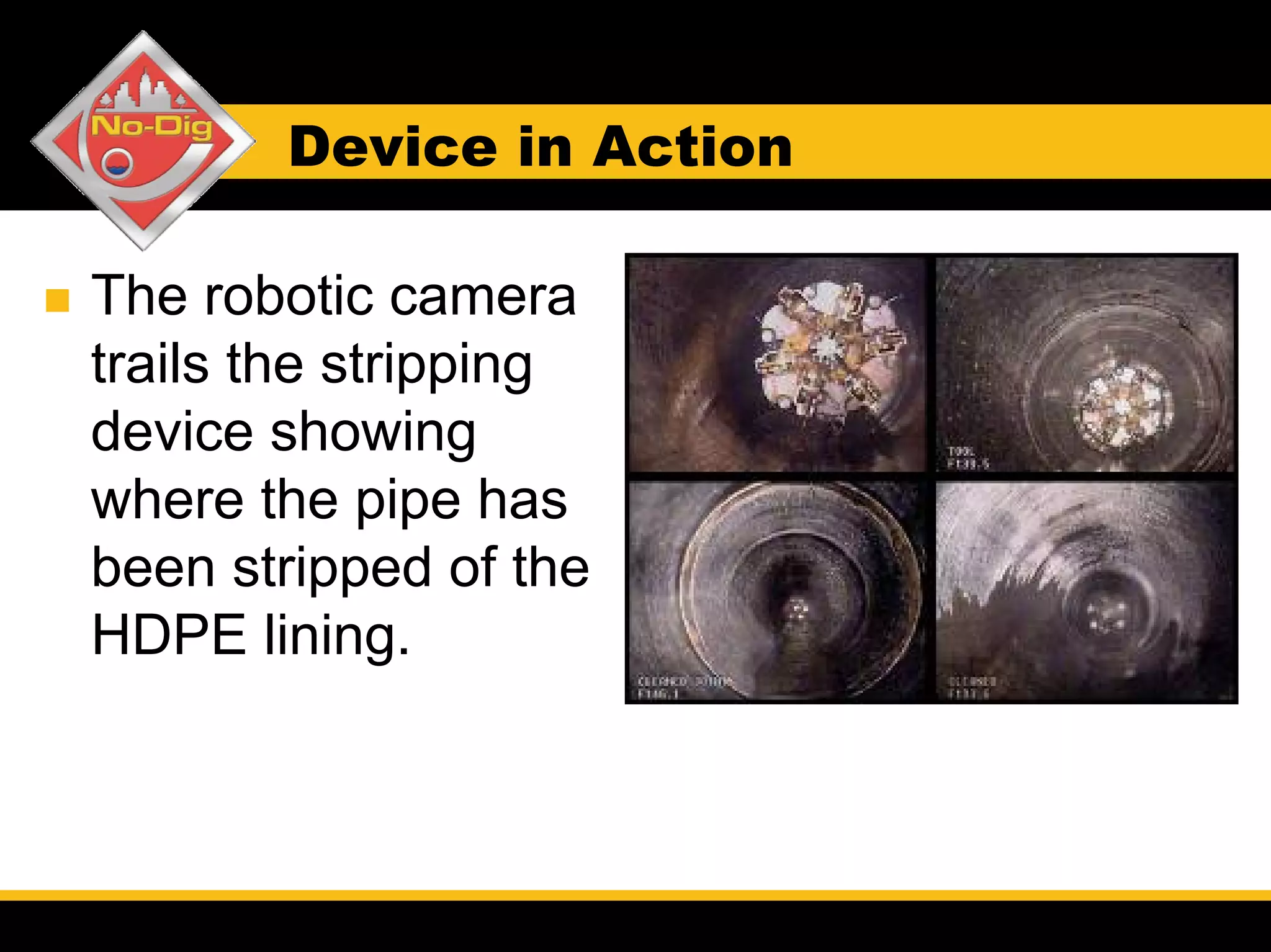
Device in Action

The robotic camera
trails the stripping
device showing
where the pipe has
been stripped of the
HDPE lining.
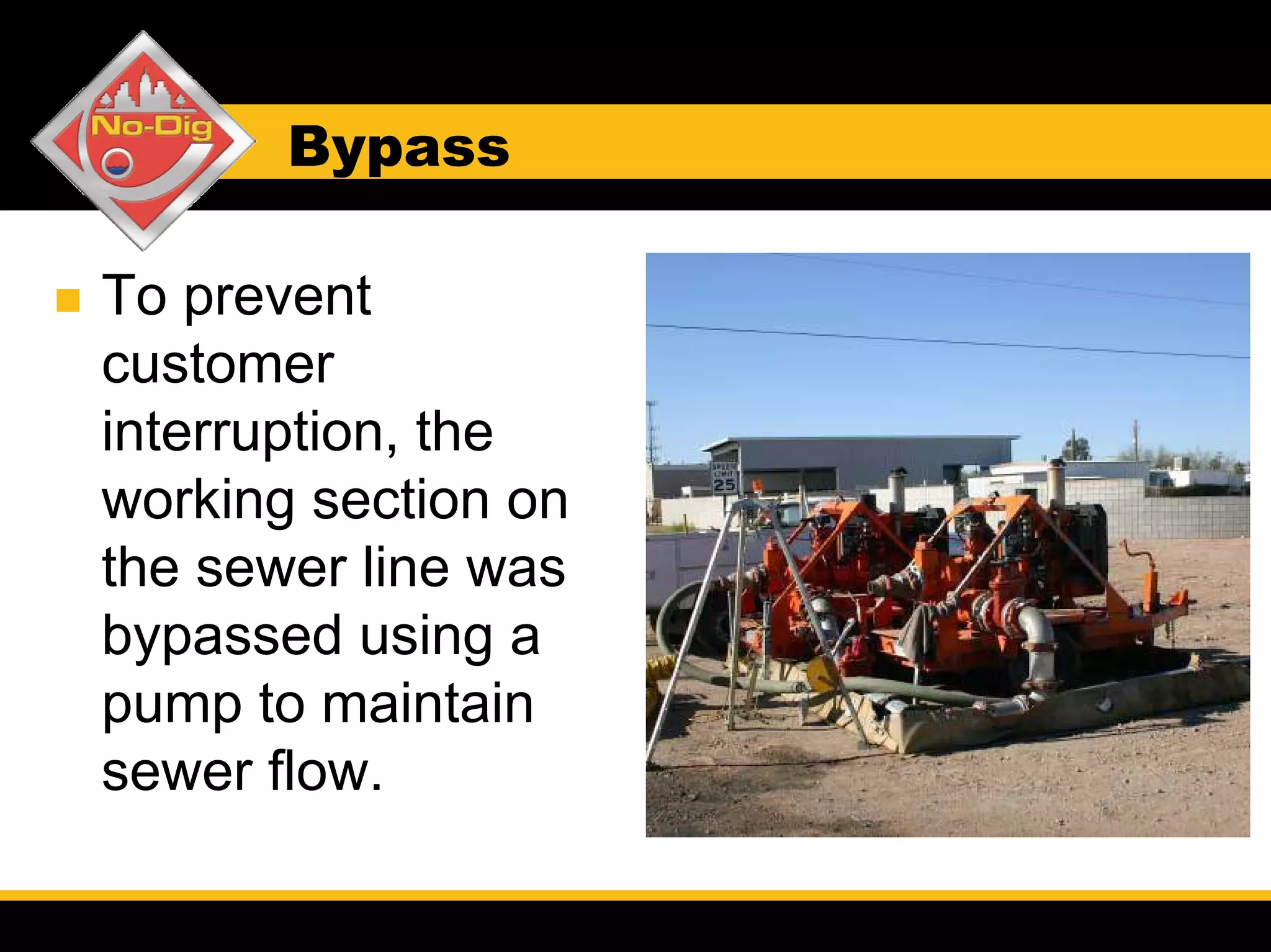
Bypass

To prevent
customer
interruption, the
working section on
the sewer line was
bypassed using a
pump to maintain
sewer flow.
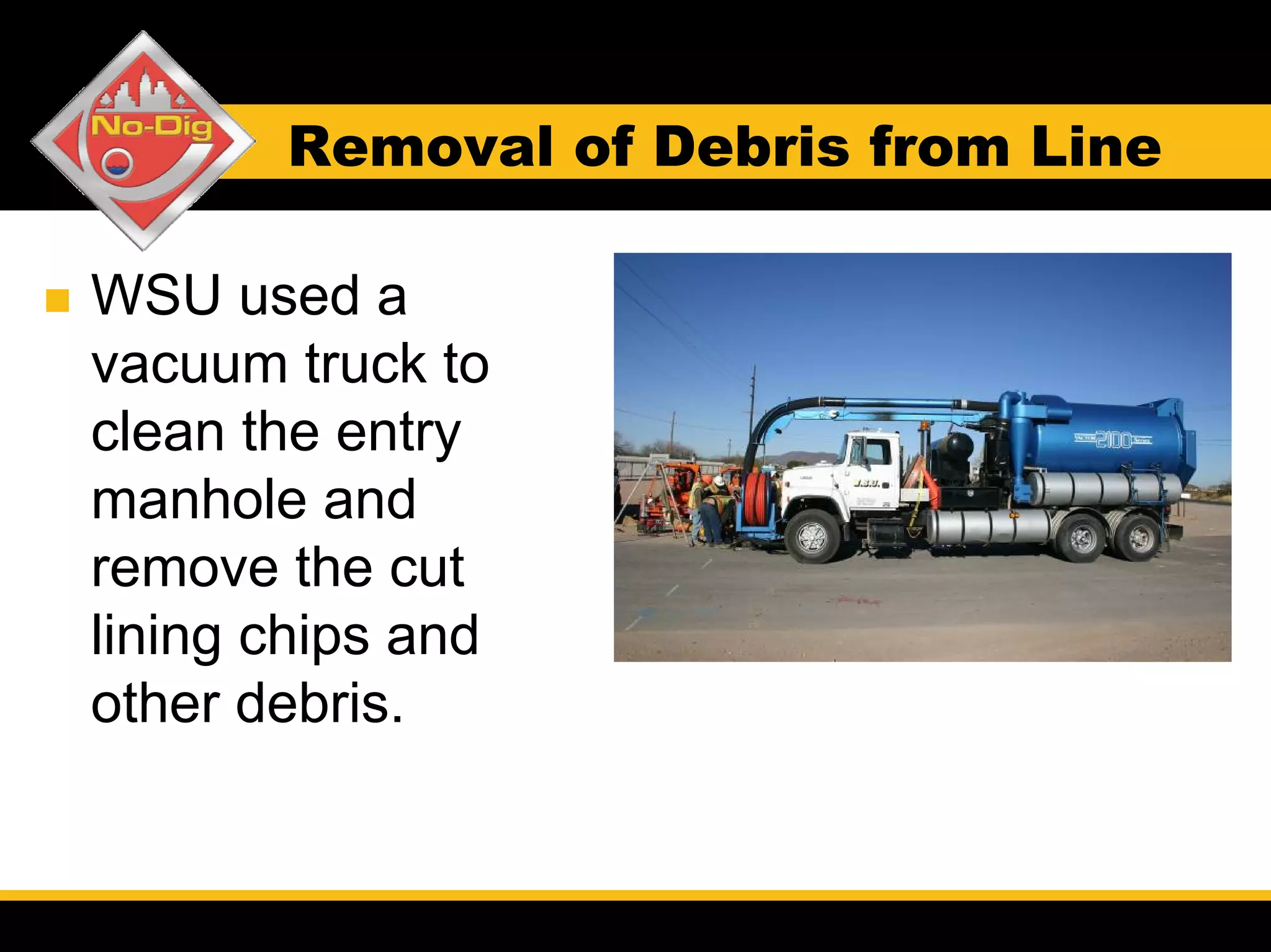
Removal of Debris from Line

WSU used a
vacuum truck to
clean the entry
manhole and
remove the cut
lining chips and
other debris.
Pipe Ready for New Liner


With the pipe ready to accept a new
liner, the pipe is lined with Pulled In
Place method.
5,720 lf of 18” CIPP installed
Conclusion

In all, the poly stripper method was
used to clean about 5,700 feet of pipe
over a two and a half month period.
With the liner completely removed, the
new CIPP liner was installed normally
without any intrusive obstacles.
Thank You
Harry Baum, President, W.S.U. Inc., Breckenridge, Colorado
Kwigs Bowen, Area Manager, Team Fishel, Chandler, Arizona

Western Pipeway Presentation

  • 1.
    Stripping of LinersFrom Pipes Using HDD Technology Harry Baum, President, W.S.U. Inc., Breckenridge, Colorado Kwigs Bowen, Area Manager, Team Fishel, Chandler, Arizona
  • 2.
    Factory Installed Liners Duringthe 1980s, an HDPE lining was factory installed on ductile iron pipe to avoid corrosion from hydrogen sulfide gas (a normal byproduct of decomposition in sanitary systems). These pipes were installed throughout the country.
  • 3.
    De-lamination of Liners Inthe Pima County Project, damage to the HDPE liner around the bell and spigot occurred at some time during installation or afterwards which caused the liner to de- laminate from the pipe it was supposed to protect.
  • 4.
    Inspection Results The arrowindicates the early stages of HDPE lining separation at the ductile iron pipe joint.
  • 5.
  • 6.
    Inspection Results HDPE linerfolded into the flow stream.
  • 7.
    Inspection Results Liner hascompletely pulled away from host pipe Creates turbulence downstream By-product of turbulence is hydrogen sulfide gas that escalates degradation of pipe.
  • 8.
  • 9.
    Problems in PimaCounty De-lamination disrupted flow. Caused back ups In Pima County, fine granular soil is susceptible to erosion. Backups lead to ground erosion Sinkholes follow Emergency repairs were required
  • 10.
    Methods of Repair Efficientmethods did not exist to remove the liner from the existing pipe for installation of new liners. Conversations between WSU and HammerHead began to design a new trenchless methodology
  • 11.
  • 12.
    Benefits of HDDTechnology Proven existing technology Un-intrusive Rotational ability to use stripper technology Connect to pump for water pressure
  • 13.
    How the StripperWorks Urethane radial Stripper or triangular pilot arms are was used as a deployed centering plug using water pressure Rotation of the drill string allows the cutting blades to strip the lining material away from the host pipe
  • 14.
  • 15.
    Access to theLine For the directional drill to access the sewer main, a fifteen foot section was removed from the top of the pipe.
  • 16.
    Coordination of Equipment Drilloperator receives radio confirmation from the camera operator to access progress in the sewer line. If section requires further stripping, the camera operator alerts the drill operator to back up and give additional attention that section of pipe.
  • 17.
    Coordination of Drilland Stripper Mobile camera inspection truck controls the camera and communicates to the drill operator.
  • 18.
    The Stripping Device Theliner stripping device is assembled above ground to instruct crew members of the proper joint assembly connection down hole.
  • 19.
    Installation of StrippingDevice The stripping device is lowered down hole in sections and assembled in the manhole.
  • 20.
    Deployment of StrippingDevice The stripping arms are deployed using water pressure supplied through the drill stem by a water pump connected to the directional drill. Once arms are deployed, drill string is rotated and liner is scraped from pipe, preparing it for lining.
  • 21.
    Device in Action Therobotic camera trails the stripping device showing where the pipe has been stripped of the HDPE lining.
  • 22.
    Bypass To prevent customer interruption, the workingsection on the sewer line was bypassed using a pump to maintain sewer flow.
  • 23.
    Removal of Debrisfrom Line WSU used a vacuum truck to clean the entry manhole and remove the cut lining chips and other debris.
  • 24.
    Pipe Ready forNew Liner With the pipe ready to accept a new liner, the pipe is lined with Pulled In Place method. 5,720 lf of 18” CIPP installed
  • 25.
    Conclusion In all, thepoly stripper method was used to clean about 5,700 feet of pipe over a two and a half month period. With the liner completely removed, the new CIPP liner was installed normally without any intrusive obstacles.
  • 26.
    Thank You Harry Baum,President, W.S.U. Inc., Breckenridge, Colorado Kwigs Bowen, Area Manager, Team Fishel, Chandler, Arizona