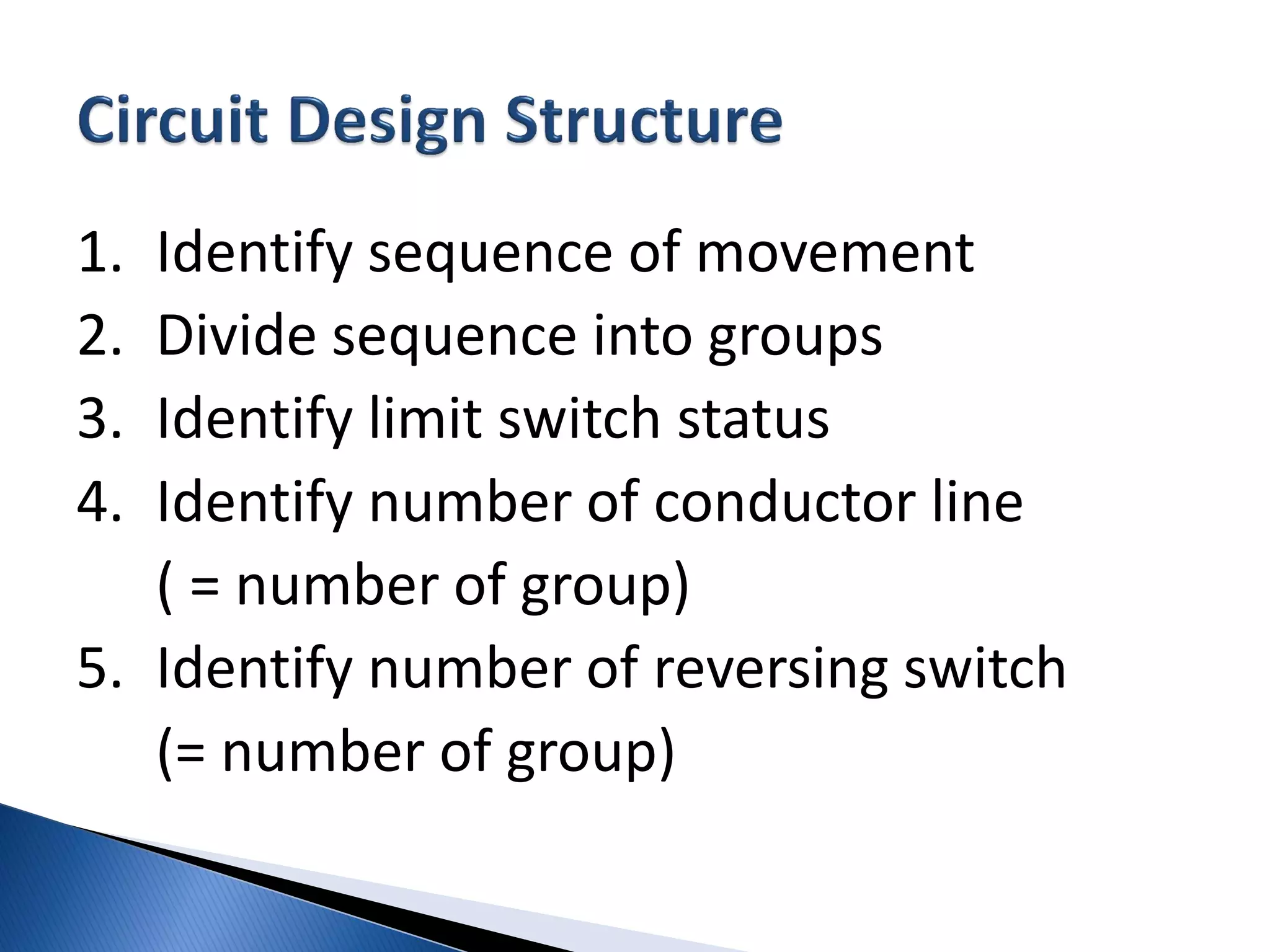
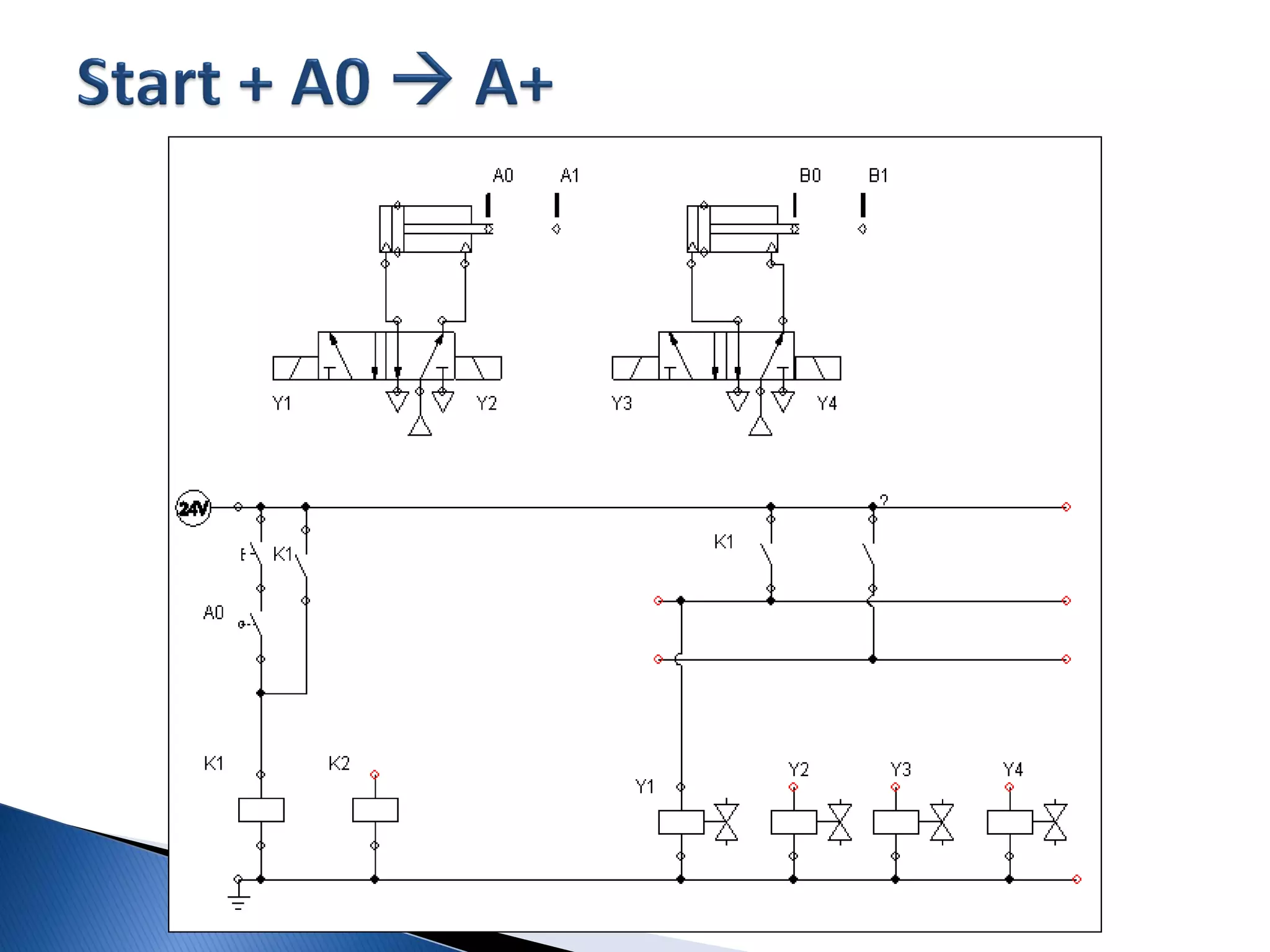
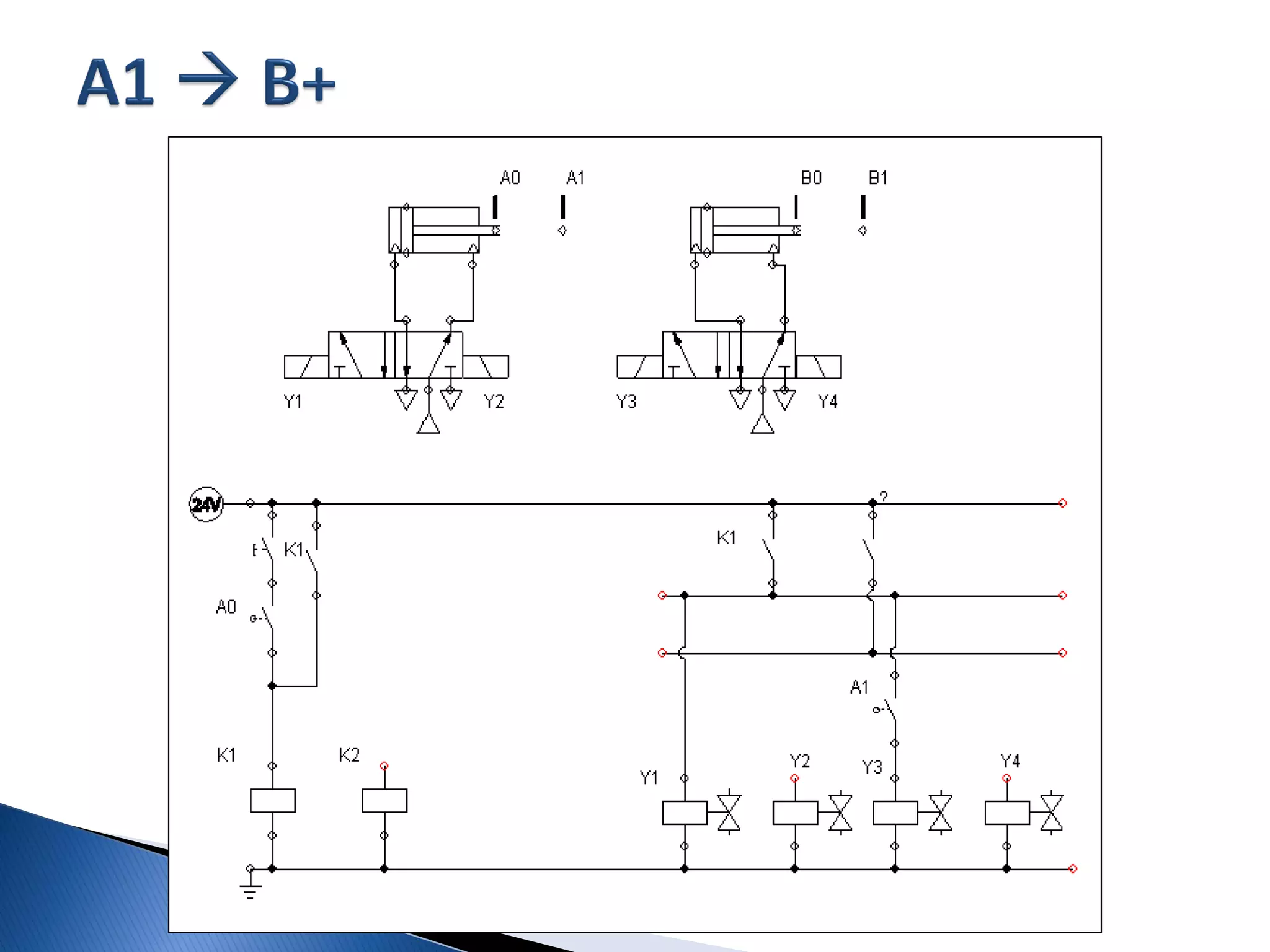
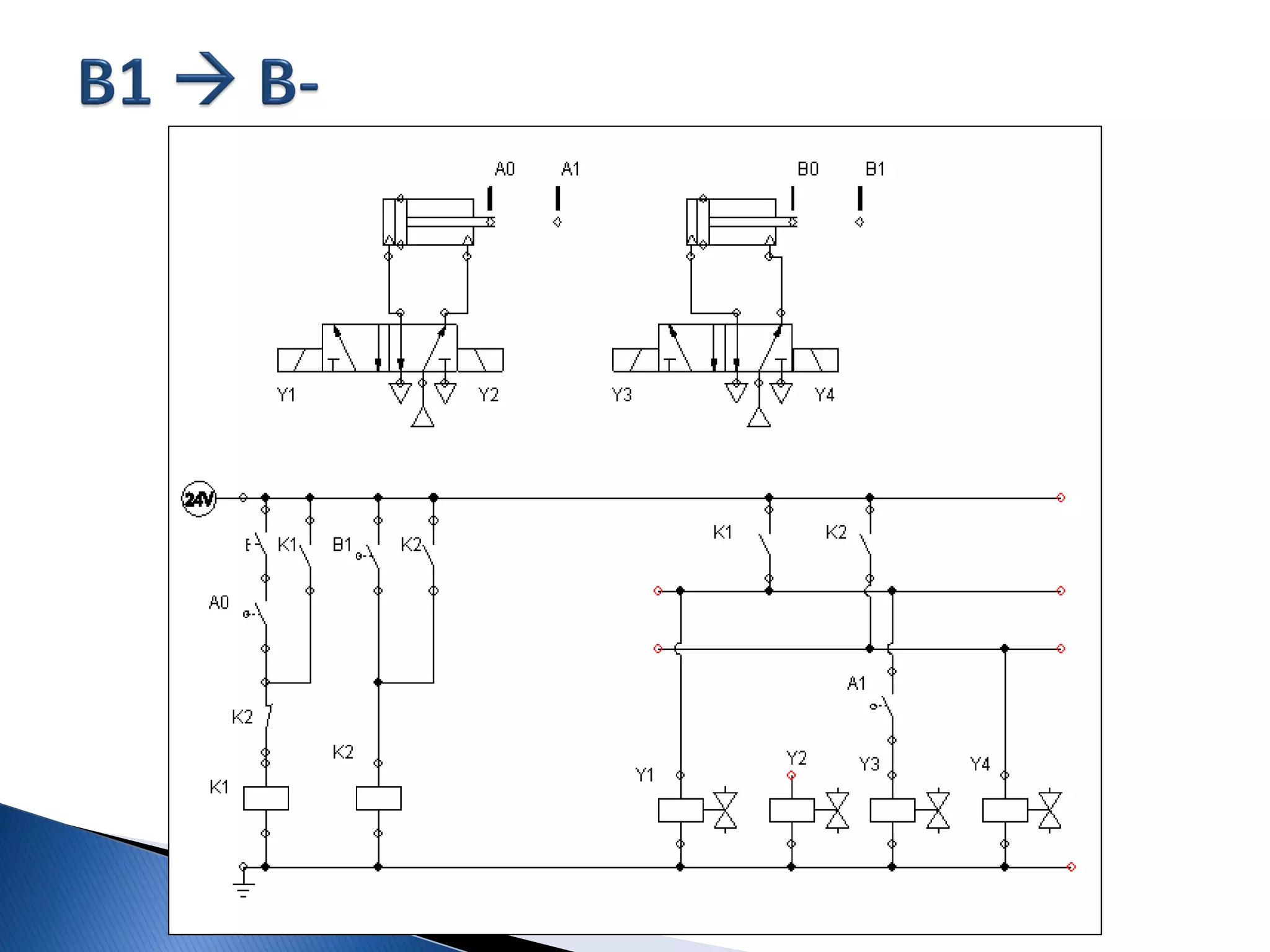
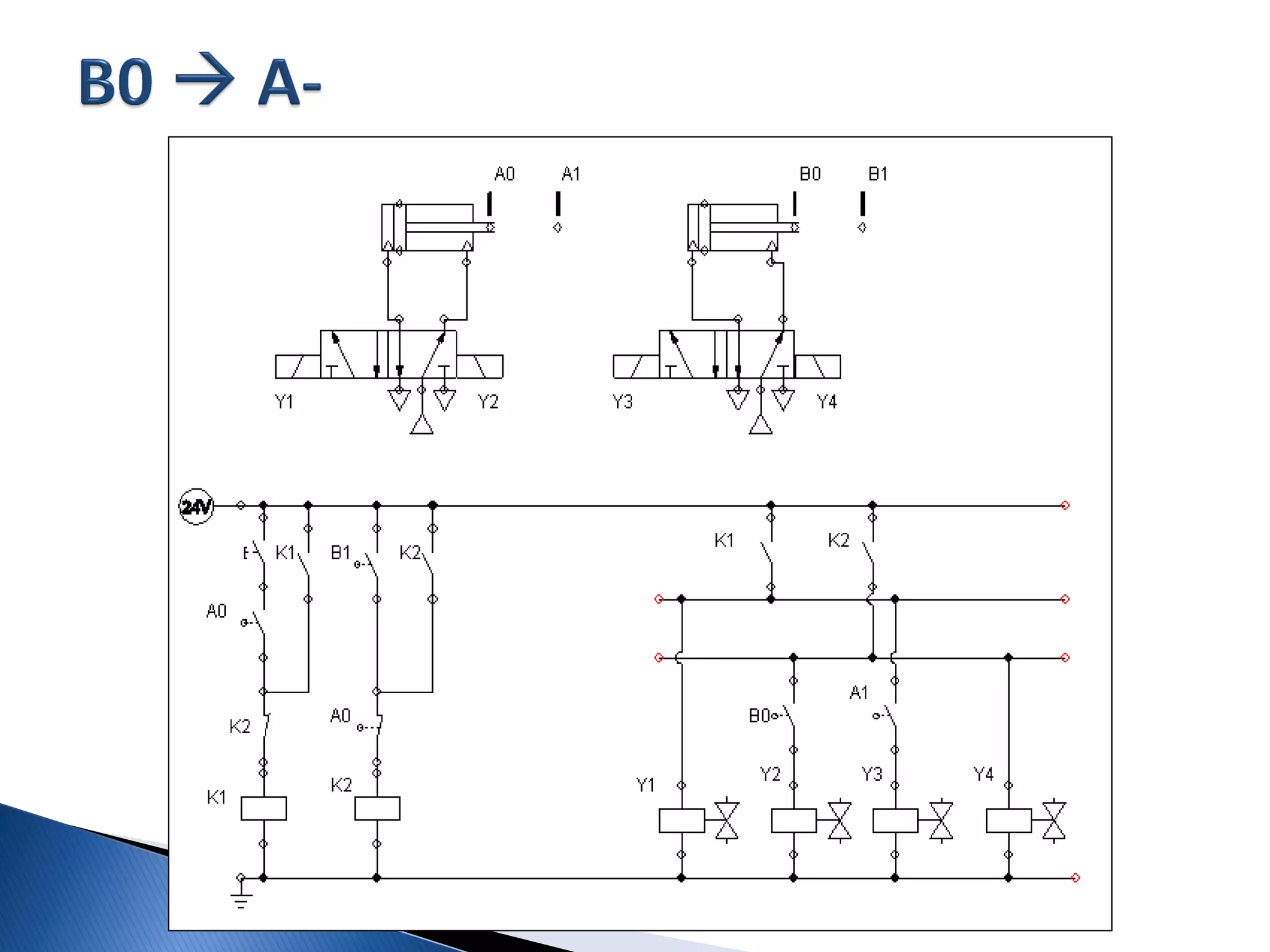
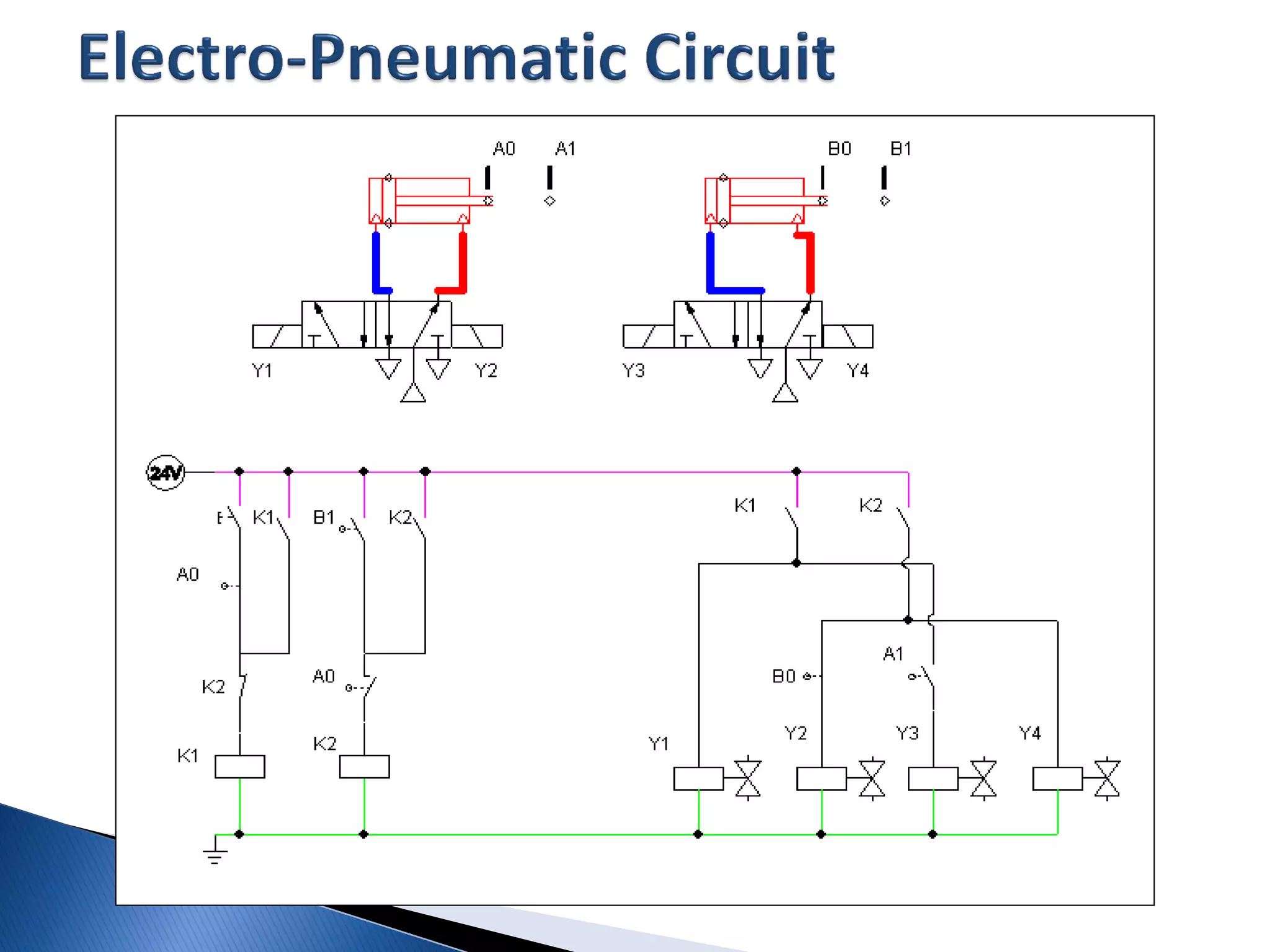
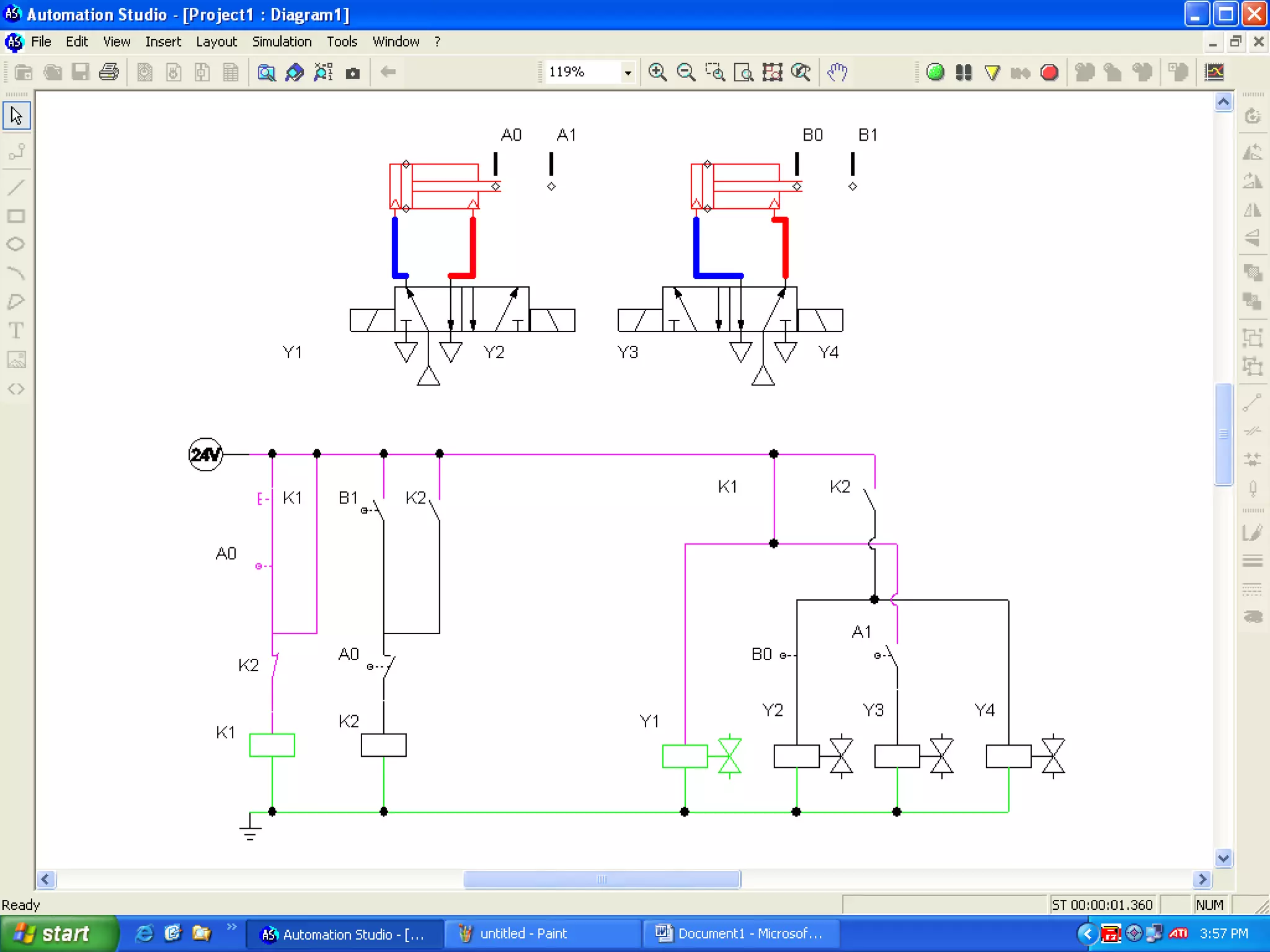
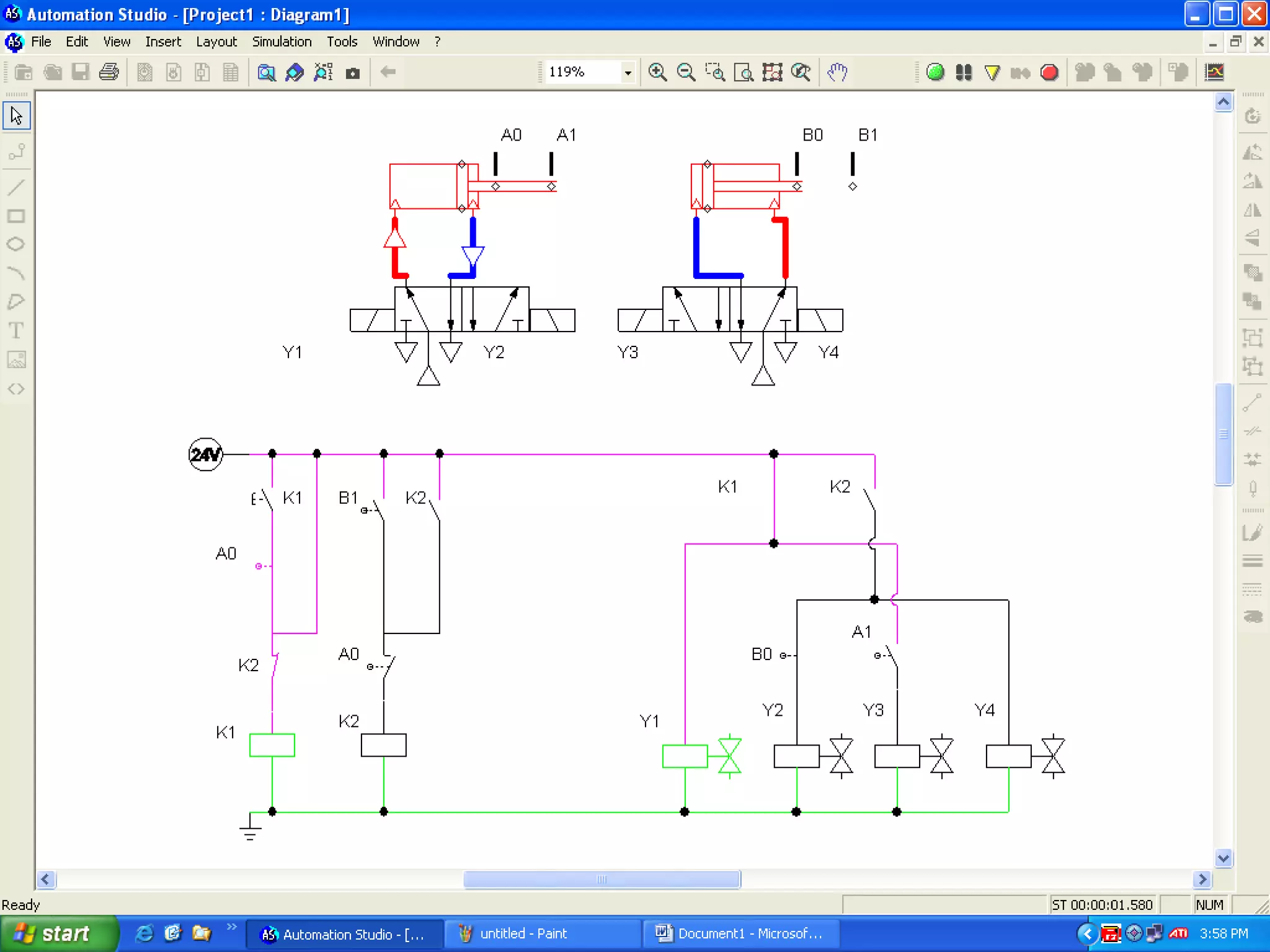
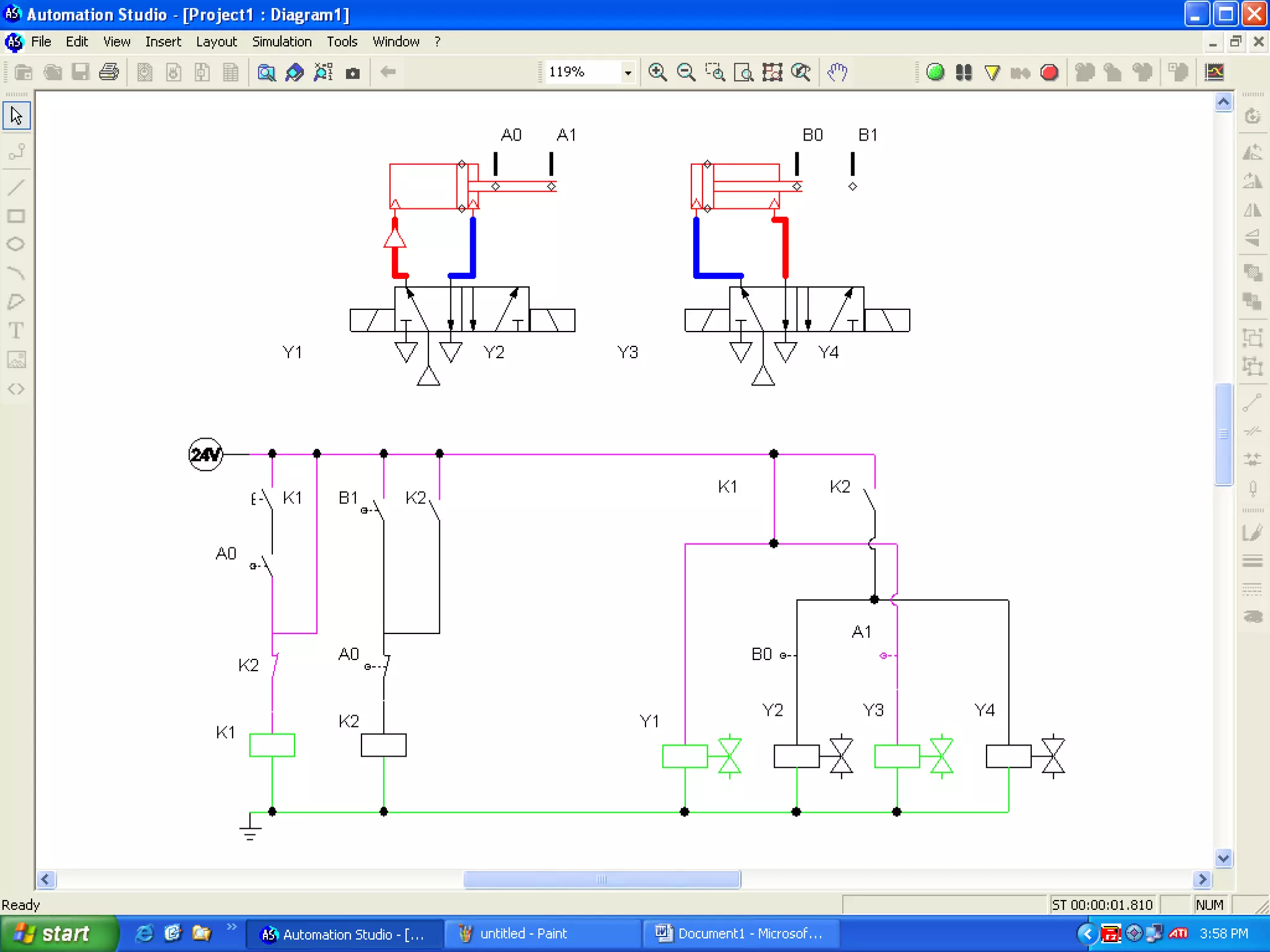
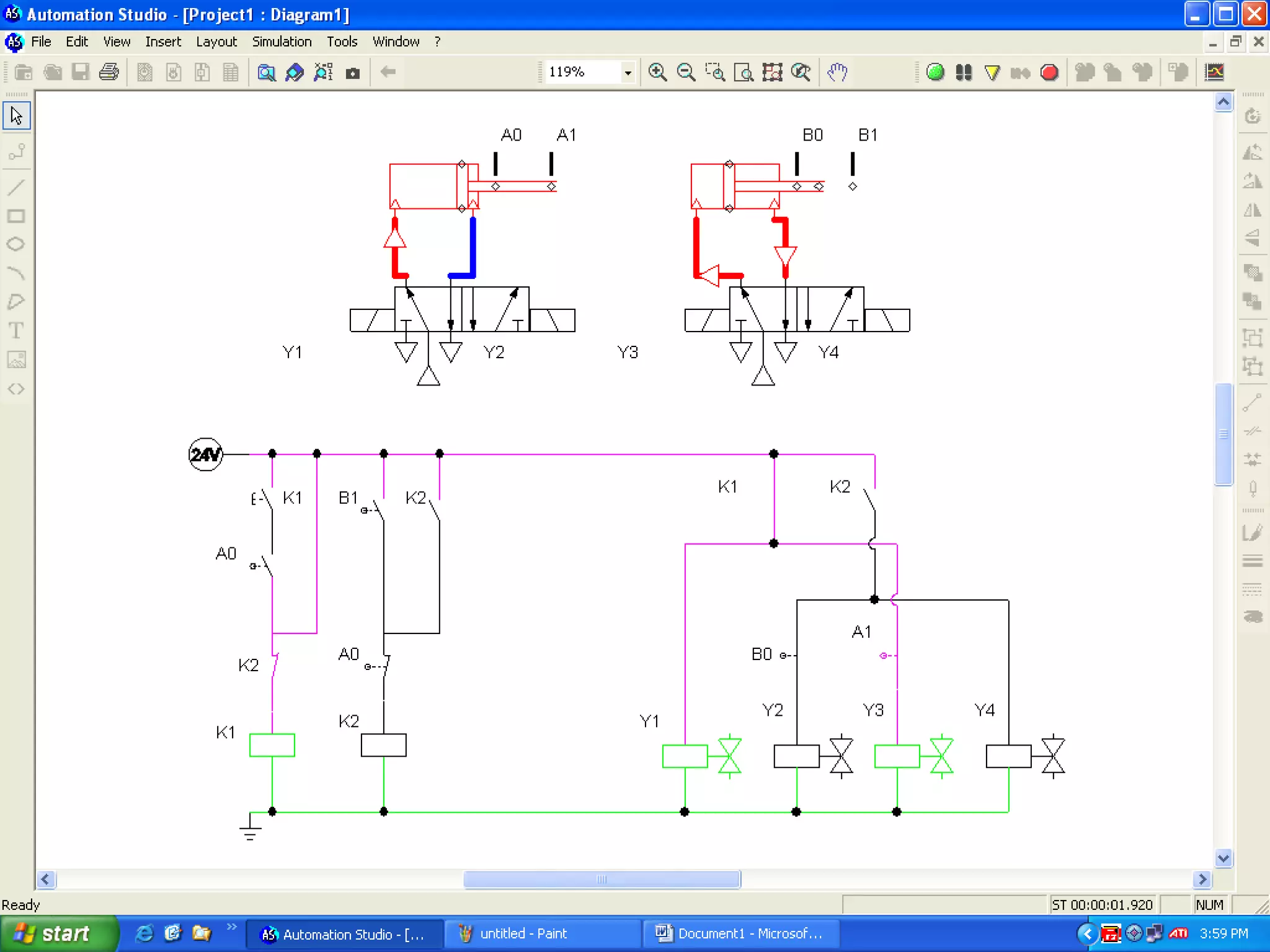
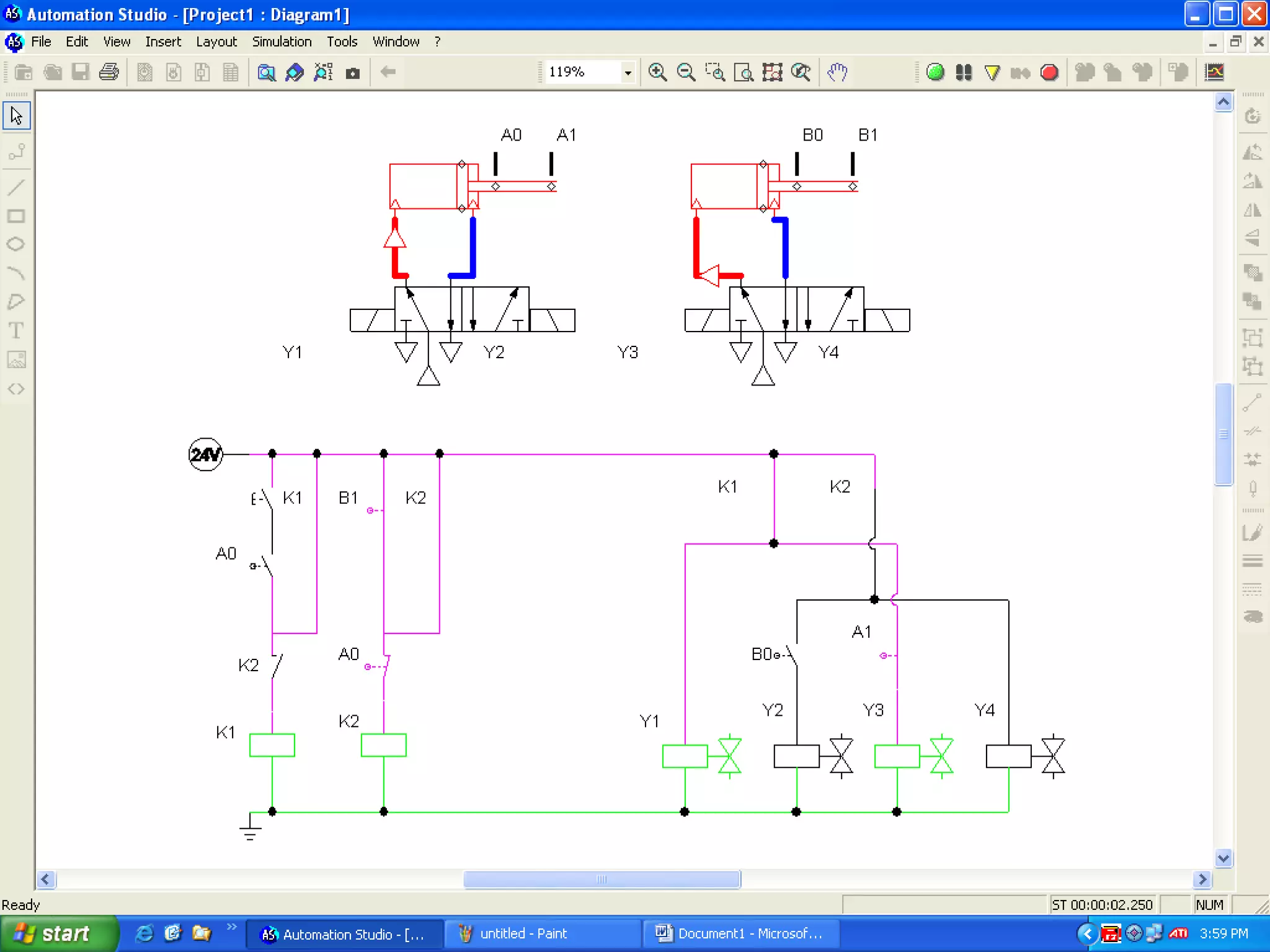
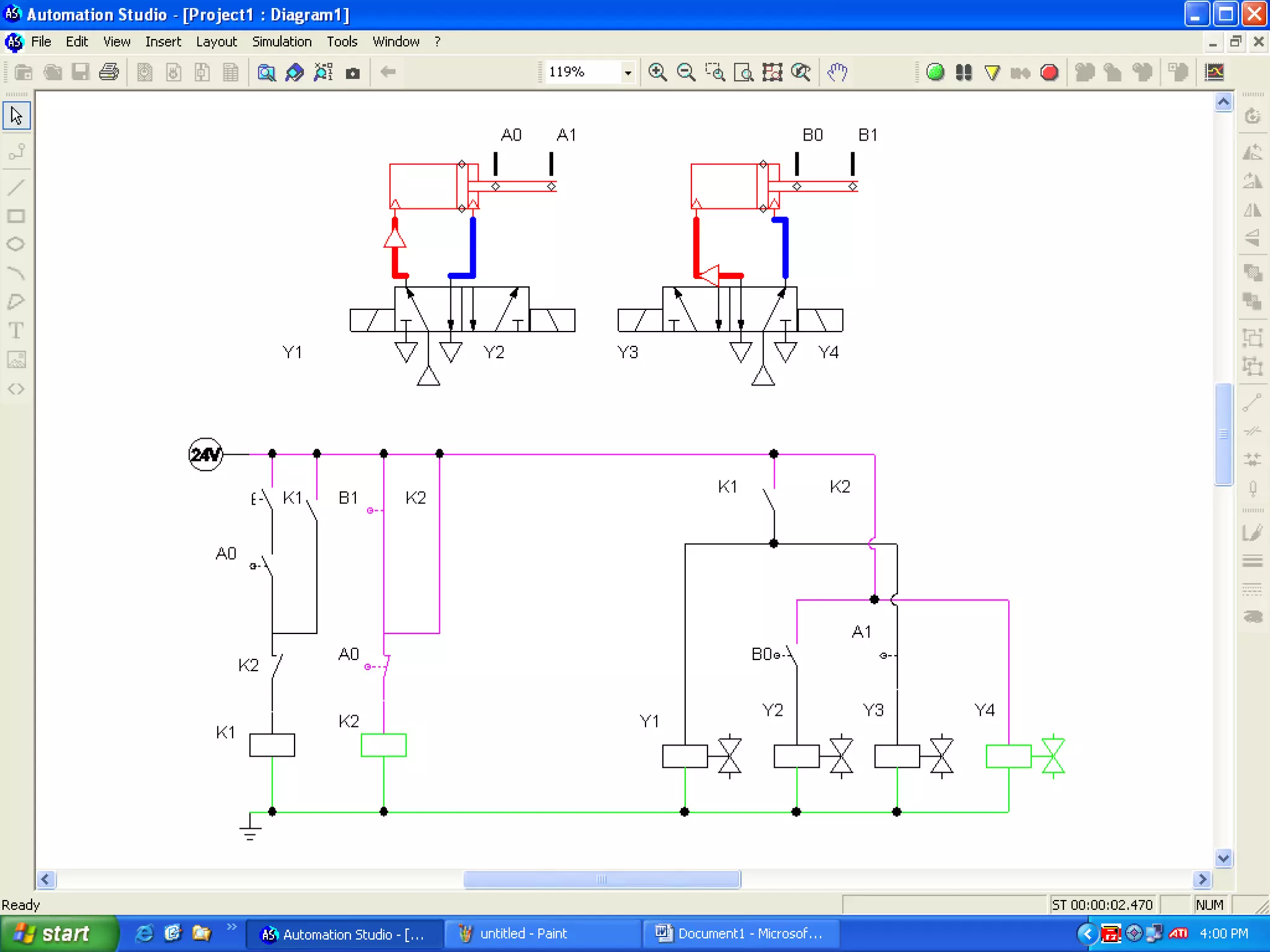
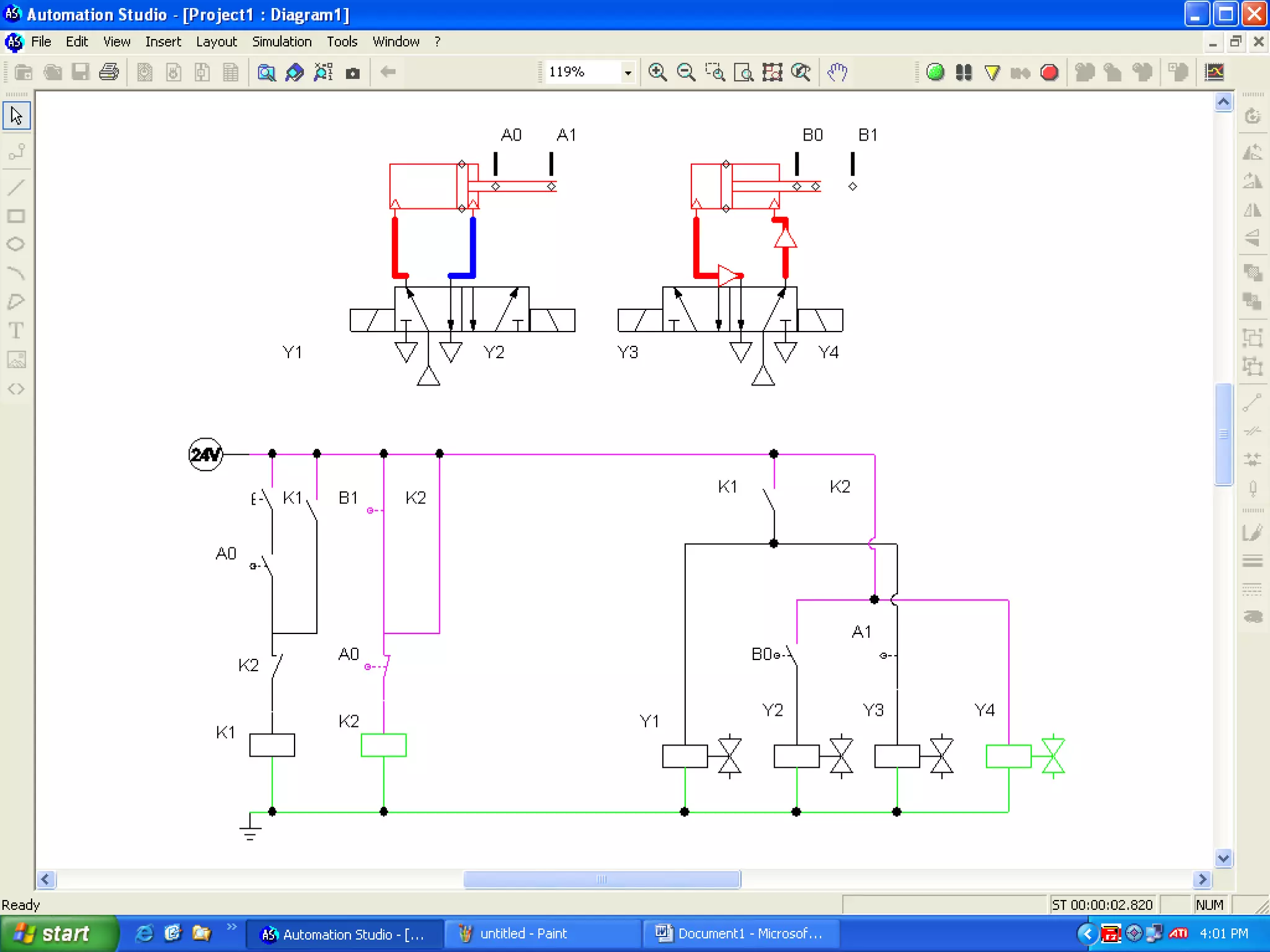
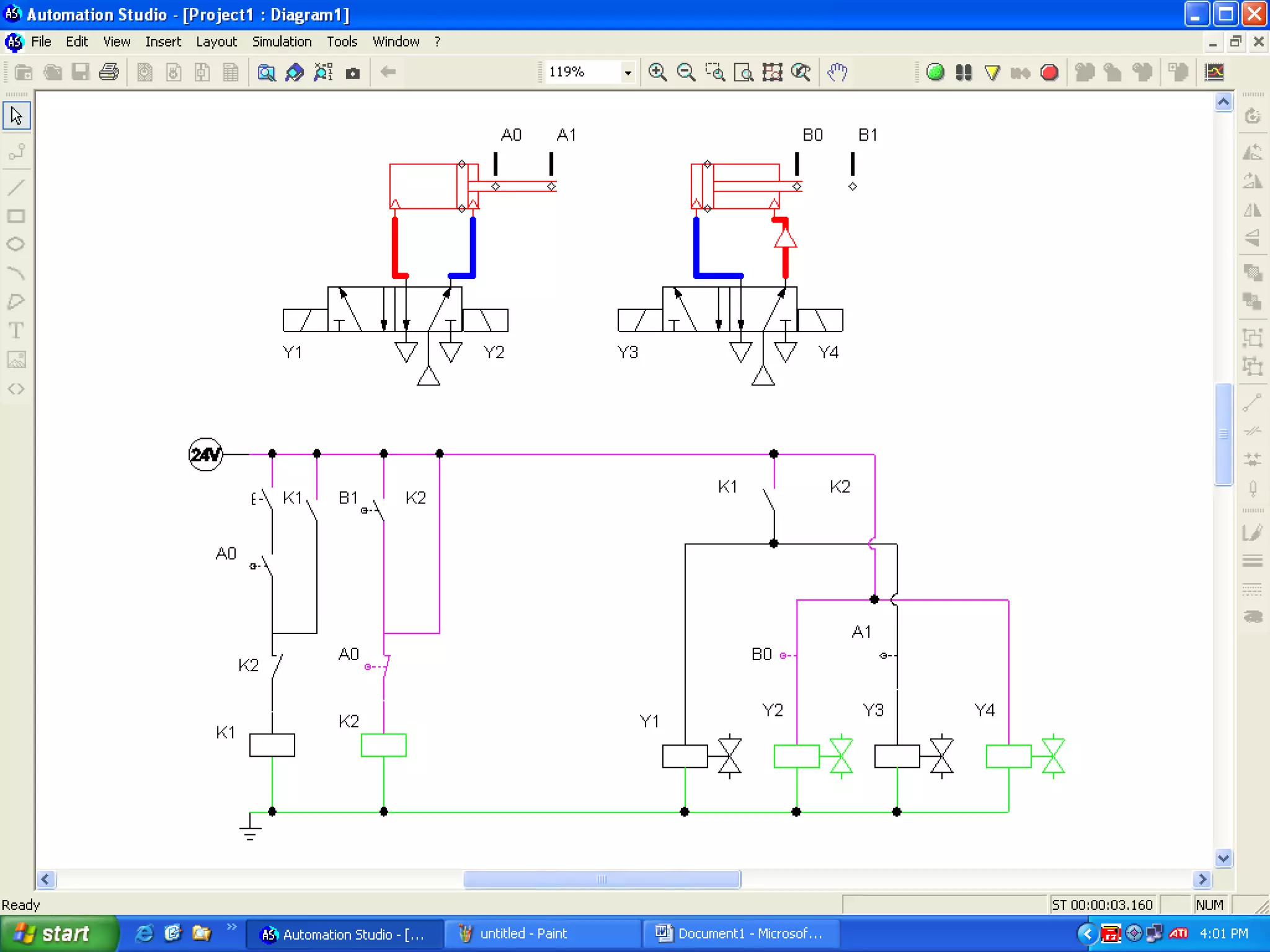
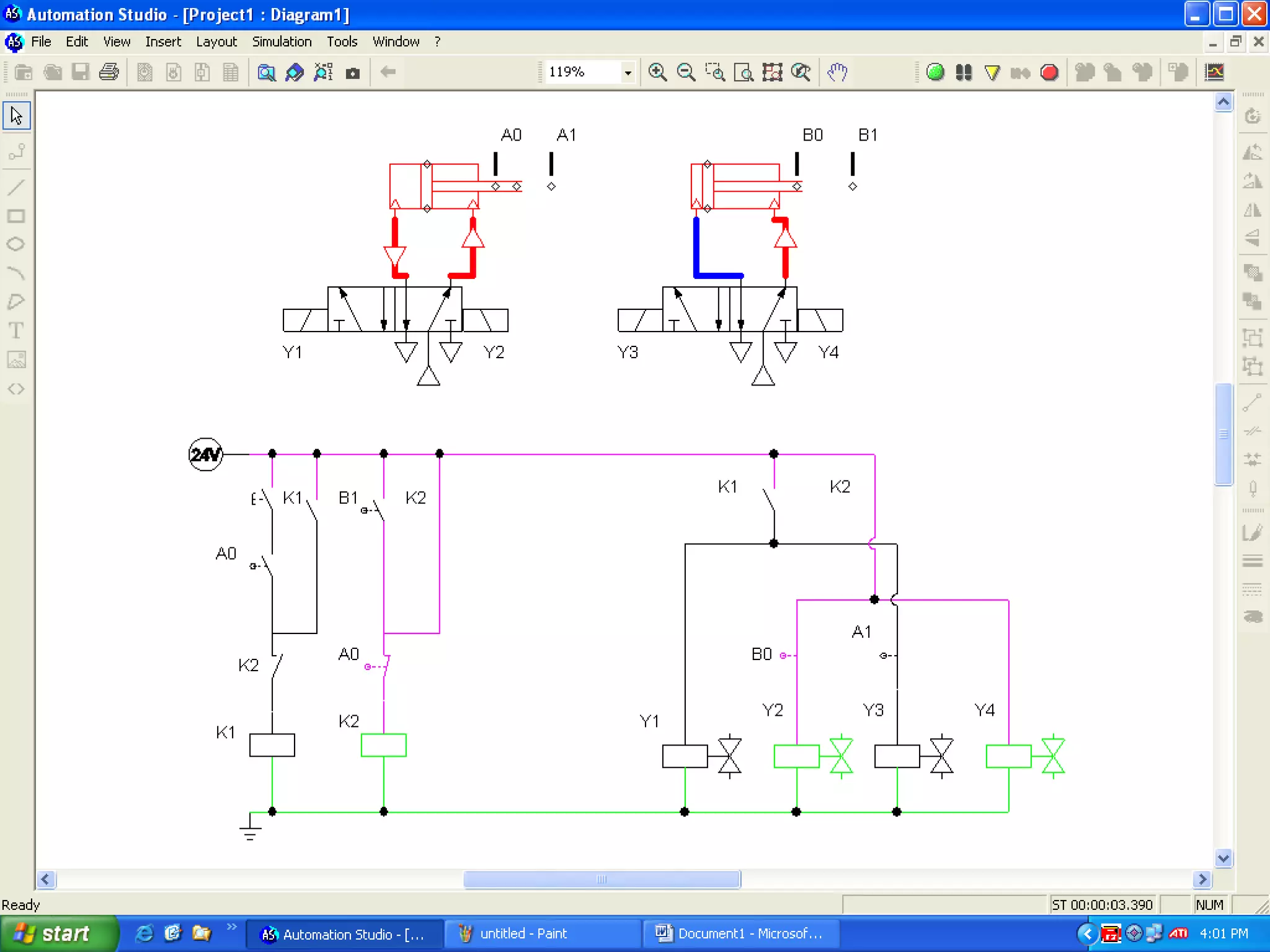
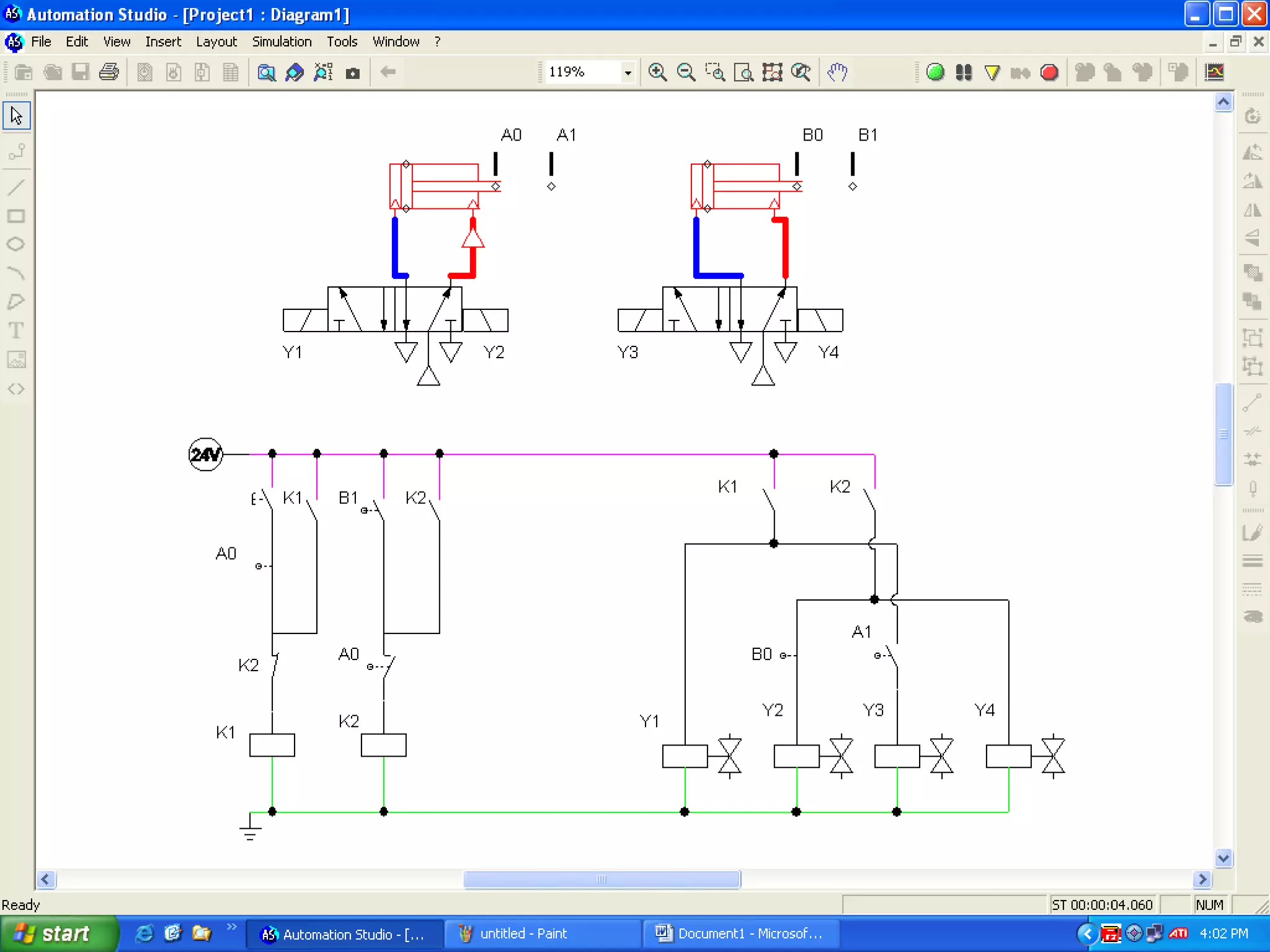
1. Identify sequence of movement
2. Divide sequence into groups
3. Identify limit switch status
4. Identify number of conductor line
( = number of group)
5. Identify number of reversing switch
(= number of group)
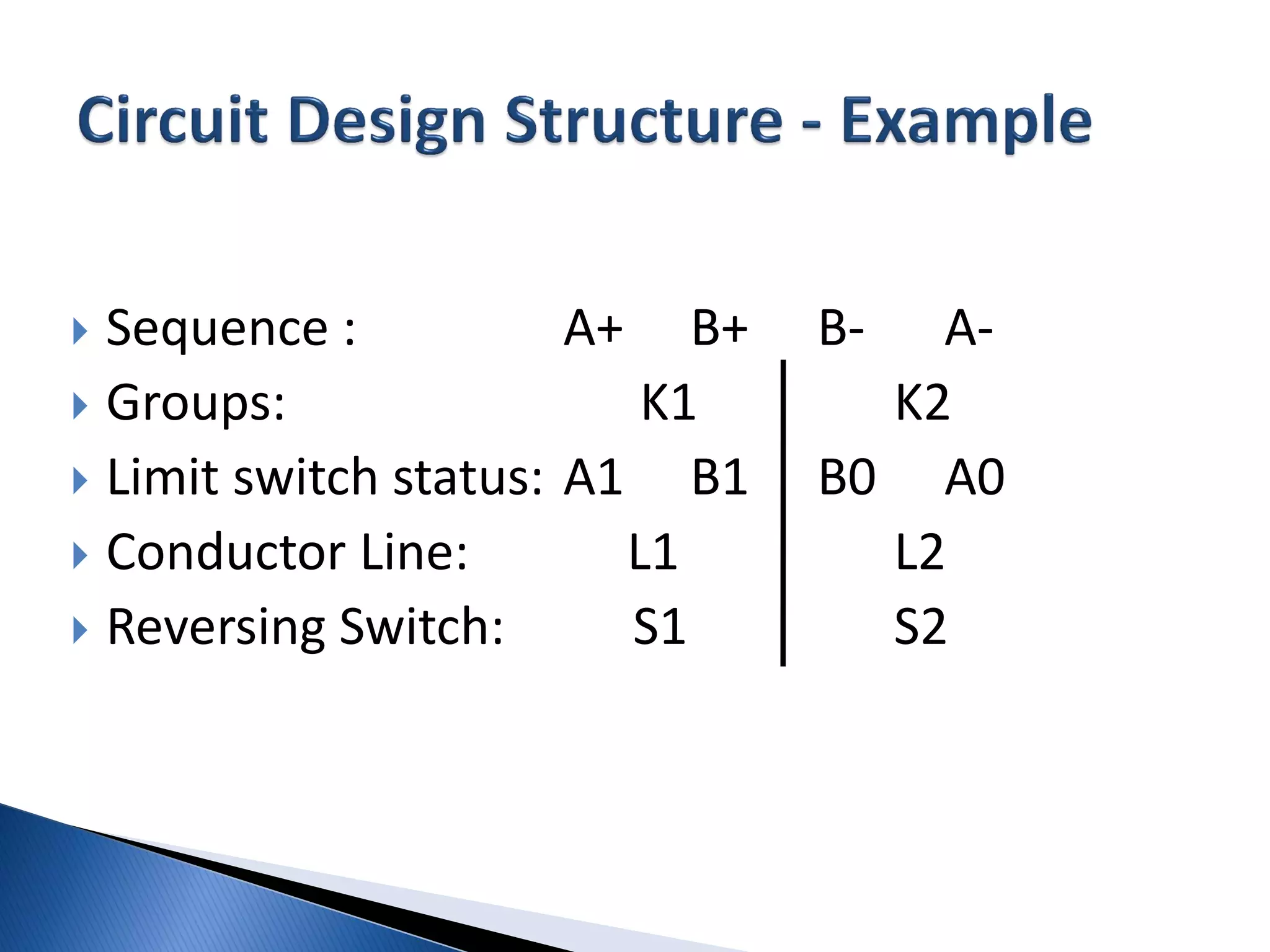
 Sequence : A+ B+ B- A-
 Groups: K1 K2
 Limit switch status: A1 B1 B0 A0
 Conductor Line: L1 L2
 Reversing Switch: S1 S2
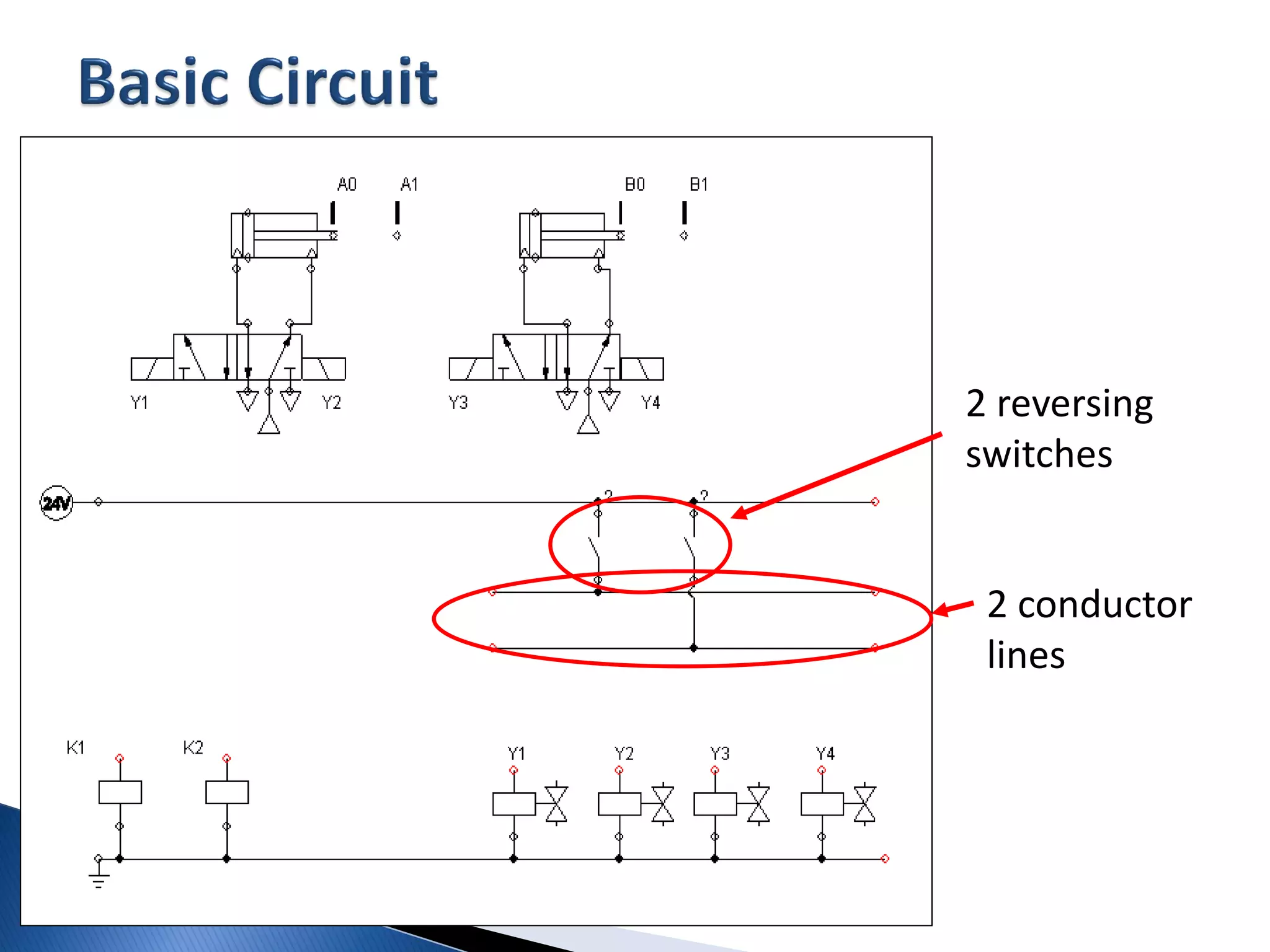
2 conductor
lines
2 reversing
switches
Week 8 2_design_of_electro_pneumatic_circuit

Week 8 2_design_of_electro_pneumatic_circuit

  • 2.
    1. Identify sequenceof movement 2. Divide sequence into groups 3. Identify limit switch status 4. Identify number of conductor line ( = number of group) 5. Identify number of reversing switch (= number of group)
  • 3.
     Sequence :A+ B+ B- A-  Groups: K1 K2  Limit switch status: A1 B1 B0 A0  Conductor Line: L1 L2  Reversing Switch: S1 S2
  • 4.