Week 3 
The Bourgeois Century
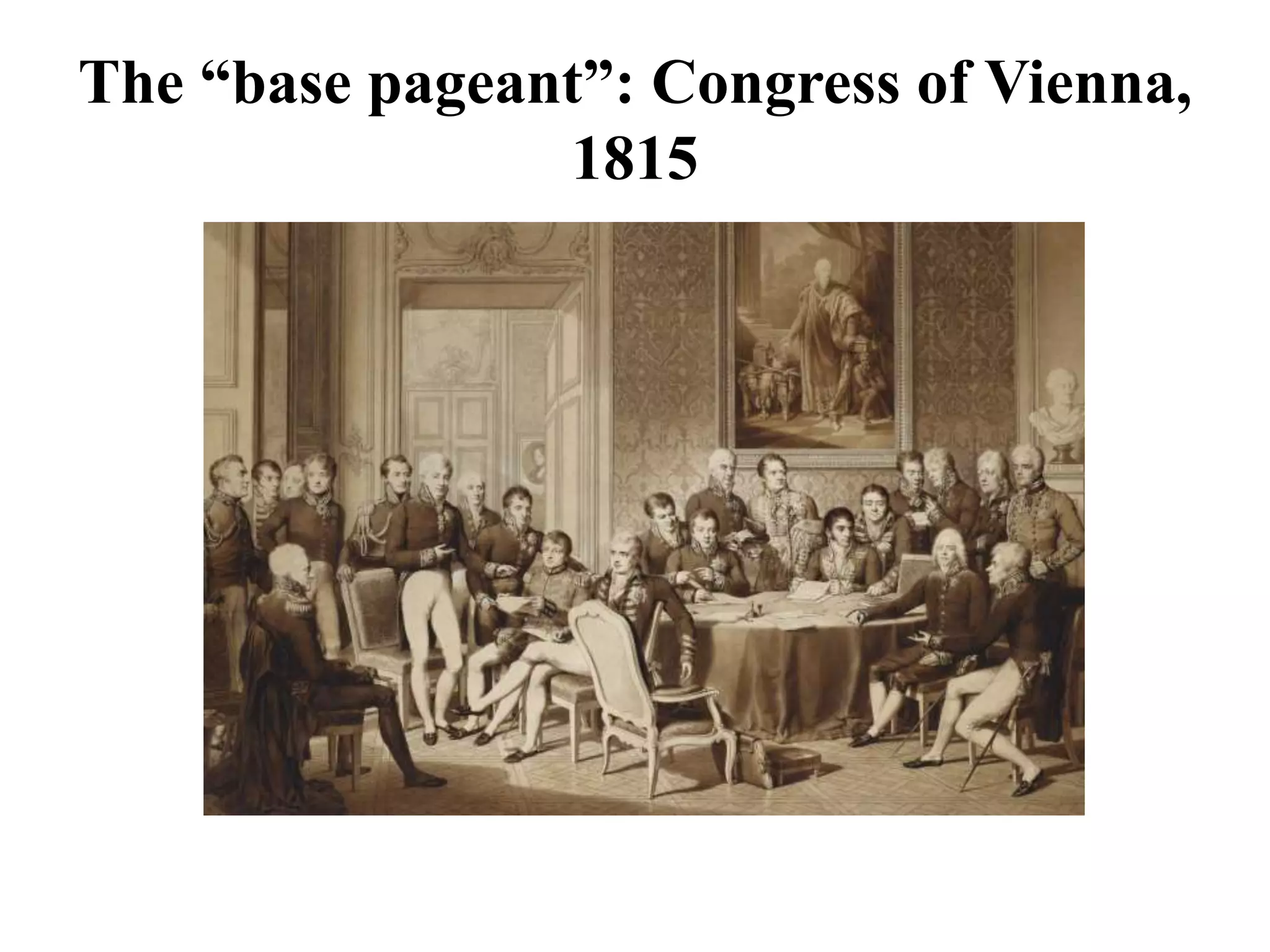
The “base pageant”: Congress of Vienna, 
1815
Major Goals 
• Contain France and restore monarchical 
territories 
• Create a “balance of power” to ensure against 
European-wide conflict 
• Suppress any threats to status quo; stifle liberal 
and nationalist demands
Restoration Europe
Territorial changes 
• Growth of Russia, Prussia, and Austria 
• “Congress” Poland 
• France pushed back to its pre-1790 borders 
• Disappearance of republics of Genoa and Venice 
• Buffer zones around France: Prussian Westphalia, 
Swiss Confederation, Piedmont-Sardinia 
• Creation of German Confederation and 
Bundestag
Prince Klemens von 
Metternich (1821)
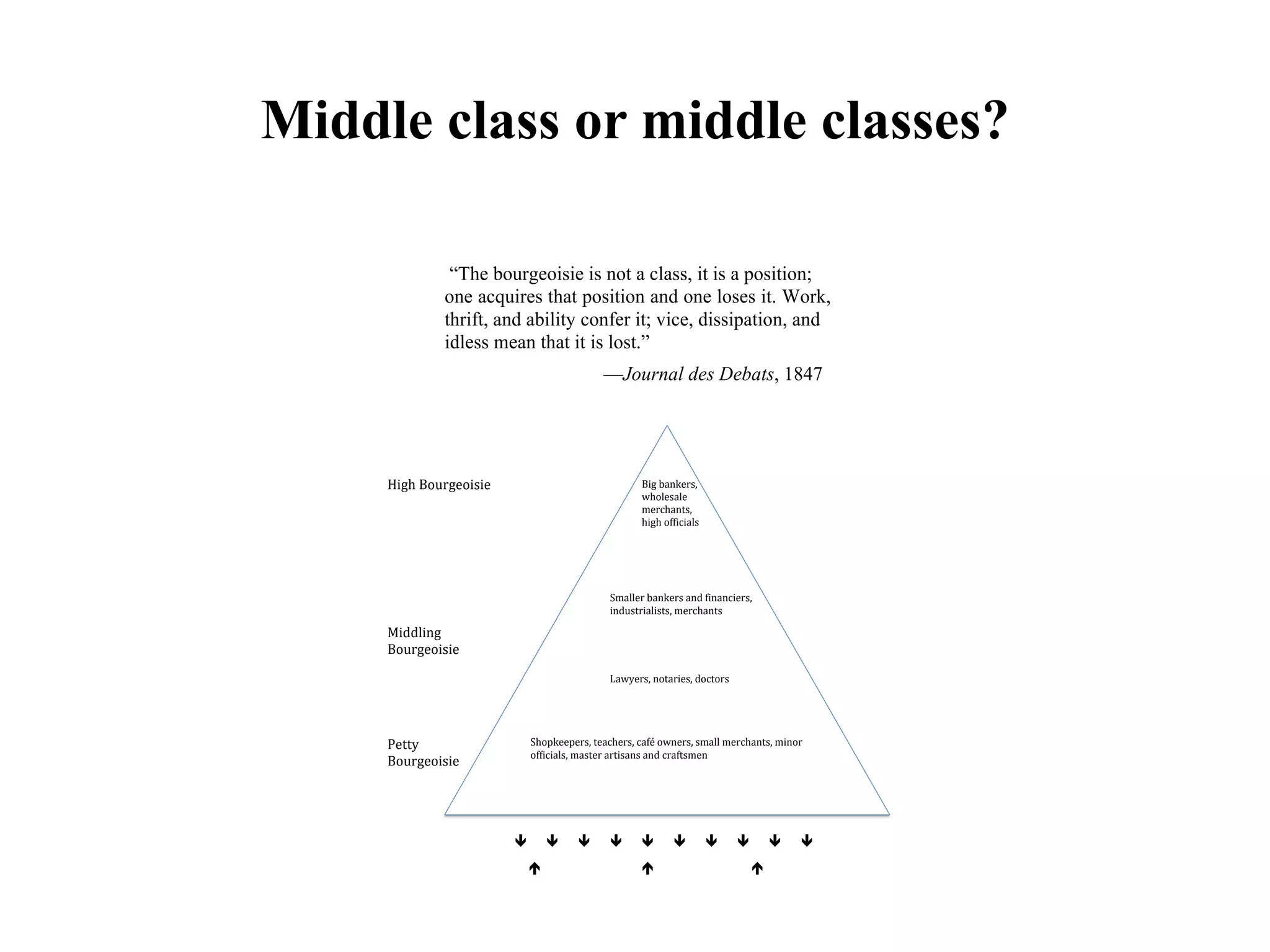
Middle class or middle classes? 
“The bourgeoisie is not a class, it is a position; 
one acquires that position and one loses it. Work, 
thrift, and ability confer it; vice, dissipation, and 
idless mean that it is lost.” 
—Journal des Debats, 1847 
Big	bankers,	 
wholesale	 
merchants,	 
high	officials	 
Smaller	bankers	and	financiers,	 
industrialists,	merchants	 
Lawyers,	notaries,	doctors	 
	 
Shopkeepers,	teachers,	café	owners,	small	merchants,	minor	 
officials,	master	artisans	and	craftsmen	 
High	Bourgeoisie	 
Middling	 
Bourgeoisie	 
Petty		 
Bourgeoisie
Caricaturist of middle classes: Honoré 
Daumier (1808–1879)
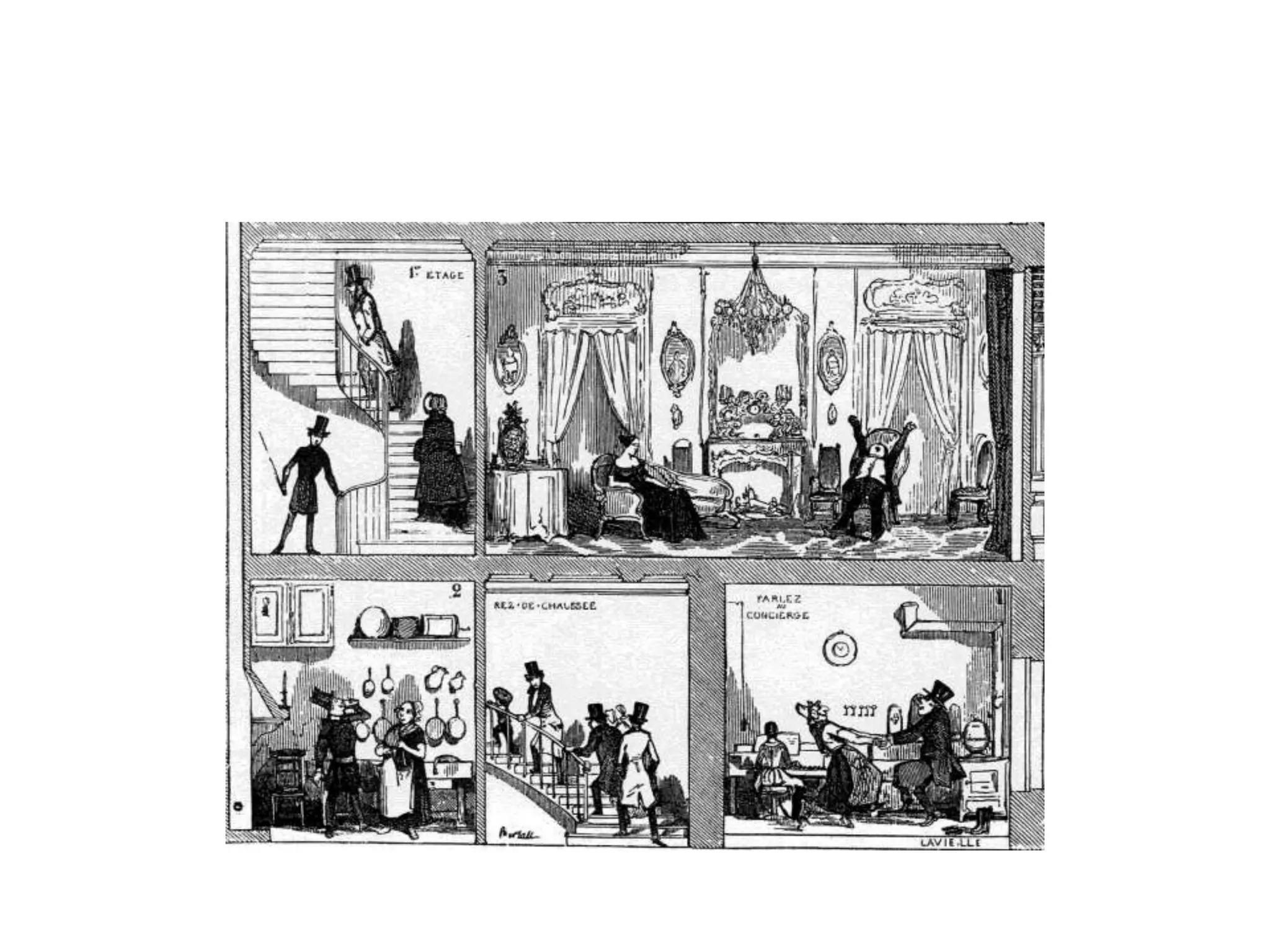
Verticality of class: typical apartment in 19th 
century Paris
Bourgeois domesticity: the private sphere
Christmas, a celebration of middle class 
domesticity
Bourgeoisie and books: self-cultivation or 
dangerous escapism?
Do you know what your wife needs? said Madame Bovary senior. She needs some hard 
work, some manual labor. If she were like nearly everyone else, forced to earn a living, 
she wouldn’t have these vapours of hers, which all come from stuffing her head with 
nonsense and leading a life of idleness. 
–But she is always busy, said Charles. 
–Ah! Busy indeed! And with what? Busy reading novels, wicked books, things written 
against religion, where priests are made a mockery with speeches taken from Voltaire. 
It all leads to no good, my poor boy, and anyone with no religion always comes to a 
bad end. 
Therefore, it was decided to prevent Emma from reading novels. This was by no means 
an easy matter. The old lady took it upon herself: on her way through Rouen she was to 
call in person at the lending library and notify them that Emma was cancelling her 
subscription. Would they not have the right to tell the police, if the librarian still 
persisted in his poisonous trade?” 
—Gustave Flaubert, Madame Bovary (1856)

Week 3: The Bourgeois Century

  • 1.
    Week 3 TheBourgeois Century
  • 2.
    The “base pageant”:Congress of Vienna, 1815
  • 3.
    Major Goals •Contain France and restore monarchical territories • Create a “balance of power” to ensure against European-wide conflict • Suppress any threats to status quo; stifle liberal and nationalist demands
  • 4.
  • 5.
    Territorial changes •Growth of Russia, Prussia, and Austria • “Congress” Poland • France pushed back to its pre-1790 borders • Disappearance of republics of Genoa and Venice • Buffer zones around France: Prussian Westphalia, Swiss Confederation, Piedmont-Sardinia • Creation of German Confederation and Bundestag
  • 6.
    Prince Klemens von Metternich (1821)
  • 7.
    Middle class ormiddle classes? “The bourgeoisie is not a class, it is a position; one acquires that position and one loses it. Work, thrift, and ability confer it; vice, dissipation, and idless mean that it is lost.” —Journal des Debats, 1847 Big bankers, wholesale merchants, high officials Smaller bankers and financiers, industrialists, merchants Lawyers, notaries, doctors Shopkeepers, teachers, café owners, small merchants, minor officials, master artisans and craftsmen High Bourgeoisie Middling Bourgeoisie Petty Bourgeoisie
  • 8.
    Caricaturist of middleclasses: Honoré Daumier (1808–1879)
  • 9.
    Verticality of class:typical apartment in 19th century Paris
  • 12.
  • 13.
    Christmas, a celebrationof middle class domesticity
  • 14.
    Bourgeoisie and books:self-cultivation or dangerous escapism?
  • 15.
    Do you knowwhat your wife needs? said Madame Bovary senior. She needs some hard work, some manual labor. If she were like nearly everyone else, forced to earn a living, she wouldn’t have these vapours of hers, which all come from stuffing her head with nonsense and leading a life of idleness. –But she is always busy, said Charles. –Ah! Busy indeed! And with what? Busy reading novels, wicked books, things written against religion, where priests are made a mockery with speeches taken from Voltaire. It all leads to no good, my poor boy, and anyone with no religion always comes to a bad end. Therefore, it was decided to prevent Emma from reading novels. This was by no means an easy matter. The old lady took it upon herself: on her way through Rouen she was to call in person at the lending library and notify them that Emma was cancelling her subscription. Would they not have the right to tell the police, if the librarian still persisted in his poisonous trade?” —Gustave Flaubert, Madame Bovary (1856)

Editor's Notes

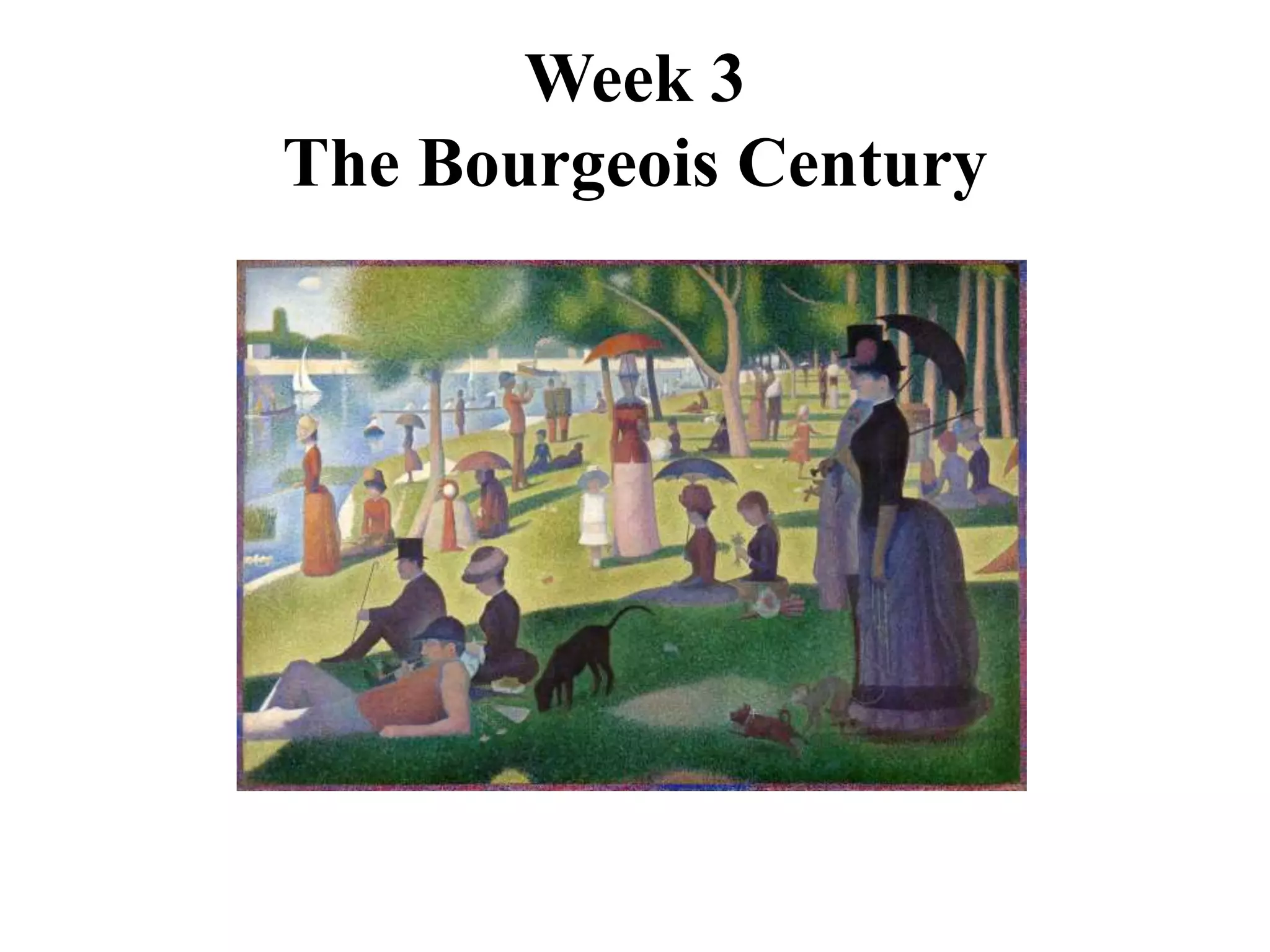
  • #2 Georges Seurat, A Sunday Afternoon on the Island of La Grande Jatte (1884)