weCliq
Defining Key Issues in Group Socialization
and Choosing a Primary Market
Presented by:
Christina Chen Simone Liano
Shambhu Koirala Erica Swallow
 weCliq Overview
 Project Scope
 Methodology
 Key Findings
 Recommendations
Agenda
weCliq Overview
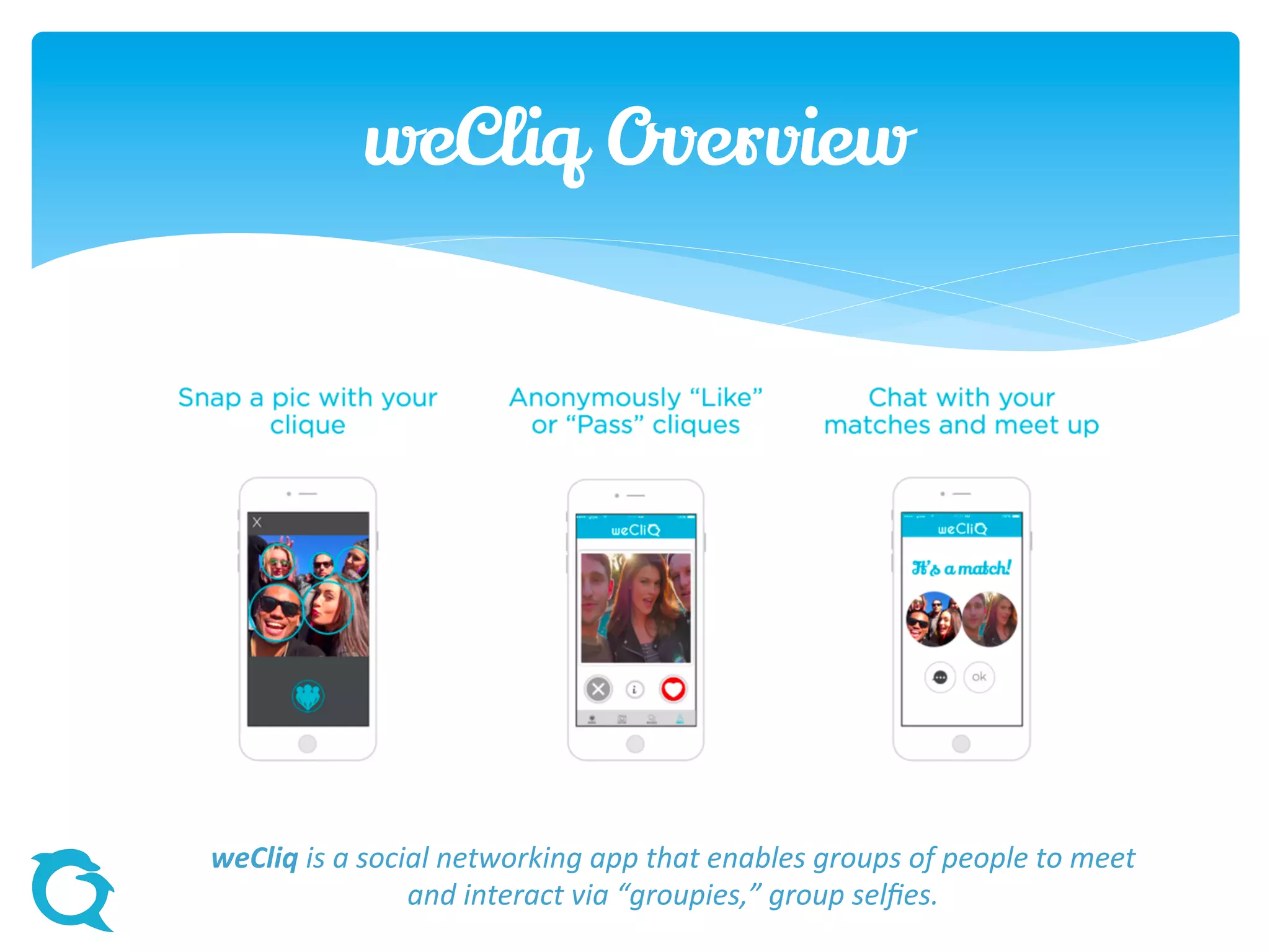
weCliq is a social networking app that enables groups of people to meet
and interact via “groupies,” group selfies.
Project Scope
 PROBLEM STATEMENT
What key problems exist in
the market regarding group
socialization and which
group of consumers
experience this problem the
most?
Methodology
 Customer Interviews
 30-45 minute qualitative
interviews
 Smartphone-toting college
students, 18-24 years old
 Discussed…
 Photo-taking habits
 Socialization norms
 Opinions on groupies/selfies
 Limited data analysis
 Data Analysis
 3,050 unique Facebook
photos analyzed on 30
dimensions (90,000+ data
points)
 Type of photo
 Occasion
 User demographics
 Researched two groups
 Young professionals
 College students
Key Findings
 College students have ample socialization opportunities.
 Interest-driven clubs, mixers, dorm life, sports, classes
 Groupies have a more positive reputation than selfies.
 Selfies are seen as vane, while groupies are fun and interactive.
 College students have bigger problems with scheduling.
 They don’t need more friends. Corralling current friends
through existing social apps is hard enough.
Customer Discovery Findings
See full customer discovery findings in mid-term presentation.
“Trying to meet new people online is
awkward. I feel it's better to be introduced
by a friend of a friend.”
Students Prefer Offline…
See full customer discovery findings in mid-term presentation.
 65% of interviewees reported having met someone
online, but most claimed meeting through friends is
preferred. Meeting online still has a stigma.
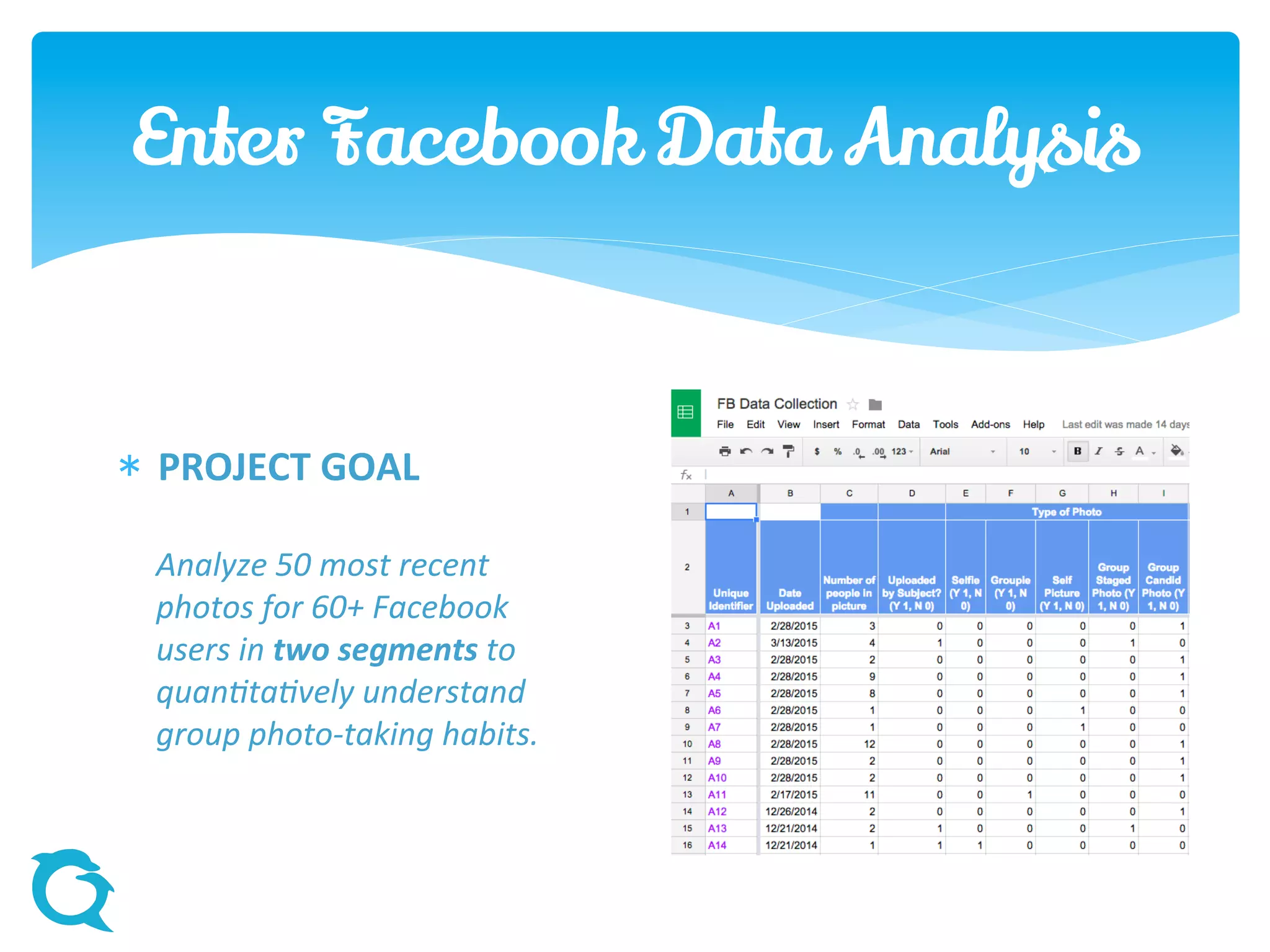
Enter Facebook Data Analysis
 PROJECT GOAL
Analyze 50 most recent
photos for 60+ Facebook
users in two segments to
quantitatively understand
group photo-taking habits.
 The data echoes that college students don’t have a deep
pain point for group socialization.
 Young professionals are more diverse in the activities they
convey in social media photos.
 Our assumption that women take more selfies and
groupies was debunked.
Data Analysis Findings
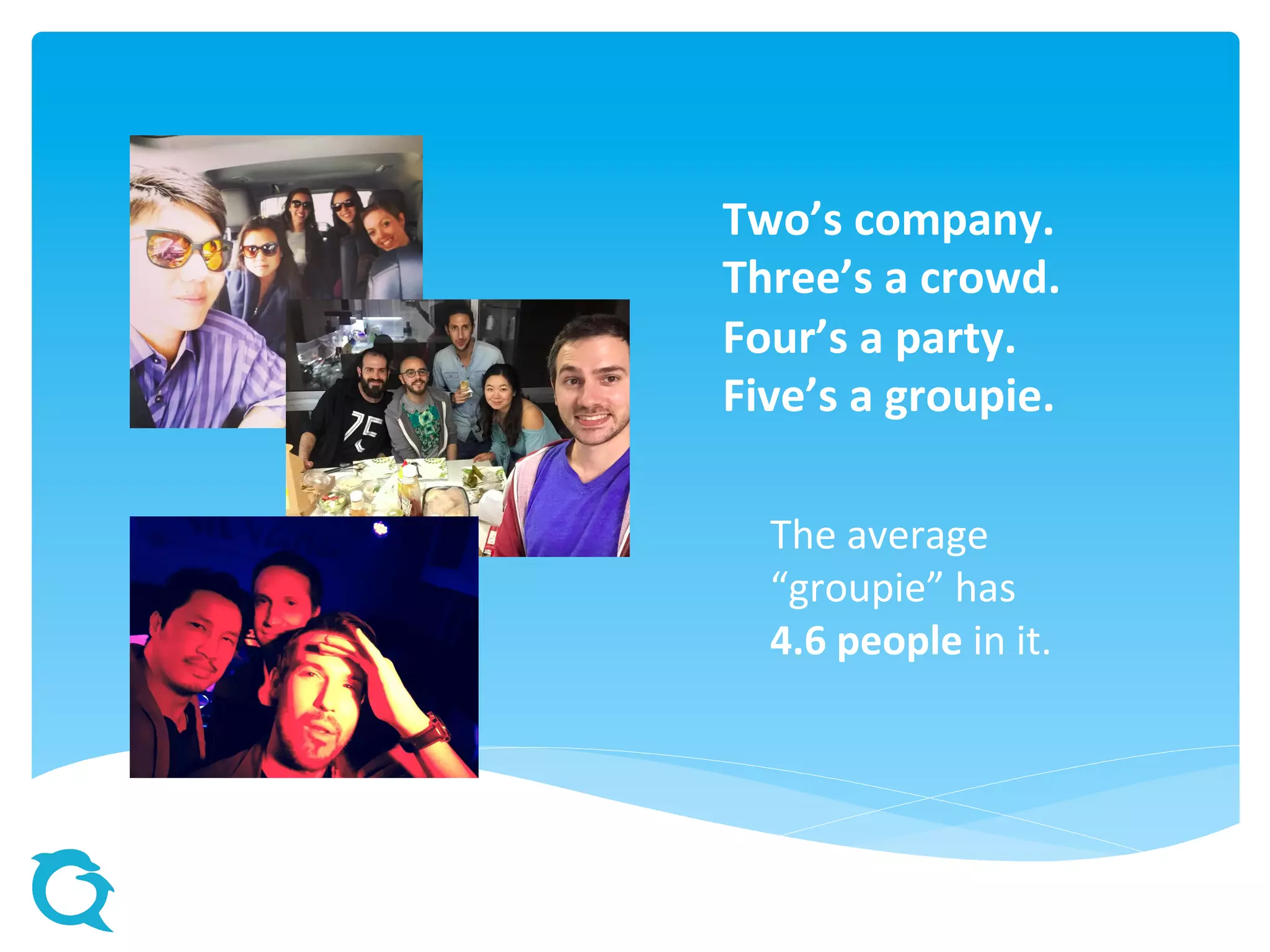
Two’s company.
Three’s a crowd.
Four’s a party.
Five’s a groupie.
The average
“groupie” has
4.6 people in it.
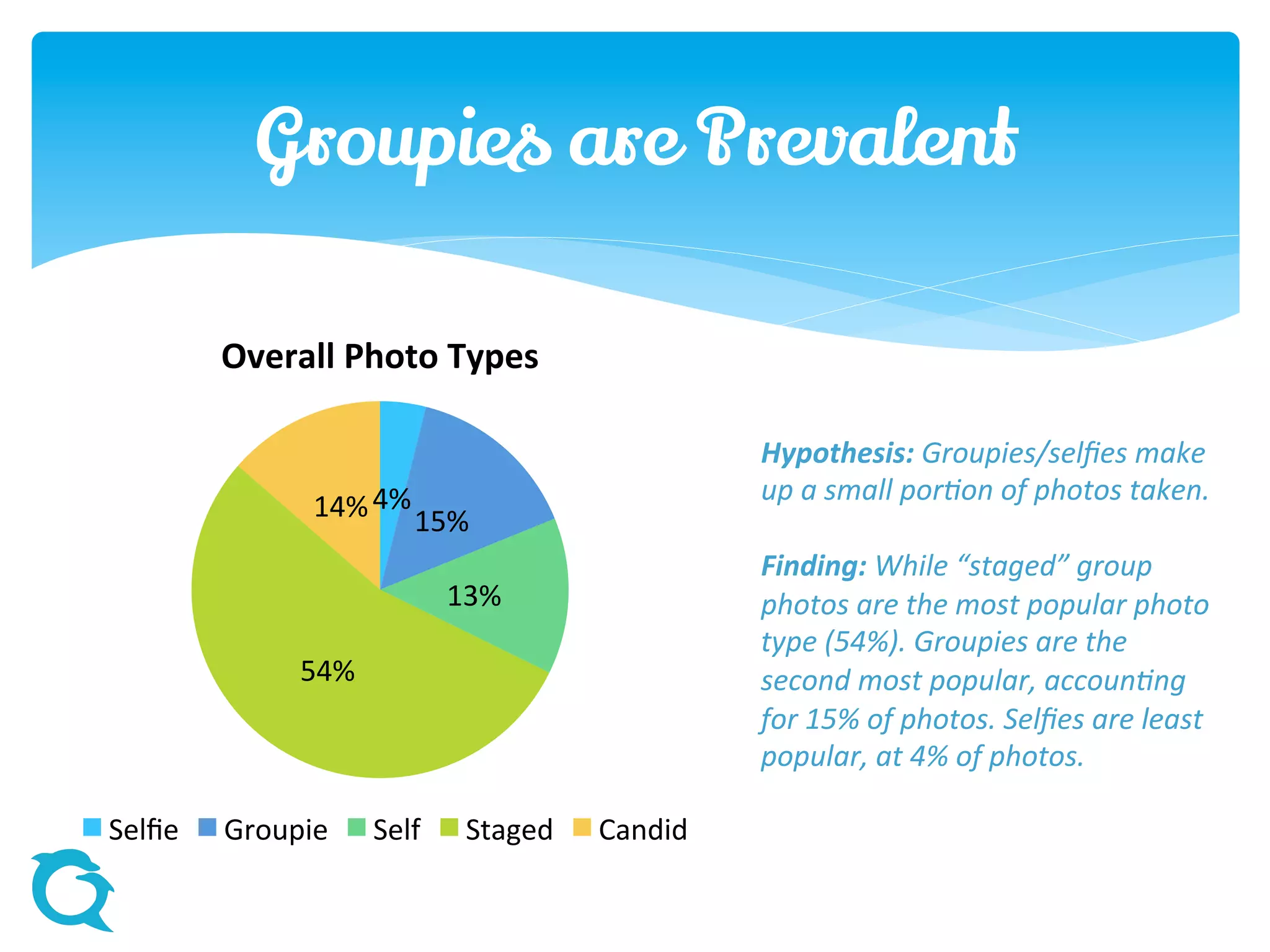
Hypothesis: Groupies/selfies make
up a small portion of photos taken.
Finding: While “staged” group
photos are the most popular photo
type (54%). Groupies are the
second most popular, accounting
for 15% of photos. Selfies are least
popular, at 4% of photos.
4%
15%
13%
54%
14%
Overall Photo Types
Selfie Groupie Self Staged Candid
Groupies are Prevalent
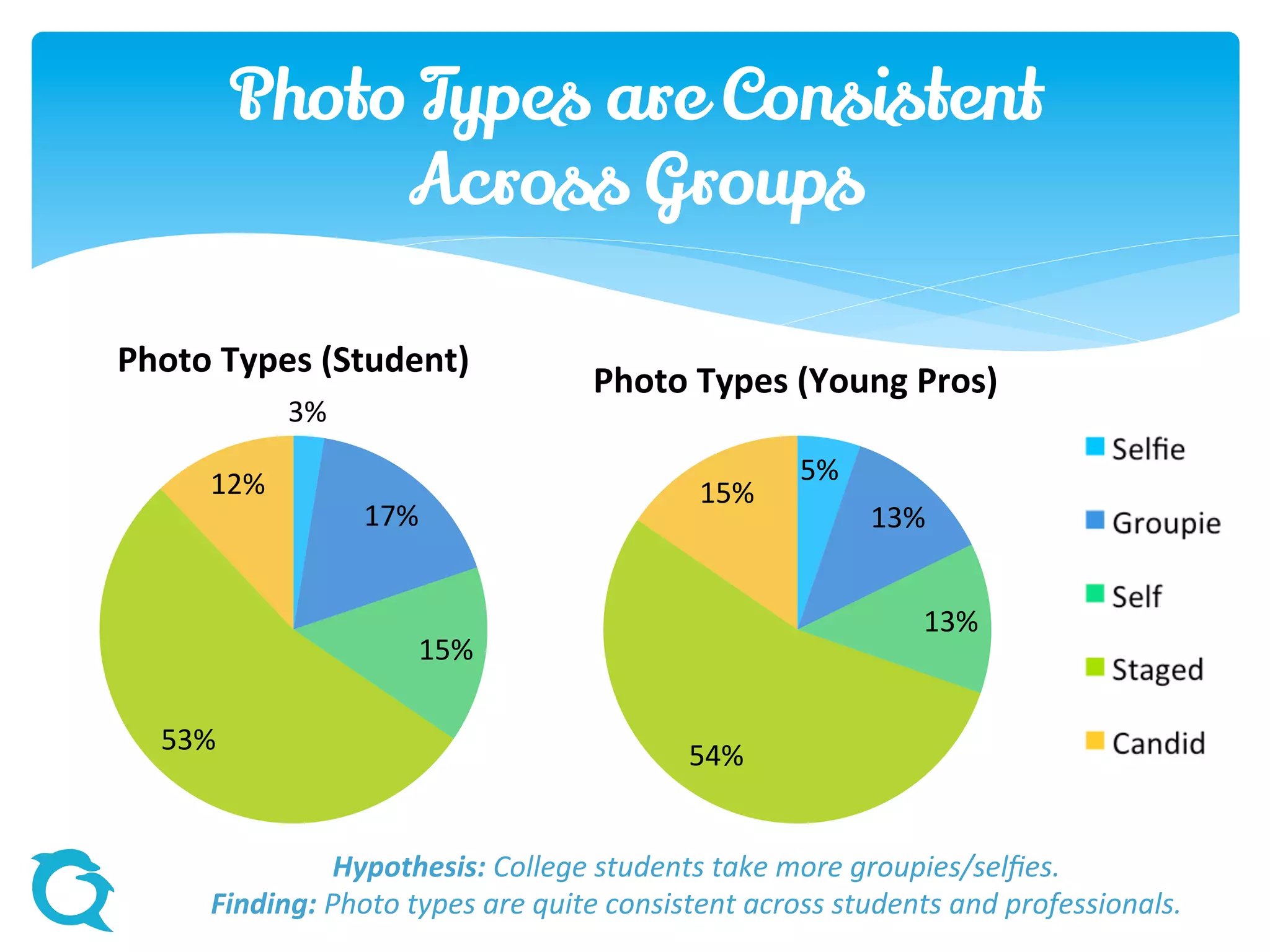
Hypothesis: College students take more groupies/selfies.
Finding: Photo types are quite consistent across students and professionals.
3%
17%
15%
53%
12%
Photo Types (Student)
5%
13%
13%
54%
15%
Photo Types (Young Pros)
Photo Types are Consistent
Across Groups
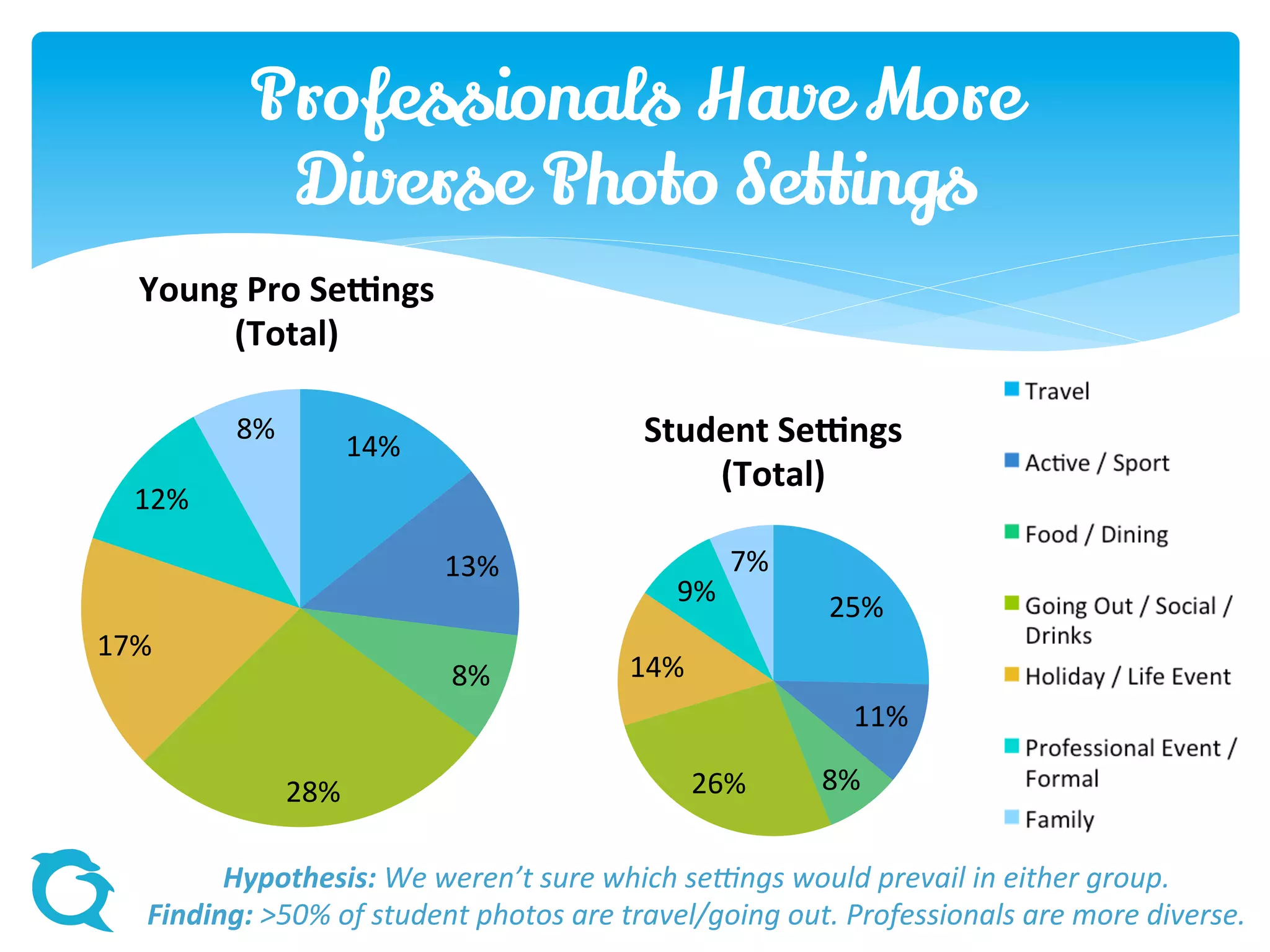
Hypothesis: We weren’t sure which settings would prevail in either group.
Finding: >50% of student photos are travel/going out. Professionals are more diverse.
25%
11%
8%26%
14%
9%
7%
Student Settings
(Total)
14%
13%
8%
28%
17%
12%
8%
Young Pro Settings
(Total)
Professionals Have More
Diverse Photo Settings
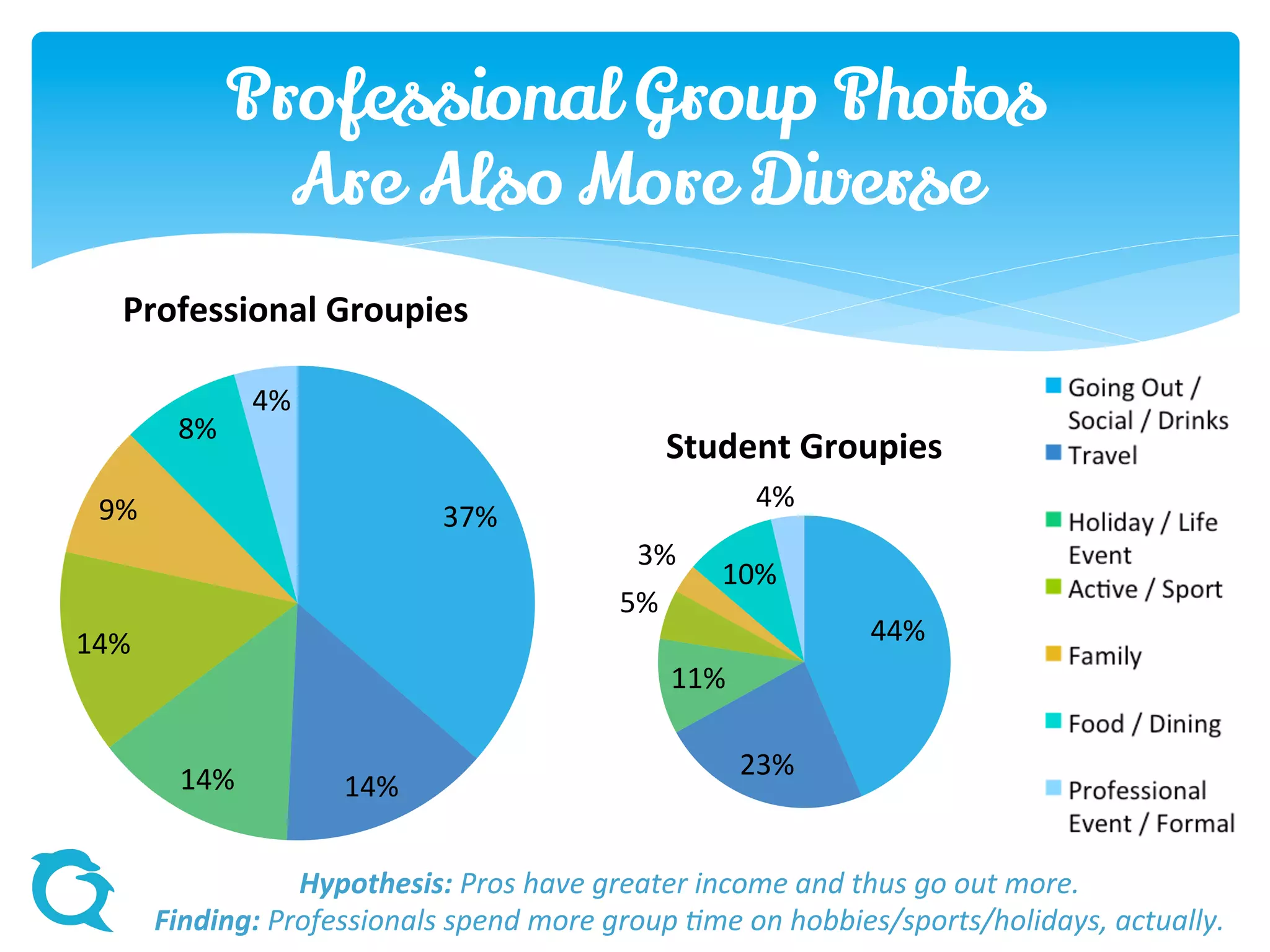
Professional Group Photos
Are Also More Diverse
Hypothesis: Pros have greater income and thus go out more.
Finding: Professionals spend more group time on hobbies/sports/holidays, actually.
37%
14%14%
14%
9%
8%
4%
Professional Groupies
44%
23%
11%
5%
3% 10%
4%
Student Groupies
5%
16%
11%
52%
16%
Photo Types (Male)
3%
14%
16%
55%
12%
Photo Types (Female)
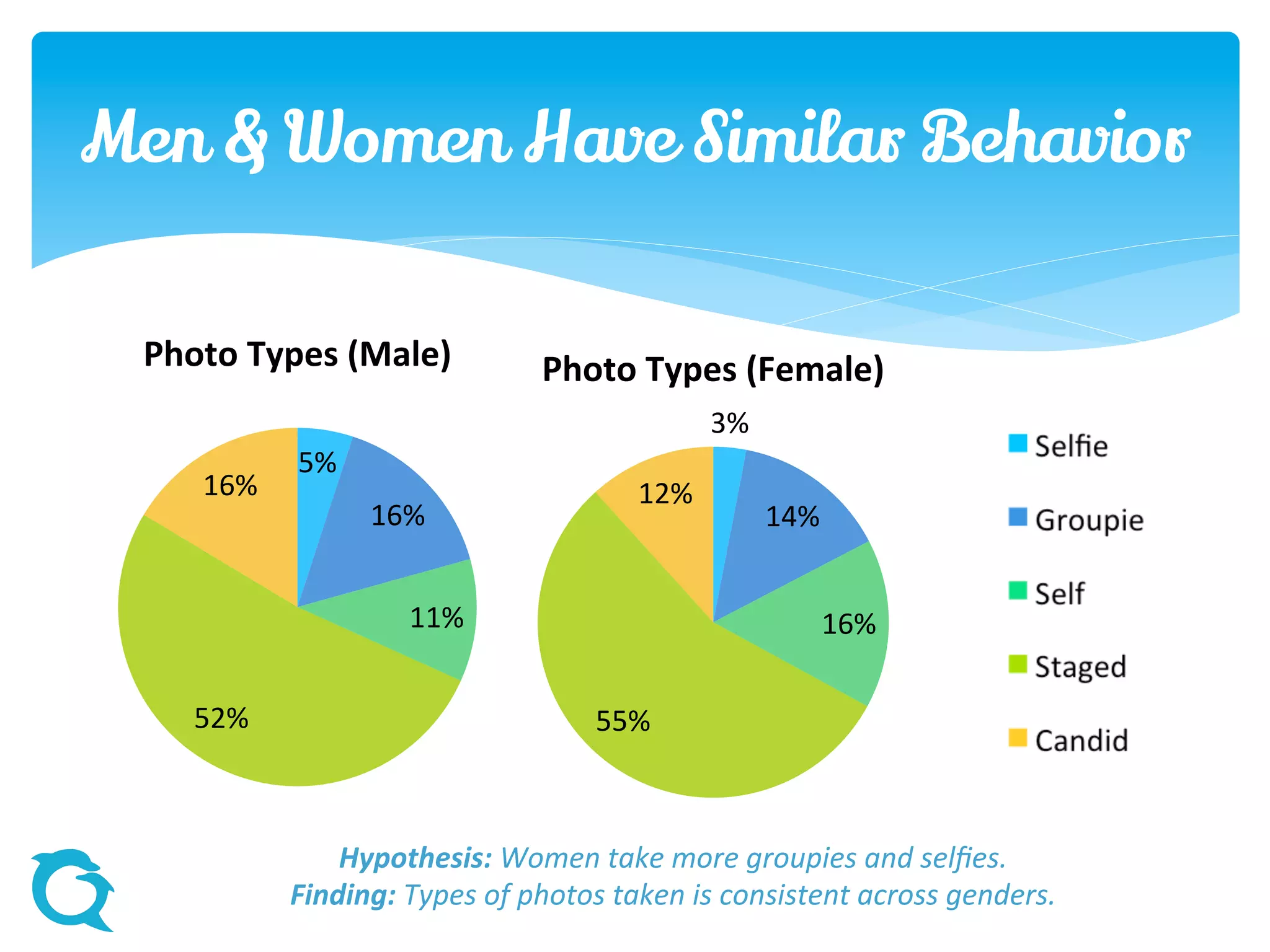
Hypothesis: Women take more groupies and selfies.
Finding: Types of photos taken is consistent across genders.
Men & Women Have Similar
Behavior
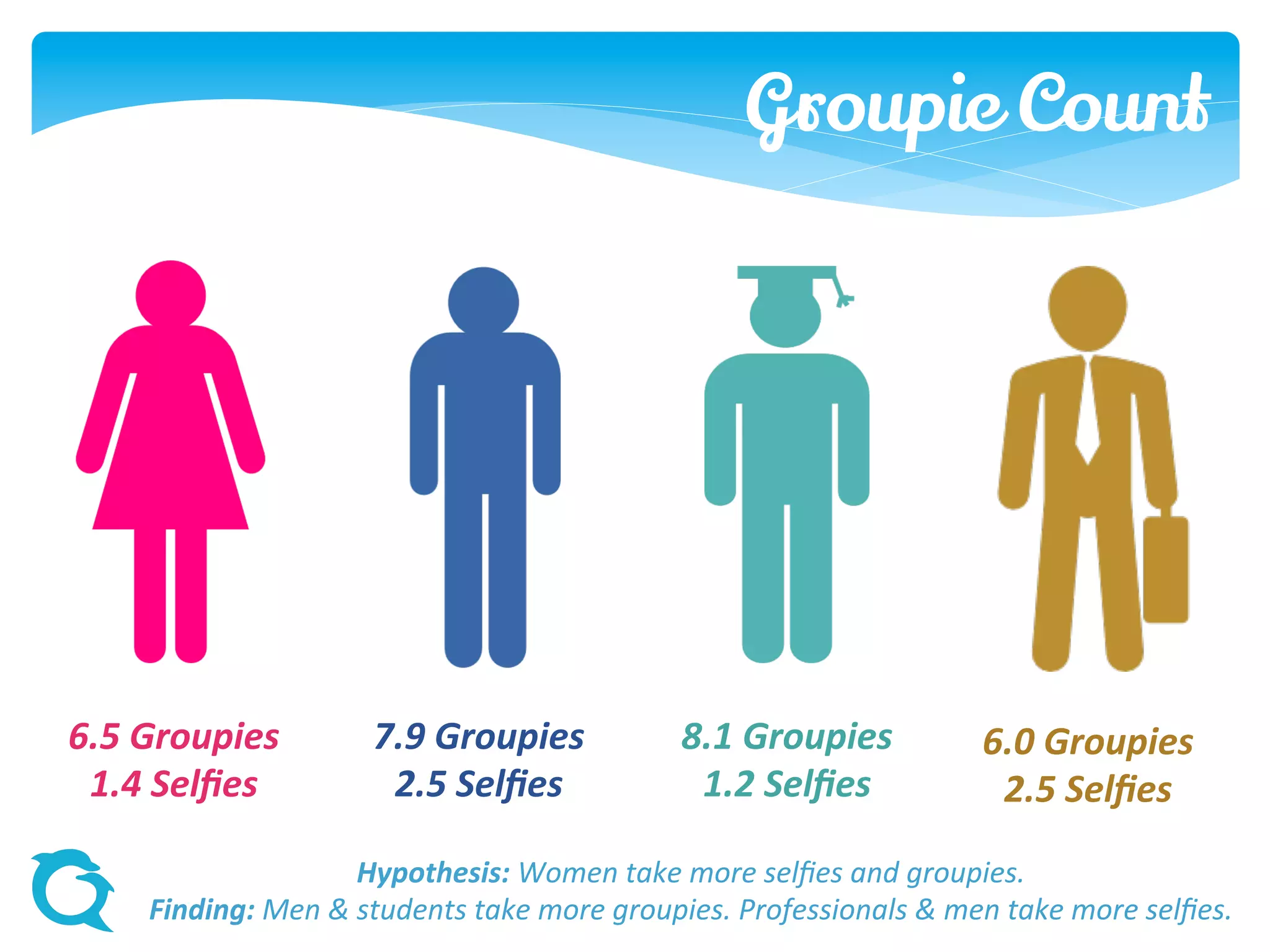
Hypothesis: Women take more selfies and groupies.
Finding: Men & students take more groupies. Professionals & men take more selfies.
Groupie Count
6.5 Groupies
1.4 Selfies
7.9 Groupies
2.5 Selfies
8.1 Groupies
1.2 Selfies
6.0 Groupies
2.5 Selfies
 Target young professionals.
 They exhibit greater need to socialize in groups.
 Focus marketing towards interest-based use cases.
 Young professionals focus their group time on diverse activities.
 Consider moving away from “groupie” format.
 Groupie format limits potential, since “staged” group photos
account for the majority of social media photos.
Recommendations
Thank you!
 How do you find out about new apps?
 Which apps do you use most for meeting up with friends?
 Have you ever met someone virtually before meeting them
in person?
 How do you tend to spend your free time?
 Do you use any online or social platforms to meet new
people?
 Do you ever take “group selfies”?
 What do you think a “group selfie” means? What does it
convey?
Appendix 1: Sample Customer
Discovery Interview Questions
 During Facebook data collection, the parameters used
to categorize individuals were: Age, gender, race,
student/working, sexual orientation, marital status,
rural/urban, and whether the individual had children.
 The parameters used to categorize photos were: Date
uploaded, groupie, selfie, group staged photo, group
candid photo, self photo, uploaded by subject, number
of people in photo, travel, active/sport, food/dining,
going out/social/drinks, holiday/life event, professional
event/formal, and family.
Appendix 2: Data Dimensions
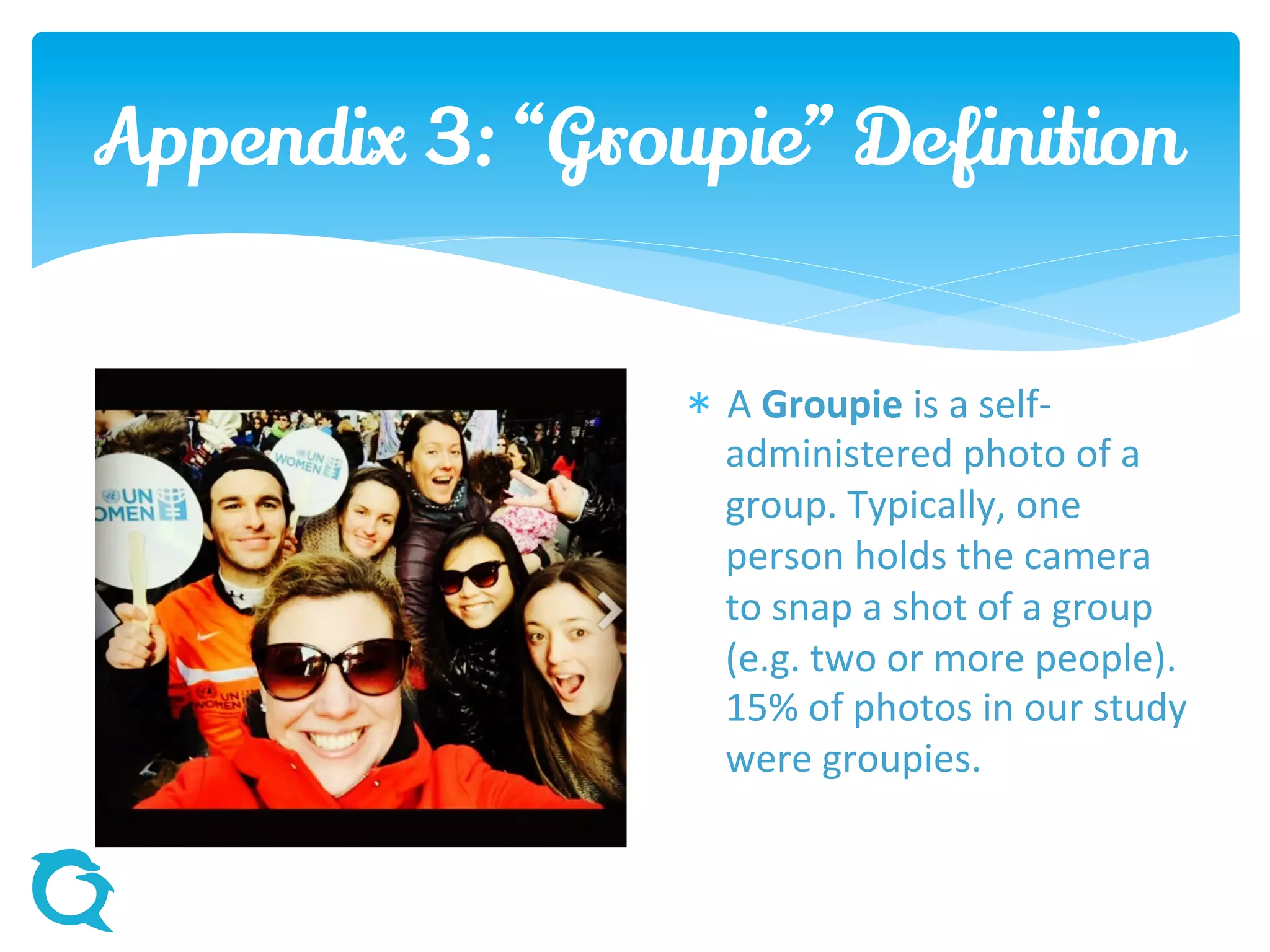
Appendix 3: “Groupie” Definition
 A Groupie is a self-
administered photo of a
group. Typically, one
person holds the camera
to snap a shot of a group
(e.g. two or more people).
15% of photos in our study
were groupies.
Appendix 4: “Selfie” Definition
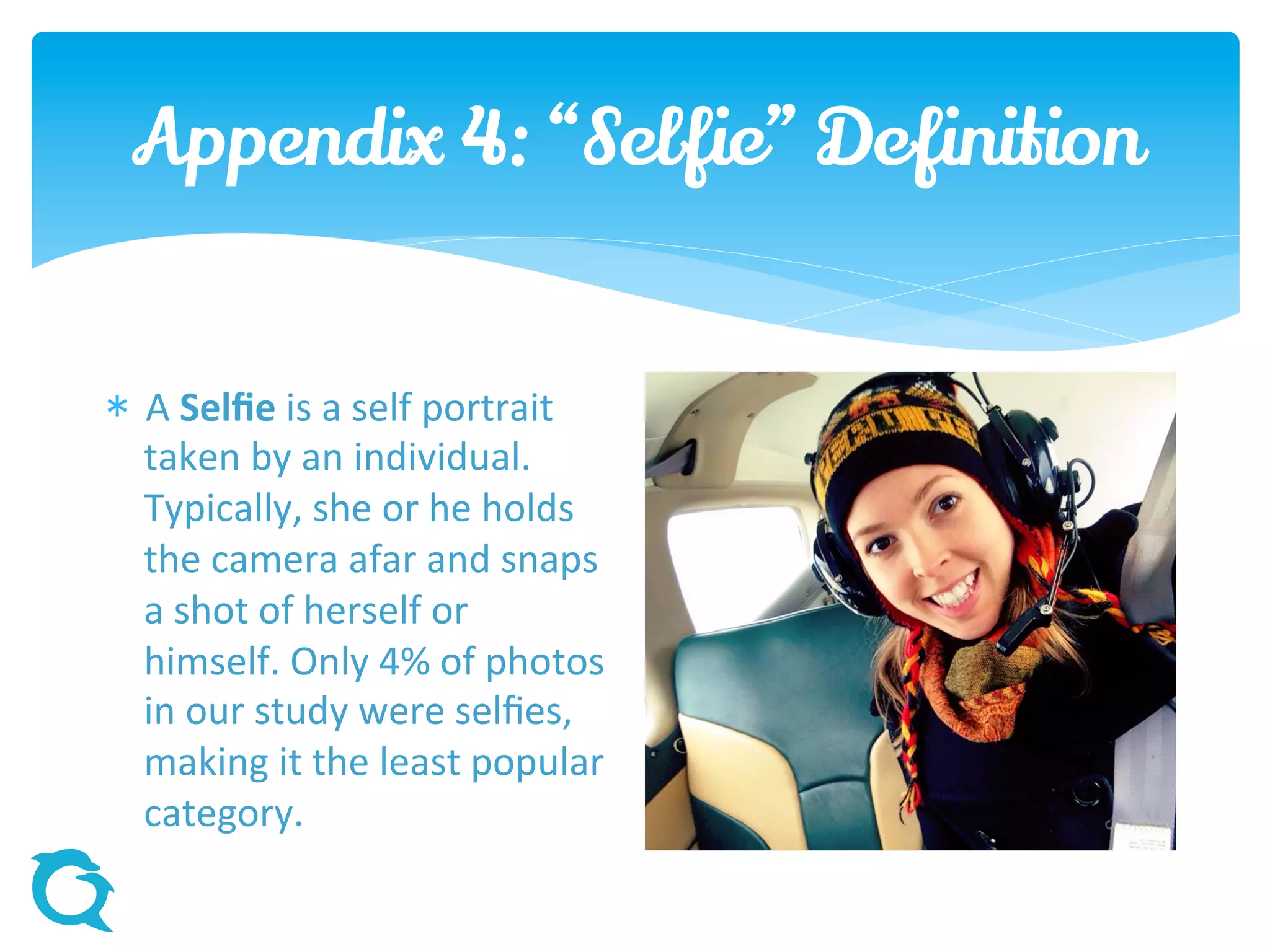
 A Selfie is a self portrait
taken by an individual.
Typically, she or he holds
the camera afar and snaps
a shot of herself or himself.
Only 4% of photos in our
study were selfies, making
it the least popular
category.
Appendix 5: “Staged” Definition
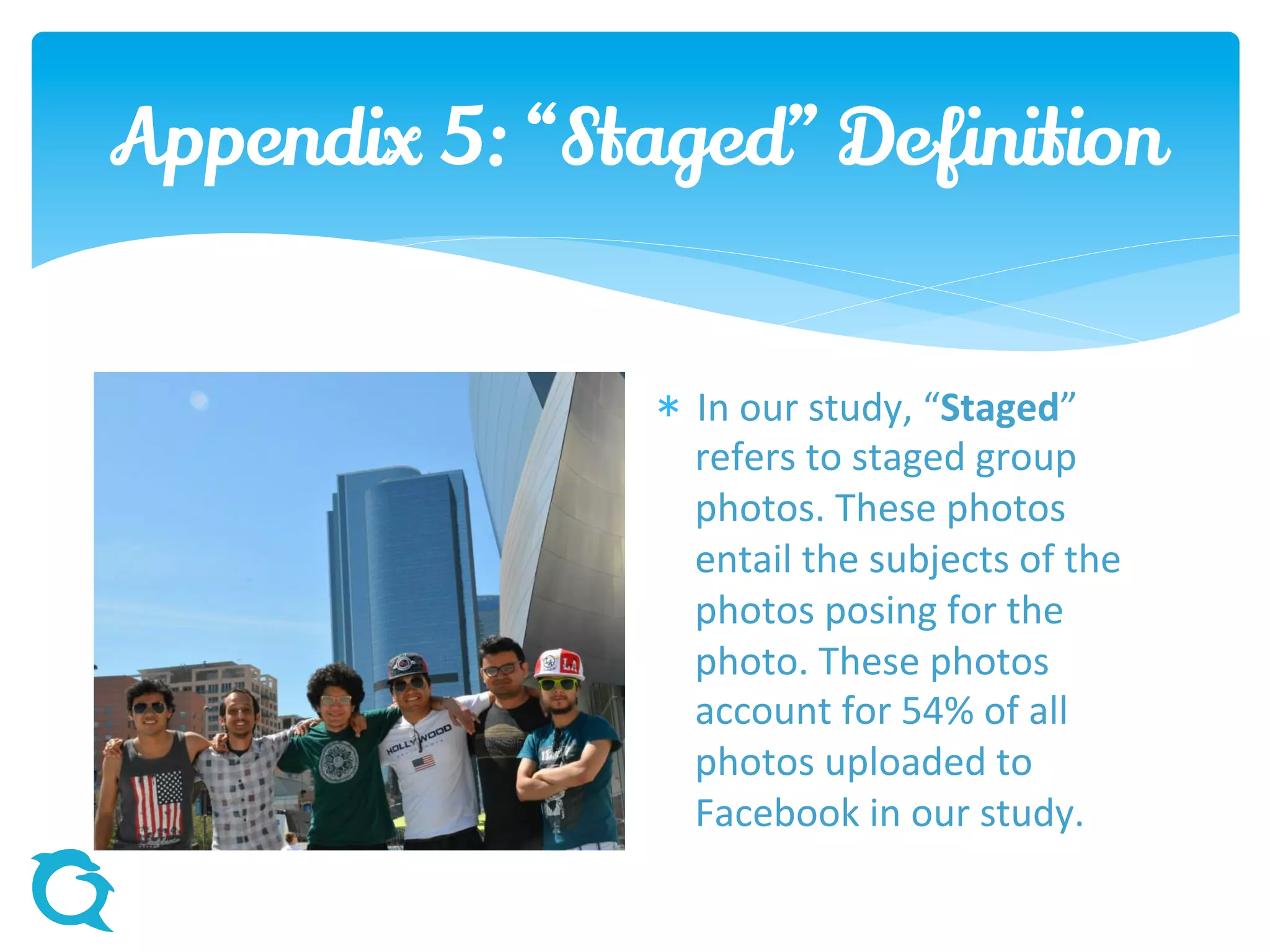
 In our study, “Staged”
refers to staged group
photos. These photos
entail the subjects of the
photos posing for the
photo. These photos
account for 54% of all
photos uploaded to
Facebook in our study.
Appendix 6: “Candid” Definition
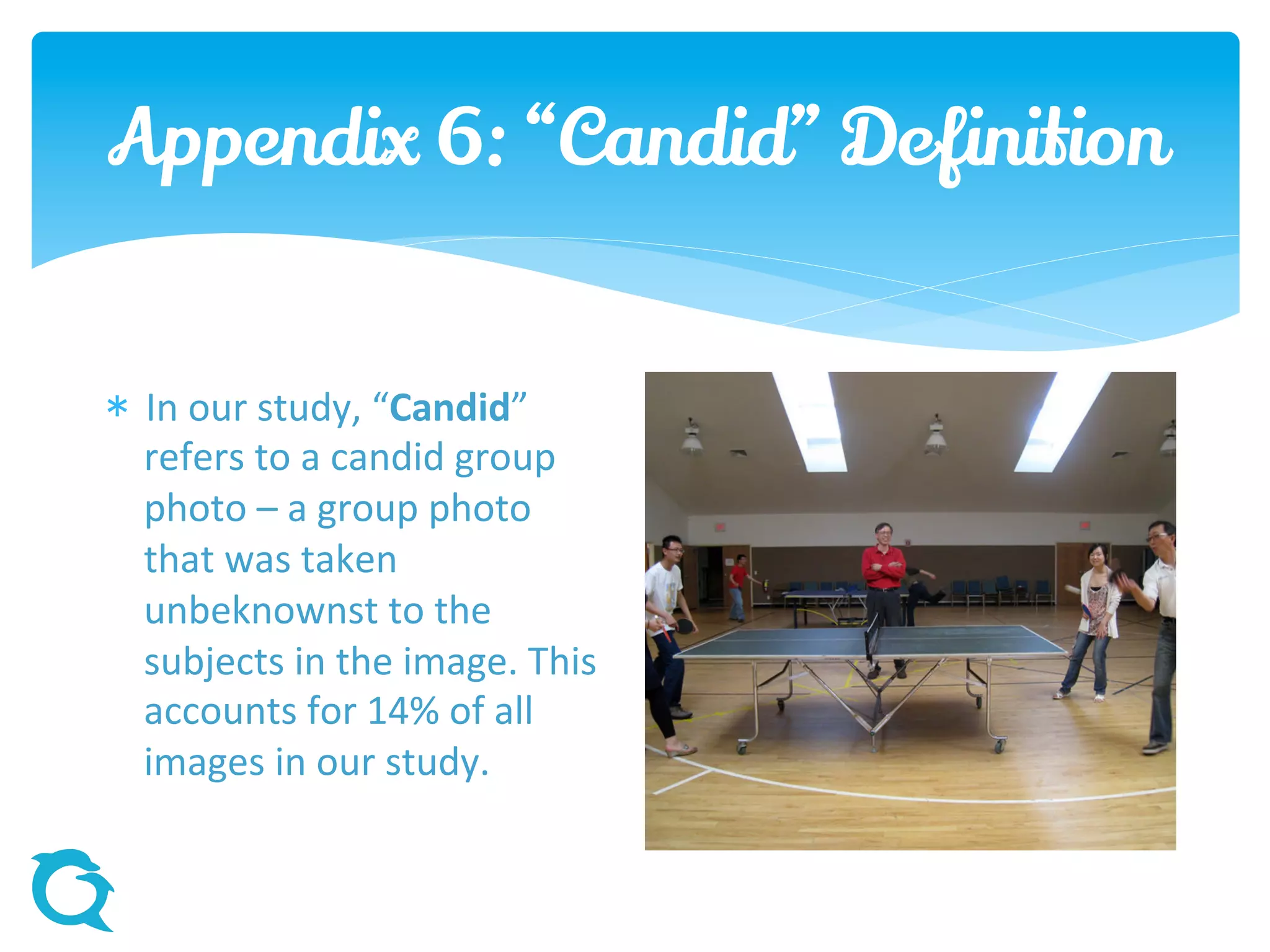
 In our study, “Candid”
refers to a candid group
photo – a group photo that
was taken unbeknownst to
the subjects in the image.
This accounts for 14% of all
images in our study.
Appendix 7: “Self” Definition
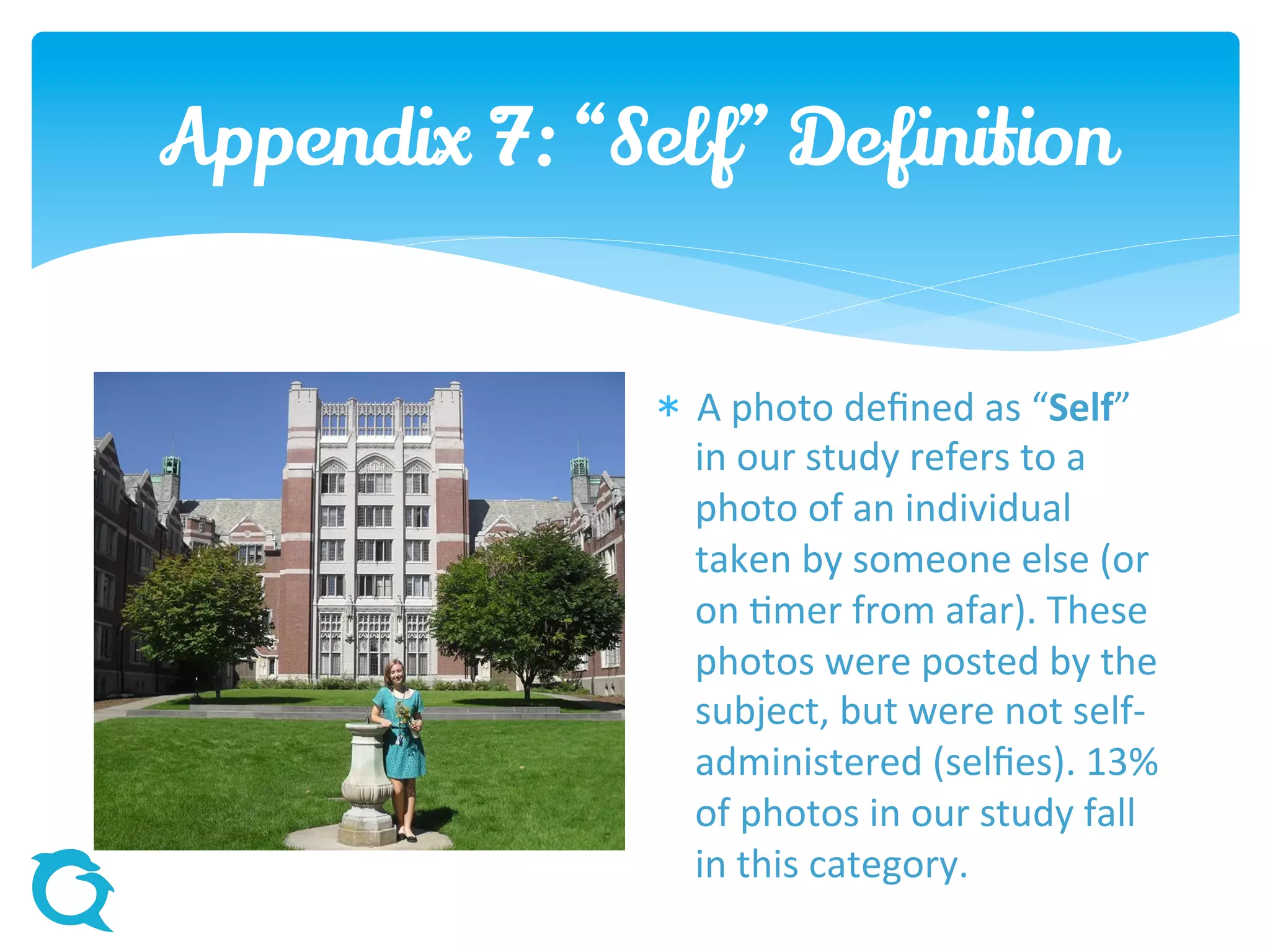
 A photo defined as “Self”
in our study refers to a
photo of an individual
taken by someone else (or
on timer from afar). These
photos were posted by the
subject, but were not self-
administered (selfies). 13%
of photos in our study fall
in this category.
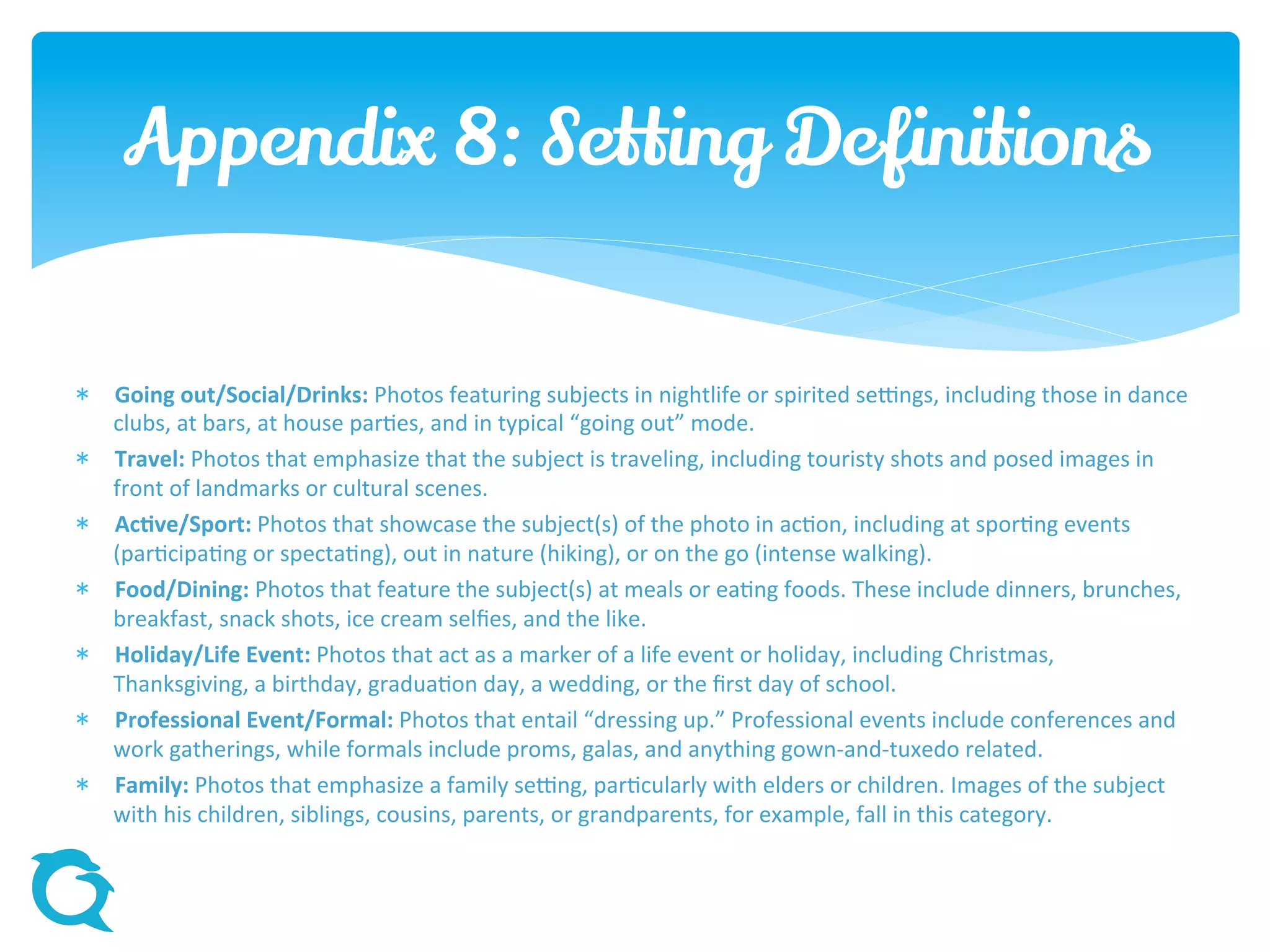
 Going out/Social/Drinks: Photos featuring subjects in nightlife or spirited settings, including those in dance
clubs, at bars, at house parties, and in typical “going out” mode.
 Travel: Photos that emphasize that the subject is traveling, including touristy shots and posed images in
front of landmarks or cultural scenes.
 Active/Sport: Photos that showcase the subject(s) of the photo in action, including at sporting events
(participating or spectating), out in nature (hiking), or on the go (intense walking).
 Food/Dining: Photos that feature the subject(s) at meals or eating foods. These include dinners, brunches,
breakfast, snack shots, ice cream selfies, and the like.
 Holiday/Life Event: Photos that act as a marker of a life event or holiday, including Christmas, Thanksgiving,
a birthday, graduation day, a wedding, or the first day of school.
 Professional Event/Formal: Photos that entail “dressing up.” Professional events include conferences and
work gatherings, while formals include proms, galas, and anything gown-and-tuxedo related.
 Family: Photos that emphasize a family setting, particularly with elders or children. Images of the subject
with his children, siblings, cousins, parents, or grandparents, for example, fall in this category.
Appendix 8: Setting Definitions
Appendix 9: Data
Demographics
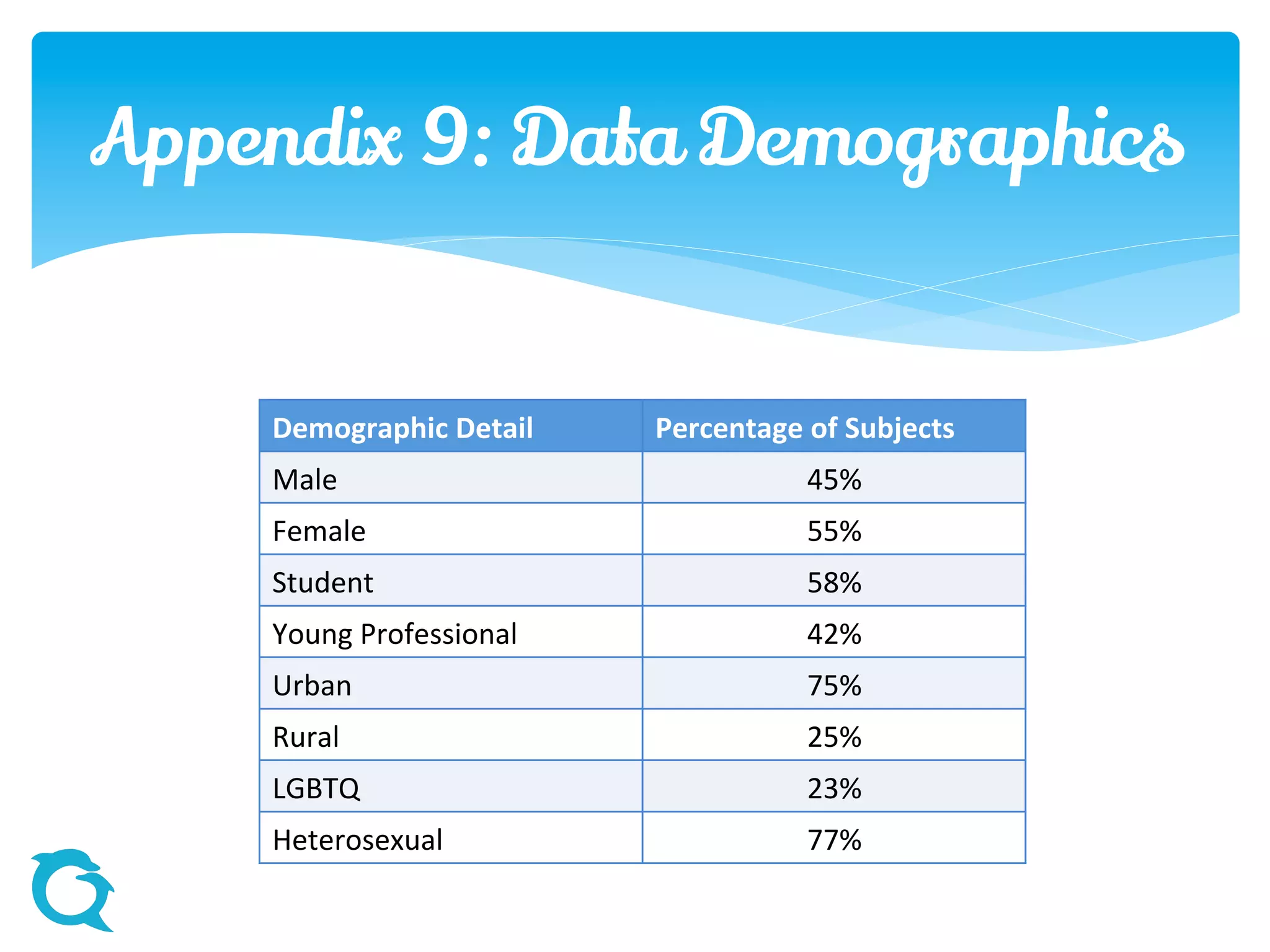
Demographic Detail Percentage of Subjects
Male 45%
Female 55%
Student 58%
Young Professional 42%
Urban 75%
Rural 25%
LGBTQ 23%
Heterosexual 77%
Appendix 10: Groupie
Occasions
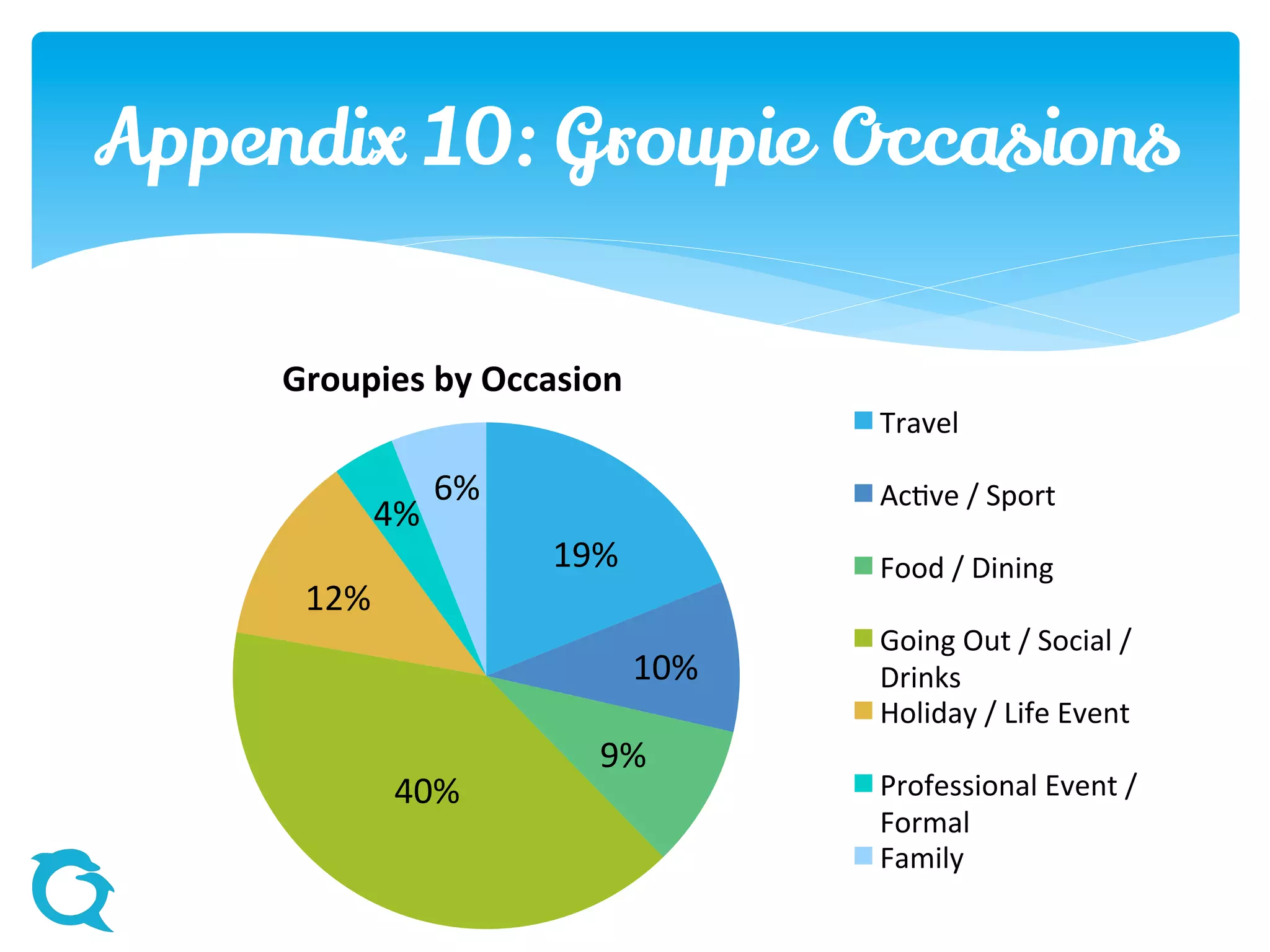
19%
10%
9%
40%
12%
4%
6%
Groupies by Occasion
Travel
Active / Sport
Food / Dining
Going Out / Social /
Drinks
Holiday / Life Event
Professional Event /
Formal
Family
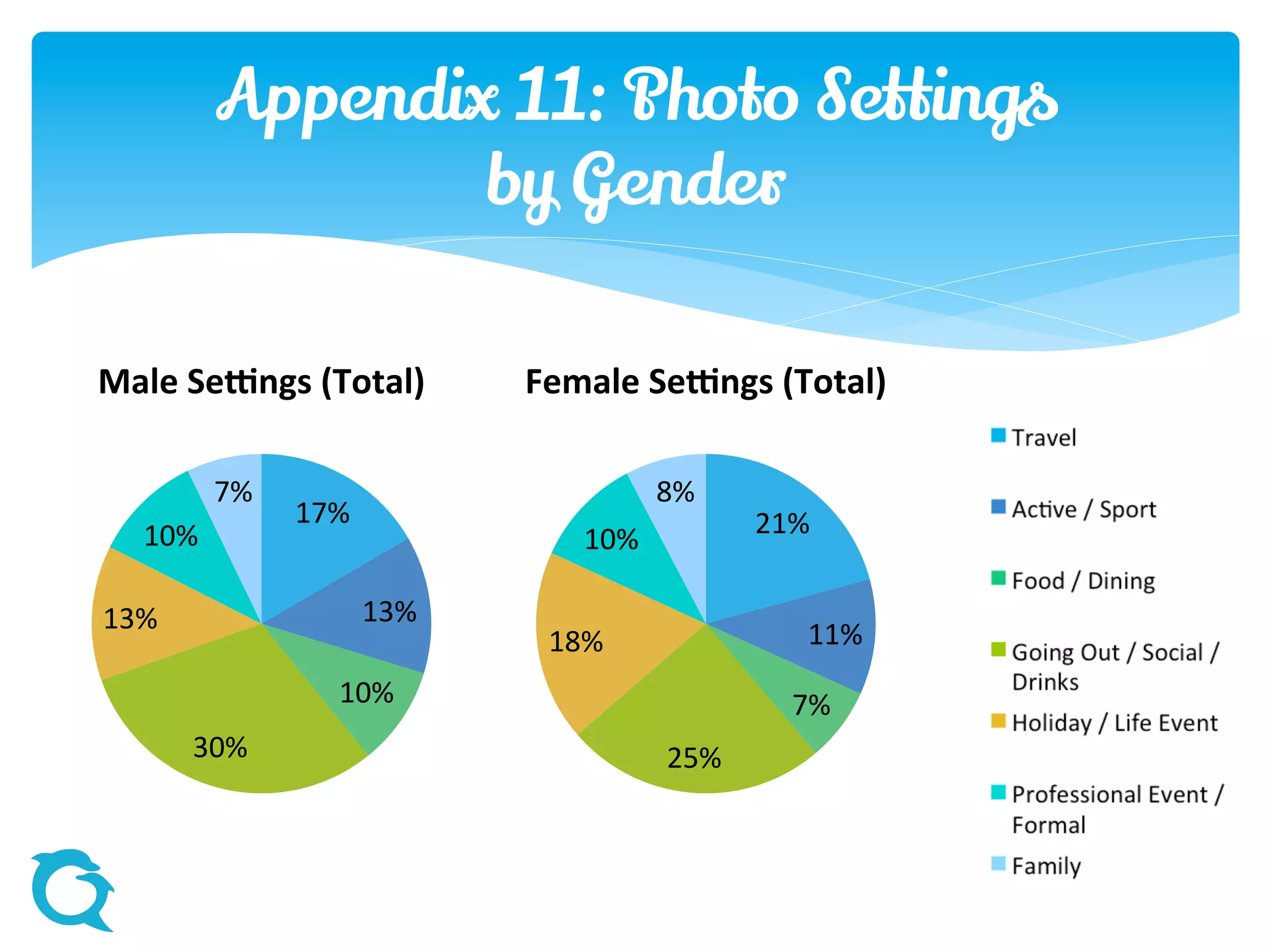
17%
13%
10%
30%
13%
10%
7%
Male Settings (Total)
21%
11%
7%
25%
18%
10%
8%
Female Settings (Total)
Appendix 11: Photo Settings
by Gender

weCliq: Defining Key Issues in Group Socialization and Choosing a Primary Market

  • 1.
    weCliq Defining Key Issuesin Group Socialization and Choosing a Primary Market Presented by: Christina Chen Simone Liano Shambhu Koirala Erica Swallow
  • 2.
     weCliq Overview Project Scope  Methodology  Key Findings  Recommendations Agenda
  • 3.
    weCliq Overview weCliq isa social networking app that enables groups of people to meet and interact via “groupies,” group selfies.
  • 4.
    Project Scope  PROBLEMSTATEMENT What key problems exist in the market regarding group socialization and which group of consumers experience this problem the most?
  • 5.
    Methodology  Customer Interviews 30-45 minute qualitative interviews  Smartphone-toting college students, 18-24 years old  Discussed…  Photo-taking habits  Socialization norms  Opinions on groupies/selfies  Limited data analysis  Data Analysis  3,050 unique Facebook photos analyzed on 30 dimensions (90,000+ data points)  Type of photo  Occasion  User demographics  Researched two groups  Young professionals  College students
  • 6.
  • 7.
     College studentshave ample socialization opportunities.  Interest-driven clubs, mixers, dorm life, sports, classes  Groupies have a more positive reputation than selfies.  Selfies are seen as vane, while groupies are fun and interactive.  College students have bigger problems with scheduling.  They don’t need more friends. Corralling current friends through existing social apps is hard enough. Customer Discovery Findings See full customer discovery findings in mid-term presentation.
  • 8.
    “Trying to meetnew people online is awkward. I feel it's better to be introduced by a friend of a friend.” Students Prefer Offline… See full customer discovery findings in mid-term presentation.  65% of interviewees reported having met someone online, but most claimed meeting through friends is preferred. Meeting online still has a stigma.
  • 9.
    Enter Facebook DataAnalysis  PROJECT GOAL Analyze 50 most recent photos for 60+ Facebook users in two segments to quantitatively understand group photo-taking habits.
  • 10.
     The dataechoes that college students don’t have a deep pain point for group socialization.  Young professionals are more diverse in the activities they convey in social media photos.  Our assumption that women take more selfies and groupies was debunked. Data Analysis Findings
  • 11.
    Two’s company. Three’s acrowd. Four’s a party. Five’s a groupie. The average “groupie” has 4.6 people in it.
  • 12.
    Hypothesis: Groupies/selfies make upa small portion of photos taken. Finding: While “staged” group photos are the most popular photo type (54%). Groupies are the second most popular, accounting for 15% of photos. Selfies are least popular, at 4% of photos. 4% 15% 13% 54% 14% Overall Photo Types Selfie Groupie Self Staged Candid Groupies are Prevalent
  • 13.
    Hypothesis: College studentstake more groupies/selfies. Finding: Photo types are quite consistent across students and professionals. 3% 17% 15% 53% 12% Photo Types (Student) 5% 13% 13% 54% 15% Photo Types (Young Pros) Photo Types are Consistent Across Groups
  • 14.
    Hypothesis: We weren’tsure which settings would prevail in either group. Finding: >50% of student photos are travel/going out. Professionals are more diverse. 25% 11% 8%26% 14% 9% 7% Student Settings (Total) 14% 13% 8% 28% 17% 12% 8% Young Pro Settings (Total) Professionals Have More Diverse Photo Settings
  • 15.
    Professional Group Photos AreAlso More Diverse Hypothesis: Pros have greater income and thus go out more. Finding: Professionals spend more group time on hobbies/sports/holidays, actually. 37% 14%14% 14% 9% 8% 4% Professional Groupies 44% 23% 11% 5% 3% 10% 4% Student Groupies
  • 16.
    5% 16% 11% 52% 16% Photo Types (Male) 3% 14% 16% 55% 12% PhotoTypes (Female) Hypothesis: Women take more groupies and selfies. Finding: Types of photos taken is consistent across genders. Men & Women Have Similar Behavior
  • 17.
    Hypothesis: Women takemore selfies and groupies. Finding: Men & students take more groupies. Professionals & men take more selfies. Groupie Count 6.5 Groupies 1.4 Selfies 7.9 Groupies 2.5 Selfies 8.1 Groupies 1.2 Selfies 6.0 Groupies 2.5 Selfies
  • 18.
     Target youngprofessionals.  They exhibit greater need to socialize in groups.  Focus marketing towards interest-based use cases.  Young professionals focus their group time on diverse activities.  Consider moving away from “groupie” format.  Groupie format limits potential, since “staged” group photos account for the majority of social media photos. Recommendations
  • 19.
  • 20.
     How doyou find out about new apps?  Which apps do you use most for meeting up with friends?  Have you ever met someone virtually before meeting them in person?  How do you tend to spend your free time?  Do you use any online or social platforms to meet new people?  Do you ever take “group selfies”?  What do you think a “group selfie” means? What does it convey? Appendix 1: Sample Customer Discovery Interview Questions
  • 21.
     During Facebookdata collection, the parameters used to categorize individuals were: Age, gender, race, student/working, sexual orientation, marital status, rural/urban, and whether the individual had children.  The parameters used to categorize photos were: Date uploaded, groupie, selfie, group staged photo, group candid photo, self photo, uploaded by subject, number of people in photo, travel, active/sport, food/dining, going out/social/drinks, holiday/life event, professional event/formal, and family. Appendix 2: Data Dimensions
  • 22.
    Appendix 3: “Groupie”Definition  A Groupie is a self- administered photo of a group. Typically, one person holds the camera to snap a shot of a group (e.g. two or more people). 15% of photos in our study were groupies.
  • 23.
    Appendix 4: “Selfie”Definition  A Selfie is a self portrait taken by an individual. Typically, she or he holds the camera afar and snaps a shot of herself or himself. Only 4% of photos in our study were selfies, making it the least popular category.
  • 24.
    Appendix 5: “Staged”Definition  In our study, “Staged” refers to staged group photos. These photos entail the subjects of the photos posing for the photo. These photos account for 54% of all photos uploaded to Facebook in our study.
  • 25.
    Appendix 6: “Candid”Definition  In our study, “Candid” refers to a candid group photo – a group photo that was taken unbeknownst to the subjects in the image. This accounts for 14% of all images in our study.
  • 26.
    Appendix 7: “Self”Definition  A photo defined as “Self” in our study refers to a photo of an individual taken by someone else (or on timer from afar). These photos were posted by the subject, but were not self- administered (selfies). 13% of photos in our study fall in this category.
  • 27.
     Going out/Social/Drinks:Photos featuring subjects in nightlife or spirited settings, including those in dance clubs, at bars, at house parties, and in typical “going out” mode.  Travel: Photos that emphasize that the subject is traveling, including touristy shots and posed images in front of landmarks or cultural scenes.  Active/Sport: Photos that showcase the subject(s) of the photo in action, including at sporting events (participating or spectating), out in nature (hiking), or on the go (intense walking).  Food/Dining: Photos that feature the subject(s) at meals or eating foods. These include dinners, brunches, breakfast, snack shots, ice cream selfies, and the like.  Holiday/Life Event: Photos that act as a marker of a life event or holiday, including Christmas, Thanksgiving, a birthday, graduation day, a wedding, or the first day of school.  Professional Event/Formal: Photos that entail “dressing up.” Professional events include conferences and work gatherings, while formals include proms, galas, and anything gown-and-tuxedo related.  Family: Photos that emphasize a family setting, particularly with elders or children. Images of the subject with his children, siblings, cousins, parents, or grandparents, for example, fall in this category. Appendix 8: Setting Definitions
  • 28.
    Appendix 9: Data Demographics DemographicDetail Percentage of Subjects Male 45% Female 55% Student 58% Young Professional 42% Urban 75% Rural 25% LGBTQ 23% Heterosexual 77%
  • 29.
    Appendix 10: Groupie Occasions 19% 10% 9% 40% 12% 4% 6% Groupiesby Occasion Travel Active / Sport Food / Dining Going Out / Social / Drinks Holiday / Life Event Professional Event / Formal Family
  • 30.
    17% 13% 10% 30% 13% 10% 7% Male Settings (Total) 21% 11% 7% 25% 18% 10% 8% FemaleSettings (Total) Appendix 11: Photo Settings by Gender

Editor's Notes

  • #4 Description: weCliq is a social networking application that enables groups of people to meet and interact via “Groupies,” selfies with your group. The app enables a group (two or more people) to snap a photo, and share the “groupie” with other groups in the area that are looking for spontaneous fun.
  • #6 Parameters: Date uploaded, age, gender, race, student/working, sexual orientation, marital status, rural/urban, groupie, selfie, group staged, self, uploaded by subject, # people in photo Photo categories: Travel, Social/Going out/Drinks, Active/Sport, Food/Dining, Holiday/Life Event, Professional Event/Formal, Family
  • #9 While 65% of interviewees had
  • #11 1.) weCliq should consider the young professional market 2.) In line with weCliq’s group dating use case
  • #17 In fact, men take slightly more groupies and selfies on average.
  • #18 Women uploaded 37% of photos they were tagged in. Men uploaded 15%.
  • #31 Men, take slightly more “going out” groupies, while women take slightly more “travel” groupies and “holiday/life event” groupies.