Detecting Deception: Investigation Interviewing Skills


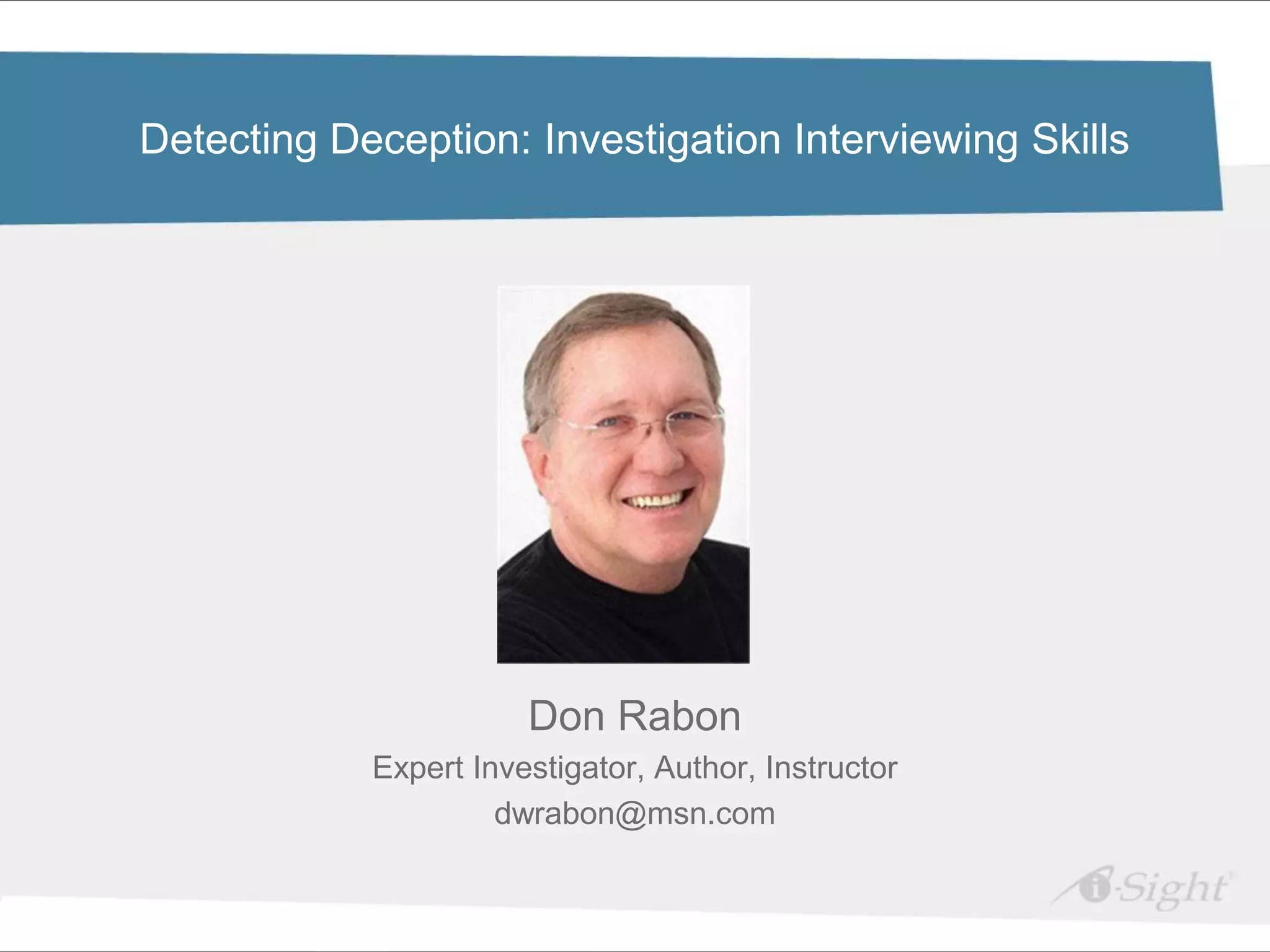
                       Don Rabon
            Expert Investigator, Author, Instructor
                     dwrabon@msn.com
Click to edit Master title style
Introduction

•   Click to edit Master text styles
                   Don Rabon
     - fdsfds
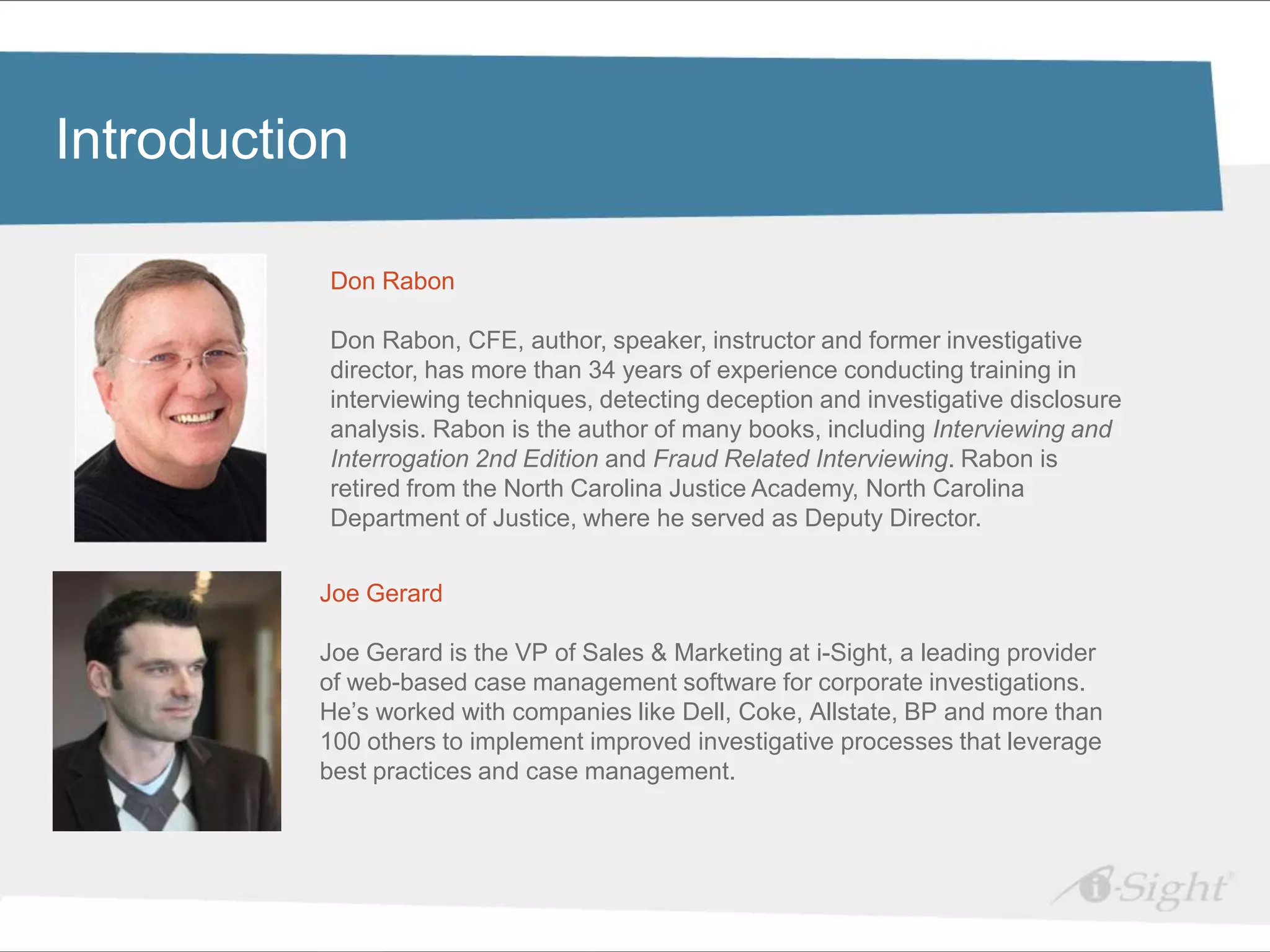
                   Don Rabon, CFE, author, speaker, instructor and former investigative
                   director, has more than 34 years of experience conducting training in
                   interviewing techniques, detecting deception and investigative disclosure
                   analysis. Rabon is the author of many books, including Interviewing and
                   Interrogation 2nd Edition and Fraud Related Interviewing. Rabon is
                   retired from the North Carolina Justice Academy, North Carolina
                   Department of Justice, where he served as Deputy Director.


                  Joe Gerard

                  Joe Gerard is the VP of Sales & Marketing at i-Sight, a leading provider
                  of web-based case management software for corporate investigations.
                  He’s worked with companies like Dell, Coke, Allstate, BP and more than
                  100 others to implement improved investigative processes that leverage
                  best practices and case management.
Deception


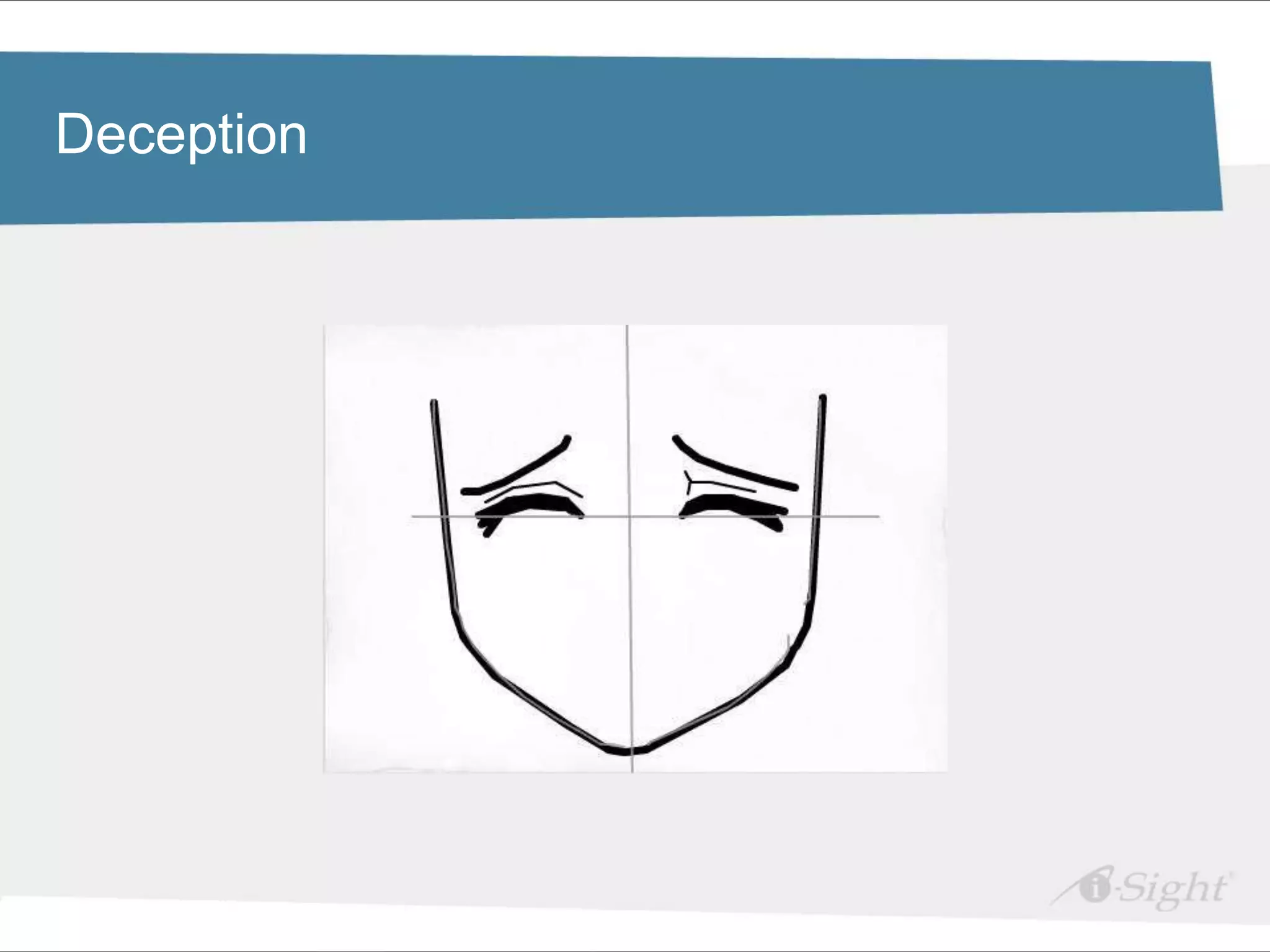
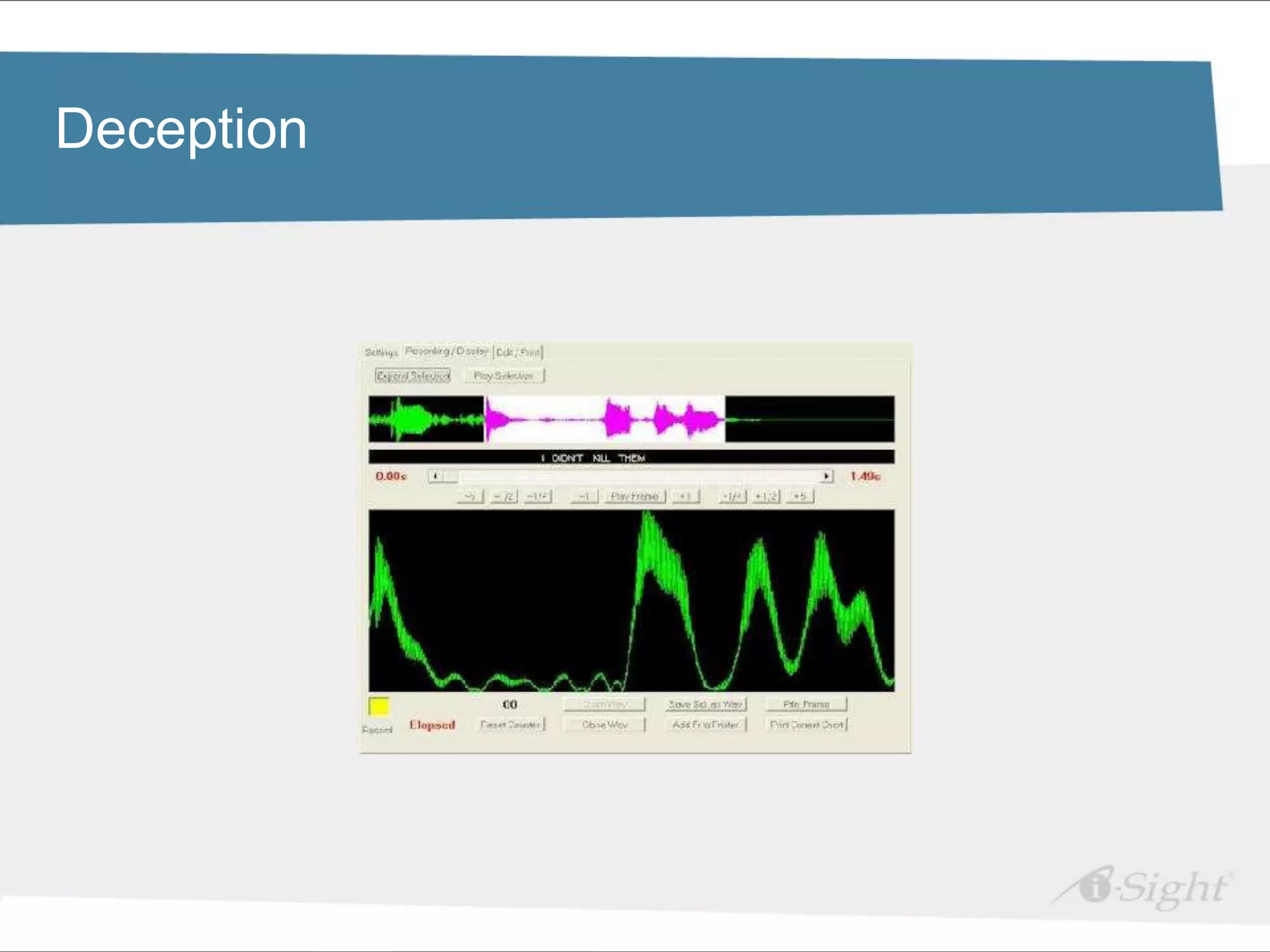
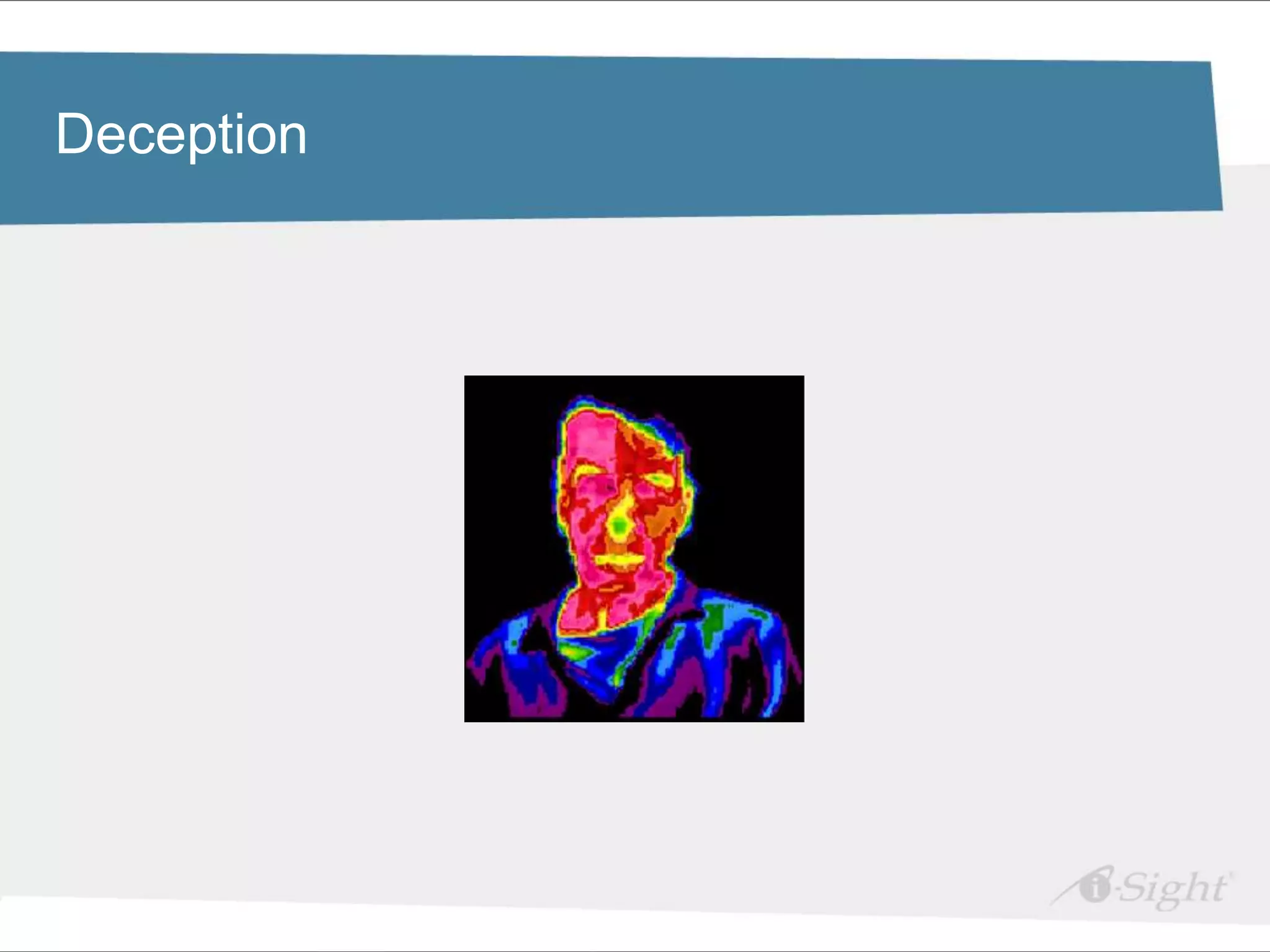
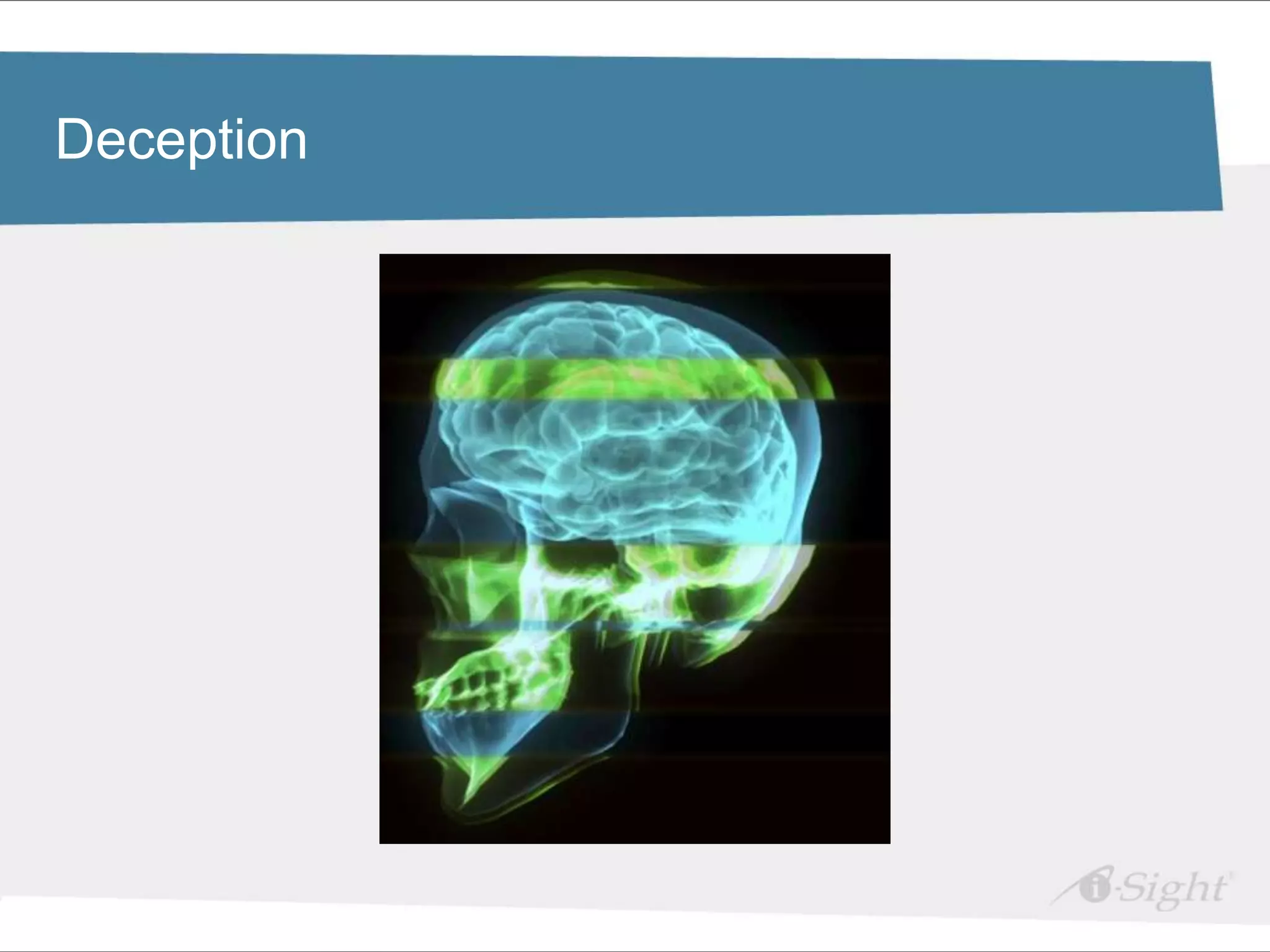
  Deception is most certainly with us
Deception


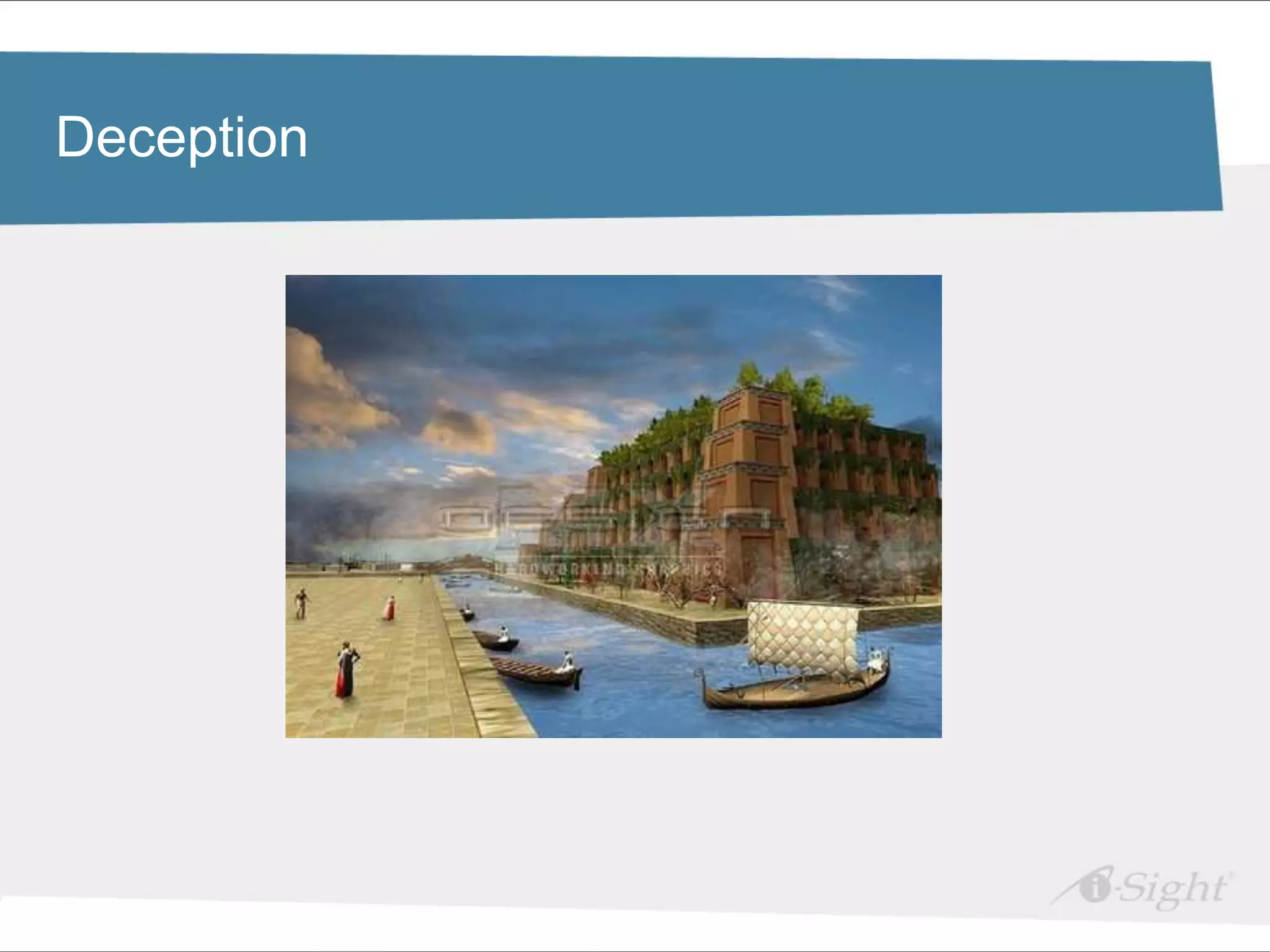
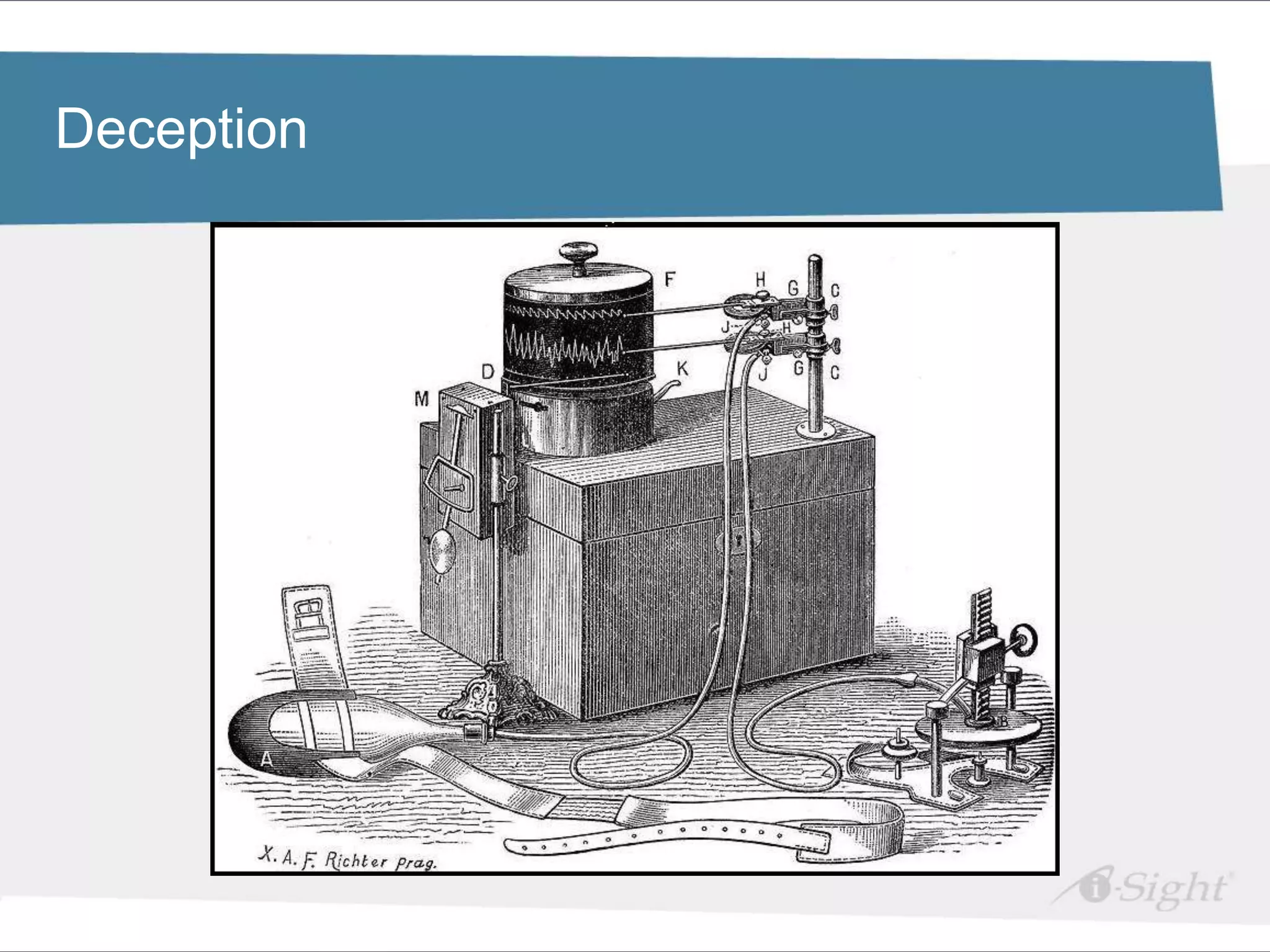
Deception has been with us for a good
             long while:
Deception
Click to edit Master title style
Deception

•   Click to edit Master text styles
     - fdsfds
Deception edit Master title style
 Click to

•   Click to edit Master text styles
     - fdsfds
Deception edit Master title style
 Click to

•   Click to edit Master text styles
     - fdsfds
Deception edit Master title style
 Click to

•   Click to edit Master text styles
     - fdsfds
Deception edit Master title style
 Click to

•   Click to edit Master text styles
     - fdsfds
Deception edit Master title style
 Click to

•   Click to edit Master text styles
     - fdsfds
Deception edit Master title style
 Click to

•   Click to edit Master text styles
     - fdsfds
Deception edit Master title style
 Click to

•   Click to edit Master text styles
     - fdsfds
Deception edit Master title style
 Click to

•   Click to edit Master text styles
     - fdsfds
Click to edit Master title style
Deception

•   Click to edit Master text styles
     - fdsfds
Click to edit Master title style
Deception

•   Click to edit Master text styles
     - fdsfds
Click to edit Master title style
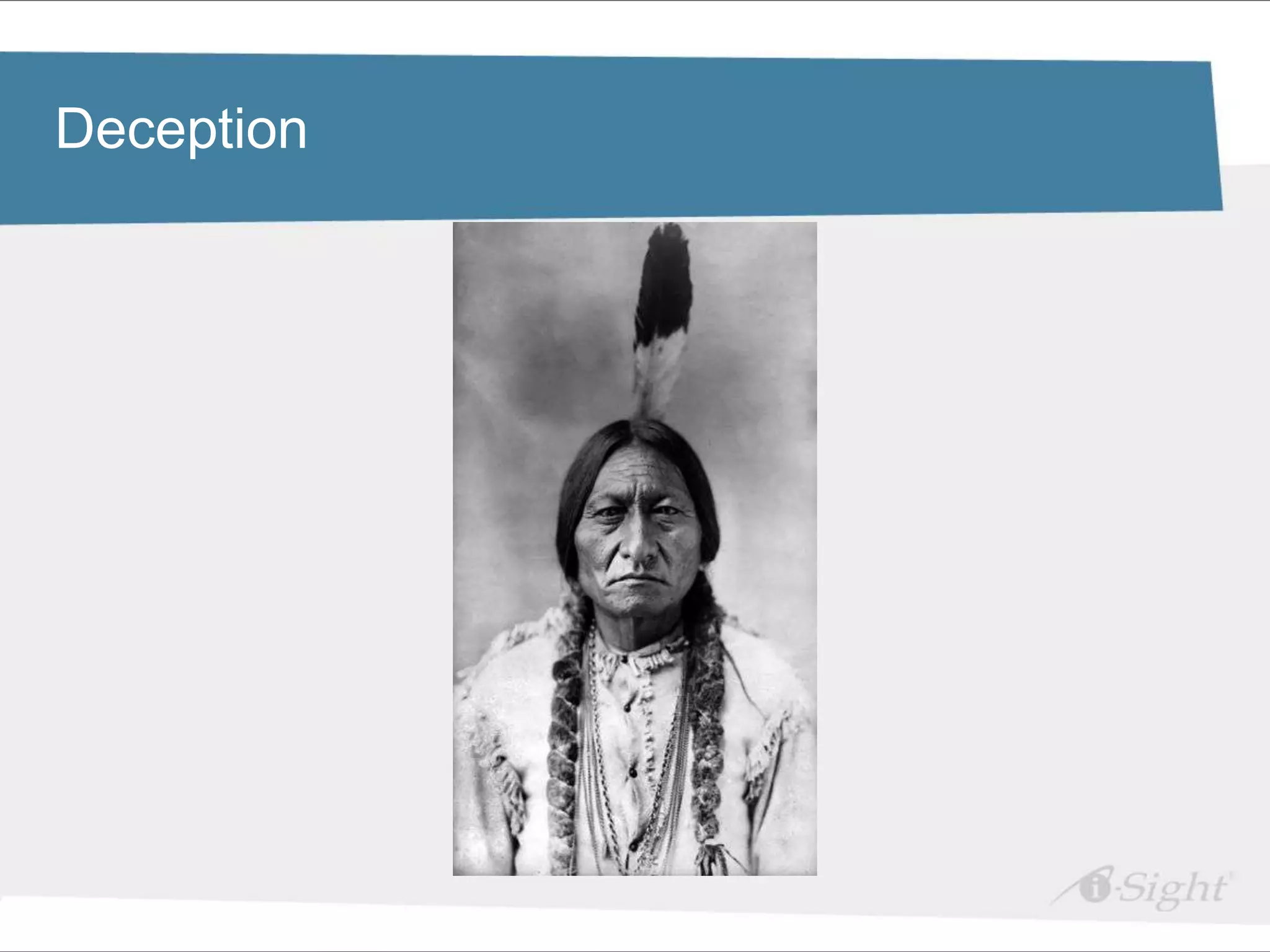
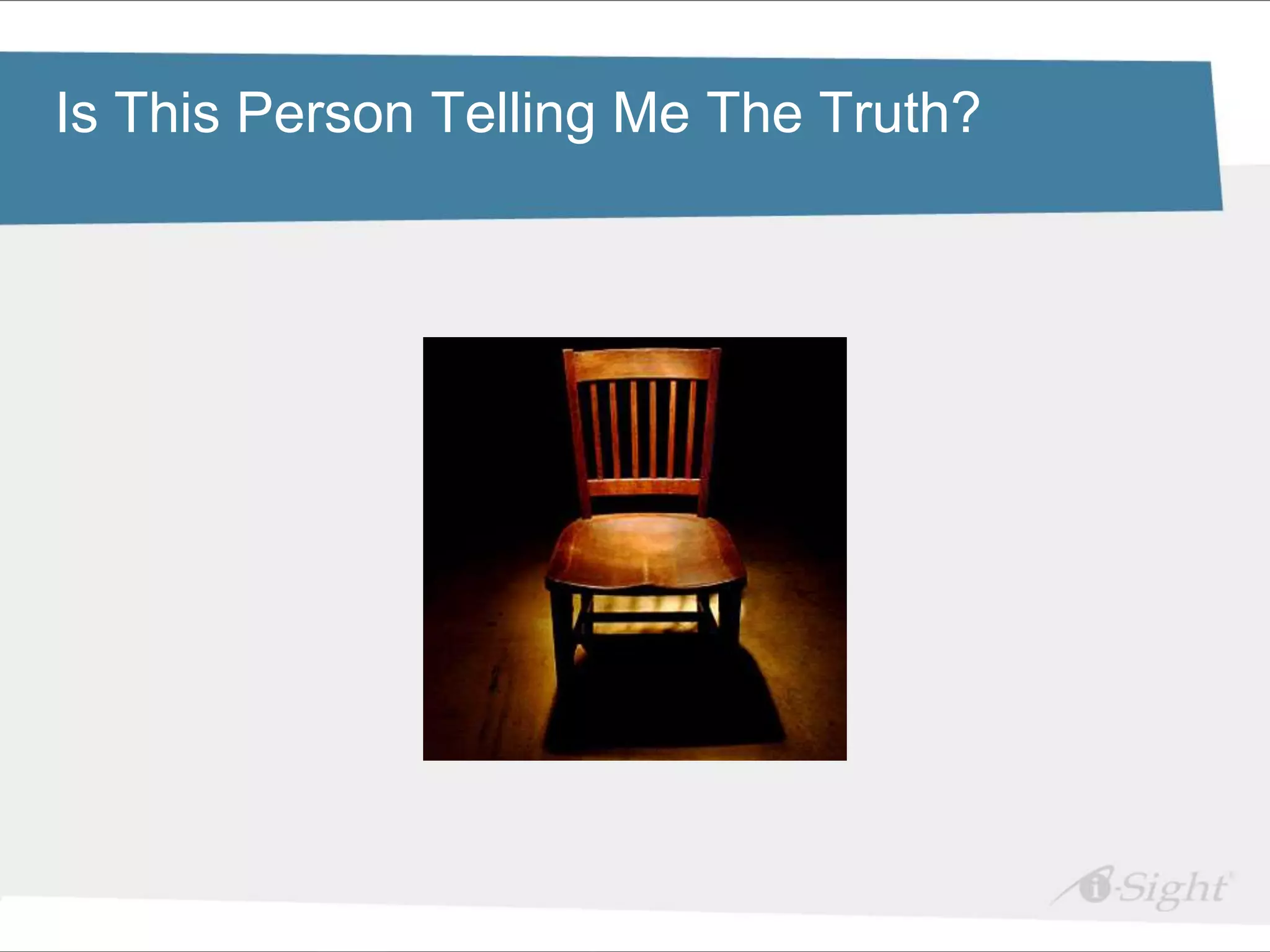
Is This Person Telling Me The Truth?

•   Click to edit Master text styles
     - fdsfds
Click to edit Master title style
Poll

•   Click to edit Master text styles
     - fdsfds


                           Poll Question #1
Ask Yourself: Master title style
 Click to edit

•   Click to edit Master text styles
     - fdsfds


Professionally, why is it important for you to
  know if someone is telling you the truth?
Click to edit Master title style
Ask Yourself:

•   Click to edit Master text styles
     - fdsfds
    What are the consequences if you do not
      accurately make the truth/deception
                  assessment?
Click to edit Master title style
Poll

•   Click to edit Master text styles
     - fdsfds


                           Poll Question #2
Click to edit Master title style
Ask Yourself:

•    Click to edit Master text styles
    How do you determine if someone is truthful
      - fdsfds

                     or not?
Click to Deception
Detecting
          edit Master title style

•   Click to edit Master text styles
      Detecting deception as it relates to the
     - fdsfds

       interviewing process – putting it into
                   perspective
Detecting Deception


  The template for detecting deception
Click to edit Master title style
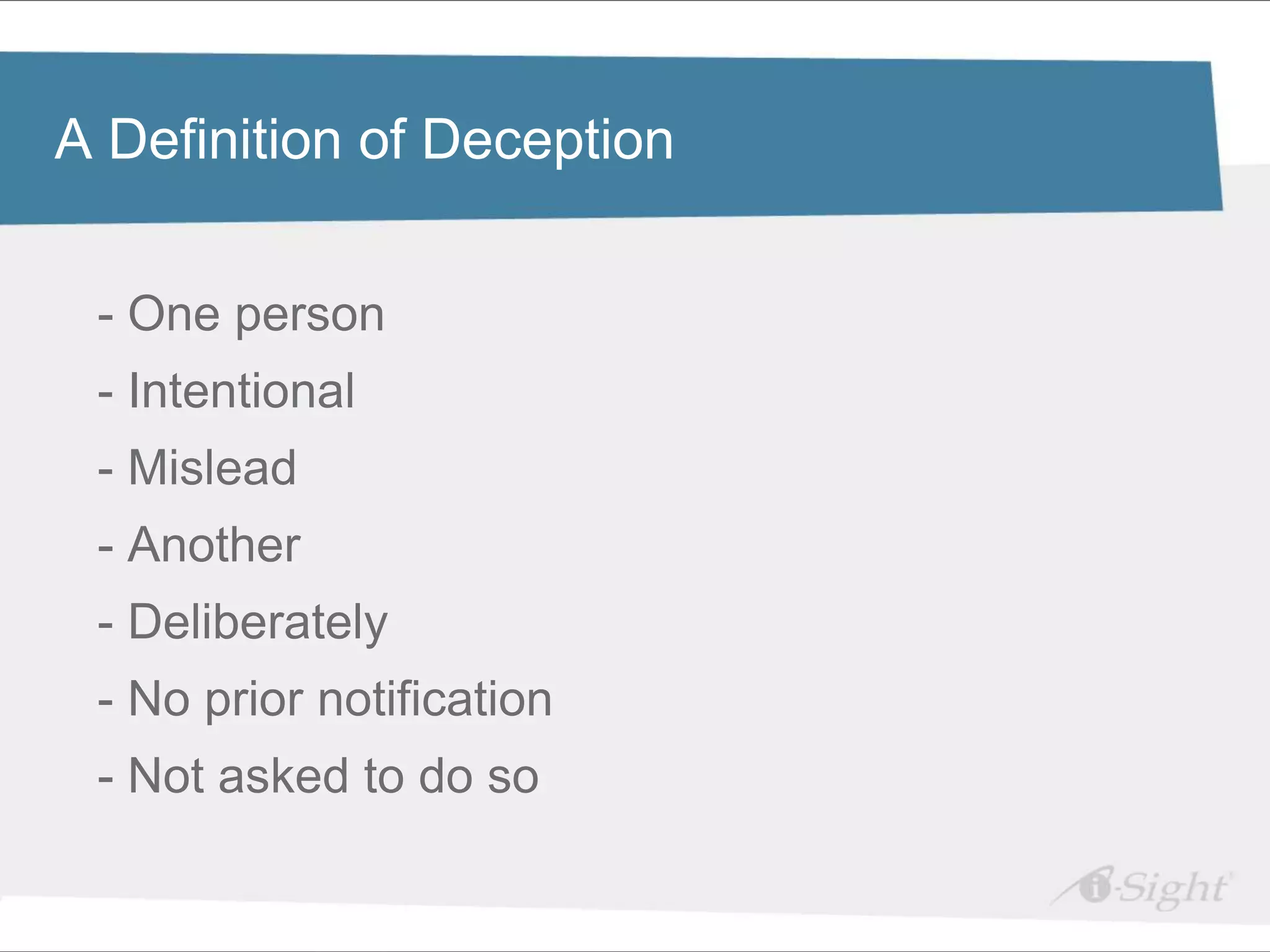
A Definition of Deception

•       Click to edit Master text styles
    -   One person
         - fdsfds

    - Intentional
    - Mislead
    - Another
    - Deliberately
    - No prior notification
    - Not asked to do so
Deception Is…


          Learned behavior
Deception Is…


     Learned at a very early age
Deception Is…


            18 to 36 months
Click to edit Master title style
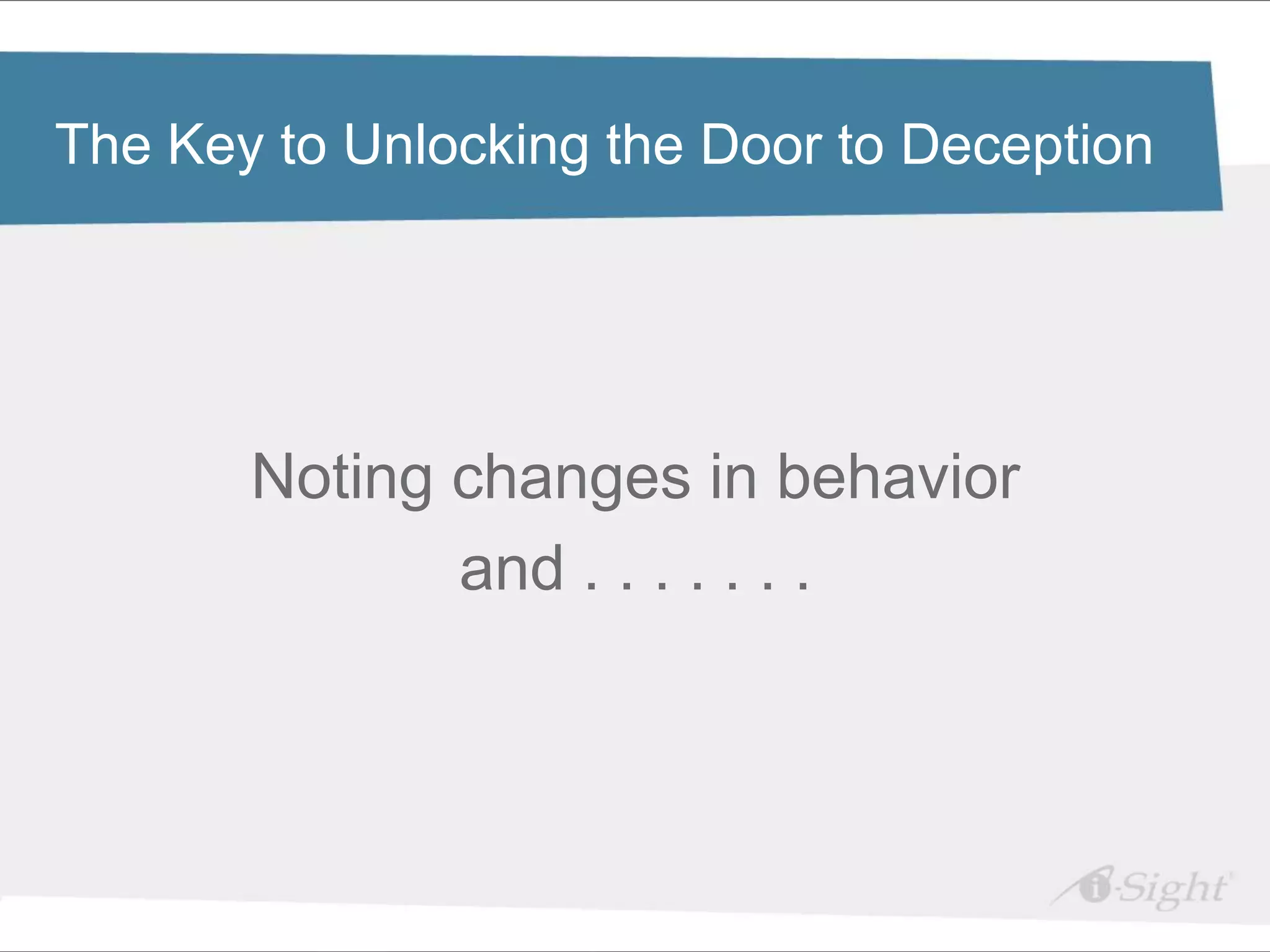
The Key to Unlocking the Door to Deception

•   Click to edit Master text styles
     - fdsfds


             Noting changes in behavior
                    and . . . . . . .
Click to Deception
Detecting
          edit Master title style

•   Click to edit Master text styles
     - fdsfds
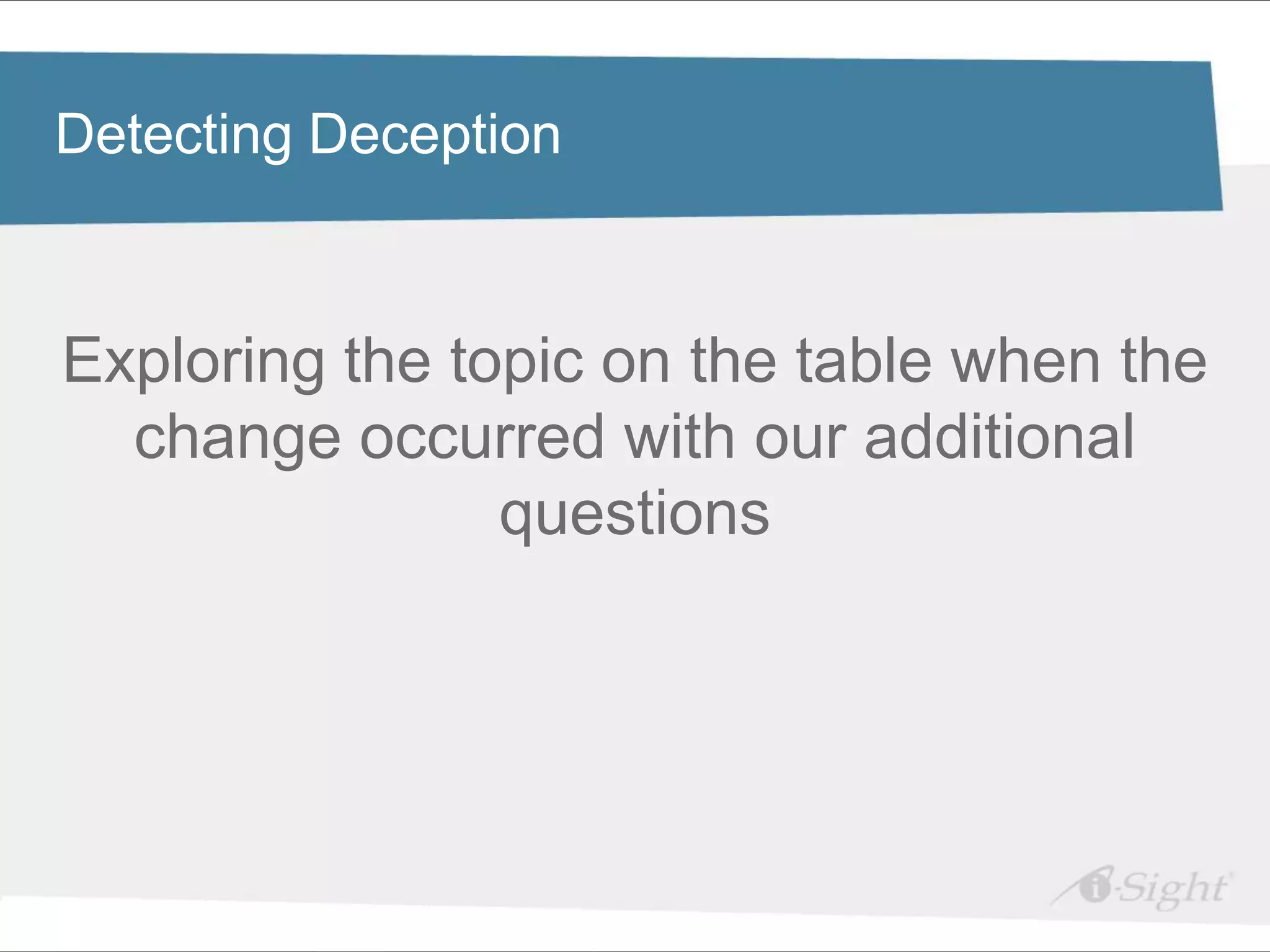
Exploring the topic on the table when the
  change occurred with our additional
                questions
Click to edit Master title style
Detecting Deception

•   Click to edit Master text styles
     - fdsfds


                The Deception Template
Deception edit Master title style
 Click to

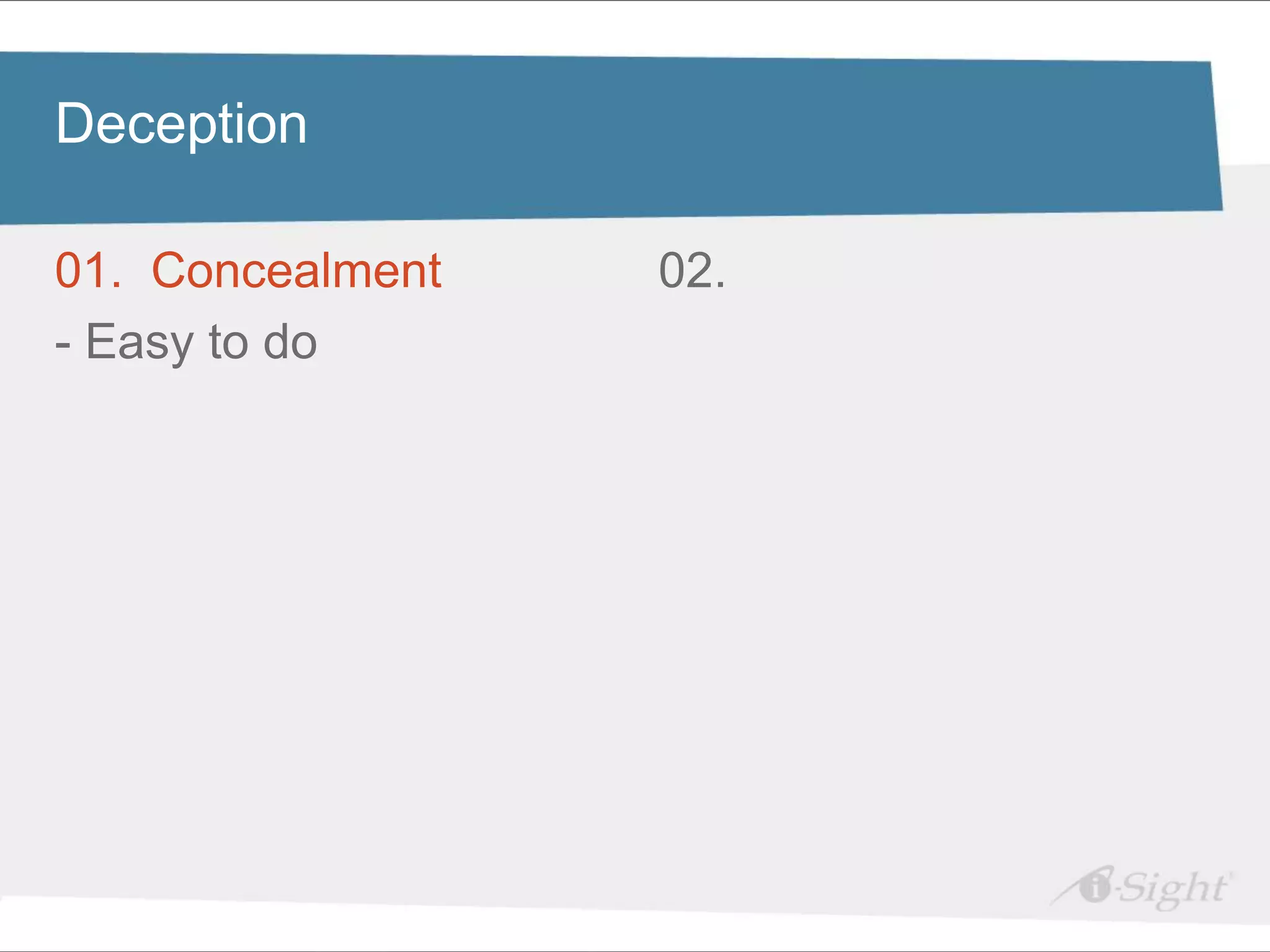
01.Click to edit Master text styles
 •   Concealment                      02.
    - fdsfds
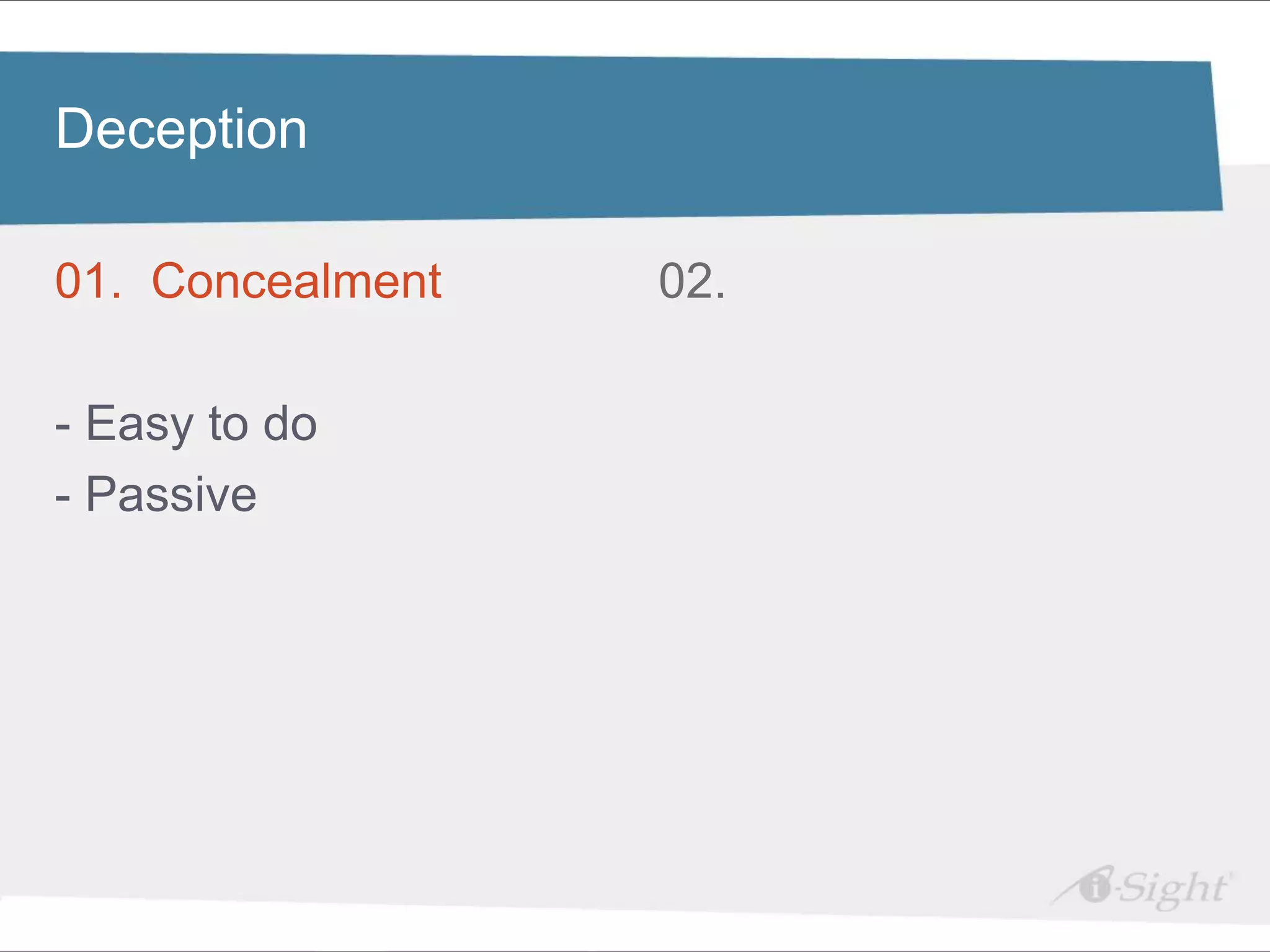
- Easy to do
Deception edit Master title style
 Click to

 •
01.Click to edit Master text styles
     Concealment                      02.
      - fdsfds


- Easy to do
- Passive
Deception edit Master title style
 Click to

01. Concealmentstyles
• Click to edit Master text   02.
    - fdsfds
- Easy to do
- Passive
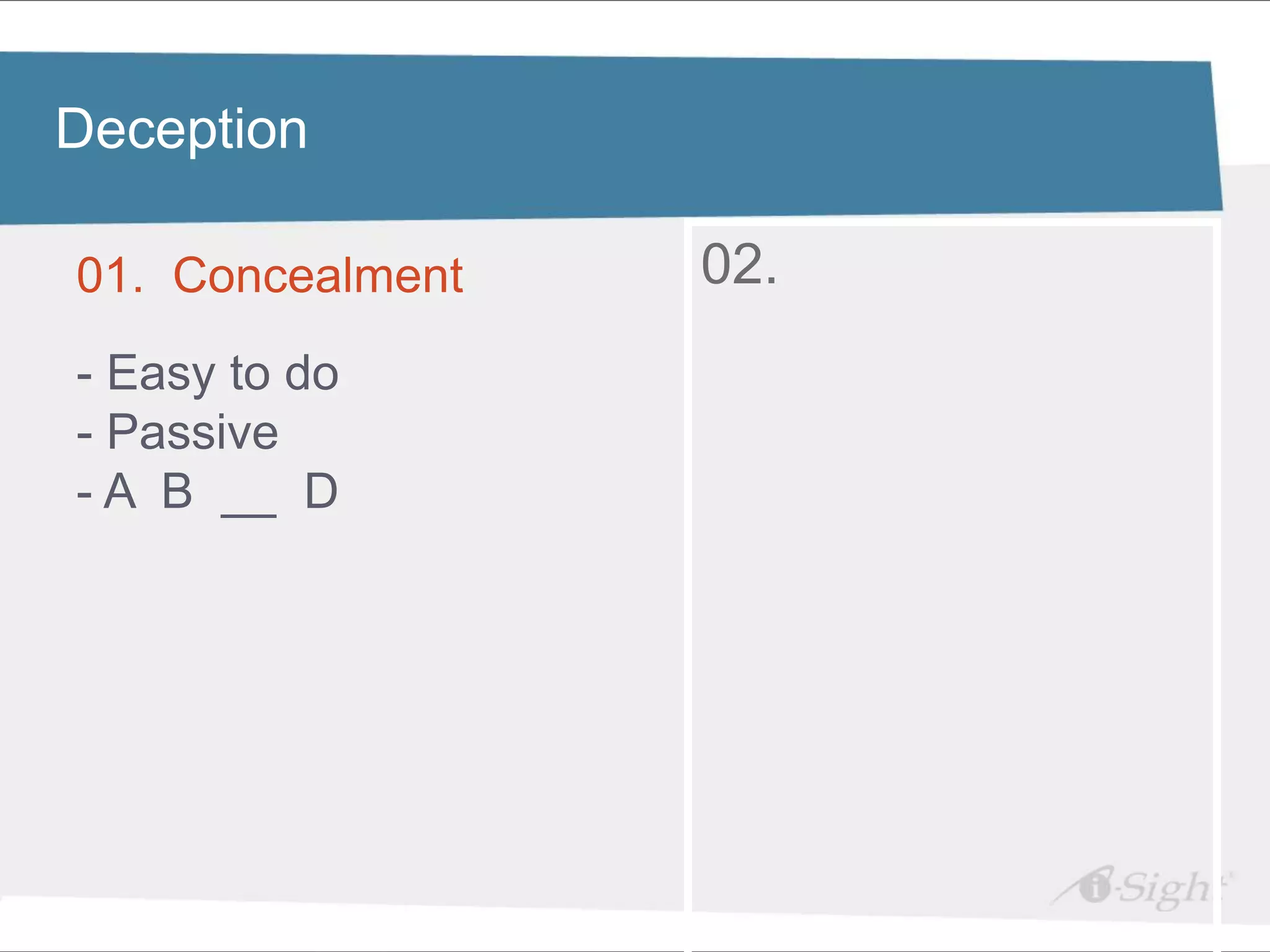
- A B __ D
Click to edit Master title style
Poll

•   Click to edit Master text styles
     - fdsfds

                           Poll Question #3
Deception edit Master title style
 Click to

 •
01.Click to edit Master text styles
     Concealment                      02.
      - fdsfds


- Easy to do
- Passive
- A B __ D
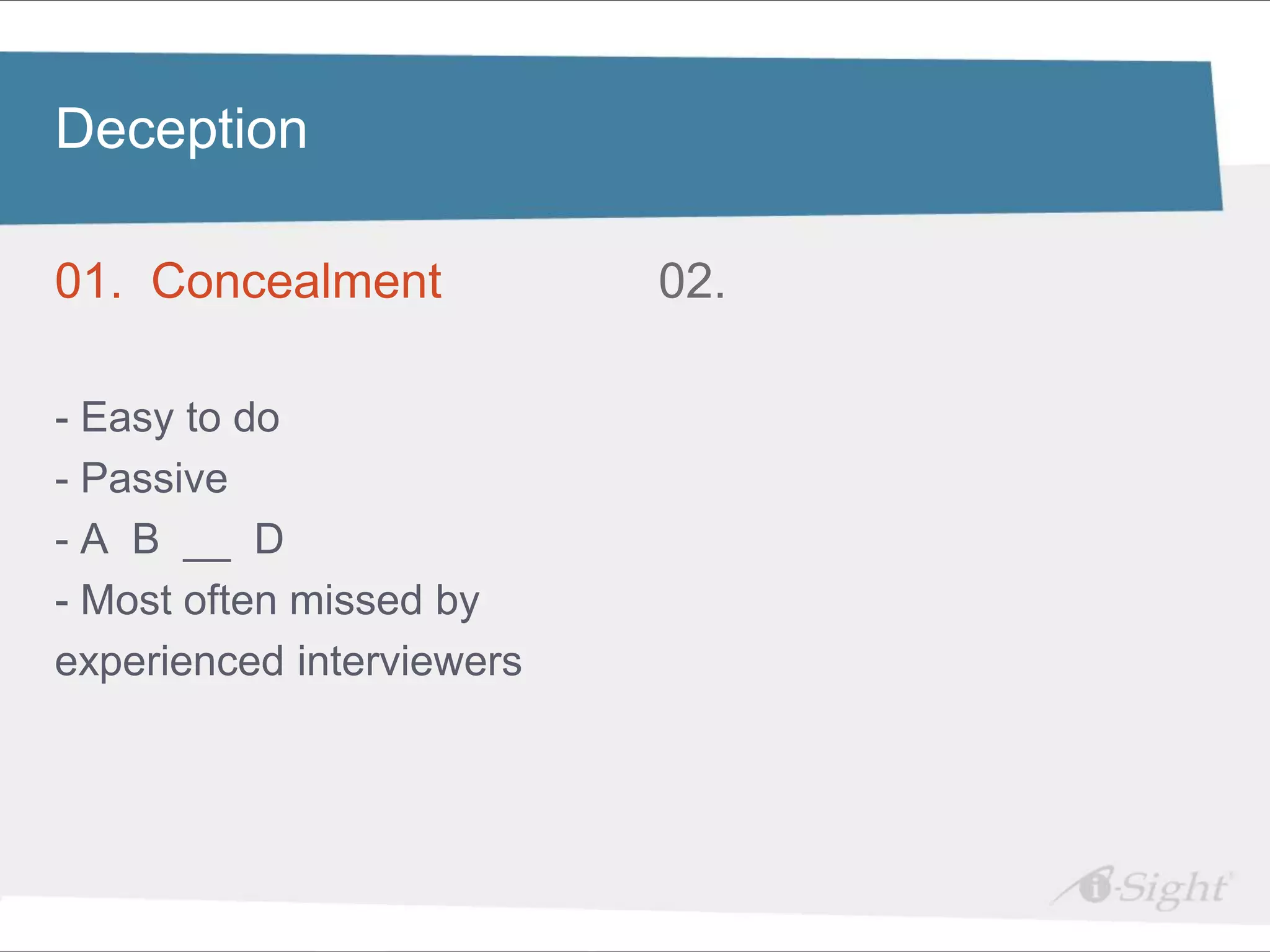
- Most often missed by
experienced interviewers
Deception edit Master title style
 Click to

Concealment text styles
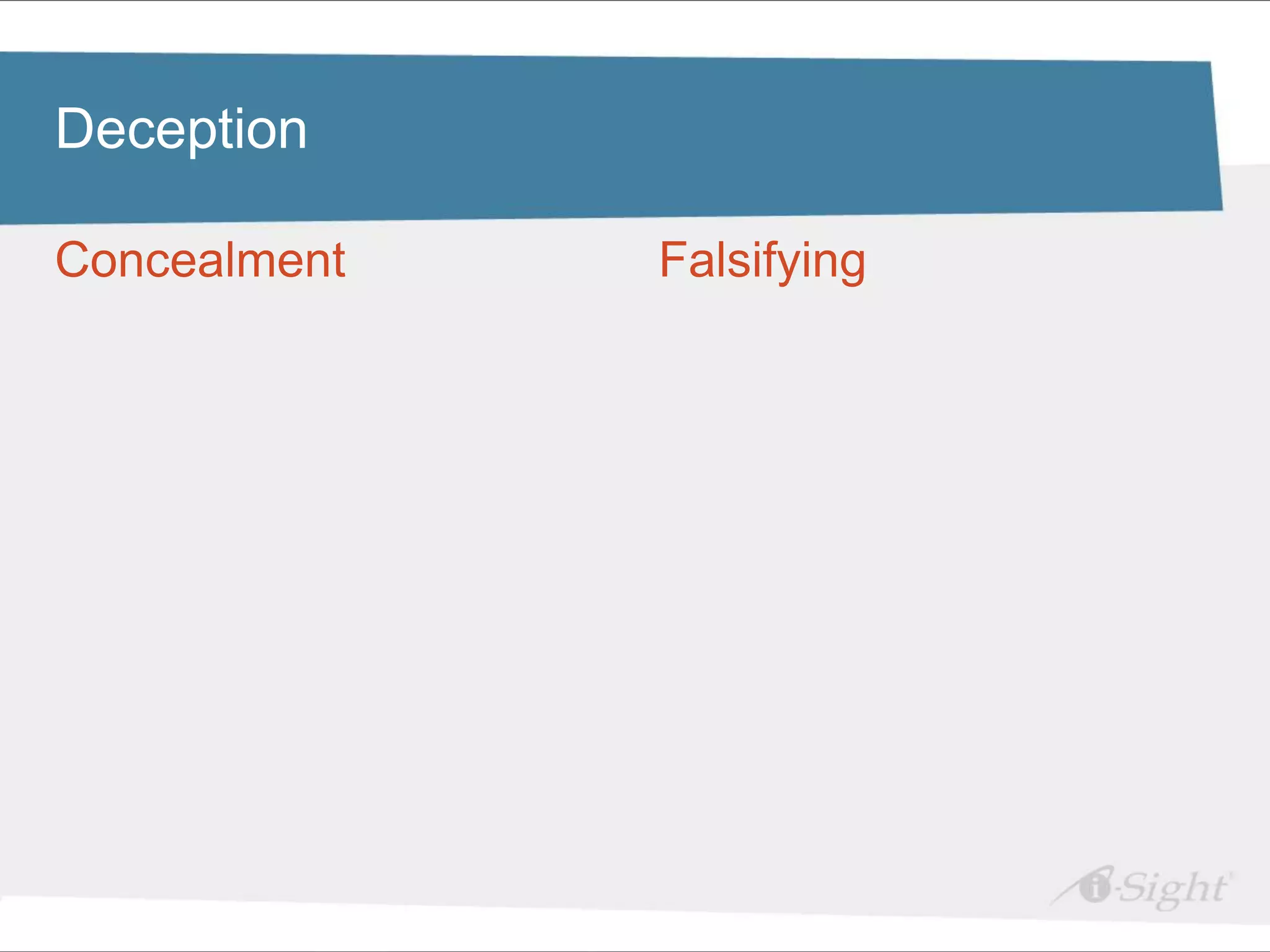
 • Click to edit Master   Falsifying
    - fdsfds
Click to edit Master title style
Deception

 •
Concealment text styles
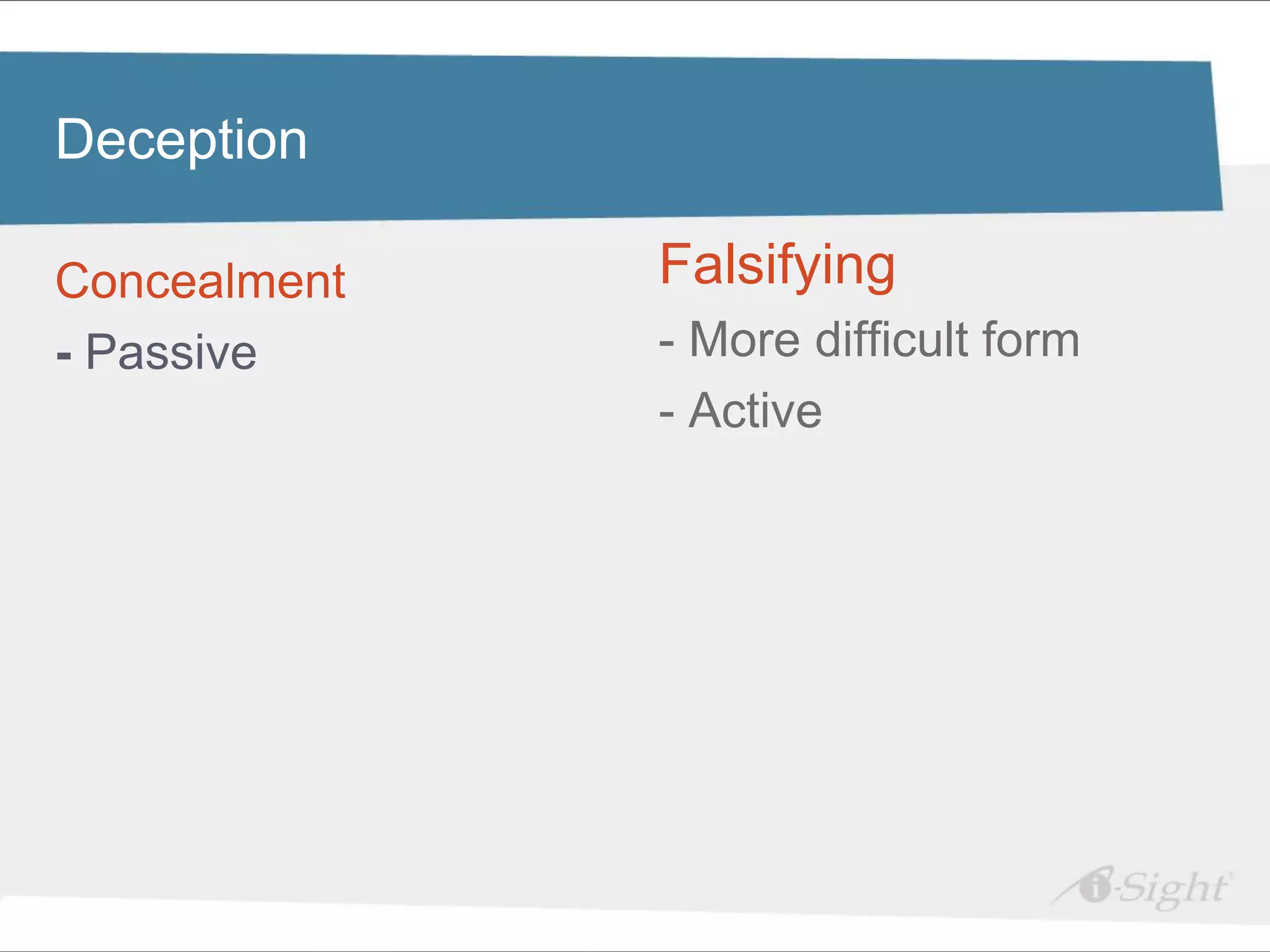
   Click to edit Master   Falsifying
    - fdsfds
- Passive                 - More difficult form
                          - Active
Deception edit Master title style
 Click to

Concealment text styles
 • Click to edit Master   Falsifying
    - fdsfds
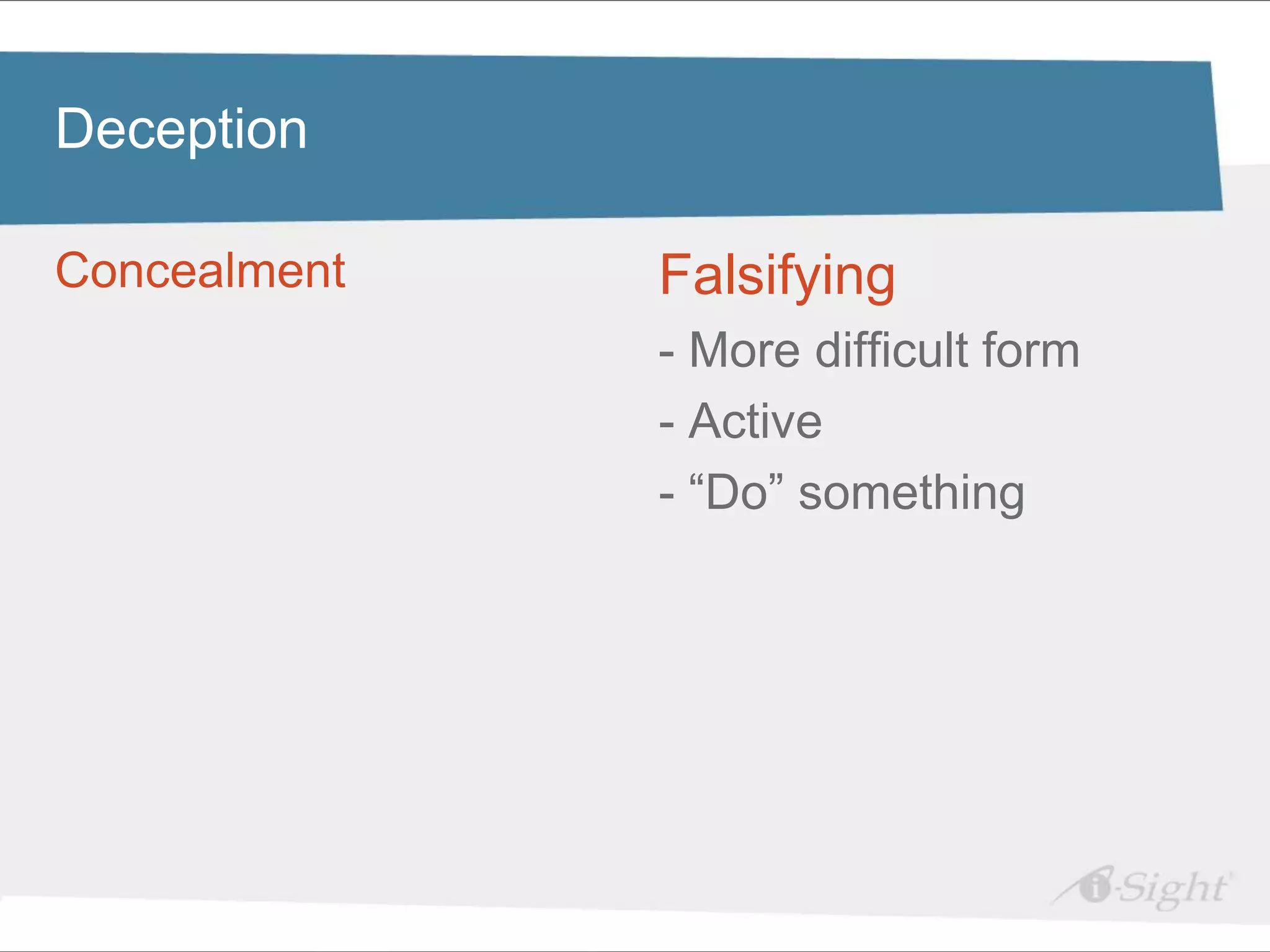
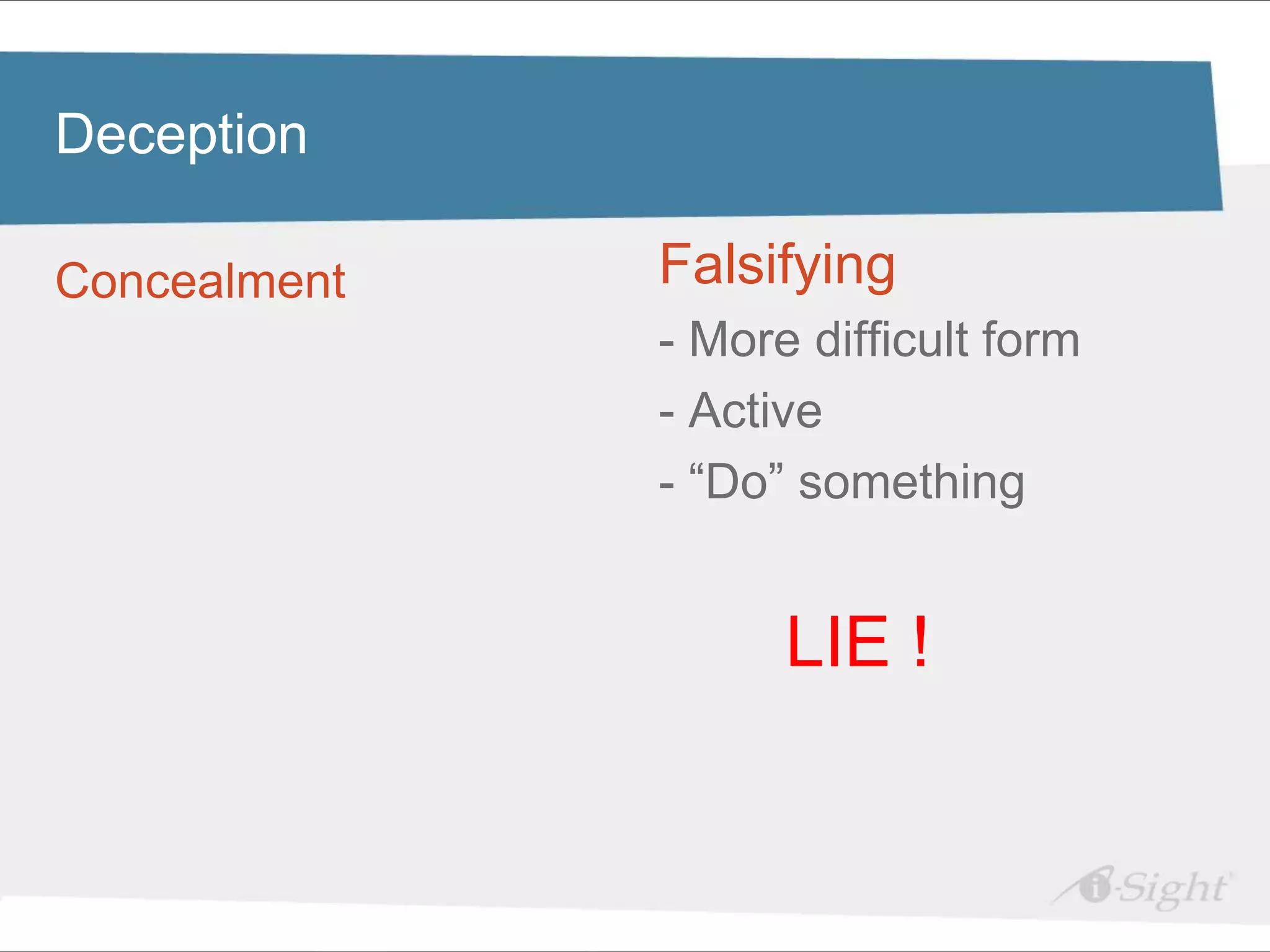
                          - More difficult form
                          - Active
                          - “Do” something
Click to edit Master title style
Deception

 •
Concealment text styles
   Click to edit Master   Falsifying
    - fdsfds
                          - More difficult form
                          - Active
                          - “Do” something


                                LIE !
Click to edit Master title style
Deception

Concealment text styles
 • Click to edit Master   Falsifying
    - fdsfds
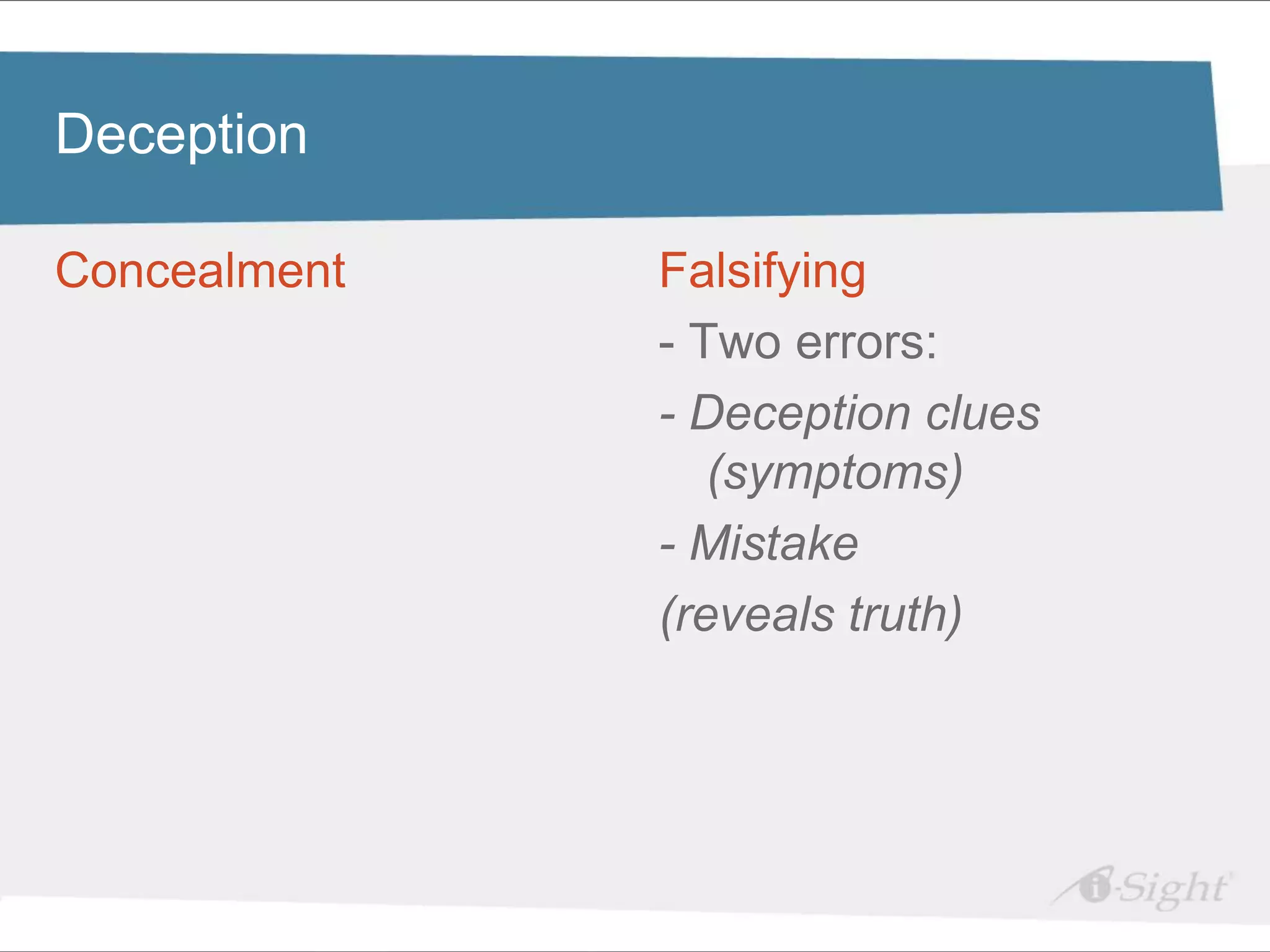
                          - Two errors:
                          - Deception clues
                             (symptoms)
                          - Mistake
                          (reveals truth)
Click to edit Master title style
Deception

Concealment text styles
 • Click to edit Master   Falsifying
    - fdsfds
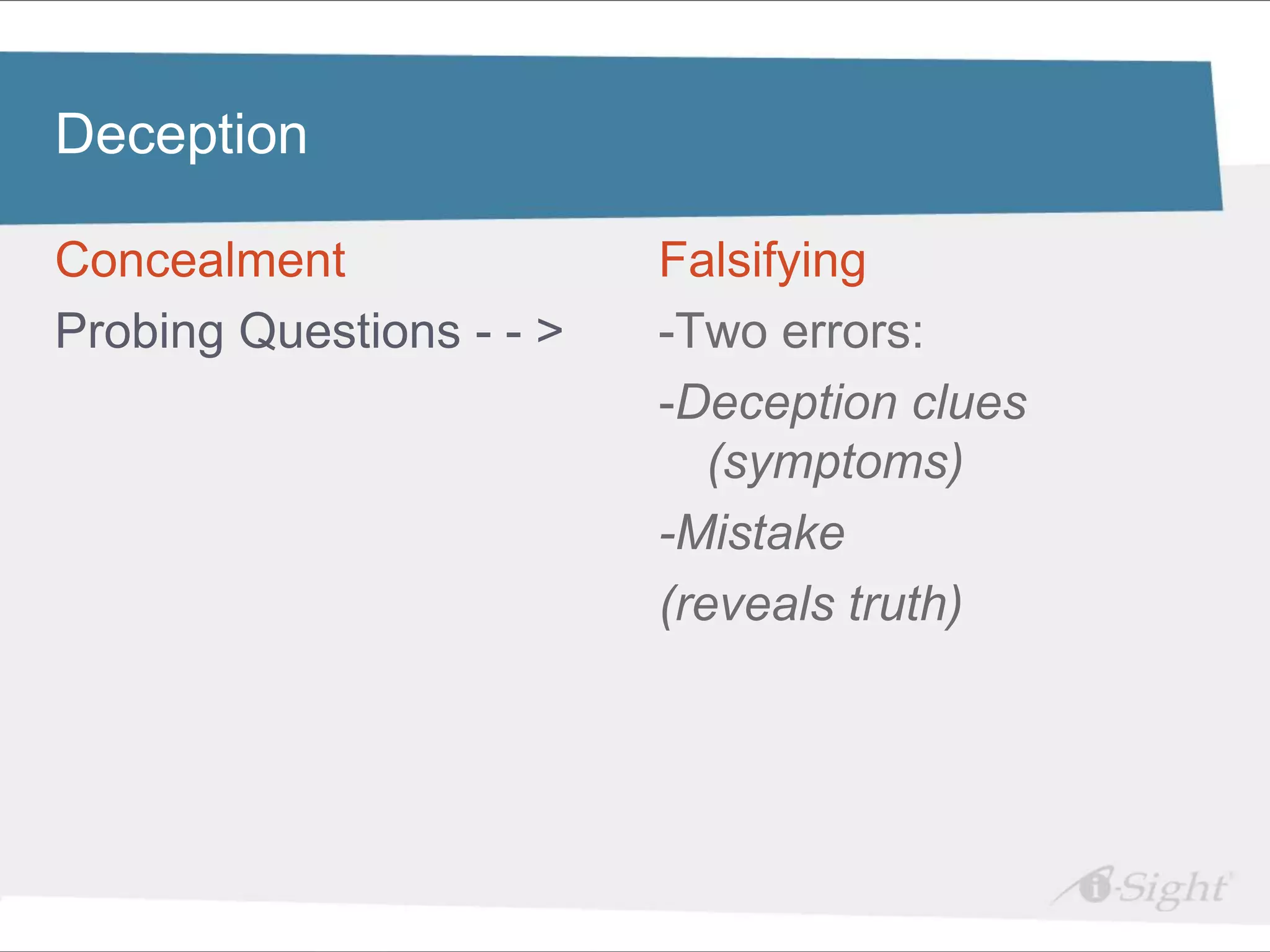
Probing Questions - - >   -Two errors:
                          -Deception clues
                             (symptoms)
                          -Mistake
                          (reveals truth)
Deception edit Master title style
 Click to

Concealment text styles
 • Click to edit Master   Falsifying
    - fdsfds
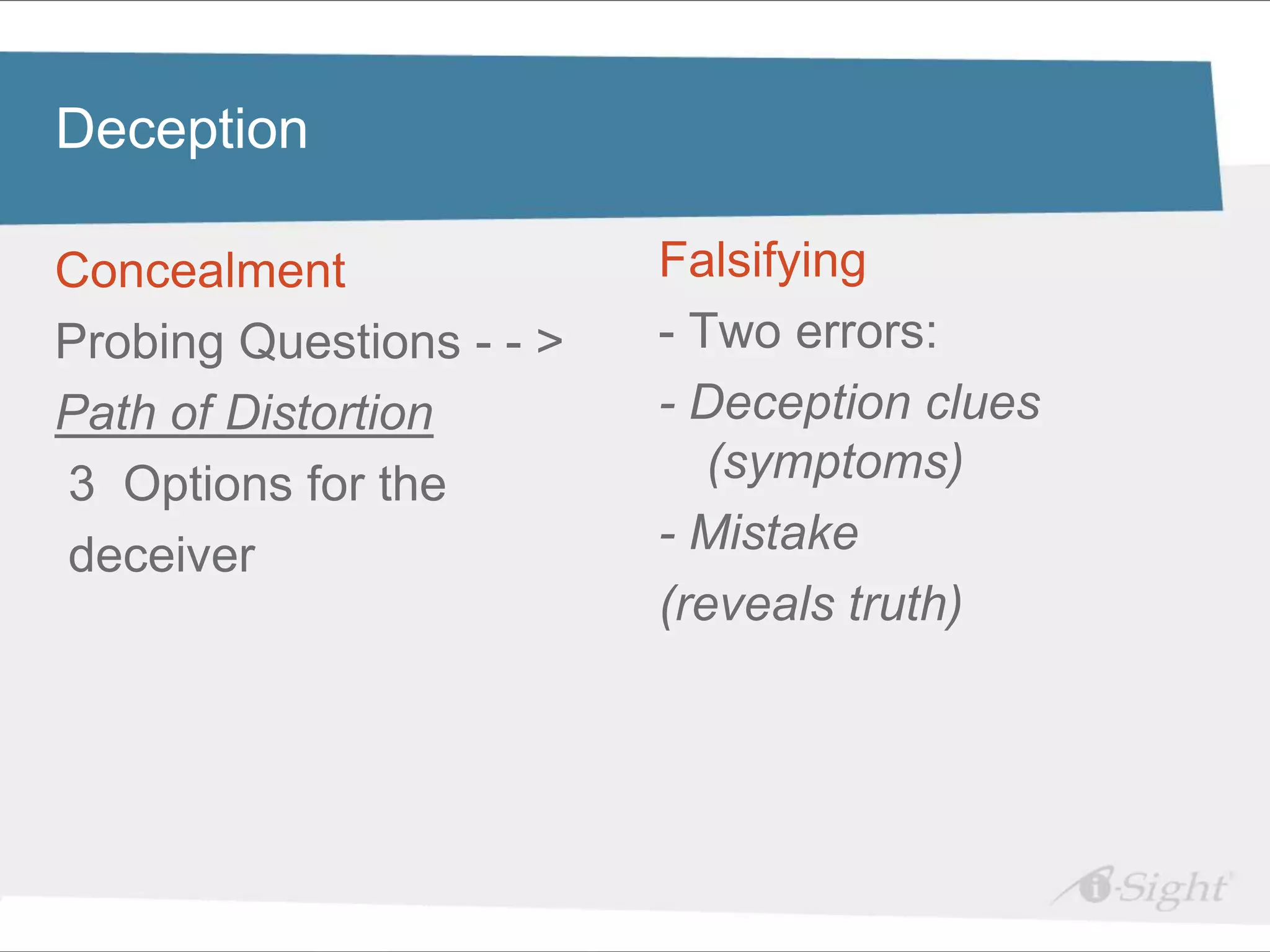
Probing Questions - - >   - Two errors:
Path of Distortion        - Deception clues
3 Options for the            (symptoms)
deceiver                  - Mistake
                          (reveals truth)
Deception edit Master title style
 Click to

Concealment text styles
 • Click to edit Master   Falsifying
    - fdsfds
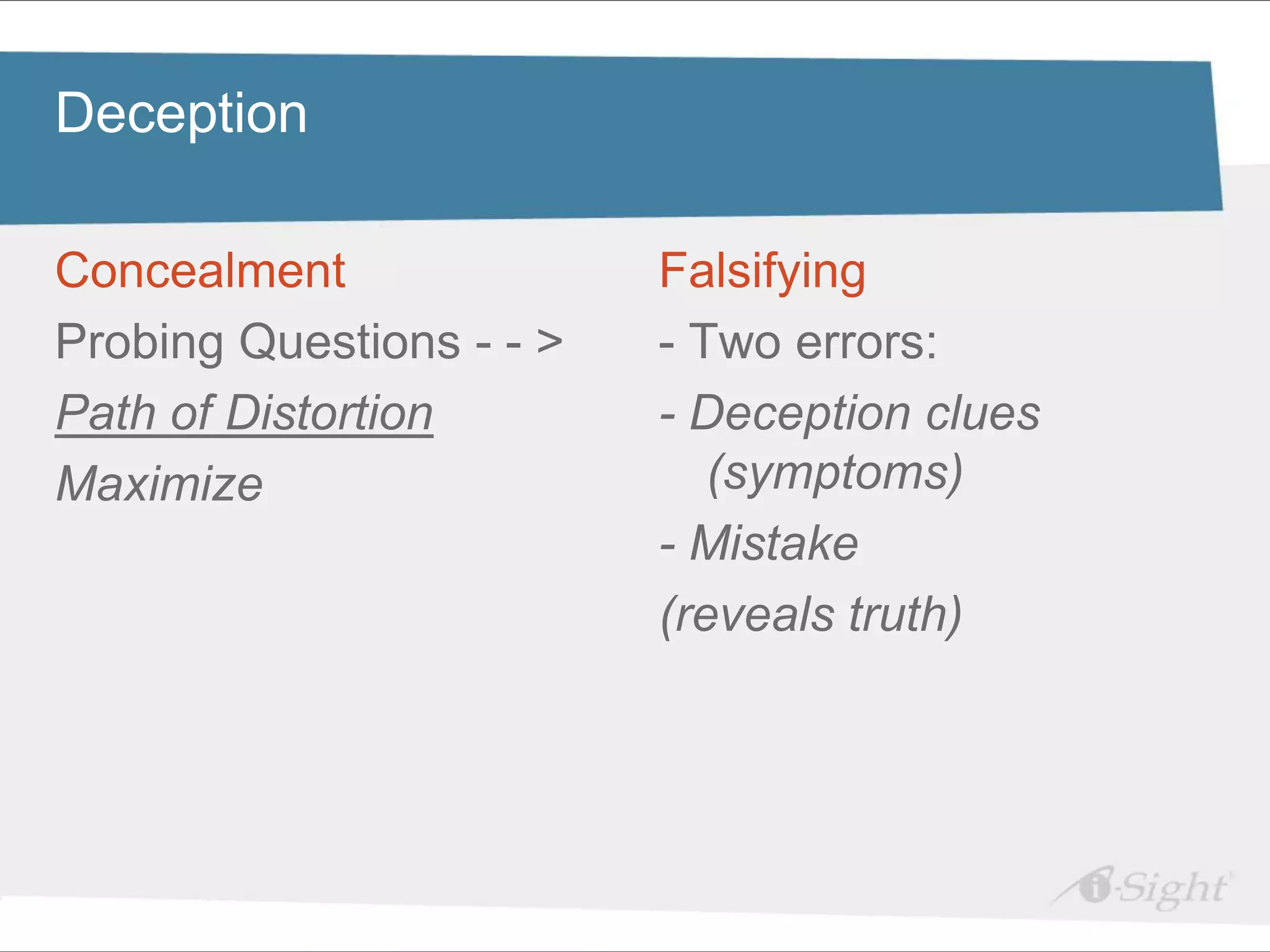
Probing Questions - - >   - Two errors:
Path of Distortion        - Deception clues
Maximize                     (symptoms)
                          - Mistake
                          (reveals truth)
Deception edit Master title style
 Click to

Concealment text styles
 • Click to edit Master   Falsifying
    - fdsfds
Probing Questions - - >   - Two errors:
Path of Distortion        - Deception clues
Maximize                     (symptoms)
Minimize                  - Mistake
                          (reveals truth)
Deception edit Master title style
 Click to

Concealment text styles
 • Click to edit Master   Falsifying
    - fdsfds
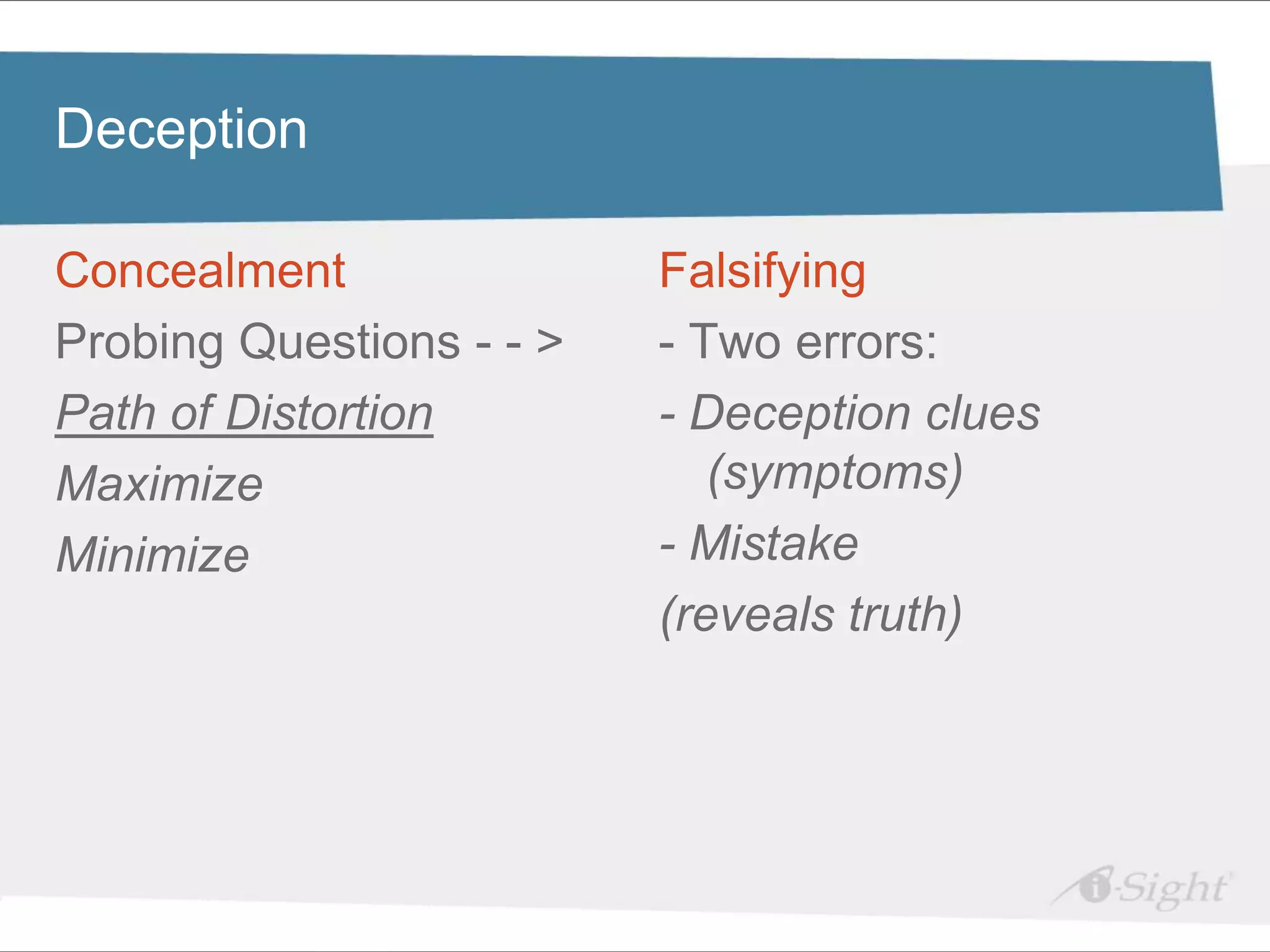
Probing Questions - - >   - Two errors:
Path of Distortion        - Deception clues
Maximize                     (symptoms)
Minimize                  - Mistake
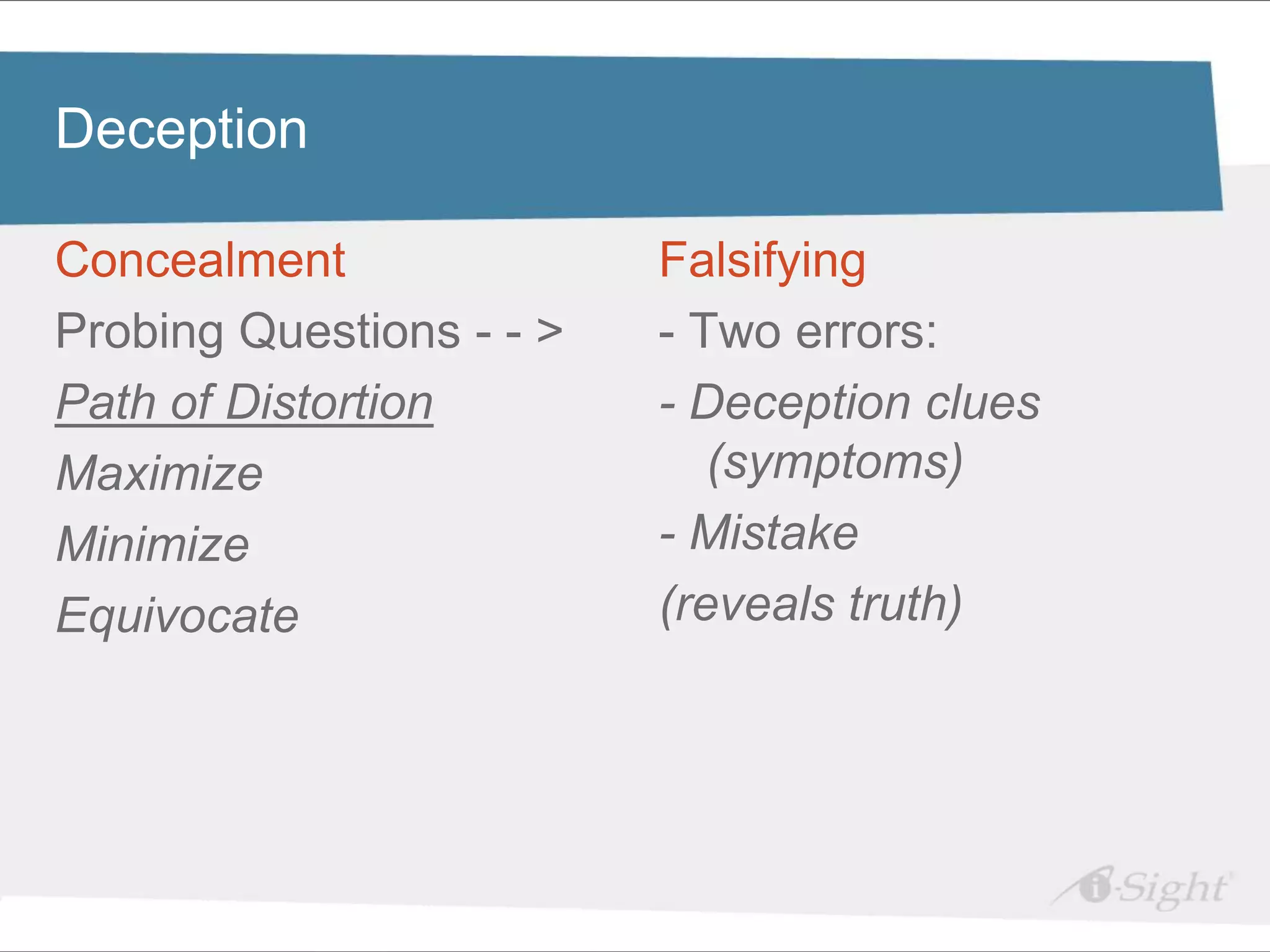
Equivocate                (reveals truth)
Click to edit Master title style
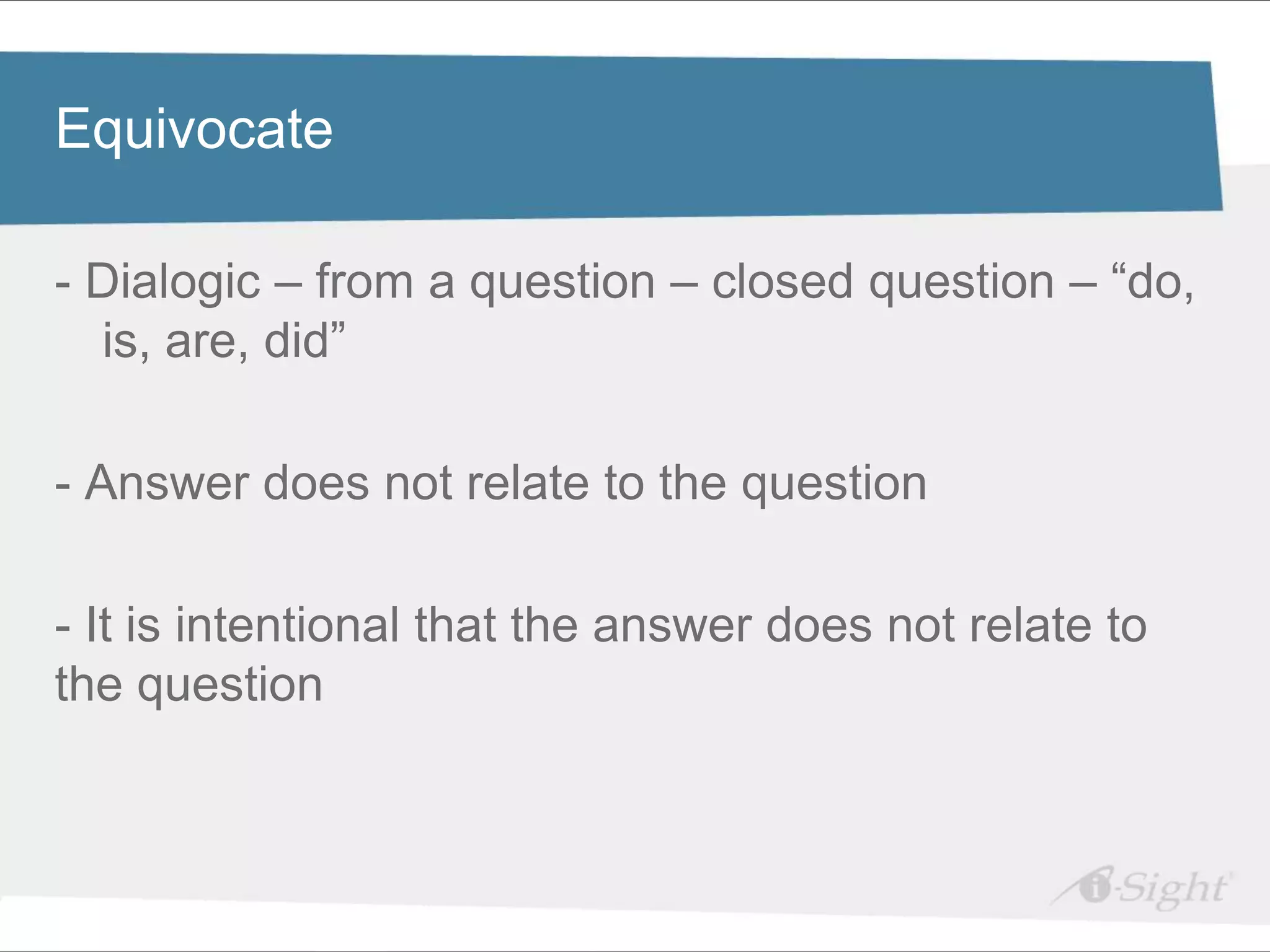
Equivocate

- •Dialogic –Master text styles
    Click to edit
                  from a question – closed question – “do,
     - fdsfds
   is, are, did”

- Answer does not relate to the question

- It is intentional that the answer does not relate to
the question
Click to Deception
Detecting
          edit Master title style

•   Click to edit Master text styles
     - fdsfds
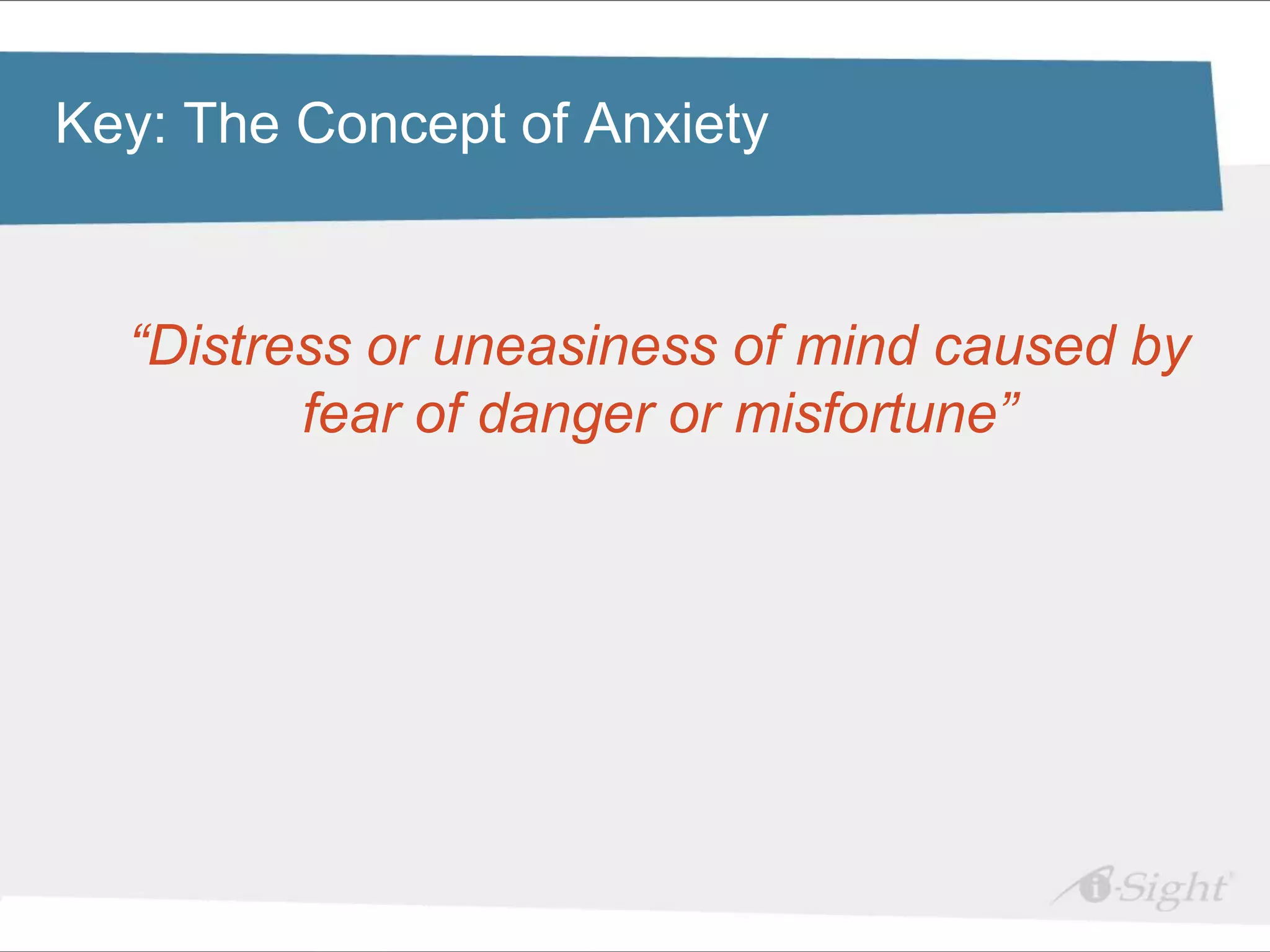
The Role of Anxiety in Detecting Deception
Key: The Concept of Anxiety style
 Click to edit Master title

•   Click to edit Master text styles
     - fdsfds
    “Distress or uneasiness of mind caused by
           fear of danger or misfortune”
Click to edit Master title style
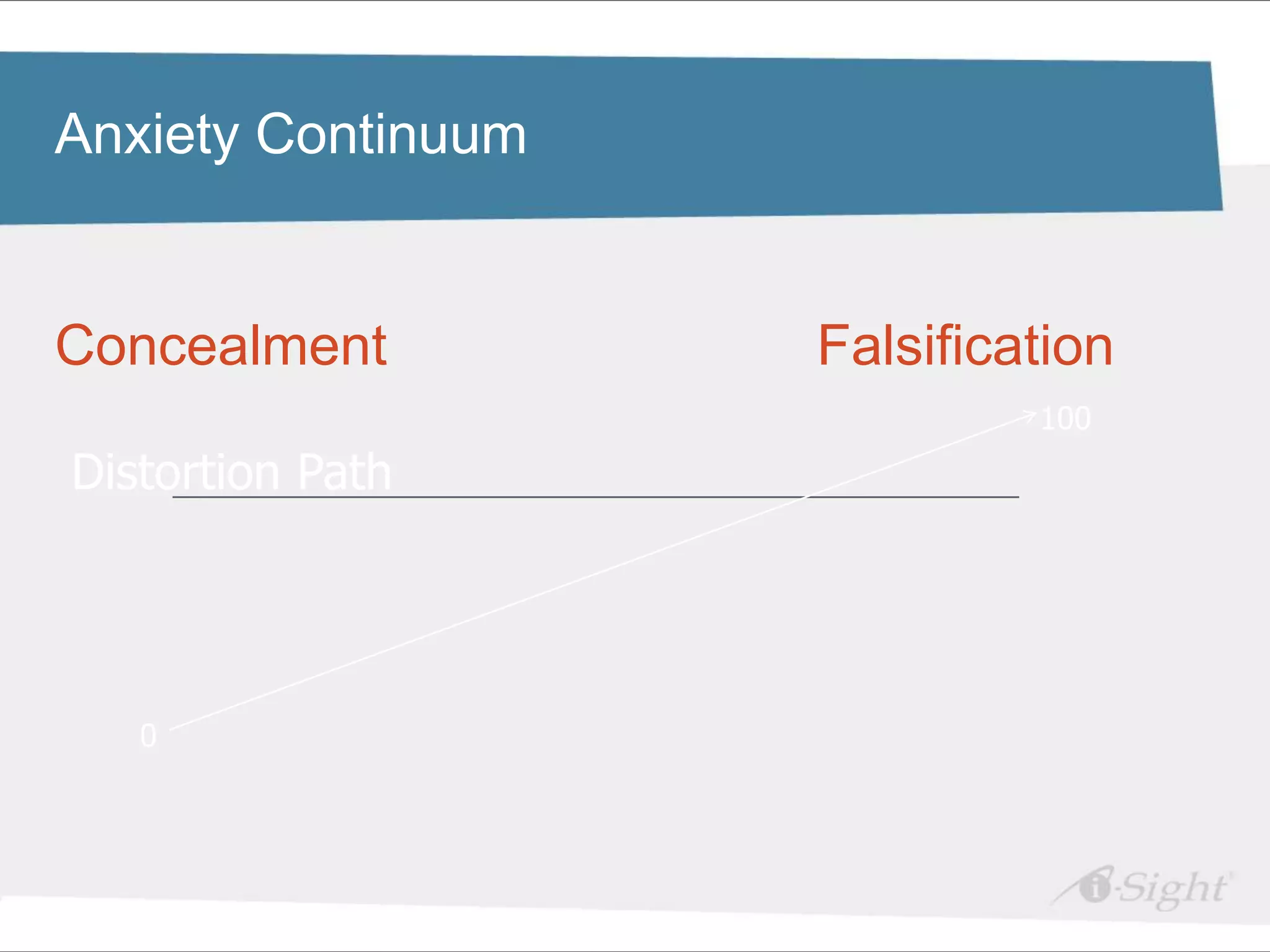
Anxiety Continuum

•   Click to edit Master text styles
     - fdsfds
Concealment                            Falsification
                                                100
Distortion Path


     0
Click to edit Master title style
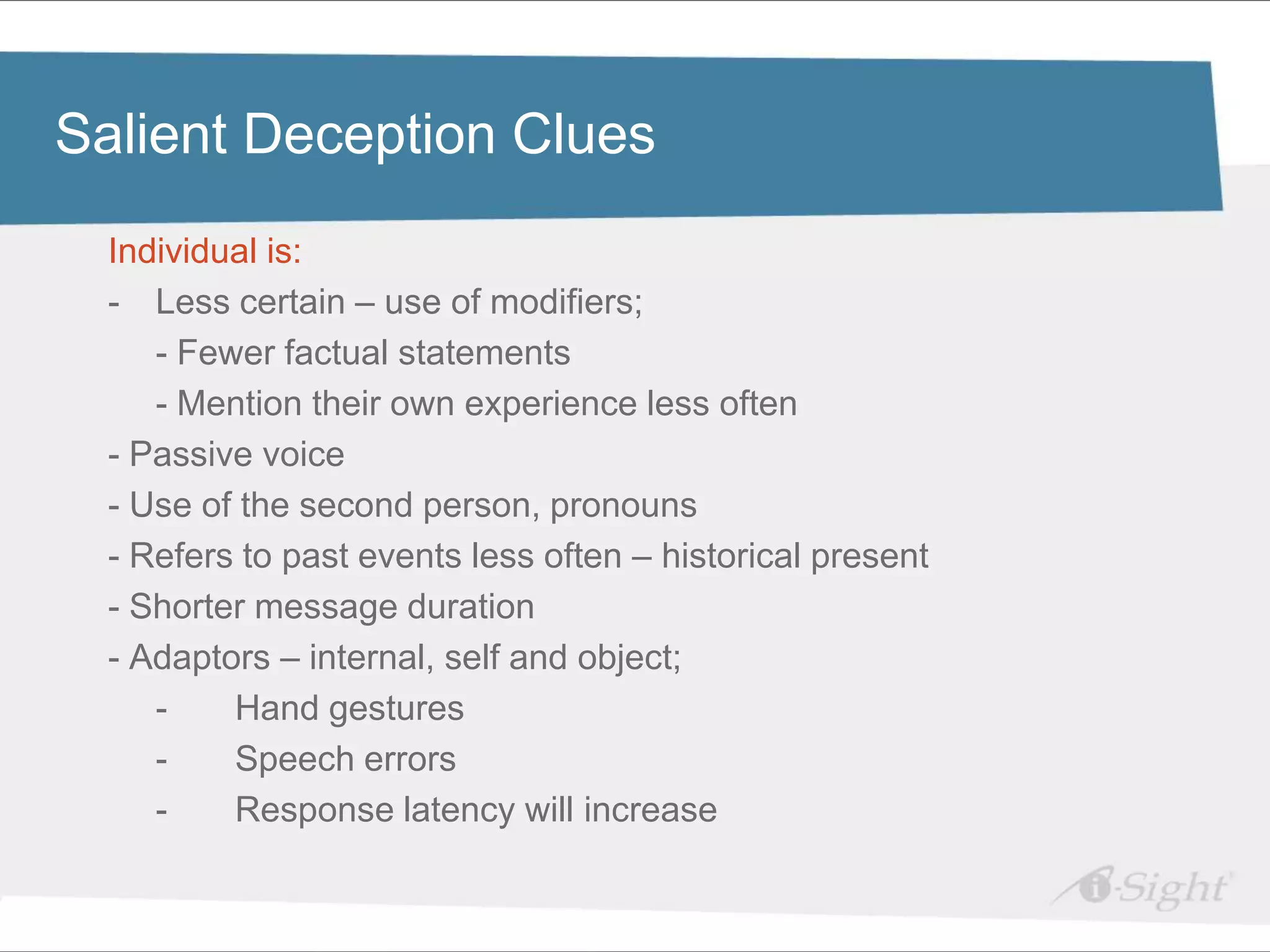
Salient Deception Clues
    Individual is:
•    Click to edit Master text styles
    - - Less certain – use of modifiers;
          fdsfds
        - Fewer factual statements
        - Mention their own experience less often
    - Passive voice
    - Use of the second person, pronouns
    - Refers to past events less often – historical present
    - Shorter message duration
    - Adaptors – internal, self and object;
        -     Hand gestures
        -     Speech errors
        -     Response latency will increase
Click to edit Master title style
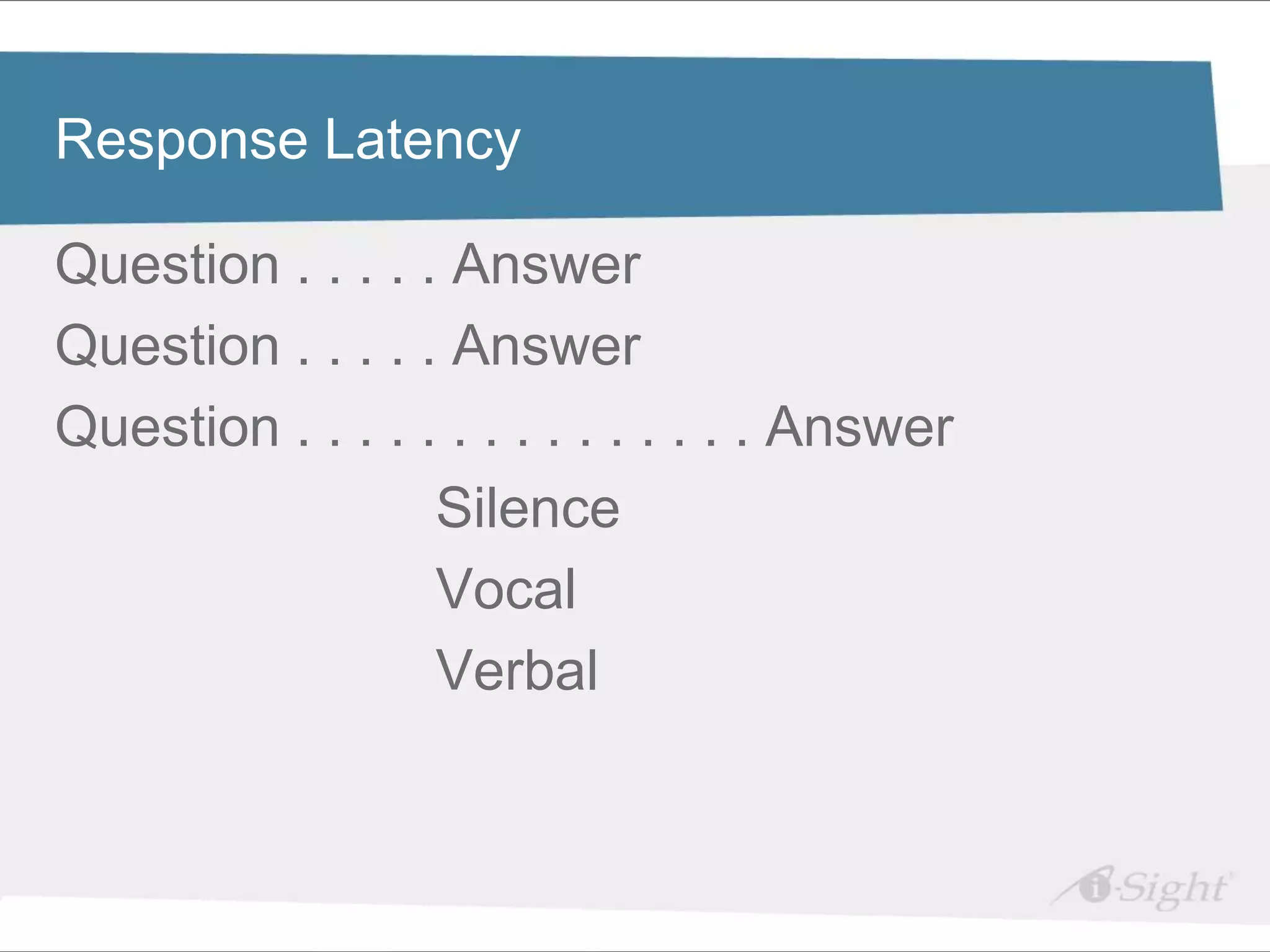
Response Latency

Question . . . .textAnswer
• Click to edit Master . styles
   - fdsfds
Question . . . . . Answer
Question . . . . . . . . . . . . . . . Answer
                        Silence
                        Vocal
                        Verbal
Mistake


      Reveals the truth
Click to edit Master title style
Questions

•    Click to edit Master text styles
      - fdsfds
             If you have any questions, please submit them now.


           Thank you for taking the time to attend today’s webinar.


    If you have any questions about the information covered in the webinar,
                                please contact:

                       Joe Gerard              Don Rabon
                  jgerard@i-sight.com      dwrabon@msn.com

Webinar: Detecting Deception - Investigation Interviewing Skills

  • 1.
    Detecting Deception: InvestigationInterviewing Skills Don Rabon Expert Investigator, Author, Instructor dwrabon@msn.com
  • 2.
    Click to editMaster title style Introduction • Click to edit Master text styles Don Rabon - fdsfds Don Rabon, CFE, author, speaker, instructor and former investigative director, has more than 34 years of experience conducting training in interviewing techniques, detecting deception and investigative disclosure analysis. Rabon is the author of many books, including Interviewing and Interrogation 2nd Edition and Fraud Related Interviewing. Rabon is retired from the North Carolina Justice Academy, North Carolina Department of Justice, where he served as Deputy Director. Joe Gerard Joe Gerard is the VP of Sales & Marketing at i-Sight, a leading provider of web-based case management software for corporate investigations. He’s worked with companies like Dell, Coke, Allstate, BP and more than 100 others to implement improved investigative processes that leverage best practices and case management.
  • 3.
    Deception Deceptionis most certainly with us
  • 4.
    Deception Deception has beenwith us for a good long while:
  • 5.
  • 6.
    Click to editMaster title style Deception • Click to edit Master text styles - fdsfds
  • 7.
    Deception edit Mastertitle style Click to • Click to edit Master text styles - fdsfds
  • 8.
    Deception edit Mastertitle style Click to • Click to edit Master text styles - fdsfds
  • 9.
    Deception edit Mastertitle style Click to • Click to edit Master text styles - fdsfds
  • 10.
    Deception edit Mastertitle style Click to • Click to edit Master text styles - fdsfds
  • 11.
    Deception edit Mastertitle style Click to • Click to edit Master text styles - fdsfds
  • 12.
    Deception edit Mastertitle style Click to • Click to edit Master text styles - fdsfds
  • 13.
    Deception edit Mastertitle style Click to • Click to edit Master text styles - fdsfds
  • 14.
    Deception edit Mastertitle style Click to • Click to edit Master text styles - fdsfds
  • 15.
    Click to editMaster title style Deception • Click to edit Master text styles - fdsfds
  • 16.
    Click to editMaster title style Deception • Click to edit Master text styles - fdsfds
  • 17.
    Click to editMaster title style Is This Person Telling Me The Truth? • Click to edit Master text styles - fdsfds
  • 18.
    Click to editMaster title style Poll • Click to edit Master text styles - fdsfds Poll Question #1
  • 19.
    Ask Yourself: Mastertitle style Click to edit • Click to edit Master text styles - fdsfds Professionally, why is it important for you to know if someone is telling you the truth?
  • 20.
    Click to editMaster title style Ask Yourself: • Click to edit Master text styles - fdsfds What are the consequences if you do not accurately make the truth/deception assessment?
  • 21.
    Click to editMaster title style Poll • Click to edit Master text styles - fdsfds Poll Question #2
  • 22.
    Click to editMaster title style Ask Yourself: • Click to edit Master text styles How do you determine if someone is truthful - fdsfds or not?
  • 23.
    Click to Deception Detecting edit Master title style • Click to edit Master text styles Detecting deception as it relates to the - fdsfds interviewing process – putting it into perspective
  • 24.
    Detecting Deception The template for detecting deception
  • 25.
    Click to editMaster title style A Definition of Deception • Click to edit Master text styles - One person - fdsfds - Intentional - Mislead - Another - Deliberately - No prior notification - Not asked to do so
  • 26.
    Deception Is… Learned behavior
  • 27.
    Deception Is… Learned at a very early age
  • 28.
    Deception Is… 18 to 36 months
  • 29.
    Click to editMaster title style The Key to Unlocking the Door to Deception • Click to edit Master text styles - fdsfds Noting changes in behavior and . . . . . . .
  • 30.
    Click to Deception Detecting edit Master title style • Click to edit Master text styles - fdsfds Exploring the topic on the table when the change occurred with our additional questions
  • 31.
    Click to editMaster title style Detecting Deception • Click to edit Master text styles - fdsfds The Deception Template
  • 32.
    Deception edit Mastertitle style Click to 01.Click to edit Master text styles • Concealment 02. - fdsfds - Easy to do
  • 33.
    Deception edit Mastertitle style Click to • 01.Click to edit Master text styles Concealment 02. - fdsfds - Easy to do - Passive
  • 34.
    Deception edit Mastertitle style Click to 01. Concealmentstyles • Click to edit Master text 02. - fdsfds - Easy to do - Passive - A B __ D
  • 35.
    Click to editMaster title style Poll • Click to edit Master text styles - fdsfds Poll Question #3
  • 36.
    Deception edit Mastertitle style Click to • 01.Click to edit Master text styles Concealment 02. - fdsfds - Easy to do - Passive - A B __ D - Most often missed by experienced interviewers
  • 37.
    Deception edit Mastertitle style Click to Concealment text styles • Click to edit Master Falsifying - fdsfds
  • 38.
    Click to editMaster title style Deception • Concealment text styles Click to edit Master Falsifying - fdsfds - Passive - More difficult form - Active
  • 39.
    Deception edit Mastertitle style Click to Concealment text styles • Click to edit Master Falsifying - fdsfds - More difficult form - Active - “Do” something
  • 40.
    Click to editMaster title style Deception • Concealment text styles Click to edit Master Falsifying - fdsfds - More difficult form - Active - “Do” something LIE !
  • 41.
    Click to editMaster title style Deception Concealment text styles • Click to edit Master Falsifying - fdsfds - Two errors: - Deception clues (symptoms) - Mistake (reveals truth)
  • 42.
    Click to editMaster title style Deception Concealment text styles • Click to edit Master Falsifying - fdsfds Probing Questions - - > -Two errors: -Deception clues (symptoms) -Mistake (reveals truth)
  • 43.
    Deception edit Mastertitle style Click to Concealment text styles • Click to edit Master Falsifying - fdsfds Probing Questions - - > - Two errors: Path of Distortion - Deception clues 3 Options for the (symptoms) deceiver - Mistake (reveals truth)
  • 44.
    Deception edit Mastertitle style Click to Concealment text styles • Click to edit Master Falsifying - fdsfds Probing Questions - - > - Two errors: Path of Distortion - Deception clues Maximize (symptoms) - Mistake (reveals truth)
  • 45.
    Deception edit Mastertitle style Click to Concealment text styles • Click to edit Master Falsifying - fdsfds Probing Questions - - > - Two errors: Path of Distortion - Deception clues Maximize (symptoms) Minimize - Mistake (reveals truth)
  • 46.
    Deception edit Mastertitle style Click to Concealment text styles • Click to edit Master Falsifying - fdsfds Probing Questions - - > - Two errors: Path of Distortion - Deception clues Maximize (symptoms) Minimize - Mistake Equivocate (reveals truth)
  • 47.
    Click to editMaster title style Equivocate - •Dialogic –Master text styles Click to edit from a question – closed question – “do, - fdsfds is, are, did” - Answer does not relate to the question - It is intentional that the answer does not relate to the question
  • 48.
    Click to Deception Detecting edit Master title style • Click to edit Master text styles - fdsfds The Role of Anxiety in Detecting Deception
  • 49.
    Key: The Conceptof Anxiety style Click to edit Master title • Click to edit Master text styles - fdsfds “Distress or uneasiness of mind caused by fear of danger or misfortune”
  • 50.
    Click to editMaster title style Anxiety Continuum • Click to edit Master text styles - fdsfds Concealment Falsification 100 Distortion Path 0
  • 51.
    Click to editMaster title style Salient Deception Clues Individual is: • Click to edit Master text styles - - Less certain – use of modifiers; fdsfds - Fewer factual statements - Mention their own experience less often - Passive voice - Use of the second person, pronouns - Refers to past events less often – historical present - Shorter message duration - Adaptors – internal, self and object; - Hand gestures - Speech errors - Response latency will increase
  • 52.
    Click to editMaster title style Response Latency Question . . . .textAnswer • Click to edit Master . styles - fdsfds Question . . . . . Answer Question . . . . . . . . . . . . . . . Answer Silence Vocal Verbal
  • 53.
    Mistake Reveals the truth
  • 54.
    Click to editMaster title style Questions • Click to edit Master text styles - fdsfds If you have any questions, please submit them now. Thank you for taking the time to attend today’s webinar. If you have any questions about the information covered in the webinar, please contact: Joe Gerard Don Rabon jgerard@i-sight.com dwrabon@msn.com

Editor's Notes

  • #33 Question: Why do you think falsifying is more advantageous to the professional detector of deception?
  • #34 Question: Why do you think falsifying is more advantageous to the professional detector of deception?
  • #35 Question: Why do you think falsifying is more advantageous to the professional detector of deception?
  • #37 Question: Why do you think falsifying is more advantageous to the professional detector of deception?
  • #38 Question: Why do you think falsifying is more advantageous to the professional detector of deception?
  • #39 Question: Why do you think falsifying is more advantageous to the professional detector of deception?
  • #40 Question: Why do you think falsifying is more advantageous to the professional detector of deception?
  • #41 Question: Why do you think falsifying is more advantageous to the professional detector of deception?
  • #42 Question: Why do you think falsifying is more advantageous to the professional detector of deception?
  • #43 Question: Why do you think falsifying is more advantageous to the professional detector of deception?
  • #44 Question: Why do you think falsifying is more advantageous to the professional detector of deception?
  • #45 Question: Why do you think falsifying is more advantageous to the professional detector of deception?
  • #46 Question: Why do you think falsifying is more advantageous to the professional detector of deception?
  • #47 Question: Why do you think falsifying is more advantageous to the professional detector of deception?