Mechanical weathering would produce more sediments than chemical weathering.
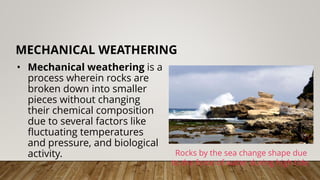
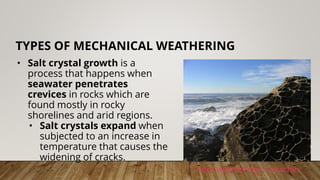
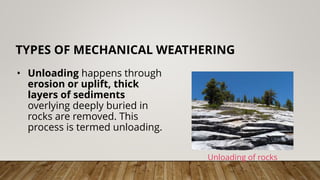
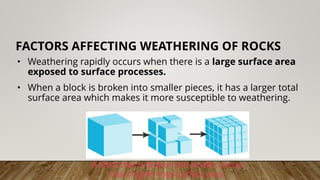
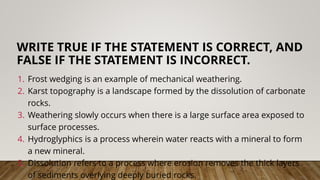
Mechanical weathering breaks rocks into smaller pieces without changing their chemical composition through processes like frost wedging, salt crystal growth, etc. This produces more loose sediments that can be transported.
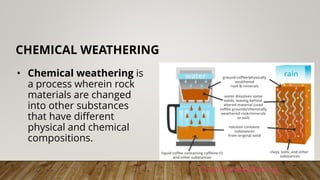
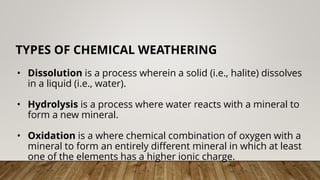
Chemical weathering changes the chemical composition of rocks to form new minerals. Though it breaks down rocks, it does not produce as many loose sediments that are easily transported since the resulting material is often still attached or residual soils rather than loose sediments.
So in summary, mechanical weathering produces more loose sediments than chemical weathering, making it the type of weathering that would produce more sediments.