EMBROIDERY
STITCHES
Back stitch
- the most often used
to outline a design. This
stitch also forms the
base line for other
embroidery stitches
Bullion stitch
- a single detached stitch
that is used for filling in a
design area. Rows of bullion
stitches may also be used to
outline a design. It is
recommended that one uses
a needle with a small eye for
ease in pulling
Cross-stitch- stitched
formed by two
crossing arms and
may be used for
outlining, as borders
or to fill in an entire
area.
Feather stitch- a
stitch with a loop
and stitches evenly
worked on both left
and right sides of a
design area.
Fish Bone- a kind of filling
stitch which is ideal for
making leaves or feathers.
It requires us to divide the
pattern into two and each
side is filled alternately
giving it a plaited effect in
the centre, thus ideal to
French knot- a single
detached stitched used
primarily to fill in a design
area. It is a popular stitch
among embroiderers in
that it can be used to
create the eyes on an
embroidered face or the
center of a flower.
HERRINGBONE
Herringbone stitch-
a basic
overlapping stitch
popular for its use
in borders.
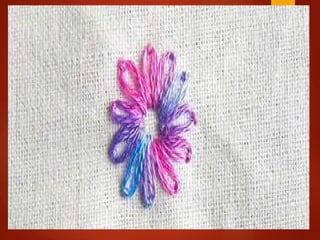
Lazy daisy chain
stitch- also called
detached chain
stitch, this stitch is work
in a circle to resemble
the petals of a flower.
Looped stitch- a very
decorative stitch and can
be experimented with
threads for various colors
over borders. Close layers
of this stitch can create
wonderful effects on a
pattern.
Running stitch-
considered
being the
easiest stitch for
outlining.
Satin stitch- a solid
filling stitch that is
used to cover a
design area with long,
straight stitches
worked very close
together
Split- done using
quite thick threads,
such as wool. It was
used as an outlining
stitch or as a filling
stitch
Seed- also known
as rice grain stitch.
Stitch uses simple
straight stitches in a
single direction to
fill in patterns.

EMBROIDERY STITCHES DEFINITION.pptx emb

  • 1.
  • 3.
    Back stitch - themost often used to outline a design. This stitch also forms the base line for other embroidery stitches
  • 5.
    Bullion stitch - asingle detached stitch that is used for filling in a design area. Rows of bullion stitches may also be used to outline a design. It is recommended that one uses a needle with a small eye for ease in pulling
  • 8.
    Cross-stitch- stitched formed bytwo crossing arms and may be used for outlining, as borders or to fill in an entire area.
  • 10.
    Feather stitch- a stitchwith a loop and stitches evenly worked on both left and right sides of a design area.
  • 12.
    Fish Bone- akind of filling stitch which is ideal for making leaves or feathers. It requires us to divide the pattern into two and each side is filled alternately giving it a plaited effect in the centre, thus ideal to
  • 14.
    French knot- asingle detached stitched used primarily to fill in a design area. It is a popular stitch among embroiderers in that it can be used to create the eyes on an embroidered face or the center of a flower.
  • 15.
  • 16.
    Herringbone stitch- a basic overlappingstitch popular for its use in borders.
  • 18.
    Lazy daisy chain stitch-also called detached chain stitch, this stitch is work in a circle to resemble the petals of a flower.
  • 20.
    Looped stitch- avery decorative stitch and can be experimented with threads for various colors over borders. Close layers of this stitch can create wonderful effects on a pattern.
  • 22.
  • 24.
    Satin stitch- asolid filling stitch that is used to cover a design area with long, straight stitches worked very close together
  • 26.
    Split- done using quitethick threads, such as wool. It was used as an outlining stitch or as a filling stitch
  • 28.
    Seed- also known asrice grain stitch. Stitch uses simple straight stitches in a single direction to fill in patterns.