We Interrupt This Program
To Bring You… An Analysis of
the Effects of Television on
College Students’ Perceptions
of Aging
Caroline Westbrook
Purpose
To understand if there are gender
differences among college
students with regards to ageist
feelings and stereotypes towards
the elder population especially as
they are portrayed in the media,
specifically television.
Hypotheses
• Women are MORE ageist.
• People who have taken an aging studies
course are LESS ageist.
• People who have worked with older
adults are LESS ageist.
• People who watch more television have
are MORE ageist.
Why care?
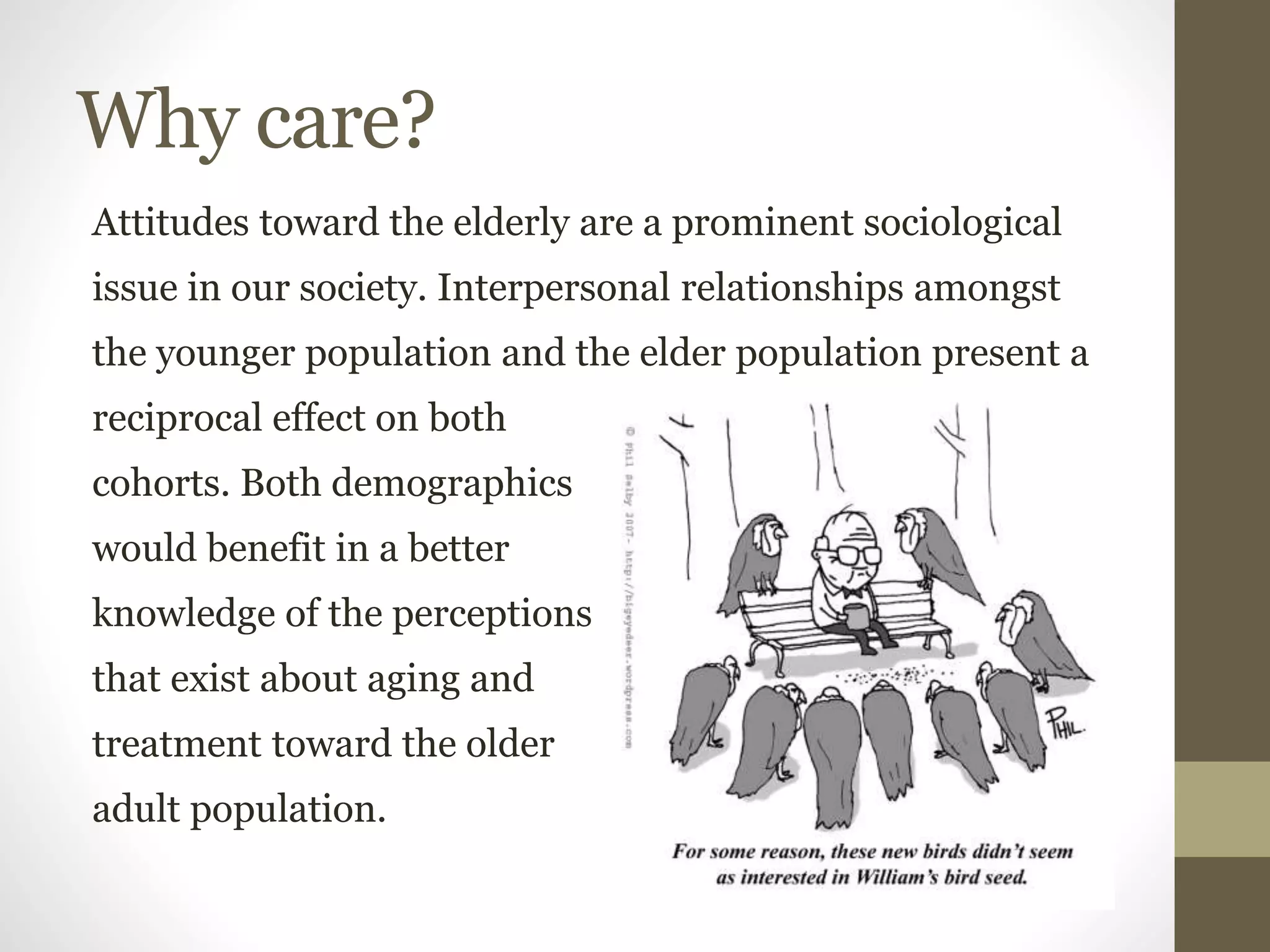
Attitudes toward the elderly are a prominent sociological
issue in our society. Interpersonal relationships amongst
the younger population and the elder population present a
reciprocal effect on both
cohorts. Both demographics
would benefit in a better
knowledge of the perceptions
that exist about aging and
treatment toward the older
adult population.
What did the experts say?
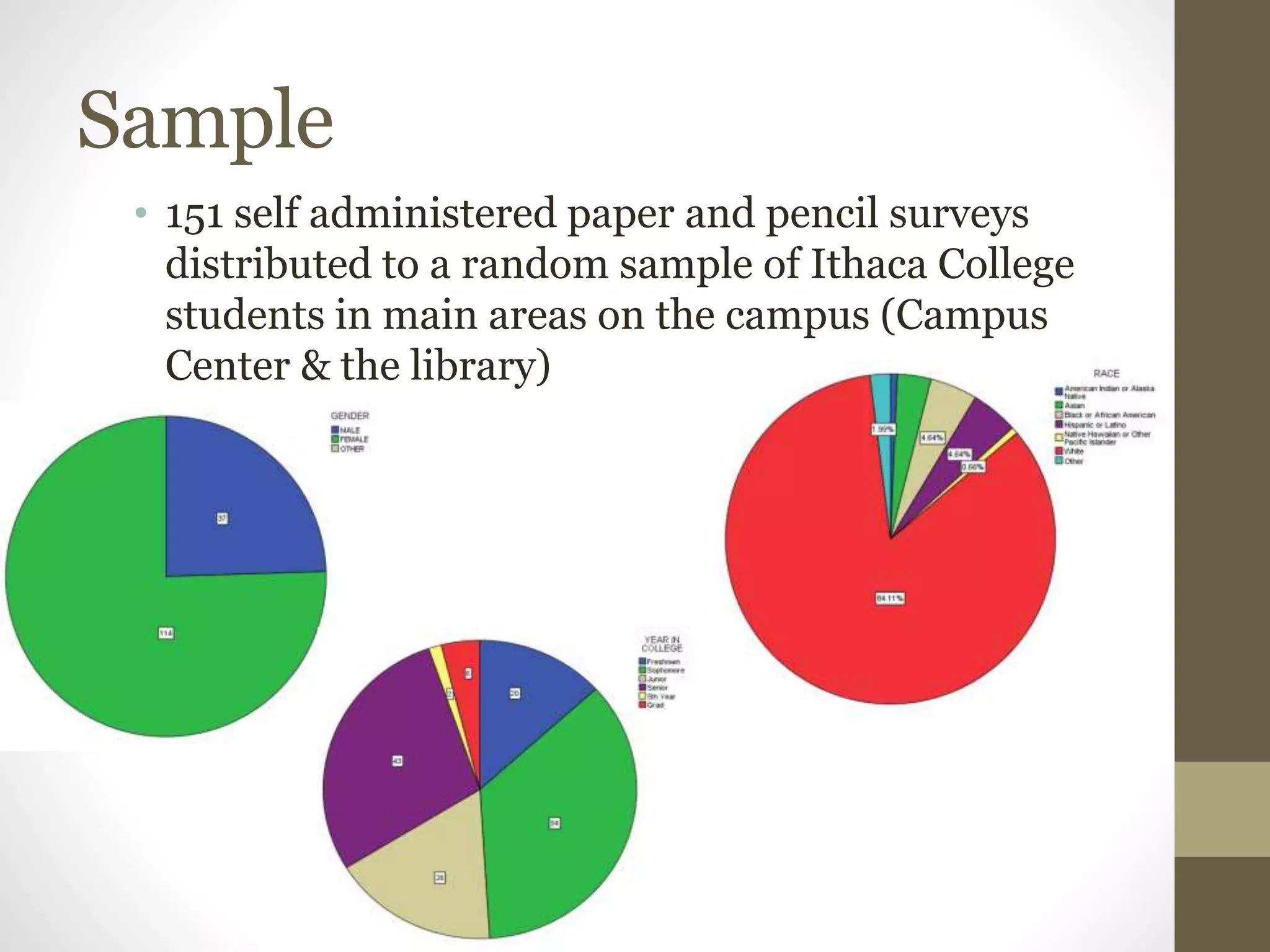
• “Older people are underrepresented in commercials and
when they are featured, they are portrayed as “young-
old” (rarely bald or wrinkled). When portrayed as
characters, they are given nondescript roles. Only 1% of
television portrayals provide an overt positive view of
being old.” (Scwalkb and Sedlack 1990)
• The general consensus among the authors of the
literature on this topic is that age has a different social
meaning for men and women.
Sample
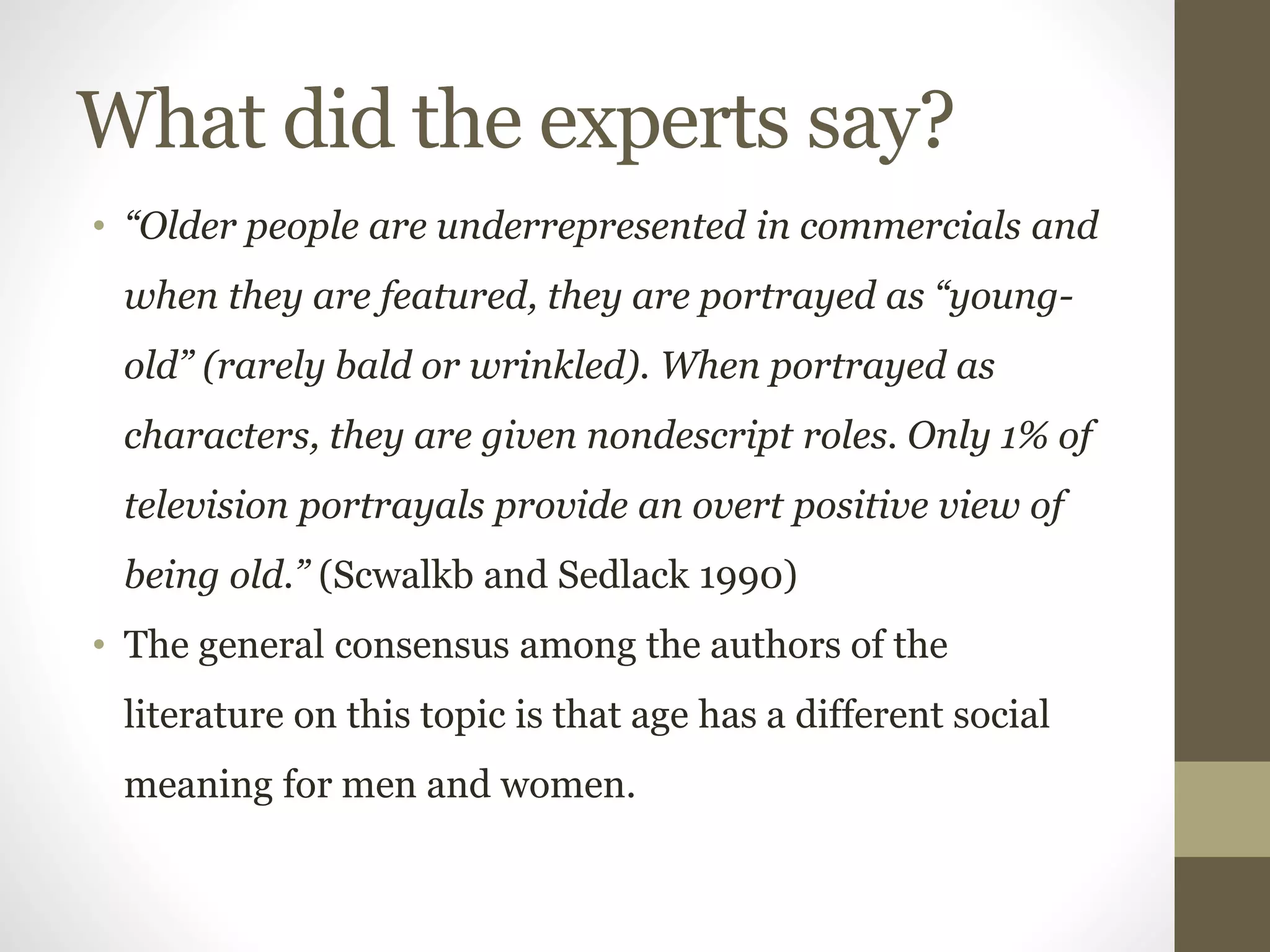
• 151 self administered paper and pencil surveys
distributed to a random sample of Ithaca College
students in main areas on the campus (Campus
Center & the library)
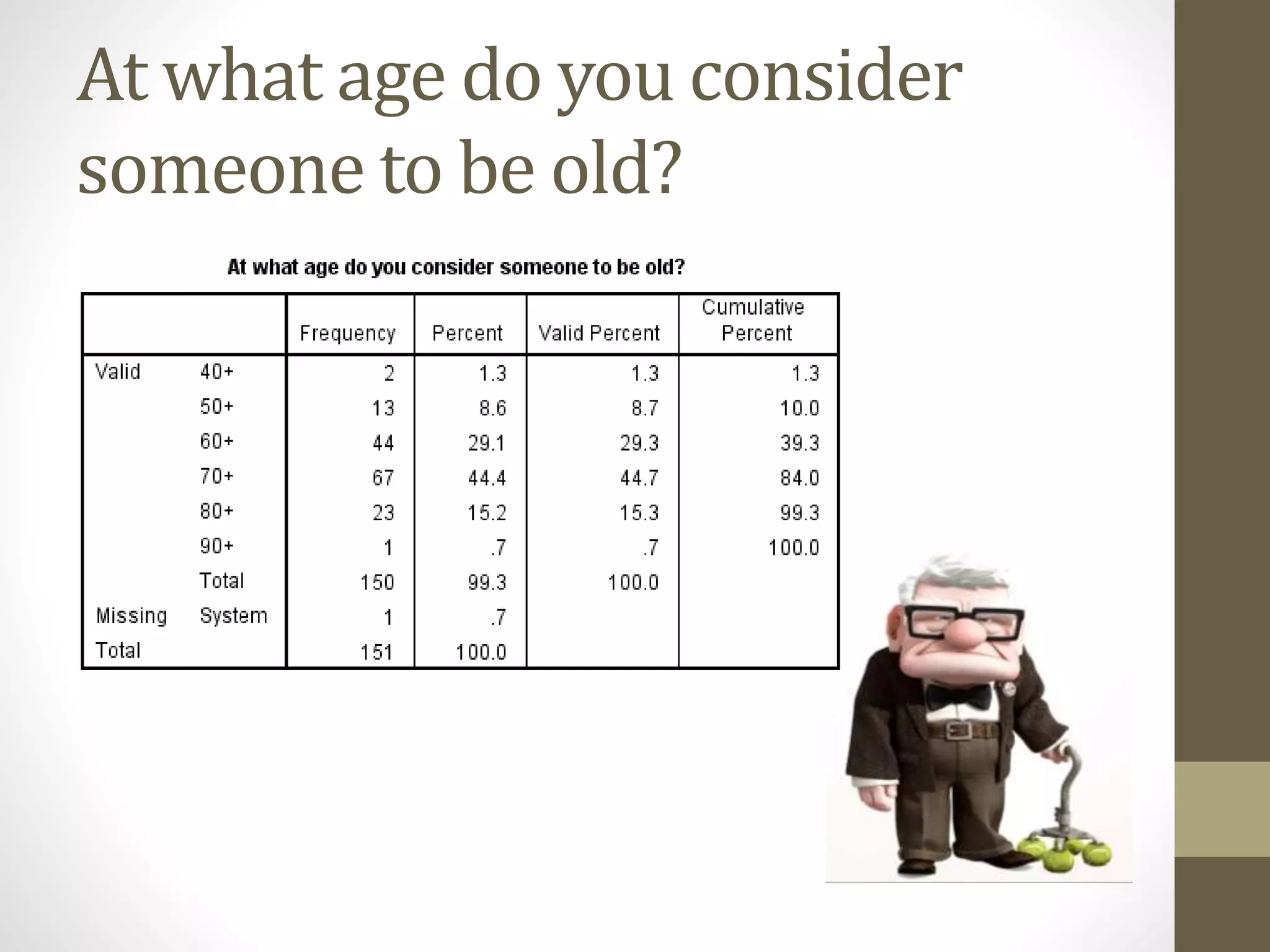
At what age do you consider
someone to be old?
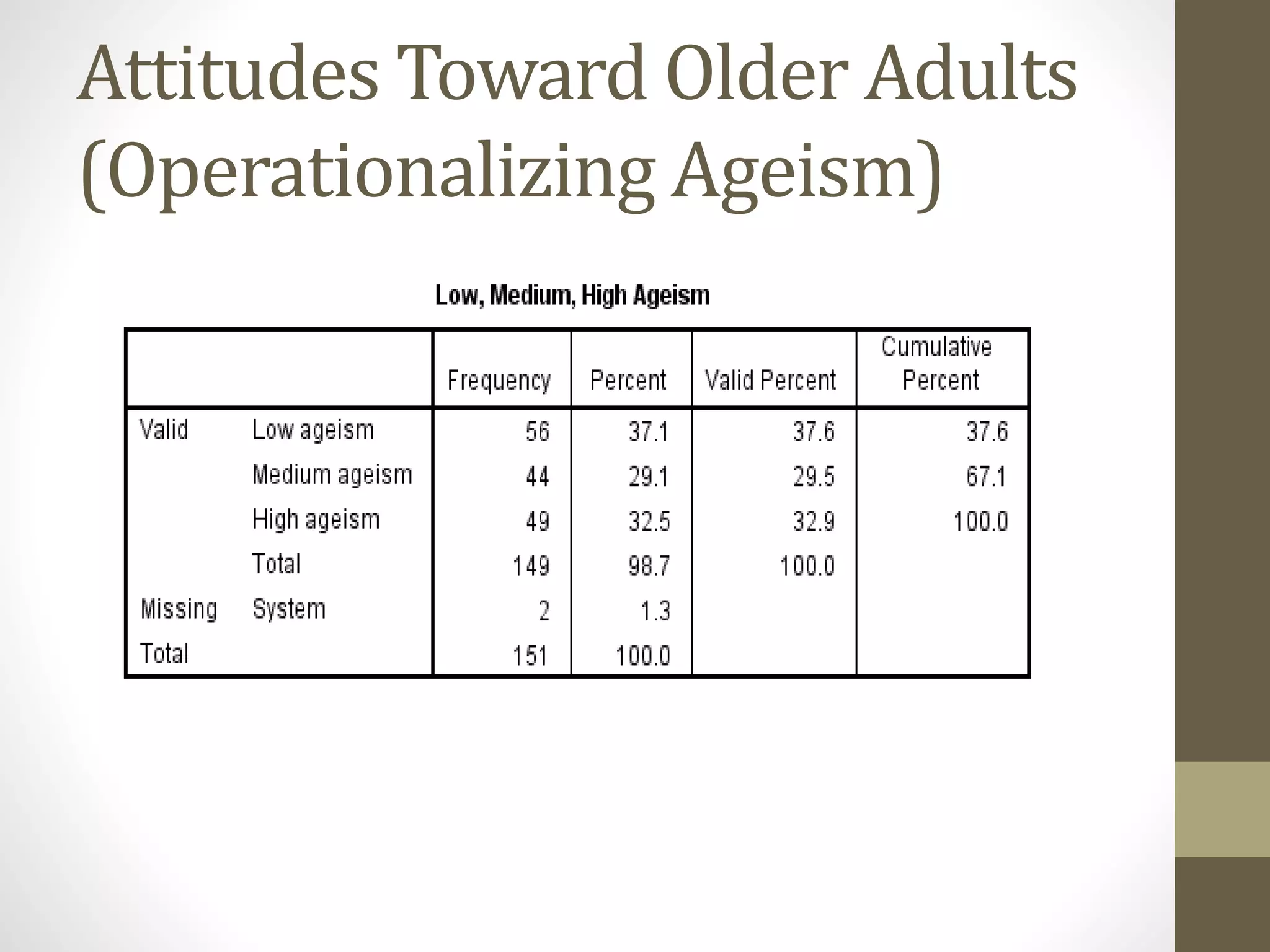
Attitudes Toward Older Adults
(Operationalizing Ageism)
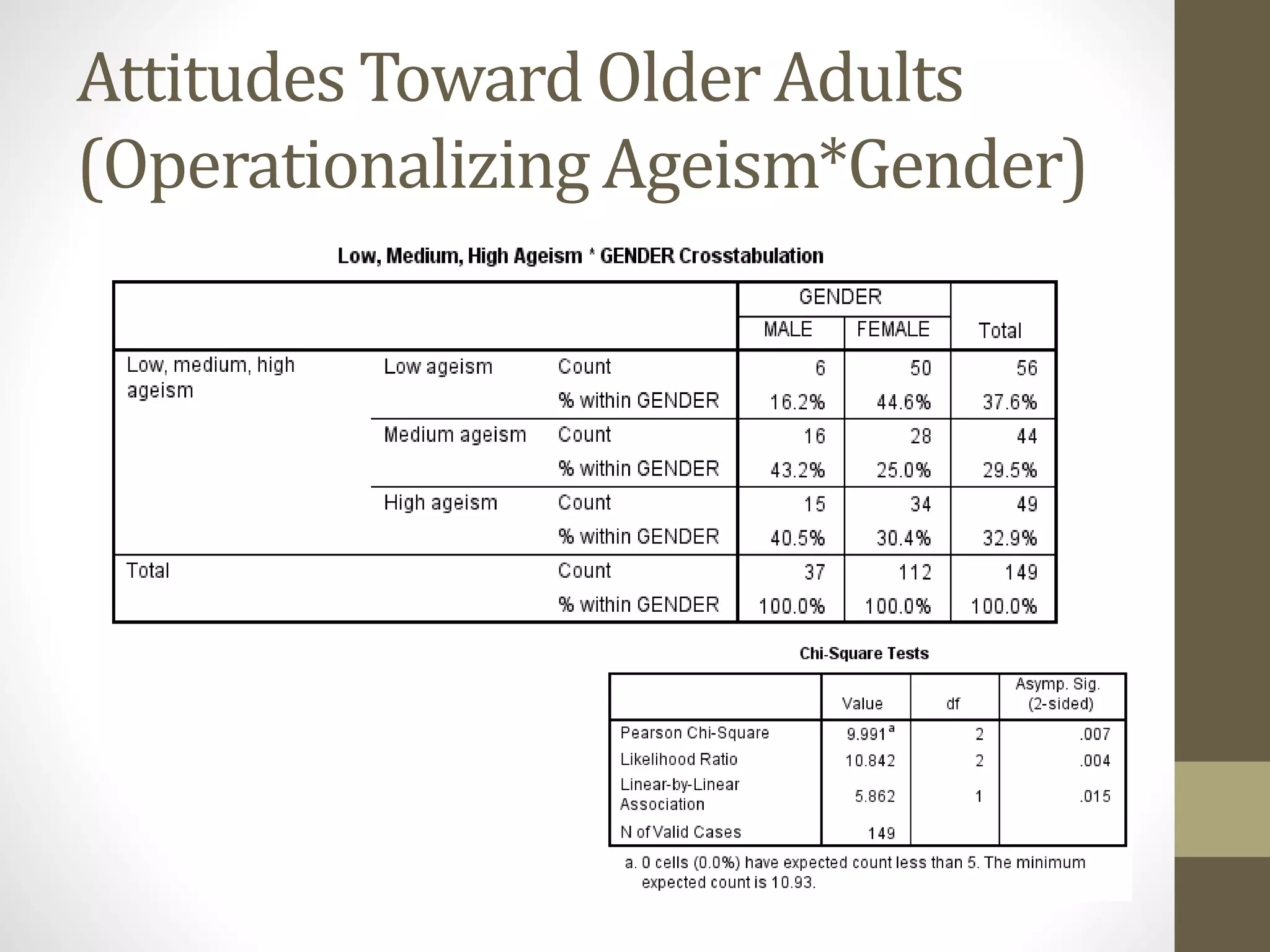
Attitudes Toward Older Adults
(Operationalizing Ageism*Gender)
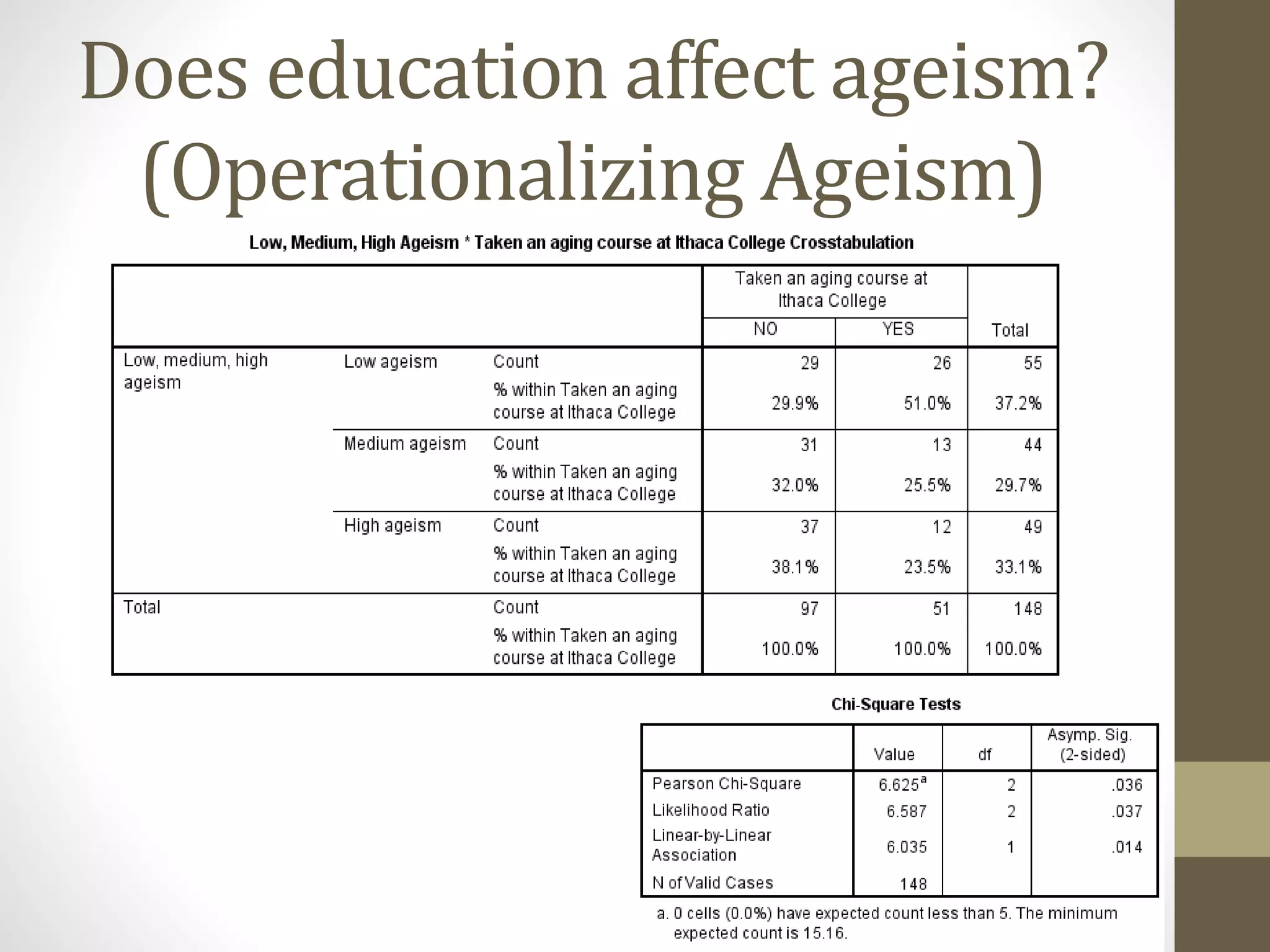
Does education affect ageism?
(Operationalizing Ageism)
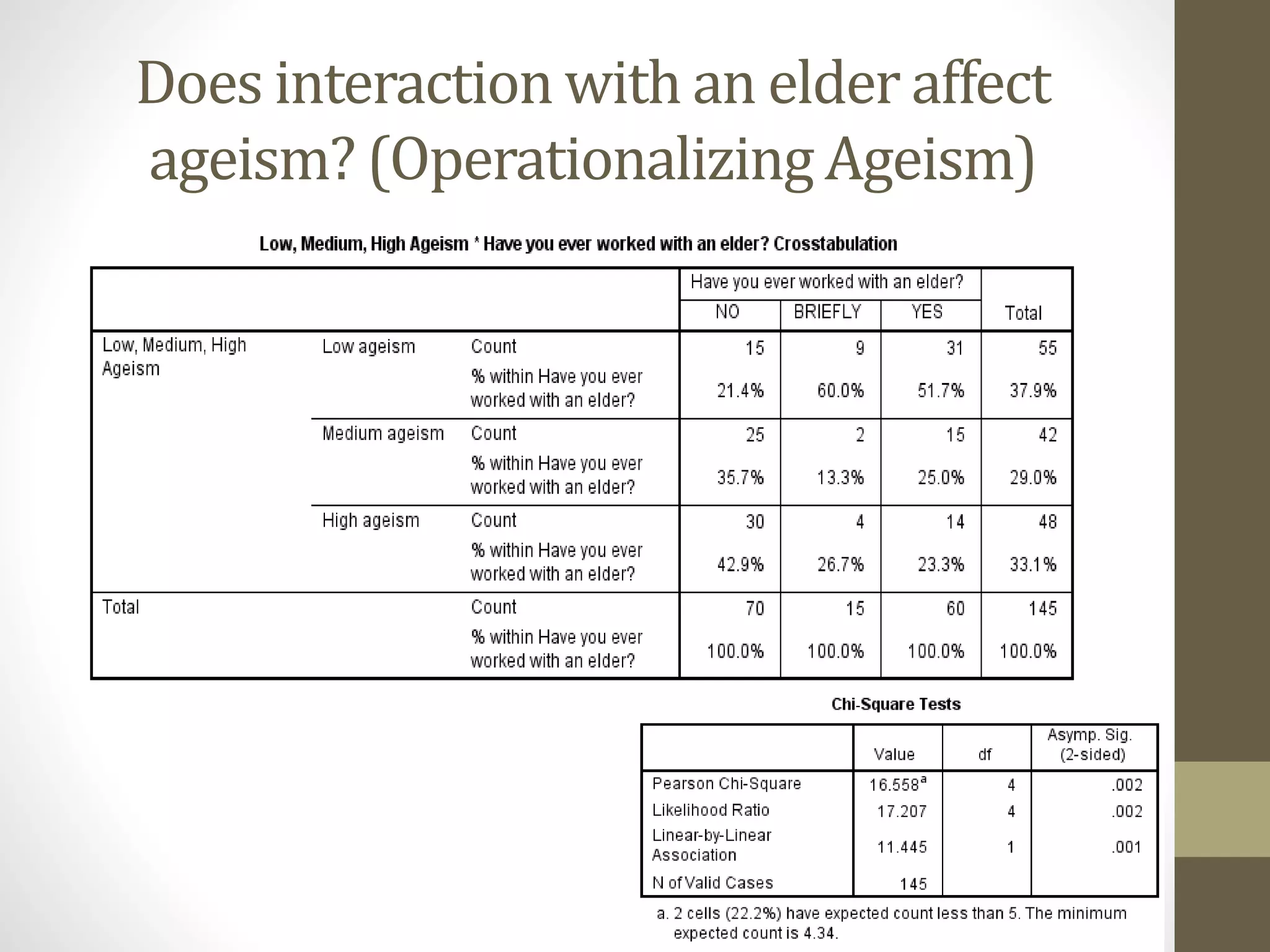
Does interaction with an elder affect
ageism? (Operationalizing Ageism)
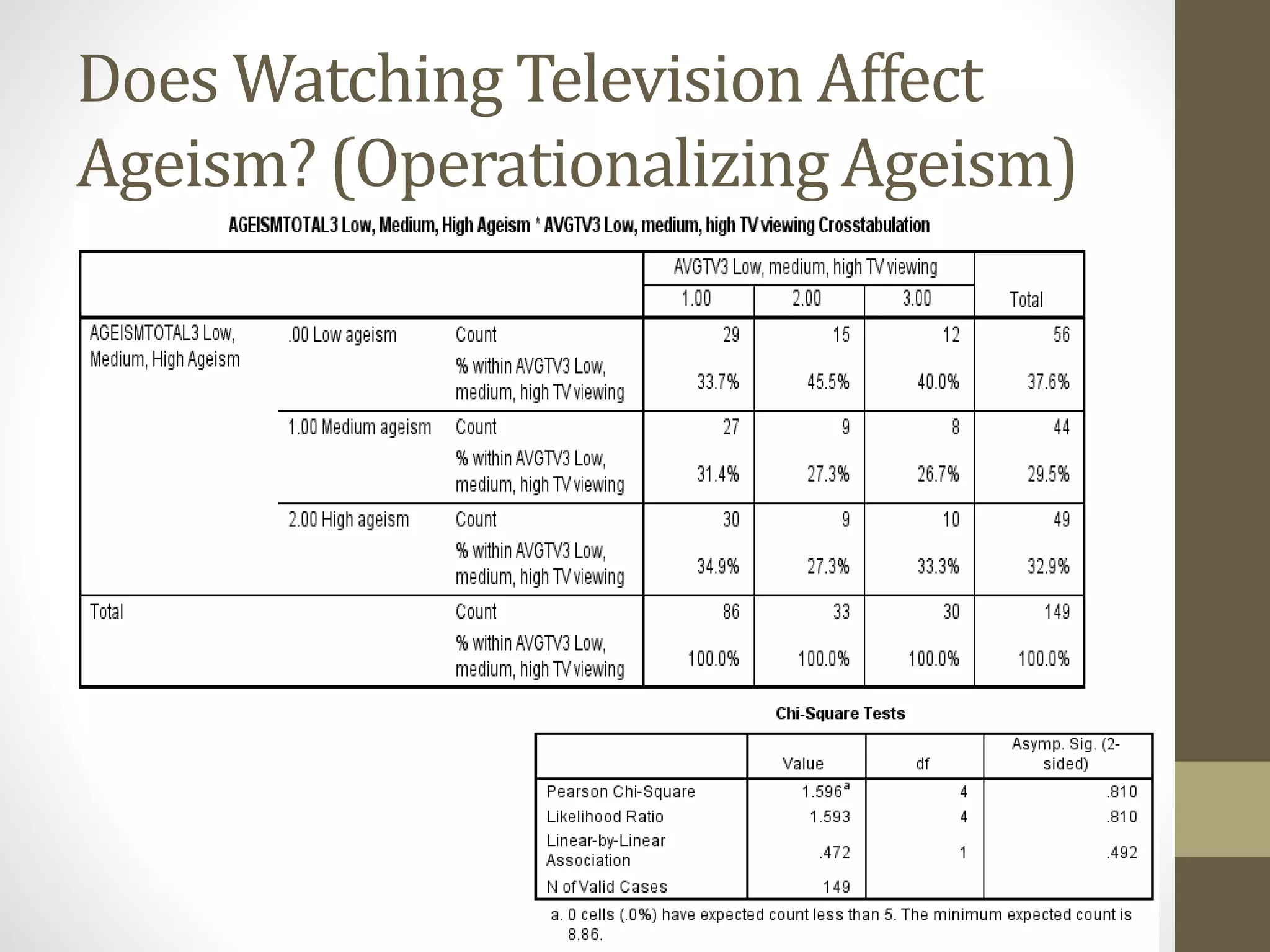
Does Watching Television Affect
Ageism? (Operationalizing Ageism)
So what?
• Male college students have more ageist feelings toward
the elderly and have a more stereotypical outlook on the
elder population than females.
Questions for Discussion
• Why do you think that male college students have
more ageist feelings toward the elderly and have a
more stereotypical outlook on the elder population
than females?
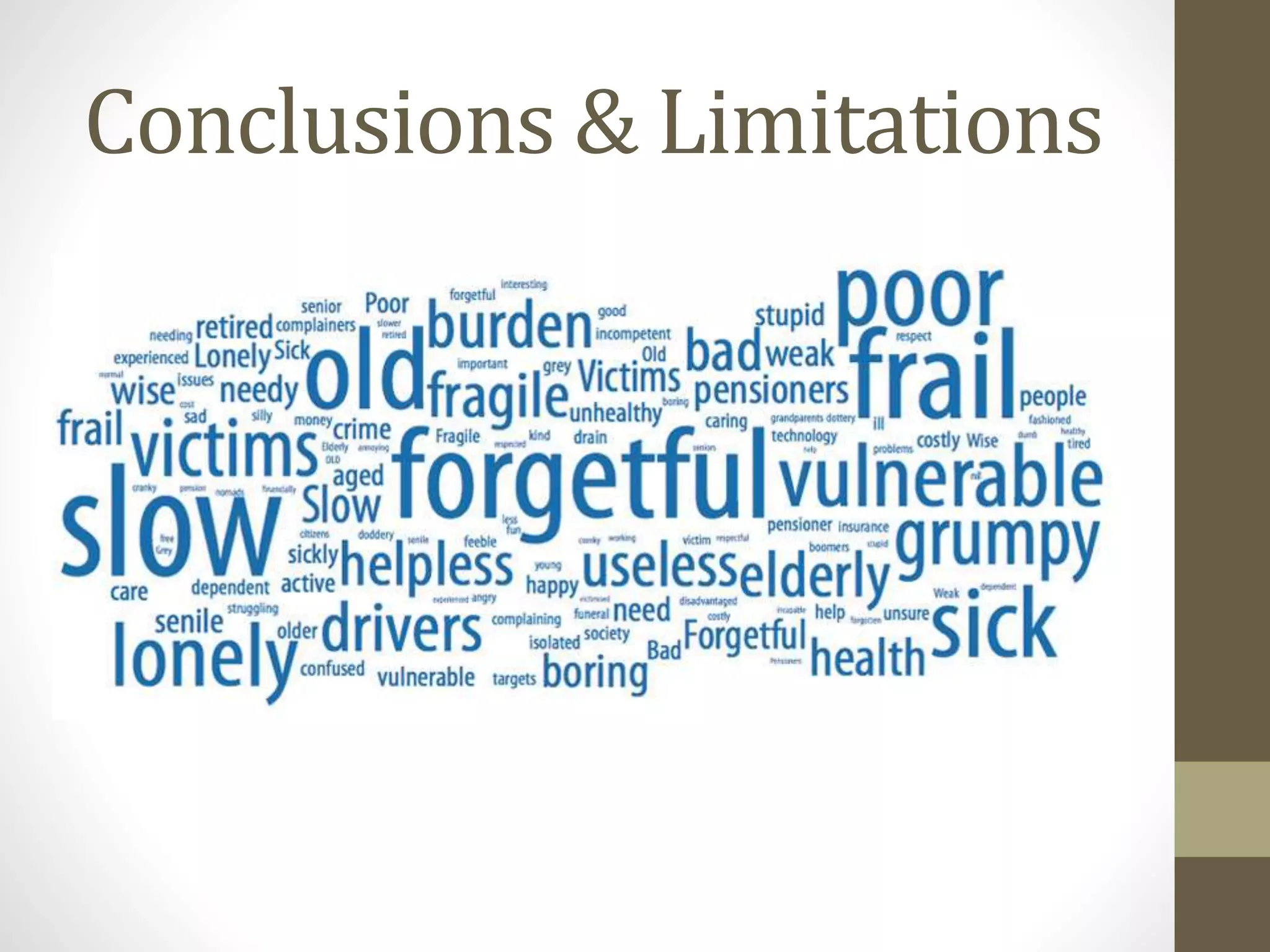
Conclusions & Limitations

We Interrupt This Program To Bring You… An Analysis of the Effects of Television on College Students’ Perceptions of Aging

  • 1.
    We Interrupt ThisProgram To Bring You… An Analysis of the Effects of Television on College Students’ Perceptions of Aging Caroline Westbrook
  • 2.
    Purpose To understand ifthere are gender differences among college students with regards to ageist feelings and stereotypes towards the elder population especially as they are portrayed in the media, specifically television.
  • 3.
    Hypotheses • Women areMORE ageist. • People who have taken an aging studies course are LESS ageist. • People who have worked with older adults are LESS ageist. • People who watch more television have are MORE ageist.
  • 4.
    Why care? Attitudes towardthe elderly are a prominent sociological issue in our society. Interpersonal relationships amongst the younger population and the elder population present a reciprocal effect on both cohorts. Both demographics would benefit in a better knowledge of the perceptions that exist about aging and treatment toward the older adult population.
  • 5.
    What did theexperts say? • “Older people are underrepresented in commercials and when they are featured, they are portrayed as “young- old” (rarely bald or wrinkled). When portrayed as characters, they are given nondescript roles. Only 1% of television portrayals provide an overt positive view of being old.” (Scwalkb and Sedlack 1990) • The general consensus among the authors of the literature on this topic is that age has a different social meaning for men and women.
  • 6.
    Sample • 151 selfadministered paper and pencil surveys distributed to a random sample of Ithaca College students in main areas on the campus (Campus Center & the library)
  • 7.
    At what agedo you consider someone to be old?
  • 8.
    Attitudes Toward OlderAdults (Operationalizing Ageism)
  • 9.
    Attitudes Toward OlderAdults (Operationalizing Ageism*Gender)
  • 10.
    Does education affectageism? (Operationalizing Ageism)
  • 11.
    Does interaction withan elder affect ageism? (Operationalizing Ageism)
  • 12.
    Does Watching TelevisionAffect Ageism? (Operationalizing Ageism)
  • 13.
    So what? • Malecollege students have more ageist feelings toward the elderly and have a more stereotypical outlook on the elder population than females.
  • 14.
    Questions for Discussion •Why do you think that male college students have more ageist feelings toward the elderly and have a more stereotypical outlook on the elder population than females?
  • 15.

Editor's Notes

  • #5 As a gerontology major, this topic is extremely interesting to me. Baby boom generation
  • #6 Women are more apt to exhibit negative assessments of age. Could be due to sociocultural values in the United States clearly emphasize the importance of appearance for women. Comparisons of elderly men and women showed patterns of traditional stereotypes, with men more likely to be depicted positively and women more likely to be depicted negatively which showed a gender difference. This causes me to infer that the reason why women are more likely to show disdain for the elderly is because they are underrepresented and unappreciated even more as adults causing a fear of growing old.
  • #7 Had race question but did not find it relevant to research. Predominantly white. Could be included in further research.
  • #8 Who qualifies as an elder? No strict definition of who qualifies as an elder.
  • #14 But there is an agreement amongst both males and females that the older population is underrepresented in the media and very stereotypical.
  • #15 Let me preface this question that there is no right answer…
  • #16 Limitations: Very small percentage of surveys were from the initial email to the students of the school. Social networks is where most of my respondents came from (friends) Further research should be done to find out if other more diverse schools have the same reactions. predominantly white campus = predominantly white results Significantly more females took survey.