Aim: How to separate
mixtures
DO NOW: EXPLAIN THE DIFFERENCE BETWEEN A COMPOUND AND A
MIXTURE. GIVE ONE EXAMPLE OF A COMPOUND AND ONE EXAMPLE OF A
MIXTURE
HOMEWORK: ON A SEPARATE SHEET, PICK ONE SEPARATION METHOD,
EXPLAIN THE PROCESS, AND INCLUDE DRAWING.
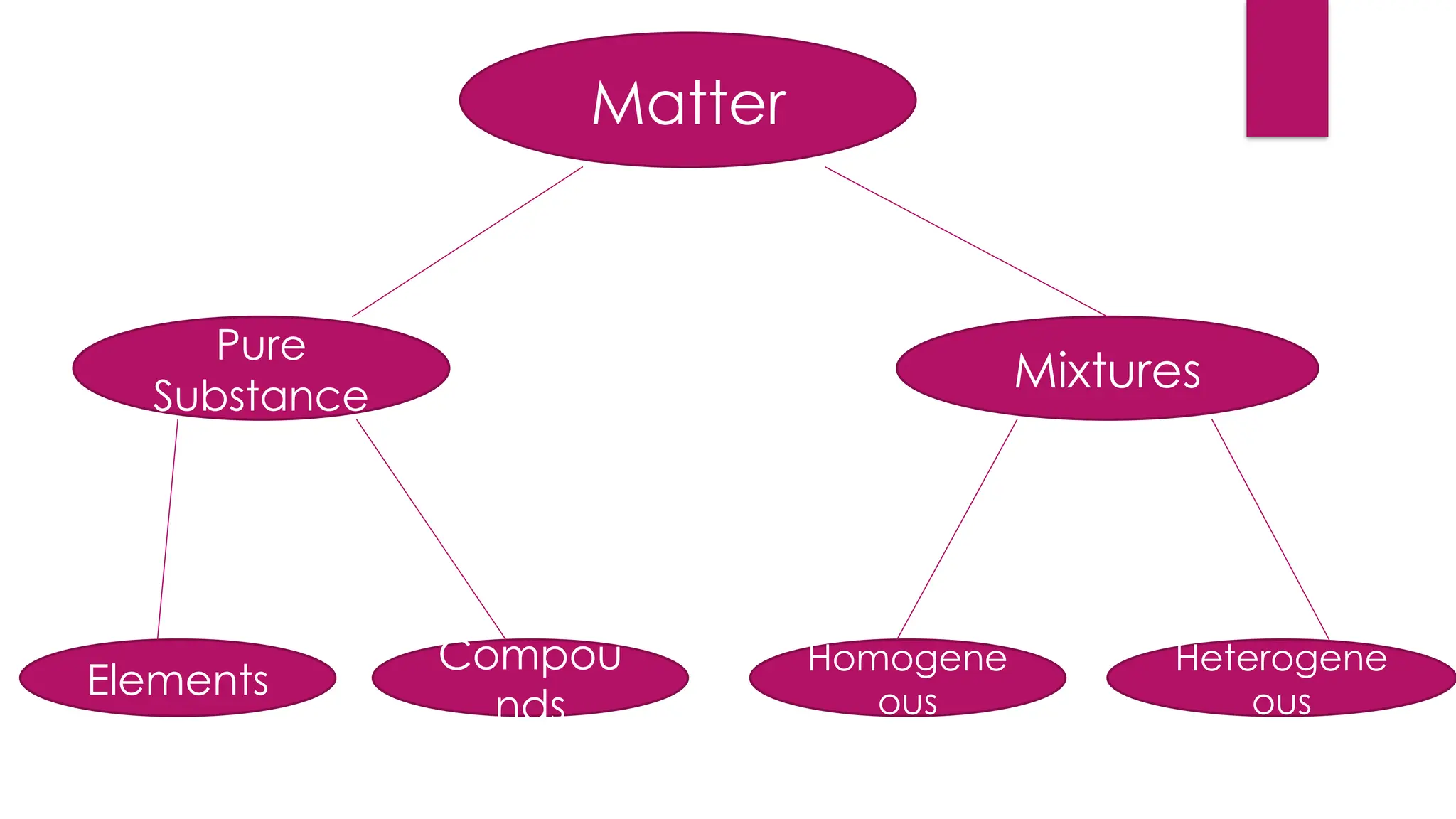
Matter
Pure
Substance
Mixtures
Elements
Compou
nds
Homogene
ous
Heterogene
ous
What is the difference between a
Homogeneous and a Heterogeneous
Mixture?
Homogeneous Heterogeneous
Vocab
 Miscible – Capable of being mixed
 Immiscible – Cannot be mixed
 Soluble – able to be dissolved
 Insoluble – unable to be dissolved
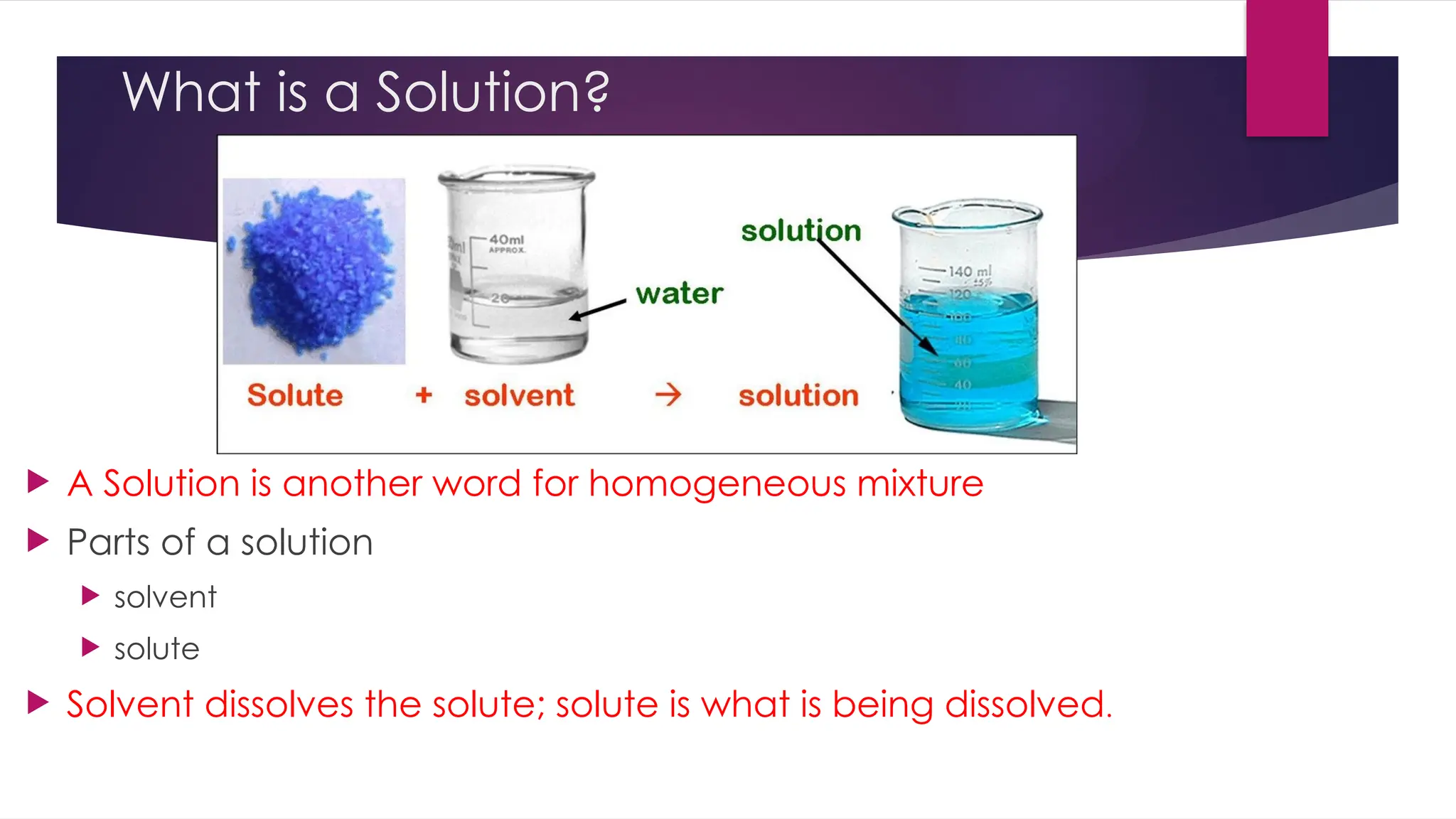
What is a Solution?
 A Solution is another word for homogeneous mixture
 Parts of a solution
 solvent
 solute
 Solvent dissolves the solute; solute is what is being dissolved.
What is an Aqueous Solution?
 An aqueous solution is a solution in which water
is the solvent ( a substance is dissolved in water)
 Created by dissolving substance in water
 (aq) next to a substance means dissolved in
water. Ex: NaCl (aq) means NaCl (table salt) is
dissolved in water forming salt water
Methods to separating Mixtures
 Mixtures are separated by physical means using differences
in physical properties
 Examples of physical properties: density, melting and boiling
point, solubility
 On the following slides, we will investigate three methods to
separating mixtures
 For each method you will Turn to you partner, discuss and
write down what you see and explain how you think the
separation occurs
filtration
 Filtration is a separation
method used to separate out
pure substances in mixtures
Made up of particles some of
which are too large enough
in size to pass through the
filter
Common Use of Filters
 Air conditioners
have filters that
allow the air to pass
through while
trapping solids such
as lint and dust
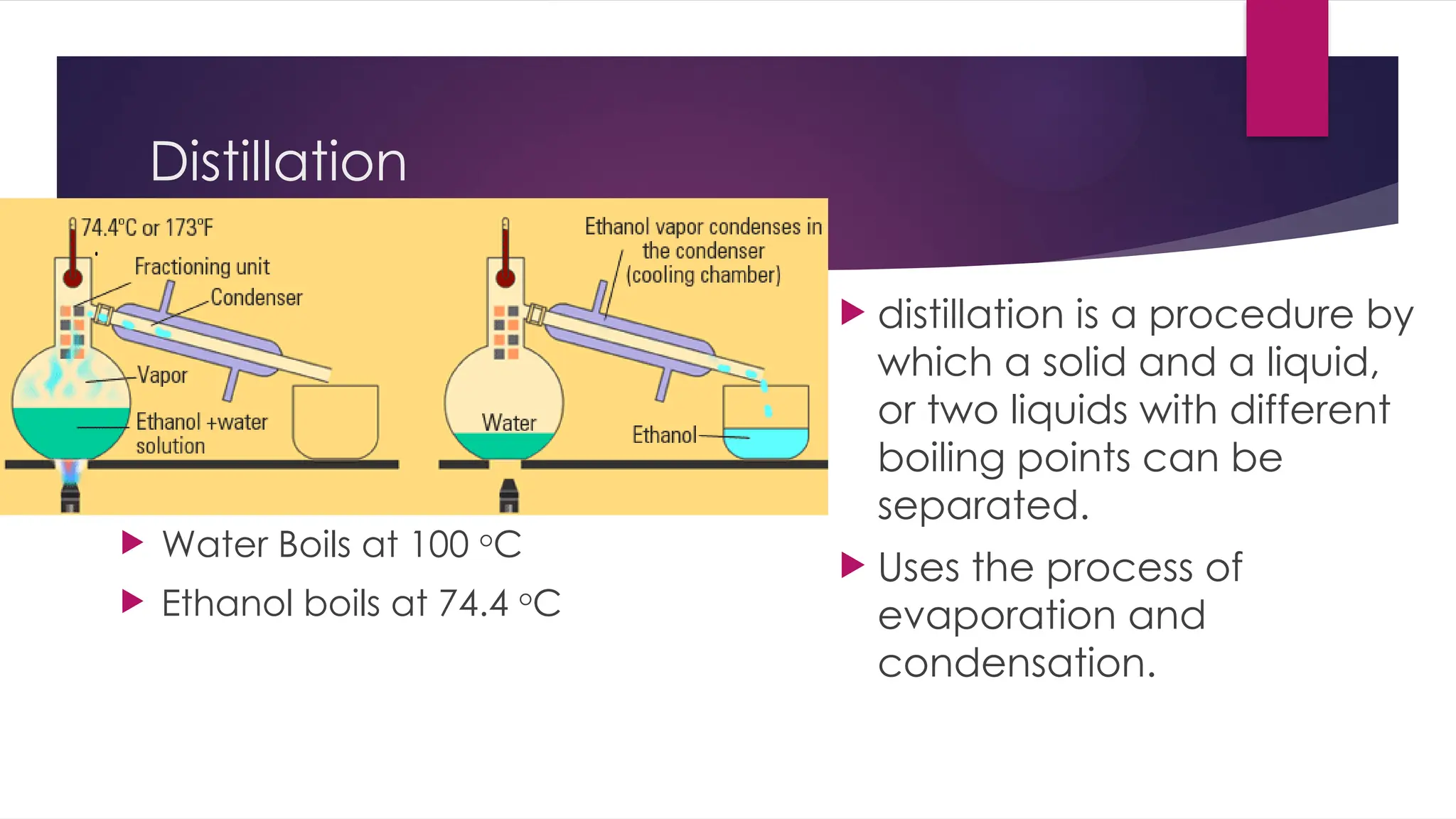
Distillation
 Water Boils at 100 o
C
 Ethanol boils at 74.4 o
C
 distillation is a procedure by
which a solid and a liquid,
or two liquids with different
boiling points can be
separated.
 Uses the process of
evaporation and
condensation.
Common Use of
Distillation
 Gasoline is
obtained from
crude oil by the
process of
distillation
Chromatography
 The components in the
mixture have different
attractions with the
chromatography paper;
therefore, the different
components travel up
the paper at different
rates.
Common uses of Chromatography
 Well, in real life, gas chromatography is
often used to investigate criminal cases
like the ones featured on those shows.
 This can take the form of crime scene
testing (the analysis of blood or cloth
samples), arson verification (identifying
the chemicals responsible for a fire to
see whether there was foul play) or
blood testing after death to determine
levels of alcohol, drugs or poisonous
substances in the body
Summary: Name the techniques which are
suitable for separating the following mixture:
Situation Separation Technique
a. To obtain drinking water from muddy water
b. To separate gasoline from crude oil
c. To remove leaves from a swimming pool
d. To obtain pure sugar from a solution
e. To determine whether the coloring in a fruit
juice is a single substance or a mixture of
colored substance

Ways of Separating Mixtures in Sci .pptx

  • 1.
    Aim: How toseparate mixtures DO NOW: EXPLAIN THE DIFFERENCE BETWEEN A COMPOUND AND A MIXTURE. GIVE ONE EXAMPLE OF A COMPOUND AND ONE EXAMPLE OF A MIXTURE HOMEWORK: ON A SEPARATE SHEET, PICK ONE SEPARATION METHOD, EXPLAIN THE PROCESS, AND INCLUDE DRAWING.
  • 2.
  • 4.
    What is thedifference between a Homogeneous and a Heterogeneous Mixture? Homogeneous Heterogeneous
  • 5.
    Vocab  Miscible –Capable of being mixed  Immiscible – Cannot be mixed  Soluble – able to be dissolved  Insoluble – unable to be dissolved
  • 6.
    What is aSolution?  A Solution is another word for homogeneous mixture  Parts of a solution  solvent  solute  Solvent dissolves the solute; solute is what is being dissolved.
  • 7.
    What is anAqueous Solution?  An aqueous solution is a solution in which water is the solvent ( a substance is dissolved in water)  Created by dissolving substance in water  (aq) next to a substance means dissolved in water. Ex: NaCl (aq) means NaCl (table salt) is dissolved in water forming salt water
  • 8.
    Methods to separatingMixtures  Mixtures are separated by physical means using differences in physical properties  Examples of physical properties: density, melting and boiling point, solubility  On the following slides, we will investigate three methods to separating mixtures  For each method you will Turn to you partner, discuss and write down what you see and explain how you think the separation occurs
  • 9.
    filtration  Filtration isa separation method used to separate out pure substances in mixtures Made up of particles some of which are too large enough in size to pass through the filter
  • 10.
    Common Use ofFilters  Air conditioners have filters that allow the air to pass through while trapping solids such as lint and dust
  • 11.
    Distillation  Water Boilsat 100 o C  Ethanol boils at 74.4 o C  distillation is a procedure by which a solid and a liquid, or two liquids with different boiling points can be separated.  Uses the process of evaporation and condensation.
  • 12.
    Common Use of Distillation Gasoline is obtained from crude oil by the process of distillation
  • 13.
    Chromatography  The componentsin the mixture have different attractions with the chromatography paper; therefore, the different components travel up the paper at different rates.
  • 14.
    Common uses ofChromatography  Well, in real life, gas chromatography is often used to investigate criminal cases like the ones featured on those shows.  This can take the form of crime scene testing (the analysis of blood or cloth samples), arson verification (identifying the chemicals responsible for a fire to see whether there was foul play) or blood testing after death to determine levels of alcohol, drugs or poisonous substances in the body
  • 15.
    Summary: Name thetechniques which are suitable for separating the following mixture: Situation Separation Technique a. To obtain drinking water from muddy water b. To separate gasoline from crude oil c. To remove leaves from a swimming pool d. To obtain pure sugar from a solution e. To determine whether the coloring in a fruit juice is a single substance or a mixture of colored substance