WATER
• Water is a colorless and odorless
substance found all over Earth. Water is
made up of billions of molecules. Each
molecule is made up of one oxygen
and two hydrogen atoms held together by
strong covalent bonds.
Agriculture is by far the largest water
use at global level. Irrigation of
agricultural lands accounted for
70%of the water used worldwide. In
several developing countries
irrigation represents up to 95%of all
water uses and plays a major role in
food production. Irrigated agriculture
Is driving much of the competition
since it accounts for 70 to 90% use of
water.
Introduction of water in agriculture
• Water plays an important role in the world
economy. Approximately 70% of the freshwater
used by humans goes to agriculture. Fishing in
salt and fresh water bodies is a major source of
food for many parts of the world. Much of long-
distance trade of commodities (such as oil
natural gas) and manufactured products is
transports by boats through seas, rivers, lakes and
canals. Large quantities of water ,ice and steam
are used for cooling and heating , in industry and
homes.
Water for soil
• Soil water acts as a sponge to take up and
retain water.
• Movement of water into soil is called
infiltration, and the downward movement of
soil is called percolation.
• Pore space in soil is the conduit that allows
water to infiltrate and percolate.
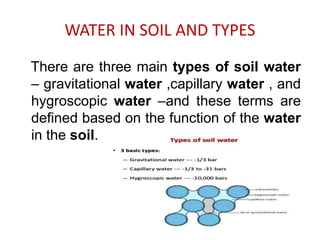
WATER IN SOIL AND TYPES
There are three main types of soil water
– gravitational water ,capillary water , and
hygroscopic water –and these terms are
defined based on the function of the water
in the soil.
GRAVITATIONAL WATER
Gravitational water is free water moving
through soil by the force of gravity. It is
largely found in the macrospores of soil
and very little gravitational water is
available to plants as it drains rapidly
down the water table in all except the most
compact of soil.
CAPILLARY WATER
Capillary water is water held in the
microspores of the soil, and is the water
that composes the soil solution. Capillary
water is held in the soil because the
surface tension properties (cohesion and
adhesion) of the soil microspores are
stronger than the force of gravity.
HYGROSCOPIC WATER
Hygroscopic water forms as a very thin
film surrounding soil particles and is
generally not available to the plant. This
types of soil water is bound so tightly to
the soil by adhesion properties that very
little of it can be taken up by plants roots.
Water for plants
• Water helps a plant by transporting important
nutrients through the plant. Nutrients are
drawn from the soil and used by the plants.
Without enough after in the cells, the plant
droop, so after helps a plant stand. Water
carries the dissolved sugar and other nutrients
through the plants.
HOW DOES WATER AFFECT PLANTS GROWTH?
What does water do for a plant? There are three
potential situations with water: too much, too little
and, of course, just enough.
• If plant’s soil has too much water, the roots can
rot, and the plant can’t get enough oxygen from
the soil.
• If there is not enough water for a plant, the
nutrients it needs cannot travel through the plant.
• A plant cannot grow if it doesn’t have healthy
roots, so the proper balance of water is key when
growing plants.
Which type of water are the best for
plant growth
• Tap water
• Rain water: rain water is the excellent choice
for watering plant.
• Distilled water: along with rain water, the
water quality assossiation states that distilled
water s are best for plants since they do not
contain harmful minerals or chemicals.
• Softened water.

WATER

  • 2.
    WATER • Water isa colorless and odorless substance found all over Earth. Water is made up of billions of molecules. Each molecule is made up of one oxygen and two hydrogen atoms held together by strong covalent bonds.
  • 3.
    Agriculture is byfar the largest water use at global level. Irrigation of agricultural lands accounted for 70%of the water used worldwide. In several developing countries irrigation represents up to 95%of all water uses and plays a major role in food production. Irrigated agriculture Is driving much of the competition since it accounts for 70 to 90% use of water. Introduction of water in agriculture
  • 4.
    • Water playsan important role in the world economy. Approximately 70% of the freshwater used by humans goes to agriculture. Fishing in salt and fresh water bodies is a major source of food for many parts of the world. Much of long- distance trade of commodities (such as oil natural gas) and manufactured products is transports by boats through seas, rivers, lakes and canals. Large quantities of water ,ice and steam are used for cooling and heating , in industry and homes.
  • 5.
    Water for soil •Soil water acts as a sponge to take up and retain water. • Movement of water into soil is called infiltration, and the downward movement of soil is called percolation. • Pore space in soil is the conduit that allows water to infiltrate and percolate.
  • 6.
    WATER IN SOILAND TYPES There are three main types of soil water – gravitational water ,capillary water , and hygroscopic water –and these terms are defined based on the function of the water in the soil.
  • 7.
    GRAVITATIONAL WATER Gravitational wateris free water moving through soil by the force of gravity. It is largely found in the macrospores of soil and very little gravitational water is available to plants as it drains rapidly down the water table in all except the most compact of soil.
  • 8.
    CAPILLARY WATER Capillary wateris water held in the microspores of the soil, and is the water that composes the soil solution. Capillary water is held in the soil because the surface tension properties (cohesion and adhesion) of the soil microspores are stronger than the force of gravity.
  • 9.
    HYGROSCOPIC WATER Hygroscopic waterforms as a very thin film surrounding soil particles and is generally not available to the plant. This types of soil water is bound so tightly to the soil by adhesion properties that very little of it can be taken up by plants roots.
  • 10.
    Water for plants •Water helps a plant by transporting important nutrients through the plant. Nutrients are drawn from the soil and used by the plants. Without enough after in the cells, the plant droop, so after helps a plant stand. Water carries the dissolved sugar and other nutrients through the plants.
  • 11.
    HOW DOES WATERAFFECT PLANTS GROWTH? What does water do for a plant? There are three potential situations with water: too much, too little and, of course, just enough. • If plant’s soil has too much water, the roots can rot, and the plant can’t get enough oxygen from the soil. • If there is not enough water for a plant, the nutrients it needs cannot travel through the plant. • A plant cannot grow if it doesn’t have healthy roots, so the proper balance of water is key when growing plants.
  • 12.
    Which type ofwater are the best for plant growth • Tap water • Rain water: rain water is the excellent choice for watering plant. • Distilled water: along with rain water, the water quality assossiation states that distilled water s are best for plants since they do not contain harmful minerals or chemicals. • Softened water.