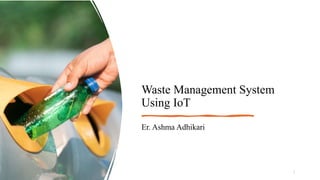
Waste Management System
Using IoT
Er. Ashma Adhikari
1
Agenda
Background
Research and
Decision
criteria
Proposed
Solution
Design and
Budget
Estimation
Ethical,
Security,
and Best
Practices
Implementat
ion Plan and
WBS
Ongoing
Maintenance
and Future
Recommendat
ions
Conclusion
2
1. Introduction
• Smart Waste Management system using IoT promises to tackle the
issues associated with effective waste collection.
• Sensor placed in the bins that determine the fill level, and temperature
• Sends the real-time data to the central system
3
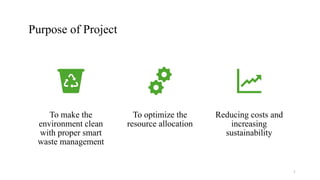
Purpose of Project
4
To make the
environment clean
with proper smart
waste management
To optimize the
resource allocation
Reducing costs and
increasing
sustainability
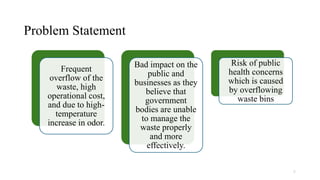
Problem Statement
Frequent
overflow of the
waste, high
operational cost,
and due to high-
temperature
increase in odor.
Bad impact on the
public and
businesses as they
believe that
government
bodies are unable
to manage the
waste properly
and more
effectively.
Risk of public
health concerns
which is caused
by overflowing
waste bins
5
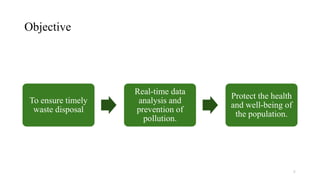
Objective
To ensure timely
waste disposal
Real-time data
analysis and
prevention of
pollution.
Protect the health
and well-being of
the population.
6
2. Research & Decision Criteria
7
Summary of
Research
IoT Sensors:
Ultrasonic
sensor,
gas/temperatu
re sensor
Communicati
on protocol:
LoRa WAN
(for long-
range, low-
power)
NB-IoT: wide
coverage and
low power,
sending data
from the
sensor to the
central
system
WiFi:
connectivity,
speed data
transfer
GPS Tracking:
Vehicle tracking(
(optimize the
route)
Data
Analytics:
Cloud-based
storage for
scalable
storage
Selection Criteria
8
Cost-effective Scalability
Easiness
Implementation
User Adoption
Security and
Compliance
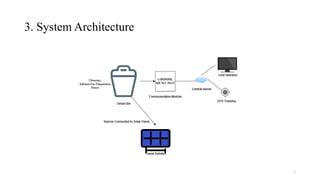
3. System Architecture
9
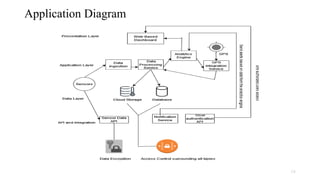
Application Diagram
10
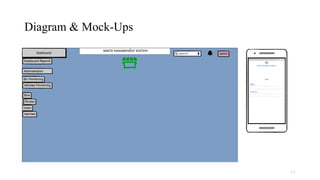
Diagram & Mock-Ups
11
12
Budget Estimation
13
4. Ethical, Security & Best Practices
14
Data privacy
laws
Access Control Environmental
Regulation
Compliance
Ethical Issues
Privacy of data
and consent
Data Accuracy
and Reliability
5. Implementation Plan
15
16
12-May-24 22-May-24 1-Jun-24 11-Jun-24 21-Jun-24 1-Jul-24 11-Jul-24 21-Jul-24
1. Project Initiation
2. System Design
3. Procurement and Setup
4. Development
5. Testing and Quality Assurances
6. Deployment
7. Traning and Support
Gantt Chart
6. Ongoing Maintenance & Future RoadMap
17
Ongoing
maintenance
Regular
monitoring
and
maintenance
Technical
support staff
training
Disaster
recovery
plan
Facilities
management
18
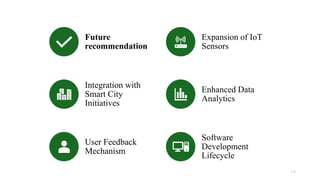
Future
recommendation
Expansion of IoT
Sensors
Integration with
Smart City
Initiatives
Enhanced Data
Analytics
User Feedback
Mechanism
Software
Development
Lifecycle
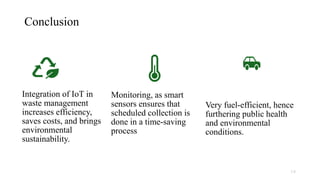
Conclusion
19
Integration of IoT in
waste management
increases efficiency,
saves costs, and brings
environmental
sustainability.
Monitoring, as smart
sensors ensures that
scheduled collection is
done in a time-saving
process
Very fuel-efficient, hence
furthering public health
and environmental
conditions.
References
• DavidChukwuekem, & Akinsanya. (2024). Security paradigms for iot in telecom networks: conceptual challenges
and solution pathways. Engineering Science & Technology Journal, 1431--1451.
• Fahmi, F. I. (2023). An Intelligent Waste Management System Enabled by IoT . IJISAE.
• Hussian, D. I., Elomri, D. A., & Kerbache, D. L. (2024). Smart city solutions: Comparative analysis of waste
management models in IoT-enabled environments using multiagent simulation. Sustainable Cities and Society,
105247.
• karthik, M., Sreevidya, L., Devi, R. N., & Thangaraj, M. (2023). An efficient waste management technique with
IoT based smart garbage system. Materials Today: Proceedings, 80, 3140--3143.
doi:https://doi.org/10.1016/j.matpr.2021.07.179
20
THANK
YOU!!!
21

Waste Management System Using IoT Devices.pptx

  • 1.
    Waste Management System UsingIoT Er. Ashma Adhikari 1
  • 2.
    Agenda Background Research and Decision criteria Proposed Solution Design and Budget Estimation Ethical, Security, andBest Practices Implementat ion Plan and WBS Ongoing Maintenance and Future Recommendat ions Conclusion 2
  • 3.
    1. Introduction • SmartWaste Management system using IoT promises to tackle the issues associated with effective waste collection. • Sensor placed in the bins that determine the fill level, and temperature • Sends the real-time data to the central system 3
  • 4.
    Purpose of Project 4 Tomake the environment clean with proper smart waste management To optimize the resource allocation Reducing costs and increasing sustainability
  • 5.
    Problem Statement Frequent overflow ofthe waste, high operational cost, and due to high- temperature increase in odor. Bad impact on the public and businesses as they believe that government bodies are unable to manage the waste properly and more effectively. Risk of public health concerns which is caused by overflowing waste bins 5
  • 6.
    Objective To ensure timely wastedisposal Real-time data analysis and prevention of pollution. Protect the health and well-being of the population. 6
  • 7.
    2. Research &Decision Criteria 7 Summary of Research IoT Sensors: Ultrasonic sensor, gas/temperatu re sensor Communicati on protocol: LoRa WAN (for long- range, low- power) NB-IoT: wide coverage and low power, sending data from the sensor to the central system WiFi: connectivity, speed data transfer GPS Tracking: Vehicle tracking( (optimize the route) Data Analytics: Cloud-based storage for scalable storage
  • 8.
  • 9.
  • 10.
  • 11.
  • 12.
  • 13.
  • 14.
    4. Ethical, Security& Best Practices 14 Data privacy laws Access Control Environmental Regulation Compliance Ethical Issues Privacy of data and consent Data Accuracy and Reliability
  • 15.
  • 16.
    16 12-May-24 22-May-24 1-Jun-2411-Jun-24 21-Jun-24 1-Jul-24 11-Jul-24 21-Jul-24 1. Project Initiation 2. System Design 3. Procurement and Setup 4. Development 5. Testing and Quality Assurances 6. Deployment 7. Traning and Support Gantt Chart
  • 17.
    6. Ongoing Maintenance& Future RoadMap 17 Ongoing maintenance Regular monitoring and maintenance Technical support staff training Disaster recovery plan Facilities management
  • 18.
    18 Future recommendation Expansion of IoT Sensors Integrationwith Smart City Initiatives Enhanced Data Analytics User Feedback Mechanism Software Development Lifecycle
  • 19.
    Conclusion 19 Integration of IoTin waste management increases efficiency, saves costs, and brings environmental sustainability. Monitoring, as smart sensors ensures that scheduled collection is done in a time-saving process Very fuel-efficient, hence furthering public health and environmental conditions.
  • 20.
    References • DavidChukwuekem, &Akinsanya. (2024). Security paradigms for iot in telecom networks: conceptual challenges and solution pathways. Engineering Science & Technology Journal, 1431--1451. • Fahmi, F. I. (2023). An Intelligent Waste Management System Enabled by IoT . IJISAE. • Hussian, D. I., Elomri, D. A., & Kerbache, D. L. (2024). Smart city solutions: Comparative analysis of waste management models in IoT-enabled environments using multiagent simulation. Sustainable Cities and Society, 105247. • karthik, M., Sreevidya, L., Devi, R. N., & Thangaraj, M. (2023). An efficient waste management technique with IoT based smart garbage system. Materials Today: Proceedings, 80, 3140--3143. doi:https://doi.org/10.1016/j.matpr.2021.07.179 20
  • 21.