Introduction to IoT based
smart waste management
system
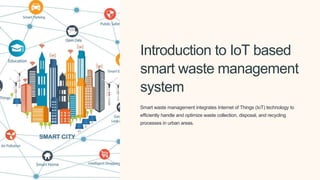
Smart waste management integrates Internet of Things (IoT) technology to
efficiently handle and optimize waste collection, disposal, and recycling
processes in urban areas.
Benefits of Implementing Smart Waste
Management in a Smart City
1 Efficient Waste
Handling
Reduces operational
costs and human error
through automated waste
collection and
transportation.
2 Environmental
Sustainability
Promotes clean and
healthy urban
environments by reducing
pollution and promoting
recycling.
3 Data-Driven
Decisions
Enables evidence-based
decision-making for
resource allocation and
waste management
policies.
Components of the IoT Based Smart Waste
Management System
Sensors
Installed in waste containers to
detect fill-levels and optimize
collection routes.
Communication Network
Connects sensors, waste
management centers, and
collection vehicles for real-time
data transmission.
Data Analytics Platform
Processes and analyzes
information for operational
insights and efficiency
improvements.
How the System Works: From Waste
Collection to Disposal
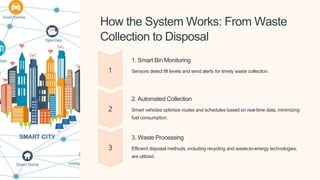
1. Smart Bin Monitoring
Sensors detect fill levels and send alerts for timely waste collection.
2. Automated Collection
Smart vehicles optimize routes and schedules based on real-time data, minimizing
fuel consumption.
3. Waste Processing
Efficient disposal methods, including recycling and waste-to-energy technologies,
are utilized.
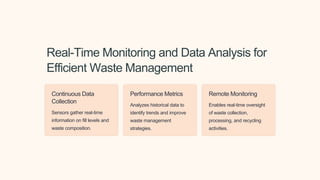
Real-Time Monitoring and Data Analysis for
Efficient Waste Management
Continuous Data
Collection
Sensors gather real-time
information on fill levels and
waste composition.
Performance Metrics
Analyzes historical data to
identify trends and improve
waste management
strategies.
Remote Monitoring
Enables real-time oversight
of waste collection,
processing, and recycling
activities.
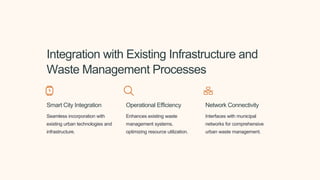
Integration with Existing Infrastructure and
Waste Management Processes
Smart City Integration
Seamless incorporation with
existing urban technologies and
infrastructure.
Operational Efficiency
Enhances existing waste
management systems,
optimizing resource utilization.
Network Connectivity
Interfaces with municipal
networks for comprehensive
urban waste management.
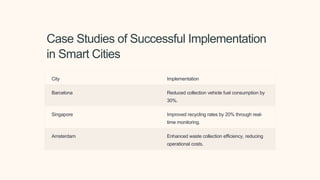
Case Studies of Successful Implementation
in Smart Cities
City Implementation
Barcelona Reduced collection vehicle fuel consumption by
30%.
Singapore Improved recycling rates by 20% through real-
time monitoring.
Amsterdam Enhanced waste collection efficiency, reducing
operational costs.
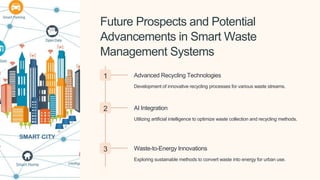
Future Prospects and Potential
Advancements in Smart Waste
Management Systems
1 Advanced Recycling Technologies
Development of innovative recycling processes for various waste streams.
2 AI Integration
Utilizing artificial intelligence to optimize waste collection and recycling methods.
3 Waste-to-Energy Innovations
Exploring sustainable methods to convert waste into energy for urban use.

IoT based smart waste management system.pptx

  • 1.
    Introduction to IoTbased smart waste management system Smart waste management integrates Internet of Things (IoT) technology to efficiently handle and optimize waste collection, disposal, and recycling processes in urban areas.
  • 2.
    Benefits of ImplementingSmart Waste Management in a Smart City 1 Efficient Waste Handling Reduces operational costs and human error through automated waste collection and transportation. 2 Environmental Sustainability Promotes clean and healthy urban environments by reducing pollution and promoting recycling. 3 Data-Driven Decisions Enables evidence-based decision-making for resource allocation and waste management policies.
  • 3.
    Components of theIoT Based Smart Waste Management System Sensors Installed in waste containers to detect fill-levels and optimize collection routes. Communication Network Connects sensors, waste management centers, and collection vehicles for real-time data transmission. Data Analytics Platform Processes and analyzes information for operational insights and efficiency improvements.
  • 4.
    How the SystemWorks: From Waste Collection to Disposal 1. Smart Bin Monitoring Sensors detect fill levels and send alerts for timely waste collection. 2. Automated Collection Smart vehicles optimize routes and schedules based on real-time data, minimizing fuel consumption. 3. Waste Processing Efficient disposal methods, including recycling and waste-to-energy technologies, are utilized.
  • 5.
    Real-Time Monitoring andData Analysis for Efficient Waste Management Continuous Data Collection Sensors gather real-time information on fill levels and waste composition. Performance Metrics Analyzes historical data to identify trends and improve waste management strategies. Remote Monitoring Enables real-time oversight of waste collection, processing, and recycling activities.
  • 6.
    Integration with ExistingInfrastructure and Waste Management Processes Smart City Integration Seamless incorporation with existing urban technologies and infrastructure. Operational Efficiency Enhances existing waste management systems, optimizing resource utilization. Network Connectivity Interfaces with municipal networks for comprehensive urban waste management.
  • 7.
    Case Studies ofSuccessful Implementation in Smart Cities City Implementation Barcelona Reduced collection vehicle fuel consumption by 30%. Singapore Improved recycling rates by 20% through real- time monitoring. Amsterdam Enhanced waste collection efficiency, reducing operational costs.
  • 8.
    Future Prospects andPotential Advancements in Smart Waste Management Systems 1 Advanced Recycling Technologies Development of innovative recycling processes for various waste streams. 2 AI Integration Utilizing artificial intelligence to optimize waste collection and recycling methods. 3 Waste-to-Energy Innovations Exploring sustainable methods to convert waste into energy for urban use.