Re-Culturing a Vision With Web 2.0 Technologies Presenters: Dr. Bradford G. Saron, District Administrator  School District of Cashton Dr. Deb Gurke, Director of Board Governance, WASB
Dynamic Drivers of Change  Time of Perpetual Whitewater No Clear Solutions or Answers A funny thing happened on the way to the 21 st  Century . . .
The  Context Is Changing The World, Wisconsin, and  Expectations of  Public Schools  Are Changing NCLB   WKCE
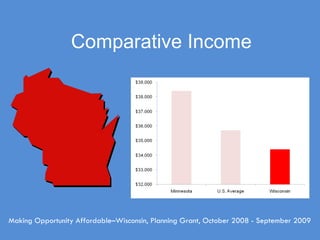
Comparative Income Making Opportunity Affordable–Wisconsin, Planning Grant, October 2008 - September 2009
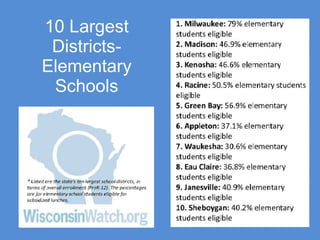
10 Largest Districts-Elementary Schools
Expectations of public education  have changed. From inputs to outputs All children can learn What children need to learn
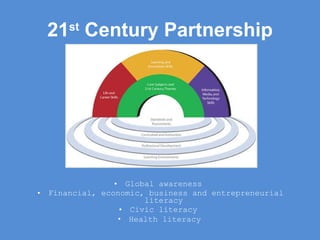
21 st  Century Partnership Global awareness  Financial, economic, business and entrepreneurial literacy  Civic literacy  Health literacy
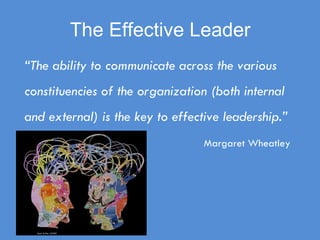
The Effective Leader “ The ability to communicate across the various constituencies of the organization (both internal and external) is the key to effective leadership.”   Margaret Wheatley
Organizational Effectiveness . . . depends on the relationships  between and among team members, and the staff, and the community.
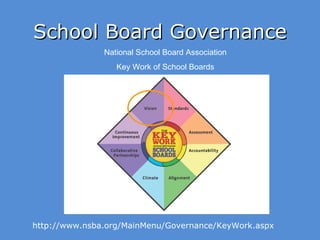
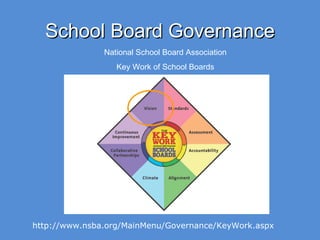
School Board Governance National School Board Association Key Work of School Boards http://www.nsba.org/MainMenu/Governance/KeyWork.aspx
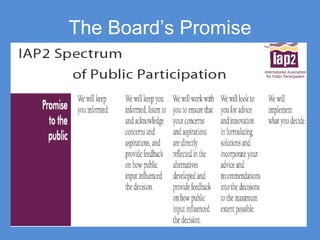
The Board’s Promise
School Board Governance Vision -http://www.nsba.org/MainMenu/Governance/KeyWork.aspx “ Statements that identify the school district's future, intermediate, and short term goals, associated objectives, and supporting tasks.  Developing a shared vision for student achievement is the starting point for a school board and its community.”
The Beginning “ We must educate our students well and equip them with the skills to change and grow as the world changes and grows. We must educate them to compete  locally, nationally, internationally, and virtually . The work of aiding the kids of the greater Cashton area to be globally and virtually competitive begins with a Plan.” -Charge Presented to School District of Cashton’s Board of Education
Web What? Web 1.0 Software on the Computer Singular One Dimensional and Locked Sit and Get Web 2.0 Software accessed through the internet Highly Collaborative Very Malleable and Open Source Entirely Interactive
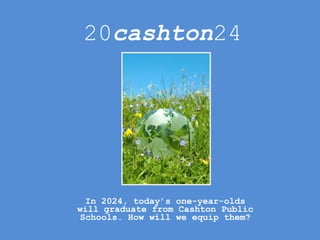
20 cashton 24 In 2024, today’s one-year-olds will graduate from Cashton Public Schools. How will we equip them?
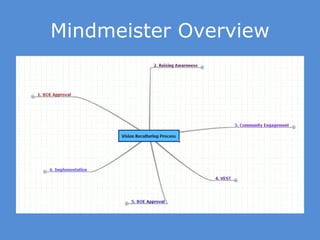
Mindmeister Overview
Put Conversations to Work Focus on what matters Contribute your thinking Speak your mind and heart Listen to understand Link and connect ideas Listen together for insights Have fun planning for our future!
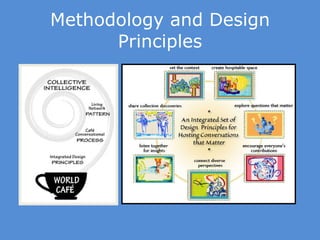
Methodology and Design Principles
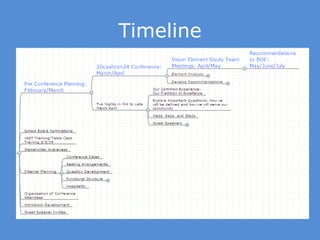
Timeline
Community Vision Team What is  emerging  here? If there was a  single voice  in the room, what would it be saying? Do we  notice any patterns  and what do those patterns point to, or how do they inform us? What do we now see and know  as a result of these conversations?
Community Vision Team Development Board Representative Five Nominated Community Members
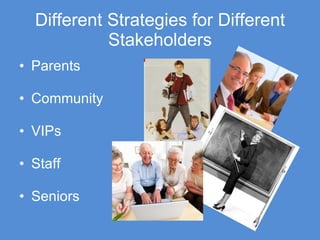
Different Strategies for Different Stakeholders Parents Community VIPs Staff Seniors
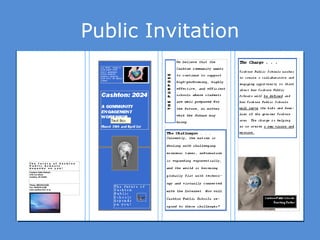
Public Invitation
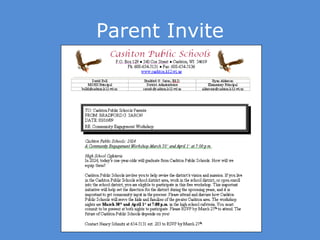
Parent Invite
Laissez-Faire   Nomination System Each of the Community Vision Team Members personally invited five other community members.
Important Questions Capacity to talk and think deeply about critical issues facing our community, organization, state, nation, and planet. Access the collective purpose and wisdom needed to create innovating paths forward.
Engagement Workshops Structure  Cross Pollination Record Keeping  Facilitator Night 1 World is Changing Our Common Experience Night 2 Kids are Changing Our Common Future
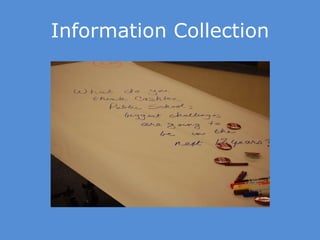
Information Collection
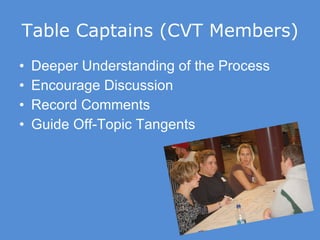
Table Captains (CVT Members) Deeper Understanding of the Process Encourage Discussion Record Comments Guide Off-Topic Tangents
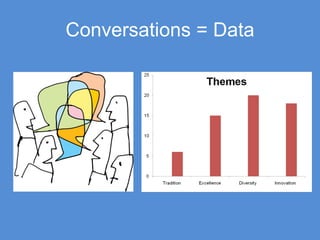
Conversations = Data
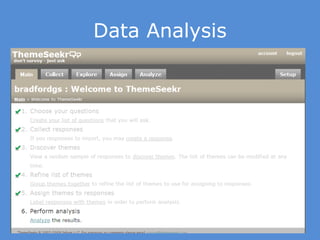
Data Analysis
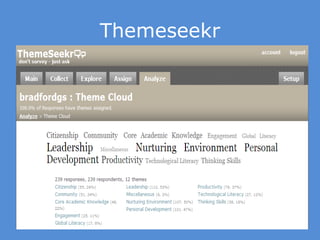
Themeseekr
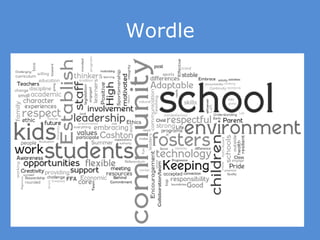
Wordle
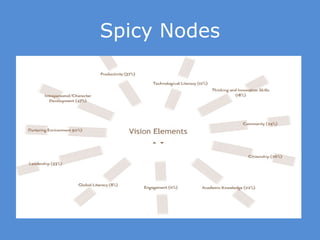
Spicy Nodes
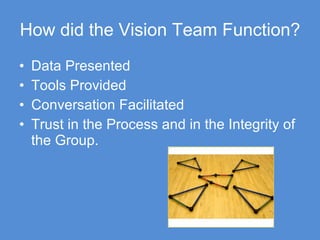
How did the Vision Team Function? Data Presented Tools Provided Conversation Facilitated Trust in the Process and in the Integrity of the Group.
Recommendations patterns trends themes elements insights
Board Decision/Adoption Vision Purpose Value Statements
School Board Governance National School Board Association Key Work of School Boards http://www.nsba.org/MainMenu/Governance/KeyWork.aspx
District Seal
District and School Goals District High School/Middle School Elementary
Fostering the Future The Significance of Foresight The Value of the Upshot (Forthcoming Projects?) The Usefulness of Key Communicators
A Tale of Antonyms:  Large/Small, Urban/Rural,  Diverse/ Homogeneous  Web 2.0 Training Potential Board Members Incentive for Positive Feedback Cycles Stakeholders Re-Branding Re-Culturing World Café
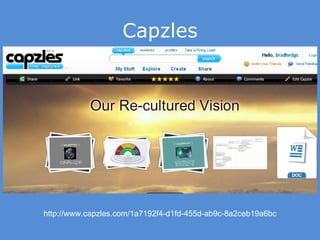
Capzles http://www.capzles.com/1a7192f4-d1fd-455d-ab9c-8a2ceb19a6bc
Questions
Contact Info Brad-  [email_address] Deb-  [email_address]
List of Resources www.mindmeister.com  Graphic Organizer www.knowledgeworks.com www.theworldcafe.com www.spicynodes.com  Graphic Organizer www.themeseekr.com  Research Tool www.wordle.com  Graphic Representations www.capzles.com  File Sharing Tool

WASB January 2010: Re Culturing A Vision

  • 1.
    Re-Culturing a VisionWith Web 2.0 Technologies Presenters: Dr. Bradford G. Saron, District Administrator School District of Cashton Dr. Deb Gurke, Director of Board Governance, WASB
  • 2.
    Dynamic Drivers ofChange Time of Perpetual Whitewater No Clear Solutions or Answers A funny thing happened on the way to the 21 st Century . . .
  • 3.
    The ContextIs Changing The World, Wisconsin, and Expectations of Public Schools Are Changing NCLB WKCE
  • 4.
    Comparative Income MakingOpportunity Affordable–Wisconsin, Planning Grant, October 2008 - September 2009
  • 5.
  • 6.
    Expectations of publiceducation have changed. From inputs to outputs All children can learn What children need to learn
  • 7.
    21 st Century Partnership Global awareness Financial, economic, business and entrepreneurial literacy Civic literacy Health literacy
  • 8.
    The Effective Leader“ The ability to communicate across the various constituencies of the organization (both internal and external) is the key to effective leadership.” Margaret Wheatley
  • 9.
    Organizational Effectiveness .. . depends on the relationships between and among team members, and the staff, and the community.
  • 10.
    School Board GovernanceNational School Board Association Key Work of School Boards http://www.nsba.org/MainMenu/Governance/KeyWork.aspx
  • 11.
  • 12.
    School Board GovernanceVision -http://www.nsba.org/MainMenu/Governance/KeyWork.aspx “ Statements that identify the school district's future, intermediate, and short term goals, associated objectives, and supporting tasks.  Developing a shared vision for student achievement is the starting point for a school board and its community.”
  • 13.
    The Beginning “We must educate our students well and equip them with the skills to change and grow as the world changes and grows. We must educate them to compete locally, nationally, internationally, and virtually . The work of aiding the kids of the greater Cashton area to be globally and virtually competitive begins with a Plan.” -Charge Presented to School District of Cashton’s Board of Education
  • 14.
    Web What? Web1.0 Software on the Computer Singular One Dimensional and Locked Sit and Get Web 2.0 Software accessed through the internet Highly Collaborative Very Malleable and Open Source Entirely Interactive
  • 15.
    20 cashton 24In 2024, today’s one-year-olds will graduate from Cashton Public Schools. How will we equip them?
  • 16.
  • 17.
    Put Conversations toWork Focus on what matters Contribute your thinking Speak your mind and heart Listen to understand Link and connect ideas Listen together for insights Have fun planning for our future!
  • 18.
  • 19.
  • 20.
    Community Vision TeamWhat is emerging here? If there was a single voice in the room, what would it be saying? Do we notice any patterns and what do those patterns point to, or how do they inform us? What do we now see and know as a result of these conversations?
  • 21.
    Community Vision TeamDevelopment Board Representative Five Nominated Community Members
  • 22.
    Different Strategies forDifferent Stakeholders Parents Community VIPs Staff Seniors
  • 23.
  • 24.
  • 25.
    Laissez-Faire Nomination System Each of the Community Vision Team Members personally invited five other community members.
  • 26.
    Important Questions Capacityto talk and think deeply about critical issues facing our community, organization, state, nation, and planet. Access the collective purpose and wisdom needed to create innovating paths forward.
  • 27.
    Engagement Workshops Structure Cross Pollination Record Keeping Facilitator Night 1 World is Changing Our Common Experience Night 2 Kids are Changing Our Common Future
  • 28.
  • 29.
    Table Captains (CVTMembers) Deeper Understanding of the Process Encourage Discussion Record Comments Guide Off-Topic Tangents
  • 30.
  • 31.
  • 32.
  • 33.
  • 34.
  • 35.
    How did theVision Team Function? Data Presented Tools Provided Conversation Facilitated Trust in the Process and in the Integrity of the Group.
  • 36.
    Recommendations patterns trendsthemes elements insights
  • 37.
    Board Decision/Adoption VisionPurpose Value Statements
  • 38.
    School Board GovernanceNational School Board Association Key Work of School Boards http://www.nsba.org/MainMenu/Governance/KeyWork.aspx
  • 39.
  • 40.
    District and SchoolGoals District High School/Middle School Elementary
  • 41.
    Fostering the FutureThe Significance of Foresight The Value of the Upshot (Forthcoming Projects?) The Usefulness of Key Communicators
  • 42.
    A Tale ofAntonyms: Large/Small, Urban/Rural, Diverse/ Homogeneous Web 2.0 Training Potential Board Members Incentive for Positive Feedback Cycles Stakeholders Re-Branding Re-Culturing World Café
  • 43.
  • 44.
  • 45.
    Contact Info Brad- [email_address] Deb- [email_address]
  • 46.
    List of Resourceswww.mindmeister.com Graphic Organizer www.knowledgeworks.com www.theworldcafe.com www.spicynodes.com Graphic Organizer www.themeseekr.com Research Tool www.wordle.com Graphic Representations www.capzles.com File Sharing Tool

Editor's Notes

  • #5 Twenty years ago, when I moved to Minnesota, the per capita income of Wisconsin and Minnesota were separated by a few dollars. Today, the gap is $4000 and grows wider every year. The population of the two states is similar which means that Wisconsin is significantly poorer in relation to Minnesota.
  • #10 How do we develop trusting relationships? How do we manage conflict?