Predective Analysis
Hello!
I am Vikrant Narayan
Data Analytics enthusiast
You can find me at @vikrant.m.narayan@gmail.com
2
“ The Holy Grail of marketing is to
proactively pounce upon every
individual customer opportunity by
predicting before hand who will
respond and pre-emptively
intervene each customer loss by
predicting who will defect
- Dr.Eric Siegel
3
What does it mean?
● It means there is a way to predict the future
using data from the past.
● It is normally done with a lot of past data, a
little statistical wizardry, and some
important assumptions.
4
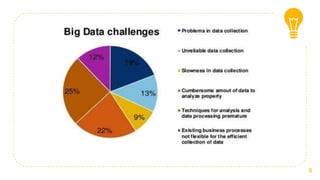
Challenges
● Lack of good data is the most common
barrier to organizations seeking to employ
predictive analytics.
● It is really hard to create an accurate
database with unique IDs.
5
6
The Statistics
● Regression analysis in its various forms is
the primary tool that organizations use for
predictive analytics.
● The analyst performs a regression analysis
to see just how correlated each attribute is
with every other attribute.
7
The Statistics
● Using that regression equation, the analyst can then
use the regression coefficients to create a score
predicting the likelihood of an event occurring.
● It’s quite likely that the high scoring events will
happen.
8
9
The Assumptions
● Every predictive model has its own
assumptions.
● The big assumption in predictive analytics is
that the future will continue to be like the
past.
10
The Assumptions
● It is based on the notion that people establish strong
patterns of behaviour that they usually keep up over
time.
● However, the most common reason for invalidation
of assumptions is time.
● The assumptions made have to be relevant to the
contemporary situation.
11
Relevance to managers
● Managers will feel more comfortable working with
and communicating with others in your organization
about the results and recommendations from
predictive analytics.
13
15
Thank You!

W2 d4

  • 1.
  • 2.
    Hello! I am VikrantNarayan Data Analytics enthusiast You can find me at @vikrant.m.narayan@gmail.com 2
  • 3.
    “ The HolyGrail of marketing is to proactively pounce upon every individual customer opportunity by predicting before hand who will respond and pre-emptively intervene each customer loss by predicting who will defect - Dr.Eric Siegel 3
  • 4.
    What does itmean? ● It means there is a way to predict the future using data from the past. ● It is normally done with a lot of past data, a little statistical wizardry, and some important assumptions. 4
  • 5.
    Challenges ● Lack ofgood data is the most common barrier to organizations seeking to employ predictive analytics. ● It is really hard to create an accurate database with unique IDs. 5
  • 6.
  • 7.
    The Statistics ● Regressionanalysis in its various forms is the primary tool that organizations use for predictive analytics. ● The analyst performs a regression analysis to see just how correlated each attribute is with every other attribute. 7
  • 8.
    The Statistics ● Usingthat regression equation, the analyst can then use the regression coefficients to create a score predicting the likelihood of an event occurring. ● It’s quite likely that the high scoring events will happen. 8
  • 9.
  • 10.
    The Assumptions ● Everypredictive model has its own assumptions. ● The big assumption in predictive analytics is that the future will continue to be like the past. 10
  • 11.
    The Assumptions ● Itis based on the notion that people establish strong patterns of behaviour that they usually keep up over time. ● However, the most common reason for invalidation of assumptions is time. ● The assumptions made have to be relevant to the contemporary situation. 11
  • 13.
    Relevance to managers ●Managers will feel more comfortable working with and communicating with others in your organization about the results and recommendations from predictive analytics. 13
  • 15.