Er. Ramesh Adhikari
MARC
H2024
Vygotsky's Theory of
Cognitive Development
2
Vygotsky's central
argument
Cognitive development
is primarily driven by
social interactions and
cultural tools.
Photo source : bigstockphoto.com
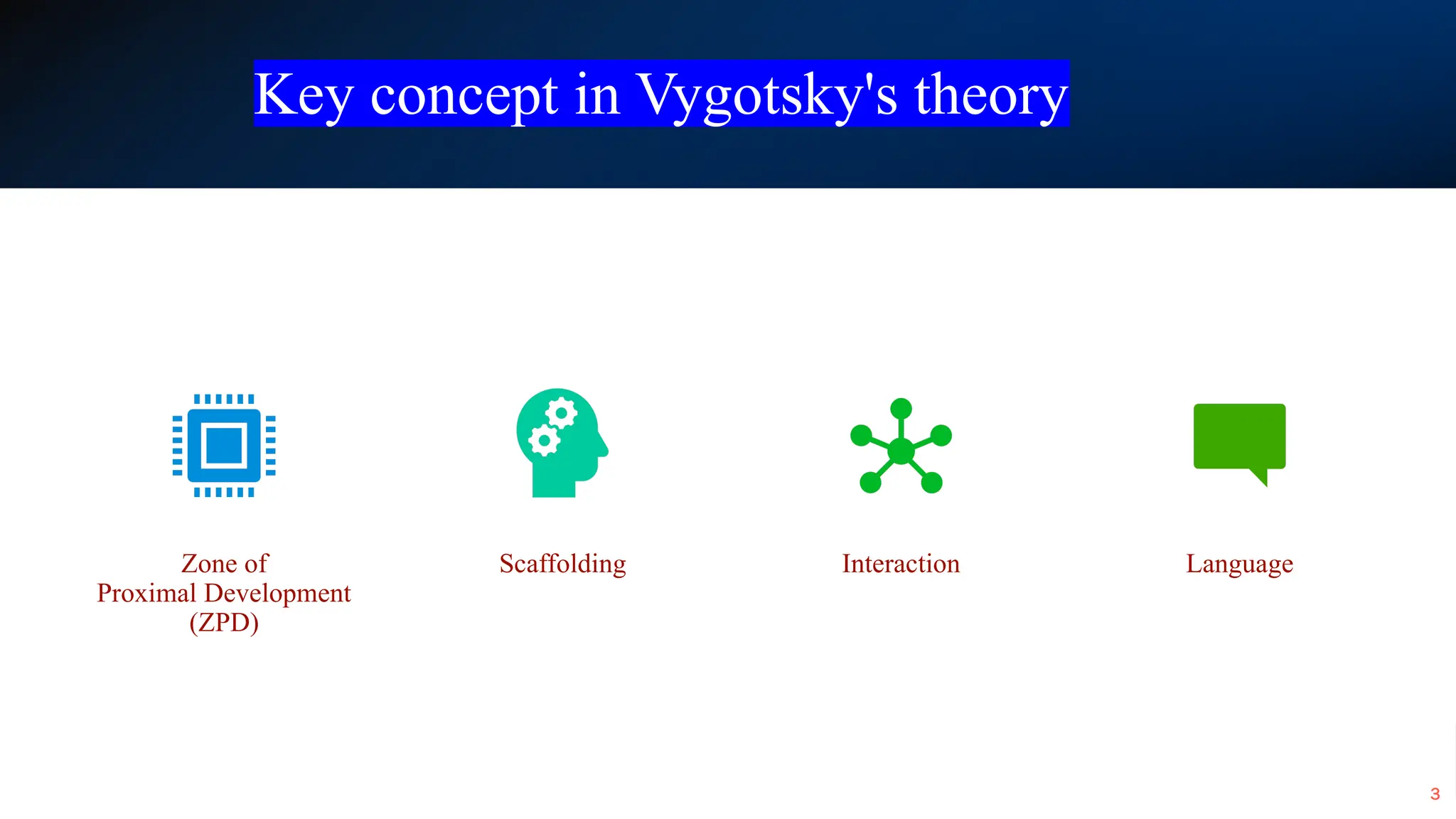
Key concept in Vygotsky's theory
3
Zone of
Proximal Development
(ZPD)
Scaffolding Interaction Language
Zone of proximal
development (ZPD)
Gap between a child's current
abilities and what they can
achieve with support from a
more knowledgeable other
Photo
Source:
firstdiscoverers.co.uk
4
5
Scaffolding : A temporary support system to help students learn
new concepts and skills.
Video: Example of Scaffolding
6
Education: Collaborative learning
Workplace Training: Mentorship
programs
Parenting: Guiding children
through new activities
Applications of
Vygotsky's Theory
7
Vygotsky vs. Piaget
Vygotsky's Sociocultural Theory
• Focuses on social interaction
• Views development as continuous
• Prioritizes cultural context
Piaget's Cognitive Development Theory
• Emphasizes individual exploration.
• Piaget sees it as stage-based
• Ignores cultural context
ADD A FOOTER 8
Criticism of
Vygotsky Theory
• Vygotsky theory only vaguely defined social interaction and never
stated the best method for engagement.
• The ZPD also does not explain the process of development or how
development actually occurs. (Chaiklin, 2003, pp. 42-46).
9
REFERENCES
• Elearning.nou.edu.np/mod/quiz/
• Moll, L. C. (1990). Vygotsky in education: Instructional design for children
with learning disabilities
• Flavell, J. H. (1993). The play of words: Essays on the development of
childhood thought. Harvard University Press
Thank You !
Any Questions ? ?

Vygotsky sociocultural learning theory.pptx

  • 1.
    Er. Ramesh Adhikari MARC H2024 Vygotsky'sTheory of Cognitive Development
  • 2.
    2 Vygotsky's central argument Cognitive development isprimarily driven by social interactions and cultural tools. Photo source : bigstockphoto.com
  • 3.
    Key concept inVygotsky's theory 3 Zone of Proximal Development (ZPD) Scaffolding Interaction Language
  • 4.
    Zone of proximal development(ZPD) Gap between a child's current abilities and what they can achieve with support from a more knowledgeable other Photo Source: firstdiscoverers.co.uk 4
  • 5.
    5 Scaffolding : Atemporary support system to help students learn new concepts and skills. Video: Example of Scaffolding
  • 6.
    6 Education: Collaborative learning WorkplaceTraining: Mentorship programs Parenting: Guiding children through new activities Applications of Vygotsky's Theory
  • 7.
    7 Vygotsky vs. Piaget Vygotsky'sSociocultural Theory • Focuses on social interaction • Views development as continuous • Prioritizes cultural context Piaget's Cognitive Development Theory • Emphasizes individual exploration. • Piaget sees it as stage-based • Ignores cultural context
  • 8.
    ADD A FOOTER8 Criticism of Vygotsky Theory • Vygotsky theory only vaguely defined social interaction and never stated the best method for engagement. • The ZPD also does not explain the process of development or how development actually occurs. (Chaiklin, 2003, pp. 42-46).
  • 9.
    9 REFERENCES • Elearning.nou.edu.np/mod/quiz/ • Moll,L. C. (1990). Vygotsky in education: Instructional design for children with learning disabilities • Flavell, J. H. (1993). The play of words: Essays on the development of childhood thought. Harvard University Press
  • 10.
    Thank You ! AnyQuestions ? ?