Download as PDF, PPTX




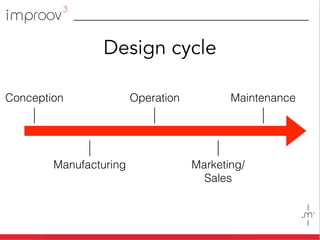


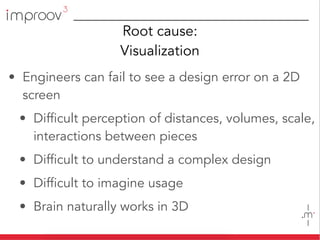

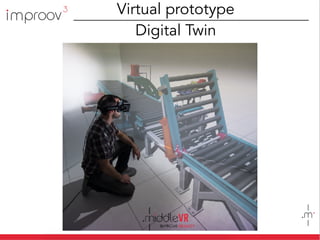
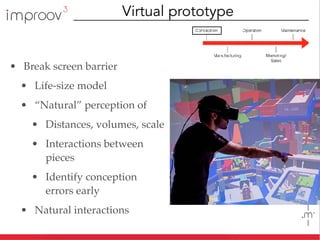
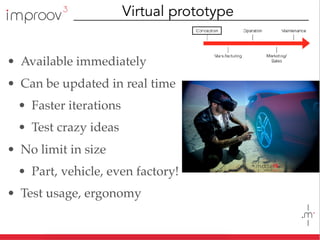

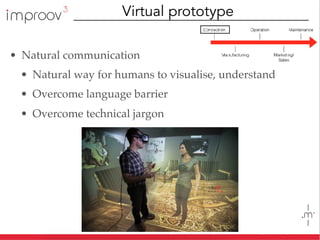
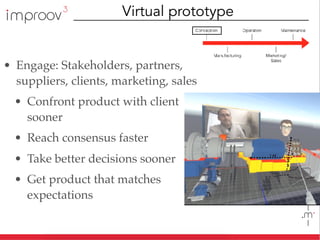
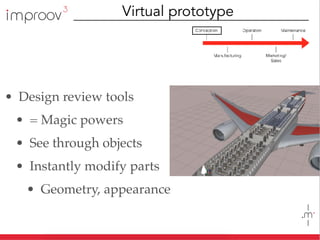
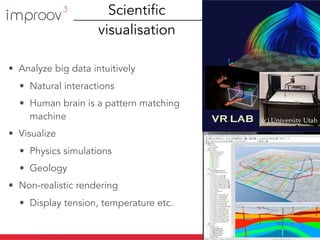


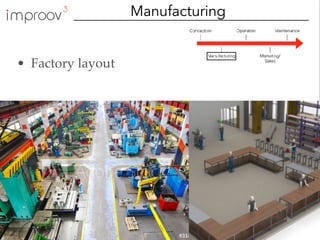
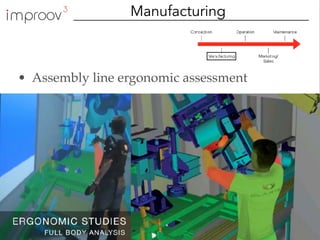

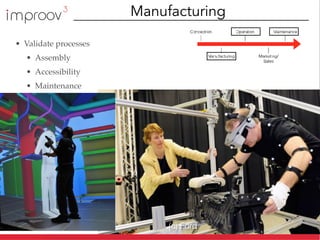
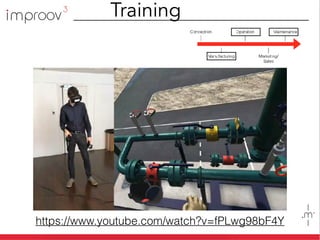

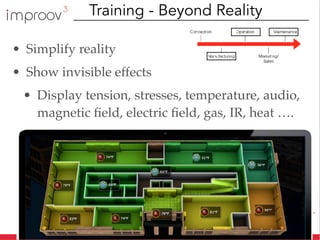
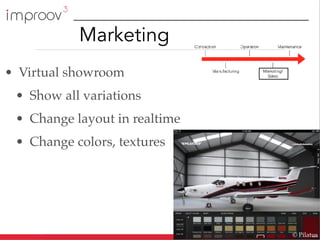


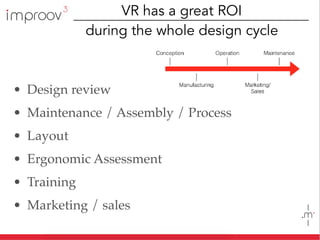

The document discusses the application of virtual reality (VR) in the aerospace industry, highlighting its capabilities in improving design processes, stakeholder engagement, and product accuracy. Key advantages of VR include early detection of design errors, enhanced communication among non-engineers, and opportunities for innovative prototyping and training. Overall, VR is presented as a powerful tool that offers significant return on investment throughout the design cycle, from conception to marketing.


