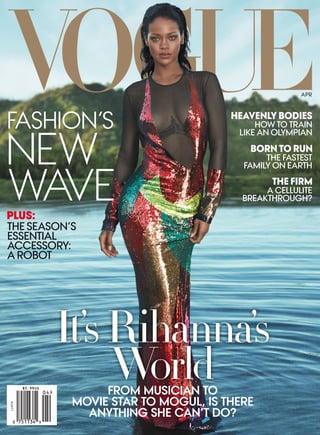
FROM MUSICIAN TO
MOVIE STAR TO MOGUL, IS THERE
ANYTHING SHE CAN’T DO?
APR
THE SEASON’S
ESSENTIAL
ACCESSORY:
A ROBOT
PLUS:
NEW
WAVE
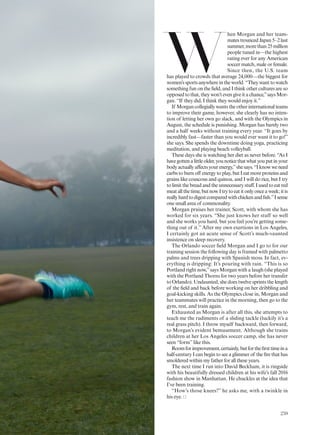
THE FASTEST
FAMILY ON EARTH
BORN TO RUN
A CELLULITE
BREAKTHROUGH?
THE FIRM
HEAVENLY BODIES
HOW TO TRAIN
LIKE AN OLYMPIAN
FASHION’S
april
C O N T IN U ED > 6 4
78
VOGUE.COM
80
EDITOR’S LETTER
94, 106
MASTHEAD
114
TALKING BACK
Reactions far and wide
120
CONTRIBUTORS
122
UP FRONT
When she met Andy—an
aid worker like herself—he’d
sufered an unimaginable
tragedy. Falling in love,
Jessica Alexander would
discover, doesn’t mean
letting go of the past
128
NOSTALGIA
With her young life going
sideways, Maxine Swann
took the cure at her
grandparents’twelve-
bedroom manor house out
of aWharton novel,where
eccentricity was embraced
flash
136
IT GIRL
Riley Keough
138
TALKING FASHION
White, wide-leg trousers
140
TNT
Elisabeth TNT goes to
the world’s end only to
discover that New Zealand
is even more spectacular
than she had imagined
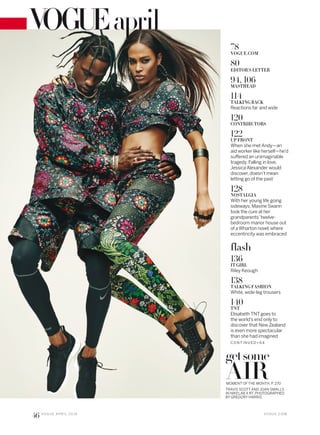
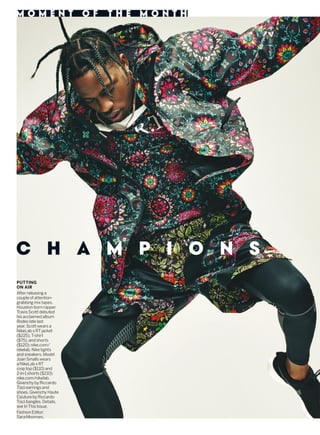
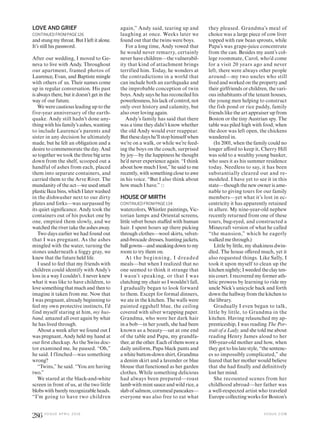
TRAVIS SCOTT AND JOAN SMALLS
IN NIKELAB X RT. PHOTOGRAPHED
BY GREGORY HARRIS.
MOMENT OF THE MONTH, P. 270
getsome
AIR
V O G U E . C O M
46 V O G U E A P R I L 2 0 1 6
april
C O N T IN U ED >7 2
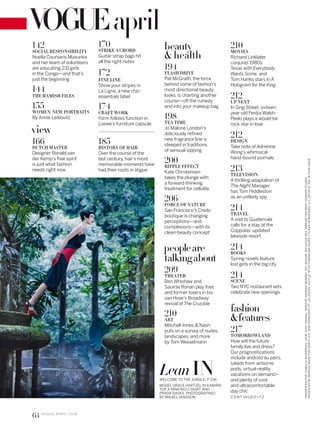
142
SOCIAL RESPONSIBILITY
Noella Coursaris Musunka
and her team of volunteers
are educating 231 girls
in the Congo—and that’s
just the beginning
144
THE HAMISH FILES
155
WOMEN: NEW PORTRAITS
By Annie Leibovitz
view
166
DUTCH MASTER
Designer Ronald van
der Kemp’s free spirit
is just what fashion
needs right now
170
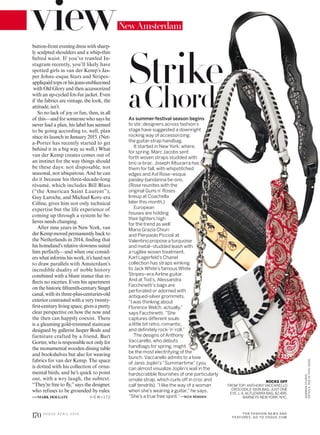
STRIKE A CHORD
Guitar-strap bags hit
all the right notes
172
FINE LINE
Show your stripes in
La Ligne, a new chic-
essentials label
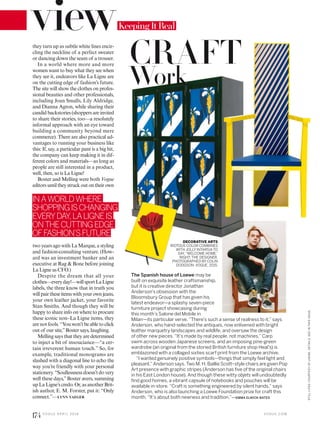
174
CRAFT WORK
Form follows function in
Loewe’s furniture capsule
185
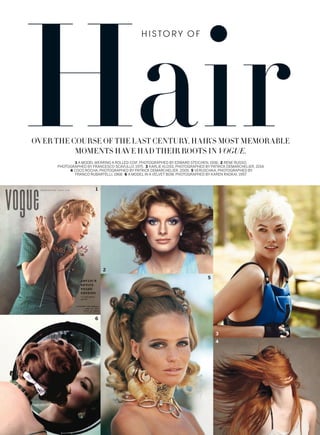
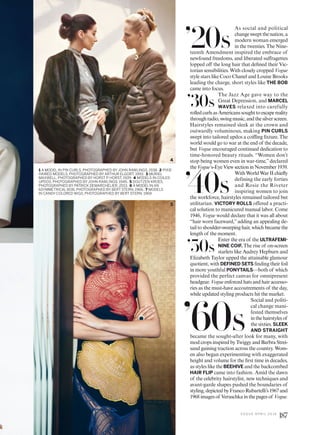
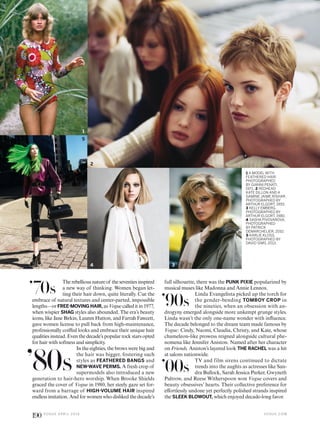
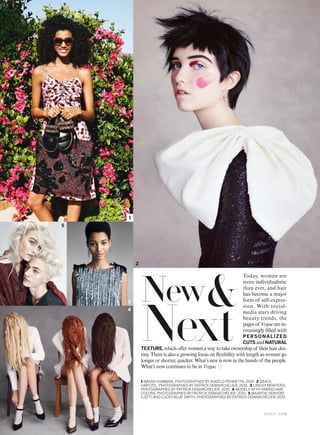
HISTORY OF HAIR
Over the course of the
last century, hair’s most
memorable moments have
had their roots in Vogue
beauty
& health
194
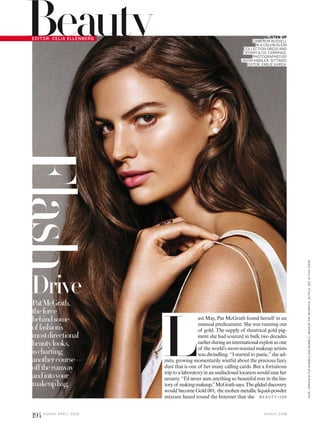
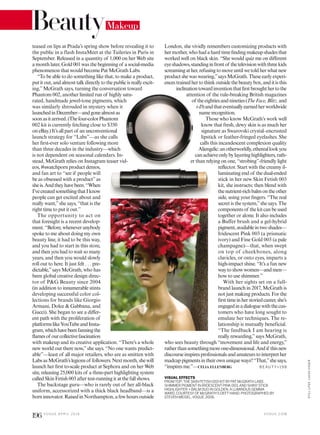
FLASH DRIVE
Pat McGrath, the force
behind some of fashion’s
most directional beauty
looks, is charting another
course—of the runway
and into your makeup bag
198
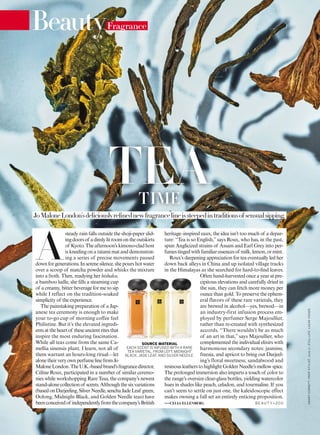
TEA TIME
Jo Malone London’s
deliciously reined
new fragrance line is
steeped in traditions
of sensual sipping
200
RIPPLE EFFECT
Kate Christensen
takes the plunge with
a forward-thinking
treatment for cellulite
206
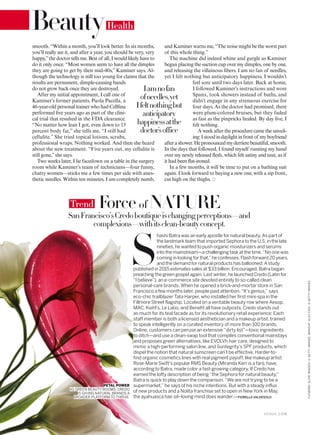
FORCE OF NATURE
San Francisco’s Credo
boutique is changing
perceptions—and
complexions—with its
clean-beauty concept
peopleare
talkıngabout
209
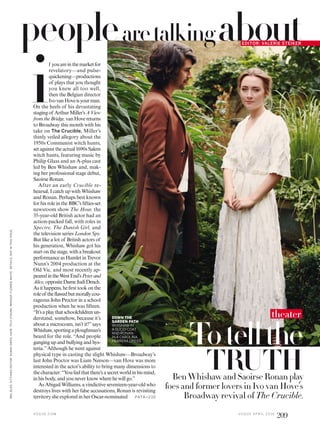
THEATER
Ben Whishaw and
Saoirse Ronan play foes
and former lovers in Ivo
van Hove’s Broadway
revival of The Crucible
210
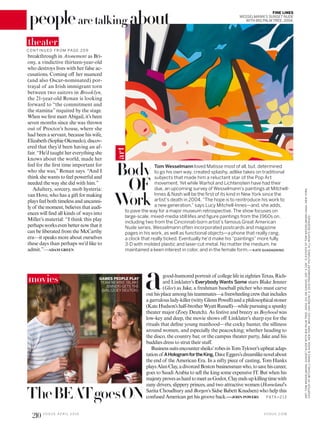
ART
Mitchell-Innes & Nash
puts on a survey of nudes,
landscapes, and more
by Tom Wesselmann
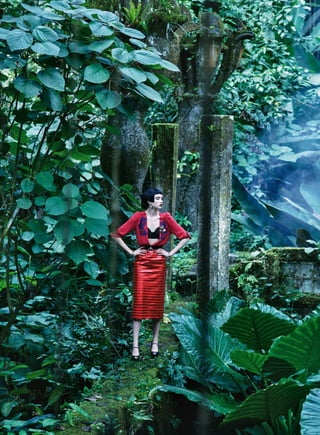
MODEL GRACE HARTZEL IN A MARNI
TOP, A NINA RICCI SKIRT, AND
PRADA SHOES. PHOTOGRAPHED
BY MIKAEL JANSSON.
WELCOME TO THE JUNGLE, P. 236
Lean IN
210
MOVIES
Richard Linklater
conjures 1980s
Texas with Everybody
Wants Some, and
Tom Hanks stars in A
Hologram for the King
212
UP NEXT
In Sing Street, sixteen-
year-old Ferdia Walsh-
Peelo plays a would-be
rock star in love
212
DESIGN
Take note of Adrienne
Wong’s whimsical
hand-bound journals
213
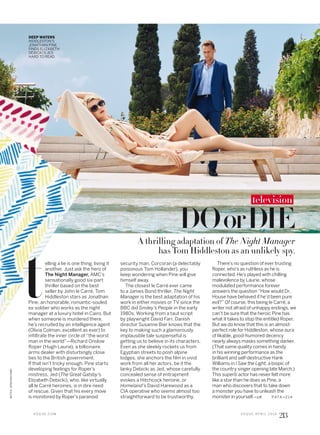
TELEVISION
A thrilling adaptation of
The Night Manager
has Tom Hiddleston
as an unlikely spy
214
TRAVEL
A visit to Guatemala
calls for a stay at the
Coppolas’updated
lakeside resort
214
BOOKS
Spring novels feature
lost girls in the big city
214
SCENE
Two NYC restaurant vets
celebrate new openings
fashion
&features
217
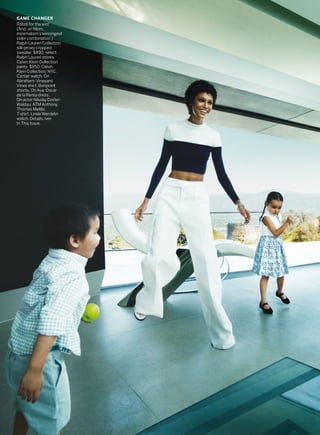
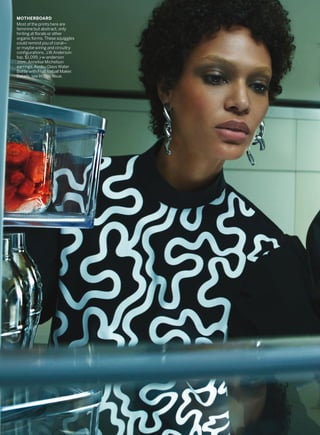
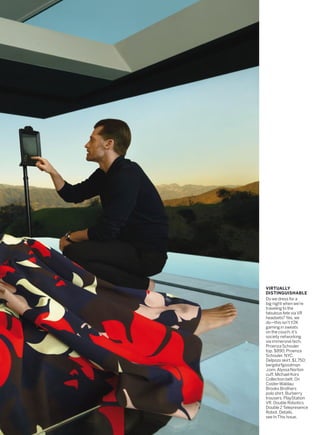
TOMORROWLAND
How will the future
family live and dress?
Our prognostications
include android au pairs,
salads from airborne
pods, virtual-reality
vacations on demand—
and plenty of cool
and ultracomfortable
day chic
FASHIONEDITOR:CAMILLANICKERSON.HAIR,SHAYASHUAL;MAKEUP,HANNAHMURRAY.SETDESIGN,NICHOLASDESJARDINSFORMARYHOWARDSTUDIO.
PRODUCEDBYMARCUSWARDFORNORTHSIX.PHOTOGRAPHEDATLASPOZAS,XILITLA,WITHFUNDACIÓNPEDROYELENAHERNÁNDEZ,A.C.DETAILS,SEEINTHISISSUE.
64 V O G U E A P R I L 2 0 1 6
april
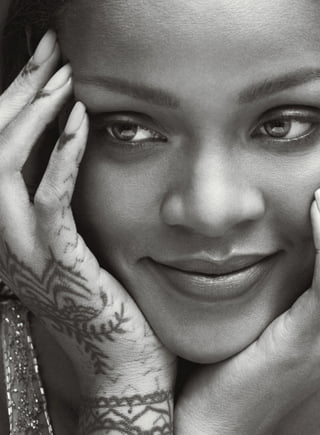
cover look
VENUS
RISING
Rihanna wears a Tom Ford
dress. To get this look, try:
Lightful C Tinted Cream SPF
30 with Radiance Booster,
Mineralize Skinfinish
Natural in Dark Deep,
Veluxe Brow Liner in
Velvetstone, Amber Times
Nine Eye Shadow Palette,
False Lashes Waterproof
mascara, Lipstick in
Touch. All by MAC
Cosmetics. Hair, Yusef;
makeup, Mark Carrasquillo.
Details, see In This Issue.
Photographers:
Mert Alas
and Marcus Piggott.
Fashion Editor:
Tonne Goodman.

230
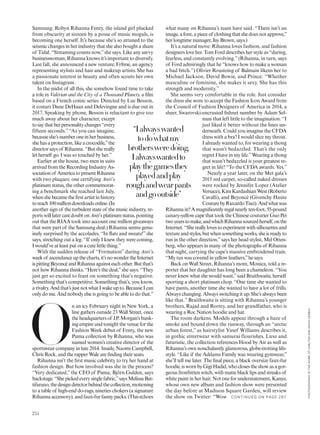
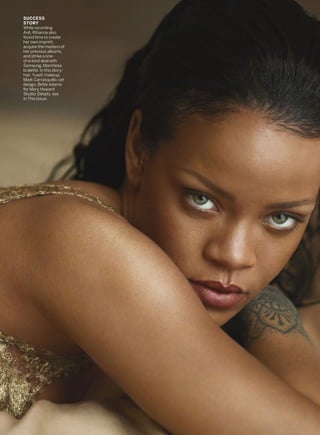
WORKING IT
Rihanna has revealed
a new sound, launched
an agency, designed
a debut fashion line,
and is embarking on a
63-city world tour. Can
global domination be far
behind? By Abby Aguirre
236
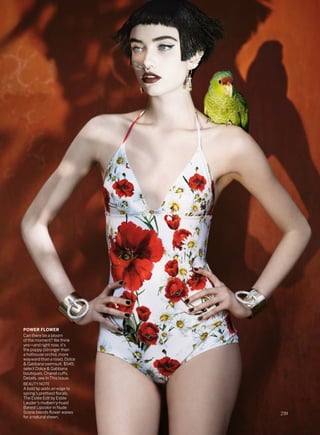
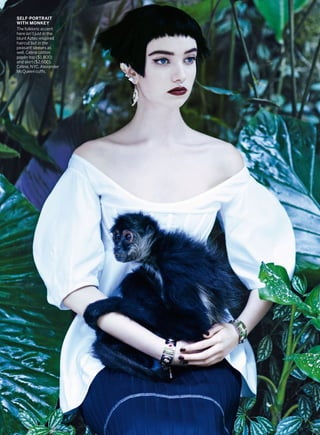
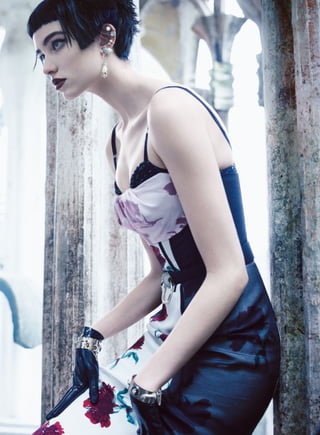
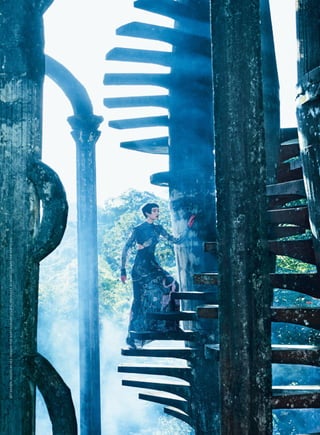
WELCOMETOTHEJUNGLE
A lush, sculpture-strewn
Garden of Eden in the
mountains of central Mexico
makes a torrid setting
for the season’s most
sultry (and, sometimes,
surreal) lowers–by–
Frida Kahlo looks
250
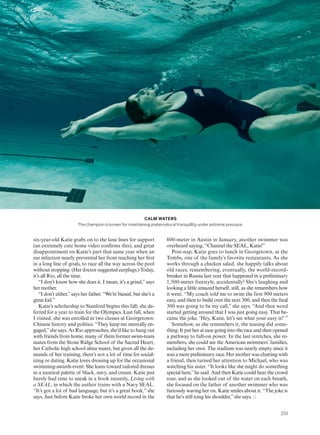
FREE STYLE
Nineteen-year-old Katie
Ledecky has emerged
as a once-in-a-lifetime
phenomenon, breaking
multiple world records
in races short and long.
What’s her secret?
asks Robert Sullivan
254
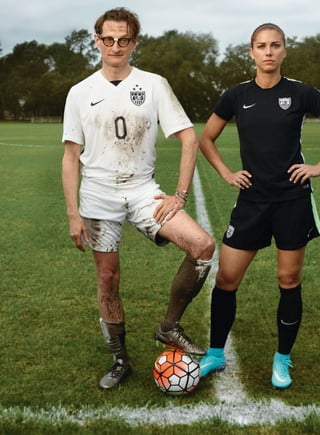
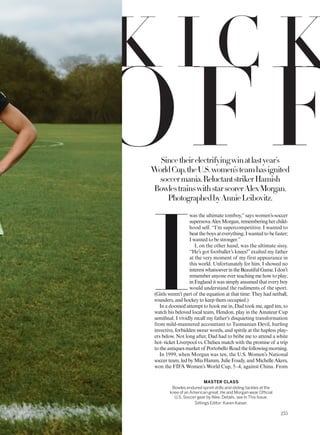
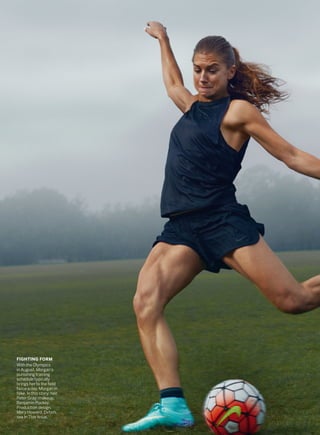
KICK OFF
Since their electrifying
win at last year’s
World Cup, the U.S.
women’s team has
ignited soccer mania.
Reluctant striker Hamish
Bowles trains with star
scorer Alex Morgan
260
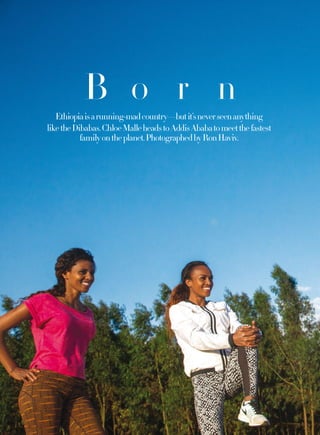
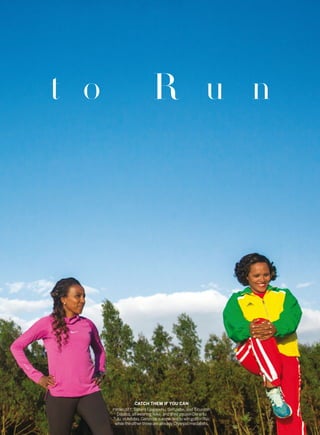
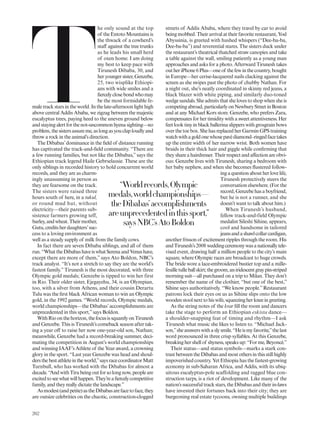
BORN TO RUN
Ethiopia is a track-mad
country—but it’s never
seen anything like the
Dibabas. Chloe Malle
heads to Addis Ababa
to meet the fastest
family on the planet
264
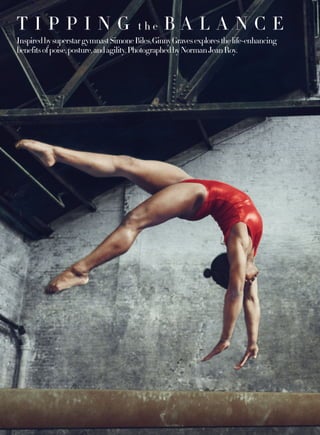
TIPPING THE BALANCE
Inspired by superstar
gymnast Simone Biles,
Ginny Graves explores
the life-enhancing
beneits of poise,
posture, and agility
266
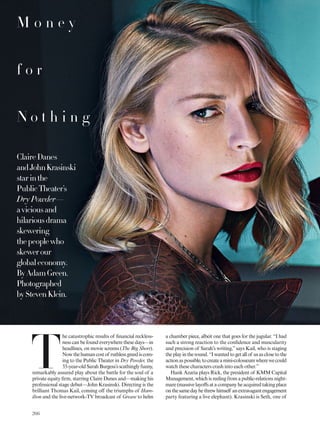
MONEY FOR NOTHING
Claire Danes and John
Krasinski star in the
Public Theater’s Dry
Powder—a vicious and
hilarious drama skewering
the people who skewer
our global economy.
By Adam Green
268
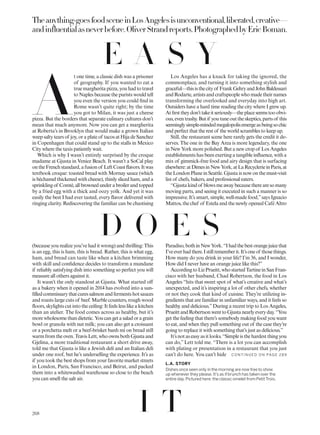
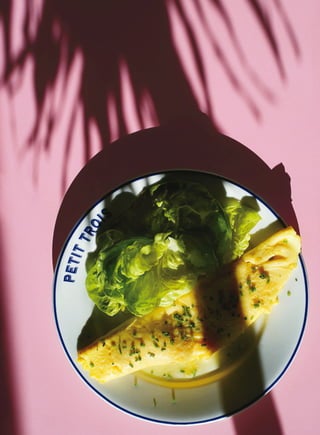
EASY DOES IT
The anything-goes food
scene in Los Angeles
is unconventional,
liberated, creative—and
inluential as never before.
Oliver Strand reports
270
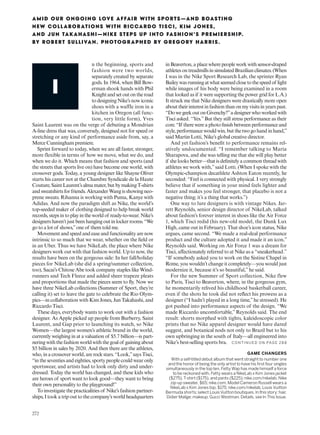
MOMENT OF THE MONTH
Amid our ongoing love
afair with sports—and
boasting new
collaborations with
Riccardo Tisci, Kim Jones,
and Jun Takahashi—
Nike steps up into
fashion’s premiership.
By Robert Sullivan
274
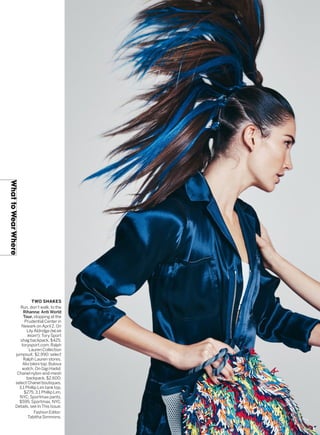
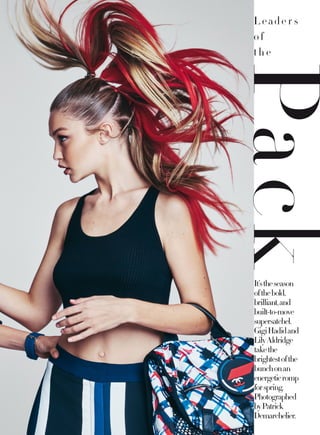
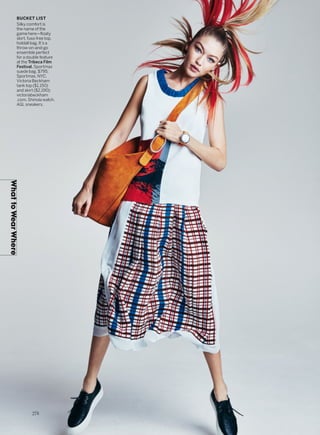
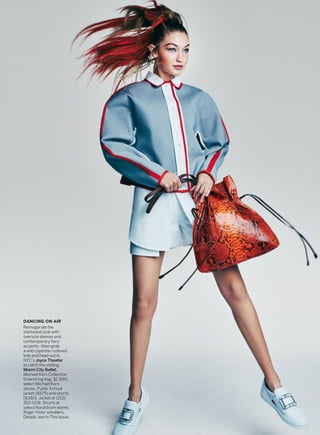
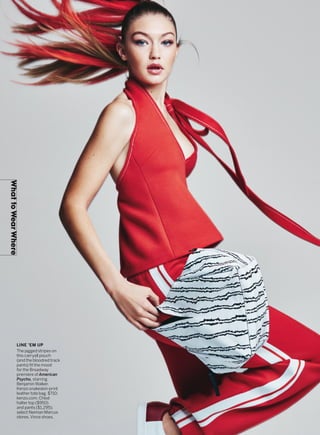
WHAT TO WEAR WHERE
It’s the season of the
bold, brilliant, and built-to-
move supersatchel.
FROM LEFT: EJEGAYEHU, GENZEBE,
AND TIRUNESH DIBABA, AND
THEIR COUSIN DERARTU TULU.
PHOTOGRAPHED BY RON HAVIV.
BORN TO RUN, P. 260
the
Fantastic
FOUR
Gigi Hadid and Lily
Aldridge take the brightest
of the bunch on an
energetic romp for spring
index
284
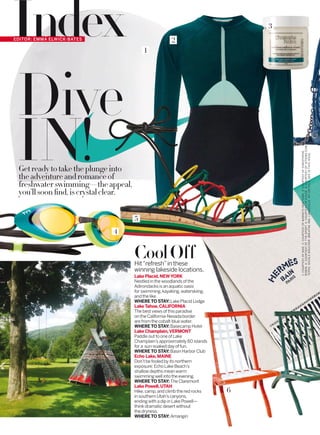
DIVE IN!
Get ready to plunge
into the adventure and
romance of freshwater
swimming—the
appeal, you’ll soon
ind, is crystal clear
290
INTHISISSUE
292
LASTLOOK
V O G U E . C O M
COVERLOOK:SETDESIGN,BETTEADAMSFORMARYHOWARDSTUDIO.PHOTOGRAPHEDATTHEHOMEOFCARLTONANDDAVIDGEBBIA.
72 V O G U E A P R I L 2 0 1 6
After a frigid winter, it’s time to turn up the heat on
your wardrobe—and what better way to shake off
the cold than with a new look? From the prettiest
sundresses to sandals in every style, here’s
how to look hot and stay cool all season long.
Game ONTo match the marvel of athleticism that the world will be
watching during the Olympics, we highlight the best of Rio de
Janeiro. Find under-the-radar restaurants, shopping destinations,
and more in a tourist’s trove of ideas for an upcoming trip.
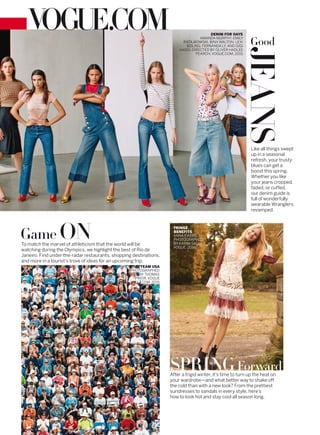
Like all things swept
up in a seasonal
refresh, your trusty
blues can get a
boost this spring.
Whether you like
your jeans cropped,
faded, or cuffed,
our denim guide is
full of wonderfully
wearable Wranglers
revamped.
DENIM FOR DAYS
AMANDA MURPHY, EMILY
RATAJKOWSKI, BINX WALTON, LEXI
BOLING, FERNANDA LY, AND GIGI
HADID. DIRECTED BY OLIVER HADLEE
PEARCH, VOGUE.COM, 2015.
TEAM USA
PHOTOGRAPHED
BYTHOMAS
PRIOR, VOGUE
.COM, 2015.
FRINGE
BENEFITS
ANNA EWERS,
PHOTOGRAPHED
BY KARIM SADLI,
VOGUE, 2016.
SPRINGForward
Good
JEANS
letterfromtheeditor
T
ome,totheeditorsof Vogue,andnodoubtto
you, it feels like the magazine has been chart-
ing the inluence of sports clothes on fashion
for at least the past decade. And you’ll ind
plenty more such looks in this issue, whether
the upgraded version of gym bags you can
carryjustabouteverywhere(WhattoWearWhere,page274)
or the futuristically inclined wardrobe depicted in “Tomor-
rowland”(page 217). Yet as writer Robert Sullivan discusses
in his piece on the brilliantly inno-
vative Nike and its ventures into
fashion (Moment of the Month,
page 270), the real story is about
much more than the stylistic ap-
propriation of hoods, sneaker soles,
and track pants. It is instead about
where we are today—dressing for a
world where there has never been
a greater fusion of speed, technol-
ogy, mobility, well-being, diversity,
the democracy of the street, and,
yes, looking good. That all of this is
comingtogetherinanOlympicyear
only makes it all the more timely.
As I write this, we’ve just inished
seeing the New York fall 2016 col-
lections, where two labels fronted
by music titans—this month’s cover
star, Rihanna, with Fenty Puma,
and Kanye West with Yeezy—
stirred up the most headlines with
shows that demonstrated exactly
what so many of us are actively
thinking about right now: connectivity, immediacy, and
the involvement of a far greater constituency than those
merely sitting in the audience watching. (They might also
be responsible for the trend in New York for dark, raucous
shows that felt more like nightclubs.) It’s certainly no sur-
prise that musicians and not movie stars are fronting these
labels, and the reason for that is far more than their inher-
ent sense of style. Both Rihanna and Kanye, like Taylor
Swift and Beyoncé (who launches
MOTION GRAPHICS
TRAVIS SCOTT IN NIKELAB X RT.
PHOTOGRAPHED BY GREGORY HARRIS.
Power
PLAYERS
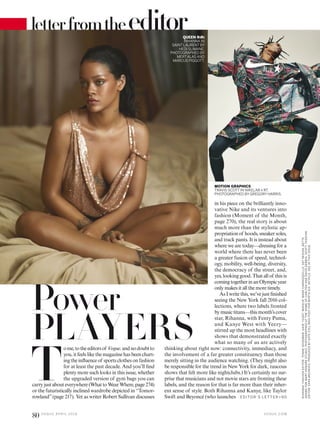
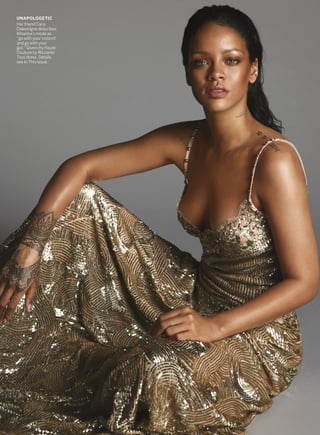
QUEEN RIRI
RIHANNA IN
SAINT LAURENT BY
HEDI SLIMANE.
PHOTOGRAPHED BY
MERTALAS AND
MARCUS PIGGOTT.
ED ITO R ’S LE T T ER >9 0
V O G U E . C O M
80 V O G U E A P R I L 2 0 1 6
RIHANNA:FASHIONEDITOR:TONNEGOODMAN.HAIR,YUSEF;MAKEUP,MARKCARRASQUILLO;SETDESIGN,BETTE
ADAMSFORMARYHOWARDSTUDIO.PHOTOGRAPHEDATTHEHOMEOFCARLTONANDDAVIDGEBBIA.SCOTT:FASHION
EDITOR:SARAMOONVES.PRODUCEDBYKATECOLLINGS-POSTFORNORTHSIX.DETAILS,SEEINTHISISSUE.
letterfromtheeditor
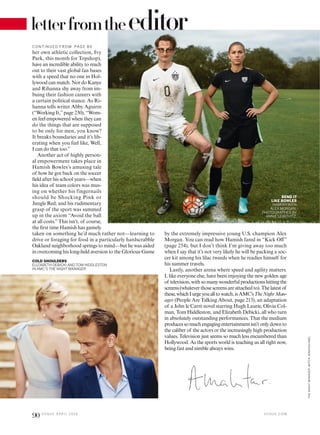
BEND IT
LIKE BOWLES
HAMISH WITH
ALEX MORGAN.
PHOTOGRAPHED BY
ANNIE LEIBOVITZ.
COLD SHOULDERS
ELIZABETH DEBICKI AND TOM HIDDLESTON
IN AMC’S THE NIGHT MANAGER.
her own athletic collection, Ivy
Park, this month for Topshop),
have an incredible ability to reach
out to their vast global fan bases
with a speed that no one in Hol-
lywood can match. Nor do Kanye
and Rihanna shy away from im-
buing their fashion careers with
a certain political stance. As Ri-
hanna tells writer Abby Aguirre
(“Working It,”page 230), “Wom-
en feel empowered when they can
do the things that are supposed
to be only for men, you know?
It breaks boundaries and it’s lib-
erating when you feel like, Well,
I can do that too.”
Another act of highly person-
al empowerment takes place in
Hamish Bowles’s amusing tale
of how he got back on the soccer
ield after his school years—when
his idea of team colors was mus-
ing on whether his fingernails
should be Shocking Pink or
Jungle Red, and his rudimentary
grasp of the sport was summed
up in the axiom “Avoid the ball
at all costs.”This isn’t, of course,
the irst time Hamish has gamely
taken on something he’d much rather not—learning to
drive or foraging for food in a particularly hardscrabble
Oakland neighborhood springs to mind—but he was aided
in overcoming his long-held aversion to the Glorious Game
by the extremely impressive young U.S. champion Alex
Morgan. You can read how Hamish fared in “Kick Of”
(page 254), but I don’t think I’m giving away too much
when I say that it’s not very likely he will be packing a soc-
cer kit among his lilac tweeds when he readies himself for
his summer travels.
Lastly, another arena where speed and agility matters.
I, like everyone else, have been enjoying the new golden age
of television,withsomanywonderfulproductionshittingthe
screens(whateverthosescreensareattachedto).Thelatestof
these,whichIurgeyoualltowatch,isAMC’sTheNightMan-
ager (People Are Talking About, page 213), an adaptation
of a John le Carré novel starring Hugh Laurie, Olivia Col-
man, Tom Hiddleston, and Elizabeth Debicki, all who turn
in absolutely outstanding performances. That the medium
producessomuchengagingentertainmentisn’tonlydownto
the caliber of the actors or the increasingly high production
values. Television just seems so much less encumbered than
Hollywood. As the sports world is teaching us all right now,
being fast and nimble always wins.
C O N TIN U ED F RO M PAG E 8 0
V O G U E . C O M
90 V O G U E A P R I L 2 0 1 6
THENIGHTMANAGER:MITCHJENKINS/AMC
V O G U E . C O M
94 V O G U E A P R I L 2 0 1 6
ANNA WINTOUR
Editor in Chief
Design Director RAÚL MARTINEZ
Fashion Director TONNE GOODMAN Features Director EVE MACSWEENEY Market Director, Fashion and Accessories VIRGINIA SMITH
Executive Fashion Editor PHYLLIS POSNICK Style Director CAMILLA NICKERSON
International Editor at Large HAMISH BOWLES Fashion News Director MARK HOLGATE
Creative Digital Director SALLY SINGER
Creative Director at Large GRACE CODDINGTON
FA S H I O N /A C C E S S O R I E S
Fashion News Editor EMMA ELWICK-BATES Bookings Director HELENA SURIC Accessories Director SELBY DRUMMOND
Editors GRACE GIVENS, ALEXANDRA MICHLER, EMMA MORRISON, MAYA SASAKI Menswear Editor MICHAEL PHILOUZE
Bookings Associate ERINA DIGBY Associate Market Editors SARA KLAUSING, WILLOW LINDLEY, FRANCESCA RAGAZZI Market Manager TAYLOR ANGINO
Associates LAUREN BELLAMY, GABRIELLA KAREFA-JOHNSON
Fashion Writer RACHEL WALDMAN Fashion Market Assistant MADELINE SWANSON Home Market Associate SAMANTHA REES
B E A U T Y
Beauty Director CELIA ELLENBERG
Beauty Writer LAURA REGENSDORF Beauty Assistant ARDEN FANNING
F E AT U R E S
Culture Editor VALERIE STEIKER Senior Editors TAYLOR ANTRIM, LAUREN MECHLING, JOYCE RUBIN (Copy), COREY SEYMOUR
Entertainment Editor JILLIAN DEMLING Social Editor CHLOE MALLE Style Editor at Large ELISABETH VON THURN UND TAXIS
Food Critic JEFFREY STEINGARTEN Arts Editor MARK GUIDUCCI Assistant Editor KATE GUADAGNINO
Assistant Entertainment Editor SAMANTHA LONDON Features Associates LILI GÖKSENIN, ELIZABETH INGLESE
Features Assistants MADELEINE LUCKEL, LILAH RAMZI, LAUREN SANCHEZ
A R T
Deputy Design Director ALBERTO ORTA
Art Director MARTIN HOOPS
Associate Art Director NOBI KASHIWAGI Designer JENNIFER DONNELLY
Executive Photography Director IVAN SHAW
Photo Editor ALEX O’NEILL Photo Editor, Research MAUREEN SONGCO Photo Researcher TIM HERZOG
Producers NIC BURDEKIN, JENNIFER GREIM Assistant Photo Editor LIANA BLUM Assistant to the Design Director ROSEMARY HANSEN
V O G U E . C O M
Site Director BEN BERENTSON
Managing Editor ALEXANDRA MACON Senior Director of Product NEHA SINGH Director of Engineering KENTON JACOBSEN
Fashion News Director CHIOMA NNADI Director, Vogue Runway NICOLE PHELPS Executive Fashion Editor JORDEN BICKHAM
Beauty Director CATHERINE PIERCY Culture Editor ABBY AGUIRRE
Photography Director ANDREW GOLD Art Director FERNANDO DIAS DE SOUZA Director of Visual Production and Development ALLISON BROWN
Fashion News Editor ALESSANDRA CODINHA Style Editor EDWARD BARSAMIAN Senior Fashion Writer MARJON CARLOS
Market Editors KELLY CONNOR, CHELSEA ZALOPANY Accessories Editor BROOKE DANIELSON Archive Editor LAIRD BORRELLI-PERSSON
Fashion News Writers KRISTIN ANDERSON, JANELLE OKWODU, LIANA SATENSTEIN, STEFF YOTKA Fashion News Associate EMILY FARRA
Beauty Editor MACKENZIE WAGONER Beauty Writer MONICA KIM Beauty Assistant JENNA RENNERT
Deputy Culture Editor JESSIE HEYMAN Senior Culture Writer JULIA FELSENTHAL Culture Writer PATRICIA GARCIA
Living Editor VIRGINIA VAN ZANTEN Living Writer BROOKE BOBB
Senior Photo Editor SUZANNE SHAHEEN Photo Editor EMILY ROSSER Associate Photo Editor SAMANTHA ADLER
Associate Director, Digital Operations ANDEE OLSON Assistant Managing Editor OLIVIA WEISS Senior Producer CHRISTINA LIAO Producer MARIA WARD
Social Media Director ANNE JOHNSON Social Media Manager, Vogue Runway LUCIE ZHANG Associate Social Media Manager ZOE TAUBMAN
New Media Editor BEAU SAM Photo Producer SOPHIA LI Copy Chief LANI MEYER
Associate Director, Audience Development BERKELEY BETHUNE Senior Manager, Analytics RACHEL LESAGE Product Manager BEN SMIT
Senior Developers JEROME COVINGTON, GREGORY KILIAN Developers JE SUIS ENCRATEIA, SIMONE HILL, BEN MILTON
P R O D U C T I O N /C O P Y/ R E S E A R C H
Deputy Managing Editor DAVID BYARS
Digital Production Manager JASON ROE Production Designers COR HAZELAAR, SARA REDEN
Deputy Copy Chief CAROLINE KIRK Senior Copy Editor LESLIE LIPTON Copy Editor DIEGO HADIS
Research Director JENNIFER CONRAD Research Editors ALEXANDRA SANIDAD, COURTNEY MARCELLIN
Fashion Credits Editor IVETTE MANNERS
S P E C I A L P R OJ E C T S / E D I T O R I A L D E V E L O P M E N T/C O M M U N I C AT I O N S
Director of Special Projects SYLVANA WARD DURRETT Senior Events Manager EADDY KIERNAN
Editorial Business Director MIRA ILIE Manager, Editorial Operations XAVIER GONZALEZ Contracts Manager ALEXA ELAM
Editorial Business Coordinator JESSECA JONES Special Events Associate LINDSAY STALL
Executive Director of Communications HILDY KURYK Director of Brand Marketing NEGAR MOHAMMADI
Communications and Marketing Manager DANIKA OWSLEY
Executive Assistant to the Editor in Chief GRACE HUNT Assistants to the Editor in Chief LOUISA STELLE, REBECCA UNGER
European Editor FIONA DARIN
Fashion Associates CAMILA HENNESSY, ANTHONY KLEIN
West Coast Director LISA LOVE
West Coast Associates CARA SANDERS, WENDELL WINTON
Managing Editor JON GLUCK Executive Director, Editorial and Special Projects CHRISTIANE MACK
C O N T R I B U T I N G E D I T O R S
ROSAMOND BERNIER, MIRANDA BROOKS, SARAH BROWN, ADAM GREEN, NATHAN HELLER, LAWREN HOWELL, CAROLINA IRVING,
REBECCA JOHNSON, DODIE KAZANJIAN, SHIRLEY LORD, CATIE MARRON, SARA MOONVES, SARAH MOWER, MEGAN O’GRADY,
JOHN POWERS, MARINA RUST, LAUREN SANTO DOMINGO, TABITHA SIMMONS, ROBERT SULLIVAN, PLUM SYKES,
JONATHAN VAN METER, SHELLEY WANGER, JANE WITHERS, VICKI WOODS, LYNN YAEGER
V O G U E . C O M
106 V O G U E A P R I L 2 0 1 6
SUSAN D. PLAGEMANN
Chief Revenue Oicer and Publisher
Associate Publisher, Marketing KIMBERLY FASTING BERG
General Manager DAVID STUCKEY
A D V E R T I S I N G
Executive Director, Digital Advertising KRISTEN ELLIOTT
Advertising Director, Digital ELIZABETH MARVIN
Executive Director, International Fashion and Business Development SUSAN CAPPA
Executive Retail Director GERALDINE RIZZO Executive Beauty Director LAUREN HULKOWER-BELNICK
Fashion Director JAMIE TILSON ROSS
Luxury Director ROY KIM Senior Director, American Fashion and Beauty MARIE LA FRANCE
American Fashion Managers LENA JOHNSON
Account Managers BLAIR CHEMIDLIN, LYNDSEY NATALE
Executive Assistants to the Publisher ANNIE MAYBELL, JEENA MARIE PENA
Advertising Coordinator NINA CAPACCHIONE
Retail Coordinator ELIZABETH ODACHOWSKI
International Fashion Coordinator WILLIAM PRIGGE
Advertising Assistants LILY MUMMERT, ELEANOR PEERY, CASEY TAYLOR, GABRIELLE MIZRAHI
Advertising Tel: 212 286 2860 Advertising Fax: 212 286 6921
B U S I N E S S
Executive Director of Finance and Business Development SYLVIA W. CHAN
Senior Business Director TERESA GRANDA
Business Managers CHRISTINE GUERCIO, MEREDITH HAINES
Advertising Services Manager PHILIP ZISMAN
C R E AT I V E S E R V I C E S
Integrated Marketing
Executive Director, Creative Services BONNIE ABRAMS
Executive Director of Events, Partnerships, and Communications BRIGID WALSH
Senior Director, Creative Development and Integrated Partnerships RACHAEL KLEIN
Branded Content Director JANE HERMAN BISHOP
Director, Integrated Marketing and Brand Development CATESBY CATOR
Integrated Marketing Directors MARK HARTNETT, SARAH RYAN
Director, Special Events CARA CROWLEY
Senior Integrated Marketing Manager EUNICE KIM
Digital Marketing Manager ELLYN PULEIO
Integrated Marketing Manager LIAM MCKESSAR
Integrated Marketing Assistants SHARTINIQUE CHLOE LEE, TARA MCDERMOTT
Vogue Studio
Creative Director DELPHINE GESQUIERE
Director of Vogue Studio Services SCOTT ASHWELL
Associate Creative Director SARAH RUBY
Art Directors NANCY ROSENBERG, TIMOTHY SCHULTHEIS
Copy Director DEENIE HARTZOG-MISLOCK
Designer KELSEY REIFLER
M A R K E T I N G
Executive Director of Marketing MELISSA HALVERSON
Marketing Director YI-MEI TRUXES
Senior Marketing Managers MEREDITH MCCUE, ALEXANDRIA GURULE
Marketing Managers ANNA NATALI SWANSON, LINDSAY KASS
D I G I TA L A D S T R AT E G Y A N D P L A N N I N G
Senior Director of Digital Ad Strategy and Planning JULIA STEDMAN
Senior Digital Account Manager REBECCA ISQUITH
Digital Account Managers COURTNEY CARROLL
Associate Account Manager RYAN HOOVER
Analysts, Sales Planning NIDA SAYED, REBECCA YOUNG
B R A N C H O F F I C E S
San Francisco SUSAN KETTLER, Director, 50 Francisco St., San Francisco CA 94133 Tel: 415 955 8210 Fax: 415 982 5539
Midwest WENDY LEVY, Director, 875 N. Michigan Ave., Chicago IL 60611 Tel: 312 649 3522 Fax: 312 799 2703
Detroit STEPHANIE SCHULTZ, Director, 2600 West Big Beaver Rd., Troy MI 48084 Tel: 248 458 7953 Fax: 248 637 2406
Los Angeles MARJAN DIPIAZZA, Executive Director; KATIE HUSA, Account Manager, West Coast, 6300 Wilshire Blvd., Los Angeles CA 90048 Tel: 323 965 3598 Fax: 323 965 4982
Southeast PETER ZUCKERMAN, Z. MEDIA 1666 Kennedy Causeway, Suite 602, Miami Beach FL 33141 Tel: 305 532 5566 Fax: 305 532 5223
Paris FLORENCE MOUVIER, Director, Europe 4 Place du Palais Bourbon, 75343 Paris Cedex 07 Tel: 331 4411 7846 Fax: 331 4705 4228
Milan ALESSANDRO AND RINALDO MODENESE, Managers, Italy Via M. Malpighi 4, 20129 Milan Tel: 39 02 2951 3521 Fax: 39 02 204 9209
P U B L I S H E D B Y C O N D É N A S T
Chairman Emeritus S.I. NEWHOUSE, JR.
Chairman CHARLES H. TOWNSEND
President & Chief Executive Oicer ROBERT A.SAUERBERG, JR.
Chief Financial Oicer DAVID E.GEITHNER
Chief Marketing Oicer & President, Condé Nast Media Group EDWARD J. MENICHESCHI
Chief Administrative Oicer JILL BRIGHT
Executive Vice President/Chief Digital Oicer FRED SANTARPIA
Executive Vice President–Consumer Marketing MONICA RAY
Executive Vice President–Human Resources JOANN MURRAY
Executive Vice President–Corporate Communications CAMERON BLANCHARD
Senior Vice President–Business Operations DAVID ORLIN
Senior Vice President–Corporate Controller DAVID B.CHEMIDLIN
Senior Vice President–Managing Director–23 Stories JOSH STINCHCOMB
Senior Vice President–Network Sales & Partnerships, CN & Chief Revenue Oicer, CNÉ LISA VALENTINO
Senior Vice President–Financial Planning & Analysis SUZANNE REINHARDT
Senior Vice President–Strategy–23 Stories PADRAIG CONNOLLY
Senior Vice President–Ad Tech DAVID ADAMS
Senior Vice President–Licensing CATHY HOFFMAN GLOSSER
Senior Vice President–Research & Analytics STEPHANIE FRIED
Senior Vice President– Digital Operations LARRY BAACH
C O N D É N A S T E N T E R TA I N M E N T
President DAWN OSTROFF
Executive Vice President–General Manager-Digital Video JOY MARCUS
Executive Vice President–Chief Operating Oicer SAHAR ELHABASHI
Executive Vice President–Motion Pictures JEREMY STECKLER
Executive Vice President–Programming & Content Strategy/Digital Channels MICHAEL KLEIN
Executive Vice President–Alternative TV JOE LABRACIO
Executive Vice President– CNÉ Studios AL EDGINGTON
Senior Vice President–Marketing & Partner Management TEAL NEWLAND
C O N D É N A S T I N T E R N AT I O N A L
Chairman and Chief Executive JONATHAN NEWHOUSE
President NICHOLAS COLERIDGE
Condé Nast is a global media company producing premium content for more than 263 million consumers in 30 markets.
www.condenast.com www.condenastinternational.com Published at 1 World Trade Center, New York NY 10007.
Subscription Inquiries: subscriptions@vogue.com or www.vogue.com/services or call (800) 234-2347.
For Permissions and Reprint requests: (212) 630-5656; fax: (212) 630-5883.
Address all editorial, business, and production correspondence to Vogue Magazine, 1 World Trade Center, New York NY 10007.
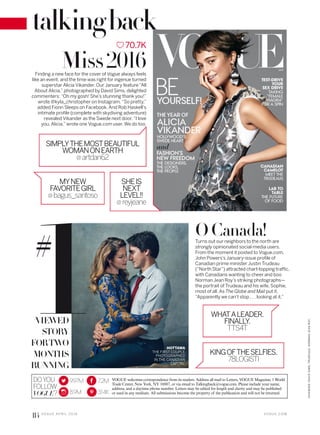
WHATALEADER.
FINALLY.
TTS4T
KINGOFTHESELFIES.
78LOGISTI
1#
DOYOU
FOLLOW
VOGUE?
9.97M
8.9M
7.2M
314K
VOGUE welcomes correspondence from its readers. Address all mail to Letters, VOGUE Magazine, 1 World
Trade Center, New York, NY 10007, or via email to Talkingback@vogue.com. Please include your name,
address, and a daytime phone number. Letters may be edited for length and clarity and may be published
or used in any medium. All submissions become the property of the publication and will not be returned.
70.7K
OCanada!Turns out our neighbors to the north are
strongly opinionated social-media users.
From the moment it posted to Vogue.com,
John Powers’s January-issue profile of
Canadian prime minister Justin Trudeau
(“North Star”) attracted chart-topping traffic,
with Canadians wanting to cheer and boo
Norman Jean Roy’s striking photographs—
the portrait of Trudeau and his wife, Sophie,
most of all. As The Globe and Mail put it,
“Apparently we can’t stop . . . looking at it.”
Miss2016
VIEWED
STORY
FORTWO
MONTHS
RUNNING
Finding a new face for the cover of Vogue always feels
like an event, and the time was right for ingenue turned
superstar Alicia Vikander. Our January feature “All
About Alicia,” photographed by David Sims, delighted
commenters: “Oh my gosh! She’s stunning thank you!”
wrote @kyla_christopher on Instagram. “So pretty,”
added Fionn Sleeps on Facebook. And Rob Haskell’s
intimate profile (complete with skydiving adventure)
revealed Vikander as the Swede next door. “I love
you, Alicia,” wrote one Vogue.com user. We do too.
MYNEW
FAVORITEGIRL
@bagus_santoso
SHEIS
NEXT
LEVEL!!
@reyjeane
SIMPLYTHEMOSTBEAUTIFUL
WOMANONEARTH
@artdan62
HOTTAWA
THE FIRST COUPLE,
PHOTOGRAPHED
IN THE CANADIAN
CAPITAL.
V O G U E . C O M
VIKANDER:DAVIDSIMS;TRUDEAUS:NORMANJEANROY.
114 V O G U E A P R I L 2 0 1 6
talkingback
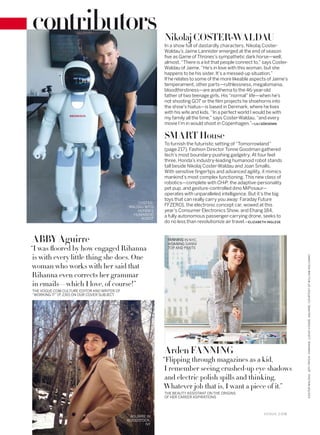
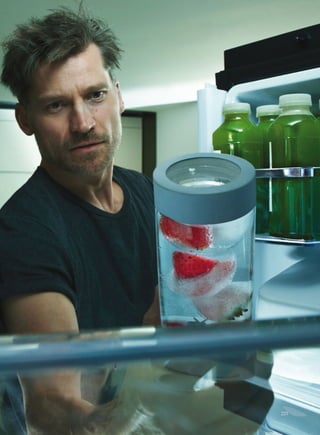
In a show full of dastardly characters, Nikolaj Coster-
Waldau’s Jaime Lannister emerged at the end of season
five as Game of Thrones’s sympathetic dark horse—well,
almost. “There is a lot that people connect to,” says Coster-
Waldau of Jaime. “He’s in love with this woman, but she
happens to be his sister. It’s a messed-up situation.”
If he relates to some of the more likeable aspects of Jaime’s
temperament, other parts—ruthlessness, megalomania,
bloodthirstiness—are anathema to the 46-year-old
father of two teenage girls. His “normal” life—when he’s
not shooting GOT or the film projects he shoehorns into
the show’s hiatus—is based in Denmark, where he lives
with his wife and kids. “In a perfect world I would be with
my family all the time,” says Coster-Waldau, “and every
movie I’m in would shoot in Copenhagen.”—LILI GÖKSENIN
NikolajCOSTER-WALDAU
FANNING IN NYC,
WEARING GANNI
TOP AND PANTS“I was floored by how engaged Rihanna
is with every little thing she does. One
woman who works with her said that
Rihanna even corrects her grammar
in emails—which I love, of course!”
THE VOGUE.COM CULTURE EDITOR AND WRITER OF
“WORKING IT” (P. 230) ON OUR COVER SUBJECT
ABBY Aguirre
Arden FANNING
“Flipping through magazines as a kid,
I remember seeing crushed-up eye shadows
and electric polish spills and thinking,
Whatever job that is, I want a piece of it.”
THE BEAUTY ASSISTANT ON THE ORIGINS
OF HER CAREER ASPIRATIONS
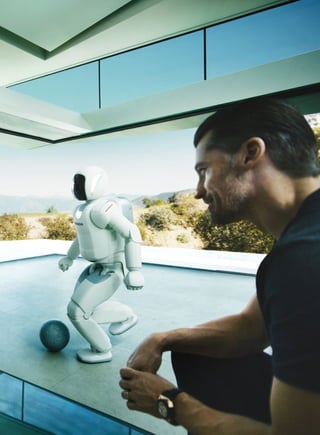
COSTER-
WALDAU WITH
HONDA’S
HUMANOID
ROBOT
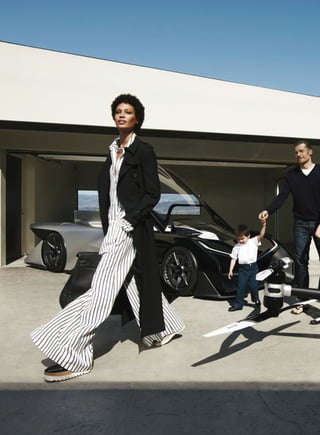
To furnish the futuristic setting of “Tomorrowland”
(page 217), Fashion Director Tonne Goodman gathered
tech’s most boundary-pushing gadgetry. At four feet
three, Honda’s industry-leading humanoid robot stands
tall beside Nikolaj Coster-Waldau and Joan Smalls.
With sensitive fingertips and advanced agility, it mimics
mankind’s most complex functioning. This new class of
robotics—complete with CHiP, the adaptive-personality
pet pup, and gesture-controlled dino MiPosaur—
operates with unparalleled intelligence. But it’s the big
toys that can really carry you away: Faraday Future
FFZERO1, the electronic concept car, wowed at this
year’s Consumer Electronics Show, and Ehang 184,
a fully autonomous passenger-carrying drone, seeks to
do no less than revolutionize air travel.—ELIZABETH INGLESE
SMART House
AGUIRRE IN
WOODSTOCK,
NY
V O G U E . C O M
COSTER-WALDAU:JEFFPATCH.FANNING:LUCASVISSER.AGUIRRE:COURTESYOFWILLIAMHOLLOWAY.
contributors
Love and GriefWhen she met Andy—an aid worker like herself—he’d suffered
an unimaginable tragedy. Falling in love, JESSICA ALEXANDER would
discover, doesn’t mean letting go of the past.
F
or some couples, choosing names for a new-
borncanbechallenging—ninemonthsof ne-
gotiationandlistsuponlistsof combinations.
Ourtwinboyswereaweekoldbythetimemy
husband, Andy, and I finally made up our
minds. It wasn’t because we hadn’t prepared;
it was that Andy had a change of heart about
their middle names once they arrived. “Those names belong
to their brothers,” he said as our sons slept silently side by
side. “And I never want these boys to think I want them to be
anyone other than who they are.”
I was introduced to Andy through Facebook. Not in the
way that you’d expect; he’s not even on Facebook. It was
mid-Januaryof 2010,andtheworstearthquakeinHaiti’shis-
tory had befallen the small Caribbean country. I irst learned
about him on that terrible day when a mutual friend linked
to a Facebook message asking for information on three of
the missing: Andy’s wife, Laurence, and his two sons, Evan,
seven, and Baptiste, ive. For the past nine months Andy had
upfront THE AFTERMATH
HAITI, WHERE THE AUTHOR
WAS POSTED FOLLOWING
THE CATASTROPHIC
2010 EARTHQUAKE.
beenlivingwithhisfamilyinPort-au-Prince,wherehewasthe
head of the humanitarian coordination oice of the United
Nations.Hewasshuttingdownhiscomputer,gettingreadyto
leavetheoice,whentheshakingstarted.Hisapartmentbuild-
ing, where the boys and Laurence were at the time, collapsed.
SittinginmyapartmentinNewYork,Istaredattheirpho-
tos on my computer screen: his wife, an attractive brunette;
his elder son, all dimples and loppy brown hair; the younger,
with a smile so huge and magniicent I could see every last
baby tooth. Of course they had to be found, I thought—
even though I knew the scale of the destruction. (More than
200,000peopleburied,I’dread.)Overthenextfewdays,mes-
sagesonFacebookturnedfromonesof hopeandencourage-
ment to announcements about where to send condolences.
Anaidworkermyself,IwaspostedtoPort-au-Princeafew
weeks later. I spent the next several months working for an
NGOaspartof themassiverelief efort.Ididn’tforgetabout
Andy,butmyattentionshiftedtothehundredsof thousands
of Haitian survivors in need of help. Years U P F RO N T>1 24
V O G U E . C O M
122 V O G U E A P R I L 2 0 1 6
MATTIAVELATI/LUZPHOTO/REDUX
enthusiastic and optimistic person. He will bike miles out of
hiswayupamountainjusttoseewhat’satthetop.Hegetsjoy
from inding new recipes and sitting around the dinner table
with bottles of wine, always wanting to prolong the evening,
illing everyone’s glass one more time. Although I knew he
thoughtabouthiswifeandsonsconstantly,Ineverwantedto
disturbthegoodtimewewerehaving—perhapsamomentary
break from his pain. I wanted him to ofer information when
he was ready, if he was ever ready.
OnChristmasthatsameyear,AndycamebacktotheU.S.,
and we visited his family’s house in northern Vermont. He
told me that the day he left, he cried in his father’s arms, re-
membering the last time he was in the house for the holidays:
Evan reading a book on the couch, Laurence in the kitchen
whipping up lunch, Andy helping Baptiste put together a
train set on the floor under the tree. When Andy told me
about it, I realized that he had never cried in front of me, or
talked about his grief so directly. I asked if he was OK, if
he needed anything from me. “I’m OK,”he said. “But you
should know, it’s part of the package. I come with this.”
Part of me wondered what I was doing getting involved
with this man and his past. How would he be able to open
himself back up to the world? I worried there would inevita-
bly be a fall, an emotional crash, anger and hostility for all
that he lost. Would he want to start again? Could he?
B
ut in another way, I did know what I was getting
into.WhenIwas22,mymother,asuccessfulchild
psychologist, died of cancer. She and my father
had gotten engaged three weeks after they met,
and even after 28 years together, my mom still
referred to my dad as “her boyfriend.”After her death, tasks
likecleaningoutMom’sclosetandgoingthroughboxesof her
professional documents, scrawled with her familiar doodles,
went on for years. We couldn’t bear to get rid of anything.
During this time I’d imagine Dad coming home, turning
on the lights one at a time as he entered each empty room.
I couldn’t stand the thought of him making dinner for him-
self and then slumping down on the couch in front of the
television where he’d doze and wake up hours later, which is
how he spent many nights. Work helped him rebuild. Dad
wasn’tawidoweratwork—hewasarespecteddoctor,needed
by others. At irst, I accompanied him to social gatherings,
acting as his date to weddings, going with him to friends’art
openings in the city, both of us relying on each other in ways
weneverhadbefore.Butafterawhile,hebegantobravetravel
and dinner parties alone, and eventually began dating.
Andy’s healing was less straightforward. He left Haiti
immediately after the earthquake and took ten months of,
visiting friends and family around the world, never spending
more than a couple of weeks in one place. He couldn’t bear
the voices of children, or the sight of carousels, and inding
outposts where he wouldn’t have to face such things wasn’t
easy. In the end, he returned to the UN because, like my
dad, he knew himself at work. He could have easily moved
to a remote hardship post where he would be distracted by
constant chaos. But he thought he’d end up an alcoholic
emergencyjunkie,unrecognizabletohisformerself.Formost
UN aid workers, the Geneva headquarters is a respite from
the messiness and rigors of ield postings.
later, I learned that Andy’s mother had also come to Port-au-
Prince during those tense and chaotic months. She went to
the boys’school and introduced herself to their teachers, one
of whom still carried Evan’s notebook in her purse. Andy’s
mother needed to come, she would tell me. She needed to be
where it happened, to see the trees they had seen every day,
to breathe the air they had breathed.
On the two-year anniversary of the earthquake, I hap-
pened to be in Geneva for a work trip. A friend invited me
skiing with a few other people; one of them was Andy, who
was now living and working for the UN there. He would
come to refer to that period as a dark time. He was bufeted
by memories, spent hours on a therapist’s couch, and more
on the ski slopes, where he found peace in the solitude.
When he first moved to Geneva, nine months after the
earthquake, he would spend days driving aimlessly on the
winding roads outside town, navigating this new and lonely
and bewildering world. Long after, his therapist would tell
him that each time he left her oice she worried whether it
would be the last time she saw him.
We barely made eye contact that weekend; meeting new
people with their inevitable questions and sympathetic looks
distressed him. It wasn’t until months had passed, when I
was back in Geneva and we met again with the same mutual
friends, that we began to get to know each other.
Our irst date was in New York. This time, Andy was in
townforworkand sentmeabrief emailaskingmetodinner.
It was an ordinary date. We ate at a tapas restaurant, split
a bottle of wine, held hands across the table, and casually
lirted. I was taken aback at just how normal it was, at how
normal he was. I don’t know what I expected—perhaps
someone who seemed broken or angry. But I was the one
who was on edge. After dinner we went to a crowded bar,
where a man cut in front of us to get a drink, grimacing
rudely at Andy. I wanted to smack the guy across the face,
to yell, “Do you know what this person has been through?
Do you have any idea?”To me, the world needed to protect
Andy; he had exceeded his quota of bad events no matter
how commonplace and trivial they might be.
We didn’t mention the earthquake until much later in
the night, when he scrolled through a folder on his phone
labeled “My Loves,” swiftly swiping photos aside to show
me another image of his sons emerging from the ocean, then
one of him and his wife—he was holding her by the waist
and resting his chin on her shoulder—and one of all of them
together. They had gone to an island of the coast of Haiti
for New Year’s vacation, and his last photos were of the four
of them standing on the beach.
After that night, Andy and I continued to see each other
long distance, Skyping every day, visiting each other every
three weeks. I asked few questions about his past, his family,
their lives. Andy seemed to be doing well; he is a naturally
upfront BeginningAgain
U P F RO N T>1 26
Andy would wake up panicked
without me next to him in bed.
“I hate it when you do that,” he told
me. “I don’t know where you are”
V O G U E . C O M
124 V O G U E A P R I L 2 0 1 6
For Andy, it was a place without distractions, where on
Sundays the whole city shut down and there was nothing
for him to do but come to terms with the new reality of his
life. He forced himself to grapple with it every silent evening,
every still day, waking each morning asking himself, Which
one do I mourn today? It was only by staring at the silence,
the absence in his life, so uncompromisingly that he was able
to come to some measure of acceptance. He believes that if
he had buried his head in Afghanistan or Somalia he would
have been lost forever.
Andy never had the chance to clean out his wife’s closet,
or the closets of his sons. He never had to go through their
effects, confronting the memories in each object, because
everythingwasdestroyed.Theabruptnessof thelosshaunted
him for a long time. I’m a light sleeper, and often in the early
days of our relationship I’d move in the middle of the night
to the couch, where I could toss and turn without disturbing
him. Andy would wake up panicked. “I hate it when you do
that,”hetoldme.“Idon’tknowwhereyouare.Fromoneday
to the next, Laurence was gone from our bed.” From then
on, when I went to the couch, I’d leave something of mine
on the pillow or on top of the covers: clothes arranged in the
outline of my body, a photo of the two of us, the book I was
reading—any signal to reassure him I was in the next room.
F
our years after the earthquake, Andy and I got
married. Early in our marriage, people came to
me to express their sorrow about Andy’s loss, peo-
ple who had never even acknowledged it to him.
“How is he doing?”they’d ask in hushed tones. “I
can’t imagine what he went through. How does he go on?”
Once, we visited a close friend of mine whose two-year-old


son had gotten his hand stuck in the elevator earlier that day.
He was ine, but my friend was clearly shaken. She relayed
the story to us, and Andy immediately replied, “That sounds
awful. You must have been terriied.”Later, my friend said to
me with tears in her eyes, “I have no idea how he manages to
be so empathetic to my little scare.”
I also notice people’s insensitivity. Last April, after the
earthquakeinNepal,Andywasinameetingcoordinatingthe
humanitarianresponse.Acolleaguesittingnexttohimsaidto
thegroup,“Youknow,afterHaitiwejokedthatif something
happensintheKathmanduValleywe’dlookbackonHaitias
sunny days.”As if what happened to Andy had happened in
amovie,andhiswifeandsonswerejustcharactersinascript.
Of course, disasters like Nepal bring Andy back to that
time. At work he must attend meetings where search-and-
rescue is planned, where the destruction is detailed, where
death tolls are tallied. Sometimes he inds himself masochis-
tically reading about children being pulled out of the rubble
alive—his own fantasies never realized.
Andy often thinks about who his boys would be now. He
looks at his nephew, born the same year as Evan, and won-
ders whether Evan would be that tall, starting to notice girls,
and also be winning swim meets. The movie Boyhood, which
tracks its main character from six years old—one year older
than Baptiste when he died—unnerved him as he walked
through their potential years together.
Over time, he’s revealed more about all of them. He and
Laurence were the unlikely couple that worked magically—a
baseball-capped frat boy and an artist from Paris. He re-
members coming home from work and inding her and his
sons hiding in enchanted forts in the living room, furniture
and sheets of cardboard and canvas arranged together like a
huge art installation. Evan was a playful and calm boy, who
could sit on flights coloring and entertaining himself for
hours, who loved to hike, even though he was more cerebral
than sporty. Baptiste was the dreamer, who loved Looney
Tunes and mimicked Road Runner by winding up his legs
and arms before racing out of a room. As time has passed,
my sorrow about their loss has intensified. I find myself
getting emotional as Andy, calm and smiling, tells me a
story about Baptiste’s irst crush; or imitates Evan’s adorable
mispronunciation of words; or remarks, while we’re paying
bills, that Evan loved doing math problems just for fun.
These were the memories he once had to ward of, because
they were too raw. But they comfort him now. “I knew them
better than anyone,”he says. “I’m a richer person because of
theyearsweshared.Idothingsdiferently.Ispeakdiferently
because of them. Parts of them are inside me.”
There are times, of course, when I can’t help comparing
myself to Laurence and wonder how he could love two
such distinct people. I think back to something my father
told me right after mom died, when he was at the height of
his grief—your mother was the love of my life. Hearing that
as a daughter, I felt comforted. As the wife of a widower,
I felt that sentiment as a betrayal. But I’ve watched my fa-
ther remarry, and because of that I know that it is possible
to have more than one love.
Sharing another person like this isn’t always easy. I once
needed to get into Andy’s computer and asked for his pass-
word to log on. He yelled it to me from the shower, a strange
word he had to spell out and some numbers. “What’s that?”
I asked. “It’s Laurence’s nickname and birthday.” A sharp
pain spread through my chest
upfront BeginningAgain
As the ashes mingled with the
water, turning the stones
underneath a foggy gray, we knew
that the future held life
IN BLOOM
JESSICA AND
HER HUSBAND,
ANDY, ON THEIR
WEDDING DAY.
V O G U E . C O M
126 V O G U E A P R I L 2 0 1 6
CESARLECHOWICK
C O N TIN U ED O N PAG E 28 6
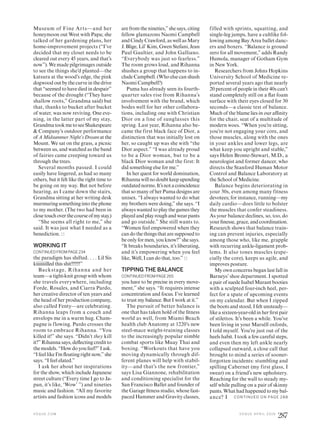
House of MirthWhen her young life started going sideways, MAXINE SWANN
took the cure at her grandparents’ twelve-bedroom manor house
out of a Wharton novel, where eccentricity was embraced.
I
waseighteen,inthethroesof anervousbreakdown,
when I checked myself in to my grandparents’
house in the Berkshires. I had recently graduated
with lying colors from Phillips Academy Ando-
ver, but suddenly I was having trouble doing the
simplest things: walking, talking, reading a menu,
dialing a phone. The world appeared as if in a fog.
I couldn’t see straight; I could barely hear. Other people
loomed as shadowy igures through the mist, approaching
or retreating, nearly always threatening.
It started in the months after graduation. I had decided
to take the year of before college and travel. I knew that I
wanted to be a writer, and in my mind I was beginning my
apprenticeship. I would read and write, explore the world,
workatwhateverjobthatcamealong.FirstIwenttoJuneau,
Alaska. I took a job in the oice of a theater company that
flew around in little planes, performing their shows in re-
mote locales. I found an apartment on the hillside in town
overlooking the water, got a library card. The landscape was
beautiful, even through the constant blur of rain. But I was
spending more and more time alone, reading and writing,
huddled in my apartment. One evening, as I was returning
homefromwork,agroupof dogsambushedmeonthestreet.
One bit me on the inner thigh, leaving deep teeth marks. I
began to feel more and more afraid of going out.
Next I went to London. Through a contact, I found a job
in an upscale restaurant called the River Café. One day, I
was waiting on a large table of businesspeople out to lunch.
They all wanted steak, but each cooked a diferent way. My
ears felt stuffed with cotton; I wasn’t
nostalgia ONE STEP AT A TIME
NATALIA VODIANOVA
AT THE MOUNT, EDITH
WHARTON’S HOME
IN THE BERKSHIRES,
PHOTOGRAPHED BY
ANNIE LEIBOVITZ
FOR VOGUE, 2012.
N OSTA LG IA >1 3 4
V O G U E . C O M
128 V O G U E A P R I L 2 0 1 6
hearing well. I got the orders all wrong and then, confused
at my own mistake, dropped a plate, the warm bloody steak
landing on my foot with a plop. The owners, two women,
gently suggested I rest.
I was feeling more and more jittery, but I didn’t want to go
home, equivalent in my mind to admitting defeat. If I didn’t
stick this out, I would never be a writer. “I just have to rest,”
I told myself. “I just have to get somewhere where I can rest.”
A man I’d been seeing on and of, whom I’ll call Paul, got
in touch. He was on his way to France. Did I want to meet
up? A friend had ofered him a house in the countryside in
Bordeaux. On my way there to meet him, I pictured myself
falling in front of moving cars on the street, out the doors of
the speeding train. I clutched lampposts, guardrails. I even
pictured myself falling when there was nowhere to fall, when
I was simply sitting waiting on a bench.
Paul was a writer himself, ten years older than me, and full
of opinionsabouthowtodoeverything—howtopeelapear,
wear your hair, clean your ears, keep a strict writing regimen,
talktostrangersonthephone,wipeatileloor.Plunginginto
a relationship in my state was overwhelming, and even more
so with a man who intimidated me. I stumbled around the
house, tried to force myself to speak, gave up and took to the
bed, where I lay nearly catatonic, staring out at the vineyards
in their pretty little rows, until Paul inally persuaded me to
get on a plane and ly home.
Nervous conditions run through the family bloodlines,
along with more serious maladies like manic depression. My
grandmother’sgreat-auntCloverHooperAdams,anaccom-
plishedportraitphotographer,wasmarriedtoHenryAdams
and written about by Henry James. (“Clover Hooper has
it—intellectual grace—Minny Temple has it—moral sponta-
neity,”Jameswroteof thetwowomen[Templewashiscousin]
who served as models for his great American heroines, Daisy
Miller and Isabel Archer.) For her part, Clover once quipped
of James’sstyle:“Hechewsmorethanhebitesof.”Whenher
father died, Clover, age 42 and deeply depressed, committed
suicide by drinking developing luid; after spending time in
variouspsychiatricinstitutions,Grandma’ssister,Bunny,was
given a lobotomy—the only way, doctors assured the family,
that she would be able to return home and take care of her
two small children. But not all the stories were tragic. My
great-great-grandfather Ned Hooper, who had a proclivity
toward depression, lived a full life that included a successful
marriage and ive childrenaswellasadistinguishedcareeras
treasurer of Harvard University—before he checked himself
into a psychiatric institute near the end of his life.
Inowfollowedinhisfootsteps,thoughinmycasetheclinic
was my grandparents’ turn-of-the-century twelve-bedroom
manor house just down the road from the
Mount, Edith Wharton’s grand home in
Lenox, Massachusetts. At Cherry Hill, as
the house was called, mental illness wasn’t
shunned—there was no woman in the
attic—but, rather, managed. I was one in a line of many
refugees who showed up at the house in a fragile state and
foundasafehaven.Decadesearlierthearrangementhadbeen
formalized when the founder of the Austen Riggs Center,
the tony psychiatric institution in neighboring Stockbridge,
approachedmygrandparentswithaproposition.Theinstitu-
tionwasexperimentingwithanewprograminwhichpatients
who’d made progress would be sent to live in nearby homes.
Aware of my grandparents’ acceptance, even valorization,
of eccentricity, as well as of their need for money—they had
suffered a great loss of wealth during the Depression and
afterward, due to my grandfather’s spendthrift ways—Dr.
Riggs asked if they’d be interested in housing Riggs’s outpa-
tients during the latter stages of their treatment.
The doctors at Riggs were enamored with Grandma,
whose indirect methods and subtle ways they thought of as
wonderfully creative. “They were all just so peculiar that you
immediately felt that you were OK,” Sally Begley, a Riggs
outpatient who became a lifelong family friend, says of the
scene at Cherry Hill. As part of the curative process, Sally
had been enrolled to take care of a baby—my uncle Nick,
as it turned out—and took it upon herself to clean up the
kitchen every night after dinner. Even after she’d returned to
Radclife, she would rush back to the house on weekends to
study; later, she and her new family settled in the cottage at
the bottom of the drive.
My own “cure”was difuse; it was multifaceted. A good
partof itwasthat,whileprovidedmealsandshelter,Iwasleft
tomyowndevices.Aschildren,wehadalwaysvisitedCherry
Hill twice a year—in the summer to sail on the Stockbridge
Bowl, in the winter to ski and celebrate Christmas—but until
this visit, I had never been there on my own. At irst, I just
stayedinmyroomandintheadjacentbathroom,takinglong
baths.Then,tentatively,Ibegantowanderthroughthehouse,
rediscovering childhood wonders. Grandma, who was from
a family of hoarders, was a hoarder herself: Bare lightbulbs
hung from the basement ceiling illuminated rows and rows
of ear trumpets, sewing machines, irons, antiquated micro-
scopes, while in the attic rested the entire estates of ances-
torslonggone—JohnLaFarge
nostalgia
I began to wander through
the house, rediscovering childhood
wonders: John La Farge watercolors,
Whistler paintings, little velvet boxes
stuffed with human hair
TO THE
MANOR BORN
THE AUTHOR’S
GRANDMOTHER
AT THE AGE
OF FOUR.
SafeHaven
C O N TIN U ED O N PAG E 28 6
V O G U E . C O M
JOHNBRIGGSPOTTER/COURTESYOFMAXINESWANN
134 V O G U E A P R I L 2 0 1 6
EDITOR: CHLOE MALLE
FL ASH
I
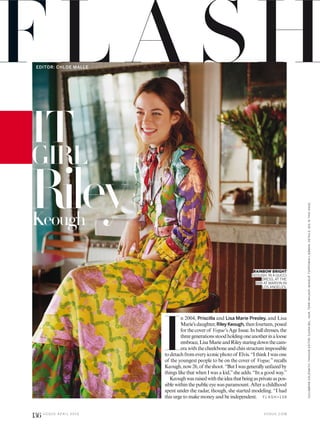
n 2004, Priscilla and Lisa Marie Presley, and Lisa
Marie’sdaughter,RileyKeough, thenfourteen,posed
forthecoverof Vogue’sAgeIssue.Inballdresses,the
threegenerationsstoodholdingoneanotherinaloose
embrace,LisaMarieandRileystaringdownthecam-
erawiththecheekboneandchinstructureimpossible
todetachfromeveryiconicphotoof Elvis.“IthinkIwasone
of the youngest people to be on the cover of Vogue,”recalls
Keough,now26,of theshoot.“ButIwasgenerallyunfazedby
things like that when I was a kid,”she adds. “In a good way.”
Keoughwasraisedwiththeideathatbeingasprivateaspos-
siblewithinthepubliceyewasparamount.Afterachildhood
spent under the radar, though, she started modeling. “I had
this urge to make money and be independent.
Keough
RAINBOW BRIGHT
KEOUGH, IN A GUCCI
DRESS, AT THE
BAR AT MARVIN IN
LOS ANGELES.
ITGIRL
Riley
FL ASH>1 3 8
136 V O G U E A P R I L 2 0 1 6
COLUMBINEGOLDSMITH.FASHIONEDITOR:DJUNABEL.HAIR,TERRIWALKER;MAKEUP,TSIPPORAHLIEBMAN.DETAILS,SEEINTHISISSUE.
V O G U E . C O M
FLASH ItGirl
I saw a friend’s sister model and thought, That’s what I’ll do.
I was twelve.”The plan was to use the money she earned in
front of the camera to put herself through ilm school. At
nineteen,withnoactingexperience,Keoughwentonanaudi-
tion to play Marie, sister of Dakota Fanning’s Cherie Currie,
in the Kristen Stewart–led The Runaways—and she booked
it. “I had no idea what to do,”she confesses. “I’d never been
on a ilm set. To me, acting was what I liked watching, which
was people being human and not too over-the-top.” Last
summer,sheappearedasoneof thewivesinMadMax:Fury
Road—intheprocessmeetingastuntmannamedBenSmith-
Petersen, who showed her around Australia, where the crew
wasdoingreshoots.Lastyearthetwoweremarriedinfrontof
90guestsatCalifornia’sCalistogaRanch.ThebrideworeDel-
phine Manivet and loved the party—but hated the attention.
It’s Keough’s innate unassumingness that makes her per-
formanceinthismonth’sTheGirlfriendExperienceevenmore
compelling.Inthethirteen-episodeStarzseries,inspiredloose-
lybyStevenSoderbergh’s2009ilmof thesametitle,Keough
plays Christine—a law school student who starts working as
anescortandbecomesenthralledwiththemoney,power,and
adrenaline—withacontrol,subtlety,andracinessthatareelec-
trifying. “We wanted to tell the story of this girl who doesn’t
haveaterriblebackground,wasn’tabused,whoendsupdoing
sexwork—whohappenstoalsobeinlawschool,whohappens
to also be really smart.”––MOLLY CREEDEN
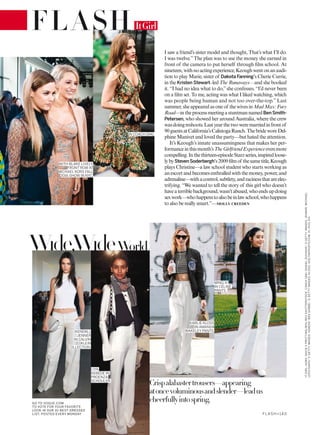
Crispalabastertrousers—appearing
atoncevoluminousandslender—leadus
cheerfullyintospring.
Wıde,WıdeWorld
LIYA
KEBEDE IN
PROENZA
SCHOULER.
MING XI
IN CÉLINE
PANTS.
KENDALL
JENNER
IN CALVIN
KLEIN
COLLECTION.
WITH BLAKE LIVELY,
FRONT ROW AT
MICHAEL KORS FALL
2016 SHOW IN NYC.
IN COACH 1941.
KARLIE KLOSS
IN AMANDA
WAKELEY PANTS.
FL ASH>14 0
ITGIRL:KORS:DAVIDXPRUTTING/BFA/REXSHUTTERSTOCK.COACH1941:DANIELZUCHNIK/©GETTYIMAGES.JENNER:MICHAEL
LOCCISANO/©GETTYIMAGES.KEBEDE:BENGABBE/©GETTYIMAGES.KLOSS:ACE/INFPHOTO.COM.XI:PHILOH.
GO TO VOGUE.COM
TO VOTE FOR YOUR FAVORITE
LOOK IN OUR 10-BEST-DRESSED
LIST, POSTED EVERY MONDAY
H
ave you ever wondered what the other side
of the world looks like? I have—ever since I
was a little girl in my nursery spinning a big
illuminated globe. The farther the better, I
thought: Easter Island, French Polynesia,
Papua New Guinea, New Zealand.
What a pristine place New Zealand is! All tumbling green
hills, and forests thicker than any I have seen. On a recent
visit, I found my childhood fantasies matched again and
again.MyfriendEva-MariaShumanandItookabumpyride
inasingle-engineplaneoverMilfordSound—afjordframed
bywaterfallsthatmadeusgaspinamazement.Wesawsnow-
capped mountains like sugar-coated chunks of Toblerone,
glaciers, and brilliant-green islands dotting the water. It was
no wonder even a seasoned traveler like Rudyard Kipling is
said to have called this place the eighth wonder of the world.
FLASH
For a comparatively small country at the end of the Earth,
NewZealandwasilledtothebrimwithtreats.Aftertouching
downinAuckland,aquaintcityfullof coollittlerestaurants,
cold-press juiceries, and boutiques, we aimed to explore the
famousbeachesalongtheNorthIsland.Despiteintelfromlo-
cal friends, it was hard to choose where to begin: Rangiputa,
Coopers Beach, Ninety Mile Beach, Bay of Islands? In the
end we just hit the road and encountered one stretch of sand
more beautiful than the last.
One afternoon, the sky pouring down with rain, we drove
to the Kawiti glow worm caves and took a tour by lashlight.
We scrambled through stalagmites and past stalactites, and
when the guide switched of his light, we saw thousands of
sparkling glow worms above our heads. Easy to imagine a
Maori princess snuggling up here for her nap.
Next stop was Queenstown on the South Island. A gem
of a town with an alpine vibe nestled on Lake Wakatipu. A
friend of mine, Nina Flohr, who happened to be in the area
with her Kiwi boyfriend, Ben Fisher, invited us camping at a
cabininthemiddleof nowhere.Togettherewedrovealonga
steep dirt track where I kept wondering how Ben was able to
keepthecarfromspillingof themountain.Suddenly,tucked
between green hills were beautiful Lake Luna and a simple
log cabin—nothing else. Ben expertly barbecued a feast and
we sat by the ire, watching the sun slowly disappear behind
the mountain. Just to remind us that nature has a temper, a
sharp gust of wind whipped up, then another.
Eventually our entire barbecue was blown away—and
torrential rains began, a storm raging so violently that
the cabin rattled and I imagined the whole roof would
ly away and then the whole little house. Where will you
take us, Mr. Wind, I wondered . . . ? That adventure is for
another time.
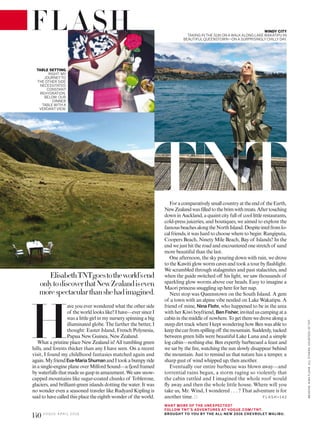
ElisabethTNTgoestotheworld’send
onlytodiscoverthatNewZealandiseven
morespectacularthanshehadimagined.
TABLE SETTING
RIGHT: MY
JOURNEYTO
THE OTHER SIDE
NECESSITATED
CONSTANT
REHYDRATION.
BELOW: OUR
DINNER
TABLE WITH A
VERDANT VIEW.
WINDY CITY
TAKING IN THE SUN ON A WALK ALONG LAKE WAKATIPU IN
BEAUTIFUL QUEENSTOWN—ON A SURPRISINGLY CHILLY DAY.
TNT
FL ASH>14 2
WANT MORE OF THE UNEXPECTED?
FOLLOW TNT’S ADVENTURES AT VOGUE.COM/TNT.
BROUGHT TO YOU BY THE ALL-NEW 2016 CHEVROLET MALIBU.
MEADOW:NINAFLOHR.ALLOTHERS:COURTESYOFTNT.
140 V O G U E A P R I L 2 0 1 6
FLASH
W
estartedwith104,thenitgrewto150 . . .
180 . . .” The former model Noella
Coursaris Musunka is explaining the
origins of the Malaika School in Kale-
buka,asmallvillageinthesoutheastern
corner of the Democratic Republic of Congo, which is cur-
rently in the business of feeding and educating 231 girls—no
small feat in a country where nearly half of school-age chil-
dren are not attending school. Coursaris Musunka was once
ayounggirlintheDRC,butwhenherfatherdied,hermother,
unabletosupportherself andachild,senthertolivewithrela-
tivesinEurope.“WhenIsawmymumafterthirteenyears,she
was like a stranger to me,”she says. “But I’m thankful to her
because she tried to give me a better chance.”
Now Malaika, the foundation that Coursaris Musunka
founded, aims to do the same thing for other girls. At irst
they sponsored orphans, but she and her team quickly saw
the need for something with more impact. “So we built a
schoolfromscratch,”shesays.Whentheconstructionprocess
unearthedthedireneedforwells(“Therewasalmostnoclean
water in the village,” Coursaris Musunka says), they built
ive of them; feeding on the momentum, FIFA sponsored a
community center complete with its own soccer ield. Three
years later the complex serves more than 7,000 people annu-
ally,withclassesinFrenchandSwahiliandprogramstoteach
leadership and entrepreneurship to both youth and adults.
Coursaris Musunka’s career in modeling began when she
moved to London to study English and was scouted on the
street. She continues to live in the city now with her husband
andyoungfamily,buthastransitionedfrommodelingtobeing
amumandCEOfull-time.ShevisitsMalaikaregularly,often
with her kids, JJ (ive) and Cara (almost two), in tow. (“I’ve
been to the Congo thirteen times,” JJ proudly proclaims.)
When she’s not on the ground, Coursaris Musunka Skypes
daily with local staf or texts on WhatsApp. “All of our girls
have a story,”she says. “Take Esther, who was knocked over
by a motorbike and wasn’t coming to school.”It turned out
that her parents couldn’t aford to take her to the hospital, so
Malaika’s staf, after paying a visit to her home, did just that.
“If we had gone there two days later, she would have died.”
Malaika contributes almost 100 percent of donations di-
rectly to the school itself. The result is an organization that is
expanding at the swift pace of a Silicon Valley start-up. This
past winter the school received 50 new computers, and in
Februarytheyconvertedtosolarpower;alibrary,meanwhile,
is currently under construction on the grounds.
Coursaris Musunka sees her work in the Congo as one
importantstepinaseriesof continentalimprovements.“A lot
of people ask if we will open more schools,”she says. “For
me,though,it’saboutonegood-qualityschool—it’sablessing
just to have set it up. I love what I do.”—LILI GöKSENIN
NoellaCoursaris
Musunkaand
herteamof
volunteersare
educating 231girls
intheCongo—
andthat’sjust
thebeginning.
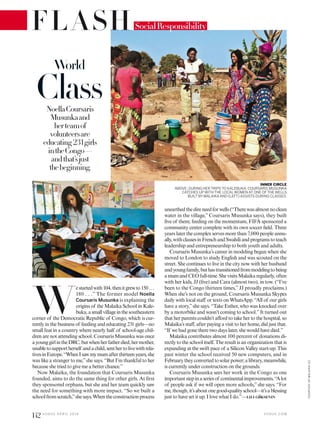
World
Class
INNER CIRCLE
ABOVE: DURING HER TRIPS TO KALEBUKA, COURSARIS MUSUNKA
CATCHES UP WITH THE LOCALWOMEN AT ONE OF THE WELLS
BUILT BY MALAIKA AND (LEFT) ASSISTS DURING CLASSES.
SocialResponsibility
V O G U E . C O M
142 V O G U E A P R I L 2 0 1 6
COURTESYOFMALAIKA(2)
Pamela Golbin, who promises “a chron-
ological frieze of the evolution of men’s,
children’s, and women’s fashion for the
last 300 years”—all of it, including 70
newly conserved pieces never on view
before, displayed for the first time not
behind glass but in the museum’s high-
ceilingednave.“Oneof thebiggestchalleng-
eswe’vealwaysfacedpresentingfashioninamuseumenviron-
ment is that clothes don’t move,”Golbin explained—so she
has worked with the distinguished ballet choreographer (and
director of An American in Paris on Broadway) Christopher
Wheeldon, whohasarticulatedthemovementsof thespecial-
lydesigned“corpsdeballetof mannequins,”ashedescribesit,
and produced short movies featuring dancers from the Paris
Opéra Ballet dressed in translucent copies of the collection’s
clothes.The ilms also indicate the underpinnings that helped
to shape the silhouettes, while suggesting the evolving body
language that the clothes demanded.
thehamishfiles
I
n Los Angeles for Hedi Slimane’s Saint Laurent
show,ItooktheopportunitytoheadtotheLACMA
archives for a behind-the-scenes peek at “Reigning
Men” (April 10 through August 21) with the mu-
seum’s senior costume curator, Sharon Takeda. Five
years in the making, the exhibition celebrates the
evolution of the peacock male from London’s macaronis of
the1770stotheHanna-Barbera–coloredhip-hopof Jeremy
Scott. It wouldn’t have been possible without LACMA’s
acquisition, in 2008, of the 500-piece costume collection
assembled by rival London- and Switzerland-based dealers
Martin Kamer and Wolfgang Ruf—“I marveled at the amaz-
ing cache of eighteenth- and nineteenth-century menswear,”
Takeda said. Subsequent gifts and acquisitions, including a
large1980sand1990sArmaniwardrobe,outrageouslywide-
legged 1920s Oxford bags, and an original 1940s zoot suit,
bring the collection—which will be showcased in an installa-
tionbyL.A.–basedCommune—intothetwenty-irstcentury.
In Paris, meanwhile, the Musée des
Arts Décoratifs celebrates 30 years of
its own costume department by fea-
turing stars from the museum’s aston-
ishing treasury in “Fashion Forward”
(April 7 through August 14), curated by
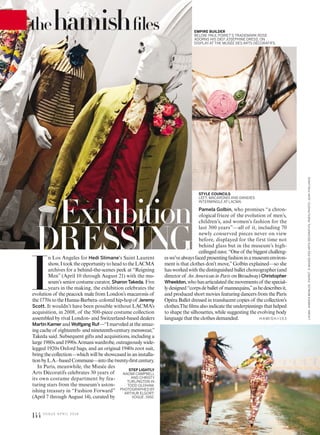
Exhibition
DRESSING
STYLE COUNCILS
LEFT: MACARONIS AND DANDIES
INTERMINGLE AT LACMA.
STEP LIGHTLY
NAOMI CAMPBELL
AND CHRISTY
TURLINGTON IN
TODD OLDHAM,
PHOTOGRAPHED BY
ARTHUR ELGORT;
VOGUE, 1992.
EMPIRE BUILDER
BELOW: PAUL POIRET’S TRADEMARK ROSE
ADORNS HIS 1907 JOSÉPHINE DRESS, ON
DISPLAY AT THE MUSÉE DES ARTS DÉCORATIFS.
HAMISH>1 5 3
144 V O G U E A P R I L 2 0 1 6
LACMA:HAMISHBOWLES.POIRET:©MUSÉEDESARTSDÉCORATIFS,PARIS/PHOTO:JEANTHOLANCE.
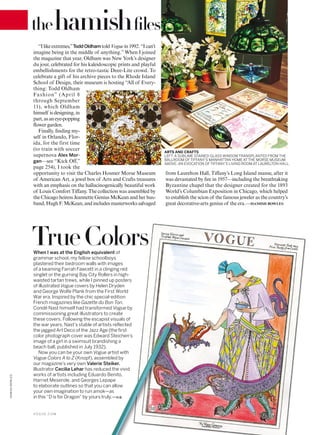
“Ilikeextremes,”ToddOldham toldVoguein1992.“I can’t
imagine being in the middle of anything.” When I joined
the magazine that year, Oldham was New York’s designer
du jour, celebrated for his kaleidoscopic prints and playful
embellishments for the retro-tastic Deee-Lite crowd. To
celebrate a gift of his archive pieces to the Rhode Island
School of Design, their museum is hosting “All of Every-
thing: Todd Oldham
Fashion” (April 8
through September
11), which Oldham
himself is designing, in
part,asaneye-popping
lower garden.
Finally, inding my-
self in Orlando, Flor-
ida, for the first time
(to train with soccer
supernova Alex Mor-
gan—see “Kick Off,”
page 254), I took the
opportunity to visit the Charles Hosmer Morse Museum
of American Art, a jewel box of Arts and Crafts treasures
with an emphasis on the hallucinogenically beautiful work
of Louis Comfort Tifany. The collection was assembled by
the Chicago heiress Jeannette Genius McKean and her hus-
band, Hugh F. McKean, and includes masterworks salvaged
When I was at the English equivalent of
grammar school, my fellow schoolboys
plastered their bedroom walls with images
of a beaming Farrah Fawcett in a clinging red
singlet or the gurning Bay City Rollers in high-
waisted tartan trews, while I pinned up posters
of illustrated Vogue covers by Helen Dryden
and George Wolfe Plank from the First World
War era. Inspired by the chic special-edition
French magazines like Gazette du Bon Ton,
Condé Nast himself had transformed Vogue by
commissioning great illustrators to create
these covers. Following the escapist visuals of
the war years, Nast’s stable of artists reflected
the jagged Art Deco of the Jazz Age (the first
color photograph cover was Edward Steichen’s
image of a girl in a swimsuit brandishing a
beach ball, published in July 1932).
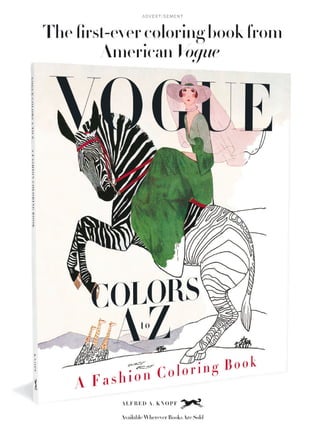
Now you can be your own Vogue artist with
Vogue Colors A to Z (Knopf), assembled by
our magazine’s very own Valerie Steiker.
Illustrator Cecilia Lehar has reduced the vivid
works of artists including Eduardo Benito,
Harriet Meserole, and Georges Lepape
to elaborate outlines so that you can allow
your own imagination to run amok—as
in this “D is for Dragon” by yours truly.—H.B.
TrueColors
from Laurelton Hall, Tifany’s Long Island manse, after it
was devastated by ire in 1957—including the breathtaking
Byzantine chapel that the designer created for the 1893
World’s Columbian Exposition in Chicago, which helped
to establish the scion of the famous jeweler as the country’s
great decorative-arts genius of the era.—HAMISH BOWLES
ARTS AND CRAFTS
LEFT: A SUBLIME STAINED-GLASS WINDOW TRANSPLANTED FROM THE
BALLROOM OF TIFFANY’S MANHATTAN HOME AT THE MORSE MUSEUM.
ABOVE: AN EVOCATION OF TIFFANY’S LIVING ROOM AT LAURELTON HALL.
thehamishfiles
V O G U E . C O M
HAMISHBOWLES
ANNIE LEIBOVITZ
Overfourandahalfdecades,AnnieLeibovitzhasrefinedtheartof
portraitureinimagesthatareprofound,provocative,andrevelatoryofthe
timeswelivein.HerphotographsforAmericanVogueandVanityFair,
andforbooksandexhibitions,havebroughtusanextraordinaryrangeof
subjectsfromthemostcelebratedtothemosthumble.In“Women,”an
exhibitionthatopenedattheCorcoranGalleryofArtinWashington,D.C.,
sixteenyearsago,Leibovitz’slenscapturedfemaleSupremeCourtjustices,
senators,artists,athletes,maids,mothers,businesswomen,comedians,
actors,architects,andsoldiers.
Amplifyingthatphenomenalbodyofwork,Leibovitz,withexclusive
commissioning partnerUBS,presentsthe2016travelingexhibition
“WOMEN:NewPortraits.”Tencities—London,Tokyo,SanFrancisco,
Singapore,HongKong,MexicoCity,Istanbul,Frankfurt,NewYork,and
Zurich—arehostingthephotographer’sresponsetochangesintheroles
ofwomen,presentingimagesfromtheoriginalprojectalongsiderecent
subjects,allofwhomtouchourlivestoday.
“WOMEN:NewPortraits”
ThePresidio’sCrissyField,649OldMasonStreet,SanFrancisco,CA94129
March25toApril17,2016
Monday–Sunday10:00A.M.–6:00P.M.,Friday until8:00P.M.
www.ubs.com/annieleibovitz
#WOMENxUBSby#AnnieLeibovitz
WOMEN:NEWPORTRAITS
V O G U E . C O M V O G U E A P R I L 2 0 1 6
155
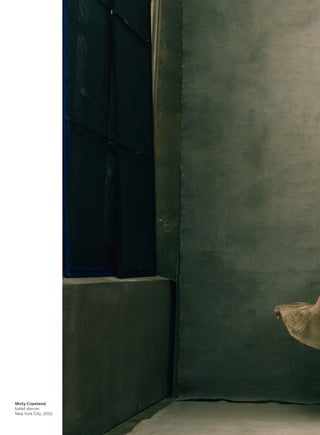
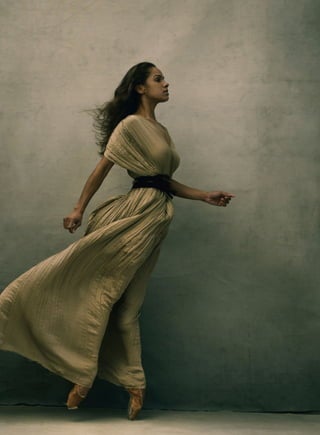
Misty Copeland,
ballet dancer,
New York City, 2015.
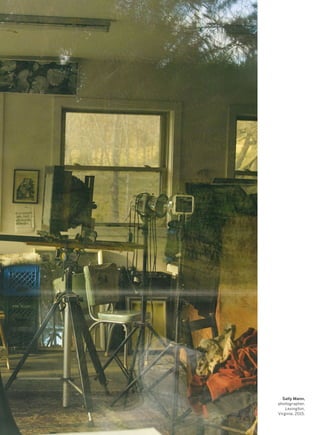
Sally Mann,
photographer,
Lexington,
Virginia, 2015.
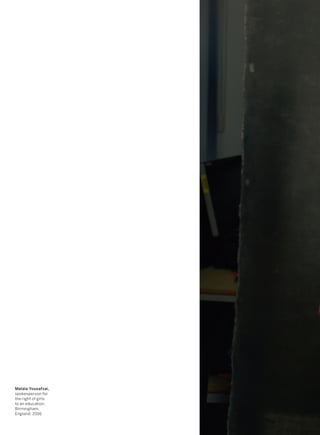
Malala Yousafzai,
spokesperson for
the right of girls
to an education,
Birmingham,
England, 2016.
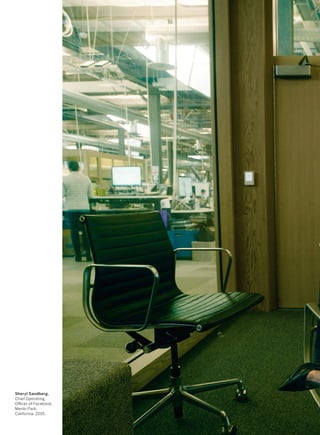
Sheryl Sandberg,
Chief Operating
Oicer of Facebook,
Menlo Park,
California, 2015.
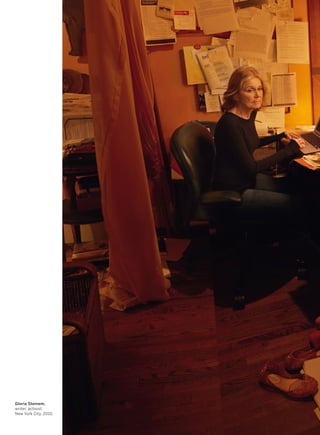
Gloria Steinem,
writer, activist,
New York City, 2015.
R
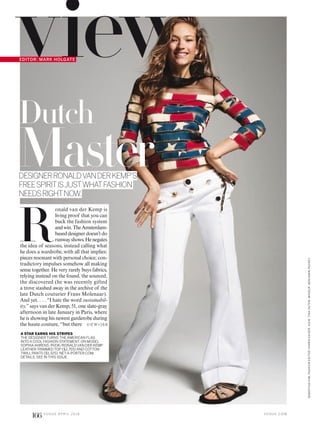
onald van der Kemp is
living proof that you can
buck the fashion system
andwin.TheAmsterdam-
based designer doesn’t do
runwayshows.Henegates
the idea of seasons, instead calling what
he does a wardrobe, with all that implies:
pieces resonant with personal choice; con-
tradictory impulses somehow all making
sense together. He very rarely buys fabrics,
relying instead on the found, the sourced,
the discovered (he was recently gifted
a trove stashed away in the archive of the
late Dutch couturier Frans Molenaar).
And yet. . . . “I hate the word sustainabil-
ity,”says van der Kemp, 51, one slate-gray
afternoon in late January in Paris, where
he is showing his newest garderobe during
the haute couture, “but there
A STAR EARNS HIS STRIPES
THE DESIGNER TURNS THE AMERICAN FLAG
INTO A COOL FASHION STATEMENT. ON MODEL
SOPHIAAHRENS: RVDK/RONALD VAN DER KEMP
LEATHER-TRIMMED TOP ($2,755) AND COTTON-
TWILL PANTS ($1,325). NET-A-PORTER.COM.
DETAILS, SEE IN THIS ISSUE.
EDITOR: MARK HOLGATE
Master
Dutch
DESIGNERRONALDVANDERKEMP’S
FREESPIRITISJUSTWHATFASHION
NEEDSRIGHTNOW.
VIE W>16 8
V O G U E . C O M
SEBASTIANKIM.FASHIONEDITOR:KARENKAISER.HAIR,TINAOUTEN;MAKEUP,BENJAMINPUCKEY.
166 V O G U E A P R I L 2 0 1 6
is something about being ethical that is very good. I want
to do something on my own terms.”
Inotherwords,heispoliticallycorrectinhispoliticalincor-
rectness. This isn’t the latter-day equivalent of sackcloth and
ashes.VanderKempcollaborateswithlocalartisans—tailors,
theatrical costumers, even furniture makers—to conjure up
clothes loaded with beauty, whimsy, irony, glamour, playful-
ness, and a sense of being lifted out of the ordinary. “I want
to make pieces where you can see that someone has really
touched them,”he says. “I know when clothes aren’t made
with love.”
Currently on ofer are gleaming leather-and-python zip-
pered jackets, a ball skirt in a furnishing fabric that could
be Frans Hals–era but isn’t, and a loor-length
NewAmsterdam
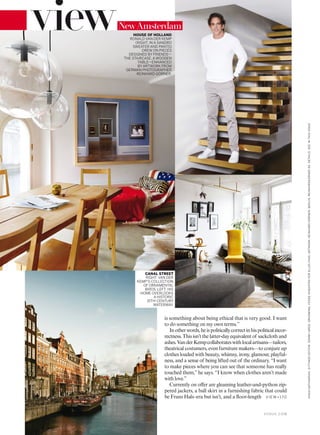
HOUSE OF HOLLAND
RONALD VAN DER KEMP
(RIGHT, IN A SANDRO
SWEATER AND PANTS)
DREW ON PIECES
DESIGNED BY FRIENDS—
THE STAIRCASE, A WOODEN
TABLE—ENHANCED
BY ARTWORK FROM
GERMAN PHOTOGRAPHER
REINHARD GÖRNER.
CANAL STREET
RIGHT: VAN DER
KEMP’S COLLECTION
OF ORNAMENTAL
BIRDS. LEFT: HIS
HOME OVERLOOKS
A HISTORIC
15TH-CENTURY
WATERWAY.
VIE W>170
V O G U E . C O M
KASIAGATKOWSKA.SITTINGSEDITOR:SONNYGROO.GROOMING,FEDDEHOEKSTRAFORELLESFAAS.ARTWORK:REINHARDGÖRNER,BERLIN,REINHARDGORNER.DE.DETAILS,SEEINTHISISSUE.
NewAmsterdam
button-front evening dress with sharp-
ly sculpted shoulders and a whip-thin
belted waist. If you’ve trawled In-
stagram recently, you’ll likely have
spotted girls in van der Kemp’s Jas-
per Johns–esque Stars and Stripes–
appliquédtopsorhisjeansemblazoned
with Old Glory and then accessorized
with an up-cycled fox-fur jacket. Even
if the fabrics are vintage, the look, the
attitude, isn’t.
So no lack of joy or fun, then, in all
of this—and for someone who says he
never had a plan, his label has seemed
to be going according to, well, plan
since its launch in January 2015. (Net-
a-Porter has recently started to get
behind it in a big way as well.) What
van der Kemp creates comes out of
an instinct for the way things should
be these days: not disposable, not
seasonal, not ubiquitous. And he can
do it because his three-decade-long
résumé, which includes Bill Blass
(“the American Saint Laurent”),
Guy Laroche, and Michael Kors–era
Céline, gives him not only technical
expertise but the life experience of
coming up through a system he be-
lieves needs changing.
After nine years in New York, van
derKempmovedpermanentlybackto
the Netherlands in 2014, inding that
his homeland’s relative slowness suited
him perfectly—and when one consid-
erswhatinformshiswork,it’shardnot
to draw parallels with Amsterdam’s
incredible duality of noble history
combined with a blunt stance that re-
lects no niceties. Even his apartment
on the historic ifteenth-century Singel
canal, with its three-plus-centuries-old
exterior contrasted with a very twenty-
irst-century living space, gives a pretty
clear perspective on how the now and
the then can happily coexist. There
is a gleaming gold-trimmed staircase
designed by gallerist Jasper Bode and
furniture crafted by a friend, Bart
Gorter, who is responsible not only for
the monumental wooden dining table
and bookshelves but also for weaving
fabrics for van der Kemp. The space
is dotted with his collection of orna-
mental birds, and he’s quick to point
out, with a wry laugh, the subtext.
“They’re free to ly,”says the designer,
who refuses to be grounded by rules.
—MARK HOLGATE VIE W>172
ROCKS OFF
FROM TOP: ANTHONYVACCARELLO
CROCODILE-SKIN BAG; JUST ONE
EYE, L.A.ALTUZARRA BAG, $2,495;
BARNEYS NEWYORK, NYC.
As summer-festival season begins
to stir, designers across fashion’s
stage have suggested a downright
rocking way of accessorizing:
the guitar-strap handbag.
It started in New York, where,
for spring, Marc Jacobs sent
forth woven straps studded with
bric-a-brac. Joseph Altuzarra has
them for fall, with whipstitched
edges and Axl Rose–esque
paisley-bandanna tie-ons.
(Rose reunites with the
original Guns n’ Roses
lineup at Coachella
later this month.)
European
houses are holding
their lighters high
for the trend as well:
Maria Grazia Chiuri
and Pierpaolo Piccioli at
Valentino propose a turquoise
and metal–studded leash with
a ruglike woven treatment.
Karl Lagerfeld’s Chanel
collection has straps winking
to Jack White’s famous White
Stripes–era Airline guitar.
And at Tod’s, Alessandra
Facchinetti’s bags are
perforated or adorned with
antiqued-silver grommets.
“I was thinking about
Florence Welch, actually,”
says Facchinetti. “She
captures different souls:
a little bit retro, romantic,
and definitely rock-’n’-roll.”
The designs of Anthony
Vaccarello, who debuts
handbags for spring, might
be the most electrifying of the
bunch. Vaccarello admits to a love
of Janis Joplin’s “Summertime” (you
can almost visualize Joplin’s wail in the
hardscrabble flourishes of one particularly
ornate strap, which curls off in croc and
calf tendrils). “I like the way of a woman
when she’s wearing a guitar,” he says.
“She’s a true free spirit.”—NICK REMSEN
Strike
aChord
170 V O G U E A P R I L 2 0 1 6 FOR FASHION NEWS AND
FEATURES, GO TO VOGUE.COM
GORMANSTUDIO.
DETAILS,SEEINTHISISSUE.
WINNING STREAKS
FROM TOP: MODEL LILYALDRIDGE IN A SHIRT
($195), DRESS ($500),AND SWEATER ($150)
FROM LA LIGNE; ALLAT LALIGNENYC.COM.
W
hen you are
tired of stripes,
you are tired of
life!” declares
Valerie Boster,
cofounder of the new fashion brand
La Ligne, paraphrasing Samuel John-
son. That august gentleman was talk-
ing about London, and Boster about
fabric, but the sentiment is the same:
Wonderful things are eternal.
Boster and her coconspirators,
Meredith Melling and Molly How-
ard, may have given a French name
to their direct-to-consumer fashion
company, but to my mind their proj-
ect is distinctly American: a line—a
ligne!—of clothing with nothing over
$550,everythingmadeof theinestma-
terialsandwithaferociousattentionto
detail, and all of it available only from
its own Web site or Net-a-Porter. The
inaugural 50-piece collection includes
an irresistible light suit; a phalanx of
work-to-weekend trousers, shirts, and
shirtdresses; even a basket embellished
with a wide white bar.
“Youknowthosesixpiecesyouhave
in your closet that are pretty much the
onlythingsyouwear?”Bostersays.“We
wanttobeoneof thosesixthings——”
Melling cuts her off: “We want to be
all six!”
Though she and Boster have
been obsessed with stripes for
years, La Ligne has a rather looser
interpretation—sometimes the stripes
are full-on, as in a faithful homage
to the French marinière (the pullover
beloved of Jean Genet and Jean Paul
Gaultier); other times
Fine
LINESHOWYOURSTRIPESINLALIGNE,
ANEWCHIC-ESSENTIALSLABEL.
VIE W>174
MATTHEWSPROUT(3)
172 V O G U E A P R I L 2 0 1 6
CRAFT
Work
The Spanish house of Loewe may be
built on exquisite leather craftsmanship,
but it is creative director Jonathan
Anderson’s obsession with the
Bloomsbury Group that has given his
latest endeavor—a splashy seven-piece
furniture project showcasing during
this month’s Salone del Mobile in
Milan—its particular verve. “There’s such a sense of realness to it,” says
Anderson, who hand-selected the antiques, now enlivened with bright
leather marquetry landscapes and wildlife, and oversaw the design
of other new pieces. “It’s made by real people, not machines.” Carp
swim across wooden Japanese screens, and an imposing pine-green
wardrobe (an original from the storied British furniture shop Heal’s) is
emblazoned with a collaged sixties scarf print from the Loewe archive.
“I wanted genuinely positive symbols—things that simply feel light and
pleasant,” Anderson says. Two M. H. Baillie Scott–style chairs are given Pop
Art presence with graphic stripes (Anderson has five of the original chairs
in his East London house). And though these witty objets will undoubtedly
find good homes, a vibrant capsule of notebooks and pouches will be
available in-store. “Craft is something engineered by silent hands,” says
Anderson, who is also launching a Loewe Foundation prize for craft this
month. “It’s about both newness and tradition.”—EMMA ELWICK-BATES
DECORATIVE ARTS
RIOTOUS COLOR COMBINES
WITH JOLLY INTARSIATO
SAY,“WELCOME HOME.”
RIGHT: THE DESIGNER,
PHOTOGRAPHED BY COLIN
DODGSON. VOGUE, 2015.
they turn up as subtle white lines encir-
cling the neckline of a perfect sweater
or dancing down the seam of a trouser.
In a world where more and more
women want to buy what they see when
they see it, endeavors like La Ligne are
on the cutting edge of fashion’s future.
The site will show the clothes on profes-
sional beauties and other professionals,
including Joan Smalls, Lily Aldridge,
and Dianna Agron, while sharing their
candid backstories (shoppers are invited
to share their stories, too—a resolutely
informal approach with an eye toward
building a community beyond mere
commerce). There are also practical ad-
vantages to running your business like
this: If, say, a particular pant is a big hit,
the company can keep making it in dif-
ferent colors and materials—as long as
people are still interested in a product,
well, then, so is La Ligne!
Boster and Melling were both Vogue
editorsuntiltheystruckoutontheirown
two years ago with La Marque, a styling
and fashion-consulting venture. (How-
ard was an investment banker and an
executive at Rag & Bone before joining
La Ligne as CFO.)
Despite the dream that all your
clothes—everyday!—willsportLaLigne
labels, the three know that in truth you
willpairtheseitemswithyourownjeans,
your own leather jacket, your favorite
Stan Smiths. And though they will be
happy to share info on where to procure
these iconic non–La Ligne items, they
are not fools. “You won’t be able to click
out of our site,”Boster says, laughing.
Melling says that they are determined
to inject a bit of insouciance—“a cer-
tain irreverent human touch.” So, for
example, traditional monograms are
slashed with a diagonal line to echo the
way you’re friendly with your personal
stationery. “Soullessness doesn’t do very
well these days,”Boster avers, summing
up La Ligne’s credo. Or, as another Brit-
ish author, E. M. Forster, put it: “Only
connect.”—LYNN YAEGER
Keeping It Real
INAWORLDWHERE
SHOPPINGISCHANGING
EVERYDAY,LALIGNEIS
ONTHECUTTINGEDGE
OFFASHION’SFUTURE
V O G U E . C O M
STILLLIFES:COURTESYOFLOEWE.DETAILS,SEEINTHISISSUE.
174 V O G U E A P R I L 2 0 1 6
OVER THE COURSE OF THE LAST CENTURY, HAIR’S MOST MEMORABLE
MOMENTS HAVE HAD THEIR ROOTS IN VOGUE.
1 A MODEL WEARING A ROLLED COIF, PHOTOGRAPHED BY EDWARD STEICHEN, 1936. 2 RENE RUSSO,
PHOTOGRAPHED BY FRANCESCO SCAVULLO, 1975. 3 KARLIE KLOSS, PHOTOGRAPHED BY PATRICK DEMARCHELIER, 2014.
4 COCO ROCHA, PHOTOGRAPHED BY PATRICK DEMARCHELIER, 2009. 5 VERUSCHKA, PHOTOGRAPHED BY
FRANCO RUBARTELLI, 1968. 6 A MODEL IN A VELVET BOW, PHOTOGRAPHED BY KAREN RADKAI, 1957.
H I S TO R Y O F
1
2
3
4
5
6
1
3
2
67
1 A MODEL IN PIN CURLS, PHOTOGRAPHED BY JOHN RAWLINGS, 1938. 2 PIXIE-
HAIRED MODELS, PHOTOGRAPHED BY ARTHUR ELGORT, 1993. 3 MURIEL
MAXWELL, PHOTOGRAPHED BY HORST P. HORST, 1939. 4 MODELS IN COILED
UPDOS, PHOTOGRAPHED BY JOHN RAWLINGS, 1945. 5 DOUTZEN KROES,
PHOTOGRAPHED BY PATRICK DEMARCHELIER, 2013. 6 A MODEL IN AN
ASYMMETRICAL BOB, PHOTOGRAPHED BY BERT STERN, 1966. 7 MODELS
IN CANDY-COLORED WIGS, PHOTOGRAPHED BY BERT STERN, 1969.
As social and political
changesweptthenation,a
modern woman emerged
in the twenties. The Nine-
teenth Amendment inspired the embrace of
newfound freedoms, and liberated sufragettes
lopped of the long hair that deined their Vic-
torian sensibilities. With closely cropped Vogue
style stars like Coco Chanel and Louise Brooks
leading the charge, short styles like THE BOB
came into focus.
The Jazz Age gave way to the
Great Depression, and MARCEL
WAVES relaxed into carefully
rolledcurlsasAmericanssoughttoescapereality
throughradio,swingmusic,andthesilverscreen.
Hairstyles remained sleek at the crown and
outwardly voluminous, making PIN CURLS
swept into tailored updos a coiing ixture. The
world would go to war at the end of the decade,
but Vogue encouraged continued dedication to
time-honored beauty rituals. “Women don’t
stop being women even in war-time,” declared
theVogue’s-EyeViewsectioninNovember1939.
With World War II chiely
defining the early forties
and Rosie the Riveter
inspiring women to join
the workforce, hairstyles remained tailored but
utilitarian. VICTORY ROLLS ofered a practi-
cal solution to manicured manual labor. Come
1946, Vogue would declare that it was all about
“hair worn faceward,”adding an appealing de-
tail to shoulder-sweeping hair, which became the
length of the moment.
Enter the era of the ULTRAFEMI-
NINE COIF. The rise of on-screen
starlets like Audrey Hepburn and
Elizabeth Taylor upped the attainable glamour
quotient, with DEFINED SETS inding their foil
in more youthful PONYTAILS—both of which
provided the perfect canvas for omnipresent
headgear. Vogue enforced hats and hair accesso-
ries as the must-have accoutrements of the day,
while updated styling products hit the market.
Social and politi-
cal change mani-
fested themselves
inthehairstylesof
the sixties. SLEEK
AND STRAIGHT
became the sought-after look for many, with
mod crops inspired by Twiggy and Barbra Strei-
sand gaining traction across the country. Wom-
en also began experimenting with exaggerated
height and volume for the irst time in decades,
as styles like the BEEHIVE and the backcombed
HAIR FLIP came into fashion. Amid the dawn
of the celebrity hairstylist, new techniques and
avant-garde shapes pushed the boundaries of
styling,depictedbyFrancoRubartelli’s1967and
1968imagesof Veruschkainthepagesof Vogue.
’20s
’40s
’60s
’30s
’50s
4
5
V O G U E A P R I L 2 0 1 6
187
1 A MODEL WITH
FEATHERED HAIR,
PHOTOGRAPHED
BY GIANNI PENATI,
1971. 2 REDHEAD
KATE DILLON AND A
GAMINE JAIME RISHAR,
PHOTOGRAPHED BY
ARTHUR ELGORT, 1993.
3 KELLY EMBERG,
PHOTOGRAPHED BY
ARTHUR ELGORT, 1980.
4 SASHA PIVOVAROVA,
PHOTOGRAPHED
BY PATRICK
DEMARCHELIER, 2010.
5 KARLIE KLOSS,
PHOTOGRAPHED BY
DAVID SIMS, 2013.
The rebellious nature of the seventies inspired
a new way of thinking. Women began let-
ting their hair down, quite literally. Cue the
embrace of natural textures and center-parted, impossible
lengths—or FREE-MOVING HAIR, as Vogue called it in 1977,
when wispier SHAG styles also abounded. The era’s beauty
icons, like Jane Birkin, Lauren Hutton, and Farrah Fawcett,
gave women license to pull back from high-maintenance,
professionally coifed looks and embrace their unique hair
qualities instead. Even the decade’s popular rock stars opted
for hair with softness and simplicity.
In the eighties, the brows were big and
the hair was bigger, fostering such
styles as FEATHERED BANGS and
NEW-WAVE PERMS. A fresh crop of
supermodels also introduced a new
generation to hair-hero worship. When Brooke Shields
graced the cover of Vogue in 1980, her steely gaze set for-
ward from a barrage of HIGH-VOLUME HAIR inspired
endless imitation. And for women who disliked the decade’s
full silhouette, there was the PUNK PIXIE popularized by
musical muses like Madonna and Annie Lennox.
Linda Evangelista picked up the torch for
the gender-bending TOMBOY CROP in
the nineties, when an obsession with an-
drogyny emerged alongside more unkempt grunge styles.
Linda wasn’t the only one-name wonder with inluence.
The decade belonged to the dream team made famous by
Vogue: Cindy, Naomi, Claudia, Christy, and Kate, whose
chameleon-like prowess reigned alongside cultural phe-
nomena like Jennifer Aniston. Named after her character
on Friends, Aniston’s layered look THE RACHEL was a hit
at salons nationwide.
TV and film sirens continued to dictate
trends into the aughts as actresses like San-
dra Bullock, Sarah Jessica Parker, Gwyneth
Paltrow, and Reese Witherspoon won Vogue covers and
beauty obsessives’ hearts. Their collective preference for
efortlessly undone yet perfectly polished strands inspired
the SLEEK BLOWOUT, which enjoyed decade-long favor.
’70s
’90s
’00s’80s
2
3
1
4
5
V O G U E . C O M
190 V O G U E A P R I L 2 0 1 6
Today, women are
more individualistic
than ever, and hair
has become a major
form of self-expres-
sion. With social-
media stars driving
beauty trends, the
pagesof Voguearein-
creasingly illed with
PERSONALIZED
CUTS and NATURAL
TEXTURE, whichoferwomenawaytotakeownershipof theirhairdes-
tiny. There is also a growing focus on lexibility with length as women go
longer or shorter, quicker. What’s new is now in the hands of the people.
What’s now continues to be in Vogue.
1 IMAAN HAMMAM, PHOTOGRAPHED BY ANGELO PENNETTA, 2014. 2 GRACE
HARTZEL, PHOTOGRAPHED BY PATRICK DEMARCHELIER, 2015. 3 LINEISY MONTERO,
PHOTOGRAPHED BY PATRICK DEMARCHELIER, 2015. 4 MODELS WITH VARIED HAIR
COLORS, PHOTOGRAPHED BY PATRICK DEMARCHELIER, 2015. 5 MAARTJE VERHOEF
(LEFT) AND LUCKY BLUE SMITH, PHOTOGRAPHED BY PATRICK DEMARCHELIER, 2015.
1
2
4
3
5
New&
Next
V O G U E . C O M
Flash
L
ast May, Pat McGrath found herself in an
unusual predicament: She was running out
of gold. The supply of theatrical gold pig-
ment she had sourced in bulk two decades
earlierduringaninternationalexploitasone
of the world’s most-wanted makeup artists
was dwindling. “I started to panic,”she ad-
mits, growing momentarily wistful about the precious fairy
dust that is one of her many calling cards. But a fortuitous
triptoalaboratoryinanundisclosedlocationwouldeaseher
anxiety. “I’d never seen anything so beautiful ever in the his-
toryof makingmakeup,”McGrathsays.Thegildeddiscovery
would become Gold 001, the molten metallic liquid-powder
mixture heard round the Internet that she
Drive
GLISTEN UP
CAMERON RUSSELL
IN A CALVIN KLEIN
COLLECTION DRESS AND
TIFFANY & CO. EARRINGS.
PHOTOGRAPHED BY
JASON KIBBLER. SITTINGS
EDITOR: EMILIE KAREH.
PatMcGrath,
theforce
behindsome
offashion’s
mostdirectional
beautylooks,
ischarting
anothercourse—
offtherunway
andintoyour
makeupbag.
B E AU T Y>1 9 6
BeautyEDITOR: CELIA ELLENBERG
V O G U E . C O M
HAIR,JORDANMFORBUMBLEANDBUMBLE;MAKEUP,PATMCGRATH.DETAILS,SEEINTHISISSUE.
194 V O G U E A P R I L 2 0 1 6
London, she vividly remembers customizing products with
hermother,whohadahardtimeindingmakeupshadesthat
worked well on black skin. “She would quiz me on diferent
eyeshadows,standinginfrontof thetelevisionwiththreekids
screamingather,refusingtomoveuntilwetoldherwhatnew
productshewaswearing,”saysMcGrath.Theseearlyexperi-
encestrainedhertothinkoutsidethebeautybox,anditisthis
inclinationtowardinventionthatirstbroughthertothe
attention of the rule-breaking British magazines
of theeightiesandnineties(TheFace,Blitz,and
i-D)andthateventuallyearnedherworldwide
name recognition.
Those who know McGrath’s work well
know that fresh, dewy skin is as much her
signature as Swarovski crystal–encrusted
lipstick or feather-fringed eyelashes. She
calls this incandescent complexion quality
Aliengelic:anotherworldly,ethereallookyou
canachieveonlybylayeringhighlighters,rath-
er than relying on one, “strobing”-friendly light
relector. Start with the creamy il-
luminating end of the dual-ended
stick in her new Skin Fetish 003
kit, she instructs; then blend with
thenutrient-richbalmontheother
side, using your ingers. “The real
secret is the system,”she says. The
componentsof thekitcanbeused
together or alone. It also includes
a Buffer brush and a gel-hybrid
pigment,availableintwoshades—
Iridescent Pink 003 (a prismatic
ivory) and Fine Gold 003 (a pale
champagne)—that, when swept
on top of cheekbones, along
clavicles, or onto eyes, imparts a
high-impact shine. “It’s a fun new
waytoshowwomen—andmen—
how to use shimmer.”
With her sights set on a full-
brand launch in 2017, McGrath is
not just making products. For the
irsttimeinherstoriedcareer,she’s
engagedinadialoguewiththecus-
tomers who have long sought to
emulate her techniques. The re-
lationship is mutually beneficial.
“The feedback I am hearing is
really rewarding,”says McGrath,
who sees beauty through “movement and life and energy,”
ratherthansomethingmoreone-dimensional.Andif thisnew
discourseinspiresprofessionalsandamateurstointerprether
madcappigmentsintheirownuniqueways?“That,”shesays,
“inspires me.”—CELIA ELLENBERG
BeautyMakeup
teased on lips at Prada’s spring show before revealing it to
the public in a flash InstaMeet at the Tuileries in Paris in
September. Released in a quantity of 1,000 on her Web site
a month later, Gold 001 was the beginning of a social-media
phenomenon that would become Pat McGrath Labs.
“To be able to do something like that, to make a product,
putitout,andalmosttalkdirectlytothepublicisreallyexcit-
ing,”McGrath says, turning the conversation toward
Phantom 002, another limited run of highly satu-
rated, handmade jewel-tone pigments, which
was similarly shrouded in mystery when it
launchedinDecember—andgonealmostas
soonasitarrived.(Thefour-colorPhantom
002 kit is currently fetching close to $350
oneBay.)It’sallpartof anunconventional
launch strategy for “Labs”—as she calls
her irst-ever solo venture following more
than three decades in the industry—which
is not dependent on seasonal calendars. In-
stead, McGrath relies on Instagram teaser vid-
eos, #swatchporn product demos,
and fan art to “see if people will
be as obsessed with a product”as
sheis.Andtheyhavebeen.“When
I’vecreatedsomethingthatIknow
people can get excited about and
really want,”she says, “that is the
right time to put it out.”
The opportunity to act on
that foresight is a recent develop-
ment.“Before,wheneveranybody
spoke to me about doing my own
beauty line, it had to be this way,
and you had to start in this store,
and then you had to wait so many
years, and then you would slowly
roll out to here. It just felt . . . pre-
dictable,”says McGrath, who has
been global creative design direc-
tor of P&G Beauty since 2004
(in addition to innumerable stints
developing successful color col-
lections for brands like Giorgio
Armani, Dolce & Gabbana, and
Gucci). She began to see a difer-
ent path with the proliferation of
platformslikeYouTubeandInsta-
gram,whichhavebeenfanningthe
lamesof ourcollectivefascination
with makeup and its creative application. “There’s a whole
new world out there now,”she says. “No one wants predict-
able”—least of all major retailers, who are as smitten with
LabsasMcGrath’slegionsof followers.Nextmonth,shewill
launch her irst to-scale product at Sephora and on her Web
site, releasing 25,000 kits of a three-part highlighting system
called Skin Fetish 003 after test-running it at the fall shows.
The backstage guru—who is rarely out of her all-black
uniform, accessorized with a thick black headband—is a
borninnovator.RaisedinNorthampton,afewhoursoutside
VISUAL EFFECTS
FROMTOP:THE SKIN FETISH 003 KITBYPATMCGRATH LABS
SHIMMER PIGMENTIN IRIDESCENTPINK 003,AND SHINYSTICK
HIGHLIGHTER + BALM DUO IN GOLDEN.ALUMINOUS GEMMA
WARD,COURTESYOFMCGRATH’S DEFTHAND.PHOTOGRAPHED BY
STEVEN MEISEL,VOGUE,2006.
B E AU T Y>1 9 8
V O G U E . C O M
196 V O G U E A P R I L 2 0 1 6
STILLLIFES:LUCASVISSER
Beauty
A
steady rain falls outside the shoji-paper slid-
ingdoorsof adimlylitroomontheoutskirts
of Kyoto.Theafternoon’skimono-cladhost
is kneeling on a tatami mat and demonstrat-
ing a series of precise movements passed
down for generations. In serene silence, she pours hot water
over a scoop of matcha powder and whisks the mixture
into a froth. Then, readying her hishaku,
a bamboo ladle, she ills a steaming cup
of a creamy, bitter beverage for me to sip
while I reflect on the tradition-soaked
simplicity of the experience.
The painstaking preparation of a Jap-
anese tea ceremony is enough to make
your to-go cup of morning coffee feel
Philistine. But it’s the elevated ingredi-
entsattheheartof theseancientritesthat
inspire the most enduring fascination.
While all teas come from the same Ca-
mellia sinensis plant, I learn, not all of
them warrant an hours-long ritual—let
alonetheirveryownperfumelinefromJo
MaloneLondon.TheU.K.-basedbrand’sfragrancedirector,
Céline Roux, participated in a number of similar ceremo-
nies while workshopping Rare Teas, the company’s newest
stand-alonecollectionof scents.Althoughthesixvariations
(basedonDarjeeling,SilverNeedle,senchaJadeLeaf green,
Oolong, Midnight Black, and Golden Needle teas) have
beenconceivedof independentlyfromthecompany’sBritish
heritage–inspired eaux, the idea isn’t too much of a depar-
ture: “Tea is so English,”says Roux, who has, in the past,
spun Anglicized strains of Assam and Earl Grey into per-
fumestingedwithfamiliaressencesof milk,lemon,ormint.
Roux’s deepening appreciation for tea eventually led her
down back alleys in China and up isolated village tracks
in the Himalayas as she searched for hard-to-ind leaves.
Often hand-harvested once a year at pre-
cipitous elevations and carefully dried in
the sun, they can fetch more money per
ounce than gold. To preserve the ephem-
eral flavors of these rare varietals, they
are brewed in alcohol—yes, brewed—in
an industry-first infusion process em-
ployed by perfumer Serge Majoullier,
rather than re-created with synthesized
accords. “There wouldn’t be as much
of an art in that,” says Majoullier, who
complemented the individual elixirs with
harmonious secondary notes: jasmine,
freesia, and apricot to bring out Darjeel-
ing’s floral sweetness; sandalwood and
resinousleatherstohighlightGoldenNeedle’smellowspice.
The prolonged immersion also imparts a touch of color to
the range’s oversize clear-glass bottles, yielding watercolor
hues in shades like peach, celadon, and tourmaline. If you
can’t seem to settle on just one, the kaleidoscopic effect
makes owning a full set an entirely enticing proposition.
—CELIA ELLENBERG
JoMaloneLondon’sdeliciouslyrefinednewfragrancelineissteepedintraditionsofsensualsipping.
TEATIME
SOURCE MATERIAL
EACH SCENT IS INFUSED WITH A RARE
TEA VARIETAL. FROM LEFT, MIDNIGHT
BLACK, JADE LEAF, AND SILVER NEEDLE.
Fragrance
B E AU T Y>20 0
GRANTCORNETT.PROPSTYLIST,JOJOLI.STILLLIFE:LUCASVISSER.
BeautyHealth
L
ast summer, while vacationing in the White
Mountains of New Hampshire, I emerged
from the cool, pristine lake to stretch out
on the dock. As I lay back, dripping wet, on
thesun-heatedboards,Icaughtaglimpseof
the slight ruling of the skin on my thighs
that, along with many other signs of aging,
intensiied with every passing year. I glanced over at my sun-
bathing summer neighbor, a tanned and toned competitive
athlete around my age. She rose from the dock, sleekly lean,
almost all muscle in her racing-back maillot. As she dove
into the water, I saw that she, too,
had orange-peel skin. I had been
watching her with detached envy,
but now I felt perversely relieved.
According to Jeremy Green,
M.D., a Miami dermatologist,
more than 90 percent of women
havecellulite.It’scausedbygenet-
ics, hormones, and skin structure.
“Cellulite can start any time after
puberty,”Amy Wechsler, M.D., a
NewYorkdermatologist,tellsme.
“I see it often in 20-year-olds.”
Celluliteisfrequentlymistakenfor
a lumpy, puckered expression of
body fat. But the dimples are ac-
tuallycausedbyibrousstrandsof
connectivetissuecompressingthe
subcutaneous layer of fat, which
tends to concentrate in the thighs
and buttocks of even the most
slender women. Green likens the
efect to a tufted sofa.
Sincemyownindentationsirst
surfaced, around fifteen years
ago, I’ve resigned myself to their
permanence. Treatments such as caffeine creams, scrubs,
wraps, myofascial massages, and vitamin injections can pro-
vide a temporary improvement in appearance, but none of
them confers any long-term solution. Losing weight reduces
the fat but, alas, not the dimples, which are caused by the
ishnet-stocking-like structure of the connective tissue itself.
Stayinginshapedoesn’tpreventorbanishcellulite;mycondi-
tion had persisted, despite my twice-weekly Pilates practice
and conscientiously nutritious diet.
Every spring, I admire the gazelles I see stepping out of
taxis in their abbreviated skirts and dresses, their skin “as
luminous as the inest of seashells,”in the words of the great
sensualist Anaïs Nin. I recall with nostalgic appreciation
the days I’d stride the city streets in summertime, taking
backward glances for granted. At 53, I’ve long retired my
short,frothyskirts,evenonthehottestdays.Inaboutiquelast
summer,IwastemptedbyaLisaMarieFernandezone-piece
bathing suit with a zip front, cut daringly high on the thighs,
but reluctantly bought a less revealing one.
Acceptance recently gave way to hope, however, when I
heard about a new technique called Cellina, FDA-approved
since 2014. The first of its kind, using a tiny blade to per-
manently sever the bands of connective tissue, it promised
to address the underlying cause of cellulite, not simply its
appearance. In a clinical study, 55 patients underwent a
single treatment. Two years later,
independent physician evaluators
declared improvement in the ap-
pearanceof cellulitein98 percent
of those treated.
“It’s the first thing that’s
worked,” says Daniel R. Foitl,
M.D., a Manhattan dermatolo-
gist.Thedownside,headds,isthat
theprocedure,whichcostsaround
$5,000, doesn’t remove any fat.
“I sometimes tell patients they
need liposuction or CoolSculpt-
ing,” he says. Wechsler sounds
another note of caution: “Cell-
ina is painful and causes swelling
and bruising,”she says. “It is not
a ‘lunchtime’treatment.”
To learn more, I make an ap-
pointment with dermatologist
Michael S. Kaminer, M.D., who
was one of a team of three doc-
tors who developed the proce-
dure; he regularly performs it at
his Boston area practice.
In a well-lit consultation room,
Kaminer examines my skin. “You have between ten and 20
dimplesperside,”hetellsme,“andveryfewripples.Thatmakes
youaperfectcandidate.”Ismile,oddlypleased;I’veneverimag-
ined I’d ind myself happy to have the “right”kind of cellulite.
As Kaminer explains, “With a lot of dimples, over 50 per side
maybe, there is a point beyond which it really just isn’t worth
it. It doesn’t fix skin laxity. And it doesn’t work on longer
horizontal lines, only shorter ripples and discrete dimples.”
Cellina originated as a less-invasive iteration of a com-
mon treatment for pitted acne scars. Kaminer describes its
elegant simplicity: On numbed skin, an iPhone-size suction
cup lifts and stretches each dimple, and then a tiny blade per-
forms a subcision to release the connective bands. The bands
fall apart, and the skin floats up again,
A LEG UP
THE PROCEDURE DOESN’T REMOVE
FAT BUT INSTEAD DESTROYS THE CONNECTIVE
TISSUE THAT CAUSES PUCKERING.
RippleEffect
KateChristensentakestheplungewitharadicalnewtreatmentforcellulite.
B E AU T Y>20 6
BILLBRANDT©BILLBRANDTARCHIVE
200 V O G U E A P R I L 2 0 1 6 FOR BEAUT Y NEWS AND
FEATURES, GO TO VOGUE.COM
BeautyHealth
S
hashi Batra was an early apostle for natural beauty. As part of
the landmark team that imported Sephora to the U.S. in the late
nineties, he wanted to push organic moisturizers and serums
into the mainstream—a challenging task at the time. “No one was
coming in looking for that,” he confesses. Flash forward 20 years,
and the demand for natural products has ballooned: A study
published in 2015 estimates sales at $33 billion. Encouraged, Batra began
preaching the green gospel again. Last winter, he launched Credo (Latin for
“I believe”), an e-commerce site devoted entirely to so-called clean
personal-care brands. When he opened a brick-and-mortar store in San
Francisco a few months later, people paid attention. “It’s genius,” says
eco-chic trailblazer Tata Harper, who installed her first mini-spa in the
Fillmore Street flagship. Located on a veritable beauty row where Aesop,
MAC, Kiehl’s, Le Labo, and Benefit all have outposts, Credo stands out
as much for its teal facade as for its revolutionary retail experience: Each
staff member is both a licensed aesthetician and a makeup artist, trained
to speak intelligently on a curated inventory of more than 100 brands.
Online, customers can peruse an extensive “dirty list”—toxic ingredients
to ditch—and use a clean-swap tool that compiles conventional mainstays
and proposes green alternatives, like EVOLVh hair care, designed to
mimic a high-performing salon line, and Suntegrity’s SPF products, which
dispel the notion that natural sunscreen can’t be effective. Harder-to-
find organic cosmetics lines with real pigment payoff, like makeup artist
Rose-Marie Swift’s popular RMS Beauty (Miranda Kerr is a fan), have,
according to Batra, made color a fast-growing category. If Credo has
earned the lofty description of being “the Sephora for natural beauty,”
Batra is quick to play down the comparison. “We are not trying to be a
supermarket,” he says of his niche intentions. But with a steady influx
of new products and a Nolita franchise set to open in New York in May,
the ayahuasca hair oil–loving mind does wander.—FIORELLA VALDESOLO
Forceof NATURE
SanFrancisco’sCredoboutiqueischangingperceptions—and
complexions—withitsclean-beautyconcept.
smooth. “Within a month, you’ll look better. In six months,
you’ll really see it, and after a year, you should be very, very
happy,”the doctor tells me. Best of all, I would likely have to
do it only once. “Most women seem to have all the dimples
they are going to get by their mid-40s,” Kaminer says. Al-
though the technology is still too young for claims that the
results are permanent, dimple-causing bands
do not grow back once they are destroyed.
After my initial appointment, I call one of
Kaminer’s former patients, Paola Pacella, a
46-year-old personal trainer who had Cellina
performed ive years ago as part of the clini-
cal trial that resulted in the FDA clearance.
“No matter how lean I got, even down to 13
percent body fat,” she tells me, “I still had
cellulite.” She tried topical lotions, scrubs,
professional wraps. Nothing worked. And then she heard
about the new treatment. “Five years out, my cellulite is
still gone,”she says.
Two weeks later, I lie facedown on a table in the surgery
room while Kaminer’s team of technicians—four funny,
chatty women—sticks me a few times per side with anes-
thetic needles. Within ten minutes, I am completely numb,
and Kaminer warns me, “The noise might be the worst part
of this whole thing.”
The machine did indeed whine and gurgle as Kaminer
began placing the suction cup over my dimples, one by one,
and releasing the villainous ibers. I am no fan of needles,
yet I felt nothing but anticipatory happiness. I wouldn’t
feel sore until two days later. Back at home,
I followed Kaminer’s instructions and wore
Spanx, took showers instead of baths, and
didn’t engage in any strenuous exercise for
four days. As the doctor had promised, there
were plum-colored bruises, but they faded
as fast as the pinpricks healed. By day ive, I
felt nothing.
A week after the procedure came the unveil-
ing:Istoodindaylightinfrontof myboyfriend
afterashower.Hepronouncedmyderrierebeautiful,smooth.
In the days that followed, I found myself running my hand
over my newly released lesh, which felt satiny and taut, as if
it had been lat-ironed.
In a few months, it will be time to put on a bathing suit
again. I look forward to buying a new one, with a zip front,
cut high on the thighs.
Trend
Iamnofan
ofneedles,yet
Ifeltnothingbut
anticipatory
happinessatthe
doctor’soffice
PETAL POWER
AS GREEN BEAUTY BOOMS, CREDO
IS GIVING NATURAL BRANDS A
BROADER PLATFORM TO THRIVE.
V O G U E . C O M
FLOWERS:GLOWIMAGES/©GETTYIMAGES.MAKEUP:ALEXCAO/©GETTYIMAGES.
f youareinthemarketfor
revelatory—and pulse-
quickening—productions
of plays that you thought
you knew all too well,
then the Belgian director
IvovanHoveisyourman.
On the heels of his devastating
stagingof ArthurMiller’sAView
fromtheBridge,vanHovereturns
to Broadway this month with his
take on The Crucible, Miller’s
thinly veiled allegory about the
1950s Communist witch hunts,
setagainsttheactual1690sSalem
witch hunts, featuring music by
Philip Glass and an A-plus cast
led by Ben Whishaw and, mak-
ing her professional stage debut,
Saoirse Ronan.
After an early Crucible re-
hearsal, I catch up with Whishaw
and Ronan. Perhaps best known
for his role in the BBC’s ifties-set
newsroom show The Hour, the
35-year-old British actor had an
action-packed fall, with roles in
Spectre, The Danish Girl, and
the television series London Spy.
But like a lot of British actors of
his generation, Whishaw got his
startonthestage,withabreakout
performance as Hamlet in Trevor
Nunn’s 2004 production at the
Old Vic, and most recently ap-
pearedintheWestEnd’sPeterand
Alice,oppositeDameJudiDench.
Asithappens,heirsttookonthe
roleof thelawedbutmorallycou-
rageous John Proctor in a school
production when he was ifteen.
“It’saplaythatschoolchildrenun-
derstand, somehow, because it’s
about a microcosm, isn’t it?”says
Whishaw,sportingaploughman’s
beard for the role. “And people
ganging up and bullying and hys-
teria.”Although he went against
physical type in casting the slight Whishaw—Broadway’s
last John Proctor was Liam Neeson—van Hove was more
interested in the actor’s ability to bring many dimensions to
thecharacter:“Youfeelthatthere’sasecretworldinhismind,
in his body, and you never know where he will go.”
As Abigail Williams, a vindictive seventeen-year-old who
destroys lives with her false accusations, Ronan is revisiting
territory she explored in her Oscar-nominated
EDITOR: VALERIE STEIKER
aboutpeoplearetalking
PATA >2 10
Totellthe
TRUTHBen Whishaw and Saoirse Ronan play
foes and former lovers in Ivo van Hove’s
Broadway revival of The Crucible.
i
theaterDOWN THE
GARDEN PATH
WHISHAW IN
A GUCCI COAT
AND RONAN
IN A CAROLINA
HERRERA DRESS.
V O G U E . C O M
MELBLES.SITTINGSEDITOR:SONNYGROO.HAIR,TEIJIUTSUMI;MAKEUP,FLORRIEWHITE.DETAILS,SEEINTHISISSUE.
V O G U E A P R I L 2 0 1 6
209
good-humored portrait of college life in eighties Texas, Rich-
ard Linklater’s Everybody Wants Some stars Blake Jenner
(Glee) as Jake, a freshman baseball pitcher who must carve
outhisplaceamonghisteammates—afreewheelingcrewthatincludes
agarrulouslady-killer(wittyGlennPowell)andaphilosophicalstoner
(KateHudson’shalf-brotherWyattRussell)—whilepursuingaspunky
theater major (Zoey Deutch). As festive and breezy as Boyhood was
low-key and deep, the movie shows of Linklater’s sharp eye for the
rituals that deine young manhood—the cocky banter, the silliness
around women, and especially the peacocking; whether heading to
the disco, the country bar, or the campus theater party, Jake and his
buddies dress to strut their stuf.
Businesssuitsencountersheiks’robesinTomTykwer’supbeatadap-
tationof AHologramfortheKing,DaveEggers’sdreamlikenovelabout
the end of the American Era. In a nifty piece of casting, Tom Hanks
playsAlanClay,adivorcedBostonbusinessmanwho,tosavehiscareer,
goes to Saudi Arabia to sell the king some expensive IT. But when his
majestyprovesashardtomeetasGodot,Clayendsupkillingtimewith
zany drivers, slippery princes, and two attractive women (Homeland’s
Sarita Choudhury and Borgen’s Sidse Babett Knudsen) who help this
confused American get his groove back.—JOHN POWERS
amovies
breakthrough in Atonement as Bri-
ony, a vindictive thirteen-year-old
who destroys lives with her false ac-
cusations. Coming of her nuanced
(and also Oscar-nominated) por-
trayal of an Irish immigrant torn
between two suitors in Brooklyn,
the 21-year-old Ronan is looking
forward to “the commitment and
the stamina” required by the stage.
When we irst meet Abigail, it’s been
seven months since she was thrown
out of Proctor’s house, where she
had been a servant, because his wife,
Elizabeth (Sophie Okonedo), discov-
ered that they’d been having an af-
fair. “He’d taught her everything she
knows about the world, made her
feel for the irst time important for
who she was,” Ronan says. “And I
think she wants to feel powerful and
needed the way she did with him.”
Adultery, sorcery, mob hysteria:
van Hove, who has a gift for making
plays feel both timeless and uncanni-
ly of the moment, believes that audi-
ences will ind all kinds of ways into
Miller’s material: “I think this play
perhapsworksevenbetternowthatit
can be liberated from the McCarthy
era—it speaks more about ourselves
these days than perhaps we’d like to
admit.”—ADAM GREEN
TheBEATgoesON
theater
art
GAMES PEOPLE PLAY
TEAM NEWBIE (BLAKE
JENNER) GETS THE
GIRL (ZOEY DEUTCH).
people aboutaretalking
C O N TIN U ED FRO M PAG E 20 9
Tom Wesselmann loved Matisse most of all, but, determined
to go his own way, created splashy, adlike takes on traditional
subjects that made him a reluctant star of the Pop Art
movement. Yet while Warhol and Lichtenstein have had their
due, an upcoming survey of Wesselmann’s paintings at Mitchell-
Innes & Nash will be the first of its kind in New York since the
artist’s death in 2004. “The hope is to reintroduce his work to
a new generation,” says Lucy Mitchell-Innes—and, she adds,
to pave the way for a major museum retrospective. The show focuses on
large-scale, mixed-media still lifes and figure paintings from the 1960s on,
including two from the Cincinnati-born artist’s famous Great American
Nude series. Wesselmann often incorporated postcards and magazine
pages in his work, as well as functional objects—a phone that really rang,
a clock that really ticked. Eventually he’d make his “paintings” more fully
3-D with molded plastic and laser-cut metal. No matter the medium, he
maintained a keen interest in color, and in the female form.—KATE GUADAGNINO
PATA >2 1 2
Body
OF
Work
FINE LINES
WESSELMANN’S SUNSET NUDE
WITH BIG PALM TREE, 2004.
V O G U E . C O M
ART:TOMWESSELMANN.SUNSETNUDEWITHBIGPALMTREE,2004.OILONCANVAS,105”X128”.©ESTATEOFTOMWESSELMANN/VAGA,NEWYORK,
COURTESYOFMITCHELL-INNES&NASH,NEWYORK.MOVIES:VANREDIN/©2015PARAMOUNTPICTURES.ALLRIGHTSRESERVED.
210 V O G U E A P R I L 2 0 1 6
people aboutaretalkingupnext
SchoolofROCKDirector John Carney (Once) discovered the
power of music somewhere in the early eighties.
His new film, Sing Street, which he calls “a
fantastical version of my teenage years,” is set
in his hometown of Dublin, at a moment when
the Irish economy was sliding and music videos
were on the rise. Sixteen-year-old newcomer
Ferdia Walsh-Peelo stars as Conor, who starts
a band to impress an aspiring model with the
mesmerizing name Raphina (Lucy Boynton).
The makeshift group, called Sing Street after its
members’ parochial school, becomes a paragon
of New Romanticism, replete with Flock of
Seagulls hair, guyliner, and chintzy music videos.
Walsh-Peelo was cast for his proficiency on
the guitar but felt a connection to more than
the music. “My granddad, my father, and my
uncles all went to Synge Street school [the film’s
namesake and shoot location], and it’s hardly
changed—the hallways, the uniforms,” he says.
Born in 1999, he was less familiar with the musical
era, and so he immersed himself. “I’d never
come across that stuff before, but I’m a whiz
now,” he says. Walsh-Peelo particularly got into
Hall & Oates and now describes M’s song “Pop
Muzik” as “seminal.” And while Walsh-Peelo is
already auditioning for new roles—Sing Street
premiered at Sundance and will be released by
Weinstein this month—Carney might be pleased
to know that the film’s actors still regularly get
together in Dublin to jam.—MARK GUIDUCCI
NOTEWORTHYStep into spring with Adrienne Wong’s whimsical
hand-bound journals in seasonal shades of rose,
daffodil, and aqua. The New York–based Wong
was a graphic designer before getting into decor
and stylishly updating the notebook—with cover
illustrations of soft graphics and organic shapes that
play off traditional gilded edges.—SAMANTHA REES
design
BY THE BOOK
JOURNALS AVAILABLE AT
ADRIENNEWONG.COM.
KISS ON
MY LIST
THE ACTOR
PLAYS A
SINGER WHO
WOOS LUCY
BOYNTON’S
CHARACTER.
V O G U E . C O M
212 V O G U E A P R I L 2 0 1 6
UPNEXT:COURTESYOFTHEWEINSTEINCOMPANY.
DESIGN:LUCASVISSER.DETAILS,SEEINTHISISSUE.
PATA >2 14
DOorDIE
A thrilling adaptation of The Night Manager
has Tom Hiddleston as an unlikely spy.
DEEP WATERS
HIDDLESTON’S
JONATHAN PINE
FINDS ELIZABETH
DEBICKI’S JED
HARD TO READ.
security man, Corcoran (a delectably
poisonous Tom Hollander), you
keep wondering when Pine will give
himself away.
The closest le Carré ever came
to a James Bond thriller, The Night
Manager is the best adaptation of his
work in either movies or TV since the
BBC did Smiley’s People in the early
1980s. Working from a taut script
by playwright David Farr, Danish
director Susanne Bier knows that the
key to making such a glamorously
implausible tale suspenseful is
getting us to believe in its characters.
Even as she sleekly rockets us from
Egyptian streets to posh alpine
lodges, she anchors the film in vivid
work from all her actors, be it the
lanky Debicki as Jed, whose carefully
concealed sense of entrapment
evokes a Hitchcock heroine, or
Homeland’s David Harewood as a
CIA operative who seems almost too
straightforward to be trustworthy.
There’s no question of ever trusting
Roper, who’s as ruthless as he is
connected. He’s played with chilling
malevolence by Laurie, whose
modulated performance forever
answers the question “How would Dr.
House have behaved if he’d been pure
evil?” Of course, this being le Carré, a
writer not afraid of unhappy endings, we
can’t be sure that the heroic Pine has
what it takes to stop the entitled Roper.
But we do know that this is an almost-
perfect role for Hiddleston, whose aura
of likable, good-humored decency
nearly always masks something darker.
(That same quality comes in handy
in his winning performance as the
brilliant and self-destructive Hank
Williams in I Saw the Light, a biopic of
the country singer opening late March.)
This superb actor has never felt more
like a star than he does as Pine, a
man who discovers that to take down
a monster you have to unleash the
monster in yourself.—J.P.
elling a lie is one thing, living it
another. Just ask the hero of
The Night Manager, AMC’s
sensationally good six-part
thriller based on the best
seller by John le Carré. Tom
Hiddleston stars as Jonathan
Pine, an honorable, romantic-souled
ex-soldier who works as the night
manager at a luxury hotel in Cairo. But
when someone is murdered there,
he’s recruited by an intelligence agent
(Olivia Colman, excellent as ever) to
infiltrate the inner circle of “the worst
man in the world”—Richard Onslow
Roper (Hugh Laurie), a billionaire
arms dealer with disturbingly close
ties to the British government.
If that isn’t tricky enough, Pine starts
developing feelings for Roper’s
mistress, Jed (The Great Gatsby’s
Elizabeth Debicki), who, like virtually
all le Carré heroines, is in dire need
of rescue. Given that his every move
is monitored by Roper’s paranoid
t
television
V O G U E . C O M V O G U E A P R I L 2 0 1 6
213
MITCHJENKINS/AMC
FRESH PERSPECTIVE
LA LANCHA OFFERS SWIMMING,
CANOEING, AND TUBING.
In northern Guatemala, where
a lush rain forest gives way to
the clear waters of Lake Petén
Itzá, you’ll find the rustic-chic La
Lancha. Part of the Francis Ford
Coppola portfolio, the resort has
just undergone a renovation that
expanded the dock and doubled
the size of the suites, newly
outfitted with white mahogany
antiques and brightly colored
woven textiles. Guests can climb
the nearby Mayan ruins of Tikal,
then return for a swim or a meal
of fresh bay snook fish at the
open-air restaurant. “I find it’s
one of my favorite properties. I
love the simplicity,” says Coppola,
“and the howler monkeys.”
thefamilycoppolaresorts.com.—K.G.
TheLakeHOUSE
travel
books
BRIGHT
YoungThings
S
he knew if she waited long enough it
would happen. The big bang, the cos-
mic crash, the delightful disturbance
that would determine her true city fate,”
thinks Lucy, the Idaho naïf turned art-world
muse in Tuesday Nights in 1980 (Scout), Molly
Prentiss’s love letter to a vanished New York.
Innocence can be a kind of currency, one easily
stolen, or so inds the young Midwestern wait-
ress in Stephanie Danler’s memoir-like Sweet-
bitter (Knopf), whose tutelage by a jaded older
couple gives way to Dangerous Liaisons–style
lessons in oysters and betrayal. Don’t quit your
day job: That’s the takeaway of Lisa Owens’s
ruefully funny NotWorking (Dial Press), featur-
ing a Generation Y Bridget Jones, whose red
wine–and–TED talk–fueled pursuit of a higher
purpose in life leads to hard truths and hang-
overs. A trip to Sri Lanka provides no easy re-
demption for the wayward heroine of Hannah
Tennant-Moore’s Wreck and Order (Hogarth),
who speaks to 20-something motivations—
“lust, rage, lust, rage”—with bracing honesty.
But perhaps the most unrepentant of all is the
social-climbing auction-house assistant in L. S.
Hilton’s jubilantly mordant Maestra (Putnam).
Already optioned for the big screen by Amy
Pascal, it’s the story of a twenty-irst-century
femme fatale as lethal as Tom Ripley and as
seductive as Bacall.—MEGAN O’GRADY
Springnovelsfeaturelost
girlsinthebigcity.
people aboutaretalking
LOAVES AND
FISHES
MAIRA KALMAN’S
PAINTINGS
HANG IN UNION
SQUARE CAFE’S
WINDOWS DURING
RENOVATION.
Second SERVINGS
W
hen a rent hike forced Union Square Cafe to shutter, New
Yorkersheavedacollectivesighof dismay.Butthencamethe
good news that the New American favorite would rise again
nearby.TheDavidRockwell–designedspacewillberoomier,withdouble-
heightceilingsandanupstairsbar,whileretainingabustlingfeel.Thedish-
es, too, shouldbeamixof oldandnew, withsomesurprises. “Idon’tplay
favoriteswiththemenu,butChef Quagliatahasaprettymagicalwaywith
pasta,”saysDannyMeyer.Farthernorth,DanielHummandWillGuida-
ra are at work remaking their high-end seasonal fare for the fast-casual
trend: Made Nice will ofer classic pairings (chicken and lemon; salmon
anddill)atapricepointideallysuitedforgrabbingaquickbite.“Itwillbe
toNoMadasNoMadistoElevenMadisonPark,”saysGuidara—“faster,
less expensive, but just as delicious and just as gracious.”—LILI GÖKSENIN
scene
V O G U E . C O M
TRAVEL:JOSÉRODRIGUES/©GETTYIMAGES.SCENE:MAIRAKALMAN.
214 V O G U E A P R I L 2 0 1 6
EX MACHINA
“Unfussy”isn’tanewideal,butithasgreatcurrency.Weallwanttobe,finally,liberatedfromphysicallyconstrictingclothes—and
sartorialfoolishness.That’swhyaloosetopandlounge-y,laid-backpantsaretheshapeofthingstocome.ModelJoanSmallswearsaVetements
shirtdress,$1,180;matchesfashion.com.Bosspants,$375;selectHugoBossstores.Hondahumanoidrobot.Details,seeInThisIssue.
Fashion Editor: Tonne Goodman.
April 2016
T O M O R R O W L A N D
Howwillthefuturefamilyliveanddress?Ourprognosticationsinclude
androidaupairs,saladsfromairbornepods,virtual-realityvacationson
demand—andplentyofclean-lined,cool,andultracomfortabledaychic.
PhotographedbyMertAlasandMarcusPiggott.
GAME CHANGER
Robot for the win!
(And, on Mom,
minimalism’swinningest
color combination.)
Ralph Lauren Collection
silk-jersey cropped
sweater, $890; select
Ralph Lauren stores.
Calvin Klein Collection
pants, $950; Calvin
Klein Collection, NYC.
Cartier watch. On
Abraham: Vineyard
Vines shirt. Bonpoint
shorts. On Ava: Oscar
de la Renta dress.
On actor Nikolaj Coster-
Waldau: ATM Anthony
Thomas Melillo
T-shirt. Linde Werdelin
watch. Details, see
In This Issue.
ETERNAL SUNSHINE
A new era calls for a new kind of cover-up—like a matching jacket, say,
instead of a pareo or kurta. Dolce & Gabbana jacket ($2,745) and swimsuit
($575); select Dolce & Gabbana boutiques. On Ava: Lands’ End jumper,
shirt, and shoes. On Coster-Waldau: Solid & Striped swim trunks.
GOOD SHAPE
The interesting
silhouettes we’re
seeing are essentially
geometric—witness
this creative spin on
the old high-low with
an apron skirt–over–
trousers combination.
Marni top ($770)
and skirt ($1,500).
Top at select Neiman
Marcus stores. Skirt
at Marni boutiques.
Jil Sander trousers,
$870; Jil Sander,
NYC. Bulgari ring.
Fendi sandals. Details,
see In This Issue.
MOTHERBOARD
Most of the prints here are
feminine but abstract, only
hinting at florals or other
organic forms. These squiggles
could remind you of coral—
or maybe wiring and circuitry
configurations. J.W.Anderson
top, $1,095; j-w-anderson
.com. Annelise Michelson
earrings. Asobu Glass Water
Bottle with Fruit Iceball Maker.
Details, see In This Issue.
223
224
VIRTUALLY
DISTINGUISHABLE
Do we dress for a
big night when we’re
traveling to the
fabulous fete via VR
headsets? Yes, we
do—this isn’t Y2K
gaming in sweats
on the couch; it’s
society networking
via immersive tech.
Proenza Schouler
top, $890; Proenza
Schouler, NYC.
Delpozo skirt, $1,750;
bergdorfgoodman
.com. Alyssa Norton
cuff. Michael Kors
Collection belt. On
Coster-Waldau:
Brooks Brothers
polo shirt. Burberry
trousers. PlayStation
VR. Double Robotics
Double 2 Telepresence
Robot. Details,
see In This Issue.
NEW TRICKS
Robotic dogs: They’re
cute, friendly—and
they don’t shed on your
pristine Space Age
digs. Sailor pants are
also cute and friendly;
pair them with an
extra-lanky sweater
and you’ve created a
newsy A-line silhouette.
Sportmax sweater,
$695; Sportmax,
NYC. J.Crew pants,
$138; jcrew.com.
WowWee CHiP robot
dog and MiPosaur
robot dinosaur.
226
ORGANIC CHEMISTRY
Loungewear—or post-postmodern formalwear? Either way, we’re loving the look of
outlines and contrast piping. J.W.Anderson shirt ($745) and pants ($695); Maryam
Nassir Zadeh, NYC. Sophie Buhai ring. On Coster-Waldau: Rag & Bone jeans. Boskke
Sky Planters. Samsung Family Hub refrigerator. Details, see In This Issue.
FUTURE PERFECT
A new utopia: the relaxation of
pajama dressing—with all the
panache of McQueen. McQ
Alexander McQueen jacket
($995), shirt ($485), and
trousers ($550); mcq.com.
Jennifer Fisher choker. Hermès
bag. Stella McCartney shoes. On
Abraham: Lands’ End shirt and
pants. On Coster-Waldau: J.Crew
sweater. ATM Anthony Thomas
Melillo T-shirt. Faraday Future
FFZER01 concept car. Ehang 184
Autonomous Aerial Vehicle. In
this story: hair, Garren at Garren
New York for R+Co.; makeup,
Mark Carrasquillo. Menswear
Editor: Michael Philouze. Set
design, Bette Adams for Mary
Howard Studio. Architect,
Mike Rostami for Unicon
Builders, Inc. Photographed at
a Mulholland Realty property.
Details, see In This Issue.
Rihannahasrevealedanewsound,launched
anagency,designedadebutfashionline,andis
embarkingona63-cityworldtour.Canglobal
dominationbefarbehind?ByAbbyAguirre.
PhotographedbyMertAlasandMarcusPiggott.
A LEAGUE OF HER OWN
“Icanonlydome,”thesingersays.RalphLaurenCollectiondress.
AnitaKoearcuffs.Details,seeInThisIssue.
FashionEditor:TonneGoodman.
I
t’s Super Bowl Sunday, and I am in the large
Mediterraneanhomeof RealHousewifeCarlton
GebbiainBeverlyHills,thesettingforRihanna’s
Vogue shoot. The 28-year-old singer appears in
the doorway, fresh off a plane from Toronto,
where the night before she and Drake wrapped
thevideofortheirhitsingle“Work.”Sheiswear-
ing a vintage Guess leather biker jacket, a gray
Star Wars T-shirt, and green Vetements sweat-
pants, her sleek black hair chopped into a blunt nineties
bob. Even such a Netlix-and-chill look cannot conceal the
singularproportionsof herbody.Shehugsmehelloandthen
loats upstairs, where hair and makeup stylists await.
I settle into a chair outside and pass the time by—what
else?—checking my phone. Thanks to the demands of the
24-hour news cycle, every Instagram post by a pop star has
become a source of intrigue, every teased video clip fodder
for frenzied speculation. On this particular afternoon, the
RiRi chatter, robust on any day, is reaching peak hysteria.
Ten days earlier, Rihanna dropped Anti, her irst album
since 2012. For seven years, she had released a new pop
confection every year, like clockwork. Then, suddenly, noth-
ing. It wasn’t just the timing. Anti immediately announced
itself as something diferent. A deiant, idiosyncratic mix
of dance hall, doo-wop, and soul, it did not deliver her
Working
UNAPOLOGETIC
Her friend Cara
Delevingne describes
Rihanna’s mode as
“go with your instinct
and go with your
gut.” Givenchy Haute
Couture by Riccardo
Tisci dress. Details,
see In This Issue.
year to just do whatever I want artistically, creatively,” she
says. “I lasted a week.” The paparazzi got a picture of her
going into the studio, “and my fans were like, ‘Oh, yes! We’s
droppin’ a single.’ ”From that moment, she says, the Navy
was expecting an album. It would be another two years.
Turns out it takes a while to reinvent your sound. As
Delevingne says, “Anti’s got its own genre, and that genre
is her.”Had Rihanna gotten bored with the pop formula?
“Very much,”the singer says. “I just gravitated toward the
songs that were honest to where I’m at right now.”From the
irst song, “Consideration,” a trip-hop collaboration with
SZA, the message is clear. The chorus has Rihanna singing,
“I got to do things my own way, darling.”It’s “like a PSA,”
she tells me. She recognizes the risks: “It might not be some
automatic record that will be Top 40. But I felt like I earned
the right to do that now.”
Avoidingthebravadoandeasyhooksof pasthits,another
song, “Higher,”reveals a woman who’s been burned by love.
Rihanna compares it to “a drunk voice mail.”She explains,
“You know he’s wrong, and then you get drunk and you’re
like, ‘I could forgive him. I could call him. I could make up
with him.’ Just, desperate.” The candor is heightened by
a husky, soul-inlected warmth. “We just said, ‘You know
what? Let’s just drink some whiskey and record this song.’”
Then there’s “Work,” on which she repeats the word
work until it is no longer recognizable, a lourish one critic
called “post-language.”While it evokes a technofuture, it’s
actually a nod to her home culture in Barbados. (Though
Rihanna now splits her time between New York and
L.A., her ties to the island remain strong. She is close with
her mother, Monica Braithwaite, who owns a clothing
boutique there, and with her mater-
nal grandfather, Lionel Braithwaite, a
frequent star of her Instagram feed.)
“You get what I’m saying, but it’s not
all the way perfect,” she says. “Because
that’s how we speak in the Caribbean.”
In the accompanying video she made
with Drake—“Everything he does is so
amazing”—Rihanna grinds and jerks in
a knitted Rasta-colored Tommy Hiliger
dress at a raucous dance-hall party, the
kind “we would go to in the Caribbean
and just dance and drink and smoke and lirt,” with her
real-life best friends, Melissa Forde and Jennifer Rosales.
There have been a few singles dropped along the way,
including “FourFiveSeconds,” an acoustic collaboration
with Kanye West and Paul McCartney. “It’s almost like no
one ever told him about his success,”Rihanna says of Mc-
Cartney, whom she found to be endearingly humble. “It’s
like, Aren’t you busy being a Beatle?”Last spring brought
“Bitch Better Have My Money,” an over-the-top revenge
fantasy whose video walked the line between empowerment
and misogyny. “It’s just a way to describe a situation,”she
says. “It’s a way to be in charge, to let people know that
you’re all about your business.”
Over the past two years, Rihanna has deinitely been all
about her business. After fulilling her contract with Def
Jam, she created her own imprint, Westbury Road Enter-
tainment, on Universal’s Roc Nation label. In a bold move,
she then acquired the masters of all her previous albums
and made a reported $25 million promotional deal with
“Itmightnotbe
someautomaticrecord
thatwillbeTop40,”
shesays.“ButIfelt
likeIearnedtheright
todothatnow”
usual instantly gratifying, reliable pop formula. Stoking the
ire were rumors that Anti was leaked through Tidal, the
streaming service run by Jay Z and co-owned by Rihanna.
Next were the reports of impossibly low sales igures. Then,
the day before, out of nowhere, came the surprise release of
Beyoncé’s pointedly political video for “Formation.” The
Internet is ablaze: Did Bey just try to steal RiRi’s thunder?
And, most breathlessly: Is Rihanna going to make a surprise
appearance at the Super Bowl?!
Rihanna,meanwhile,isrecliningonachaiseonaveranda
in the sun, taking pulls from a joint and sending wisps of
smoke into the cloudless California sky. She’s listening to a
remix of Sia’s “Chandelier,”occasionally belting out a lyric
in that inimitable Bajan tone: “I’m gonna live like tomorrow
doesn’t exist! Like it doesn’t exist!”
W
e are living in a golden age of
pop divas. Beyoncé, Taylor
Swift, Adele: Rarely have
the top ranks been so ruled
by women. We feel vulner-
able with Adele, empowered
by Taylor. We want to watch
Beyoncé. Watch her dance, watch her dominate the mar-
ketplace, watch her slay. In this gloriously crowded arena,
Rihanna transmits something unique. Not afraid to show
us her flaws, Rihanna inspires us to, as her friend Cara
Delevingne puts it, “go with your instinct and go with your
gut, and if people don’t like you, fuck ’em.”
This take-it-or-leave-it realness is what draws young
women into the ranks of Rihanna’s iercely loyal fan base,
known as her Navy, after a lyric from
her song “G4L.” And in 2016, the
Navy is going to get a lot of Rihanna.
Over the next few weeks alone, her
planistolytoNewYorktodebutacol-
lection she designed for Puma at New
York Fashion Week; return to L.A. for
the Grammys; then head to London
to perform at the Brit Awards (she will
grind with Drake in white-hot fringed
pants); and, two days after that, go
back to California to begin a 63-city
world tour. Her looks on tour are “inspired by neutral earth
tones,”she says, “and evolve from one extreme to the other
as the show progresses.”Joining her will be Big Sean and the
Weeknd in Europe, as well as Travis Scott, whom she’s been
seen out with in the last few months. “I like to bring people
who can get the crowd excited,”she says.
“I probably am going to have like four days of tour
rehearsal in total, which is Freaking. Me. Out,” Rihanna
says. It’s after 9:00 p.m., the shoot is over, and we’re sitting
cross-legged in red leather recliners in the home theater of
the Beverly Hills house, sipping Pinot Grigio from Dixie
cups. “My schedule is so crazy right now.” It’s why, she
says, she’s single: “It’s deinitely going to be a challenge
when I do decide to pursue a relationship . . . but I have
hope!”Exercise is also hard to ind time for. “I don’t work
out as much as I’d like to,”she says, “but my trainer Jamie
is a beast and she makes me pay for it.”
After her last tour, in 2013, for Unapologetic, Rihanna
vowed to take a break from recording. “I wanted to have a
233
what many on Rihanna’s team have said. “There isn’t an
image, a font, a piece of clothing that she does not approve,”
her longtime manager, Jay Brown, says.)
It’s a natural move: Rihanna loves fashion, and fashion
designers love her. Tom Ford describes her style as “daring,
fearless, and constantly evolving.”(Rihanna, in turn, says
of Ford admiringly that he “knows how to make a woman
a bad bitch.”) Olivier Rousteing of Balmain likens her to
Michael Jackson, David Bowie, and Prince: “Whether
masculine or feminine, she makes it sexy. She has this
strength and modernity.”
She seems very comfortable in the role. Just consider
the dress she wore to accept the Fashion Icon Award from
the Council of Fashion Designers of America in 2014, a
sheer, Swarovski-encrusted ishnet number by Adam Sel-
man that left little to the imagination. “I
just liked it better without the lines un-
derneath. Could you imagine the CFDA
dress with a bra? I would slice my throat.
I already wanted to, for wearing a thong
that wasn’t bedazzled. That’s the only
regret I have in my life.”Wearing a thong
that wasn’t bedazzled is your greatest re-
gret in life? “To the CFDA awards. Yes.”
Nearly a year later, on the Met gala’s
2015 red carpet, so-called naked dresses
were rocked by Jennifer Lopez (Atelier
Versace),KimKardashianWest(Roberto
Cavalli), and Beyoncé (Givenchy Haute
CouturebyRiccardoTisci).Andwhatwas
Rihannain?Amagniicentlyregalnearlyten-foot,55-pound
canary-yellow cape that took the Chinese couturier Guo Pei
twoyearstomake,andwhichRihannasourcedherself,onthe
Internet.“Shereallylovestoexperimentwithsilhouettesand
textureandstyles,butwhensomethingworks,sheisreadyto
run in the other direction,”says her head stylist, Mel Otten-
berg, who appears in many of the photographs of Rihanna
that night, carrying the cape’s massive embroidered train.
“My tux was covered in yellow feathers,”he says.
Back on Wall Street, Rihanna’s mom, Monica, told a re-
porter that her daughter has long been a chameleon. “You
never knew what she would want,”said Braithwaite, herself
sporting a short platinum chop. “One time she wanted to
have pants, another time she wanted to have a lot of frills.
Always changing. Always switching it up. She’s always been
like that.” Braithwaite is sitting with Rihanna’s younger
brothers, Rajad and Rorrey, and her grandfather, who is
wearing a Roc Nation hoodie and hat.
The room darkens. Models appear through a haze of
smoke and bound down the runway, through an “arctic
urban forest,” as hairstylist Yusef Williams describes it,
in gothic streetwear with samurai flourishes. Luxe and
futuristic, the collection references Hood by Air as well as
Rihanna’s own nonchalantly glamorous, globe-trotting life-
style. “Like if the Addams Family was wearing gymwear,”
she’ll tell me later. The inal piece, a black oversize faux-fur
hoodie,iswornbyGigiHadid,whoclosestheshowasagor-
geous frostbitten witch, with matte black lips and streaks of
white paint in her hair. Not one for understatement, Kanye,
whose own new album and fashion show were presented
the day before at Madison Square Garden, will review
the show on Twitter: “Wow
Samsung. Robyn Rihanna Fenty, the island girl plucked
from obscurity at sixteen by a posse of music moguls, is
becoming one herself. It’s because she’s so attuned to the
seismic changes in her industry that she also bought a share
of Tidal. “Streaming counts now,”she says. Like any savvy
businesswoman, Rihanna knows it’s important to diversify.
Last fall, she announced a new venture, Fr8me, an agency
representing stylists and hair and makeup artists. She has
a passionate interest in beauty and often scouts her own
talent on Instagram.
In the midst of all this, she somehow found time to take
a role in Valérian and the City of a Thousand Planets, a ilm
based on a French comic series. Directed by Luc Besson,
it costars Dane DeHaan and Delevingne and is due out in
2017. Speaking by phone, Besson is reluctant to give too
much away about her character, except
tosaythatherpersonalitychanges“every
fifteen seconds.” “As you can imagine,
becauseshe’snumberoneinherbusiness,
she has a protection, like a crocodile,”the
director says of Rihanna. “But she really
let herself go. I was so touched by her.”
Earlier at the house, two men in suits
arrived from the Recording Industry As-
sociationof AmericatopresentRihanna
with two plaques: one certifying Anti’s
platinum status, the other commemorat-
ing a benchmark she reached last July,
whenshebecametheirstartistinhistory
toreach100milliondownloadsonline.(In
another sign of the turbulent state of the music industry, re-
portswilllatercastdoubtonAnti’splatinumstatus,pointing
out that the RIAA took into account one million giveaways
that were part of the Samsung deal.) Rihanna seems genu-
inely surprised by the accolades. “In lats and sweats!”she
says, stretching out a leg. “If only I knew they were coming,
I would’ve at least put on a cute little thing.”
With the sudden release of “Formation” during Anti’s
weekof ascendanceupthecharts,it’snowondertheInternet
ispittingBeyoncéandRihannaagainsteachother.Butthat’s
not how Rihanna thinks. “Here’s the deal,”she says. “They
just get so excited to feast on something that’s negative.
Something that’s competitive. Something that’s, you know,
arivalry.Andthat’sjustnotwhatIwakeupto.BecauseIcan
only do me. And nobody else is going to be able to do that.”
O
n an icy February night in New York, a
line gathers outside 23 Wall Street, once
the headquarters of J.P. Morgan’s bank-
ing empire and tonight the venue for the
Fashion Week debut of Fenty, the new
Puma collection by Rihanna, who was
named women’s creative director of the
sportswear company in late 2014. Inside, Naomi Campbell,
Chris Rock, and the rapper Wale are inding their seats.
Rihanna isn’t the irst music celebrity to try her hand at
fashion design. But how involved was she in the process?
“Very dedicated,” the CEO of Puma, Björn Gulden, says
backstage.“Shepickedeverysinglefabric,”saysMelissaBat-
tifarano,thedesigndirectorbehindthecollection,motioning
to a table of high-end do-rags, nineties chokers (a signature
Rihanna accessory), and faux-fur fanny packs. (This echoes
“Ialwayswanted
todowhatmy
brothersweredoing.
Ialwayswantedto
playthegamesthey
playedandplay
roughandwearpants
andgooutside”
C O N TIN U ED O N PAG E 287
234
PHOTOGRAPHEDATTHEHOMEOFCARLTONANDDAVIDGEBBIA
SUCCESS
STORY
While recording
Anti, Rihanna also
found time to create
her own imprint,
acquire the masters of
her previous albums,
and strike a one-
of-a-kind deal with
Samsung. Marchesa
bralette. In this story:
hair, Yusef; makeup,
Mark Carrasquillo; set
design, Bette Adams
for Mary Howard
Studio. Details, see
In This Issue.
CLOUD ATLAS
Like the clothes,
the art-sanctuary
terrain of Las Pozas—
both man-made and
not—is worlds away
from the ordinary.
Model Grace Hartzel
wears a Gucci koi-
pond embroidered
dress complete
with fish and lily
pads; select Gucci
boutiques. Details,
see In This Issue.
Fashion Editor:
Camilla Nickerson.
W E L C O M E
T O
T H E
J U N G L E
A LUSH, SCULPTURE-STREWN GARDEN OF EDEN IN
THE MOUNTAINS OF CENTRAL MEXICO MAKES A TORRID
SETTING FOR THE SEASON’S MOST SULTRY (AND,
SOMETIMES, SURREAL) FLOWERS–BY–FRIDA KAHLO LOOKS.
PHOTOGRAPHED BY MIKAEL JANSSON.
THE REAL
MACAW
Many of these looks
brilliantly channel
both the elegance and
the fearless quirk of
Schiaparelli c. 1934.
Lanvin jersey dress,
$4,590; select Saks
Fifth Avenue stores.
Earrings by Givenchy
Haute Couture by
Riccardo Tisci and Lulu
Frost. Brooches by
Sonia Rykiel, Miriam
Haskell, and Lulu
Frost. Gaspar gloves.
POWER FLOWER
Can there be a bloom
of the moment? We think
yes—and right now, it’s
the poppy (stronger than
a hothouse orchid, more
wayward than a rose). Dolce
& Gabbana swimsuit, $545;
select Dolce & Gabbana
boutiques. Chanel cuffs.
Details, see In This Issue.
BEAUTY NOTE
A bold lip adds an edge to
spring’s prettiest florals.
The Estée Edit by Estée
Lauder’s mulberry-hued
Barest Lipcolor in Nude
Scene blends flower waxes
for a natural sheen.
239
240
JUNGLE RED
Harking back to the
cinematic drama of the
1940s, wicked-woman
scarlet is the essential
statement color for
the passionate and the
artistically inclined.
Marc Jacobs patent
leather skirt ($4,800)
and silk blouse ($1,800);
select Marc Jacobs
stores. Dries Van Noten
embroidered bra, $590;
Barneys New York,
NYC. Chanel belt. Tom
Ford ankle-strap heels.
Details, see In This Issue.
SELF-PORTRAIT
WITH MONKEY
The folkloric accent
here isn’t just in the
blunt Aztec-inspired
haircut but in the
peasant sleeves as
well. Céline cotton
poplin top ($1,800)
and skirt ($2,600);
Céline,NYC.Alexander
McQueen cuffs.
SOCIAL
BUTTERFLY
When-Dalí-met-
couture motifs—
the disembodied
hands, the kiss
print—are witty,
wonderfully chic,
and not too weird.
Bally silk blouse,
$1,195; Bally,
NYC. Sonia Rykiel
earring. Fallon
pearl earring and
nose ring. Details,
see In This Issue.
243
FEMME
FATALE
Initsconstruction,
thiscorsetdress—
withava-voom
bandeauatthe
chest—isaclassic
hourglass. The
addition of an
exposed bra raises
the temperature to
scorching. Oscar de
la Renta silk-cady
dress, $3,290;
select Oscar de la
Renta boutiques.
Dawnamatrix
gloves. Details,
see In This Issue.
SIGN
LANGUAGE
Hands and gloves
(with or without
sequin “fingernails”)
were among
Schiaparelli’s
trademarks. Here,
slightly kinky latex
iterations signal
an emphatic
independent streak.
Chanel dress; select
Chanel boutiques.
Dawnamatrix
gloves. Miu Miu
platform shoes.
246
ADULT SWIM
Corseted structures
made a return on
many runways.
Maison Margiela uses
shirring, underwiring,
and a low hip line
on a black-and-
white lily one-piece
(available at Maison
Margiela, NYC) for
a supersophisticated
alternative to skin,
skin, skin. Details,
see In This Issue.
WINGED
VICTORY
Hummingbirds and
flamingos are the
natural companions
of all these tropical
flowers. And they’re
to be found, in
rainbow array, on
Alexander McQueen’s
embroidered dress
(available at Alexander
McQueen, NYC). In
this story: hair, Shay
Ashual; makeup,
Hannah Murray.
Photographed at Las
Pozas, Xilitla, with
Fundación Pedro y
Elena Hernández,
A.C. Details, see
In This Issue.
SETDESIGN,NICHOLASDESJARDINSFORMARYHOWARDSTUDIO;PRODUCEDBYMARCUSWARDFORNORTHSIX.
249
POOL SHARK
As the Rio games
approach, swimming
sensation Ledecky
trains up to 30
hours per week.
“She doesn’t have
a lot of time on
land,” her father
says. Hair, Braydon
Nelson; makeup,
Asami Taguchi.
Sittings Editor:
Phyllis Posnick.
ne of the reasons it
isdiiculttoseepreciselywhatmakesKatieLedeckyperhaps
the greatest athlete in America, and maybe the planet, is
that when she comes out of her house it is dark, as in very
dark, as in 4:25 in the morning. Naturally, conversation at
this hour is limited: The swimmer is under the hood of her
parka and savoring those last few moments before the 5:00
a.m.plunge,while herfather,DavidLedecky,whoisferrying
her to practice, is DJ-ing a little classic rock, as fathers driv-
ing their nineteen-year-old daughters anywhere typically do.
Ninety minutes and thousands of strokes later, at the
pool at Georgetown Prep, in Bethesda, Maryland, where
Ledecky trains six days a week, it’s easy to spot the swim-
mer who has broken her own world record in the 800-meter
Nineteen-year-oldKatieLedeckyhas
emergedasaonce-in-a-lifetime
phenomenon,breakingmultipleworld
recordsinracesshortandlong.
What’shersecret?asksRobertSullivan.
PhotographedbyAnnieLeibovitz.
S t y l e
F r e e
250
PHOTOGRAPHEDATTHESTONERIDGESCHOOLOFTHESACREDHEART.SETDESIGN,MARYHOWARD.
freestyle an astounding four times since 2013. She is the six-
foot-tall woman powering through her laps alongside the
men, a few lanes away from the rest of the women. Seated
in the stands is the swimmer’s mother, Mary Gen (short for
Mary Genevieve), who doesn’t get into the particulars of
her daughter’s technique. “You should ask Katie,”she says.
“I wonder what she’ll say. We try to stay out of strategies.
We just try to make sure she’s happy.”
To that end, Mary Gen Ledecky sprints from the pool
before practice is over, places an order on her phone, and
drives to the Ledeckys’favorite deli, Ize’s, to pick up break-
fast. Does the Olympian order special
açaipowdersorproteinshakesthatwere
originally tested by NASA? Does she
favor anything that gives a clue as to
how a person can win only gold medals
since her 2012 Olympic debut as a if-
teen-year-old? Or how, given her subse-
quentgoldsinthe200-,400-,800-,and
1,500-meterfreestyleracesattheFINA
World Championships in Russia last
August, she pulled off a first-time-in-
history coup that, by the way, set world
records in the 800 and 1,500, when people had thought that
maybe she was good only at short distances? (“I don’t know
if she has any weaknesses,” Olympic gold medalist Missy
Franklin said recently. “If she does, we haven’t seen them
yet.”) Sportswriters are pulling muscles trying to explain the
signiicance of this four-event sweep by Ledecky, which is
akin to a runner’s taking the gold in the 100-yard dash and
then doing the same for the marathon. “Katie wants an om-
elet,”sayshermom.“Shedoesn’treallyeatanythingspecial.”
L
edecky seemed to swim from nowhere
to win a gold at the London Olympics
four years ago, and her trail of gold
medals and broken world records
since is like nothing seen before. Even
though you might search for that one
specialthing—aseveryonesurelywillif
she takes as many medals in Rio as an-
ticipated(andbreakssomemoreworld
records)—Ledecky’s trick will likely remain elusive. Her
coach, Bruce Gemmell, irst met her at the 2012 Olympics;
his son, Andrew, was on the 2012 Olympic team and now
trains with Ledecky. “Her strength is not in any physical at-
tribute,”says Gemmell. “It’s not even in any particular tech-
nique. It’s in her overwhelming desire to do what she needs
to do to get better.” Sure, she does the little things, makes
the technical changes—working hard on her tempo and her
stroke count, along with adjusting her kick—and she does
hershareof traininginthegymandmeetswithanutritionist
to supplement her Ize’s habit. “As far as I’m concerned, the
bigger story is that she’s a better person than she is a swim-
mer,”Gemmell continues. “We all know she’s a pretty good
swimmer, but she’s just a better person.”
Whatismostevidentatswimmeets,infact,isexactlywhat
is not happening, Ledecky’s Zen-like way of avoiding stress.
She is not about to be so rude as to ignore the question that
is asked of her over and over, but in her of time—in the car
on the way home from morning practice, anyway—Ledecky
seems perplexed. “People always ask, ‘Don’t you feel the
pressure?’ ” She shakes her head and rolls her eyes, long-
limbed and friendly in person, with nut-brown hair and a
widesmile.“AndIreallydon’tfeelit.I’vejustalwayssetgoals.
When I was a kid, I would write them down, and I would
work toward them, and that’s still pretty much what I do. In
2013,Isatdownwithmycoach,andmygoalsaresetthrough
2016, though since then a few things have been added.”
“You used to put them up in your room,”her mom says
from the driver’s seat.
“They’re just not in my room now,”Ledecky says. “I have
a reminder somewhere, but I am not going to tell where.”
Her fans (and they are legion, and
they are swimming in high school pools
the world over) see her as the poster
woman for optimistic self-discipline,
with 20 to 25 hours per week in the pool
and about five hours of work in the
gym. An example of this work ethic: In
2014, she tells me, achieving her world-
record-setting mile speed was not only
not easy but painful—she drove her-
self very hard to win. “That hurt,” she
says. She kept pushing herself, though.
“Now my speed from 2014 becomes my easy speed.”
This is the extent of her secret weaponry: a devotion to
practice, to superhuman goals achieved with a low-key,
family-supported routine, one that involves watching
CNN after dinner and maybe a little on-demand SNL
while doing all the big reading for school on the weekend,
so she can get to bed by nine-thirty. “She’s extraordinarily
ordinary in some respects,”says her older brother, Michael,
21, a senior at Harvard and an editor for the Crimson.
“I mean, the way she carries herself, the way she goes
about things—there’s no drama or anything like that. She’s
just always very dialed-in and doesn’t let the extraneous
things, whether it’s expectations or anything else, get in
her way.” Katie credits the dozens of Stratego games she
played against Michael in London before her swims with
preparing her mentally for her Olympic gold, and cites his
diligence as her inspiration. “I’ve always looked up to my
brother, for how hard he works,”she says. “I started swim-
ming with him, and we had a lot of fun.”
Her poolside rep is that of the teammate who sticks
around for other people’s races; even a little before 7:00
a.m., she is impressively upbeat. On the quick drive home to
the Ledeckys’ cozy Colonial in Bethesda, there’s only time
to discuss the barest of the day’s logistics because when her
motherpullsintothedriveway,Katieisupthestairsandinto
bed, to sleep for an hour before her classes at Georgetown
University. Her father, an attorney, is in the kitchen. “She
doesn’t have a lot of time on land,”he says.
While the Olympian sleeps, her parents recount Katie’s
history in the pool. Mary Gen, who had herself been a
championship swimmer in college, was looking for a place
for the family to swim in the D.C. area, where, it turns out,
competitive swimming has deep roots. (The irst pool she
tried had a seven-year waiting list.) When Mary Gen inally
landed a membership at a club, she realized her kids knew
none of the other children there, and so out of parental
desperation an Olympic hopeful was born. “Hey,” Mary
Gen said, “do you guys want to join the swim team?”Two
big road-to-the-Olympics moments: an early race in which
“Idon’tknowifshehas
anyweaknesses,”
Olympicgoldmedalist
MissyFranklinsaid.
“Ifshedoes,wehaven’t
seenthemyet”
252
800-meter in Austin in January, another swimmer was
overheard saying, “Channel the SEAL, Katie!”
Post-nap, Katie goes to lunch in Georgetown, at the
Tombs, one of the family’s favorite restaurants. As she
works through a chicken salad, she happily talks about
old races, remembering, eventually, the world-record-
breaker in Russia last year that happened in a preliminary
1,500-meter freestyle, accidentally! She’s laughing and
looking a little amazed herself, still, as she remembers how
it went. “My coach told me to swim the first 900 meters
easy, and then to build over the next 300, and then the inal
300 was going to be my call,” she says. “And then word
started getting around that I was just going easy. That be-
came the joke. ‘Hey, Katie, let’s see what your easy is!’ ”
Somehow, as she remembers it, the teasing did some-
thing: It put her at ease going into the race and then opened
a pathway to full-on power. In the last stretches, she re-
members, she could see the American swimmers’ families,
including her own. The stadium was nearly empty since it
was a mere preliminary race. Her mother was chatting with
a friend, then turned her attention to Michael, who was
watching his sister. “It looks like she might do something
special here,”he said. And then Katie could hear the crowd
roar, and as she looked out of the water on each breath,
she focused on the father of another swimmer who was
furiously waving her on. Katie smiles about it. “The joke is
that he’s still icing his shoulder,”she says.
six-year-old Katie grabs on to the lane lines for support
(an extremely cute home video conirms this), and great
disappointment on Katie’s part that same year when an
ear infection nearly prevented her from reaching her irst
in a long line of goals, to race all the way across the pool
without stopping. (Her doctor suggested earplugs.) Today,
it’s all Rio, all the time.
“I don’t know how she does it. I mean, it’s a grind,”says
her mother.
“I don’t either,”says her father. “We’re biased, but she’s a
great kid.”
Katie’s scholarship to Stanford begins this fall; she de-
ferred for a year to train for the Olympics. Last fall, when
I visited, she was enrolled in two classes at Georgetown:
Chinese history and politics. “They keep me mentally en-
gaged,”she says. As Rio approaches, she’d like to hang out
with friends from home, many of them former swim-team
mates from the Stone Ridge School of the Sacred Heart,
her Catholic high school alma mater, but given all the de-
mands of her training, there’s not a lot of time for social-
izing or dating. Katie loves dressing up for the occasional
swimming-awards event: She leans toward tailored dresses
in a nautical palette of black, navy, and cream. Katie just
barely had time to sneak in a book recently, Living with
a SEAL, in which the author trains with a Navy SEAL.
“It’s got a lot of bad language, but it’s a great book,” she
says. Just before Katie broke her own world record in the
CALM WATERS
The champion is known for maintaining preternatural tranquillity under extreme pressure.
253
Sincetheirelectrifyingwinatlastyear’s
WorldCup,theU.S.women’steamhasignited
soccermania.ReluctantstrikerHamish
BowlestrainswithstarscorerAlexMorgan.
PhotographedbyAnnieLeibovitz.
MASTER CLASS
Bowles endured sprint drills and sliding tackles at the
knee of an American great. He and Morgan wear Official
U.S. Soccer gear by Nike. Details, see In This Issue.
Sittings Editor: Karen Kaiser.
 I
was the ultimate tomboy,”says women’s-soccer
supernovaAlexMorgan,rememberingherchild-
hood self. “I’m supercompetitive. I wanted to
beat the boys at everything, I wanted to be faster;
I wanted to be stronger.”
I, on the other hand, was the ultimate sissy.
“He’s got footballer’s knees!”exulted my father
at the very moment of my first appearance in
this world. Unfortunately for him, I showed no
interestwhatsoeverintheBeautifulGame.Idon’t
remember anyone ever teaching me how to play;
in England it was simply assumed that every boy
would understand the rudiments of the sport.
(Girls weren’t part of the equation at that time: They had netball,
rounders, and hockey to keep them occupied.)
In a doomed attempt to hook me in, Dad took me, aged ten, to
watch his beloved local team, Hendon, play in the Amateur Cup
semiinal. I vividly recall my father’s disquieting transformation
from mild-mannered accountant to Tasmanian Devil, hurling
invective, forbidden swear words, and spittle at the hapless play-
ers below. Not long after, Dad had to bribe me to attend a white
hot–ticket Liverpool vs. Chelsea match with the promise of a trip
to the antiques market of Portobello Road the following morning.
In 1999, when Morgan was ten, the U.S. Women’s National
soccer team, led by Mia Hamm, Julie Foudy, and Michelle Akers,
won the FIFA Women’s World Cup, 5–4, against China. From
255
Westartoffwitha“Turkishget-up,”which,sadly,isnotsomefabuloussable-trimmed
robetoprancearoundTopkapiPalacein,butagruelingwarm-upexercise
that point on, she was hooked. At sixteen, already a star on
her Diamond Bar, California, high school soccer team, she
felt that her childhood dream of making it as a professional
player was an achievable goal.
My achievable soccer goal, meanwhile, was to continue
avoiding the ball at all costs. In my irst term at high school
I was inexplicably picked for the irst eleven—the elite soc-
cer team—presumably because I could run fast. I briely
served as goalkeeper, a role in which I displayed astonishing
thespian, if not athletic, skills as I pretended to miss the
ball by inches as it pelted toward me at breakneck speed.
Mostly, though, I just loitered about on the outskirts of the
ield with my best friend, gossiping away and admiring our
imaginary nail varnish as the ball and the rest of the players
went whizzing past. Never, then, in my wildest teen dreams
did I expect that one day I would be gossiping away and
having my nails done alongside one of the most admired
and lauded soccer players in America.
Morgan is understandably dumbfounded by the pitiful
trajectory of my soccer odyssey, with its pattern of resis-
tance to the sexist norm. “It’s almost the complete opposite
for women soccer players,”the 26-year-old explains. “We’re
dying to play and people are telling us, ‘You can’t play.’
I almost wish I’d been forced into it, instead of my having
to ight for it!”
I conide in Morgan that I am being forced into the sport
again now, for the irst time since those early teenage morti-
ications. The assignment would be tolerable were it not for
the childhood traumas keeping me awake at night. But if
England’s Sir Stanley Matthews, a mid-century star revered
by Dad for his dribbling skills, was still playing at 50, the
least I could do was give it a go.
MyfriendSimonDoonanwasabletoprovidefurtherreas-
surance:Heiscurrentlywritingabookaboutsoccerthrough
the lens of fashion and style, a project that I am at least half-
interested in. “There’s nothing I don’t know about George
Best’s cleats,”Doonan told me over our pep-talk lunch.
“It’s a stat-mad world, so I’m looking for correlations
where fashion-obsessed players score more goals!” He
supports his thesis by citing style-crazed players including
A.C. Milan’s Mario Balotelli (and his camoulage-wrapped
Bentley Continental GT); Paris Saint Germain’s Zlatan
Ibrahimovi´c (who favors Rick Owens and a man bun);
and Real Madrid’s Cristiano Ronaldo, who arrives for
training carrying a Gucci wash bag tucked under his arm
like a minaudière.
The ultimate football fashionisto, of course, is David
Beckham, who practically minted the concept of the me-
trosexual male with his unquestioning embrace of fashion.
“I like nice clothes, whether they’re dodgy or not,” Beck-
ham has said, and who can forget his brave experiments
with faux-hawks and sarongs?
As it happens, I recently found myself at an intimate
Manhattan dinner party with Victoria Beckham and her
husband, and I thought that I would seize the day and
ask the glamorous soccer legend (impeccable that night in
Savile Row tweeds and elaborate tattoos) what advice he
might have for me. David is a man of few words, but they
are usually well chosen. “Listen to the girls,”he counseled.
“They’re the most driven athletes I’ve ever known, and their
success is showing it. They know better than most of the
guys. Listen to them—and run fast!”
H
eeding his advice, I begin my odyssey
by lying to Los Angeles to work with
DawnScott,thereveredtrainerrespon-
sibleforkeepingtheU.S.women’steam
in fighting and winning form. In the
spirit of that person who does a spring
clean before the housekeeper arrives,
I book in for some pre-training sessions beforehand.
I meet my fetching Brazilian-Swedish trainer, Daniel
Söderström, in the prettily landscaped gardens surround-
ing the La Brea Tar Pits on the grounds of the Los Angeles
County Museum of Art. He has set up a loor ladder, cones,
and a series of nets and goal posts under the shade of a
spreading maple tree next to a pit in which a prehistoric
sloth was once trapped, an ominous metaphor for my own
speed if ever there was one.
Söderström and I work on my “cognitive skills,” which
are sadly, if not surprisingly, wanting: I can’t quite connect
my foot to the ball. When I inally make contact, I kick it so
wide of any of the goals that it hits the maple tree’s trunk
with a force that sends half a dozen squirrels hurtling from
its sheltering limbs.
Two days later, I meet Scott in the StubHub Center in
balmy Carson, where she is putting Morgan’s teammate
Christen Press through her paces. Growing up, Press tells
me, she thought, “Soccer’s so fun because you have all your
friends. You come to practice and you talk about everything
and you’re running and gossiping. It’s like social hour!”
If only I had looked at it that way myself.
Scott,whowearsherine,laxenhairpulledbacksensibly,
hails from the no-nonsense north of England, where she
“grewupplayingonthestreetswiththeboys.”Shefondlyre-
members her father taking her to the local Newcastle games
during the era of the charismatic Kevin “Mighty Mouse”
Keegan,famedforhisBarbraStreisand–in–Evergreenperm.
Scott’s training programs are customized to each play-
er, taking into account age and injury history. The ath-
letes, based all around the country with their local teams
when they are not training for the U.S., contribute their
information—including diet and all-important sleep
recovery—to a central online database so that Scott and
head coach Jill Ellis can download it at the end of the day
and monitor the GPS and the heart rate of all the players,
along with their speed, agility, and itness levels, and adjust
the routines accordingly. “It’s a daily ongoing process,”says
Scott. “You’re dealing with 25 diferent personalities. You
can’t expect they’re all going to be the same.”
Now it’s my turn to become intimately acquainted with
Scott’s all-star program. I start with forward-bend walks “to
256
Morganhasbarelytwoandahalfweekswithouttrainingevery year.
“Itgoesbyincrediblyfast—fasterthanyouwouldeverwantittogo!”shesays
switch on the glutes and core,”according to Scott, who then
introduces me to something iendish called a “Turkish get-
up,”which, sadly, is not some fabulous sable-trimmed robe
toprancearoundTopkapiPalacein,butagruelingwarm-up
exercise. Press does the movements with sleek balletic grace
and a ifteen-pound weight held aloft as though it were a
dandelion clock. Scott coolly assesses my form and hands
me a shoe to work with instead.
We follow up with trap-bar work, power cleans, dead
lifts, squats, kettle bells, Bulgarian splits, down slides,
mountain climbers, and box jumps. “This takes months,
years to learn the technique,” Scott says reassuringly. “I
don’t want you to feel fatigued too soon.” Frankly, I am
already wiped out. “Let’s do two diferent exercises,” she
adds cheerily, “and then we will go out to the ield.”Gawd,
I’d almost forgotten that bit.
A typical field session begins with a good warm-up
and might include some speed work, then high-intensity
interval training. “You run 90 yards, which should take
you ifteen seconds, and you rest for ifteen seconds. You
do twelve of those,” Scott says. I am trying to take this
alarming information on board, but I am also soaking up
the beauty of the ield, fringed with eucalyptus and palm
trees and blissfully unlike any of the frigid muddy pitches
I remember from childhood.
Afterfourruns,myheartrateisatapounding194.“Train-
ing like this is really, really hard,” Press tells me. “Training
until you’re about to throw up every single day—it’s kind of
miserable,actually.Butthatmakesitsomuchmorefunwhen
you come back together as a team.”
T
womonthslater,Scott’sgoodworkundone
by holiday dining and indolence, I am in
Orlando, Florida, having my nails done
alongside Alex Morgan, a player so starry
that her new team, the Orlando Pride, was
essentially created around her in 2015. Her
husband, midielder Servando Carrasco
(they met almost a decade ago, when they were both playing
soccer at University of California, Berkeley), had recently
transferredtoOrlandoCity.Servandohasbeenmovingthem
intotheirnewhouse,ashiswifeonlyreturnedyesterdayafter
three months on the road. “It looks so pretty,”Morgan says
of their home, “but I had never actually been to the house
or the neighborhood, so it was kind of a weird experience.”
(She worked with a realtor and FaceTime.) “My husband
got traded to Houston, and then here, and each time he had
to ind a place within 48 hours. The life of professional ath-
letes—you have to live your life on the go!”Morgan shrugs.
“But I’m living with him for the irst time since college, so I
don’t really care where we are—we will make it work!”
Morganmayjusthavecomefromherhour-and-45-minute
morning workout, but she is looking prom-queen perfect, as
beits this poster girl for women’s soccer. She wears orchid
purple leggings that showcase her legendarily toned and
muscular legs, her favorite Nike trainers in tangerine, a gray
hooded sweatshirt, and a practical Marc Jacobs purse in
navy and putty. Morgan has been thrice to the New York
fashion shows and shops at Veronica Beard, Rag & Bone,
andAllSaints.“Alotof fashionisnowveryathletic-looking,
so that’s cool for me,”she says. “When I am traveling, I need
my basics with something that makes my outit stand out.
It needs to be packable and interchangeable.”
Morgan proselytizes for her sport not only through her
astonishing performances on the ield (she is famed for her
late heroics—like scoring the winning goal against Canada
inthe2012 OlympicssemiinalgameinLondoninthe123rd
minute) but also via her motivational autobiography, Break-
away:BeyondtheGoal,andherpopularseriesof soccernov-
els aimed at middle school kids. In addition to playing and
writing,sheisaforcefullobbyistforequalityinasportwhere
sexism is still shockingly rampant, if not institutionalized.
Late last year Morgan and her teammates Shannon
Boxx and Julie Johnston were invited to join a roundtable
at the Forbes Under 30 Summit in Philadelphia, where
they discussed the inequality in the game. The $265,000
salary cap for women’s national-league soccer players, for
instance, is less than one tenth that for men’s major-league
soccer players. (International male supernovas Lionel Messi
and Cristiano Ronaldo, meanwhile, take home around
$1,000,000 a week.) After the U.S. women’s thrilling 2015
World Cup victory, it was revealed that they were awarded
$2 million; the German men’s team received $35 million
after winning the 2014 cup. “I think players need to get paid
for what they’re worth, for what they put up on the ield,”
Morgan told the summit.
At 21, Morgan was the youngest player on the team for
the 2011 FIFA Women’s World Cup, and was subsequently
named U.S. Soccer Female Athlete of the Year in 2012 and
placed third in the FIFA Ballon d’Or—essentially the world
soccer MVP—that same year. At the ceremony, FIFA’s
absurd and controversial president Sepp Blatter, who had
earlier suggested that women players should wear “tighter
shorts”to improve the game’s popularity, failed to recognize
Morgan. (A sense of Schadenfreude might have washed
over the women’s locker rooms when Blatter was forced to
step down from his position at FIFA earlier this year after
proceedingswereiledagainsthimfor“criminalmismanage-
ment . . . and misappropriation”by the Swiss authorities.)
There seems to be sexism afoot, too, in the fact that the
seven U.S. women’s World Cup matches in Canada were
played on artiicial rubber and plastic turf, even though
most of the players had spent their careers playing on grass.
Turf is exponentially harder on the body and can lead to
impact injuries, and it discourages daring moves like slid-
ing tackles. There is no hooliganism in women’s soccer,
however, and homophobia is a non-starter. “Gone are the
days that you need to come out of a closet,” said Abby
Wambach (star of four World Cup tournaments and two
Olympic Games), who was surprised at the media scrutiny
when she married her long-term partner, Sarah Hufman,
in 2013. “I never felt like I was in a closet.”
257
FIGHTING FORM
With the Olympics
in August, Morgan’s
punishing training
schedule typically
brings her to the field
twice a day. Morgan in
Nike. In this story: hair,
Peter Gray; makeup,
Benjamin Puckey.
Production design,
Mary Howard. Details,
see In This Issue.
W
hen Morgan and her team-
matestrouncedJapan5–2last
summer,morethan25million
people tuned in—the highest
rating ever for any American
soccer match, male or female.
Since then, the U.S. team
has played to crowds that average 24,000—the biggest for
women’ssportsanywhereintheworld.“Theywanttowatch
something fun on the ield, and I think other cultures are so
opposed to that, they won’t even give it a chance,”says Mor-
gan. “If they did, I think they would enjoy it.”
If Morgan collegially wants the other international teams
to improve their game, however, she clearly has no inten-
tion of letting her own go slack, and with the Olympics in
August, the schedule is punishing. Morgan has barely two
and a half weeks without training every year. “It goes by
incredibly fast—faster than you would ever want it to go!”
she says. She spends the downtime doing yoga, practicing
meditation, and playing beach volleyball.
These days she is watching her diet as never before. “As I
havegottenalittleolder,younoticethatwhatyouputinyour
bodyactuallyafectsyourenergy,”shesays.“Iknowweneed
carbs to burn of energy to play, but I eat more proteins and
grains like couscous and quinoa, and I will do rice, but I try
to limit the bread and the unnecessary stuf. I used to eat red
meatallthetime,butnowItrytoeatitonlyonceaweek;itis
reallyhardtodigestcomparedwithchickenandish.”Isense
one small area of commonality.
Morgan praises her trainer, Scott, with whom she has
worked for six years. “She just knows her stuff so well
and she works you hard, but you feel you’re getting some-
thing out of it.” After my own exertions in Los Angeles,
I certainly got an acute sense of Scott’s much-vaunted
insistence on sleep recovery.
The Orlando soccer ield Morgan and I go to for our
training session the following day is framed with palmetto
palms and trees dripping with Spanish moss. In fact, ev-
erything is dripping: It’s pouring with rain. “This is so
Portland right now,”says Morgan with a laugh (she played
with the Portland Thorns for two years before her transfer
to Orlando). Undaunted, she does twelve sprints the length
of the ield and back before working on her dribbling and
goal-kicking skills. As the Olympics close in, Morgan and
her teammates will practice in the morning, then go to the
gym, rest, and train again.
Exhausted as Morgan is after all this, she attempts to
teach me the rudiments of a sliding tackle (luckily it’s a
real grass pitch). I throw myself backward, then forward,
to Morgan’s evident bemusement. Although she trains
children at her Los Angeles soccer camp, she has never
seen “form”like this.
Roomforimprovement,certainly,butfortheirsttimeina
half-century I can begin to see a glimmer of the ire that has
smoldered within my father for all these years.
The next time I run into David Beckham, it is ringside
with his beautifully dressed children at his wife’s fall 2016
fashion show in Manhattan. He chuckles at the idea that
I’ve been training.
“How’s those knees?” he asks me, with a twinkle in
his eye.
259
B o r n
Ethiopiaisarunning-madcountry—butit’sneverseenanything
liketheDibabas.ChloeMalleheadstoAddisAbabatomeetthefastest
familyontheplanet.PhotographedbyRonHaviv.
CATCH THEM IF YOU CAN
FROM LEFT: Sisters Ejegayehu, Genzebe, and Tirunesh
Dibaba, all wearing Nike, and their cousin Derartu
Tulu, in Adidas. Genzebe is expected to win gold in Rio,
while the other three are already Olympic medalists.
t o R u n
T
he only sound at the top
of the Entoto Mountains is
the thwack of a cowherd’s
staf against the tree trunks
as he leads his small herd
of oxen home. I am doing
my best to keep pace with
Tirunesh Dibaba, 30, and
heryoungersister,Genzebe,
25, two wisplike Ethiopi-
ans with wide smiles and a
iercelyclosebondwhomay
be the most formidable fe-
maletrackstarsintheworld.Inthelate-afternoonlighthigh
above central Addis Ababa, we zigzag between the majestic
eucalyptus trees, paying heed to the uneven ground below
andstayingalertforthenot-uncommonhyenasighting—no
problem,thesistersassureme,aslongasyouclaploudlyand
throw a rock in the animal’s direction.
The Dibabas’dominance in the ield of distance running
has captivated the track-and-ield community. “There are
a few running families, but not like the Dibabas,” says the
Ethiopian track legend Haile Gebrselassie. These are the
only siblings in recorded history to hold concurrent world
records, and they are as charm-
ingly unassuming in person as
they are fearsome on the track.
The sisters were raised three
hours south of here, in a tukul,
or round mud hut, without
electricity—their parents sub-
sistence farmers growing teff,
barley,andwheat.Theirmother,
Gutu,creditsherdaughters’suc-
cess to a loving environment as
well as a steady supply of milk from the family cows.
In fact there are seven Dibaba siblings, and all of them
run.“WhattheDibabashaveiswhatSerenaandVenushave,
except there are more of them,” says Ato Boldon, NBC’s
track analyst. “It’s not a stretch to say they are the world’s
fastest family.” Tirunesh is the most decorated, with three
Olympic gold medals; Genzebe is tipped to win her first
in Rio. Their older sister, Ejegayehu, 34, is an Olympian,
too, with a silver from Athens, and their cousin Derartu
Tulu was the irst black African woman to win an Olympic
gold, in the 1992 games. “World records, Olympic medals,
world championships—the Dibabas’accomplishments are
unprecedented in this sport,”says Boldon.
WithRioonthehorizon,thefocusissquarelyonTirunesh
and Genzebe. This is Tirunesh’s comeback season after tak-
ing a year of to raise her now one-year-old son, Nathan;
meanwhile, Genzebe had a record-breaking summer, deci-
mating the competition in August’s world championships
and winning IAAF’s Athlete of the Year award, a crowning
glory in the sport. “Last year Genzebe was head and shoul-
dersthebestathleteintheworld,”saysracecoordinatorMatt
Turnbull, who has worked with the Dibabas for almost a
decade.“AndwithTirubeingoutforsolongnow,peopleare
excitedtoseewhatwillhappen.They’reaiercelycompetitive
family, and they really dictate the landscape.”
Asmodest(andpetite)astheDibabasarefacetoface,they
are outsize celebrities on the chaotic, construction-clogged
streets of Addis Ababa, where they travel by car to avoid
being mobbed. Their arrival at their favorite restaurant, Yod
Abyssinia, is greeted with hushed whispers (“Dee-ba-ba,
Dee-ba-ba”) and reverential stares. The sisters duck under
the restaurant’s theatrical thatched straw canopies and take
a table against the wall, smiling patiently as a young man
approaches and asks for a photo. Afterward Tirunesh takes
outheriPhone6 Plus—oneof thefewinthecountry,bought
in Europe—her cerise-lacquered nails clacking against the
screen as she swipes past the photo of chubby Nathan. For
a night out, she’s neatly coordinated in skinny red jeans, a
black blazer with white piping, and similarly duo-toned
wedge sandals. She admits that she loves to shop when she is
competingabroad,particularlyonNewburyStreetinBoston
and at any Michael Kors store. Genzebe, who prefers Zara,
compensates for her timidity with a sweet attentiveness. Her
feet look tiny in black ballerina slippers with grosgrain bows
over the toe box. She has replaced her Garmin GPS training
watchwithagoldonewhosepavédiamond–ringedfacetakes
up the entire width of her narrow wrist. Both women have
braids in their thick hair and giggle while conirming that
theyshareahairdresser.Theirrespectandafectionareobvi-
ous: Genzebe lives with Tirunesh, sharing a bedroom with
her baby nephew, and when she becomes lustered follow-
ing a question about her love life,
Tirunesh protectively steers the
conversation elsewhere. (For the
record,Genzebehasaboyfriend,
but he is not a runner, and she
doesn’t want to talk about him.)
When Tirunesh’s husband,
fellow track-and-field Olympic
medalist Sileshi Sihine, appears,
cool and handsome in tailored
jeansandashawlcollarcardigan,
another frisson of excitement ripples through the room. His
andTirunesh’s2008 weddingceremonywasanationallytele-
vised event, drawing half a million people to the city’s main
square, where Olympic races are broadcast to huge crowds.
The bride wore a lace-embroidered bustier top and a mille-
feuilletulleballskirt;thegroom,aniridescentgraypin-striped
morning suit—all purchased on a trip to Milan. They don’t
remember the name of the clothier, “but one of the best,”
Sihine says authoritatively. “We know people.”Restaurant
patrons lock their eyes on us as Sihine slips onto the low
woodenstoolnexttohiswife,squeezingherkneeingreeting.
As the string notes of the krar ill the room and dancers
take the stage to perform an Ethiopian eskista dance—
a shoulder-snapping feat of timing and rhythm—I ask
Tirunesh what music she likes to listen to. “Michael Jack-
son,”sheanswerswithaslysmile.“Heismyfavorite,”thelast
word pronounced in three crisp syllables. At this Genzebe,
breaking her shell of shyness, speaks up: “For me, Beyoncé.”
Their status—and status symbols—marks a stark con-
trastbetweentheDibabasandmostothersinthisstillhighly
impoverished country. Yet Ethiopia has the fastest-growing
economy in sub-Saharan Africa, and Addis, with its ubiq-
uitous eucalyptus-pole scaffolding and ragged blue con-
struction tarps, is a riot of development. Like many of the
nation’s successful track stars, the Dibabas and their in-laws
have invested their fortunes back into their city; they are
burgeoning real estate tycoons, owning multiple buildings
“Worldrecords,Olympic
medals,worldchampionships—
theDibabas’accomplishments
areunprecedentedinthissport,”
saysNBC’sAtoBoldon
262
in the capital—including the ive-star Tirunesh Hotel, slated
to open this fall on Bole Road, the Fifth Avenue of Addis.
Along with Kenya, Ethiopia is a powerhouse for turning
out elite runners. According to David Epstein, author of
The Sports Gene: Inside the Science of Extraordinary Athlet-
ic Performance, much of the two countries lies in an altitude
“sweet spot”—around 6,000 to 9,000 feet. “High enough to
cause physiological changes but not so high that the air is
too thin for hard training,”Epstein says. As NBC’s Boldon
explains, “When the Dibabas come down to sea level—I’m
not going to say it’s like Superman coming from Krypton,
but it is a version of that.”There’s also the Ethiopian diet,
with its reliance on the iron- and calcium-rich grain tef, and
the typical Ethiopian body type, petite and narrow, which is
idealforthesport:Tiruneshisivefeetthreeand110 pounds;
Genzebe is ive feet ive and 115 pounds. “They have a lot
of fight in a very small lightweight frame,” says Boldon.
“If youcomparedthemtoacar,theywouldbeaFordFocus
with a Ferrari engine.”
Genzebe’s Ferrari engine is in top gear at Addis’s only
track stadium for an 8:00 a.m. workout. The sun is already
high overhead, and she is warming up with her nineteen-
year-old sister Anna. They move at a focused, steady clip,
their legs in sync, so that from across the track they look like
one person, Anna’s smaller frame blending into Genzebe’s.
As they speed up, moving seamlessly into sprints on the
straightaways,Genzebe’sstridesareprecise,astricteconomy
of energy and movement. The two inish the warm-up and
plop down on the tartan track to shimmy out of their Nike
leggings, casual in their cotton underwear as they pull on
micro shorts, the pink swoosh on Genzebe’s matching her
fuchsia Dri-Fit T-shirt.
The ensuing workout is a series of 20 400-meter sprints,
timed by a national team coach, who jots down intervals in
red ballpoint on his palm. Genzebe shaves of seconds with
each rep, her muscles taut as bowstrings as she catapults her-
self acrosstheinishline.Afterwardit’sbacktoTiruneshand
Sihine’s impressive home, a two-story stuccoed mansion in
one of Addis’s gated communities. Inside, framed photos of
familymembersonvictorypodiumstakeprideof place,and
a lat-screen TV plays yesterday’s Africa Cup soccer match,
butTiruneshexplainsthatshedoesn’tparticularlylikewatch-
ing sports. She and her sisters prefer Amharic ilms. What
Americanilmsdoesshelike?“AnythingwithAngelinaJolie.”
A large breakfast—traditional Ethiopian irir and eggs—is
followed by a nap, lunch, and then it’s of to the gym. They
are on two workouts a day until Rio.
TheairinEntoto,unliketheexhaust-chokedstreetsof Ad-
dis, is crisp and clean—and also thin at 10,000 feet above sea
level. When we gather for our late-afternoon run, the Diba-
bas’cousinTuluarrivesonthemountaintop,nowretiredand
lookingmoresoccermomthanOlympian.Thesistersciteher
astheirinspiration,andherliltingvoiceboomerangsthrough
the trees as they jog together into a cattle clearing. Tulu, who
won the New York City marathon in 2009 at the age of 37,
is a gregarious and outgoing foil to the soft-spoken Dibabas.
Whenaskedwhomshewillcheerforif TiruneshandGenzebe
competeagainsteachotherinRiointhe5,000or10,000,Tulu
doesnothesitateandsqueezesTirunesh’sshoulder.“She!She
is my favorite!”then looks lovingly across at Genzebe: “I am
sorry!”Genzeberemainsdiplomatic,sayingonly,“Thestron-
gest will win,”while Tirunesh explains that they likely won’t
beinthesameheatandthenlooksintothesun,whichisdip-
pingbehindthecrestof themountain.“Butwecometowin,
so. . . . ”She shrugs; the end of the sentence is unnecessary.
There’s an intimacy up here as we jog among the dappled
eucalyptus, the Ethiopians slowing their pace to a relative
shule while I wheeze from the efort and altitude. “We are
always together,”says Tirunesh. “Maybe one day a week we
aren’t together.”For all of their bashfulness, the sisters share
a mischievous humor that they sometimes let loose on inter-
loperslikemyself.Attheendof ourruninEntoto,Tirunesh,
joggingbehindme,yells,“Hyena!”withauthoritativeurgency.
Ishriek,whippingmyheadaround.WhenIlookbackatthe
girls,theyaredoubledoverlaughing,theonlyanimalinsight
a weary pack mule trudging slowly across the horizon.
IT’S ALL RELATIVE
LEFT: Framed pictures fill the Dibaba family home in Addis Ababa. ABOVE: Genzebe, in red, with
Tirunesh and her husband, Sileshi Sihine—also an Olympic runner—and their son, Nathan.
263
T I P P I N G t h e B A L A N C E
InspiredbysuperstargymnastSimoneBiles,GinnyGravesexploresthelife-enhancing
benefitsofpoise,posture,andagility.PhotographedbyNormanJeanRoy.
STEADY NOW
Biles, in a GK Elite Sportswear leotard, credits her surefootedness
to her powers of concentration—and 30 minutes of core work every
day. Hair, Jawara; makeup, Yumi Lee. Details, see In This Issue.
Sittings Editor: Phyllis Posnick.
’m trying to improve my balance,”
I tell a friend when she phones and
asks what I’m up to. “Aren’t we
all?”She sighs. “I feel like I’m con-
stantly racing around and never
accomplishing anything.”But I’m
nottalkingabouttheeternal questforwork-lifeequilibrium.
I’m actually standing (ine, wobbling) on my left leg, doing
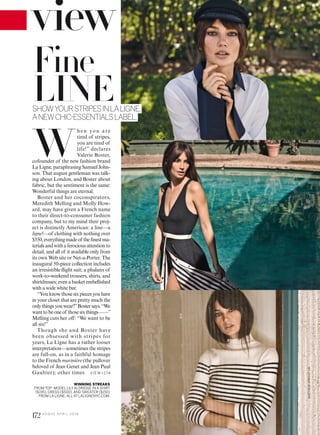
biceps curls with my right arm, atop a BOSU ball.
Inspiring me is the nineteen-year-old gymnastics star
Simone Biles, whom I watched at the recent world cham-
pionships in Glasgow spinning 900 degrees on one foot on
the balance beam. The most dominant woman in the sport
today,thefour-foot-eightpowerhousestartedrackingupna-
tionalwinsatagethirteen.Bynowshehasarecord-breaking
ten world-championship gold medals and is the overwhelm-
ingfavoritetobringhomethegoldinRio.Withherirrepress-
iblegrinandwarmsenseof humor—shetweetsjokilyseveral
times a day—she’s also an overwhelming favorite, full stop.
So how does Biles pirouette, leap, and lip on a four inch–
wide beam with such apparent ease? “It helps that I started
when I was six,”she says, recalling the day her class took a
ield trip to Bannon’s Gymnastix in Houston. She began
imitating the students’ cartwheels and lips; her grandpar-
ents, who have raised Biles since she was three (her mother
struggled with addiction), thought the sport would be a
good outlet for their granddaughter. “Simone was super-
hyper and not afraid to try anything,” recalls her grand-
mother Nellie Biles (whom Simone calls Mom). “From the
time she got out of bed in the morning she was jumping and
lipping on the furniture.”
That tremendous energy, Biles believes, is what allows her
to throw jaw-dropping vaults with two-and-a-half twists
and perform a double layout with a half twist in her loor
routine—a feat that is now oicially known as “the Biles.”
The best in her game, she’s beating her nearest competitors
by full integers in a sport where medals are decided by frac-
tionsof apoint.Judgestakeroutines’diicultyintoaccount;
hersaresoambitiousthatevenwhenshemakesmistakes,she
earnsenoughpointstocomeoutontop.LastOctober,atthe
world championships, she overrotated on a front lip on the
beam,andinanastoundingsavegrabbedtheapparatuswith
her hands and righted herself. Despite the error, she brought
home the gold. “On the beam, C O N TIN U ED O N PAG E 287
I
265
SETDESIGN,DEARY’SGYMNASTICSSUPPLY
T
he catastrophic results of inancial reckless-
ness can be found everywhere these days—in
headlines, on movie screens (The Big Short).
Nowthehumancostof ruthlessgreediscom-
ing to the Public Theater in Dry Powder, the
33-year-old Sarah Burgess’s scathingly funny,
remarkably assured play about the battle for the soul of a
private equity irm, starring Claire Danes and—making his
professional stage debut—John Krasinski. Directing is the
brilliant Thomas Kail, coming of the triumphs of Ham-
ilton and the live-network-TV broadcast of Grease to helm
ClaireDanes
andJohnKrasinski
starinthe
PublicTheater’s
Dry Powder—
aviciousand
hilariousdrama
skewering
thepeoplewho
skewerour
globaleconomy.
ByAdamGreen.
Photographed
byStevenKlein.
M o n e y
f o r
N o t h i n g
a chamber piece, albeit one that goes for the jugular. “I had
such a strong reaction to the conidence and muscularity
and precision of Sarah’s writing,”says Kail, who is staging
theplayintheround.“Iwantedtogetallof usasclosetothe
actionaspossible,tocreateamini-colosseumwherewecould
watch these characters crash into each other.”
Hank Azaria plays Rick, the president of KMM Capital
Management, which is reeling from a public-relations night-
mare(massivelayofsatacompanyheacquiredtakingplace
onthesamedayhethrewhimself anextravagantengagement
party featuring a live elephant). Krasinski is Seth, one of
266
Claire Danes wears an Altuzarra coat. John Krasinski wears a Dior Homme suit and a Paul Smith tie. Menswear Editor: Michael Philouze.
Hair, Bryce Scarlett; makeup, Matin. Set design, Mary Howard Studio. Details, see In This Issue. Sittings Editor: Phyllis Posnick.
Rick’s founding partners, a self-proclaimed good guy who
wants to make things right by acquiring a luggage company
and growing it; Danes is Jenny, a inancial Terminator who
wants to strip the company for its parts. “Seth is this great
epitomeof thehumancondition,”saysKrasinski,forwhom
theplayhasechoesof GlengarryGlenRoss.“He’sgotamoral
compass,butatthesametimehethinks,You’reallsoluckyto
havesomeonewithmyintegrityinsidetheinancialsystem—
rather than realizing he’s actually a part of that system.”
Danes is thrilled to be returning to the New York stage
for the irst time since her 2007 turn in Pygmalion. She’s also
excited to ind her way into a new character after ive years
of playing Carrie Mathison on Homeland, though she does
admit that Jenny and Carrie share some quirks. “They’re
both incredibly myopic,” she says. “And they’re both dii-
cult and not immediately afable, but impassioned. Neither
of them is encumbered by a life or the messiness of human
relationships—that’s their advantage. I do like that Jenny’s
not such an open wound, because Carrie is, and that’s pretty
exhausting.IindJennyverycharming—howcansomebody
have such awful values and say things that are so cutting and
still be strangely adorable?”
Theanything-goesfoodsceneinLosAngelesisunconventional,liberated,creative—
andinfluentialasneverbefore.OliverStrandreports.PhotographedbyEricBoman.
A
t one time, a classic dish was a prisoner
of geography. If you wanted to eat a
true margherita pizza, you had to travel
to Naples because the purists would tell
you even the version you could ind in
Rome wasn’t quite right; by the time
you got to Milan, it was just a cheese
pizza. But the borders that separate culinary cultures don’t
mean that much anymore. Now you can get a margherita
at Roberta’s in Brooklyn that would make a grown Italian
weep salty tears of joy, or a plate of tacos at Hija de Sanchez
in Copenhagen that could stand up to the stalls in Mexico
City where the taxis patiently wait.
Which is why I wasn’t entirely surprised by the croque
madame at Gjusta in Venice Beach. It wasn’t a SoCal play
ontheFrenchstandard,afusionof LeftCoastlavors.Itwas
textbook croque: toasted bread with Mornay sauce (which
is béchamel thickened with cheese), thinly sliced ham, and a
sprinklingof Comté,allbrownedunderabroilerandtopped
by a fried egg with a thick and oozy yolk. And yet it was
easily the best I had ever tasted, every lavor delivered with
ringing clarity. Rediscovering the familiar can be chastising
(because you realize you’ve had it wrong) and thrilling: This

is an egg, this is ham, this is bread. Rather, this is what egg,
ham, and bread can taste like when a kitchen brimming
with skill and conidence decides to transform a mundane
if reliably satisfying dish into something so perfect you will
measure all others against it.
It wasn’t the only standout at Gjusta. What started of
as a bakery when it opened in 2014 has evolved into a sun-
illedcommissarythatcuressalmonandfermentshotsauces
and roasts large cuts of beef. Marble counters, rough wood
loors, skylights cut into the ceiling: It feels less like a kitchen
than an atelier. The food comes across as healthy, but it’s
morewholesomethandietetic.Youcangetasaladoragrain
bowl or granola with nut milk; you can also get a croissant
or a porchetta melt or a beef-brisket banh mi on bread still
warmfromtheoven.TravisLett,whoownsbothGjustaand
Gjelina, a more traditional restaurant a short drive away,
told me that Gjusta is like a Jewish deli and an Italian deli
under one roof, but he’s underselling the experience. It’s as
if you took the best shops from your favorite market streets
in London, Paris, San Francisco, and Beirut, and packed
them into a whitewashed warehouse so close to the beach
you can smell the salt air.
Los Angeles has a knack for taking the ignored, the
commonplace, and turning it into something stylish and
graceful—thisisthecityof FrankGehryandJohnBaldessari
and Rodarte, artists and craftspeople who made their names
transforming the overlooked and everyday into high art.
Outsiders have a hard time reading the city where I grew up.
Atirsttheydon’ttakeitseriously—theplaceseemstooobvi-
ous,eventrashy.Butif youtuneouttheskeptics,partsof this
seeminglysimple-mindedmegalopolisemergeasbeingsochic
and perfect that the rest of the world scrambles to keep up.
Still, the restaurant scene here rarely gets the credit it de-
serves. The one in the Bay Area is more legendary, the one
in New York more polished. But a new crop of Los Angeles
establishments has been exerting a tangible inluence, with a
mix of gimmick-free food and airy design that is surfacing
elsewhere:atDimesinNewYork,atLaRecyclerieinParis,at
the London Plane in Seattle. Gjusta is now on the must-visit
list of chefs, bakers, and professional eaters.
“Gjustakindof blowsmeawaybecausetherearesomany
moving parts, and seeing it executed in such a manner is so
impressive. It’s smart, simple, well-made food,”says Ignacio
Mattos, the chef of Estela and the newly opened Café Altro
Paradiso,bothinNewYork.“Ihadthebestorangejuicethat
I’veeverhadthere.Istillrememberit.It’soneof thosethings.
How many do you drink in your life? I’m 36, and I wonder,
How did I never have an orange juice like this?”
AccordingtoLizPrueitt,whostartedTartineinSanFran-
cisco with her husband, Chad Robertson, the food in Los
Angeles “hits that sweet spot of what’s creative and what’s
unexpected, and it’s inspiring a lot of other chefs, whether
or not they cook that kind of cuisine. They’re utilizing in-
gredients that are familiar in unfamiliar ways, and it feels so
healthy and delicious.”During a recent trip to Los Angeles,
PrueittandRobertsonwenttoGjustanearlyeveryday.“You
get the feeling that there’s somebody making food you want
to eat, and when they pull something out of the case they’re
going to replace it with something that’s just as delicious.”
It’snotaseasyasitlooks.“Simpleisthehardestthingyou
can do,” Lett told me. “There is a lot you can accomplish
with plating or presentation in a restaurant that you just
can’t do here. You can’t hide
L.A. STORY
Dishes once seen only in the morning are now free to show
up whenever they please. It’s as if brunch has taken over the
entire day. Pictured here: the classic omelet from Petit Trois.
C O N TIN U ED O N PAG E 28 9
E A S Y
D O E S
I T268
M O M E N T O F T H E M O N T H
C H A M P I O N S
PUTTING
ON AIR
After releasing a
couple of attention-
grabbing mix tapes,
Houston-born rapper
Travis Scott debuted
his acclaimed album
Rodeo late last
year. Scott wears a
NikeLab x RT jacket
($225), T-shirt
($75), and shorts
($120); nike.com/
nikelab. Nike tights
and sneakers. Model
Joan Smalls wears
a NikeLab x RT
crop top ($110) and
2-in-1 shorts ($210);
nike.com/nikelab.
Givenchy by Riccardo
Tisci earrings and
shoes. Givenchy Haute
Couture by Riccardo
Tisci bangles. Details,
see In This Issue.
Fashion Editor:
Sara Moonves.
L E A G U E
n the beginning, sports and
fashion were two worlds,
separately created by separate
gods. In 1964, when Bill Bow-
erman shook hands with Phil
Knightandsetoutontheroad
to designing Nike’s now iconic
shoes with a waffle iron in a
kitchen in Oregon (all func-
tion, very little form), Yves
Saint Laurent was on the verge of debuting a Mondrian
A-line dress that was, conversely, designed not for speed or
stretching or any kind of performance aside from, say, a
Merce Cunningham premiere.
Sprint forward to today, when we are all faster, stronger,
more flexible in terms of how we move, what we do, and
when we do it. Which means that fashion and sports (and
the streets that sports live on) have become one world, with
crossover gods. Today, a young designer like Shayne Oliver
starts his career not at the Chambre Syndicale de la Haute
Couture,SaintLaurent’salmamater,butbymakingT-shirts
andsweatshirtsforfriends.AlexanderWangisshowingneo-
prene sweats. Rihanna is working with Puma, Kanye with
Adidas. And now the paradigm shift as Nike, the world’s
top-seeded maker of clothing designed to help break world
records,stepsintoplayintheworldof ready-to-wear.Nike’s
designershaven’tjustbeenhangingoutinlockerrooms.“We
go to a lot of shows,”one of them told me.
Movement and speed and ease and functionality are now
intrinsic to so much that we wear, whether on the ield or
in an Uber. Thus we have NikeLab, the place where Nike
designers work out with that fashion world. Up to now, the
results have been on the gorgeous side: In her fall/holiday
pieces for NikeLab (she did a spring/summer collection,
too), Sacai’s Chitose Abe took company staples like Wind-
runners and Tech Fleece and added sheer trapeze pleats
and proportions that made the pieces seem to ly. Now we
have three NikeLab collections (Summer of Sport, they’re
calling it) set to leave the gate to celebrate the Rio Olym-
pics—in collaboration with Kim Jones, Jun Takahashi, and
Riccardo Tisci.
These days, everybody wants to work out with a fashion
designer. As Apple picked up people from Burberry, Saint
Laurent, and Gap prior to launching its watch, so Nike
Women—the largest women’s athletic brand in the world,
currently weighing in at a valuation of $5.7 billion—is part-
neringwiththe fashionworldwiththegoalof gainingabout
$5 billion in sales by 2020. And then there are the athletes,
who, in a crossover world, are rock stars. “Look,”says Tisci,
“in the seventies and eighties, sporty people could wear only
sportswear, and artists had to look only dirty and under-
dressed. Today the world has changed, and these kids who
are heroes of sport want to look good—they want to bring
their own personality to the playground!”
To investigate the practicalities of Nike’s fashion partner-
ships, I took a trip out to the company’s world headquarters
in Beaverton, a place where people work with sensor-draped
athletesontreadmillsinsimulatedBrazilianclimates.(When
I was in the Nike Sport Research Lab, the sprinter Ryan
Baileywasrunningatwhatseemedclosetothespeedof light
while images of his body were being examined in a room
that looked as if it were supporting the power grid for L.A.)
It struck me that Nike designers were drastically more open
abouttheirinterestinfashionthanonmyvisitsinyearspast.
“DowegeekoutonGivenchy?”adesignerwhoworkedwith
Tisci asked. “Yes.”But they still stress performance as their
core.“If therewereaphotoinishbetweenperformanceand
style,performancewouldwin,butthetwogohandinhand,”
said Martin Lotti, Nike’s global creative director.
And yet fashion’s beneit to performance remains rel-
atively undocumented. “I remember talking to Maria
Sharapova, and she was telling me that she will play better
if she looks better—that is deinitely a common thread with
athletes we work with,”said Lotti. (When I spoke with the
Olympic-champion decathlete Ashton Eaton recently, he
seconded: “Feel is connected with physical. I very strongly
believe that if something in your mind feels lighter and
faster and makes you feel stronger, that placebo is not a
negative thing; it’s a thing that works.”)
One way to lure designers is with vintage Nikes. Jar-
rett Reynolds, senior design director of NikeLab, talked
about fashion’s forever interest in shoes like the Air Force
1, which Tisci redid (his new-old model, the Dunk Lux
High, came out in February). That shoe’s icon status, Nike
argues, came second. “We made a real-deal performance
product and the culture adopted it and made it an icon,”
Reynolds said. Working on Air Force 1 was a dream for
Tisci, afectionately referred to at Nike as a “sneakerhead.”
“If somebody asked you to work on the Sistine Chapel in
Rome, you wouldn’t change it completely—you would just
modernize it, because it’s so beautiful,”he said.
For the new Summer of Sport collection, Nike flew
to Paris, Tisci to Beaverton, where, in the gorgeous gym,
he momentarily relived his childhood basketball career,
even if the shots he took did not relect his prowess as a
designer (“I hadn’t played in a long time,”he stressed). He
got pushed into performance aspects of the design. “We
made Riccardo uncomfortable,” Reynolds said. The end
result: shorts morphed with tights, kaleidoscopic color
prints that no Nike apparel designer would have dared
suggest, and botanical nods not only to Brazil but to his
own upbringing in the south of Italy—all engineered into
Nike’s best-selling sports bra.
I
GAME CHANGERS
With a self-titled debut album that went straight to number one
and the honor of being the only artist to have his first four singles
simultaneously in the top ten, Fetty Wap has made himself a force
to be reckoned with. Fetty wears a NikeLab x Kim Jones jacket
($275), T-shirt ($175), and pants ($225); nike.com/nikelab. Nike
zip-up sweater, $65; nike.com. Model Cameron Russell wears a
NikeLab x Kim Jones top, $175; nike.com/nikelab. Louis Vuitton
Bermuda shorts; select Louis Vuitton boutiques. In this story: hair,
Didier Malige; makeup, Gucci Westman. Details, see In This Issue.
AMID OUR ONGOING LOVE AFFAIR WITH SPORTS —AND BOASTING
NEW COLLABORATIONS WITH RICCARDO TISCI, KIM JONES,
AND JUN TAKAHASHI—NIKE STEPS UP INTO FASHION’S PREMIERSHIP.
BY ROBERT SULLIVAN. PHOTOGRAPHED BY GREGORY HARRIS.
C O N TIN U ED O N PAG E 28 8
272
M O M E N T O F T H E M O N T H
PRODUCEDBYKATECOLLINGS-
POSTFORNORTHSIX
TWO SHAKES
Run, don’t walk, to the
Rihanna: Anti World
Tour, stopping at the
Prudential Center in
Newark on April 2. On
Lily Aldridge (NEAR
RIGHT): Tory Sport
shag backpack, $425;
torysport.com. Ralph
Lauren Collection
jumpsuit, $2,990; select
Ralph Lauren stores.
Alix bikini top. Bulova
watch. On Gigi Hadid:
Chanel nylon-and-mesh
backpack, $2,600;
select Chanel boutiques.
3.1 Phillip Lim tank top,
$275; 3.1 Phillip Lim,
NYC. Sportmax pants,
$595; Sportmax, NYC.
Details, see In This Issue.
Fashion Editor:
Tabitha Simmons.
WhattoWearWhere
L eade r s
of
t h e
It’stheseason
ofthebold,
brilliant,and
built-to-move
supersatchel.
GigiHadidand
LilyAldridge
takethe
brightestofthe
bunchonan
energeticromp
forspring.
Photographed
byPatrick
Demarchelier.
Pack
CASING
THE PLACE
Power-lunch in vivid
white and crisp primary
colors at Covina, James
Beard Award winner
Tim Cushman’s new
restaurant, opening this
month in Manhattan’s
Park South Hotel. Dior
bag, $3,700; select Dior
boutiques. Lacoste dress,
$295; lacoste.com.
Bulgari watch.
BEAUTY NOTE
Makeup mishaps
shouldn’t slow you
down. Prevent melting
and fading with a light,
translucent mist of
Maybelline New York’s
Face Studio Master
Fix Setting Spray.
WhattoWearWhere
276
CROSSING
THE LINES
This refreshing
combination of
polo plus plaid is
the ultimate preppy
mix for the finals
at the Miami Open
tennis tourney in
Key Biscayne. Stella
McCartney striped
wicker bag ($1,750),
check knit bag,
polo shirt ($675),
and skirt ($1,595);
Stella McCartney,
NYC. Details, see
In This Issue.
BUCKET LIST
Silky comfort is
the name of the
game here—floaty
skirt, fuss-free top,
holdall bag. It’s a
throw-on-and-go
ensemble perfect
for a double feature
at the Tribeca Film
Festival. Sportmax
suede bag, $795;
Sportmax, NYC.
Victoria Beckham
tank top ($1,150)
and skirt ($2,190);
victoriabeckham
.com. Shinola watch.
AGL sneakers.
WhattoWearWhere
278
DANCING ON AIR
Reinvigorate the
shirtwaist look with
oversize sleeves and
contemporary fiery
accents—then grab
a wild cayenne–colored
tote and head out to
NYC’s Joyce Theater
to catch the visiting
Miami City Ballet.
Michael Kors Collection
drawstring bag, $2,990;
select Michael Kors
stores. Public School
jacket ($575) and shorts
($380). Jacket at (212)
302-1108. Shorts at
select Nordstrom stores.
Roger Vivier sneakers.
Details, see In This Issue.
WhattoWearWhere
CIRCLE UP
Grommets and
pockets and chains,
oh my—this bag has
it all! Sling it over your
shoulder to take in
the Steve McQueen
exhibition at the
Whitney Museum
of American Art.
Versace suede
backpack ($2,995)
and jersey dress
($2,375); select
Versace boutiques.
Caeden bracelet.
280
ZIP CODES
The wonderfully
utilitarian fanny pack
gets a stylish makeover
in molten metallics and
heavy hardware. Pair
it with a graphic tee and
short shorts for a visit
to fitness-cult-favorite
the Class at Taryn
Toomey’s new studio
in Tribeca. Jimmy Choo
belted bag, $1,450;
select Saks Fifth Avenue
stores. Fendi backpack
($2,700) and backpack
charm; select Fendi
boutiques. Longchamp
top ($340) and
shorts ($195); select
Longchamp boutiques.
Bulgari watch. Details,
see In This Issue.
LINE ’EM UP
The jagged stripes on
this carryall pouch
(and the bloodred track
pants) fit the mood
for the Broadway
premiere of American
Psycho, starring
Benjamin Walker.
Kenzo snakeskin-print
leather tote bag, $710;
kenzo.com. Chloé
halter top ($950)
and pants ($1,295);
select Neiman Marcus
stores. Vince shoes.
WhattoWearWhere
FASHION
FORWARD
You’ll want to stay
conveniently hands-free
to salute the imminently
retiring Kobe Bryant
when the Lakers play
the Clippers at the
Staples Center in Los
Angeles on April 6. Louis
Vuitton backpack; select
Louis Vuitton boutiques.
Proenza Schouler
cropped crewneck top,
$890; Proenza Schouler,
NYC. BCBG Max Azria
shorts, $298; bcbg.com.
Shinola watch. In this
story: hair, Duffy;
makeup, Tom Pecheux.
Details, see In This Issue.
IndexEDITOR: EMMA ELWICK-BATES
IN!
Dive
Getreadytotaketheplungeinto
theadventureandromanceof
freshwaterswimming—theappeal,
you’llsoonfind,iscrystalclear.
CoolOffHit“refresh”in these
winning lakeside locations.
Lake Placid, NEWYORK
Nestled in the woodlands of the
Adirondacks is an aquatic oasis
for swimming,kayaking,waterskiing,
and the like.
WHERE TO STAY:Lake Placid Lodge
Lake Tahoe, CALIFORNIA
The best views of this paradise
on the California-Nevada border
are from the cobalt-blue water.
WHERE TO STAY:Basecamp Hotel
Lake Champlain,VERMONT
Paddle out to one of Lake
Champlain’s approximately 80 islands
for a sun-soaked day of fun.
WHERE TO STAY:Basin Harbor Club
Echo Lake, MAINE
Don’t be fooled by its northern
exposure: Echo Lake Beach’s
shallow depths mean warm
swimming well into the evening.
WHERE TO STAY: The Claremont
Lake Powell, UTAH
Hike,camp,and climb the red rocks
in southern Utah’s canyons,
ending with a dip in Lake Powell—
think dramatic desert without
the dryness.
WHERE TO STAY: Amangiri
6
3
2
1
4
5
1:COURTESYOFNIKE.2:COURTESYOFBARNEYSNEWYORK.3:COURTESYOFCHRISTOPHE
ROBIN.4:COURTESYOFTYRSPORT.5:COURTESYOFCHLOÉ.6:COURTESYOF1STDIBS.COM.
TEPEE:NICOLEBOUCHER.BREATHEINN,LANESVILLE,NY.DETAILS,SEEINTHISISSUE.
7
8
9
13
11
12
10
1. Nike swim cap, $14;
academy.com.
2. Flagpole Swim rash-guard
swimsuit, $450; Barneys
New York, NYC.
3. Christophe Robin
Cleansing Purifying Scrub
with Sea Salt, $52;
sephora.com.
4. TYR Sport goggles,
$20; tyr.com.
5. Chloé sandal, $865;
Just One Eye, L.A.
6. Robert Mallet-Stevens
folding chairs; 1stdibs.com.
7. Hermès beach throw,
$540; hermes.com.
8. Bottega Veneta bag;
(800) 845-6790.
9. Prism sunglasses,
$408; prismlondon.com.
10. Sanborn Canoe Co.
paddles, $180 each;
domesticdomestic.com.
11. Zeus+Dione swimsuit,
$179; zeusndione.com.
12. Crate & Barrel
picnic cooler, $70;
crateandbarrel.com.
13. AGLsandal, $397; agl.com.
CHECK OUT VOGUE.COM FOR
MORE SHOPPABLE LOOKS
7:COURTESYOFHERMÈS.8:COURTESYOFBOTTEGAVENETA.9:COURTESYOF
PRISM.10:COURTESYOFSANBORNCANOECO.11:COURTESYOFZEUS+DIONE.
12:COURTESYOFCRATE&BARREL.13:GORMANSTUDIO.CLIFF:CARTERSMITH.
PRESLEYANDKAIAGERBER,VOGUE,2015.DETAILS,SEEINTHISISSUE.
LOVE AND GRIEF
CONTINUED FROM PAGE 126
and stung my throat. But I left it alone.
It’s still his password.
After our wedding, I moved to Ge-
neva to live with Andy. Throughout
our apartment, framed photos of
Laurence, Evan, and Baptiste mingle
with others of us. Their names come
up in regular conversation. His past
is always there, but it doesn’t get in the
way of our future.
We were cautious leading up to the
five-year anniversary of the earth-
quake. Andy still hadn’t done any-
thing with his family’s ashes, wanting
to include Laurence’s parents and
sister in any decision he ultimately
made, but he felt an obligation and a
desire to commemorate the day. And
so together we took the three big urns
down from the shelf, scooped out a
handful of ashes from each, placed
them into separate containers, and
carried them to the Arve River. The
mundanity of the act—we used small
plasticIkeabins,whichIlaterwashed
in the dishwasher next to our dirty
plates and forks—was surpassed by
its quiet signiicance. Andy took the
containers out of his pocket one by
one, emptied them slowly, and we
watchedtherivertaketheashesaway.
Two days earlier we had found out
that I was pregnant. As the ashes
mingled with the water, turning the
stones underneath a foggy gray, we
knew that the future held life.
I used to feel that my friends with
children could identify with Andy’s
loss in a way I couldn’t. I never knew
what it was like to have children, to
lovesomething thatmuch andthento
imagine it taken from me. Now that
I was pregnant, already beginning to
feel my own protective instincts, I’d
find myself staring at him, my hus-
band, amazed all over again by what
he has lived through.
About a week after we found out I
was pregnant, Andy held my hand at
our irst checkup. As the Swiss doc-
tor examined me, he paused. “Oh,”
he said. I flinched—was something
wrong?
“Twins,” he said. “You are having
two.”
We stared at the black-and-white
screen in front of us, at the two little
blobs with barely recognizable heads.
“I’m going to have two children
again,” Andy said, tearing up and
laughing at once. Weeks later we
found out that the twins were boys.
For a long time, Andy vowed that
he would never remarry, certainly
never have children—the vulnerabil-
ity that kind of attachment brings
terrified him. Today, he wonders at
the contradictions in a world that
can include both an earthquake and
the improbable conception of twin
boys. Andy says he has reconciled his
powerlessness, his lack of control, not
only over history and calamity, but
also over loving again.
Andy’s family has said that there
was a time they didn’t know whether
the old Andy would ever reappear.
Butthesedayshe’llstophimselfwhen
we’re on a walk, or while we’re feed-
ing the boys on the couch, surprised
by joy—by the happiness he thought
he’d never experience again. “I think
about how much I lost,” he said to me
recently, with something close to awe
in his voice. “But I also think about
how much I have.”
HOUSE OF MIRTH
CONTINUED FROM PAGE 134
watercolors, Whistler paintings, Vic-
torian lamps and Oriental screens,
little velvet boxes stufed with human
hair. I spent hours up there picking
through clothes—wool skirts, velvet-
and-brocade dresses, hunting jackets,
ballgowns—andsneakingdowntomy
room to try them on.
At the beginning, I dreaded
meals—but when I realized that no
one seemed to think it strange that
I wasn’t speaking, or that I was
clutching my chair so I wouldn’t fall,
I gradually began to look forward
to them. Except for formal dinners,
we ate in the kitchen. The walls were
painted eggshell blue, the ceiling
covered with silver wrapping paper.
Grandma, who wore her dark hair
in a bob—in her youth, she had been
known as a beauty—sat at one end
of the table and Papa, my grandfa-
ther,attheother.Eachofthemworea
daily uniform, Papa black pants and
a white button-down shirt, Grandma
a denim skirt and a lavender or blue
blouse that functioned as her garden
clothes. While something delicious
had always been prepared—roast
lamb with mint sauce and wild rice, a
slabofsalmon,cornmealpancakes—
everyone was also free to eat what
they pleased. Grandma’s meal of
choice was a large piece of cow liver
topped with raw bean sprouts, while
Papa’s was grape-juice concentrate
from the can. Besides my aunt’s col-
lege roommate, Carol, who’d come
for a visit 20 years ago and never
left, there were always other people
around—my two uncles who still
lived and worked on the property and
their girlfriends or children, the vari-
ous inhabitants of the tenant houses,
the young men helping to construct
the fish pond or rice paddy, family
friends like the art appraiser up from
Boston or the tiny Austrian spy. The
table was piled high with food; when
the door was left open, the chickens
wandered in.
(In 2001, when the family could no
longer aford to keep it, Cherry Hill
was sold to a wealthy young banker,
who uses it as his summer residence
today. Needless to say, it has been
substantially cleared out and re-
modeled. I have yet to see it in this
state—though the new owner is ame-
nable to giving tours for our family
members—yet what it’s lost in ec-
centricity it has apparently retained
in allure. My nine-year-old nephew
recently returned from one of these
tours, bug-eyed, and constructed a
Minecraft version of what he called
“the mansion,” which he eagerly
walked me through.)
Little by little, my shakiness dwin-
dled. The house ofered much, yet it
also requested things. Like Sally, I
took it upon myself to clean up the
kitchen nightly; I weededthe clayten-
nis court. I recovered my former ath-
letic prowess by learning to ride my
uncle Nick’s unicycle back and forth
down the hallway from the kitchen to
the library.
Gradually I even began to talk,
little by little, to Grandma in the
kitchen. Having relaunched my ap-
prenticeship, I was reading The Por-
trait of a Lady, and she told me about
reading Henry James aloud to her
100-year-old mother and how, when
they got to his late style, “the sentenc-
es so impossibly complicated,” she
feared that her mother would believe
that she had inally and deinitively
lost her mind.
She recounted scenes from her
childhood abroad—her father was
a well-respected artist who traveled
Europe collecting works for Boston’s
V O G U E . C O M
286 V O G U E A P R I L 2 0 1 6
Museum of Fine Arts—and her
honeymoon out West with Papa; she
talked of her gardening plans, her
home-improvement projects (“I’ve
decided that my closet needs to be
cleared out every 45 years, and that’s
now”). We made pilgrimages outside
to see the things she’d planted—the
katsura at the wood’s edge, the pink
dogwoodoutbythecurveinthedrive
that “seemed to have died in despair”
because of the drought (“They have
shallow roots,” Grandma said) but
that, thanks to bucket after bucket
of water, was now reviving. One eve-
ning, in the latter part of my stay,
GrandmatookmetoseeShakespeare
& Company’s outdoor performance
ofAMidsummerNight’sDreamatthe
Mount. We sat on the grass, a picnic
between us, and watched as the band
of fairies came creeping toward us
through the trees.
Several months passed. I could
easily have lingered, as had so many
others, but it felt like the right time to
be going on my way. But not before
hearing, as I came down the stairs,
Grandma sitting at her writing desk
murmuringsomethingintothephone
to my mother. (The two had been in
closetouchoverthecourseofmystay.)
“She seems all right to me,” she
said. It was just what I needed as a
benediction.
WORKING IT
CONTINUED FROM PAGE 234
the paradigm has shifted. . . . Lil Sis
kiiiiiiiilled this shit!!!!!!!”
Backstage, Rihanna and her
team—a tight-knit group with whom
she travels everywhere, including
Forde, Rosales, and Ciarra Pardo,
her creative director of ten years and
the head of her production company,
also called Fenty—are celebrating.
Rihanna leaps from a couch and
envelops me in a warm hug. Cham-
pagne is flowing. Pardo crosses the
room to embrace Rihanna. “You
killed it!” she says. “Didn’t they kill
it?” Rihanna says, delecting credit to
the models. “How do you feel?” I ask.
“I feel like I’m loating right now,” she
says. “I feel elated.”
I ask her about her inspirations
for the show, which include Japanese
street culture (“Every time I go to Ja-
pan, it’s like, ‘Wow’ ”) and nineties
music and fashion. “All my favorite
artists and fashion icons and models
are from the nineties,” she says, citing
fellow glamazons Naomi Campbell
and Cindy Crawford, as well as Mary
J. Blige, Lil’ Kim, Gwen Stefani, Jean
Paul Gaultier, and John Galliano.
“Everybody was just so fearless.”
The room grows loud, and Rihanna
shushes a group that happens to in-
clude Campbell. (Who else can shush
Naomi Campbell?)
Puma has already seen its fourth-
quarter sales rise from Rihanna’s
involvement with the brand, which
bodes well for her other collabora-
tions, including one with Christian
Dior on a line of sunglasses this
spring. Last year, Rihanna also be-
came the first black face of Dior, a
distinction that was initially lost on
her, so caught up was she with “the
Dior aspect.” “I was already proud
to be a Dior woman, but to be a
black Dior woman and the first: It
did something else for me.”
In her quest for world domination,
Rihannawillnodoubtkeepupending
outdatednorms.It’snotacoincidence
that so many of her Puma designs are
unisex. “I always wanted to do what
my brothers were doing,” she says. “I
always wanted to play the games they
playedandplayroughandwearpants
and go outside.” She still wants to.
“Women feel empowered when they
candothethingsthataresupposedto
be only for men, you know?” she says.
“It breaks boundaries, it’s liberating,
and it’s empowering when you feel
like, Well, I can do that, too.”
TIPPING THE BALANCE
CONTINUED FROM PAGE 265
you have to be precise in every move-
ment,” she says. “It requires intense
concentration and focus. I’ve learned
to trust my balance. But I work at it.”
The pursuit of better balance is
one that has taken hold of the itness
world as well, from Miami Beach
health club Anatomy at 1220’s new
steel-mace weight-training classes
to the increasingly popular nimble
combat sports like Muay Thai and
boxing. “Workouts that have you
moving dynamically through dif-
ferent planes will help with stabil-
ity—and that’s the new frontier,”
says Lisa Giannone, rehabilitation
and conditioning specialist for the
San Francisco Ballet and founder of
the Garage itness studio, whose fast-
paced Hammer and Gravity classes,
filled with sprints, squatting, and
single-leg jumps, have a cultlike fol-
lowing among Bay Area ballet danc-
ers and boxers. “Balance is ground
zero for all movement,” adds Randy
Humola, manager of Gotham Gym
in New York.
Researchers from Johns Hopkins
University School of Medicine re-
ported several years ago that nearly
20 percent of people in their 40s can’t
stand completely still on a lat foam
surface with their eyes closed for 30
seconds—a classic test of balance.
Much of the blame lies in our ainity
for the chair, seat of a multitude of
modern woes. “When you’re sitting,
you’re not engaging your core, and
those muscles, along with the ones
in your ankles and lower legs, are
what keep you upright and stable,”
says Helen Bronte-Stewart, M.D., a
neurologist and former dancer, who
directs the Stanford Human Motor
Control and Balance Laboratory at
the School of Medicine.
Balance begins deteriorating in
your 30s, even among many fitness
devotees; for instance, running—my
daily cardio—does little to bolster
the muscles that confer steadiness.
As your balance declines, so, too, do
yourinesse, grace,andcoordination.
Research shows that balance train-
ing can prevent injuries, especially
among those who, like me, grapple
with recurring ankle-ligament prob-
lems. It also tones muscles (espe-
cially the core), keeps us agile, and
improves posture.
My own concerns began last fall in
Barneys’ shoe department. I spotted
a pair of suede Isabel Marant booties
with a sculpted four-inch heel, per-
fect for a spate of upcoming events
on my calendar. But when I zipped
the boots and stood, I felt unsteady—
like a sixteen-year-old in her irst pair
of stilettos. It’s been a while. You’ve
been living in your Marsèll oxfords,
I told myself. You’re just out of the
heels habit. I took a few careful steps,
and even then my left ankle nearly
collapsed outward, a close call that
brought to mind a series of sooner-
forgotten incidents: stumbling and
spilling Cabernet (my first glass, I
swear) on a friend’s new upholstery.
Reaching for the wall to steady my-
self while pulling on a pair of skinny
pants.Whathadhappenedtomybal-
ance? I CONTINUED ON PAGE 28 8
V O G U E . C O M V O G U E A P R I L 2 0 1 6
287
was raised on gymnastics and ballet.
I ski, I surf. I would not be laid low by
a pair of party shoes!
First things irst: I needed to know
how of-kilter I really was. For that,
I visited Aaron Sparks, a biomecha-
nist at the University of California
SanFrancisco’sHumanPerformance
Center, and a balance fanatic who
can stand for full minutes on a stabil-
ity ball without wavering. He put me
through a standard physical-therapy
screening tool, the Y balance test:
Whilestandingonmyleftleg,armsat
my side, I slid my right foot along the
ground as far as I could to the front,
sideandbehindme,thenrepeatedthe
process on the left side. Sparks pro-
nounced me “average, maybe slightly
above” and sent me on my way with
this advice: “Strengthen your core
with planks and side planks and re-
place your desk chair with a stability
ball.” To stabilize the muscles around
my knees and ankles, he suggested
single-leg squats.
Seeking reassurance (average is a
tough adjective to swallow), I called
Daniel Merfeld, Ph.D., professor of
otology at Harvard Medical School
and director of the Jenks Vestibular
Physiology Laboratory, and asked
him to elucidate the challenge of
balance. “It’s like setting the tip of
a broom handle on the palm of your
open hand and trying to keep it up-
right,” he said. The human body, he
explained, is actually like six of those
unstable witch’s brooms (our weighty
heads balance on slender necks, our
hips and thighs teeter atop narrow
knees, et cetera)—all stacked on a
single pair of feet. Small wonder ex-
perts drive home the importance of
a strong core.
So how does Biles work on hers? “I
do 30 minutes of abs every day,” she
says. Her favorite technique: rolling
across the floor from back to front
and front to back with her arms and
legs off the ground at all times. “It
strengthens your back muscles, and
people often neglect that part of their
core,” says her longtime coach, Ai-
mee Boorman. “Simone trains hard,
but she also has uncanny air aware-
ness. She can judge where she is in re-
lation to the ground, even when she’s
upside down. Some things you just
can’t teach.”
Biles, according to Harvard’s
Merfeld, has been blessed with an
unusually keen vestibular system,
the labyrinthine arrangement in the
inner ear that monitors the position
and movement of your head—and
plays a critical role in balance. Hold-
ing oneself steady requires a complex
coordination among the vestibular
system and two other factors: pro-
prioceptors, which are the GPS-like
sensors in your muscles, joints and
tendons that send the brain up-to-
the-millisecond information about
your body’s relative position (they’re
the reason you know your ankle is
starting to roll, even though you’re
not looking at your feet), and vision,
which plays a surprisingly important
role, as any yogini who tries to close
her eyes in tree pose knows.
Balance, like most motor skills,
is about 50 percent genetic, so I can
partly blame my parents for my me-
diocre ability. “But almost every-
one can improve significantly with
practice,” says Daniel Ferris, Ph.D.,
director of the Human Neurome-
chanics Laboratory at the Univer-
sity of Michigan. “From the time you
start losing your balance,” he says,
“you have up to one second to catch
yourself.” He knows this because he
has covered study subjects’ scalps
with electrodes and had them walk
on balance beams mounted to tread-
mills to see what happens when we
begin to fall. Healthy young adults,
he learned, typically react in about
400 milliseconds; older people may
take an additional 150 milliseconds
more—a micro-lag that can mean
the difference between getting on
with your day and winding up in the
ER. In other words, balance isn’t just
about strength; I need to be quick,
too. The most effective way to keep
one’s reaction time sharp, says Ferris:
Do activities that throw the body of
balance, and force it to recover, over
and over again.
Thus, the BOSU ball, the precari-
ous perch on which I now strength
train. I began by standing on it with
two feet for a few minutes at a time,
then the next day added arm exer-
cises. After several weeks, I have
upped the ante by doing upper-body
strength training on one foot—far
more diicult. I bolster all the work
I’m doing by sprinkling balance chal-
lenges throughout my day—standing
on one leg and closing my eyes while I
brush my teeth, for instance.
By the time I’m sitting in Bronte-
Stewart’s office at Stanford, where
I’ve come for a reassessment, I’ve
been maxing out on tree poses and
holding planks for up to two minutes
for nearly three months. It’s been
weeks since I’ve slipped, stumbled,
or bumped into a doorway. During
the half-hour analysis (Stanford em-
ploys a more sophisticated system
than the Y balance test), I stand on
a movable metal plate that measures
the slightest shift of my feet or sway
of my body, while the lab assistant
puts me through a series of tests—
standing on the plate while it moves
forward and backward and side to
side, sometimes with my eyes closed,
sometimes open. I feel stable—and I
am. Overall I score higher than peo-
ple with normal balance.
The next day in yoga, while twist-
ing into eagle pose, I totter and have
to put my foot down. Really? I think
with a spike of irritation. Then I re-
member something Biles told me: “A
loss of balance is really a loss of focus.
When you’re doing something that
requires lots of balance, you have to
concentrate. I can be clumsy outside
the gym, too.”
MOMENT OF THE MONTH
CONTINUED FROM PAGE 272
“He pushed us to a place where
we wouldn’t have had the conidence
to go on our own,” Reynolds said.
Tisci also pushed them to a place
where gender lines were blurry,
where male and female pieces are
interchangeable—something you
see a lot of when sportswear is on
the street. “The walls between him
and her were less important,” said
Reynolds.
The designer Jun Takahashi runs
close to 20 miles a week dressed, he
says, “head to toe” in the pieces he’s
been collaborating on with NikeLab
since 2010, a highly technical and
sharply cut layered collection called
Gyakusou (translation: “running in
reverse”). “We usually start by say-
ing, ‘OK, Jun, what’s been happen-
ing with your running?’ ” explained
Reynolds. If you replaced the terms
art and beauty in the definition of
couture with design that gorgeously
frames and assists the performance
of the body, then Gyakusou would
be couture. Takahashi’s own ready-
to-wear collection, Undercover,
V O G U E . C O M
288 V O G U E A P R I L 2 0 1 6
has always included functional ele-
ments, raising the question, What is
the difference between sportswear
and ready-to-wear out in the ield? “I
think we’re seeing very little differ-
ence between the two on the streets,”
he says.
When I finally caught up with
Kim Jones, the Vuitton men’s style
director, he had just taken a plane
to a plane to another plane, each
one smaller, until it let him out in a
southern coastal forest in Vietnam,
track-suited and trainered-up. (The
NikeLab team had pegged him years
before as a sneakerhead.) “He knows
tech, and he’s been part of street cul-
ture forever, so he spoke the language
of Nike culture,” said Reynolds. For
his collaborations, Jones was shown
the Windrunner, a 1978 Nike piece
that quickly crossed over from mar-
athoning to New York City break-
dancers in the eighties. Jones was
also shown technical data—along
the lines of charts by Nike’s research
lab that indicated where a runner is
hot, where not. “It’s no use to outcool
them,” Reynolds said. “You have to
outnerd them.”
Jones approached athlete perfor-
mance from the vantage of travel—a
silver in South America one day, a
gold in Europe the next—something
he knows in his bones as the son of a
globe-traveling geologist. In the end,
Jones collaborated on jackets that
are,amongotherthings,nearlyseam-
less engineering marvels of packing
performance, perfect to work out
in, perfect to pack, perfect to run
in—and vaguely secret agent–like.
“It really gets down to almost zero
when you fold it in your bag,” he says.
(When we spoke he was headed out
to see his irst extremely endangered
black-shanked douc langur in the
Ninh Thuan province. “There’s only
about600ofthemleftinVietnam,and
they are called the painted monkey—
and they are the most beautiful mon-
key in the world,” said Jones.)
All the designers sounded ready
to burst out of the gates to fashion
new sport—and vice versa. Tisci, for
one, thinks his fashion idols would
approve. Though he never met
Coco Chanel, he inds her a simpa-
tico spirit when it comes to break-
ing down the differences between
events and categories. “She was one
of the first people to bring women
from Victorian-looking dresses to a
male look when she deconstructed
the jacket,” he said. “What I’m doing
today, she did already in her time. I
think she would be like, ‘Go, Riccar-
do, go!’ I think she would be a sup-
porter.”
EASY DOES IT
CONTINUED FROM PAGE 268
behind the facade of ine dining.”Lett
is 37, but he seems ten years younger:
Bearded, with a tangle of sun-streaked
hair pulled back in a ponytail, he has
the calm manner and messy charm
of a professional skateboarder or a
successful designer or the handsome
barista behind the counter. Still, he’s
as driven and focused as the chef of a
ine-dining restaurant. His food is café
fare treated with a near-religious rever-
ence and served on a battered pewter
plate you can take over to one of the
lea-market tables on the back patio.
Gjusta’s croque madame is on the
breakfast menu, which is something
of a feint, given that the breakfast
menu is offered all day long. This
is the other thing happening in Los
Angeles: The categories that most
Americans use to sort out which
dish goes where—breakfast, lunch,
dinner—are disappearing. Restau-
rants that were once in the business of
delaying gratiication will now fulill
your desires right away. If you want
steak for breakfast, you can go, at
eight o’clock in the morning, to the
counter at Eggslut in the revitalized
99-year-old Grand Central Market
in Downtown, and order a seared
wagyu–and–egg sandwich with chi-
michurri; you can also get a bacon,
egg, and cheese sandwich for a late
lunch. You can get char siu pork roti
with wilted bok choy for breakfast at
the Paramount Cofee Project in the
Fairfax District, or cashew-nut yo-
gurt with fresh fruit and house-made
granola for dinner. It’s as if brunch
took over the entire day, and dishes
once seen only at nine at night are
now free to show up at nine in the
morning or four in the afternoon or
whenever the creative class that gives
Los Angeles its edge feels like it’s time
to eat.
This approach to dining isn’t en-
tirely new. As in many other cities,
a number of all-night L.A. diners
opened in the irst half of the twenti-
eth century. In the 1960s and 1970s, a
number of them became social hubs
for the counterculture: You went to
Ben Frank’s on the Sunset Strip or
to Ships in Westwood or to Canter’s
in the Fairfax District, a Jewish deli
that Frank Zappa once called “the
TopFreakoWateringHoleandSocial
HQ.”BenFrank’swassold,andShips
was razed, but the freakos still go to
Canter’s to feed their appetites with a
burger and fries for breakfast.
Trois Familia, the latest venture
from Ludo Lefebvre (of Trois Mec)
and Vinny Dotolo and Jon Shook
(of Animal), has taken that idea and
turned it into a founding principle.
There’s only one menu all day long
(right now, Trois Familia closes at
3:00 p.m., although you can book
the restaurant for a private party
at night), and it’s a counterintuitive
mash-up of Mexican food and clas-
sic French cooking that sounds like
a stoner’s wish list but can be daz-
zling on the plate. Buckwheat crepe
with chorizo and avocado crema;
tres leches cake that looks like a sad
supermarket confection you eat in
spite of yourself but that’s actually as
elegant and light as a baba au rhum.
Ever since Trois Familia opened in a
dumpy strip mall in Silver Lake last
October, the wait to get a seat at one
oftheglossywhitepicnictablesinside
has been measured in hours.
It’s time well spent if you order the
duck confit, which is as traditional
as you will find, served in a shallow
bowlwithmintandcilantroandleche
de tigre (the citric marinade you use
for ceviche)—a weird and wonder-
ful companion. Every bite is a play
between the rich, meaty duck and the
sharp, sweet, ginger-tinged broth. Or
if you get the beet tartare tostada,
which is a play on one of the great
dishes at l’Arpège, the gastronomic
temple in Paris where Lefebvre once
worked.“Thebeetsarecookedinsalt,
andthenit’saclassicmayonnaisewith
oliveoil,eggyolk,andatouchofmus-
tard, then some dried chile and lime,”
Lefebvre said, explaining why a dish
that doesn’t look like much—a salad
piled on a crisp tortilla—has such
depth and complexity. Essentially,
it’s haute cuisine with the windows
open and the top down and the stereo
turned way up. “Really this is French
food and technique with ingredients
and lavors from Mexico,” Lefebvre
said. CONTINUED ON PAGE 290
V O G U E . C O M V O G U E A P R I L 2 0 1 6
289
Contents64:Top,$990;
ByGeorge,Austin,TX.
Skirt,$990;(312)587-
1000forinformation.
Shoes,priceuponrequest;
selectPradaboutiques.
Coverlook72:Dress,
priceuponrequest;Tom
Ford,NYC.Editor’sletter
80:OnRihanna:Dress,
priceuponrequest;Saint
Laurent,NYC,(212)
980-2970.Contributors
120:OnFanning:Top
($300)andpants($325);
needsupply.com.Flash
136:Dress,$8,500;
gucci.com.AlexisBittar
ring,$275;AlexisBittar
boutiques.View166:
CharlotteChesnaisring,
$570;DoverStreetMarket
NewYork.MaisonMargiela
Line12FineJewellery
Collection18K-goldtwo-
ingerring($1,300)and
18K–whitegoldtwo-inger
ring($1,400);Maison
Margielaboutiques.
IsabelMarantsandals,
$585;IsabelMarant,San
Francisco.168:Onvander
Kemp:Sweaterandpants
(priceduponrequest);
sandro-paris.com.
GivenchybyRiccardo
Tiscisneakers,$495;
neimanmarcus.com.
Görner:PaintingGallery,
Berlin.Paintings:Right:
TheCapitularsfrom
Utrecht,1544,Anthonis
Mor.Left:Portraitofan
Apostle,1618,Antonvan
Dyck.Background:Saint
Sebastian,1618,PeterPaul
Rubens.170:Crocodile-
skinbag,$11,600.
174:LoeweMarquetry
wardrobeandchair
(priceduponrequest),
andnotebook($323);
Loewe,Miami.Beauty
194:Dress,$3,695;Calvin
KleinCollection,NYC.Pearl
earrings,$375;tifany
.com.Repossi18K-gold
ring,$3,500;Barneys
NewYork,NYC.Manicure,
JinSoonChoiforJINsoon.
PATA209:OnWhishaw:
Coat,$3,300;selectGucci
boutiques.Amisweater,
$270;mrporter
.com.RafSimonspants,
$542;rafsimons.com.On
Ronan:Dress,$2,490;
carolinaherrera.com.
Tacoriearrings($420)and
ring($640);tacori.com.
PaulaCademartoriboots,
$1,375;10corsocomo
.com.212:Journals,$55
each;adriennewong.com.
TOMORROWLAND
217: StellaMcCartney
sandals,$845;Stella
McCartney,NYC,(212)
255-1556.218–219:
Watch,$6,550;Cartier
boutiques.OnAbraham:
Shirt,$45;vineyardvines
.com.Shorts,$145;
Bonpoint,NYC,(212)
879-0900.OnAva:Dress,
$245;oscardelarenta
.com.OnCoster-Waldau:
T-shirt,$80;BarneysNew
York,NYC.220: OnAva:
Jumper($32),shirt($22),
socks($13forthree),and
shoes($39);landsend
.com.OnCoster-Waldau:
Swimtrunks,$130:
solidandstriped
.com.221: Ring,$2,200;
Bulgariboutiques.
Sandals,$795;Fendi,
NYC,(212)897-2244.
222–223: Earrings,$475;
annelisemichelson.com.
GlassWaterBottlewith
FruitIceballMaker,$26;
amazon.com.224–225:
Cuf,$350;alyssanorton
.com.Belt,$495;select
MichaelKorsstores.
OnCoster-Waldau:
Poloshirt,$90;Brooks
Brothersstores.Trousers,
$435;burberry.com.
PlayStationVR;
playstation.com.Double
RoboticsDouble2
TelepresenceRobot,
$3,000;doublerobotics
.com.226: WowWee
CHiProbotdog($199)
andMiPosaurrobot
dinosaur($99).Robot
dogatchipk9.com.Robot
dinosauratwowwee
.com.227: Ring,$550;
sophiebuhai.com.On
Coster-Waldau:Jeans,
$210;rag-bone.com.
J.Crewbelt,$68;jcrew
.com.Skyplanters,
$59each;boskke.com.
SamsungFamilyHub
refrigerator;samsung
.com.228–229:
Choker,$2,045;
jenniferisherjewelry.com.
Bag,$15,500;Hermès
boutiques.Shoes,$995;
StellaMcCartney,NYC,
(212)255-1556.On
Abraham:Shirt($22)and
pants($32);landsend
.com.Umishoes,$70;
umishoes.com.On
Coster-Waldau:Sweater,
$78;jcrew.com.T-shirt,
$80;BarneysNewYork,
NYC.Havaianaslip-lops,
$18;havaianas.com.
Ehang184Autonomous
AerialVehicle;priceupon
request;ehang.com.
Inthisstory,manicure,
AlexandraJachno.
WORKING IT
230–231: Dress,
$10,000;selectRalph
Laurenstores.Single-row
diamondearcuf($1,025)
anddouble-rowdiamond
earcuf($2,050);anitako
.com.232: Dress,price
uponrequest;givenchy
.com.235: Bralette,price
uponrequest;marchesa
.com.Inthisstory,
manicure,MariaSalandra.
WELCOME TO THE
JUNGLE
236–237: Dress,
$19,000;selectGucci
boutiques.MarcJacobs
shoes,$7,100;select
MarcJacobsstores.238:
Postearrings,priceupon
request;givenchy.com.
Dropearring($225)and
glass-crystaldressclip
($295);LuluFrost,NYC.
“I’m not going to make the perfect
mole—I’m not going to compete with
the Mexican restaurants. But I can
take the duck and make it more color-
ful, more California.”
Lefebvre could have been talking
about himself. Tanned, handsome,
tattooed, the 44-year-old is a TV per-
sonality, one of the stars of ABC’s re-
cent cooking competition The Taste.
He followed a traditional path at irst
and started cooking at fourteen in his
native Burgundy before earning posi-
tions in the Michelin-starred kitchens
ofPierreGagnaireandAlainPassard.
Inasenseheisapartofthetraditionof
culturedEuropeanswhosetupshopin
SouthernCalifornia—ThomasMann
had a house in Paciic Palisades; Igor
Stravinsky lived in the Hollywood
Hills—and found the messy, sun-
streaked sprawl to be liberating.
You ind that freedom only if you
embrace not only what is alluring
about Los Angeles, such as produce
so consistent and excellent that it’s
almost unfair, but also what is vul-
gar, such as the strip mall, a cheap
and unimaginative building type
that ages poorly and that, like it or
not, is one of the deining examples
of local vernacular architecture. “I
love a strip mall,” said Lefebvre. “A
restaurant is a business. I really want
to be accessible to people, and a strip
mall can have the best location and
not be too expensive.” In fact, all
three of his restaurants are in strip
malls, including the bistro Petit Trois,
where the omelet is so delicate and
custard-like that it only just holds
together (the French term is baveuse,
which means “drooling”—the eggs
should be moist but irm, on the cusp
of wet). “You have strip malls every-
where, and all the amazing Japanese
restaurants with the best chefs are in
the strip malls,” Lefebvre continued.
“Besides, it’s easy to park. I go, I
have my parking place, and I have
my cleaner and I get my chef’s jacket;
I have my doughnut store. For me it’s
fantastic. For me it’s L.A.”
The current moment in Los An-
geles food can be traced back to
October 2012, when Jessica Koslow
opened Sqirl on an unfashionable
stretch of North Virgil Avenue in
East Hollywood. Other like-minded
restaurants were already scattered
around the city, but it was as if the
kombucha-fueled conversations the
cooks and tastemakers were holding
at the time—that you should build a
menu around what you want to eat
instead of hewing to convention—
solidified into an ideology when
Koslow posted her first breakfast
menu, which had only a few items.
One was toasted brioche with a fried
egg, tomatillo puree, and hot sauce;
anotherwasbrownriceporridgewith
inthisissue
V O G U E . C O M
290 V O G U E A P R I L 2 0 1 6
Hand-shapedbrooch,
$410;SoniaRykiel,NYC.
Bird-shapedpin,$270;
miriamhaskell.com.
Gloves,$320;
gaspargloves.com.
239:Cufs,$2,050each;
selectChanelboutiques.
240–241:Belt,$1,775;
selectChanelboutiques.
Heels,$1,290;Tom
Ford,NYC.242:Cufs,
$1,695each;Alexander
McQueen,NYC.243:
Dropearring,$410;Sonia
Rykiel,NYC.Pearlearring
($250)andnosering
($100);fallonjewelry.com.
244–245:Gloves,$50;
dawnamatrix.com.246:
Dress,$16,450;select
Chanelboutiques.Gloves,
$50;dawnamatrix.com.
Shoes,$1,350;select
MiuMiuboutiques.247:
Swimsuit,priceupon
request.248–249:Dress,
priceuponrequest.
Inthisstory,LasPozas,
XilitlawithFundación
PedroyElenaHernández,
A.C.;laspozasxilitla.com.
mx,pedroyelena.org.
KICKOFF
254–255:OnBowles:
NikeU.S.Women’s
NationalTeamhome
soccerjerseyandshorts.
Nikesocks($20),soccer
shinguards($22),and
soccercleats($200);nike
.com.OnMorgan:NikeU.S.
Women’sNationalTeam
squadtrainingtop($55),
shorts($65),socks($18),
soccershinguards($22),
andsoccercleats($275);
nike.com.258–259:
Niketop($65),shorts
($55),andsocks($18);
nike.com.
TIPPING THE BALANCE
264–265: Leotard;
similar styles at
gkelite.com.
MONEY FOR NOTHING
266–267: On Danes:
Alligator-skin coat,
$95,000; altuzarra
.com.On Krasinski: Suit,
$3,400; Dior Homme
stores.Brooks Brothers
shirt,$120; Brooks
Brothers stores.Tie,
$145; paulsmith.co.uk.In
this story,manicure,Jin
Soon Choi forJINsoon.
MOMENT OF THE
MONTH
270–271: On Scott:
Tights ($45) and
sneakers ($75); nike
.com.On Smalls: Earrings
($720) and shoes (price
upon request).Earrings
at Givenchy,NYC.
Shoes at givenchy.com.
Bangles,priced upon
request; givenchy.com.
273: Shorts,price upon
request; select Louis
Vuitton boutiques.
RoxanneAssoulin x Baja
East bracelets,$90 each;
amazon.com/bajaeast.
In this story,manicure,
AliciaTorello.
WHAT TO WEAR
WHERE
274–275: OnAldridge:
Bikini top,$125; Mohawk
General Store,LA.
Watch,$299; similar
styles at Macy’s stores.
276: Watch,$3,900;
Bulgari boutiques.
277: Knit bag,price
upon request.278:
Watch,$875; shinola
.com.Sneakers,$325;
agl.com. 279: Sneakers,
$1,325; RogerVivier,
NYC. 280: Bracelet,
$199; caeden.com.
281: Backpack charm,
$1,400.Watch,$9,200;
Bulgari boutiques.
282: Sneakers,$295;
neimanmarcus.com.
283: Backpack,price
upon request.Watch,
$875; shinola.com.
In this story,manicure,
MegumiYamamoto.
INDEX
284–285: 6.Folding
chairs,$1,920 for set
of three.8.Bag,$2,600.
LAST LOOK
292: Heels; select
Miu Miu boutiques.
ALLPRICES
APPROXIMATE.
VOGUE ISAREGISTEREDTRADEMARKOFADVANCE MAGAZINE PUBLISHERS INC.COPYRIGHT© 2016 CONDÉ NAST. ALLRIGHTS RESERVED.PRINTED INTHE U.S.A.VOLUME206,NO.4.VOGUE(ISSN0042-
8000)ispublishedmonthlybyCondéNast,whichisadivisionofAdvanceMagazinePublishersInc.PRINCIPALOFFICE:1WorldTradeCenter,NewYork,NY10007.S.I.Newhouse,Jr.,ChairmanEmeritus;CharlesH.Townsend,
Chairman;RobertA.Sauerberg,Jr.,President&ChiefExecutiveOicer;DavidE.Geithner,ChiefFinancialOicer;JillBright,ChiefAdministrativeOicer.PeriodicalspostagepaidatNewYork,NY,andatadditionalmailingoices.
CanadianGoodsandServicesTaxRegistrationNo.123242885-RT0001.POSTMASTER: Send all UAAto CFS (see DMM 507.1.5.2); NON-POSTALAND MILITARYFACILITIES: Send address corrections toVOGUE,P.O.
Box37720,Boone,IA50037-0720.FORSUBSCRIPTIONS,ADDRESSCHANGES,ADJUSTMENTS,ORBACK-ISSUEINQUIRIES:PleasewritetoVOGUE,P.O.Box37720,Boone,IA50037-0720,call800-234-2347,oremail
subscriptions@vogue.com.Pleasegivebothnewandoldaddressesasprintedonmostrecentlabel.Subscribers:IfthePostOicealertsusthatyourmagazineisundeliverable,wehavenofurtherobligationunlesswereceive
acorrectedaddresswithinoneyear.If,duringyoursubscriptiontermoruptooneyearafterthemagazinebecomesundeliverable,youareeverdissatisiedwithyoursubscription,letusknow.Youwillreceiveafullrefundonall
unmailedissues.Firstcopyofnewsubscriptionwillbemailedwithinfourweeksafterreceiptoforder.Addressalleditorial,business,andproductioncorrespondencetoVOGUEMagazine,1WorldTradeCenter,NewYork,NY
10007.Forreprints,pleaseemailreprints@condenast.comorcallWright’sMedia877-652-5295.Forreusepermissions,pleaseemailcontentlicensing@condenast.comorcall800-897-8666.Visitusonlineatwww.vogue.com.
TosubscribetootherCondéNastmagazinesontheWorldWideWeb,visitwww.condenastdigital.com.Occasionally,wemakeoursubscriberlistavailabletocarefullyscreenedcompaniesthatoferproductsandservicesthat
webelievewouldinterestourreaders.Ifyoudonotwanttoreceivetheseofersand/orinformation,pleaseadviseusatP.O.Box37720,Boone,IA50037-0720,orcall800-234-2347.
VOGUEISNOTRESPONSIBLEFORTHERETURNORLOSSOF,ORFORDAMAGEORANYOTHERINJURYTO,UNSOLICITEDMANUSCRIPTS,UNSOLICITEDARTWORK(INCLUDING,BUTNOTLIMITEDTO,DRAWINGS,PHOTO-
GRAPHS,ANDTRANSPARENCIES),ORANYOTHERUNSOLICITEDMATERIALS.THOSESUBMITTINGMANUSCRIPTS,PHOTOGRAPHS,ARTWORK,OROTHERMATERIALSFORCONSIDERATIONSHOULDNOT SENDORIGI-
NALS,UNLESSSPECIFICALLYREQUESTEDTODOSOBYVOGUEINWRITING.MANUSCRIPTS,PHOTOGRAPHS,ANDOTHERMATERIALSSUBMITTEDMUSTBEACCOMPANIEDBYASELF-ADDRESSEDSTAMPEDENVELOPE.
sorrel pesto, preserved lemon, blis-
tered tomatoes, and a poached egg.
The menu sent a message. If you
wanted eggs Benedict or French
toast, you were free to go to any of
the hundreds of establishments that
would take your money. But if you
were craving something savory and
illing and a little weird, you now had
ahomewiththegastronomicfreakos.
Since then the menu has grown—
to 50 or so items, including the baked
goods—as have the crowds, which
mob the restaurant every morning
during the week. “It’s so satisfying to
know that I’m not screaming into the
wind,” Koslow told me. “I opened
a place that’s misspelled, that’s a
hole in the wall in the middle of Vir-
gil Avenue, and that has a kind of
food that’s definable and undefin-
able, that’s familiar and unfamiliar.”
Koslow grew up in Long Beach, Cali-
fornia, where she was a competitive
ice skater—her mother, a derma-
tologist, was determined to keep her
out of the sun. She still has her fair
skin. Now she’s either on the line and
running her kitchen or making the
jams that irst gave her a reputation
at Sqirl Away, the take-out spot she’s
planning to open next door.
Sqirl doesn’t have customers as
much as a clientele, a devoted group
that wants to be challenged. They
go back for their favorites, but they
also go back to see what’s new. Fried
egg with creamed spinach and on-
ion jam; whiteish and crispy trout
skin with crème fraîche and pureed
acorn squash on toast: The dishes
are so strange that they come close
to satire, but the lavors are so engag-
ing that they make other breakfasts
seem as original as a box of Eggos.
“I’m not afraid of change and think-
ing that there’s something better,”
Koslow said, explaining that when
she knew she had to have a pancake,
she decided to make it out of buck-
wheat and cactus flour and bake it
in a cast-iron skillet so that it would
be grainy, tart, and lufy. (It’s also
gluten-free, which is always appreci-
ated in Los Angeles.)
It is exhausting to work this hard.
Gjusta, Trois Familia, and Sqirl
could get by with half as many dishes,
made with ingredients half as com-
plicated. These and other establish-
ments are bursting with ideas that the
chefsandlinecooksaroundtheworld
are aching to develop, reine, and get
on the menu. Restaurants are busi-
nesses and need to make money, but
the new breed of Los Angeles restau-
rant seems to be driven by a creative
impulse so strong that it comes close
to being an art project.
“Do I have the energy to pull this
of?”Koslowaskedrhetorically.“The
answer is, right now I do.”
V O G U E . C O M V O G U E A P R I L 2 0 1 6
291
AWORDABOUTDISCOUNTERSWHILEVOGUETHOROUGHLYRESEARCHESTHECOMPANIESMENTIONEDINITSPAGES,WECANNOT
GUARANTEETHEAUTHENTICITYOFMERCHANDISESOLDBYDISCOUNTERS.ASISALWAYSTHECASEINPURCHASINGANITEMFROM
ANYWHEREOTHERTHANTHEAUTHORIZEDSTORE,THEBUYERTAKESARISKANDSHOULDUSECAUTIONWHENDOINGSO.
MiuMiuheel,$1,290
Behold the ultimate midnight mule—entirely handcrafted and teetering in at 120 millimeters. But look closely:
It’s also a cleverly deconstructed Mary Jane bejeweled to resemble a starry, crystalline sky—and, while studded to
resemble a brogue, its romantic evocation of the boudoir style of old Hollywood mimics that of a bedroom slipper.
Though Miuccia Prada, eccentric as ever, paired the shoe with mustard stockings and a leather cape, we’d like to think
there are no rules whatsoever for this remarkable, celestial shoe. Well, perhaps one: Wear exceptionally.
P H O T O G R A P H E D B Y E R I C B O M A N
EDITOR: VIRGINIA SMITH
LastLook
292 V O G U E A P R I L 2 0 1 6
DETAILS,SEEINTHISISSUE

Vogue_US_April_2016

  • 1.
    FROM MUSICIAN TO MOVIESTAR TO MOGUL, IS THERE ANYTHING SHE CAN’T DO? APR THE SEASON’S ESSENTIAL ACCESSORY: A ROBOT PLUS: NEW WAVE THE FASTEST FAMILY ON EARTH BORN TO RUN A CELLULITE BREAKTHROUGH? THE FIRM HEAVENLY BODIES HOW TO TRAIN LIKE AN OLYMPIAN FASHION’S
  • 48.
    april C O NT IN U ED > 6 4 78 VOGUE.COM 80 EDITOR’S LETTER 94, 106 MASTHEAD 114 TALKING BACK Reactions far and wide 120 CONTRIBUTORS 122 UP FRONT When she met Andy—an aid worker like herself—he’d sufered an unimaginable tragedy. Falling in love, Jessica Alexander would discover, doesn’t mean letting go of the past 128 NOSTALGIA With her young life going sideways, Maxine Swann took the cure at her grandparents’twelve- bedroom manor house out of aWharton novel,where eccentricity was embraced flash 136 IT GIRL Riley Keough 138 TALKING FASHION White, wide-leg trousers 140 TNT Elisabeth TNT goes to the world’s end only to discover that New Zealand is even more spectacular than she had imagined TRAVIS SCOTT AND JOAN SMALLS IN NIKELAB X RT. PHOTOGRAPHED BY GREGORY HARRIS. MOMENT OF THE MONTH, P. 270 getsome AIR V O G U E . C O M 46 V O G U E A P R I L 2 0 1 6
  • 66.
    april C O NT IN U ED >7 2 142 SOCIAL RESPONSIBILITY Noella Coursaris Musunka and her team of volunteers are educating 231 girls in the Congo—and that’s just the beginning 144 THE HAMISH FILES 155 WOMEN: NEW PORTRAITS By Annie Leibovitz view 166 DUTCH MASTER Designer Ronald van der Kemp’s free spirit is just what fashion needs right now 170 STRIKE A CHORD Guitar-strap bags hit all the right notes 172 FINE LINE Show your stripes in La Ligne, a new chic- essentials label 174 CRAFT WORK Form follows function in Loewe’s furniture capsule 185 HISTORY OF HAIR Over the course of the last century, hair’s most memorable moments have had their roots in Vogue beauty & health 194 FLASH DRIVE Pat McGrath, the force behind some of fashion’s most directional beauty looks, is charting another course—of the runway and into your makeup bag 198 TEA TIME Jo Malone London’s deliciously reined new fragrance line is steeped in traditions of sensual sipping 200 RIPPLE EFFECT Kate Christensen takes the plunge with a forward-thinking treatment for cellulite 206 FORCE OF NATURE San Francisco’s Credo boutique is changing perceptions—and complexions—with its clean-beauty concept peopleare talkıngabout 209 THEATER Ben Whishaw and Saoirse Ronan play foes and former lovers in Ivo van Hove’s Broadway revival of The Crucible 210 ART Mitchell-Innes & Nash puts on a survey of nudes, landscapes, and more by Tom Wesselmann MODEL GRACE HARTZEL IN A MARNI TOP, A NINA RICCI SKIRT, AND PRADA SHOES. PHOTOGRAPHED BY MIKAEL JANSSON. WELCOME TO THE JUNGLE, P. 236 Lean IN 210 MOVIES Richard Linklater conjures 1980s Texas with Everybody Wants Some, and Tom Hanks stars in A Hologram for the King 212 UP NEXT In Sing Street, sixteen- year-old Ferdia Walsh- Peelo plays a would-be rock star in love 212 DESIGN Take note of Adrienne Wong’s whimsical hand-bound journals 213 TELEVISION A thrilling adaptation of The Night Manager has Tom Hiddleston as an unlikely spy 214 TRAVEL A visit to Guatemala calls for a stay at the Coppolas’updated lakeside resort 214 BOOKS Spring novels feature lost girls in the big city 214 SCENE Two NYC restaurant vets celebrate new openings fashion &features 217 TOMORROWLAND How will the future family live and dress? Our prognostications include android au pairs, salads from airborne pods, virtual-reality vacations on demand— and plenty of cool and ultracomfortable day chic FASHIONEDITOR:CAMILLANICKERSON.HAIR,SHAYASHUAL;MAKEUP,HANNAHMURRAY.SETDESIGN,NICHOLASDESJARDINSFORMARYHOWARDSTUDIO. PRODUCEDBYMARCUSWARDFORNORTHSIX.PHOTOGRAPHEDATLASPOZAS,XILITLA,WITHFUNDACIÓNPEDROYELENAHERNÁNDEZ,A.C.DETAILS,SEEINTHISISSUE. 64 V O G U E A P R I L 2 0 1 6
  • 74.
    april cover look VENUS RISING Rihanna wearsa Tom Ford dress. To get this look, try: Lightful C Tinted Cream SPF 30 with Radiance Booster, Mineralize Skinfinish Natural in Dark Deep, Veluxe Brow Liner in Velvetstone, Amber Times Nine Eye Shadow Palette, False Lashes Waterproof mascara, Lipstick in Touch. All by MAC Cosmetics. Hair, Yusef; makeup, Mark Carrasquillo. Details, see In This Issue. Photographers: Mert Alas and Marcus Piggott. Fashion Editor: Tonne Goodman. 230 WORKING IT Rihanna has revealed a new sound, launched an agency, designed a debut fashion line, and is embarking on a 63-city world tour. Can global domination be far behind? By Abby Aguirre 236 WELCOMETOTHEJUNGLE A lush, sculpture-strewn Garden of Eden in the mountains of central Mexico makes a torrid setting for the season’s most sultry (and, sometimes, surreal) lowers–by– Frida Kahlo looks 250 FREE STYLE Nineteen-year-old Katie Ledecky has emerged as a once-in-a-lifetime phenomenon, breaking multiple world records in races short and long. What’s her secret? asks Robert Sullivan 254 KICK OFF Since their electrifying win at last year’s World Cup, the U.S. women’s team has ignited soccer mania. Reluctant striker Hamish Bowles trains with star scorer Alex Morgan 260 BORN TO RUN Ethiopia is a track-mad country—but it’s never seen anything like the Dibabas. Chloe Malle heads to Addis Ababa to meet the fastest family on the planet 264 TIPPING THE BALANCE Inspired by superstar gymnast Simone Biles, Ginny Graves explores the life-enhancing beneits of poise, posture, and agility 266 MONEY FOR NOTHING Claire Danes and John Krasinski star in the Public Theater’s Dry Powder—a vicious and hilarious drama skewering the people who skewer our global economy. By Adam Green 268 EASY DOES IT The anything-goes food scene in Los Angeles is unconventional, liberated, creative—and inluential as never before. Oliver Strand reports 270 MOMENT OF THE MONTH Amid our ongoing love afair with sports—and boasting new collaborations with Riccardo Tisci, Kim Jones, and Jun Takahashi— Nike steps up into fashion’s premiership. By Robert Sullivan 274 WHAT TO WEAR WHERE It’s the season of the bold, brilliant, and built-to- move supersatchel. FROM LEFT: EJEGAYEHU, GENZEBE, AND TIRUNESH DIBABA, AND THEIR COUSIN DERARTU TULU. PHOTOGRAPHED BY RON HAVIV. BORN TO RUN, P. 260 the Fantastic FOUR Gigi Hadid and Lily Aldridge take the brightest of the bunch on an energetic romp for spring index 284 DIVE IN! Get ready to plunge into the adventure and romance of freshwater swimming—the appeal, you’ll soon ind, is crystal clear 290 INTHISISSUE 292 LASTLOOK V O G U E . C O M COVERLOOK:SETDESIGN,BETTEADAMSFORMARYHOWARDSTUDIO.PHOTOGRAPHEDATTHEHOMEOFCARLTONANDDAVIDGEBBIA. 72 V O G U E A P R I L 2 0 1 6
  • 84.
    After a frigidwinter, it’s time to turn up the heat on your wardrobe—and what better way to shake off the cold than with a new look? From the prettiest sundresses to sandals in every style, here’s how to look hot and stay cool all season long. Game ONTo match the marvel of athleticism that the world will be watching during the Olympics, we highlight the best of Rio de Janeiro. Find under-the-radar restaurants, shopping destinations, and more in a tourist’s trove of ideas for an upcoming trip. Like all things swept up in a seasonal refresh, your trusty blues can get a boost this spring. Whether you like your jeans cropped, faded, or cuffed, our denim guide is full of wonderfully wearable Wranglers revamped. DENIM FOR DAYS AMANDA MURPHY, EMILY RATAJKOWSKI, BINX WALTON, LEXI BOLING, FERNANDA LY, AND GIGI HADID. DIRECTED BY OLIVER HADLEE PEARCH, VOGUE.COM, 2015. TEAM USA PHOTOGRAPHED BYTHOMAS PRIOR, VOGUE .COM, 2015. FRINGE BENEFITS ANNA EWERS, PHOTOGRAPHED BY KARIM SADLI, VOGUE, 2016. SPRINGForward Good JEANS
  • 86.
    letterfromtheeditor T ome,totheeditorsof Vogue,andnodoubtto you, itfeels like the magazine has been chart- ing the inluence of sports clothes on fashion for at least the past decade. And you’ll ind plenty more such looks in this issue, whether the upgraded version of gym bags you can carryjustabouteverywhere(WhattoWearWhere,page274) or the futuristically inclined wardrobe depicted in “Tomor- rowland”(page 217). Yet as writer Robert Sullivan discusses in his piece on the brilliantly inno- vative Nike and its ventures into fashion (Moment of the Month, page 270), the real story is about much more than the stylistic ap- propriation of hoods, sneaker soles, and track pants. It is instead about where we are today—dressing for a world where there has never been a greater fusion of speed, technol- ogy, mobility, well-being, diversity, the democracy of the street, and, yes, looking good. That all of this is comingtogetherinanOlympicyear only makes it all the more timely. As I write this, we’ve just inished seeing the New York fall 2016 col- lections, where two labels fronted by music titans—this month’s cover star, Rihanna, with Fenty Puma, and Kanye West with Yeezy— stirred up the most headlines with shows that demonstrated exactly what so many of us are actively thinking about right now: connectivity, immediacy, and the involvement of a far greater constituency than those merely sitting in the audience watching. (They might also be responsible for the trend in New York for dark, raucous shows that felt more like nightclubs.) It’s certainly no sur- prise that musicians and not movie stars are fronting these labels, and the reason for that is far more than their inher- ent sense of style. Both Rihanna and Kanye, like Taylor Swift and Beyoncé (who launches MOTION GRAPHICS TRAVIS SCOTT IN NIKELAB X RT. PHOTOGRAPHED BY GREGORY HARRIS. Power PLAYERS QUEEN RIRI RIHANNA IN SAINT LAURENT BY HEDI SLIMANE. PHOTOGRAPHED BY MERTALAS AND MARCUS PIGGOTT. ED ITO R ’S LE T T ER >9 0 V O G U E . C O M 80 V O G U E A P R I L 2 0 1 6 RIHANNA:FASHIONEDITOR:TONNEGOODMAN.HAIR,YUSEF;MAKEUP,MARKCARRASQUILLO;SETDESIGN,BETTE ADAMSFORMARYHOWARDSTUDIO.PHOTOGRAPHEDATTHEHOMEOFCARLTONANDDAVIDGEBBIA.SCOTT:FASHION EDITOR:SARAMOONVES.PRODUCEDBYKATECOLLINGS-POSTFORNORTHSIX.DETAILS,SEEINTHISISSUE.
  • 96.
    letterfromtheeditor BEND IT LIKE BOWLES HAMISHWITH ALEX MORGAN. PHOTOGRAPHED BY ANNIE LEIBOVITZ. COLD SHOULDERS ELIZABETH DEBICKI AND TOM HIDDLESTON IN AMC’S THE NIGHT MANAGER. her own athletic collection, Ivy Park, this month for Topshop), have an incredible ability to reach out to their vast global fan bases with a speed that no one in Hol- lywood can match. Nor do Kanye and Rihanna shy away from im- buing their fashion careers with a certain political stance. As Ri- hanna tells writer Abby Aguirre (“Working It,”page 230), “Wom- en feel empowered when they can do the things that are supposed to be only for men, you know? It breaks boundaries and it’s lib- erating when you feel like, Well, I can do that too.” Another act of highly person- al empowerment takes place in Hamish Bowles’s amusing tale of how he got back on the soccer ield after his school years—when his idea of team colors was mus- ing on whether his fingernails should be Shocking Pink or Jungle Red, and his rudimentary grasp of the sport was summed up in the axiom “Avoid the ball at all costs.”This isn’t, of course, the irst time Hamish has gamely taken on something he’d much rather not—learning to drive or foraging for food in a particularly hardscrabble Oakland neighborhood springs to mind—but he was aided in overcoming his long-held aversion to the Glorious Game by the extremely impressive young U.S. champion Alex Morgan. You can read how Hamish fared in “Kick Of” (page 254), but I don’t think I’m giving away too much when I say that it’s not very likely he will be packing a soc- cer kit among his lilac tweeds when he readies himself for his summer travels. Lastly, another arena where speed and agility matters. I, like everyone else, have been enjoying the new golden age of television,withsomanywonderfulproductionshittingthe screens(whateverthosescreensareattachedto).Thelatestof these,whichIurgeyoualltowatch,isAMC’sTheNightMan- ager (People Are Talking About, page 213), an adaptation of a John le Carré novel starring Hugh Laurie, Olivia Col- man, Tom Hiddleston, and Elizabeth Debicki, all who turn in absolutely outstanding performances. That the medium producessomuchengagingentertainmentisn’tonlydownto the caliber of the actors or the increasingly high production values. Television just seems so much less encumbered than Hollywood. As the sports world is teaching us all right now, being fast and nimble always wins. C O N TIN U ED F RO M PAG E 8 0 V O G U E . C O M 90 V O G U E A P R I L 2 0 1 6 THENIGHTMANAGER:MITCHJENKINS/AMC
  • 102.
    V O GU E . C O M 94 V O G U E A P R I L 2 0 1 6 ANNA WINTOUR Editor in Chief Design Director RAÚL MARTINEZ Fashion Director TONNE GOODMAN Features Director EVE MACSWEENEY Market Director, Fashion and Accessories VIRGINIA SMITH Executive Fashion Editor PHYLLIS POSNICK Style Director CAMILLA NICKERSON International Editor at Large HAMISH BOWLES Fashion News Director MARK HOLGATE Creative Digital Director SALLY SINGER Creative Director at Large GRACE CODDINGTON FA S H I O N /A C C E S S O R I E S Fashion News Editor EMMA ELWICK-BATES Bookings Director HELENA SURIC Accessories Director SELBY DRUMMOND Editors GRACE GIVENS, ALEXANDRA MICHLER, EMMA MORRISON, MAYA SASAKI Menswear Editor MICHAEL PHILOUZE Bookings Associate ERINA DIGBY Associate Market Editors SARA KLAUSING, WILLOW LINDLEY, FRANCESCA RAGAZZI Market Manager TAYLOR ANGINO Associates LAUREN BELLAMY, GABRIELLA KAREFA-JOHNSON Fashion Writer RACHEL WALDMAN Fashion Market Assistant MADELINE SWANSON Home Market Associate SAMANTHA REES B E A U T Y Beauty Director CELIA ELLENBERG Beauty Writer LAURA REGENSDORF Beauty Assistant ARDEN FANNING F E AT U R E S Culture Editor VALERIE STEIKER Senior Editors TAYLOR ANTRIM, LAUREN MECHLING, JOYCE RUBIN (Copy), COREY SEYMOUR Entertainment Editor JILLIAN DEMLING Social Editor CHLOE MALLE Style Editor at Large ELISABETH VON THURN UND TAXIS Food Critic JEFFREY STEINGARTEN Arts Editor MARK GUIDUCCI Assistant Editor KATE GUADAGNINO Assistant Entertainment Editor SAMANTHA LONDON Features Associates LILI GÖKSENIN, ELIZABETH INGLESE Features Assistants MADELEINE LUCKEL, LILAH RAMZI, LAUREN SANCHEZ A R T Deputy Design Director ALBERTO ORTA Art Director MARTIN HOOPS Associate Art Director NOBI KASHIWAGI Designer JENNIFER DONNELLY Executive Photography Director IVAN SHAW Photo Editor ALEX O’NEILL Photo Editor, Research MAUREEN SONGCO Photo Researcher TIM HERZOG Producers NIC BURDEKIN, JENNIFER GREIM Assistant Photo Editor LIANA BLUM Assistant to the Design Director ROSEMARY HANSEN V O G U E . C O M Site Director BEN BERENTSON Managing Editor ALEXANDRA MACON Senior Director of Product NEHA SINGH Director of Engineering KENTON JACOBSEN Fashion News Director CHIOMA NNADI Director, Vogue Runway NICOLE PHELPS Executive Fashion Editor JORDEN BICKHAM Beauty Director CATHERINE PIERCY Culture Editor ABBY AGUIRRE Photography Director ANDREW GOLD Art Director FERNANDO DIAS DE SOUZA Director of Visual Production and Development ALLISON BROWN Fashion News Editor ALESSANDRA CODINHA Style Editor EDWARD BARSAMIAN Senior Fashion Writer MARJON CARLOS Market Editors KELLY CONNOR, CHELSEA ZALOPANY Accessories Editor BROOKE DANIELSON Archive Editor LAIRD BORRELLI-PERSSON Fashion News Writers KRISTIN ANDERSON, JANELLE OKWODU, LIANA SATENSTEIN, STEFF YOTKA Fashion News Associate EMILY FARRA Beauty Editor MACKENZIE WAGONER Beauty Writer MONICA KIM Beauty Assistant JENNA RENNERT Deputy Culture Editor JESSIE HEYMAN Senior Culture Writer JULIA FELSENTHAL Culture Writer PATRICIA GARCIA Living Editor VIRGINIA VAN ZANTEN Living Writer BROOKE BOBB Senior Photo Editor SUZANNE SHAHEEN Photo Editor EMILY ROSSER Associate Photo Editor SAMANTHA ADLER Associate Director, Digital Operations ANDEE OLSON Assistant Managing Editor OLIVIA WEISS Senior Producer CHRISTINA LIAO Producer MARIA WARD Social Media Director ANNE JOHNSON Social Media Manager, Vogue Runway LUCIE ZHANG Associate Social Media Manager ZOE TAUBMAN New Media Editor BEAU SAM Photo Producer SOPHIA LI Copy Chief LANI MEYER Associate Director, Audience Development BERKELEY BETHUNE Senior Manager, Analytics RACHEL LESAGE Product Manager BEN SMIT Senior Developers JEROME COVINGTON, GREGORY KILIAN Developers JE SUIS ENCRATEIA, SIMONE HILL, BEN MILTON P R O D U C T I O N /C O P Y/ R E S E A R C H Deputy Managing Editor DAVID BYARS Digital Production Manager JASON ROE Production Designers COR HAZELAAR, SARA REDEN Deputy Copy Chief CAROLINE KIRK Senior Copy Editor LESLIE LIPTON Copy Editor DIEGO HADIS Research Director JENNIFER CONRAD Research Editors ALEXANDRA SANIDAD, COURTNEY MARCELLIN Fashion Credits Editor IVETTE MANNERS S P E C I A L P R OJ E C T S / E D I T O R I A L D E V E L O P M E N T/C O M M U N I C AT I O N S Director of Special Projects SYLVANA WARD DURRETT Senior Events Manager EADDY KIERNAN Editorial Business Director MIRA ILIE Manager, Editorial Operations XAVIER GONZALEZ Contracts Manager ALEXA ELAM Editorial Business Coordinator JESSECA JONES Special Events Associate LINDSAY STALL Executive Director of Communications HILDY KURYK Director of Brand Marketing NEGAR MOHAMMADI Communications and Marketing Manager DANIKA OWSLEY Executive Assistant to the Editor in Chief GRACE HUNT Assistants to the Editor in Chief LOUISA STELLE, REBECCA UNGER European Editor FIONA DARIN Fashion Associates CAMILA HENNESSY, ANTHONY KLEIN West Coast Director LISA LOVE West Coast Associates CARA SANDERS, WENDELL WINTON Managing Editor JON GLUCK Executive Director, Editorial and Special Projects CHRISTIANE MACK C O N T R I B U T I N G E D I T O R S ROSAMOND BERNIER, MIRANDA BROOKS, SARAH BROWN, ADAM GREEN, NATHAN HELLER, LAWREN HOWELL, CAROLINA IRVING, REBECCA JOHNSON, DODIE KAZANJIAN, SHIRLEY LORD, CATIE MARRON, SARA MOONVES, SARAH MOWER, MEGAN O’GRADY, JOHN POWERS, MARINA RUST, LAUREN SANTO DOMINGO, TABITHA SIMMONS, ROBERT SULLIVAN, PLUM SYKES, JONATHAN VAN METER, SHELLEY WANGER, JANE WITHERS, VICKI WOODS, LYNN YAEGER
  • 114.
    V O GU E . C O M 106 V O G U E A P R I L 2 0 1 6 SUSAN D. PLAGEMANN Chief Revenue Oicer and Publisher Associate Publisher, Marketing KIMBERLY FASTING BERG General Manager DAVID STUCKEY A D V E R T I S I N G Executive Director, Digital Advertising KRISTEN ELLIOTT Advertising Director, Digital ELIZABETH MARVIN Executive Director, International Fashion and Business Development SUSAN CAPPA Executive Retail Director GERALDINE RIZZO Executive Beauty Director LAUREN HULKOWER-BELNICK Fashion Director JAMIE TILSON ROSS Luxury Director ROY KIM Senior Director, American Fashion and Beauty MARIE LA FRANCE American Fashion Managers LENA JOHNSON Account Managers BLAIR CHEMIDLIN, LYNDSEY NATALE Executive Assistants to the Publisher ANNIE MAYBELL, JEENA MARIE PENA Advertising Coordinator NINA CAPACCHIONE Retail Coordinator ELIZABETH ODACHOWSKI International Fashion Coordinator WILLIAM PRIGGE Advertising Assistants LILY MUMMERT, ELEANOR PEERY, CASEY TAYLOR, GABRIELLE MIZRAHI Advertising Tel: 212 286 2860 Advertising Fax: 212 286 6921 B U S I N E S S Executive Director of Finance and Business Development SYLVIA W. CHAN Senior Business Director TERESA GRANDA Business Managers CHRISTINE GUERCIO, MEREDITH HAINES Advertising Services Manager PHILIP ZISMAN C R E AT I V E S E R V I C E S Integrated Marketing Executive Director, Creative Services BONNIE ABRAMS Executive Director of Events, Partnerships, and Communications BRIGID WALSH Senior Director, Creative Development and Integrated Partnerships RACHAEL KLEIN Branded Content Director JANE HERMAN BISHOP Director, Integrated Marketing and Brand Development CATESBY CATOR Integrated Marketing Directors MARK HARTNETT, SARAH RYAN Director, Special Events CARA CROWLEY Senior Integrated Marketing Manager EUNICE KIM Digital Marketing Manager ELLYN PULEIO Integrated Marketing Manager LIAM MCKESSAR Integrated Marketing Assistants SHARTINIQUE CHLOE LEE, TARA MCDERMOTT Vogue Studio Creative Director DELPHINE GESQUIERE Director of Vogue Studio Services SCOTT ASHWELL Associate Creative Director SARAH RUBY Art Directors NANCY ROSENBERG, TIMOTHY SCHULTHEIS Copy Director DEENIE HARTZOG-MISLOCK Designer KELSEY REIFLER M A R K E T I N G Executive Director of Marketing MELISSA HALVERSON Marketing Director YI-MEI TRUXES Senior Marketing Managers MEREDITH MCCUE, ALEXANDRIA GURULE Marketing Managers ANNA NATALI SWANSON, LINDSAY KASS D I G I TA L A D S T R AT E G Y A N D P L A N N I N G Senior Director of Digital Ad Strategy and Planning JULIA STEDMAN Senior Digital Account Manager REBECCA ISQUITH Digital Account Managers COURTNEY CARROLL Associate Account Manager RYAN HOOVER Analysts, Sales Planning NIDA SAYED, REBECCA YOUNG B R A N C H O F F I C E S San Francisco SUSAN KETTLER, Director, 50 Francisco St., San Francisco CA 94133 Tel: 415 955 8210 Fax: 415 982 5539 Midwest WENDY LEVY, Director, 875 N. Michigan Ave., Chicago IL 60611 Tel: 312 649 3522 Fax: 312 799 2703 Detroit STEPHANIE SCHULTZ, Director, 2600 West Big Beaver Rd., Troy MI 48084 Tel: 248 458 7953 Fax: 248 637 2406 Los Angeles MARJAN DIPIAZZA, Executive Director; KATIE HUSA, Account Manager, West Coast, 6300 Wilshire Blvd., Los Angeles CA 90048 Tel: 323 965 3598 Fax: 323 965 4982 Southeast PETER ZUCKERMAN, Z. MEDIA 1666 Kennedy Causeway, Suite 602, Miami Beach FL 33141 Tel: 305 532 5566 Fax: 305 532 5223 Paris FLORENCE MOUVIER, Director, Europe 4 Place du Palais Bourbon, 75343 Paris Cedex 07 Tel: 331 4411 7846 Fax: 331 4705 4228 Milan ALESSANDRO AND RINALDO MODENESE, Managers, Italy Via M. Malpighi 4, 20129 Milan Tel: 39 02 2951 3521 Fax: 39 02 204 9209 P U B L I S H E D B Y C O N D É N A S T Chairman Emeritus S.I. NEWHOUSE, JR. Chairman CHARLES H. TOWNSEND President & Chief Executive Oicer ROBERT A.SAUERBERG, JR. Chief Financial Oicer DAVID E.GEITHNER Chief Marketing Oicer & President, Condé Nast Media Group EDWARD J. MENICHESCHI Chief Administrative Oicer JILL BRIGHT Executive Vice President/Chief Digital Oicer FRED SANTARPIA Executive Vice President–Consumer Marketing MONICA RAY Executive Vice President–Human Resources JOANN MURRAY Executive Vice President–Corporate Communications CAMERON BLANCHARD Senior Vice President–Business Operations DAVID ORLIN Senior Vice President–Corporate Controller DAVID B.CHEMIDLIN Senior Vice President–Managing Director–23 Stories JOSH STINCHCOMB Senior Vice President–Network Sales & Partnerships, CN & Chief Revenue Oicer, CNÉ LISA VALENTINO Senior Vice President–Financial Planning & Analysis SUZANNE REINHARDT Senior Vice President–Strategy–23 Stories PADRAIG CONNOLLY Senior Vice President–Ad Tech DAVID ADAMS Senior Vice President–Licensing CATHY HOFFMAN GLOSSER Senior Vice President–Research & Analytics STEPHANIE FRIED Senior Vice President– Digital Operations LARRY BAACH C O N D É N A S T E N T E R TA I N M E N T President DAWN OSTROFF Executive Vice President–General Manager-Digital Video JOY MARCUS Executive Vice President–Chief Operating Oicer SAHAR ELHABASHI Executive Vice President–Motion Pictures JEREMY STECKLER Executive Vice President–Programming & Content Strategy/Digital Channels MICHAEL KLEIN Executive Vice President–Alternative TV JOE LABRACIO Executive Vice President– CNÉ Studios AL EDGINGTON Senior Vice President–Marketing & Partner Management TEAL NEWLAND C O N D É N A S T I N T E R N AT I O N A L Chairman and Chief Executive JONATHAN NEWHOUSE President NICHOLAS COLERIDGE Condé Nast is a global media company producing premium content for more than 263 million consumers in 30 markets. www.condenast.com www.condenastinternational.com Published at 1 World Trade Center, New York NY 10007. Subscription Inquiries: subscriptions@vogue.com or www.vogue.com/services or call (800) 234-2347. For Permissions and Reprint requests: (212) 630-5656; fax: (212) 630-5883. Address all editorial, business, and production correspondence to Vogue Magazine, 1 World Trade Center, New York NY 10007.
  • 120.
    WHATALEADER. FINALLY. TTS4T KINGOFTHESELFIES. 78LOGISTI 1# DOYOU FOLLOW VOGUE? 9.97M 8.9M 7.2M 314K VOGUE welcomes correspondencefrom its readers. Address all mail to Letters, VOGUE Magazine, 1 World Trade Center, New York, NY 10007, or via email to Talkingback@vogue.com. Please include your name, address, and a daytime phone number. Letters may be edited for length and clarity and may be published or used in any medium. All submissions become the property of the publication and will not be returned. 70.7K OCanada!Turns out our neighbors to the north are strongly opinionated social-media users. From the moment it posted to Vogue.com, John Powers’s January-issue profile of Canadian prime minister Justin Trudeau (“North Star”) attracted chart-topping traffic, with Canadians wanting to cheer and boo Norman Jean Roy’s striking photographs— the portrait of Trudeau and his wife, Sophie, most of all. As The Globe and Mail put it, “Apparently we can’t stop . . . looking at it.” Miss2016 VIEWED STORY FORTWO MONTHS RUNNING Finding a new face for the cover of Vogue always feels like an event, and the time was right for ingenue turned superstar Alicia Vikander. Our January feature “All About Alicia,” photographed by David Sims, delighted commenters: “Oh my gosh! She’s stunning thank you!” wrote @kyla_christopher on Instagram. “So pretty,” added Fionn Sleeps on Facebook. And Rob Haskell’s intimate profile (complete with skydiving adventure) revealed Vikander as the Swede next door. “I love you, Alicia,” wrote one Vogue.com user. We do too. MYNEW FAVORITEGIRL @bagus_santoso SHEIS NEXT LEVEL!! @reyjeane SIMPLYTHEMOSTBEAUTIFUL WOMANONEARTH @artdan62 HOTTAWA THE FIRST COUPLE, PHOTOGRAPHED IN THE CANADIAN CAPITAL. V O G U E . C O M VIKANDER:DAVIDSIMS;TRUDEAUS:NORMANJEANROY. 114 V O G U E A P R I L 2 0 1 6 talkingback
  • 126.
    In a showfull of dastardly characters, Nikolaj Coster- Waldau’s Jaime Lannister emerged at the end of season five as Game of Thrones’s sympathetic dark horse—well, almost. “There is a lot that people connect to,” says Coster- Waldau of Jaime. “He’s in love with this woman, but she happens to be his sister. It’s a messed-up situation.” If he relates to some of the more likeable aspects of Jaime’s temperament, other parts—ruthlessness, megalomania, bloodthirstiness—are anathema to the 46-year-old father of two teenage girls. His “normal” life—when he’s not shooting GOT or the film projects he shoehorns into the show’s hiatus—is based in Denmark, where he lives with his wife and kids. “In a perfect world I would be with my family all the time,” says Coster-Waldau, “and every movie I’m in would shoot in Copenhagen.”—LILI GÖKSENIN NikolajCOSTER-WALDAU FANNING IN NYC, WEARING GANNI TOP AND PANTS“I was floored by how engaged Rihanna is with every little thing she does. One woman who works with her said that Rihanna even corrects her grammar in emails—which I love, of course!” THE VOGUE.COM CULTURE EDITOR AND WRITER OF “WORKING IT” (P. 230) ON OUR COVER SUBJECT ABBY Aguirre Arden FANNING “Flipping through magazines as a kid, I remember seeing crushed-up eye shadows and electric polish spills and thinking, Whatever job that is, I want a piece of it.” THE BEAUTY ASSISTANT ON THE ORIGINS OF HER CAREER ASPIRATIONS COSTER- WALDAU WITH HONDA’S HUMANOID ROBOT To furnish the futuristic setting of “Tomorrowland” (page 217), Fashion Director Tonne Goodman gathered tech’s most boundary-pushing gadgetry. At four feet three, Honda’s industry-leading humanoid robot stands tall beside Nikolaj Coster-Waldau and Joan Smalls. With sensitive fingertips and advanced agility, it mimics mankind’s most complex functioning. This new class of robotics—complete with CHiP, the adaptive-personality pet pup, and gesture-controlled dino MiPosaur— operates with unparalleled intelligence. But it’s the big toys that can really carry you away: Faraday Future FFZERO1, the electronic concept car, wowed at this year’s Consumer Electronics Show, and Ehang 184, a fully autonomous passenger-carrying drone, seeks to do no less than revolutionize air travel.—ELIZABETH INGLESE SMART House AGUIRRE IN WOODSTOCK, NY V O G U E . C O M COSTER-WALDAU:JEFFPATCH.FANNING:LUCASVISSER.AGUIRRE:COURTESYOFWILLIAMHOLLOWAY. contributors
  • 128.
    Love and GriefWhenshe met Andy—an aid worker like herself—he’d suffered an unimaginable tragedy. Falling in love, JESSICA ALEXANDER would discover, doesn’t mean letting go of the past. F or some couples, choosing names for a new- borncanbechallenging—ninemonthsof ne- gotiationandlistsuponlistsof combinations. Ourtwinboyswereaweekoldbythetimemy husband, Andy, and I finally made up our minds. It wasn’t because we hadn’t prepared; it was that Andy had a change of heart about their middle names once they arrived. “Those names belong to their brothers,” he said as our sons slept silently side by side. “And I never want these boys to think I want them to be anyone other than who they are.” I was introduced to Andy through Facebook. Not in the way that you’d expect; he’s not even on Facebook. It was mid-Januaryof 2010,andtheworstearthquakeinHaiti’shis- tory had befallen the small Caribbean country. I irst learned about him on that terrible day when a mutual friend linked to a Facebook message asking for information on three of the missing: Andy’s wife, Laurence, and his two sons, Evan, seven, and Baptiste, ive. For the past nine months Andy had upfront THE AFTERMATH HAITI, WHERE THE AUTHOR WAS POSTED FOLLOWING THE CATASTROPHIC 2010 EARTHQUAKE. beenlivingwithhisfamilyinPort-au-Prince,wherehewasthe head of the humanitarian coordination oice of the United Nations.Hewasshuttingdownhiscomputer,gettingreadyto leavetheoice,whentheshakingstarted.Hisapartmentbuild- ing, where the boys and Laurence were at the time, collapsed. SittinginmyapartmentinNewYork,Istaredattheirpho- tos on my computer screen: his wife, an attractive brunette; his elder son, all dimples and loppy brown hair; the younger, with a smile so huge and magniicent I could see every last baby tooth. Of course they had to be found, I thought— even though I knew the scale of the destruction. (More than 200,000peopleburied,I’dread.)Overthenextfewdays,mes- sagesonFacebookturnedfromonesof hopeandencourage- ment to announcements about where to send condolences. Anaidworkermyself,IwaspostedtoPort-au-Princeafew weeks later. I spent the next several months working for an NGOaspartof themassiverelief efort.Ididn’tforgetabout Andy,butmyattentionshiftedtothehundredsof thousands of Haitian survivors in need of help. Years U P F RO N T>1 24 V O G U E . C O M 122 V O G U E A P R I L 2 0 1 6 MATTIAVELATI/LUZPHOTO/REDUX
  • 130.
    enthusiastic and optimisticperson. He will bike miles out of hiswayupamountainjusttoseewhat’satthetop.Hegetsjoy from inding new recipes and sitting around the dinner table with bottles of wine, always wanting to prolong the evening, illing everyone’s glass one more time. Although I knew he thoughtabouthiswifeandsonsconstantly,Ineverwantedto disturbthegoodtimewewerehaving—perhapsamomentary break from his pain. I wanted him to ofer information when he was ready, if he was ever ready. OnChristmasthatsameyear,AndycamebacktotheU.S., and we visited his family’s house in northern Vermont. He told me that the day he left, he cried in his father’s arms, re- membering the last time he was in the house for the holidays: Evan reading a book on the couch, Laurence in the kitchen whipping up lunch, Andy helping Baptiste put together a train set on the floor under the tree. When Andy told me about it, I realized that he had never cried in front of me, or talked about his grief so directly. I asked if he was OK, if he needed anything from me. “I’m OK,”he said. “But you should know, it’s part of the package. I come with this.” Part of me wondered what I was doing getting involved with this man and his past. How would he be able to open himself back up to the world? I worried there would inevita- bly be a fall, an emotional crash, anger and hostility for all that he lost. Would he want to start again? Could he? B ut in another way, I did know what I was getting into.WhenIwas22,mymother,asuccessfulchild psychologist, died of cancer. She and my father had gotten engaged three weeks after they met, and even after 28 years together, my mom still referred to my dad as “her boyfriend.”After her death, tasks likecleaningoutMom’sclosetandgoingthroughboxesof her professional documents, scrawled with her familiar doodles, went on for years. We couldn’t bear to get rid of anything. During this time I’d imagine Dad coming home, turning on the lights one at a time as he entered each empty room. I couldn’t stand the thought of him making dinner for him- self and then slumping down on the couch in front of the television where he’d doze and wake up hours later, which is how he spent many nights. Work helped him rebuild. Dad wasn’tawidoweratwork—hewasarespecteddoctor,needed by others. At irst, I accompanied him to social gatherings, acting as his date to weddings, going with him to friends’art openings in the city, both of us relying on each other in ways weneverhadbefore.Butafterawhile,hebegantobravetravel and dinner parties alone, and eventually began dating. Andy’s healing was less straightforward. He left Haiti immediately after the earthquake and took ten months of, visiting friends and family around the world, never spending more than a couple of weeks in one place. He couldn’t bear the voices of children, or the sight of carousels, and inding outposts where he wouldn’t have to face such things wasn’t easy. In the end, he returned to the UN because, like my dad, he knew himself at work. He could have easily moved to a remote hardship post where he would be distracted by constant chaos. But he thought he’d end up an alcoholic emergencyjunkie,unrecognizabletohisformerself.Formost UN aid workers, the Geneva headquarters is a respite from the messiness and rigors of ield postings. later, I learned that Andy’s mother had also come to Port-au- Prince during those tense and chaotic months. She went to the boys’school and introduced herself to their teachers, one of whom still carried Evan’s notebook in her purse. Andy’s mother needed to come, she would tell me. She needed to be where it happened, to see the trees they had seen every day, to breathe the air they had breathed. On the two-year anniversary of the earthquake, I hap- pened to be in Geneva for a work trip. A friend invited me skiing with a few other people; one of them was Andy, who was now living and working for the UN there. He would come to refer to that period as a dark time. He was bufeted by memories, spent hours on a therapist’s couch, and more on the ski slopes, where he found peace in the solitude. When he first moved to Geneva, nine months after the earthquake, he would spend days driving aimlessly on the winding roads outside town, navigating this new and lonely and bewildering world. Long after, his therapist would tell him that each time he left her oice she worried whether it would be the last time she saw him. We barely made eye contact that weekend; meeting new people with their inevitable questions and sympathetic looks distressed him. It wasn’t until months had passed, when I was back in Geneva and we met again with the same mutual friends, that we began to get to know each other. Our irst date was in New York. This time, Andy was in townforworkand sentmeabrief emailaskingmetodinner. It was an ordinary date. We ate at a tapas restaurant, split a bottle of wine, held hands across the table, and casually lirted. I was taken aback at just how normal it was, at how normal he was. I don’t know what I expected—perhaps someone who seemed broken or angry. But I was the one who was on edge. After dinner we went to a crowded bar, where a man cut in front of us to get a drink, grimacing rudely at Andy. I wanted to smack the guy across the face, to yell, “Do you know what this person has been through? Do you have any idea?”To me, the world needed to protect Andy; he had exceeded his quota of bad events no matter how commonplace and trivial they might be. We didn’t mention the earthquake until much later in the night, when he scrolled through a folder on his phone labeled “My Loves,” swiftly swiping photos aside to show me another image of his sons emerging from the ocean, then one of him and his wife—he was holding her by the waist and resting his chin on her shoulder—and one of all of them together. They had gone to an island of the coast of Haiti for New Year’s vacation, and his last photos were of the four of them standing on the beach. After that night, Andy and I continued to see each other long distance, Skyping every day, visiting each other every three weeks. I asked few questions about his past, his family, their lives. Andy seemed to be doing well; he is a naturally upfront BeginningAgain U P F RO N T>1 26 Andy would wake up panicked without me next to him in bed. “I hate it when you do that,” he told me. “I don’t know where you are” V O G U E . C O M 124 V O G U E A P R I L 2 0 1 6
  • 132.
    For Andy, itwas a place without distractions, where on Sundays the whole city shut down and there was nothing for him to do but come to terms with the new reality of his life. He forced himself to grapple with it every silent evening, every still day, waking each morning asking himself, Which one do I mourn today? It was only by staring at the silence, the absence in his life, so uncompromisingly that he was able to come to some measure of acceptance. He believes that if he had buried his head in Afghanistan or Somalia he would have been lost forever. Andy never had the chance to clean out his wife’s closet, or the closets of his sons. He never had to go through their effects, confronting the memories in each object, because everythingwasdestroyed.Theabruptnessof thelosshaunted him for a long time. I’m a light sleeper, and often in the early days of our relationship I’d move in the middle of the night to the couch, where I could toss and turn without disturbing him. Andy would wake up panicked. “I hate it when you do that,”hetoldme.“Idon’tknowwhereyouare.Fromoneday to the next, Laurence was gone from our bed.” From then on, when I went to the couch, I’d leave something of mine on the pillow or on top of the covers: clothes arranged in the outline of my body, a photo of the two of us, the book I was reading—any signal to reassure him I was in the next room. F our years after the earthquake, Andy and I got married. Early in our marriage, people came to me to express their sorrow about Andy’s loss, peo- ple who had never even acknowledged it to him. “How is he doing?”they’d ask in hushed tones. “I can’t imagine what he went through. How does he go on?” Once, we visited a close friend of mine whose two-year-old son had gotten his hand stuck in the elevator earlier that day. He was ine, but my friend was clearly shaken. She relayed the story to us, and Andy immediately replied, “That sounds awful. You must have been terriied.”Later, my friend said to me with tears in her eyes, “I have no idea how he manages to be so empathetic to my little scare.” I also notice people’s insensitivity. Last April, after the earthquakeinNepal,Andywasinameetingcoordinatingthe humanitarianresponse.Acolleaguesittingnexttohimsaidto thegroup,“Youknow,afterHaitiwejokedthatif something happensintheKathmanduValleywe’dlookbackonHaitias sunny days.”As if what happened to Andy had happened in amovie,andhiswifeandsonswerejustcharactersinascript. Of course, disasters like Nepal bring Andy back to that time. At work he must attend meetings where search-and- rescue is planned, where the destruction is detailed, where death tolls are tallied. Sometimes he inds himself masochis- tically reading about children being pulled out of the rubble alive—his own fantasies never realized. Andy often thinks about who his boys would be now. He looks at his nephew, born the same year as Evan, and won- ders whether Evan would be that tall, starting to notice girls, and also be winning swim meets. The movie Boyhood, which tracks its main character from six years old—one year older than Baptiste when he died—unnerved him as he walked through their potential years together. Over time, he’s revealed more about all of them. He and Laurence were the unlikely couple that worked magically—a baseball-capped frat boy and an artist from Paris. He re- members coming home from work and inding her and his sons hiding in enchanted forts in the living room, furniture and sheets of cardboard and canvas arranged together like a huge art installation. Evan was a playful and calm boy, who could sit on flights coloring and entertaining himself for hours, who loved to hike, even though he was more cerebral than sporty. Baptiste was the dreamer, who loved Looney Tunes and mimicked Road Runner by winding up his legs and arms before racing out of a room. As time has passed, my sorrow about their loss has intensified. I find myself getting emotional as Andy, calm and smiling, tells me a story about Baptiste’s irst crush; or imitates Evan’s adorable mispronunciation of words; or remarks, while we’re paying bills, that Evan loved doing math problems just for fun. These were the memories he once had to ward of, because they were too raw. But they comfort him now. “I knew them better than anyone,”he says. “I’m a richer person because of theyearsweshared.Idothingsdiferently.Ispeakdiferently because of them. Parts of them are inside me.” There are times, of course, when I can’t help comparing myself to Laurence and wonder how he could love two such distinct people. I think back to something my father told me right after mom died, when he was at the height of his grief—your mother was the love of my life. Hearing that as a daughter, I felt comforted. As the wife of a widower, I felt that sentiment as a betrayal. But I’ve watched my fa- ther remarry, and because of that I know that it is possible to have more than one love. Sharing another person like this isn’t always easy. I once needed to get into Andy’s computer and asked for his pass- word to log on. He yelled it to me from the shower, a strange word he had to spell out and some numbers. “What’s that?” I asked. “It’s Laurence’s nickname and birthday.” A sharp pain spread through my chest upfront BeginningAgain As the ashes mingled with the water, turning the stones underneath a foggy gray, we knew that the future held life IN BLOOM JESSICA AND HER HUSBAND, ANDY, ON THEIR WEDDING DAY. V O G U E . C O M 126 V O G U E A P R I L 2 0 1 6 CESARLECHOWICK C O N TIN U ED O N PAG E 28 6
  • 134.
    House of MirthWhenher young life started going sideways, MAXINE SWANN took the cure at her grandparents’ twelve-bedroom manor house out of a Wharton novel, where eccentricity was embraced. I waseighteen,inthethroesof anervousbreakdown, when I checked myself in to my grandparents’ house in the Berkshires. I had recently graduated with lying colors from Phillips Academy Ando- ver, but suddenly I was having trouble doing the simplest things: walking, talking, reading a menu, dialing a phone. The world appeared as if in a fog. I couldn’t see straight; I could barely hear. Other people loomed as shadowy igures through the mist, approaching or retreating, nearly always threatening. It started in the months after graduation. I had decided to take the year of before college and travel. I knew that I wanted to be a writer, and in my mind I was beginning my apprenticeship. I would read and write, explore the world, workatwhateverjobthatcamealong.FirstIwenttoJuneau, Alaska. I took a job in the oice of a theater company that flew around in little planes, performing their shows in re- mote locales. I found an apartment on the hillside in town overlooking the water, got a library card. The landscape was beautiful, even through the constant blur of rain. But I was spending more and more time alone, reading and writing, huddled in my apartment. One evening, as I was returning homefromwork,agroupof dogsambushedmeonthestreet. One bit me on the inner thigh, leaving deep teeth marks. I began to feel more and more afraid of going out. Next I went to London. Through a contact, I found a job in an upscale restaurant called the River Café. One day, I was waiting on a large table of businesspeople out to lunch. They all wanted steak, but each cooked a diferent way. My ears felt stuffed with cotton; I wasn’t nostalgia ONE STEP AT A TIME NATALIA VODIANOVA AT THE MOUNT, EDITH WHARTON’S HOME IN THE BERKSHIRES, PHOTOGRAPHED BY ANNIE LEIBOVITZ FOR VOGUE, 2012. N OSTA LG IA >1 3 4 V O G U E . C O M 128 V O G U E A P R I L 2 0 1 6
  • 138.
    hearing well. Igot the orders all wrong and then, confused at my own mistake, dropped a plate, the warm bloody steak landing on my foot with a plop. The owners, two women, gently suggested I rest. I was feeling more and more jittery, but I didn’t want to go home, equivalent in my mind to admitting defeat. If I didn’t stick this out, I would never be a writer. “I just have to rest,” I told myself. “I just have to get somewhere where I can rest.” A man I’d been seeing on and of, whom I’ll call Paul, got in touch. He was on his way to France. Did I want to meet up? A friend had ofered him a house in the countryside in Bordeaux. On my way there to meet him, I pictured myself falling in front of moving cars on the street, out the doors of the speeding train. I clutched lampposts, guardrails. I even pictured myself falling when there was nowhere to fall, when I was simply sitting waiting on a bench. Paul was a writer himself, ten years older than me, and full of opinionsabouthowtodoeverything—howtopeelapear, wear your hair, clean your ears, keep a strict writing regimen, talktostrangersonthephone,wipeatileloor.Plunginginto a relationship in my state was overwhelming, and even more so with a man who intimidated me. I stumbled around the house, tried to force myself to speak, gave up and took to the bed, where I lay nearly catatonic, staring out at the vineyards in their pretty little rows, until Paul inally persuaded me to get on a plane and ly home. Nervous conditions run through the family bloodlines, along with more serious maladies like manic depression. My grandmother’sgreat-auntCloverHooperAdams,anaccom- plishedportraitphotographer,wasmarriedtoHenryAdams and written about by Henry James. (“Clover Hooper has it—intellectual grace—Minny Temple has it—moral sponta- neity,”Jameswroteof thetwowomen[Templewashiscousin] who served as models for his great American heroines, Daisy Miller and Isabel Archer.) For her part, Clover once quipped of James’sstyle:“Hechewsmorethanhebitesof.”Whenher father died, Clover, age 42 and deeply depressed, committed suicide by drinking developing luid; after spending time in variouspsychiatricinstitutions,Grandma’ssister,Bunny,was given a lobotomy—the only way, doctors assured the family, that she would be able to return home and take care of her two small children. But not all the stories were tragic. My great-great-grandfather Ned Hooper, who had a proclivity toward depression, lived a full life that included a successful marriage and ive childrenaswellasadistinguishedcareeras treasurer of Harvard University—before he checked himself into a psychiatric institute near the end of his life. Inowfollowedinhisfootsteps,thoughinmycasetheclinic was my grandparents’ turn-of-the-century twelve-bedroom manor house just down the road from the Mount, Edith Wharton’s grand home in Lenox, Massachusetts. At Cherry Hill, as the house was called, mental illness wasn’t shunned—there was no woman in the attic—but, rather, managed. I was one in a line of many refugees who showed up at the house in a fragile state and foundasafehaven.Decadesearlierthearrangementhadbeen formalized when the founder of the Austen Riggs Center, the tony psychiatric institution in neighboring Stockbridge, approachedmygrandparentswithaproposition.Theinstitu- tionwasexperimentingwithanewprograminwhichpatients who’d made progress would be sent to live in nearby homes. Aware of my grandparents’ acceptance, even valorization, of eccentricity, as well as of their need for money—they had suffered a great loss of wealth during the Depression and afterward, due to my grandfather’s spendthrift ways—Dr. Riggs asked if they’d be interested in housing Riggs’s outpa- tients during the latter stages of their treatment. The doctors at Riggs were enamored with Grandma, whose indirect methods and subtle ways they thought of as wonderfully creative. “They were all just so peculiar that you immediately felt that you were OK,” Sally Begley, a Riggs outpatient who became a lifelong family friend, says of the scene at Cherry Hill. As part of the curative process, Sally had been enrolled to take care of a baby—my uncle Nick, as it turned out—and took it upon herself to clean up the kitchen every night after dinner. Even after she’d returned to Radclife, she would rush back to the house on weekends to study; later, she and her new family settled in the cottage at the bottom of the drive. My own “cure”was difuse; it was multifaceted. A good partof itwasthat,whileprovidedmealsandshelter,Iwasleft tomyowndevices.Aschildren,wehadalwaysvisitedCherry Hill twice a year—in the summer to sail on the Stockbridge Bowl, in the winter to ski and celebrate Christmas—but until this visit, I had never been there on my own. At irst, I just stayedinmyroomandintheadjacentbathroom,takinglong baths.Then,tentatively,Ibegantowanderthroughthehouse, rediscovering childhood wonders. Grandma, who was from a family of hoarders, was a hoarder herself: Bare lightbulbs hung from the basement ceiling illuminated rows and rows of ear trumpets, sewing machines, irons, antiquated micro- scopes, while in the attic rested the entire estates of ances- torslonggone—JohnLaFarge nostalgia I began to wander through the house, rediscovering childhood wonders: John La Farge watercolors, Whistler paintings, little velvet boxes stuffed with human hair TO THE MANOR BORN THE AUTHOR’S GRANDMOTHER AT THE AGE OF FOUR. SafeHaven C O N TIN U ED O N PAG E 28 6 V O G U E . C O M JOHNBRIGGSPOTTER/COURTESYOFMAXINESWANN 134 V O G U E A P R I L 2 0 1 6
  • 140.
    EDITOR: CHLOE MALLE FLASH I n 2004, Priscilla and Lisa Marie Presley, and Lisa Marie’sdaughter,RileyKeough, thenfourteen,posed forthecoverof Vogue’sAgeIssue.Inballdresses,the threegenerationsstoodholdingoneanotherinaloose embrace,LisaMarieandRileystaringdownthecam- erawiththecheekboneandchinstructureimpossible todetachfromeveryiconicphotoof Elvis.“IthinkIwasone of the youngest people to be on the cover of Vogue,”recalls Keough,now26,of theshoot.“ButIwasgenerallyunfazedby things like that when I was a kid,”she adds. “In a good way.” Keoughwasraisedwiththeideathatbeingasprivateaspos- siblewithinthepubliceyewasparamount.Afterachildhood spent under the radar, though, she started modeling. “I had this urge to make money and be independent. Keough RAINBOW BRIGHT KEOUGH, IN A GUCCI DRESS, AT THE BAR AT MARVIN IN LOS ANGELES. ITGIRL Riley FL ASH>1 3 8 136 V O G U E A P R I L 2 0 1 6 COLUMBINEGOLDSMITH.FASHIONEDITOR:DJUNABEL.HAIR,TERRIWALKER;MAKEUP,TSIPPORAHLIEBMAN.DETAILS,SEEINTHISISSUE. V O G U E . C O M
  • 142.
    FLASH ItGirl I sawa friend’s sister model and thought, That’s what I’ll do. I was twelve.”The plan was to use the money she earned in front of the camera to put herself through ilm school. At nineteen,withnoactingexperience,Keoughwentonanaudi- tion to play Marie, sister of Dakota Fanning’s Cherie Currie, in the Kristen Stewart–led The Runaways—and she booked it. “I had no idea what to do,”she confesses. “I’d never been on a ilm set. To me, acting was what I liked watching, which was people being human and not too over-the-top.” Last summer,sheappearedasoneof thewivesinMadMax:Fury Road—intheprocessmeetingastuntmannamedBenSmith- Petersen, who showed her around Australia, where the crew wasdoingreshoots.Lastyearthetwoweremarriedinfrontof 90guestsatCalifornia’sCalistogaRanch.ThebrideworeDel- phine Manivet and loved the party—but hated the attention. It’s Keough’s innate unassumingness that makes her per- formanceinthismonth’sTheGirlfriendExperienceevenmore compelling.Inthethirteen-episodeStarzseries,inspiredloose- lybyStevenSoderbergh’s2009ilmof thesametitle,Keough plays Christine—a law school student who starts working as anescortandbecomesenthralledwiththemoney,power,and adrenaline—withacontrol,subtlety,andracinessthatareelec- trifying. “We wanted to tell the story of this girl who doesn’t haveaterriblebackground,wasn’tabused,whoendsupdoing sexwork—whohappenstoalsobeinlawschool,whohappens to also be really smart.”––MOLLY CREEDEN Crispalabastertrousers—appearing atoncevoluminousandslender—leadus cheerfullyintospring. Wıde,WıdeWorld LIYA KEBEDE IN PROENZA SCHOULER. MING XI IN CÉLINE PANTS. KENDALL JENNER IN CALVIN KLEIN COLLECTION. WITH BLAKE LIVELY, FRONT ROW AT MICHAEL KORS FALL 2016 SHOW IN NYC. IN COACH 1941. KARLIE KLOSS IN AMANDA WAKELEY PANTS. FL ASH>14 0 ITGIRL:KORS:DAVIDXPRUTTING/BFA/REXSHUTTERSTOCK.COACH1941:DANIELZUCHNIK/©GETTYIMAGES.JENNER:MICHAEL LOCCISANO/©GETTYIMAGES.KEBEDE:BENGABBE/©GETTYIMAGES.KLOSS:ACE/INFPHOTO.COM.XI:PHILOH. GO TO VOGUE.COM TO VOTE FOR YOUR FAVORITE LOOK IN OUR 10-BEST-DRESSED LIST, POSTED EVERY MONDAY
  • 144.
    H ave you everwondered what the other side of the world looks like? I have—ever since I was a little girl in my nursery spinning a big illuminated globe. The farther the better, I thought: Easter Island, French Polynesia, Papua New Guinea, New Zealand. What a pristine place New Zealand is! All tumbling green hills, and forests thicker than any I have seen. On a recent visit, I found my childhood fantasies matched again and again.MyfriendEva-MariaShumanandItookabumpyride inasingle-engineplaneoverMilfordSound—afjordframed bywaterfallsthatmadeusgaspinamazement.Wesawsnow- capped mountains like sugar-coated chunks of Toblerone, glaciers, and brilliant-green islands dotting the water. It was no wonder even a seasoned traveler like Rudyard Kipling is said to have called this place the eighth wonder of the world. FLASH For a comparatively small country at the end of the Earth, NewZealandwasilledtothebrimwithtreats.Aftertouching downinAuckland,aquaintcityfullof coollittlerestaurants, cold-press juiceries, and boutiques, we aimed to explore the famousbeachesalongtheNorthIsland.Despiteintelfromlo- cal friends, it was hard to choose where to begin: Rangiputa, Coopers Beach, Ninety Mile Beach, Bay of Islands? In the end we just hit the road and encountered one stretch of sand more beautiful than the last. One afternoon, the sky pouring down with rain, we drove to the Kawiti glow worm caves and took a tour by lashlight. We scrambled through stalagmites and past stalactites, and when the guide switched of his light, we saw thousands of sparkling glow worms above our heads. Easy to imagine a Maori princess snuggling up here for her nap. Next stop was Queenstown on the South Island. A gem of a town with an alpine vibe nestled on Lake Wakatipu. A friend of mine, Nina Flohr, who happened to be in the area with her Kiwi boyfriend, Ben Fisher, invited us camping at a cabininthemiddleof nowhere.Togettherewedrovealonga steep dirt track where I kept wondering how Ben was able to keepthecarfromspillingof themountain.Suddenly,tucked between green hills were beautiful Lake Luna and a simple log cabin—nothing else. Ben expertly barbecued a feast and we sat by the ire, watching the sun slowly disappear behind the mountain. Just to remind us that nature has a temper, a sharp gust of wind whipped up, then another. Eventually our entire barbecue was blown away—and torrential rains began, a storm raging so violently that the cabin rattled and I imagined the whole roof would ly away and then the whole little house. Where will you take us, Mr. Wind, I wondered . . . ? That adventure is for another time. ElisabethTNTgoestotheworld’send onlytodiscoverthatNewZealandiseven morespectacularthanshehadimagined. TABLE SETTING RIGHT: MY JOURNEYTO THE OTHER SIDE NECESSITATED CONSTANT REHYDRATION. BELOW: OUR DINNER TABLE WITH A VERDANT VIEW. WINDY CITY TAKING IN THE SUN ON A WALK ALONG LAKE WAKATIPU IN BEAUTIFUL QUEENSTOWN—ON A SURPRISINGLY CHILLY DAY. TNT FL ASH>14 2 WANT MORE OF THE UNEXPECTED? FOLLOW TNT’S ADVENTURES AT VOGUE.COM/TNT. BROUGHT TO YOU BY THE ALL-NEW 2016 CHEVROLET MALIBU. MEADOW:NINAFLOHR.ALLOTHERS:COURTESYOFTNT. 140 V O G U E A P R I L 2 0 1 6
  • 146.
    FLASH W estartedwith104,thenitgrewto150 . . . 180 . ..” The former model Noella Coursaris Musunka is explaining the origins of the Malaika School in Kale- buka,asmallvillageinthesoutheastern corner of the Democratic Republic of Congo, which is cur- rently in the business of feeding and educating 231 girls—no small feat in a country where nearly half of school-age chil- dren are not attending school. Coursaris Musunka was once ayounggirlintheDRC,butwhenherfatherdied,hermother, unabletosupportherself andachild,senthertolivewithrela- tivesinEurope.“WhenIsawmymumafterthirteenyears,she was like a stranger to me,”she says. “But I’m thankful to her because she tried to give me a better chance.” Now Malaika, the foundation that Coursaris Musunka founded, aims to do the same thing for other girls. At irst they sponsored orphans, but she and her team quickly saw the need for something with more impact. “So we built a schoolfromscratch,”shesays.Whentheconstructionprocess unearthedthedireneedforwells(“Therewasalmostnoclean water in the village,” Coursaris Musunka says), they built ive of them; feeding on the momentum, FIFA sponsored a community center complete with its own soccer ield. Three years later the complex serves more than 7,000 people annu- ally,withclassesinFrenchandSwahiliandprogramstoteach leadership and entrepreneurship to both youth and adults. Coursaris Musunka’s career in modeling began when she moved to London to study English and was scouted on the street. She continues to live in the city now with her husband andyoungfamily,buthastransitionedfrommodelingtobeing amumandCEOfull-time.ShevisitsMalaikaregularly,often with her kids, JJ (ive) and Cara (almost two), in tow. (“I’ve been to the Congo thirteen times,” JJ proudly proclaims.) When she’s not on the ground, Coursaris Musunka Skypes daily with local staf or texts on WhatsApp. “All of our girls have a story,”she says. “Take Esther, who was knocked over by a motorbike and wasn’t coming to school.”It turned out that her parents couldn’t aford to take her to the hospital, so Malaika’s staf, after paying a visit to her home, did just that. “If we had gone there two days later, she would have died.” Malaika contributes almost 100 percent of donations di- rectly to the school itself. The result is an organization that is expanding at the swift pace of a Silicon Valley start-up. This past winter the school received 50 new computers, and in Februarytheyconvertedtosolarpower;alibrary,meanwhile, is currently under construction on the grounds. Coursaris Musunka sees her work in the Congo as one importantstepinaseriesof continentalimprovements.“A lot of people ask if we will open more schools,”she says. “For me,though,it’saboutonegood-qualityschool—it’sablessing just to have set it up. I love what I do.”—LILI GöKSENIN NoellaCoursaris Musunkaand herteamof volunteersare educating 231girls intheCongo— andthat’sjust thebeginning. World Class INNER CIRCLE ABOVE: DURING HER TRIPS TO KALEBUKA, COURSARIS MUSUNKA CATCHES UP WITH THE LOCALWOMEN AT ONE OF THE WELLS BUILT BY MALAIKA AND (LEFT) ASSISTS DURING CLASSES. SocialResponsibility V O G U E . C O M 142 V O G U E A P R I L 2 0 1 6 COURTESYOFMALAIKA(2)
  • 148.
    Pamela Golbin, whopromises “a chron- ological frieze of the evolution of men’s, children’s, and women’s fashion for the last 300 years”—all of it, including 70 newly conserved pieces never on view before, displayed for the first time not behind glass but in the museum’s high- ceilingednave.“Oneof thebiggestchalleng- eswe’vealwaysfacedpresentingfashioninamuseumenviron- ment is that clothes don’t move,”Golbin explained—so she has worked with the distinguished ballet choreographer (and director of An American in Paris on Broadway) Christopher Wheeldon, whohasarticulatedthemovementsof thespecial- lydesigned“corpsdeballetof mannequins,”ashedescribesit, and produced short movies featuring dancers from the Paris Opéra Ballet dressed in translucent copies of the collection’s clothes.The ilms also indicate the underpinnings that helped to shape the silhouettes, while suggesting the evolving body language that the clothes demanded. thehamishfiles I n Los Angeles for Hedi Slimane’s Saint Laurent show,ItooktheopportunitytoheadtotheLACMA archives for a behind-the-scenes peek at “Reigning Men” (April 10 through August 21) with the mu- seum’s senior costume curator, Sharon Takeda. Five years in the making, the exhibition celebrates the evolution of the peacock male from London’s macaronis of the1770stotheHanna-Barbera–coloredhip-hopof Jeremy Scott. It wouldn’t have been possible without LACMA’s acquisition, in 2008, of the 500-piece costume collection assembled by rival London- and Switzerland-based dealers Martin Kamer and Wolfgang Ruf—“I marveled at the amaz- ing cache of eighteenth- and nineteenth-century menswear,” Takeda said. Subsequent gifts and acquisitions, including a large1980sand1990sArmaniwardrobe,outrageouslywide- legged 1920s Oxford bags, and an original 1940s zoot suit, bring the collection—which will be showcased in an installa- tionbyL.A.–basedCommune—intothetwenty-irstcentury. In Paris, meanwhile, the Musée des Arts Décoratifs celebrates 30 years of its own costume department by fea- turing stars from the museum’s aston- ishing treasury in “Fashion Forward” (April 7 through August 14), curated by Exhibition DRESSING STYLE COUNCILS LEFT: MACARONIS AND DANDIES INTERMINGLE AT LACMA. STEP LIGHTLY NAOMI CAMPBELL AND CHRISTY TURLINGTON IN TODD OLDHAM, PHOTOGRAPHED BY ARTHUR ELGORT; VOGUE, 1992. EMPIRE BUILDER BELOW: PAUL POIRET’S TRADEMARK ROSE ADORNS HIS 1907 JOSÉPHINE DRESS, ON DISPLAY AT THE MUSÉE DES ARTS DÉCORATIFS. HAMISH>1 5 3 144 V O G U E A P R I L 2 0 1 6 LACMA:HAMISHBOWLES.POIRET:©MUSÉEDESARTSDÉCORATIFS,PARIS/PHOTO:JEANTHOLANCE.
  • 157.
    “Ilikeextremes,”ToddOldham toldVoguein1992.“I can’t imagine beingin the middle of anything.” When I joined the magazine that year, Oldham was New York’s designer du jour, celebrated for his kaleidoscopic prints and playful embellishments for the retro-tastic Deee-Lite crowd. To celebrate a gift of his archive pieces to the Rhode Island School of Design, their museum is hosting “All of Every- thing: Todd Oldham Fashion” (April 8 through September 11), which Oldham himself is designing, in part,asaneye-popping lower garden. Finally, inding my- self in Orlando, Flor- ida, for the first time (to train with soccer supernova Alex Mor- gan—see “Kick Off,” page 254), I took the opportunity to visit the Charles Hosmer Morse Museum of American Art, a jewel box of Arts and Crafts treasures with an emphasis on the hallucinogenically beautiful work of Louis Comfort Tifany. The collection was assembled by the Chicago heiress Jeannette Genius McKean and her hus- band, Hugh F. McKean, and includes masterworks salvaged When I was at the English equivalent of grammar school, my fellow schoolboys plastered their bedroom walls with images of a beaming Farrah Fawcett in a clinging red singlet or the gurning Bay City Rollers in high- waisted tartan trews, while I pinned up posters of illustrated Vogue covers by Helen Dryden and George Wolfe Plank from the First World War era. Inspired by the chic special-edition French magazines like Gazette du Bon Ton, Condé Nast himself had transformed Vogue by commissioning great illustrators to create these covers. Following the escapist visuals of the war years, Nast’s stable of artists reflected the jagged Art Deco of the Jazz Age (the first color photograph cover was Edward Steichen’s image of a girl in a swimsuit brandishing a beach ball, published in July 1932). Now you can be your own Vogue artist with Vogue Colors A to Z (Knopf), assembled by our magazine’s very own Valerie Steiker. Illustrator Cecilia Lehar has reduced the vivid works of artists including Eduardo Benito, Harriet Meserole, and Georges Lepape to elaborate outlines so that you can allow your own imagination to run amok—as in this “D is for Dragon” by yours truly.—H.B. TrueColors from Laurelton Hall, Tifany’s Long Island manse, after it was devastated by ire in 1957—including the breathtaking Byzantine chapel that the designer created for the 1893 World’s Columbian Exposition in Chicago, which helped to establish the scion of the famous jeweler as the country’s great decorative-arts genius of the era.—HAMISH BOWLES ARTS AND CRAFTS LEFT: A SUBLIME STAINED-GLASS WINDOW TRANSPLANTED FROM THE BALLROOM OF TIFFANY’S MANHATTAN HOME AT THE MORSE MUSEUM. ABOVE: AN EVOCATION OF TIFFANY’S LIVING ROOM AT LAURELTON HALL. thehamishfiles V O G U E . C O M HAMISHBOWLES
  • 159.
    ANNIE LEIBOVITZ Overfourandahalfdecades,AnnieLeibovitzhasrefinedtheartof portraitureinimagesthatareprofound,provocative,andrevelatoryofthe timeswelivein.HerphotographsforAmericanVogueandVanityFair, andforbooksandexhibitions,havebroughtusanextraordinaryrangeof subjectsfromthemostcelebratedtothemosthumble.In“Women,”an exhibitionthatopenedattheCorcoranGalleryofArtinWashington,D.C., sixteenyearsago,Leibovitz’slenscapturedfemaleSupremeCourtjustices, senators,artists,athletes,maids,mothers,businesswomen,comedians, actors,architects,andsoldiers. Amplifyingthatphenomenalbodyofwork,Leibovitz,withexclusive commissioning partnerUBS,presentsthe2016travelingexhibition “WOMEN:NewPortraits.”Tencities—London,Tokyo,SanFrancisco, Singapore,HongKong,MexicoCity,Istanbul,Frankfurt,NewYork,and Zurich—arehostingthephotographer’sresponsetochangesintheroles ofwomen,presentingimagesfromtheoriginalprojectalongsiderecent subjects,allofwhomtouchourlivestoday. “WOMEN:NewPortraits” ThePresidio’sCrissyField,649OldMasonStreet,SanFrancisco,CA94129 March25toApril17,2016 Monday–Sunday10:00A.M.–6:00P.M.,Fridayuntil8:00P.M. www.ubs.com/annieleibovitz #WOMENxUBSby#AnnieLeibovitz WOMEN:NEWPORTRAITS V O G U E . C O M V O G U E A P R I L 2 0 1 6 155
  • 160.
  • 163.
  • 164.
    Malala Yousafzai, spokesperson for theright of girls to an education, Birmingham, England, 2016.
  • 166.
    Sheryl Sandberg, Chief Operating Oicerof Facebook, Menlo Park, California, 2015.
  • 168.
  • 170.
    R onald van derKemp is living proof that you can buck the fashion system andwin.TheAmsterdam- based designer doesn’t do runwayshows.Henegates the idea of seasons, instead calling what he does a wardrobe, with all that implies: pieces resonant with personal choice; con- tradictory impulses somehow all making sense together. He very rarely buys fabrics, relying instead on the found, the sourced, the discovered (he was recently gifted a trove stashed away in the archive of the late Dutch couturier Frans Molenaar). And yet. . . . “I hate the word sustainabil- ity,”says van der Kemp, 51, one slate-gray afternoon in late January in Paris, where he is showing his newest garderobe during the haute couture, “but there A STAR EARNS HIS STRIPES THE DESIGNER TURNS THE AMERICAN FLAG INTO A COOL FASHION STATEMENT. ON MODEL SOPHIAAHRENS: RVDK/RONALD VAN DER KEMP LEATHER-TRIMMED TOP ($2,755) AND COTTON- TWILL PANTS ($1,325). NET-A-PORTER.COM. DETAILS, SEE IN THIS ISSUE. EDITOR: MARK HOLGATE Master Dutch DESIGNERRONALDVANDERKEMP’S FREESPIRITISJUSTWHATFASHION NEEDSRIGHTNOW. VIE W>16 8 V O G U E . C O M SEBASTIANKIM.FASHIONEDITOR:KARENKAISER.HAIR,TINAOUTEN;MAKEUP,BENJAMINPUCKEY. 166 V O G U E A P R I L 2 0 1 6
  • 172.
    is something aboutbeing ethical that is very good. I want to do something on my own terms.” Inotherwords,heispoliticallycorrectinhispoliticalincor- rectness. This isn’t the latter-day equivalent of sackcloth and ashes.VanderKempcollaborateswithlocalartisans—tailors, theatrical costumers, even furniture makers—to conjure up clothes loaded with beauty, whimsy, irony, glamour, playful- ness, and a sense of being lifted out of the ordinary. “I want to make pieces where you can see that someone has really touched them,”he says. “I know when clothes aren’t made with love.” Currently on ofer are gleaming leather-and-python zip- pered jackets, a ball skirt in a furnishing fabric that could be Frans Hals–era but isn’t, and a loor-length NewAmsterdam HOUSE OF HOLLAND RONALD VAN DER KEMP (RIGHT, IN A SANDRO SWEATER AND PANTS) DREW ON PIECES DESIGNED BY FRIENDS— THE STAIRCASE, A WOODEN TABLE—ENHANCED BY ARTWORK FROM GERMAN PHOTOGRAPHER REINHARD GÖRNER. CANAL STREET RIGHT: VAN DER KEMP’S COLLECTION OF ORNAMENTAL BIRDS. LEFT: HIS HOME OVERLOOKS A HISTORIC 15TH-CENTURY WATERWAY. VIE W>170 V O G U E . C O M KASIAGATKOWSKA.SITTINGSEDITOR:SONNYGROO.GROOMING,FEDDEHOEKSTRAFORELLESFAAS.ARTWORK:REINHARDGÖRNER,BERLIN,REINHARDGORNER.DE.DETAILS,SEEINTHISISSUE.
  • 174.
    NewAmsterdam button-front evening dresswith sharp- ly sculpted shoulders and a whip-thin belted waist. If you’ve trawled In- stagram recently, you’ll likely have spotted girls in van der Kemp’s Jas- per Johns–esque Stars and Stripes– appliquédtopsorhisjeansemblazoned with Old Glory and then accessorized with an up-cycled fox-fur jacket. Even if the fabrics are vintage, the look, the attitude, isn’t. So no lack of joy or fun, then, in all of this—and for someone who says he never had a plan, his label has seemed to be going according to, well, plan since its launch in January 2015. (Net- a-Porter has recently started to get behind it in a big way as well.) What van der Kemp creates comes out of an instinct for the way things should be these days: not disposable, not seasonal, not ubiquitous. And he can do it because his three-decade-long résumé, which includes Bill Blass (“the American Saint Laurent”), Guy Laroche, and Michael Kors–era Céline, gives him not only technical expertise but the life experience of coming up through a system he be- lieves needs changing. After nine years in New York, van derKempmovedpermanentlybackto the Netherlands in 2014, inding that his homeland’s relative slowness suited him perfectly—and when one consid- erswhatinformshiswork,it’shardnot to draw parallels with Amsterdam’s incredible duality of noble history combined with a blunt stance that re- lects no niceties. Even his apartment on the historic ifteenth-century Singel canal, with its three-plus-centuries-old exterior contrasted with a very twenty- irst-century living space, gives a pretty clear perspective on how the now and the then can happily coexist. There is a gleaming gold-trimmed staircase designed by gallerist Jasper Bode and furniture crafted by a friend, Bart Gorter, who is responsible not only for the monumental wooden dining table and bookshelves but also for weaving fabrics for van der Kemp. The space is dotted with his collection of orna- mental birds, and he’s quick to point out, with a wry laugh, the subtext. “They’re free to ly,”says the designer, who refuses to be grounded by rules. —MARK HOLGATE VIE W>172 ROCKS OFF FROM TOP: ANTHONYVACCARELLO CROCODILE-SKIN BAG; JUST ONE EYE, L.A.ALTUZARRA BAG, $2,495; BARNEYS NEWYORK, NYC. As summer-festival season begins to stir, designers across fashion’s stage have suggested a downright rocking way of accessorizing: the guitar-strap handbag. It started in New York, where, for spring, Marc Jacobs sent forth woven straps studded with bric-a-brac. Joseph Altuzarra has them for fall, with whipstitched edges and Axl Rose–esque paisley-bandanna tie-ons. (Rose reunites with the original Guns n’ Roses lineup at Coachella later this month.) European houses are holding their lighters high for the trend as well: Maria Grazia Chiuri and Pierpaolo Piccioli at Valentino propose a turquoise and metal–studded leash with a ruglike woven treatment. Karl Lagerfeld’s Chanel collection has straps winking to Jack White’s famous White Stripes–era Airline guitar. And at Tod’s, Alessandra Facchinetti’s bags are perforated or adorned with antiqued-silver grommets. “I was thinking about Florence Welch, actually,” says Facchinetti. “She captures different souls: a little bit retro, romantic, and definitely rock-’n’-roll.” The designs of Anthony Vaccarello, who debuts handbags for spring, might be the most electrifying of the bunch. Vaccarello admits to a love of Janis Joplin’s “Summertime” (you can almost visualize Joplin’s wail in the hardscrabble flourishes of one particularly ornate strap, which curls off in croc and calf tendrils). “I like the way of a woman when she’s wearing a guitar,” he says. “She’s a true free spirit.”—NICK REMSEN Strike aChord 170 V O G U E A P R I L 2 0 1 6 FOR FASHION NEWS AND FEATURES, GO TO VOGUE.COM GORMANSTUDIO. DETAILS,SEEINTHISISSUE.
  • 176.
    WINNING STREAKS FROM TOP:MODEL LILYALDRIDGE IN A SHIRT ($195), DRESS ($500),AND SWEATER ($150) FROM LA LIGNE; ALLAT LALIGNENYC.COM. W hen you are tired of stripes, you are tired of life!” declares Valerie Boster, cofounder of the new fashion brand La Ligne, paraphrasing Samuel John- son. That august gentleman was talk- ing about London, and Boster about fabric, but the sentiment is the same: Wonderful things are eternal. Boster and her coconspirators, Meredith Melling and Molly How- ard, may have given a French name to their direct-to-consumer fashion company, but to my mind their proj- ect is distinctly American: a line—a ligne!—of clothing with nothing over $550,everythingmadeof theinestma- terialsandwithaferociousattentionto detail, and all of it available only from its own Web site or Net-a-Porter. The inaugural 50-piece collection includes an irresistible light suit; a phalanx of work-to-weekend trousers, shirts, and shirtdresses; even a basket embellished with a wide white bar. “Youknowthosesixpiecesyouhave in your closet that are pretty much the onlythingsyouwear?”Bostersays.“We wanttobeoneof thosesixthings——” Melling cuts her off: “We want to be all six!” Though she and Boster have been obsessed with stripes for years, La Ligne has a rather looser interpretation—sometimes the stripes are full-on, as in a faithful homage to the French marinière (the pullover beloved of Jean Genet and Jean Paul Gaultier); other times Fine LINESHOWYOURSTRIPESINLALIGNE, ANEWCHIC-ESSENTIALSLABEL. VIE W>174 MATTHEWSPROUT(3) 172 V O G U E A P R I L 2 0 1 6
  • 178.
    CRAFT Work The Spanish houseof Loewe may be built on exquisite leather craftsmanship, but it is creative director Jonathan Anderson’s obsession with the Bloomsbury Group that has given his latest endeavor—a splashy seven-piece furniture project showcasing during this month’s Salone del Mobile in Milan—its particular verve. “There’s such a sense of realness to it,” says Anderson, who hand-selected the antiques, now enlivened with bright leather marquetry landscapes and wildlife, and oversaw the design of other new pieces. “It’s made by real people, not machines.” Carp swim across wooden Japanese screens, and an imposing pine-green wardrobe (an original from the storied British furniture shop Heal’s) is emblazoned with a collaged sixties scarf print from the Loewe archive. “I wanted genuinely positive symbols—things that simply feel light and pleasant,” Anderson says. Two M. H. Baillie Scott–style chairs are given Pop Art presence with graphic stripes (Anderson has five of the original chairs in his East London house). And though these witty objets will undoubtedly find good homes, a vibrant capsule of notebooks and pouches will be available in-store. “Craft is something engineered by silent hands,” says Anderson, who is also launching a Loewe Foundation prize for craft this month. “It’s about both newness and tradition.”—EMMA ELWICK-BATES DECORATIVE ARTS RIOTOUS COLOR COMBINES WITH JOLLY INTARSIATO SAY,“WELCOME HOME.” RIGHT: THE DESIGNER, PHOTOGRAPHED BY COLIN DODGSON. VOGUE, 2015. they turn up as subtle white lines encir- cling the neckline of a perfect sweater or dancing down the seam of a trouser. In a world where more and more women want to buy what they see when they see it, endeavors like La Ligne are on the cutting edge of fashion’s future. The site will show the clothes on profes- sional beauties and other professionals, including Joan Smalls, Lily Aldridge, and Dianna Agron, while sharing their candid backstories (shoppers are invited to share their stories, too—a resolutely informal approach with an eye toward building a community beyond mere commerce). There are also practical ad- vantages to running your business like this: If, say, a particular pant is a big hit, the company can keep making it in dif- ferent colors and materials—as long as people are still interested in a product, well, then, so is La Ligne! Boster and Melling were both Vogue editorsuntiltheystruckoutontheirown two years ago with La Marque, a styling and fashion-consulting venture. (How- ard was an investment banker and an executive at Rag & Bone before joining La Ligne as CFO.) Despite the dream that all your clothes—everyday!—willsportLaLigne labels, the three know that in truth you willpairtheseitemswithyourownjeans, your own leather jacket, your favorite Stan Smiths. And though they will be happy to share info on where to procure these iconic non–La Ligne items, they are not fools. “You won’t be able to click out of our site,”Boster says, laughing. Melling says that they are determined to inject a bit of insouciance—“a cer- tain irreverent human touch.” So, for example, traditional monograms are slashed with a diagonal line to echo the way you’re friendly with your personal stationery. “Soullessness doesn’t do very well these days,”Boster avers, summing up La Ligne’s credo. Or, as another Brit- ish author, E. M. Forster, put it: “Only connect.”—LYNN YAEGER Keeping It Real INAWORLDWHERE SHOPPINGISCHANGING EVERYDAY,LALIGNEIS ONTHECUTTINGEDGE OFFASHION’SFUTURE V O G U E . C O M STILLLIFES:COURTESYOFLOEWE.DETAILS,SEEINTHISISSUE. 174 V O G U E A P R I L 2 0 1 6
  • 185.
    OVER THE COURSEOF THE LAST CENTURY, HAIR’S MOST MEMORABLE MOMENTS HAVE HAD THEIR ROOTS IN VOGUE. 1 A MODEL WEARING A ROLLED COIF, PHOTOGRAPHED BY EDWARD STEICHEN, 1936. 2 RENE RUSSO, PHOTOGRAPHED BY FRANCESCO SCAVULLO, 1975. 3 KARLIE KLOSS, PHOTOGRAPHED BY PATRICK DEMARCHELIER, 2014. 4 COCO ROCHA, PHOTOGRAPHED BY PATRICK DEMARCHELIER, 2009. 5 VERUSCHKA, PHOTOGRAPHED BY FRANCO RUBARTELLI, 1968. 6 A MODEL IN A VELVET BOW, PHOTOGRAPHED BY KAREN RADKAI, 1957. H I S TO R Y O F 1 2 3 4 5 6
  • 186.
  • 187.
    1 A MODELIN PIN CURLS, PHOTOGRAPHED BY JOHN RAWLINGS, 1938. 2 PIXIE- HAIRED MODELS, PHOTOGRAPHED BY ARTHUR ELGORT, 1993. 3 MURIEL MAXWELL, PHOTOGRAPHED BY HORST P. HORST, 1939. 4 MODELS IN COILED UPDOS, PHOTOGRAPHED BY JOHN RAWLINGS, 1945. 5 DOUTZEN KROES, PHOTOGRAPHED BY PATRICK DEMARCHELIER, 2013. 6 A MODEL IN AN ASYMMETRICAL BOB, PHOTOGRAPHED BY BERT STERN, 1966. 7 MODELS IN CANDY-COLORED WIGS, PHOTOGRAPHED BY BERT STERN, 1969. As social and political changesweptthenation,a modern woman emerged in the twenties. The Nine- teenth Amendment inspired the embrace of newfound freedoms, and liberated sufragettes lopped of the long hair that deined their Vic- torian sensibilities. With closely cropped Vogue style stars like Coco Chanel and Louise Brooks leading the charge, short styles like THE BOB came into focus. The Jazz Age gave way to the Great Depression, and MARCEL WAVES relaxed into carefully rolledcurlsasAmericanssoughttoescapereality throughradio,swingmusic,andthesilverscreen. Hairstyles remained sleek at the crown and outwardly voluminous, making PIN CURLS swept into tailored updos a coiing ixture. The world would go to war at the end of the decade, but Vogue encouraged continued dedication to time-honored beauty rituals. “Women don’t stop being women even in war-time,” declared theVogue’s-EyeViewsectioninNovember1939. With World War II chiely defining the early forties and Rosie the Riveter inspiring women to join the workforce, hairstyles remained tailored but utilitarian. VICTORY ROLLS ofered a practi- cal solution to manicured manual labor. Come 1946, Vogue would declare that it was all about “hair worn faceward,”adding an appealing de- tail to shoulder-sweeping hair, which became the length of the moment. Enter the era of the ULTRAFEMI- NINE COIF. The rise of on-screen starlets like Audrey Hepburn and Elizabeth Taylor upped the attainable glamour quotient, with DEFINED SETS inding their foil in more youthful PONYTAILS—both of which provided the perfect canvas for omnipresent headgear. Vogue enforced hats and hair accesso- ries as the must-have accoutrements of the day, while updated styling products hit the market. Social and politi- cal change mani- fested themselves inthehairstylesof the sixties. SLEEK AND STRAIGHT became the sought-after look for many, with mod crops inspired by Twiggy and Barbra Strei- sand gaining traction across the country. Wom- en also began experimenting with exaggerated height and volume for the irst time in decades, as styles like the BEEHIVE and the backcombed HAIR FLIP came into fashion. Amid the dawn of the celebrity hairstylist, new techniques and avant-garde shapes pushed the boundaries of styling,depictedbyFrancoRubartelli’s1967and 1968imagesof Veruschkainthepagesof Vogue. ’20s ’40s ’60s ’30s ’50s 4 5 V O G U E A P R I L 2 0 1 6 187
  • 190.
    1 A MODELWITH FEATHERED HAIR, PHOTOGRAPHED BY GIANNI PENATI, 1971. 2 REDHEAD KATE DILLON AND A GAMINE JAIME RISHAR, PHOTOGRAPHED BY ARTHUR ELGORT, 1993. 3 KELLY EMBERG, PHOTOGRAPHED BY ARTHUR ELGORT, 1980. 4 SASHA PIVOVAROVA, PHOTOGRAPHED BY PATRICK DEMARCHELIER, 2010. 5 KARLIE KLOSS, PHOTOGRAPHED BY DAVID SIMS, 2013. The rebellious nature of the seventies inspired a new way of thinking. Women began let- ting their hair down, quite literally. Cue the embrace of natural textures and center-parted, impossible lengths—or FREE-MOVING HAIR, as Vogue called it in 1977, when wispier SHAG styles also abounded. The era’s beauty icons, like Jane Birkin, Lauren Hutton, and Farrah Fawcett, gave women license to pull back from high-maintenance, professionally coifed looks and embrace their unique hair qualities instead. Even the decade’s popular rock stars opted for hair with softness and simplicity. In the eighties, the brows were big and the hair was bigger, fostering such styles as FEATHERED BANGS and NEW-WAVE PERMS. A fresh crop of supermodels also introduced a new generation to hair-hero worship. When Brooke Shields graced the cover of Vogue in 1980, her steely gaze set for- ward from a barrage of HIGH-VOLUME HAIR inspired endless imitation. And for women who disliked the decade’s full silhouette, there was the PUNK PIXIE popularized by musical muses like Madonna and Annie Lennox. Linda Evangelista picked up the torch for the gender-bending TOMBOY CROP in the nineties, when an obsession with an- drogyny emerged alongside more unkempt grunge styles. Linda wasn’t the only one-name wonder with inluence. The decade belonged to the dream team made famous by Vogue: Cindy, Naomi, Claudia, Christy, and Kate, whose chameleon-like prowess reigned alongside cultural phe- nomena like Jennifer Aniston. Named after her character on Friends, Aniston’s layered look THE RACHEL was a hit at salons nationwide. TV and film sirens continued to dictate trends into the aughts as actresses like San- dra Bullock, Sarah Jessica Parker, Gwyneth Paltrow, and Reese Witherspoon won Vogue covers and beauty obsessives’ hearts. Their collective preference for efortlessly undone yet perfectly polished strands inspired the SLEEK BLOWOUT, which enjoyed decade-long favor. ’70s ’90s ’00s’80s 2 3 1 4 5 V O G U E . C O M 190 V O G U E A P R I L 2 0 1 6
  • 192.
    Today, women are moreindividualistic than ever, and hair has become a major form of self-expres- sion. With social- media stars driving beauty trends, the pagesof Voguearein- creasingly illed with PERSONALIZED CUTS and NATURAL TEXTURE, whichoferwomenawaytotakeownershipof theirhairdes- tiny. There is also a growing focus on lexibility with length as women go longer or shorter, quicker. What’s new is now in the hands of the people. What’s now continues to be in Vogue. 1 IMAAN HAMMAM, PHOTOGRAPHED BY ANGELO PENNETTA, 2014. 2 GRACE HARTZEL, PHOTOGRAPHED BY PATRICK DEMARCHELIER, 2015. 3 LINEISY MONTERO, PHOTOGRAPHED BY PATRICK DEMARCHELIER, 2015. 4 MODELS WITH VARIED HAIR COLORS, PHOTOGRAPHED BY PATRICK DEMARCHELIER, 2015. 5 MAARTJE VERHOEF (LEFT) AND LUCKY BLUE SMITH, PHOTOGRAPHED BY PATRICK DEMARCHELIER, 2015. 1 2 4 3 5 New& Next V O G U E . C O M
  • 194.
    Flash L ast May, PatMcGrath found herself in an unusual predicament: She was running out of gold. The supply of theatrical gold pig- ment she had sourced in bulk two decades earlierduringaninternationalexploitasone of the world’s most-wanted makeup artists was dwindling. “I started to panic,”she ad- mits, growing momentarily wistful about the precious fairy dust that is one of her many calling cards. But a fortuitous triptoalaboratoryinanundisclosedlocationwouldeaseher anxiety. “I’d never seen anything so beautiful ever in the his- toryof makingmakeup,”McGrathsays.Thegildeddiscovery would become Gold 001, the molten metallic liquid-powder mixture heard round the Internet that she Drive GLISTEN UP CAMERON RUSSELL IN A CALVIN KLEIN COLLECTION DRESS AND TIFFANY & CO. EARRINGS. PHOTOGRAPHED BY JASON KIBBLER. SITTINGS EDITOR: EMILIE KAREH. PatMcGrath, theforce behindsome offashion’s mostdirectional beautylooks, ischarting anothercourse— offtherunway andintoyour makeupbag. B E AU T Y>1 9 6 BeautyEDITOR: CELIA ELLENBERG V O G U E . C O M HAIR,JORDANMFORBUMBLEANDBUMBLE;MAKEUP,PATMCGRATH.DETAILS,SEEINTHISISSUE. 194 V O G U E A P R I L 2 0 1 6
  • 196.
    London, she vividlyremembers customizing products with hermother,whohadahardtimeindingmakeupshadesthat worked well on black skin. “She would quiz me on diferent eyeshadows,standinginfrontof thetelevisionwiththreekids screamingather,refusingtomoveuntilwetoldherwhatnew productshewaswearing,”saysMcGrath.Theseearlyexperi- encestrainedhertothinkoutsidethebeautybox,anditisthis inclinationtowardinventionthatirstbroughthertothe attention of the rule-breaking British magazines of theeightiesandnineties(TheFace,Blitz,and i-D)andthateventuallyearnedherworldwide name recognition. Those who know McGrath’s work well know that fresh, dewy skin is as much her signature as Swarovski crystal–encrusted lipstick or feather-fringed eyelashes. She calls this incandescent complexion quality Aliengelic:anotherworldly,ethereallookyou canachieveonlybylayeringhighlighters,rath- er than relying on one, “strobing”-friendly light relector. Start with the creamy il- luminating end of the dual-ended stick in her new Skin Fetish 003 kit, she instructs; then blend with thenutrient-richbalmontheother side, using your ingers. “The real secret is the system,”she says. The componentsof thekitcanbeused together or alone. It also includes a Buffer brush and a gel-hybrid pigment,availableintwoshades— Iridescent Pink 003 (a prismatic ivory) and Fine Gold 003 (a pale champagne)—that, when swept on top of cheekbones, along clavicles, or onto eyes, imparts a high-impact shine. “It’s a fun new waytoshowwomen—andmen— how to use shimmer.” With her sights set on a full- brand launch in 2017, McGrath is not just making products. For the irsttimeinherstoriedcareer,she’s engagedinadialoguewiththecus- tomers who have long sought to emulate her techniques. The re- lationship is mutually beneficial. “The feedback I am hearing is really rewarding,”says McGrath, who sees beauty through “movement and life and energy,” ratherthansomethingmoreone-dimensional.Andif thisnew discourseinspiresprofessionalsandamateurstointerprether madcappigmentsintheirownuniqueways?“That,”shesays, “inspires me.”—CELIA ELLENBERG BeautyMakeup teased on lips at Prada’s spring show before revealing it to the public in a flash InstaMeet at the Tuileries in Paris in September. Released in a quantity of 1,000 on her Web site a month later, Gold 001 was the beginning of a social-media phenomenon that would become Pat McGrath Labs. “To be able to do something like that, to make a product, putitout,andalmosttalkdirectlytothepublicisreallyexcit- ing,”McGrath says, turning the conversation toward Phantom 002, another limited run of highly satu- rated, handmade jewel-tone pigments, which was similarly shrouded in mystery when it launchedinDecember—andgonealmostas soonasitarrived.(Thefour-colorPhantom 002 kit is currently fetching close to $350 oneBay.)It’sallpartof anunconventional launch strategy for “Labs”—as she calls her irst-ever solo venture following more than three decades in the industry—which is not dependent on seasonal calendars. In- stead, McGrath relies on Instagram teaser vid- eos, #swatchporn product demos, and fan art to “see if people will be as obsessed with a product”as sheis.Andtheyhavebeen.“When I’vecreatedsomethingthatIknow people can get excited about and really want,”she says, “that is the right time to put it out.” The opportunity to act on that foresight is a recent develop- ment.“Before,wheneveranybody spoke to me about doing my own beauty line, it had to be this way, and you had to start in this store, and then you had to wait so many years, and then you would slowly roll out to here. It just felt . . . pre- dictable,”says McGrath, who has been global creative design direc- tor of P&G Beauty since 2004 (in addition to innumerable stints developing successful color col- lections for brands like Giorgio Armani, Dolce & Gabbana, and Gucci). She began to see a difer- ent path with the proliferation of platformslikeYouTubeandInsta- gram,whichhavebeenfanningthe lamesof ourcollectivefascination with makeup and its creative application. “There’s a whole new world out there now,”she says. “No one wants predict- able”—least of all major retailers, who are as smitten with LabsasMcGrath’slegionsof followers.Nextmonth,shewill launch her irst to-scale product at Sephora and on her Web site, releasing 25,000 kits of a three-part highlighting system called Skin Fetish 003 after test-running it at the fall shows. The backstage guru—who is rarely out of her all-black uniform, accessorized with a thick black headband—is a borninnovator.RaisedinNorthampton,afewhoursoutside VISUAL EFFECTS FROMTOP:THE SKIN FETISH 003 KITBYPATMCGRATH LABS SHIMMER PIGMENTIN IRIDESCENTPINK 003,AND SHINYSTICK HIGHLIGHTER + BALM DUO IN GOLDEN.ALUMINOUS GEMMA WARD,COURTESYOFMCGRATH’S DEFTHAND.PHOTOGRAPHED BY STEVEN MEISEL,VOGUE,2006. B E AU T Y>1 9 8 V O G U E . C O M 196 V O G U E A P R I L 2 0 1 6 STILLLIFES:LUCASVISSER
  • 198.
    Beauty A steady rain fallsoutside the shoji-paper slid- ingdoorsof adimlylitroomontheoutskirts of Kyoto.Theafternoon’skimono-cladhost is kneeling on a tatami mat and demonstrat- ing a series of precise movements passed down for generations. In serene silence, she pours hot water over a scoop of matcha powder and whisks the mixture into a froth. Then, readying her hishaku, a bamboo ladle, she ills a steaming cup of a creamy, bitter beverage for me to sip while I reflect on the tradition-soaked simplicity of the experience. The painstaking preparation of a Jap- anese tea ceremony is enough to make your to-go cup of morning coffee feel Philistine. But it’s the elevated ingredi- entsattheheartof theseancientritesthat inspire the most enduring fascination. While all teas come from the same Ca- mellia sinensis plant, I learn, not all of them warrant an hours-long ritual—let alonetheirveryownperfumelinefromJo MaloneLondon.TheU.K.-basedbrand’sfragrancedirector, Céline Roux, participated in a number of similar ceremo- nies while workshopping Rare Teas, the company’s newest stand-alonecollectionof scents.Althoughthesixvariations (basedonDarjeeling,SilverNeedle,senchaJadeLeaf green, Oolong, Midnight Black, and Golden Needle teas) have beenconceivedof independentlyfromthecompany’sBritish heritage–inspired eaux, the idea isn’t too much of a depar- ture: “Tea is so English,”says Roux, who has, in the past, spun Anglicized strains of Assam and Earl Grey into per- fumestingedwithfamiliaressencesof milk,lemon,ormint. Roux’s deepening appreciation for tea eventually led her down back alleys in China and up isolated village tracks in the Himalayas as she searched for hard-to-ind leaves. Often hand-harvested once a year at pre- cipitous elevations and carefully dried in the sun, they can fetch more money per ounce than gold. To preserve the ephem- eral flavors of these rare varietals, they are brewed in alcohol—yes, brewed—in an industry-first infusion process em- ployed by perfumer Serge Majoullier, rather than re-created with synthesized accords. “There wouldn’t be as much of an art in that,” says Majoullier, who complemented the individual elixirs with harmonious secondary notes: jasmine, freesia, and apricot to bring out Darjeel- ing’s floral sweetness; sandalwood and resinousleatherstohighlightGoldenNeedle’smellowspice. The prolonged immersion also imparts a touch of color to the range’s oversize clear-glass bottles, yielding watercolor hues in shades like peach, celadon, and tourmaline. If you can’t seem to settle on just one, the kaleidoscopic effect makes owning a full set an entirely enticing proposition. —CELIA ELLENBERG JoMaloneLondon’sdeliciouslyrefinednewfragrancelineissteepedintraditionsofsensualsipping. TEATIME SOURCE MATERIAL EACH SCENT IS INFUSED WITH A RARE TEA VARIETAL. FROM LEFT, MIDNIGHT BLACK, JADE LEAF, AND SILVER NEEDLE. Fragrance B E AU T Y>20 0 GRANTCORNETT.PROPSTYLIST,JOJOLI.STILLLIFE:LUCASVISSER.
  • 200.
    BeautyHealth L ast summer, whilevacationing in the White Mountains of New Hampshire, I emerged from the cool, pristine lake to stretch out on the dock. As I lay back, dripping wet, on thesun-heatedboards,Icaughtaglimpseof the slight ruling of the skin on my thighs that, along with many other signs of aging, intensiied with every passing year. I glanced over at my sun- bathing summer neighbor, a tanned and toned competitive athlete around my age. She rose from the dock, sleekly lean, almost all muscle in her racing-back maillot. As she dove into the water, I saw that she, too, had orange-peel skin. I had been watching her with detached envy, but now I felt perversely relieved. According to Jeremy Green, M.D., a Miami dermatologist, more than 90 percent of women havecellulite.It’scausedbygenet- ics, hormones, and skin structure. “Cellulite can start any time after puberty,”Amy Wechsler, M.D., a NewYorkdermatologist,tellsme. “I see it often in 20-year-olds.” Celluliteisfrequentlymistakenfor a lumpy, puckered expression of body fat. But the dimples are ac- tuallycausedbyibrousstrandsof connectivetissuecompressingthe subcutaneous layer of fat, which tends to concentrate in the thighs and buttocks of even the most slender women. Green likens the efect to a tufted sofa. Sincemyownindentationsirst surfaced, around fifteen years ago, I’ve resigned myself to their permanence. Treatments such as caffeine creams, scrubs, wraps, myofascial massages, and vitamin injections can pro- vide a temporary improvement in appearance, but none of them confers any long-term solution. Losing weight reduces the fat but, alas, not the dimples, which are caused by the ishnet-stocking-like structure of the connective tissue itself. Stayinginshapedoesn’tpreventorbanishcellulite;mycondi- tion had persisted, despite my twice-weekly Pilates practice and conscientiously nutritious diet. Every spring, I admire the gazelles I see stepping out of taxis in their abbreviated skirts and dresses, their skin “as luminous as the inest of seashells,”in the words of the great sensualist Anaïs Nin. I recall with nostalgic appreciation the days I’d stride the city streets in summertime, taking backward glances for granted. At 53, I’ve long retired my short,frothyskirts,evenonthehottestdays.Inaboutiquelast summer,IwastemptedbyaLisaMarieFernandezone-piece bathing suit with a zip front, cut daringly high on the thighs, but reluctantly bought a less revealing one. Acceptance recently gave way to hope, however, when I heard about a new technique called Cellina, FDA-approved since 2014. The first of its kind, using a tiny blade to per- manently sever the bands of connective tissue, it promised to address the underlying cause of cellulite, not simply its appearance. In a clinical study, 55 patients underwent a single treatment. Two years later, independent physician evaluators declared improvement in the ap- pearanceof cellulitein98 percent of those treated. “It’s the first thing that’s worked,” says Daniel R. Foitl, M.D., a Manhattan dermatolo- gist.Thedownside,headds,isthat theprocedure,whichcostsaround $5,000, doesn’t remove any fat. “I sometimes tell patients they need liposuction or CoolSculpt- ing,” he says. Wechsler sounds another note of caution: “Cell- ina is painful and causes swelling and bruising,”she says. “It is not a ‘lunchtime’treatment.” To learn more, I make an ap- pointment with dermatologist Michael S. Kaminer, M.D., who was one of a team of three doc- tors who developed the proce- dure; he regularly performs it at his Boston area practice. In a well-lit consultation room, Kaminer examines my skin. “You have between ten and 20 dimplesperside,”hetellsme,“andveryfewripples.Thatmakes youaperfectcandidate.”Ismile,oddlypleased;I’veneverimag- ined I’d ind myself happy to have the “right”kind of cellulite. As Kaminer explains, “With a lot of dimples, over 50 per side maybe, there is a point beyond which it really just isn’t worth it. It doesn’t fix skin laxity. And it doesn’t work on longer horizontal lines, only shorter ripples and discrete dimples.” Cellina originated as a less-invasive iteration of a com- mon treatment for pitted acne scars. Kaminer describes its elegant simplicity: On numbed skin, an iPhone-size suction cup lifts and stretches each dimple, and then a tiny blade per- forms a subcision to release the connective bands. The bands fall apart, and the skin floats up again, A LEG UP THE PROCEDURE DOESN’T REMOVE FAT BUT INSTEAD DESTROYS THE CONNECTIVE TISSUE THAT CAUSES PUCKERING. RippleEffect KateChristensentakestheplungewitharadicalnewtreatmentforcellulite. B E AU T Y>20 6 BILLBRANDT©BILLBRANDTARCHIVE 200 V O G U E A P R I L 2 0 1 6 FOR BEAUT Y NEWS AND FEATURES, GO TO VOGUE.COM
  • 204.
    BeautyHealth S hashi Batra wasan early apostle for natural beauty. As part of the landmark team that imported Sephora to the U.S. in the late nineties, he wanted to push organic moisturizers and serums into the mainstream—a challenging task at the time. “No one was coming in looking for that,” he confesses. Flash forward 20 years, and the demand for natural products has ballooned: A study published in 2015 estimates sales at $33 billion. Encouraged, Batra began preaching the green gospel again. Last winter, he launched Credo (Latin for “I believe”), an e-commerce site devoted entirely to so-called clean personal-care brands. When he opened a brick-and-mortar store in San Francisco a few months later, people paid attention. “It’s genius,” says eco-chic trailblazer Tata Harper, who installed her first mini-spa in the Fillmore Street flagship. Located on a veritable beauty row where Aesop, MAC, Kiehl’s, Le Labo, and Benefit all have outposts, Credo stands out as much for its teal facade as for its revolutionary retail experience: Each staff member is both a licensed aesthetician and a makeup artist, trained to speak intelligently on a curated inventory of more than 100 brands. Online, customers can peruse an extensive “dirty list”—toxic ingredients to ditch—and use a clean-swap tool that compiles conventional mainstays and proposes green alternatives, like EVOLVh hair care, designed to mimic a high-performing salon line, and Suntegrity’s SPF products, which dispel the notion that natural sunscreen can’t be effective. Harder-to- find organic cosmetics lines with real pigment payoff, like makeup artist Rose-Marie Swift’s popular RMS Beauty (Miranda Kerr is a fan), have, according to Batra, made color a fast-growing category. If Credo has earned the lofty description of being “the Sephora for natural beauty,” Batra is quick to play down the comparison. “We are not trying to be a supermarket,” he says of his niche intentions. But with a steady influx of new products and a Nolita franchise set to open in New York in May, the ayahuasca hair oil–loving mind does wander.—FIORELLA VALDESOLO Forceof NATURE SanFrancisco’sCredoboutiqueischangingperceptions—and complexions—withitsclean-beautyconcept. smooth. “Within a month, you’ll look better. In six months, you’ll really see it, and after a year, you should be very, very happy,”the doctor tells me. Best of all, I would likely have to do it only once. “Most women seem to have all the dimples they are going to get by their mid-40s,” Kaminer says. Al- though the technology is still too young for claims that the results are permanent, dimple-causing bands do not grow back once they are destroyed. After my initial appointment, I call one of Kaminer’s former patients, Paola Pacella, a 46-year-old personal trainer who had Cellina performed ive years ago as part of the clini- cal trial that resulted in the FDA clearance. “No matter how lean I got, even down to 13 percent body fat,” she tells me, “I still had cellulite.” She tried topical lotions, scrubs, professional wraps. Nothing worked. And then she heard about the new treatment. “Five years out, my cellulite is still gone,”she says. Two weeks later, I lie facedown on a table in the surgery room while Kaminer’s team of technicians—four funny, chatty women—sticks me a few times per side with anes- thetic needles. Within ten minutes, I am completely numb, and Kaminer warns me, “The noise might be the worst part of this whole thing.” The machine did indeed whine and gurgle as Kaminer began placing the suction cup over my dimples, one by one, and releasing the villainous ibers. I am no fan of needles, yet I felt nothing but anticipatory happiness. I wouldn’t feel sore until two days later. Back at home, I followed Kaminer’s instructions and wore Spanx, took showers instead of baths, and didn’t engage in any strenuous exercise for four days. As the doctor had promised, there were plum-colored bruises, but they faded as fast as the pinpricks healed. By day ive, I felt nothing. A week after the procedure came the unveil- ing:Istoodindaylightinfrontof myboyfriend afterashower.Hepronouncedmyderrierebeautiful,smooth. In the days that followed, I found myself running my hand over my newly released lesh, which felt satiny and taut, as if it had been lat-ironed. In a few months, it will be time to put on a bathing suit again. I look forward to buying a new one, with a zip front, cut high on the thighs. Trend Iamnofan ofneedles,yet Ifeltnothingbut anticipatory happinessatthe doctor’soffice PETAL POWER AS GREEN BEAUTY BOOMS, CREDO IS GIVING NATURAL BRANDS A BROADER PLATFORM TO THRIVE. V O G U E . C O M FLOWERS:GLOWIMAGES/©GETTYIMAGES.MAKEUP:ALEXCAO/©GETTYIMAGES.
  • 207.
    f youareinthemarketfor revelatory—and pulse- quickening—productions ofplays that you thought you knew all too well, then the Belgian director IvovanHoveisyourman. On the heels of his devastating stagingof ArthurMiller’sAView fromtheBridge,vanHovereturns to Broadway this month with his take on The Crucible, Miller’s thinly veiled allegory about the 1950s Communist witch hunts, setagainsttheactual1690sSalem witch hunts, featuring music by Philip Glass and an A-plus cast led by Ben Whishaw and, mak- ing her professional stage debut, Saoirse Ronan. After an early Crucible re- hearsal, I catch up with Whishaw and Ronan. Perhaps best known for his role in the BBC’s ifties-set newsroom show The Hour, the 35-year-old British actor had an action-packed fall, with roles in Spectre, The Danish Girl, and the television series London Spy. But like a lot of British actors of his generation, Whishaw got his startonthestage,withabreakout performance as Hamlet in Trevor Nunn’s 2004 production at the Old Vic, and most recently ap- pearedintheWestEnd’sPeterand Alice,oppositeDameJudiDench. Asithappens,heirsttookonthe roleof thelawedbutmorallycou- rageous John Proctor in a school production when he was ifteen. “It’saplaythatschoolchildrenun- derstand, somehow, because it’s about a microcosm, isn’t it?”says Whishaw,sportingaploughman’s beard for the role. “And people ganging up and bullying and hys- teria.”Although he went against physical type in casting the slight Whishaw—Broadway’s last John Proctor was Liam Neeson—van Hove was more interested in the actor’s ability to bring many dimensions to thecharacter:“Youfeelthatthere’sasecretworldinhismind, in his body, and you never know where he will go.” As Abigail Williams, a vindictive seventeen-year-old who destroys lives with her false accusations, Ronan is revisiting territory she explored in her Oscar-nominated EDITOR: VALERIE STEIKER aboutpeoplearetalking PATA >2 10 Totellthe TRUTHBen Whishaw and Saoirse Ronan play foes and former lovers in Ivo van Hove’s Broadway revival of The Crucible. i theaterDOWN THE GARDEN PATH WHISHAW IN A GUCCI COAT AND RONAN IN A CAROLINA HERRERA DRESS. V O G U E . C O M MELBLES.SITTINGSEDITOR:SONNYGROO.HAIR,TEIJIUTSUMI;MAKEUP,FLORRIEWHITE.DETAILS,SEEINTHISISSUE. V O G U E A P R I L 2 0 1 6 209
  • 208.
    good-humored portrait ofcollege life in eighties Texas, Rich- ard Linklater’s Everybody Wants Some stars Blake Jenner (Glee) as Jake, a freshman baseball pitcher who must carve outhisplaceamonghisteammates—afreewheelingcrewthatincludes agarrulouslady-killer(wittyGlennPowell)andaphilosophicalstoner (KateHudson’shalf-brotherWyattRussell)—whilepursuingaspunky theater major (Zoey Deutch). As festive and breezy as Boyhood was low-key and deep, the movie shows of Linklater’s sharp eye for the rituals that deine young manhood—the cocky banter, the silliness around women, and especially the peacocking; whether heading to the disco, the country bar, or the campus theater party, Jake and his buddies dress to strut their stuf. Businesssuitsencountersheiks’robesinTomTykwer’supbeatadap- tationof AHologramfortheKing,DaveEggers’sdreamlikenovelabout the end of the American Era. In a nifty piece of casting, Tom Hanks playsAlanClay,adivorcedBostonbusinessmanwho,tosavehiscareer, goes to Saudi Arabia to sell the king some expensive IT. But when his majestyprovesashardtomeetasGodot,Clayendsupkillingtimewith zany drivers, slippery princes, and two attractive women (Homeland’s Sarita Choudhury and Borgen’s Sidse Babett Knudsen) who help this confused American get his groove back.—JOHN POWERS amovies breakthrough in Atonement as Bri- ony, a vindictive thirteen-year-old who destroys lives with her false ac- cusations. Coming of her nuanced (and also Oscar-nominated) por- trayal of an Irish immigrant torn between two suitors in Brooklyn, the 21-year-old Ronan is looking forward to “the commitment and the stamina” required by the stage. When we irst meet Abigail, it’s been seven months since she was thrown out of Proctor’s house, where she had been a servant, because his wife, Elizabeth (Sophie Okonedo), discov- ered that they’d been having an af- fair. “He’d taught her everything she knows about the world, made her feel for the irst time important for who she was,” Ronan says. “And I think she wants to feel powerful and needed the way she did with him.” Adultery, sorcery, mob hysteria: van Hove, who has a gift for making plays feel both timeless and uncanni- ly of the moment, believes that audi- ences will ind all kinds of ways into Miller’s material: “I think this play perhapsworksevenbetternowthatit can be liberated from the McCarthy era—it speaks more about ourselves these days than perhaps we’d like to admit.”—ADAM GREEN TheBEATgoesON theater art GAMES PEOPLE PLAY TEAM NEWBIE (BLAKE JENNER) GETS THE GIRL (ZOEY DEUTCH). people aboutaretalking C O N TIN U ED FRO M PAG E 20 9 Tom Wesselmann loved Matisse most of all, but, determined to go his own way, created splashy, adlike takes on traditional subjects that made him a reluctant star of the Pop Art movement. Yet while Warhol and Lichtenstein have had their due, an upcoming survey of Wesselmann’s paintings at Mitchell- Innes & Nash will be the first of its kind in New York since the artist’s death in 2004. “The hope is to reintroduce his work to a new generation,” says Lucy Mitchell-Innes—and, she adds, to pave the way for a major museum retrospective. The show focuses on large-scale, mixed-media still lifes and figure paintings from the 1960s on, including two from the Cincinnati-born artist’s famous Great American Nude series. Wesselmann often incorporated postcards and magazine pages in his work, as well as functional objects—a phone that really rang, a clock that really ticked. Eventually he’d make his “paintings” more fully 3-D with molded plastic and laser-cut metal. No matter the medium, he maintained a keen interest in color, and in the female form.—KATE GUADAGNINO PATA >2 1 2 Body OF Work FINE LINES WESSELMANN’S SUNSET NUDE WITH BIG PALM TREE, 2004. V O G U E . C O M ART:TOMWESSELMANN.SUNSETNUDEWITHBIGPALMTREE,2004.OILONCANVAS,105”X128”.©ESTATEOFTOMWESSELMANN/VAGA,NEWYORK, COURTESYOFMITCHELL-INNES&NASH,NEWYORK.MOVIES:VANREDIN/©2015PARAMOUNTPICTURES.ALLRIGHTSRESERVED. 210 V O G U E A P R I L 2 0 1 6
  • 210.
    people aboutaretalkingupnext SchoolofROCKDirector JohnCarney (Once) discovered the power of music somewhere in the early eighties. His new film, Sing Street, which he calls “a fantastical version of my teenage years,” is set in his hometown of Dublin, at a moment when the Irish economy was sliding and music videos were on the rise. Sixteen-year-old newcomer Ferdia Walsh-Peelo stars as Conor, who starts a band to impress an aspiring model with the mesmerizing name Raphina (Lucy Boynton). The makeshift group, called Sing Street after its members’ parochial school, becomes a paragon of New Romanticism, replete with Flock of Seagulls hair, guyliner, and chintzy music videos. Walsh-Peelo was cast for his proficiency on the guitar but felt a connection to more than the music. “My granddad, my father, and my uncles all went to Synge Street school [the film’s namesake and shoot location], and it’s hardly changed—the hallways, the uniforms,” he says. Born in 1999, he was less familiar with the musical era, and so he immersed himself. “I’d never come across that stuff before, but I’m a whiz now,” he says. Walsh-Peelo particularly got into Hall & Oates and now describes M’s song “Pop Muzik” as “seminal.” And while Walsh-Peelo is already auditioning for new roles—Sing Street premiered at Sundance and will be released by Weinstein this month—Carney might be pleased to know that the film’s actors still regularly get together in Dublin to jam.—MARK GUIDUCCI NOTEWORTHYStep into spring with Adrienne Wong’s whimsical hand-bound journals in seasonal shades of rose, daffodil, and aqua. The New York–based Wong was a graphic designer before getting into decor and stylishly updating the notebook—with cover illustrations of soft graphics and organic shapes that play off traditional gilded edges.—SAMANTHA REES design BY THE BOOK JOURNALS AVAILABLE AT ADRIENNEWONG.COM. KISS ON MY LIST THE ACTOR PLAYS A SINGER WHO WOOS LUCY BOYNTON’S CHARACTER. V O G U E . C O M 212 V O G U E A P R I L 2 0 1 6 UPNEXT:COURTESYOFTHEWEINSTEINCOMPANY. DESIGN:LUCASVISSER.DETAILS,SEEINTHISISSUE.
  • 211.
    PATA >2 14 DOorDIE Athrilling adaptation of The Night Manager has Tom Hiddleston as an unlikely spy. DEEP WATERS HIDDLESTON’S JONATHAN PINE FINDS ELIZABETH DEBICKI’S JED HARD TO READ. security man, Corcoran (a delectably poisonous Tom Hollander), you keep wondering when Pine will give himself away. The closest le Carré ever came to a James Bond thriller, The Night Manager is the best adaptation of his work in either movies or TV since the BBC did Smiley’s People in the early 1980s. Working from a taut script by playwright David Farr, Danish director Susanne Bier knows that the key to making such a glamorously implausible tale suspenseful is getting us to believe in its characters. Even as she sleekly rockets us from Egyptian streets to posh alpine lodges, she anchors the film in vivid work from all her actors, be it the lanky Debicki as Jed, whose carefully concealed sense of entrapment evokes a Hitchcock heroine, or Homeland’s David Harewood as a CIA operative who seems almost too straightforward to be trustworthy. There’s no question of ever trusting Roper, who’s as ruthless as he is connected. He’s played with chilling malevolence by Laurie, whose modulated performance forever answers the question “How would Dr. House have behaved if he’d been pure evil?” Of course, this being le Carré, a writer not afraid of unhappy endings, we can’t be sure that the heroic Pine has what it takes to stop the entitled Roper. But we do know that this is an almost- perfect role for Hiddleston, whose aura of likable, good-humored decency nearly always masks something darker. (That same quality comes in handy in his winning performance as the brilliant and self-destructive Hank Williams in I Saw the Light, a biopic of the country singer opening late March.) This superb actor has never felt more like a star than he does as Pine, a man who discovers that to take down a monster you have to unleash the monster in yourself.—J.P. elling a lie is one thing, living it another. Just ask the hero of The Night Manager, AMC’s sensationally good six-part thriller based on the best seller by John le Carré. Tom Hiddleston stars as Jonathan Pine, an honorable, romantic-souled ex-soldier who works as the night manager at a luxury hotel in Cairo. But when someone is murdered there, he’s recruited by an intelligence agent (Olivia Colman, excellent as ever) to infiltrate the inner circle of “the worst man in the world”—Richard Onslow Roper (Hugh Laurie), a billionaire arms dealer with disturbingly close ties to the British government. If that isn’t tricky enough, Pine starts developing feelings for Roper’s mistress, Jed (The Great Gatsby’s Elizabeth Debicki), who, like virtually all le Carré heroines, is in dire need of rescue. Given that his every move is monitored by Roper’s paranoid t television V O G U E . C O M V O G U E A P R I L 2 0 1 6 213 MITCHJENKINS/AMC
  • 212.
    FRESH PERSPECTIVE LA LANCHAOFFERS SWIMMING, CANOEING, AND TUBING. In northern Guatemala, where a lush rain forest gives way to the clear waters of Lake Petén Itzá, you’ll find the rustic-chic La Lancha. Part of the Francis Ford Coppola portfolio, the resort has just undergone a renovation that expanded the dock and doubled the size of the suites, newly outfitted with white mahogany antiques and brightly colored woven textiles. Guests can climb the nearby Mayan ruins of Tikal, then return for a swim or a meal of fresh bay snook fish at the open-air restaurant. “I find it’s one of my favorite properties. I love the simplicity,” says Coppola, “and the howler monkeys.” thefamilycoppolaresorts.com.—K.G. TheLakeHOUSE travel books BRIGHT YoungThings S he knew if she waited long enough it would happen. The big bang, the cos- mic crash, the delightful disturbance that would determine her true city fate,” thinks Lucy, the Idaho naïf turned art-world muse in Tuesday Nights in 1980 (Scout), Molly Prentiss’s love letter to a vanished New York. Innocence can be a kind of currency, one easily stolen, or so inds the young Midwestern wait- ress in Stephanie Danler’s memoir-like Sweet- bitter (Knopf), whose tutelage by a jaded older couple gives way to Dangerous Liaisons–style lessons in oysters and betrayal. Don’t quit your day job: That’s the takeaway of Lisa Owens’s ruefully funny NotWorking (Dial Press), featur- ing a Generation Y Bridget Jones, whose red wine–and–TED talk–fueled pursuit of a higher purpose in life leads to hard truths and hang- overs. A trip to Sri Lanka provides no easy re- demption for the wayward heroine of Hannah Tennant-Moore’s Wreck and Order (Hogarth), who speaks to 20-something motivations— “lust, rage, lust, rage”—with bracing honesty. But perhaps the most unrepentant of all is the social-climbing auction-house assistant in L. S. Hilton’s jubilantly mordant Maestra (Putnam). Already optioned for the big screen by Amy Pascal, it’s the story of a twenty-irst-century femme fatale as lethal as Tom Ripley and as seductive as Bacall.—MEGAN O’GRADY Springnovelsfeaturelost girlsinthebigcity. people aboutaretalking LOAVES AND FISHES MAIRA KALMAN’S PAINTINGS HANG IN UNION SQUARE CAFE’S WINDOWS DURING RENOVATION. Second SERVINGS W hen a rent hike forced Union Square Cafe to shutter, New Yorkersheavedacollectivesighof dismay.Butthencamethe good news that the New American favorite would rise again nearby.TheDavidRockwell–designedspacewillberoomier,withdouble- heightceilingsandanupstairsbar,whileretainingabustlingfeel.Thedish- es, too, shouldbeamixof oldandnew, withsomesurprises. “Idon’tplay favoriteswiththemenu,butChef Quagliatahasaprettymagicalwaywith pasta,”saysDannyMeyer.Farthernorth,DanielHummandWillGuida- ra are at work remaking their high-end seasonal fare for the fast-casual trend: Made Nice will ofer classic pairings (chicken and lemon; salmon anddill)atapricepointideallysuitedforgrabbingaquickbite.“Itwillbe toNoMadasNoMadistoElevenMadisonPark,”saysGuidara—“faster, less expensive, but just as delicious and just as gracious.”—LILI GÖKSENIN scene V O G U E . C O M TRAVEL:JOSÉRODRIGUES/©GETTYIMAGES.SCENE:MAIRAKALMAN. 214 V O G U E A P R I L 2 0 1 6
  • 215.
    EX MACHINA “Unfussy”isn’tanewideal,butithasgreatcurrency.Weallwanttobe,finally,liberatedfromphysicallyconstrictingclothes—and sartorialfoolishness.That’swhyaloosetopandlounge-y,laid-backpantsaretheshapeofthingstocome.ModelJoanSmallswearsaVetements shirtdress,$1,180;matchesfashion.com.Bosspants,$375;selectHugoBossstores.Hondahumanoidrobot.Details,seeInThisIssue. Fashion Editor:Tonne Goodman. April 2016 T O M O R R O W L A N D Howwillthefuturefamilyliveanddress?Ourprognosticationsinclude androidaupairs,saladsfromairbornepods,virtual-realityvacationson demand—andplentyofclean-lined,cool,andultracomfortabledaychic. PhotographedbyMertAlasandMarcusPiggott.
  • 216.
    GAME CHANGER Robot forthe win! (And, on Mom, minimalism’swinningest color combination.) Ralph Lauren Collection silk-jersey cropped sweater, $890; select Ralph Lauren stores. Calvin Klein Collection pants, $950; Calvin Klein Collection, NYC. Cartier watch. On Abraham: Vineyard Vines shirt. Bonpoint shorts. On Ava: Oscar de la Renta dress. On actor Nikolaj Coster- Waldau: ATM Anthony Thomas Melillo T-shirt. Linde Werdelin watch. Details, see In This Issue.
  • 218.
    ETERNAL SUNSHINE A newera calls for a new kind of cover-up—like a matching jacket, say, instead of a pareo or kurta. Dolce & Gabbana jacket ($2,745) and swimsuit ($575); select Dolce & Gabbana boutiques. On Ava: Lands’ End jumper, shirt, and shoes. On Coster-Waldau: Solid & Striped swim trunks.
  • 219.
    GOOD SHAPE The interesting silhouetteswe’re seeing are essentially geometric—witness this creative spin on the old high-low with an apron skirt–over– trousers combination. Marni top ($770) and skirt ($1,500). Top at select Neiman Marcus stores. Skirt at Marni boutiques. Jil Sander trousers, $870; Jil Sander, NYC. Bulgari ring. Fendi sandals. Details, see In This Issue.
  • 220.
    MOTHERBOARD Most of theprints here are feminine but abstract, only hinting at florals or other organic forms. These squiggles could remind you of coral— or maybe wiring and circuitry configurations. J.W.Anderson top, $1,095; j-w-anderson .com. Annelise Michelson earrings. Asobu Glass Water Bottle with Fruit Iceball Maker. Details, see In This Issue.
  • 221.
  • 222.
  • 223.
    VIRTUALLY DISTINGUISHABLE Do we dressfor a big night when we’re traveling to the fabulous fete via VR headsets? Yes, we do—this isn’t Y2K gaming in sweats on the couch; it’s society networking via immersive tech. Proenza Schouler top, $890; Proenza Schouler, NYC. Delpozo skirt, $1,750; bergdorfgoodman .com. Alyssa Norton cuff. Michael Kors Collection belt. On Coster-Waldau: Brooks Brothers polo shirt. Burberry trousers. PlayStation VR. Double Robotics Double 2 Telepresence Robot. Details, see In This Issue.
  • 224.
    NEW TRICKS Robotic dogs:They’re cute, friendly—and they don’t shed on your pristine Space Age digs. Sailor pants are also cute and friendly; pair them with an extra-lanky sweater and you’ve created a newsy A-line silhouette. Sportmax sweater, $695; Sportmax, NYC. J.Crew pants, $138; jcrew.com. WowWee CHiP robot dog and MiPosaur robot dinosaur. 226
  • 225.
    ORGANIC CHEMISTRY Loungewear—or post-postmodernformalwear? Either way, we’re loving the look of outlines and contrast piping. J.W.Anderson shirt ($745) and pants ($695); Maryam Nassir Zadeh, NYC. Sophie Buhai ring. On Coster-Waldau: Rag & Bone jeans. Boskke Sky Planters. Samsung Family Hub refrigerator. Details, see In This Issue.
  • 227.
    FUTURE PERFECT A newutopia: the relaxation of pajama dressing—with all the panache of McQueen. McQ Alexander McQueen jacket ($995), shirt ($485), and trousers ($550); mcq.com. Jennifer Fisher choker. Hermès bag. Stella McCartney shoes. On Abraham: Lands’ End shirt and pants. On Coster-Waldau: J.Crew sweater. ATM Anthony Thomas Melillo T-shirt. Faraday Future FFZER01 concept car. Ehang 184 Autonomous Aerial Vehicle. In this story: hair, Garren at Garren New York for R+Co.; makeup, Mark Carrasquillo. Menswear Editor: Michael Philouze. Set design, Bette Adams for Mary Howard Studio. Architect, Mike Rostami for Unicon Builders, Inc. Photographed at a Mulholland Realty property. Details, see In This Issue.
  • 229.
    Rihannahasrevealedanewsound,launched anagency,designedadebutfashionline,andis embarkingona63-cityworldtour.Canglobal dominationbefarbehind?ByAbbyAguirre. PhotographedbyMertAlasandMarcusPiggott. A LEAGUE OFHER OWN “Icanonlydome,”thesingersays.RalphLaurenCollectiondress. AnitaKoearcuffs.Details,seeInThisIssue. FashionEditor:TonneGoodman. I t’s Super Bowl Sunday, and I am in the large Mediterraneanhomeof RealHousewifeCarlton GebbiainBeverlyHills,thesettingforRihanna’s Vogue shoot. The 28-year-old singer appears in the doorway, fresh off a plane from Toronto, where the night before she and Drake wrapped thevideofortheirhitsingle“Work.”Sheiswear- ing a vintage Guess leather biker jacket, a gray Star Wars T-shirt, and green Vetements sweat- pants, her sleek black hair chopped into a blunt nineties bob. Even such a Netlix-and-chill look cannot conceal the singularproportionsof herbody.Shehugsmehelloandthen loats upstairs, where hair and makeup stylists await. I settle into a chair outside and pass the time by—what else?—checking my phone. Thanks to the demands of the 24-hour news cycle, every Instagram post by a pop star has become a source of intrigue, every teased video clip fodder for frenzied speculation. On this particular afternoon, the RiRi chatter, robust on any day, is reaching peak hysteria. Ten days earlier, Rihanna dropped Anti, her irst album since 2012. For seven years, she had released a new pop confection every year, like clockwork. Then, suddenly, noth- ing. It wasn’t just the timing. Anti immediately announced itself as something diferent. A deiant, idiosyncratic mix of dance hall, doo-wop, and soul, it did not deliver her Working
  • 230.
    UNAPOLOGETIC Her friend Cara Delevingnedescribes Rihanna’s mode as “go with your instinct and go with your gut.” Givenchy Haute Couture by Riccardo Tisci dress. Details, see In This Issue.
  • 231.
    year to justdo whatever I want artistically, creatively,” she says. “I lasted a week.” The paparazzi got a picture of her going into the studio, “and my fans were like, ‘Oh, yes! We’s droppin’ a single.’ ”From that moment, she says, the Navy was expecting an album. It would be another two years. Turns out it takes a while to reinvent your sound. As Delevingne says, “Anti’s got its own genre, and that genre is her.”Had Rihanna gotten bored with the pop formula? “Very much,”the singer says. “I just gravitated toward the songs that were honest to where I’m at right now.”From the irst song, “Consideration,” a trip-hop collaboration with SZA, the message is clear. The chorus has Rihanna singing, “I got to do things my own way, darling.”It’s “like a PSA,” she tells me. She recognizes the risks: “It might not be some automatic record that will be Top 40. But I felt like I earned the right to do that now.” Avoidingthebravadoandeasyhooksof pasthits,another song, “Higher,”reveals a woman who’s been burned by love. Rihanna compares it to “a drunk voice mail.”She explains, “You know he’s wrong, and then you get drunk and you’re like, ‘I could forgive him. I could call him. I could make up with him.’ Just, desperate.” The candor is heightened by a husky, soul-inlected warmth. “We just said, ‘You know what? Let’s just drink some whiskey and record this song.’” Then there’s “Work,” on which she repeats the word work until it is no longer recognizable, a lourish one critic called “post-language.”While it evokes a technofuture, it’s actually a nod to her home culture in Barbados. (Though Rihanna now splits her time between New York and L.A., her ties to the island remain strong. She is close with her mother, Monica Braithwaite, who owns a clothing boutique there, and with her mater- nal grandfather, Lionel Braithwaite, a frequent star of her Instagram feed.) “You get what I’m saying, but it’s not all the way perfect,” she says. “Because that’s how we speak in the Caribbean.” In the accompanying video she made with Drake—“Everything he does is so amazing”—Rihanna grinds and jerks in a knitted Rasta-colored Tommy Hiliger dress at a raucous dance-hall party, the kind “we would go to in the Caribbean and just dance and drink and smoke and lirt,” with her real-life best friends, Melissa Forde and Jennifer Rosales. There have been a few singles dropped along the way, including “FourFiveSeconds,” an acoustic collaboration with Kanye West and Paul McCartney. “It’s almost like no one ever told him about his success,”Rihanna says of Mc- Cartney, whom she found to be endearingly humble. “It’s like, Aren’t you busy being a Beatle?”Last spring brought “Bitch Better Have My Money,” an over-the-top revenge fantasy whose video walked the line between empowerment and misogyny. “It’s just a way to describe a situation,”she says. “It’s a way to be in charge, to let people know that you’re all about your business.” Over the past two years, Rihanna has deinitely been all about her business. After fulilling her contract with Def Jam, she created her own imprint, Westbury Road Enter- tainment, on Universal’s Roc Nation label. In a bold move, she then acquired the masters of all her previous albums and made a reported $25 million promotional deal with “Itmightnotbe someautomaticrecord thatwillbeTop40,” shesays.“ButIfelt likeIearnedtheright todothatnow” usual instantly gratifying, reliable pop formula. Stoking the ire were rumors that Anti was leaked through Tidal, the streaming service run by Jay Z and co-owned by Rihanna. Next were the reports of impossibly low sales igures. Then, the day before, out of nowhere, came the surprise release of Beyoncé’s pointedly political video for “Formation.” The Internet is ablaze: Did Bey just try to steal RiRi’s thunder? And, most breathlessly: Is Rihanna going to make a surprise appearance at the Super Bowl?! Rihanna,meanwhile,isrecliningonachaiseonaveranda in the sun, taking pulls from a joint and sending wisps of smoke into the cloudless California sky. She’s listening to a remix of Sia’s “Chandelier,”occasionally belting out a lyric in that inimitable Bajan tone: “I’m gonna live like tomorrow doesn’t exist! Like it doesn’t exist!” W e are living in a golden age of pop divas. Beyoncé, Taylor Swift, Adele: Rarely have the top ranks been so ruled by women. We feel vulner- able with Adele, empowered by Taylor. We want to watch Beyoncé. Watch her dance, watch her dominate the mar- ketplace, watch her slay. In this gloriously crowded arena, Rihanna transmits something unique. Not afraid to show us her flaws, Rihanna inspires us to, as her friend Cara Delevingne puts it, “go with your instinct and go with your gut, and if people don’t like you, fuck ’em.” This take-it-or-leave-it realness is what draws young women into the ranks of Rihanna’s iercely loyal fan base, known as her Navy, after a lyric from her song “G4L.” And in 2016, the Navy is going to get a lot of Rihanna. Over the next few weeks alone, her planistolytoNewYorktodebutacol- lection she designed for Puma at New York Fashion Week; return to L.A. for the Grammys; then head to London to perform at the Brit Awards (she will grind with Drake in white-hot fringed pants); and, two days after that, go back to California to begin a 63-city world tour. Her looks on tour are “inspired by neutral earth tones,”she says, “and evolve from one extreme to the other as the show progresses.”Joining her will be Big Sean and the Weeknd in Europe, as well as Travis Scott, whom she’s been seen out with in the last few months. “I like to bring people who can get the crowd excited,”she says. “I probably am going to have like four days of tour rehearsal in total, which is Freaking. Me. Out,” Rihanna says. It’s after 9:00 p.m., the shoot is over, and we’re sitting cross-legged in red leather recliners in the home theater of the Beverly Hills house, sipping Pinot Grigio from Dixie cups. “My schedule is so crazy right now.” It’s why, she says, she’s single: “It’s deinitely going to be a challenge when I do decide to pursue a relationship . . . but I have hope!”Exercise is also hard to ind time for. “I don’t work out as much as I’d like to,”she says, “but my trainer Jamie is a beast and she makes me pay for it.” After her last tour, in 2013, for Unapologetic, Rihanna vowed to take a break from recording. “I wanted to have a 233
  • 232.
    what many onRihanna’s team have said. “There isn’t an image, a font, a piece of clothing that she does not approve,” her longtime manager, Jay Brown, says.) It’s a natural move: Rihanna loves fashion, and fashion designers love her. Tom Ford describes her style as “daring, fearless, and constantly evolving.”(Rihanna, in turn, says of Ford admiringly that he “knows how to make a woman a bad bitch.”) Olivier Rousteing of Balmain likens her to Michael Jackson, David Bowie, and Prince: “Whether masculine or feminine, she makes it sexy. She has this strength and modernity.” She seems very comfortable in the role. Just consider the dress she wore to accept the Fashion Icon Award from the Council of Fashion Designers of America in 2014, a sheer, Swarovski-encrusted ishnet number by Adam Sel- man that left little to the imagination. “I just liked it better without the lines un- derneath. Could you imagine the CFDA dress with a bra? I would slice my throat. I already wanted to, for wearing a thong that wasn’t bedazzled. That’s the only regret I have in my life.”Wearing a thong that wasn’t bedazzled is your greatest re- gret in life? “To the CFDA awards. Yes.” Nearly a year later, on the Met gala’s 2015 red carpet, so-called naked dresses were rocked by Jennifer Lopez (Atelier Versace),KimKardashianWest(Roberto Cavalli), and Beyoncé (Givenchy Haute CouturebyRiccardoTisci).Andwhatwas Rihannain?Amagniicentlyregalnearlyten-foot,55-pound canary-yellow cape that took the Chinese couturier Guo Pei twoyearstomake,andwhichRihannasourcedherself,onthe Internet.“Shereallylovestoexperimentwithsilhouettesand textureandstyles,butwhensomethingworks,sheisreadyto run in the other direction,”says her head stylist, Mel Otten- berg, who appears in many of the photographs of Rihanna that night, carrying the cape’s massive embroidered train. “My tux was covered in yellow feathers,”he says. Back on Wall Street, Rihanna’s mom, Monica, told a re- porter that her daughter has long been a chameleon. “You never knew what she would want,”said Braithwaite, herself sporting a short platinum chop. “One time she wanted to have pants, another time she wanted to have a lot of frills. Always changing. Always switching it up. She’s always been like that.” Braithwaite is sitting with Rihanna’s younger brothers, Rajad and Rorrey, and her grandfather, who is wearing a Roc Nation hoodie and hat. The room darkens. Models appear through a haze of smoke and bound down the runway, through an “arctic urban forest,” as hairstylist Yusef Williams describes it, in gothic streetwear with samurai flourishes. Luxe and futuristic, the collection references Hood by Air as well as Rihanna’s own nonchalantly glamorous, globe-trotting life- style. “Like if the Addams Family was wearing gymwear,” she’ll tell me later. The inal piece, a black oversize faux-fur hoodie,iswornbyGigiHadid,whoclosestheshowasagor- geous frostbitten witch, with matte black lips and streaks of white paint in her hair. Not one for understatement, Kanye, whose own new album and fashion show were presented the day before at Madison Square Garden, will review the show on Twitter: “Wow Samsung. Robyn Rihanna Fenty, the island girl plucked from obscurity at sixteen by a posse of music moguls, is becoming one herself. It’s because she’s so attuned to the seismic changes in her industry that she also bought a share of Tidal. “Streaming counts now,”she says. Like any savvy businesswoman, Rihanna knows it’s important to diversify. Last fall, she announced a new venture, Fr8me, an agency representing stylists and hair and makeup artists. She has a passionate interest in beauty and often scouts her own talent on Instagram. In the midst of all this, she somehow found time to take a role in Valérian and the City of a Thousand Planets, a ilm based on a French comic series. Directed by Luc Besson, it costars Dane DeHaan and Delevingne and is due out in 2017. Speaking by phone, Besson is reluctant to give too much away about her character, except tosaythatherpersonalitychanges“every fifteen seconds.” “As you can imagine, becauseshe’snumberoneinherbusiness, she has a protection, like a crocodile,”the director says of Rihanna. “But she really let herself go. I was so touched by her.” Earlier at the house, two men in suits arrived from the Recording Industry As- sociationof AmericatopresentRihanna with two plaques: one certifying Anti’s platinum status, the other commemorat- ing a benchmark she reached last July, whenshebecametheirstartistinhistory toreach100milliondownloadsonline.(In another sign of the turbulent state of the music industry, re- portswilllatercastdoubtonAnti’splatinumstatus,pointing out that the RIAA took into account one million giveaways that were part of the Samsung deal.) Rihanna seems genu- inely surprised by the accolades. “In lats and sweats!”she says, stretching out a leg. “If only I knew they were coming, I would’ve at least put on a cute little thing.” With the sudden release of “Formation” during Anti’s weekof ascendanceupthecharts,it’snowondertheInternet ispittingBeyoncéandRihannaagainsteachother.Butthat’s not how Rihanna thinks. “Here’s the deal,”she says. “They just get so excited to feast on something that’s negative. Something that’s competitive. Something that’s, you know, arivalry.Andthat’sjustnotwhatIwakeupto.BecauseIcan only do me. And nobody else is going to be able to do that.” O n an icy February night in New York, a line gathers outside 23 Wall Street, once the headquarters of J.P. Morgan’s bank- ing empire and tonight the venue for the Fashion Week debut of Fenty, the new Puma collection by Rihanna, who was named women’s creative director of the sportswear company in late 2014. Inside, Naomi Campbell, Chris Rock, and the rapper Wale are inding their seats. Rihanna isn’t the irst music celebrity to try her hand at fashion design. But how involved was she in the process? “Very dedicated,” the CEO of Puma, Björn Gulden, says backstage.“Shepickedeverysinglefabric,”saysMelissaBat- tifarano,thedesigndirectorbehindthecollection,motioning to a table of high-end do-rags, nineties chokers (a signature Rihanna accessory), and faux-fur fanny packs. (This echoes “Ialwayswanted todowhatmy brothersweredoing. Ialwayswantedto playthegamesthey playedandplay roughandwearpants andgooutside” C O N TIN U ED O N PAG E 287 234 PHOTOGRAPHEDATTHEHOMEOFCARLTONANDDAVIDGEBBIA
  • 233.
    SUCCESS STORY While recording Anti, Rihannaalso found time to create her own imprint, acquire the masters of her previous albums, and strike a one- of-a-kind deal with Samsung. Marchesa bralette. In this story: hair, Yusef; makeup, Mark Carrasquillo; set design, Bette Adams for Mary Howard Studio. Details, see In This Issue.
  • 234.
    CLOUD ATLAS Like theclothes, the art-sanctuary terrain of Las Pozas— both man-made and not—is worlds away from the ordinary. Model Grace Hartzel wears a Gucci koi- pond embroidered dress complete with fish and lily pads; select Gucci boutiques. Details, see In This Issue. Fashion Editor: Camilla Nickerson.
  • 235.
    W E LC O M E T O T H E J U N G L E A LUSH, SCULPTURE-STREWN GARDEN OF EDEN IN THE MOUNTAINS OF CENTRAL MEXICO MAKES A TORRID SETTING FOR THE SEASON’S MOST SULTRY (AND, SOMETIMES, SURREAL) FLOWERS–BY–FRIDA KAHLO LOOKS. PHOTOGRAPHED BY MIKAEL JANSSON.
  • 236.
    THE REAL MACAW Many ofthese looks brilliantly channel both the elegance and the fearless quirk of Schiaparelli c. 1934. Lanvin jersey dress, $4,590; select Saks Fifth Avenue stores. Earrings by Givenchy Haute Couture by Riccardo Tisci and Lulu Frost. Brooches by Sonia Rykiel, Miriam Haskell, and Lulu Frost. Gaspar gloves.
  • 237.
    POWER FLOWER Can therebe a bloom of the moment? We think yes—and right now, it’s the poppy (stronger than a hothouse orchid, more wayward than a rose). Dolce & Gabbana swimsuit, $545; select Dolce & Gabbana boutiques. Chanel cuffs. Details, see In This Issue. BEAUTY NOTE A bold lip adds an edge to spring’s prettiest florals. The Estée Edit by Estée Lauder’s mulberry-hued Barest Lipcolor in Nude Scene blends flower waxes for a natural sheen. 239
  • 238.
  • 239.
    JUNGLE RED Harking backto the cinematic drama of the 1940s, wicked-woman scarlet is the essential statement color for the passionate and the artistically inclined. Marc Jacobs patent leather skirt ($4,800) and silk blouse ($1,800); select Marc Jacobs stores. Dries Van Noten embroidered bra, $590; Barneys New York, NYC. Chanel belt. Tom Ford ankle-strap heels. Details, see In This Issue.
  • 240.
    SELF-PORTRAIT WITH MONKEY The folkloricaccent here isn’t just in the blunt Aztec-inspired haircut but in the peasant sleeves as well. Céline cotton poplin top ($1,800) and skirt ($2,600); Céline,NYC.Alexander McQueen cuffs.
  • 241.
    SOCIAL BUTTERFLY When-Dalí-met- couture motifs— the disembodied hands,the kiss print—are witty, wonderfully chic, and not too weird. Bally silk blouse, $1,195; Bally, NYC. Sonia Rykiel earring. Fallon pearl earring and nose ring. Details, see In This Issue. 243
  • 242.
    FEMME FATALE Initsconstruction, thiscorsetdress— withava-voom bandeauatthe chest—isaclassic hourglass. The addition ofan exposed bra raises the temperature to scorching. Oscar de la Renta silk-cady dress, $3,290; select Oscar de la Renta boutiques. Dawnamatrix gloves. Details, see In This Issue.
  • 244.
    SIGN LANGUAGE Hands and gloves (withor without sequin “fingernails”) were among Schiaparelli’s trademarks. Here, slightly kinky latex iterations signal an emphatic independent streak. Chanel dress; select Chanel boutiques. Dawnamatrix gloves. Miu Miu platform shoes. 246
  • 245.
    ADULT SWIM Corseted structures madea return on many runways. Maison Margiela uses shirring, underwiring, and a low hip line on a black-and- white lily one-piece (available at Maison Margiela, NYC) for a supersophisticated alternative to skin, skin, skin. Details, see In This Issue.
  • 246.
    WINGED VICTORY Hummingbirds and flamingos arethe natural companions of all these tropical flowers. And they’re to be found, in rainbow array, on Alexander McQueen’s embroidered dress (available at Alexander McQueen, NYC). In this story: hair, Shay Ashual; makeup, Hannah Murray. Photographed at Las Pozas, Xilitla, with Fundación Pedro y Elena Hernández, A.C. Details, see In This Issue.
  • 247.
  • 248.
    POOL SHARK As theRio games approach, swimming sensation Ledecky trains up to 30 hours per week. “She doesn’t have a lot of time on land,” her father says. Hair, Braydon Nelson; makeup, Asami Taguchi. Sittings Editor: Phyllis Posnick. ne of the reasons it isdiiculttoseepreciselywhatmakesKatieLedeckyperhaps the greatest athlete in America, and maybe the planet, is that when she comes out of her house it is dark, as in very dark, as in 4:25 in the morning. Naturally, conversation at this hour is limited: The swimmer is under the hood of her parka and savoring those last few moments before the 5:00 a.m.plunge,while herfather,DavidLedecky,whoisferrying her to practice, is DJ-ing a little classic rock, as fathers driv- ing their nineteen-year-old daughters anywhere typically do. Ninety minutes and thousands of strokes later, at the pool at Georgetown Prep, in Bethesda, Maryland, where Ledecky trains six days a week, it’s easy to spot the swim- mer who has broken her own world record in the 800-meter Nineteen-year-oldKatieLedeckyhas emergedasaonce-in-a-lifetime phenomenon,breakingmultipleworld recordsinracesshortandlong. What’shersecret?asksRobertSullivan. PhotographedbyAnnieLeibovitz. S t y l e F r e e 250
  • 249.
  • 250.
    freestyle an astoundingfour times since 2013. She is the six- foot-tall woman powering through her laps alongside the men, a few lanes away from the rest of the women. Seated in the stands is the swimmer’s mother, Mary Gen (short for Mary Genevieve), who doesn’t get into the particulars of her daughter’s technique. “You should ask Katie,”she says. “I wonder what she’ll say. We try to stay out of strategies. We just try to make sure she’s happy.” To that end, Mary Gen Ledecky sprints from the pool before practice is over, places an order on her phone, and drives to the Ledeckys’favorite deli, Ize’s, to pick up break- fast. Does the Olympian order special açaipowdersorproteinshakesthatwere originally tested by NASA? Does she favor anything that gives a clue as to how a person can win only gold medals since her 2012 Olympic debut as a if- teen-year-old? Or how, given her subse- quentgoldsinthe200-,400-,800-,and 1,500-meterfreestyleracesattheFINA World Championships in Russia last August, she pulled off a first-time-in- history coup that, by the way, set world records in the 800 and 1,500, when people had thought that maybe she was good only at short distances? (“I don’t know if she has any weaknesses,” Olympic gold medalist Missy Franklin said recently. “If she does, we haven’t seen them yet.”) Sportswriters are pulling muscles trying to explain the signiicance of this four-event sweep by Ledecky, which is akin to a runner’s taking the gold in the 100-yard dash and then doing the same for the marathon. “Katie wants an om- elet,”sayshermom.“Shedoesn’treallyeatanythingspecial.” L edecky seemed to swim from nowhere to win a gold at the London Olympics four years ago, and her trail of gold medals and broken world records since is like nothing seen before. Even though you might search for that one specialthing—aseveryonesurelywillif she takes as many medals in Rio as an- ticipated(andbreakssomemoreworld records)—Ledecky’s trick will likely remain elusive. Her coach, Bruce Gemmell, irst met her at the 2012 Olympics; his son, Andrew, was on the 2012 Olympic team and now trains with Ledecky. “Her strength is not in any physical at- tribute,”says Gemmell. “It’s not even in any particular tech- nique. It’s in her overwhelming desire to do what she needs to do to get better.” Sure, she does the little things, makes the technical changes—working hard on her tempo and her stroke count, along with adjusting her kick—and she does hershareof traininginthegymandmeetswithanutritionist to supplement her Ize’s habit. “As far as I’m concerned, the bigger story is that she’s a better person than she is a swim- mer,”Gemmell continues. “We all know she’s a pretty good swimmer, but she’s just a better person.” Whatismostevidentatswimmeets,infact,isexactlywhat is not happening, Ledecky’s Zen-like way of avoiding stress. She is not about to be so rude as to ignore the question that is asked of her over and over, but in her of time—in the car on the way home from morning practice, anyway—Ledecky seems perplexed. “People always ask, ‘Don’t you feel the pressure?’ ” She shakes her head and rolls her eyes, long- limbed and friendly in person, with nut-brown hair and a widesmile.“AndIreallydon’tfeelit.I’vejustalwayssetgoals. When I was a kid, I would write them down, and I would work toward them, and that’s still pretty much what I do. In 2013,Isatdownwithmycoach,andmygoalsaresetthrough 2016, though since then a few things have been added.” “You used to put them up in your room,”her mom says from the driver’s seat. “They’re just not in my room now,”Ledecky says. “I have a reminder somewhere, but I am not going to tell where.” Her fans (and they are legion, and they are swimming in high school pools the world over) see her as the poster woman for optimistic self-discipline, with 20 to 25 hours per week in the pool and about five hours of work in the gym. An example of this work ethic: In 2014, she tells me, achieving her world- record-setting mile speed was not only not easy but painful—she drove her- self very hard to win. “That hurt,” she says. She kept pushing herself, though. “Now my speed from 2014 becomes my easy speed.” This is the extent of her secret weaponry: a devotion to practice, to superhuman goals achieved with a low-key, family-supported routine, one that involves watching CNN after dinner and maybe a little on-demand SNL while doing all the big reading for school on the weekend, so she can get to bed by nine-thirty. “She’s extraordinarily ordinary in some respects,”says her older brother, Michael, 21, a senior at Harvard and an editor for the Crimson. “I mean, the way she carries herself, the way she goes about things—there’s no drama or anything like that. She’s just always very dialed-in and doesn’t let the extraneous things, whether it’s expectations or anything else, get in her way.” Katie credits the dozens of Stratego games she played against Michael in London before her swims with preparing her mentally for her Olympic gold, and cites his diligence as her inspiration. “I’ve always looked up to my brother, for how hard he works,”she says. “I started swim- ming with him, and we had a lot of fun.” Her poolside rep is that of the teammate who sticks around for other people’s races; even a little before 7:00 a.m., she is impressively upbeat. On the quick drive home to the Ledeckys’ cozy Colonial in Bethesda, there’s only time to discuss the barest of the day’s logistics because when her motherpullsintothedriveway,Katieisupthestairsandinto bed, to sleep for an hour before her classes at Georgetown University. Her father, an attorney, is in the kitchen. “She doesn’t have a lot of time on land,”he says. While the Olympian sleeps, her parents recount Katie’s history in the pool. Mary Gen, who had herself been a championship swimmer in college, was looking for a place for the family to swim in the D.C. area, where, it turns out, competitive swimming has deep roots. (The irst pool she tried had a seven-year waiting list.) When Mary Gen inally landed a membership at a club, she realized her kids knew none of the other children there, and so out of parental desperation an Olympic hopeful was born. “Hey,” Mary Gen said, “do you guys want to join the swim team?”Two big road-to-the-Olympics moments: an early race in which “Idon’tknowifshehas anyweaknesses,” Olympicgoldmedalist MissyFranklinsaid. “Ifshedoes,wehaven’t seenthemyet” 252
  • 251.
    800-meter in Austinin January, another swimmer was overheard saying, “Channel the SEAL, Katie!” Post-nap, Katie goes to lunch in Georgetown, at the Tombs, one of the family’s favorite restaurants. As she works through a chicken salad, she happily talks about old races, remembering, eventually, the world-record- breaker in Russia last year that happened in a preliminary 1,500-meter freestyle, accidentally! She’s laughing and looking a little amazed herself, still, as she remembers how it went. “My coach told me to swim the first 900 meters easy, and then to build over the next 300, and then the inal 300 was going to be my call,” she says. “And then word started getting around that I was just going easy. That be- came the joke. ‘Hey, Katie, let’s see what your easy is!’ ” Somehow, as she remembers it, the teasing did some- thing: It put her at ease going into the race and then opened a pathway to full-on power. In the last stretches, she re- members, she could see the American swimmers’ families, including her own. The stadium was nearly empty since it was a mere preliminary race. Her mother was chatting with a friend, then turned her attention to Michael, who was watching his sister. “It looks like she might do something special here,”he said. And then Katie could hear the crowd roar, and as she looked out of the water on each breath, she focused on the father of another swimmer who was furiously waving her on. Katie smiles about it. “The joke is that he’s still icing his shoulder,”she says. six-year-old Katie grabs on to the lane lines for support (an extremely cute home video conirms this), and great disappointment on Katie’s part that same year when an ear infection nearly prevented her from reaching her irst in a long line of goals, to race all the way across the pool without stopping. (Her doctor suggested earplugs.) Today, it’s all Rio, all the time. “I don’t know how she does it. I mean, it’s a grind,”says her mother. “I don’t either,”says her father. “We’re biased, but she’s a great kid.” Katie’s scholarship to Stanford begins this fall; she de- ferred for a year to train for the Olympics. Last fall, when I visited, she was enrolled in two classes at Georgetown: Chinese history and politics. “They keep me mentally en- gaged,”she says. As Rio approaches, she’d like to hang out with friends from home, many of them former swim-team mates from the Stone Ridge School of the Sacred Heart, her Catholic high school alma mater, but given all the de- mands of her training, there’s not a lot of time for social- izing or dating. Katie loves dressing up for the occasional swimming-awards event: She leans toward tailored dresses in a nautical palette of black, navy, and cream. Katie just barely had time to sneak in a book recently, Living with a SEAL, in which the author trains with a Navy SEAL. “It’s got a lot of bad language, but it’s a great book,” she says. Just before Katie broke her own world record in the CALM WATERS The champion is known for maintaining preternatural tranquillity under extreme pressure. 253
  • 253.
    Sincetheirelectrifyingwinatlastyear’s WorldCup,theU.S.women’steamhasignited soccermania.ReluctantstrikerHamish BowlestrainswithstarscorerAlexMorgan. PhotographedbyAnnieLeibovitz. MASTER CLASS Bowles enduredsprint drills and sliding tackles at the knee of an American great. He and Morgan wear Official U.S. Soccer gear by Nike. Details, see In This Issue. Sittings Editor: Karen Kaiser.  I was the ultimate tomboy,”says women’s-soccer supernovaAlexMorgan,rememberingherchild- hood self. “I’m supercompetitive. I wanted to beat the boys at everything, I wanted to be faster; I wanted to be stronger.” I, on the other hand, was the ultimate sissy. “He’s got footballer’s knees!”exulted my father at the very moment of my first appearance in this world. Unfortunately for him, I showed no interestwhatsoeverintheBeautifulGame.Idon’t remember anyone ever teaching me how to play; in England it was simply assumed that every boy would understand the rudiments of the sport. (Girls weren’t part of the equation at that time: They had netball, rounders, and hockey to keep them occupied.) In a doomed attempt to hook me in, Dad took me, aged ten, to watch his beloved local team, Hendon, play in the Amateur Cup semiinal. I vividly recall my father’s disquieting transformation from mild-mannered accountant to Tasmanian Devil, hurling invective, forbidden swear words, and spittle at the hapless play- ers below. Not long after, Dad had to bribe me to attend a white hot–ticket Liverpool vs. Chelsea match with the promise of a trip to the antiques market of Portobello Road the following morning. In 1999, when Morgan was ten, the U.S. Women’s National soccer team, led by Mia Hamm, Julie Foudy, and Michelle Akers, won the FIFA Women’s World Cup, 5–4, against China. From 255
  • 254.
    Westartoffwitha“Turkishget-up,”which,sadly,isnotsomefabuloussable-trimmed robetoprancearoundTopkapiPalacein,butagruelingwarm-upexercise that point on,she was hooked. At sixteen, already a star on her Diamond Bar, California, high school soccer team, she felt that her childhood dream of making it as a professional player was an achievable goal. My achievable soccer goal, meanwhile, was to continue avoiding the ball at all costs. In my irst term at high school I was inexplicably picked for the irst eleven—the elite soc- cer team—presumably because I could run fast. I briely served as goalkeeper, a role in which I displayed astonishing thespian, if not athletic, skills as I pretended to miss the ball by inches as it pelted toward me at breakneck speed. Mostly, though, I just loitered about on the outskirts of the ield with my best friend, gossiping away and admiring our imaginary nail varnish as the ball and the rest of the players went whizzing past. Never, then, in my wildest teen dreams did I expect that one day I would be gossiping away and having my nails done alongside one of the most admired and lauded soccer players in America. Morgan is understandably dumbfounded by the pitiful trajectory of my soccer odyssey, with its pattern of resis- tance to the sexist norm. “It’s almost the complete opposite for women soccer players,”the 26-year-old explains. “We’re dying to play and people are telling us, ‘You can’t play.’ I almost wish I’d been forced into it, instead of my having to ight for it!” I conide in Morgan that I am being forced into the sport again now, for the irst time since those early teenage morti- ications. The assignment would be tolerable were it not for the childhood traumas keeping me awake at night. But if England’s Sir Stanley Matthews, a mid-century star revered by Dad for his dribbling skills, was still playing at 50, the least I could do was give it a go. MyfriendSimonDoonanwasabletoprovidefurtherreas- surance:Heiscurrentlywritingabookaboutsoccerthrough the lens of fashion and style, a project that I am at least half- interested in. “There’s nothing I don’t know about George Best’s cleats,”Doonan told me over our pep-talk lunch. “It’s a stat-mad world, so I’m looking for correlations where fashion-obsessed players score more goals!” He supports his thesis by citing style-crazed players including A.C. Milan’s Mario Balotelli (and his camoulage-wrapped Bentley Continental GT); Paris Saint Germain’s Zlatan Ibrahimovi´c (who favors Rick Owens and a man bun); and Real Madrid’s Cristiano Ronaldo, who arrives for training carrying a Gucci wash bag tucked under his arm like a minaudière. The ultimate football fashionisto, of course, is David Beckham, who practically minted the concept of the me- trosexual male with his unquestioning embrace of fashion. “I like nice clothes, whether they’re dodgy or not,” Beck- ham has said, and who can forget his brave experiments with faux-hawks and sarongs? As it happens, I recently found myself at an intimate Manhattan dinner party with Victoria Beckham and her husband, and I thought that I would seize the day and ask the glamorous soccer legend (impeccable that night in Savile Row tweeds and elaborate tattoos) what advice he might have for me. David is a man of few words, but they are usually well chosen. “Listen to the girls,”he counseled. “They’re the most driven athletes I’ve ever known, and their success is showing it. They know better than most of the guys. Listen to them—and run fast!” H eeding his advice, I begin my odyssey by lying to Los Angeles to work with DawnScott,thereveredtrainerrespon- sibleforkeepingtheU.S.women’steam in fighting and winning form. In the spirit of that person who does a spring clean before the housekeeper arrives, I book in for some pre-training sessions beforehand. I meet my fetching Brazilian-Swedish trainer, Daniel Söderström, in the prettily landscaped gardens surround- ing the La Brea Tar Pits on the grounds of the Los Angeles County Museum of Art. He has set up a loor ladder, cones, and a series of nets and goal posts under the shade of a spreading maple tree next to a pit in which a prehistoric sloth was once trapped, an ominous metaphor for my own speed if ever there was one. Söderström and I work on my “cognitive skills,” which are sadly, if not surprisingly, wanting: I can’t quite connect my foot to the ball. When I inally make contact, I kick it so wide of any of the goals that it hits the maple tree’s trunk with a force that sends half a dozen squirrels hurtling from its sheltering limbs. Two days later, I meet Scott in the StubHub Center in balmy Carson, where she is putting Morgan’s teammate Christen Press through her paces. Growing up, Press tells me, she thought, “Soccer’s so fun because you have all your friends. You come to practice and you talk about everything and you’re running and gossiping. It’s like social hour!” If only I had looked at it that way myself. Scott,whowearsherine,laxenhairpulledbacksensibly, hails from the no-nonsense north of England, where she “grewupplayingonthestreetswiththeboys.”Shefondlyre- members her father taking her to the local Newcastle games during the era of the charismatic Kevin “Mighty Mouse” Keegan,famedforhisBarbraStreisand–in–Evergreenperm. Scott’s training programs are customized to each play- er, taking into account age and injury history. The ath- letes, based all around the country with their local teams when they are not training for the U.S., contribute their information—including diet and all-important sleep recovery—to a central online database so that Scott and head coach Jill Ellis can download it at the end of the day and monitor the GPS and the heart rate of all the players, along with their speed, agility, and itness levels, and adjust the routines accordingly. “It’s a daily ongoing process,”says Scott. “You’re dealing with 25 diferent personalities. You can’t expect they’re all going to be the same.” Now it’s my turn to become intimately acquainted with Scott’s all-star program. I start with forward-bend walks “to 256
  • 255.
    Morganhasbarelytwoandahalfweekswithouttrainingevery year. “Itgoesbyincrediblyfast—fasterthanyouwouldeverwantittogo!”shesays switch onthe glutes and core,”according to Scott, who then introduces me to something iendish called a “Turkish get- up,”which, sadly, is not some fabulous sable-trimmed robe toprancearoundTopkapiPalacein,butagruelingwarm-up exercise. Press does the movements with sleek balletic grace and a ifteen-pound weight held aloft as though it were a dandelion clock. Scott coolly assesses my form and hands me a shoe to work with instead. We follow up with trap-bar work, power cleans, dead lifts, squats, kettle bells, Bulgarian splits, down slides, mountain climbers, and box jumps. “This takes months, years to learn the technique,” Scott says reassuringly. “I don’t want you to feel fatigued too soon.” Frankly, I am already wiped out. “Let’s do two diferent exercises,” she adds cheerily, “and then we will go out to the ield.”Gawd, I’d almost forgotten that bit. A typical field session begins with a good warm-up and might include some speed work, then high-intensity interval training. “You run 90 yards, which should take you ifteen seconds, and you rest for ifteen seconds. You do twelve of those,” Scott says. I am trying to take this alarming information on board, but I am also soaking up the beauty of the ield, fringed with eucalyptus and palm trees and blissfully unlike any of the frigid muddy pitches I remember from childhood. Afterfourruns,myheartrateisatapounding194.“Train- ing like this is really, really hard,” Press tells me. “Training until you’re about to throw up every single day—it’s kind of miserable,actually.Butthatmakesitsomuchmorefunwhen you come back together as a team.” T womonthslater,Scott’sgoodworkundone by holiday dining and indolence, I am in Orlando, Florida, having my nails done alongside Alex Morgan, a player so starry that her new team, the Orlando Pride, was essentially created around her in 2015. Her husband, midielder Servando Carrasco (they met almost a decade ago, when they were both playing soccer at University of California, Berkeley), had recently transferredtoOrlandoCity.Servandohasbeenmovingthem intotheirnewhouse,ashiswifeonlyreturnedyesterdayafter three months on the road. “It looks so pretty,”Morgan says of their home, “but I had never actually been to the house or the neighborhood, so it was kind of a weird experience.” (She worked with a realtor and FaceTime.) “My husband got traded to Houston, and then here, and each time he had to ind a place within 48 hours. The life of professional ath- letes—you have to live your life on the go!”Morgan shrugs. “But I’m living with him for the irst time since college, so I don’t really care where we are—we will make it work!” Morganmayjusthavecomefromherhour-and-45-minute morning workout, but she is looking prom-queen perfect, as beits this poster girl for women’s soccer. She wears orchid purple leggings that showcase her legendarily toned and muscular legs, her favorite Nike trainers in tangerine, a gray hooded sweatshirt, and a practical Marc Jacobs purse in navy and putty. Morgan has been thrice to the New York fashion shows and shops at Veronica Beard, Rag & Bone, andAllSaints.“Alotof fashionisnowveryathletic-looking, so that’s cool for me,”she says. “When I am traveling, I need my basics with something that makes my outit stand out. It needs to be packable and interchangeable.” Morgan proselytizes for her sport not only through her astonishing performances on the ield (she is famed for her late heroics—like scoring the winning goal against Canada inthe2012 OlympicssemiinalgameinLondoninthe123rd minute) but also via her motivational autobiography, Break- away:BeyondtheGoal,andherpopularseriesof soccernov- els aimed at middle school kids. In addition to playing and writing,sheisaforcefullobbyistforequalityinasportwhere sexism is still shockingly rampant, if not institutionalized. Late last year Morgan and her teammates Shannon Boxx and Julie Johnston were invited to join a roundtable at the Forbes Under 30 Summit in Philadelphia, where they discussed the inequality in the game. The $265,000 salary cap for women’s national-league soccer players, for instance, is less than one tenth that for men’s major-league soccer players. (International male supernovas Lionel Messi and Cristiano Ronaldo, meanwhile, take home around $1,000,000 a week.) After the U.S. women’s thrilling 2015 World Cup victory, it was revealed that they were awarded $2 million; the German men’s team received $35 million after winning the 2014 cup. “I think players need to get paid for what they’re worth, for what they put up on the ield,” Morgan told the summit. At 21, Morgan was the youngest player on the team for the 2011 FIFA Women’s World Cup, and was subsequently named U.S. Soccer Female Athlete of the Year in 2012 and placed third in the FIFA Ballon d’Or—essentially the world soccer MVP—that same year. At the ceremony, FIFA’s absurd and controversial president Sepp Blatter, who had earlier suggested that women players should wear “tighter shorts”to improve the game’s popularity, failed to recognize Morgan. (A sense of Schadenfreude might have washed over the women’s locker rooms when Blatter was forced to step down from his position at FIFA earlier this year after proceedingswereiledagainsthimfor“criminalmismanage- ment . . . and misappropriation”by the Swiss authorities.) There seems to be sexism afoot, too, in the fact that the seven U.S. women’s World Cup matches in Canada were played on artiicial rubber and plastic turf, even though most of the players had spent their careers playing on grass. Turf is exponentially harder on the body and can lead to impact injuries, and it discourages daring moves like slid- ing tackles. There is no hooliganism in women’s soccer, however, and homophobia is a non-starter. “Gone are the days that you need to come out of a closet,” said Abby Wambach (star of four World Cup tournaments and two Olympic Games), who was surprised at the media scrutiny when she married her long-term partner, Sarah Hufman, in 2013. “I never felt like I was in a closet.” 257
  • 256.
    FIGHTING FORM With theOlympics in August, Morgan’s punishing training schedule typically brings her to the field twice a day. Morgan in Nike. In this story: hair, Peter Gray; makeup, Benjamin Puckey. Production design, Mary Howard. Details, see In This Issue.
  • 257.
    W hen Morgan andher team- matestrouncedJapan5–2last summer,morethan25million people tuned in—the highest rating ever for any American soccer match, male or female. Since then, the U.S. team has played to crowds that average 24,000—the biggest for women’ssportsanywhereintheworld.“Theywanttowatch something fun on the ield, and I think other cultures are so opposed to that, they won’t even give it a chance,”says Mor- gan. “If they did, I think they would enjoy it.” If Morgan collegially wants the other international teams to improve their game, however, she clearly has no inten- tion of letting her own go slack, and with the Olympics in August, the schedule is punishing. Morgan has barely two and a half weeks without training every year. “It goes by incredibly fast—faster than you would ever want it to go!” she says. She spends the downtime doing yoga, practicing meditation, and playing beach volleyball. These days she is watching her diet as never before. “As I havegottenalittleolder,younoticethatwhatyouputinyour bodyactuallyafectsyourenergy,”shesays.“Iknowweneed carbs to burn of energy to play, but I eat more proteins and grains like couscous and quinoa, and I will do rice, but I try to limit the bread and the unnecessary stuf. I used to eat red meatallthetime,butnowItrytoeatitonlyonceaweek;itis reallyhardtodigestcomparedwithchickenandish.”Isense one small area of commonality. Morgan praises her trainer, Scott, with whom she has worked for six years. “She just knows her stuff so well and she works you hard, but you feel you’re getting some- thing out of it.” After my own exertions in Los Angeles, I certainly got an acute sense of Scott’s much-vaunted insistence on sleep recovery. The Orlando soccer ield Morgan and I go to for our training session the following day is framed with palmetto palms and trees dripping with Spanish moss. In fact, ev- erything is dripping: It’s pouring with rain. “This is so Portland right now,”says Morgan with a laugh (she played with the Portland Thorns for two years before her transfer to Orlando). Undaunted, she does twelve sprints the length of the ield and back before working on her dribbling and goal-kicking skills. As the Olympics close in, Morgan and her teammates will practice in the morning, then go to the gym, rest, and train again. Exhausted as Morgan is after all this, she attempts to teach me the rudiments of a sliding tackle (luckily it’s a real grass pitch). I throw myself backward, then forward, to Morgan’s evident bemusement. Although she trains children at her Los Angeles soccer camp, she has never seen “form”like this. Roomforimprovement,certainly,butfortheirsttimeina half-century I can begin to see a glimmer of the ire that has smoldered within my father for all these years. The next time I run into David Beckham, it is ringside with his beautifully dressed children at his wife’s fall 2016 fashion show in Manhattan. He chuckles at the idea that I’ve been training. “How’s those knees?” he asks me, with a twinkle in his eye. 259
  • 258.
    B o rn Ethiopiaisarunning-madcountry—butit’sneverseenanything liketheDibabas.ChloeMalleheadstoAddisAbabatomeetthefastest familyontheplanet.PhotographedbyRonHaviv.
  • 259.
    CATCH THEM IFYOU CAN FROM LEFT: Sisters Ejegayehu, Genzebe, and Tirunesh Dibaba, all wearing Nike, and their cousin Derartu Tulu, in Adidas. Genzebe is expected to win gold in Rio, while the other three are already Olympic medalists. t o R u n
  • 260.
    T he only soundat the top of the Entoto Mountains is the thwack of a cowherd’s staf against the tree trunks as he leads his small herd of oxen home. I am doing my best to keep pace with Tirunesh Dibaba, 30, and heryoungersister,Genzebe, 25, two wisplike Ethiopi- ans with wide smiles and a iercelyclosebondwhomay be the most formidable fe- maletrackstarsintheworld.Inthelate-afternoonlighthigh above central Addis Ababa, we zigzag between the majestic eucalyptus trees, paying heed to the uneven ground below andstayingalertforthenot-uncommonhyenasighting—no problem,thesistersassureme,aslongasyouclaploudlyand throw a rock in the animal’s direction. The Dibabas’dominance in the ield of distance running has captivated the track-and-ield community. “There are a few running families, but not like the Dibabas,” says the Ethiopian track legend Haile Gebrselassie. These are the only siblings in recorded history to hold concurrent world records, and they are as charm- ingly unassuming in person as they are fearsome on the track. The sisters were raised three hours south of here, in a tukul, or round mud hut, without electricity—their parents sub- sistence farmers growing teff, barley,andwheat.Theirmother, Gutu,creditsherdaughters’suc- cess to a loving environment as well as a steady supply of milk from the family cows. In fact there are seven Dibaba siblings, and all of them run.“WhattheDibabashaveiswhatSerenaandVenushave, except there are more of them,” says Ato Boldon, NBC’s track analyst. “It’s not a stretch to say they are the world’s fastest family.” Tirunesh is the most decorated, with three Olympic gold medals; Genzebe is tipped to win her first in Rio. Their older sister, Ejegayehu, 34, is an Olympian, too, with a silver from Athens, and their cousin Derartu Tulu was the irst black African woman to win an Olympic gold, in the 1992 games. “World records, Olympic medals, world championships—the Dibabas’accomplishments are unprecedented in this sport,”says Boldon. WithRioonthehorizon,thefocusissquarelyonTirunesh and Genzebe. This is Tirunesh’s comeback season after tak- ing a year of to raise her now one-year-old son, Nathan; meanwhile, Genzebe had a record-breaking summer, deci- mating the competition in August’s world championships and winning IAAF’s Athlete of the Year award, a crowning glory in the sport. “Last year Genzebe was head and shoul- dersthebestathleteintheworld,”saysracecoordinatorMatt Turnbull, who has worked with the Dibabas for almost a decade.“AndwithTirubeingoutforsolongnow,peopleare excitedtoseewhatwillhappen.They’reaiercelycompetitive family, and they really dictate the landscape.” Asmodest(andpetite)astheDibabasarefacetoface,they are outsize celebrities on the chaotic, construction-clogged streets of Addis Ababa, where they travel by car to avoid being mobbed. Their arrival at their favorite restaurant, Yod Abyssinia, is greeted with hushed whispers (“Dee-ba-ba, Dee-ba-ba”) and reverential stares. The sisters duck under the restaurant’s theatrical thatched straw canopies and take a table against the wall, smiling patiently as a young man approaches and asks for a photo. Afterward Tirunesh takes outheriPhone6 Plus—oneof thefewinthecountry,bought in Europe—her cerise-lacquered nails clacking against the screen as she swipes past the photo of chubby Nathan. For a night out, she’s neatly coordinated in skinny red jeans, a black blazer with white piping, and similarly duo-toned wedge sandals. She admits that she loves to shop when she is competingabroad,particularlyonNewburyStreetinBoston and at any Michael Kors store. Genzebe, who prefers Zara, compensates for her timidity with a sweet attentiveness. Her feet look tiny in black ballerina slippers with grosgrain bows over the toe box. She has replaced her Garmin GPS training watchwithagoldonewhosepavédiamond–ringedfacetakes up the entire width of her narrow wrist. Both women have braids in their thick hair and giggle while conirming that theyshareahairdresser.Theirrespectandafectionareobvi- ous: Genzebe lives with Tirunesh, sharing a bedroom with her baby nephew, and when she becomes lustered follow- ing a question about her love life, Tirunesh protectively steers the conversation elsewhere. (For the record,Genzebehasaboyfriend, but he is not a runner, and she doesn’t want to talk about him.) When Tirunesh’s husband, fellow track-and-field Olympic medalist Sileshi Sihine, appears, cool and handsome in tailored jeansandashawlcollarcardigan, another frisson of excitement ripples through the room. His andTirunesh’s2008 weddingceremonywasanationallytele- vised event, drawing half a million people to the city’s main square, where Olympic races are broadcast to huge crowds. The bride wore a lace-embroidered bustier top and a mille- feuilletulleballskirt;thegroom,aniridescentgraypin-striped morning suit—all purchased on a trip to Milan. They don’t remember the name of the clothier, “but one of the best,” Sihine says authoritatively. “We know people.”Restaurant patrons lock their eyes on us as Sihine slips onto the low woodenstoolnexttohiswife,squeezingherkneeingreeting. As the string notes of the krar ill the room and dancers take the stage to perform an Ethiopian eskista dance— a shoulder-snapping feat of timing and rhythm—I ask Tirunesh what music she likes to listen to. “Michael Jack- son,”sheanswerswithaslysmile.“Heismyfavorite,”thelast word pronounced in three crisp syllables. At this Genzebe, breaking her shell of shyness, speaks up: “For me, Beyoncé.” Their status—and status symbols—marks a stark con- trastbetweentheDibabasandmostothersinthisstillhighly impoverished country. Yet Ethiopia has the fastest-growing economy in sub-Saharan Africa, and Addis, with its ubiq- uitous eucalyptus-pole scaffolding and ragged blue con- struction tarps, is a riot of development. Like many of the nation’s successful track stars, the Dibabas and their in-laws have invested their fortunes back into their city; they are burgeoning real estate tycoons, owning multiple buildings “Worldrecords,Olympic medals,worldchampionships— theDibabas’accomplishments areunprecedentedinthissport,” saysNBC’sAtoBoldon 262
  • 261.
    in the capital—includingthe ive-star Tirunesh Hotel, slated to open this fall on Bole Road, the Fifth Avenue of Addis. Along with Kenya, Ethiopia is a powerhouse for turning out elite runners. According to David Epstein, author of The Sports Gene: Inside the Science of Extraordinary Athlet- ic Performance, much of the two countries lies in an altitude “sweet spot”—around 6,000 to 9,000 feet. “High enough to cause physiological changes but not so high that the air is too thin for hard training,”Epstein says. As NBC’s Boldon explains, “When the Dibabas come down to sea level—I’m not going to say it’s like Superman coming from Krypton, but it is a version of that.”There’s also the Ethiopian diet, with its reliance on the iron- and calcium-rich grain tef, and the typical Ethiopian body type, petite and narrow, which is idealforthesport:Tiruneshisivefeetthreeand110 pounds; Genzebe is ive feet ive and 115 pounds. “They have a lot of fight in a very small lightweight frame,” says Boldon. “If youcomparedthemtoacar,theywouldbeaFordFocus with a Ferrari engine.” Genzebe’s Ferrari engine is in top gear at Addis’s only track stadium for an 8:00 a.m. workout. The sun is already high overhead, and she is warming up with her nineteen- year-old sister Anna. They move at a focused, steady clip, their legs in sync, so that from across the track they look like one person, Anna’s smaller frame blending into Genzebe’s. As they speed up, moving seamlessly into sprints on the straightaways,Genzebe’sstridesareprecise,astricteconomy of energy and movement. The two inish the warm-up and plop down on the tartan track to shimmy out of their Nike leggings, casual in their cotton underwear as they pull on micro shorts, the pink swoosh on Genzebe’s matching her fuchsia Dri-Fit T-shirt. The ensuing workout is a series of 20 400-meter sprints, timed by a national team coach, who jots down intervals in red ballpoint on his palm. Genzebe shaves of seconds with each rep, her muscles taut as bowstrings as she catapults her- self acrosstheinishline.Afterwardit’sbacktoTiruneshand Sihine’s impressive home, a two-story stuccoed mansion in one of Addis’s gated communities. Inside, framed photos of familymembersonvictorypodiumstakeprideof place,and a lat-screen TV plays yesterday’s Africa Cup soccer match, butTiruneshexplainsthatshedoesn’tparticularlylikewatch- ing sports. She and her sisters prefer Amharic ilms. What Americanilmsdoesshelike?“AnythingwithAngelinaJolie.” A large breakfast—traditional Ethiopian irir and eggs—is followed by a nap, lunch, and then it’s of to the gym. They are on two workouts a day until Rio. TheairinEntoto,unliketheexhaust-chokedstreetsof Ad- dis, is crisp and clean—and also thin at 10,000 feet above sea level. When we gather for our late-afternoon run, the Diba- bas’cousinTuluarrivesonthemountaintop,nowretiredand lookingmoresoccermomthanOlympian.Thesistersciteher astheirinspiration,andherliltingvoiceboomerangsthrough the trees as they jog together into a cattle clearing. Tulu, who won the New York City marathon in 2009 at the age of 37, is a gregarious and outgoing foil to the soft-spoken Dibabas. Whenaskedwhomshewillcheerforif TiruneshandGenzebe competeagainsteachotherinRiointhe5,000or10,000,Tulu doesnothesitateandsqueezesTirunesh’sshoulder.“She!She is my favorite!”then looks lovingly across at Genzebe: “I am sorry!”Genzeberemainsdiplomatic,sayingonly,“Thestron- gest will win,”while Tirunesh explains that they likely won’t beinthesameheatandthenlooksintothesun,whichisdip- pingbehindthecrestof themountain.“Butwecometowin, so. . . . ”She shrugs; the end of the sentence is unnecessary. There’s an intimacy up here as we jog among the dappled eucalyptus, the Ethiopians slowing their pace to a relative shule while I wheeze from the efort and altitude. “We are always together,”says Tirunesh. “Maybe one day a week we aren’t together.”For all of their bashfulness, the sisters share a mischievous humor that they sometimes let loose on inter- loperslikemyself.Attheendof ourruninEntoto,Tirunesh, joggingbehindme,yells,“Hyena!”withauthoritativeurgency. Ishriek,whippingmyheadaround.WhenIlookbackatthe girls,theyaredoubledoverlaughing,theonlyanimalinsight a weary pack mule trudging slowly across the horizon. IT’S ALL RELATIVE LEFT: Framed pictures fill the Dibaba family home in Addis Ababa. ABOVE: Genzebe, in red, with Tirunesh and her husband, Sileshi Sihine—also an Olympic runner—and their son, Nathan. 263
  • 262.
    T I PP I N G t h e B A L A N C E InspiredbysuperstargymnastSimoneBiles,GinnyGravesexploresthelife-enhancing benefitsofpoise,posture,andagility.PhotographedbyNormanJeanRoy.
  • 263.
    STEADY NOW Biles, ina GK Elite Sportswear leotard, credits her surefootedness to her powers of concentration—and 30 minutes of core work every day. Hair, Jawara; makeup, Yumi Lee. Details, see In This Issue. Sittings Editor: Phyllis Posnick. ’m trying to improve my balance,” I tell a friend when she phones and asks what I’m up to. “Aren’t we all?”She sighs. “I feel like I’m con- stantly racing around and never accomplishing anything.”But I’m nottalkingabouttheeternal questforwork-lifeequilibrium. I’m actually standing (ine, wobbling) on my left leg, doing biceps curls with my right arm, atop a BOSU ball. Inspiring me is the nineteen-year-old gymnastics star Simone Biles, whom I watched at the recent world cham- pionships in Glasgow spinning 900 degrees on one foot on the balance beam. The most dominant woman in the sport today,thefour-foot-eightpowerhousestartedrackingupna- tionalwinsatagethirteen.Bynowshehasarecord-breaking ten world-championship gold medals and is the overwhelm- ingfavoritetobringhomethegoldinRio.Withherirrepress- iblegrinandwarmsenseof humor—shetweetsjokilyseveral times a day—she’s also an overwhelming favorite, full stop. So how does Biles pirouette, leap, and lip on a four inch– wide beam with such apparent ease? “It helps that I started when I was six,”she says, recalling the day her class took a ield trip to Bannon’s Gymnastix in Houston. She began imitating the students’ cartwheels and lips; her grandpar- ents, who have raised Biles since she was three (her mother struggled with addiction), thought the sport would be a good outlet for their granddaughter. “Simone was super- hyper and not afraid to try anything,” recalls her grand- mother Nellie Biles (whom Simone calls Mom). “From the time she got out of bed in the morning she was jumping and lipping on the furniture.” That tremendous energy, Biles believes, is what allows her to throw jaw-dropping vaults with two-and-a-half twists and perform a double layout with a half twist in her loor routine—a feat that is now oicially known as “the Biles.” The best in her game, she’s beating her nearest competitors by full integers in a sport where medals are decided by frac- tionsof apoint.Judgestakeroutines’diicultyintoaccount; hersaresoambitiousthatevenwhenshemakesmistakes,she earnsenoughpointstocomeoutontop.LastOctober,atthe world championships, she overrotated on a front lip on the beam,andinanastoundingsavegrabbedtheapparatuswith her hands and righted herself. Despite the error, she brought home the gold. “On the beam, C O N TIN U ED O N PAG E 287 I 265 SETDESIGN,DEARY’SGYMNASTICSSUPPLY
  • 264.
    T he catastrophic resultsof inancial reckless- ness can be found everywhere these days—in headlines, on movie screens (The Big Short). Nowthehumancostof ruthlessgreediscom- ing to the Public Theater in Dry Powder, the 33-year-old Sarah Burgess’s scathingly funny, remarkably assured play about the battle for the soul of a private equity irm, starring Claire Danes and—making his professional stage debut—John Krasinski. Directing is the brilliant Thomas Kail, coming of the triumphs of Ham- ilton and the live-network-TV broadcast of Grease to helm ClaireDanes andJohnKrasinski starinthe PublicTheater’s Dry Powder— aviciousand hilariousdrama skewering thepeoplewho skewerour globaleconomy. ByAdamGreen. Photographed byStevenKlein. M o n e y f o r N o t h i n g a chamber piece, albeit one that goes for the jugular. “I had such a strong reaction to the conidence and muscularity and precision of Sarah’s writing,”says Kail, who is staging theplayintheround.“Iwantedtogetallof usasclosetothe actionaspossible,tocreateamini-colosseumwherewecould watch these characters crash into each other.” Hank Azaria plays Rick, the president of KMM Capital Management, which is reeling from a public-relations night- mare(massivelayofsatacompanyheacquiredtakingplace onthesamedayhethrewhimself anextravagantengagement party featuring a live elephant). Krasinski is Seth, one of 266
  • 265.
    Claire Danes wearsan Altuzarra coat. John Krasinski wears a Dior Homme suit and a Paul Smith tie. Menswear Editor: Michael Philouze. Hair, Bryce Scarlett; makeup, Matin. Set design, Mary Howard Studio. Details, see In This Issue. Sittings Editor: Phyllis Posnick. Rick’s founding partners, a self-proclaimed good guy who wants to make things right by acquiring a luggage company and growing it; Danes is Jenny, a inancial Terminator who wants to strip the company for its parts. “Seth is this great epitomeof thehumancondition,”saysKrasinski,forwhom theplayhasechoesof GlengarryGlenRoss.“He’sgotamoral compass,butatthesametimehethinks,You’reallsoluckyto havesomeonewithmyintegrityinsidetheinancialsystem— rather than realizing he’s actually a part of that system.” Danes is thrilled to be returning to the New York stage for the irst time since her 2007 turn in Pygmalion. She’s also excited to ind her way into a new character after ive years of playing Carrie Mathison on Homeland, though she does admit that Jenny and Carrie share some quirks. “They’re both incredibly myopic,” she says. “And they’re both dii- cult and not immediately afable, but impassioned. Neither of them is encumbered by a life or the messiness of human relationships—that’s their advantage. I do like that Jenny’s not such an open wound, because Carrie is, and that’s pretty exhausting.IindJennyverycharming—howcansomebody have such awful values and say things that are so cutting and still be strangely adorable?”
  • 266.
    Theanything-goesfoodsceneinLosAngelesisunconventional,liberated,creative— andinfluentialasneverbefore.OliverStrandreports.PhotographedbyEricBoman. A t one time,a classic dish was a prisoner of geography. If you wanted to eat a true margherita pizza, you had to travel to Naples because the purists would tell you even the version you could ind in Rome wasn’t quite right; by the time you got to Milan, it was just a cheese pizza. But the borders that separate culinary cultures don’t mean that much anymore. Now you can get a margherita at Roberta’s in Brooklyn that would make a grown Italian weep salty tears of joy, or a plate of tacos at Hija de Sanchez in Copenhagen that could stand up to the stalls in Mexico City where the taxis patiently wait. Which is why I wasn’t entirely surprised by the croque madame at Gjusta in Venice Beach. It wasn’t a SoCal play ontheFrenchstandard,afusionof LeftCoastlavors.Itwas textbook croque: toasted bread with Mornay sauce (which is béchamel thickened with cheese), thinly sliced ham, and a sprinklingof Comté,allbrownedunderabroilerandtopped by a fried egg with a thick and oozy yolk. And yet it was easily the best I had ever tasted, every lavor delivered with ringing clarity. Rediscovering the familiar can be chastising (because you realize you’ve had it wrong) and thrilling: This is an egg, this is ham, this is bread. Rather, this is what egg, ham, and bread can taste like when a kitchen brimming with skill and conidence decides to transform a mundane if reliably satisfying dish into something so perfect you will measure all others against it. It wasn’t the only standout at Gjusta. What started of as a bakery when it opened in 2014 has evolved into a sun- illedcommissarythatcuressalmonandfermentshotsauces and roasts large cuts of beef. Marble counters, rough wood loors, skylights cut into the ceiling: It feels less like a kitchen than an atelier. The food comes across as healthy, but it’s morewholesomethandietetic.Youcangetasaladoragrain bowl or granola with nut milk; you can also get a croissant or a porchetta melt or a beef-brisket banh mi on bread still warmfromtheoven.TravisLett,whoownsbothGjustaand Gjelina, a more traditional restaurant a short drive away, told me that Gjusta is like a Jewish deli and an Italian deli under one roof, but he’s underselling the experience. It’s as if you took the best shops from your favorite market streets in London, Paris, San Francisco, and Beirut, and packed them into a whitewashed warehouse so close to the beach you can smell the salt air. Los Angeles has a knack for taking the ignored, the commonplace, and turning it into something stylish and graceful—thisisthecityof FrankGehryandJohnBaldessari and Rodarte, artists and craftspeople who made their names transforming the overlooked and everyday into high art. Outsiders have a hard time reading the city where I grew up. Atirsttheydon’ttakeitseriously—theplaceseemstooobvi- ous,eventrashy.Butif youtuneouttheskeptics,partsof this seeminglysimple-mindedmegalopolisemergeasbeingsochic and perfect that the rest of the world scrambles to keep up. Still, the restaurant scene here rarely gets the credit it de- serves. The one in the Bay Area is more legendary, the one in New York more polished. But a new crop of Los Angeles establishments has been exerting a tangible inluence, with a mix of gimmick-free food and airy design that is surfacing elsewhere:atDimesinNewYork,atLaRecyclerieinParis,at the London Plane in Seattle. Gjusta is now on the must-visit list of chefs, bakers, and professional eaters. “Gjustakindof blowsmeawaybecausetherearesomany moving parts, and seeing it executed in such a manner is so impressive. It’s smart, simple, well-made food,”says Ignacio Mattos, the chef of Estela and the newly opened Café Altro Paradiso,bothinNewYork.“Ihadthebestorangejuicethat I’veeverhadthere.Istillrememberit.It’soneof thosethings. How many do you drink in your life? I’m 36, and I wonder, How did I never have an orange juice like this?” AccordingtoLizPrueitt,whostartedTartineinSanFran- cisco with her husband, Chad Robertson, the food in Los Angeles “hits that sweet spot of what’s creative and what’s unexpected, and it’s inspiring a lot of other chefs, whether or not they cook that kind of cuisine. They’re utilizing in- gredients that are familiar in unfamiliar ways, and it feels so healthy and delicious.”During a recent trip to Los Angeles, PrueittandRobertsonwenttoGjustanearlyeveryday.“You get the feeling that there’s somebody making food you want to eat, and when they pull something out of the case they’re going to replace it with something that’s just as delicious.” It’snotaseasyasitlooks.“Simpleisthehardestthingyou can do,” Lett told me. “There is a lot you can accomplish with plating or presentation in a restaurant that you just can’t do here. You can’t hide L.A. STORY Dishes once seen only in the morning are now free to show up whenever they please. It’s as if brunch has taken over the entire day. Pictured here: the classic omelet from Petit Trois. C O N TIN U ED O N PAG E 28 9 E A S Y D O E S I T268
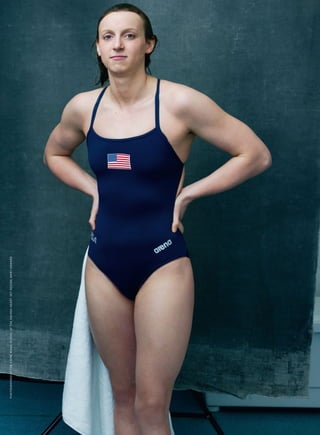
  • 268.
    M O ME N T O F T H E M O N T H C H A M P I O N S PUTTING ON AIR After releasing a couple of attention- grabbing mix tapes, Houston-born rapper Travis Scott debuted his acclaimed album Rodeo late last year. Scott wears a NikeLab x RT jacket ($225), T-shirt ($75), and shorts ($120); nike.com/ nikelab. Nike tights and sneakers. Model Joan Smalls wears a NikeLab x RT crop top ($110) and 2-in-1 shorts ($210); nike.com/nikelab. Givenchy by Riccardo Tisci earrings and shoes. Givenchy Haute Couture by Riccardo Tisci bangles. Details, see In This Issue. Fashion Editor: Sara Moonves.
  • 269.
    L E AG U E
  • 270.
    n the beginning,sports and fashion were two worlds, separately created by separate gods. In 1964, when Bill Bow- erman shook hands with Phil Knightandsetoutontheroad to designing Nike’s now iconic shoes with a waffle iron in a kitchen in Oregon (all func- tion, very little form), Yves Saint Laurent was on the verge of debuting a Mondrian A-line dress that was, conversely, designed not for speed or stretching or any kind of performance aside from, say, a Merce Cunningham premiere. Sprint forward to today, when we are all faster, stronger, more flexible in terms of how we move, what we do, and when we do it. Which means that fashion and sports (and the streets that sports live on) have become one world, with crossover gods. Today, a young designer like Shayne Oliver starts his career not at the Chambre Syndicale de la Haute Couture,SaintLaurent’salmamater,butbymakingT-shirts andsweatshirtsforfriends.AlexanderWangisshowingneo- prene sweats. Rihanna is working with Puma, Kanye with Adidas. And now the paradigm shift as Nike, the world’s top-seeded maker of clothing designed to help break world records,stepsintoplayintheworldof ready-to-wear.Nike’s designershaven’tjustbeenhangingoutinlockerrooms.“We go to a lot of shows,”one of them told me. Movement and speed and ease and functionality are now intrinsic to so much that we wear, whether on the ield or in an Uber. Thus we have NikeLab, the place where Nike designers work out with that fashion world. Up to now, the results have been on the gorgeous side: In her fall/holiday pieces for NikeLab (she did a spring/summer collection, too), Sacai’s Chitose Abe took company staples like Wind- runners and Tech Fleece and added sheer trapeze pleats and proportions that made the pieces seem to ly. Now we have three NikeLab collections (Summer of Sport, they’re calling it) set to leave the gate to celebrate the Rio Olym- pics—in collaboration with Kim Jones, Jun Takahashi, and Riccardo Tisci. These days, everybody wants to work out with a fashion designer. As Apple picked up people from Burberry, Saint Laurent, and Gap prior to launching its watch, so Nike Women—the largest women’s athletic brand in the world, currently weighing in at a valuation of $5.7 billion—is part- neringwiththe fashionworldwiththegoalof gainingabout $5 billion in sales by 2020. And then there are the athletes, who, in a crossover world, are rock stars. “Look,”says Tisci, “in the seventies and eighties, sporty people could wear only sportswear, and artists had to look only dirty and under- dressed. Today the world has changed, and these kids who are heroes of sport want to look good—they want to bring their own personality to the playground!” To investigate the practicalities of Nike’s fashion partner- ships, I took a trip out to the company’s world headquarters in Beaverton, a place where people work with sensor-draped athletesontreadmillsinsimulatedBrazilianclimates.(When I was in the Nike Sport Research Lab, the sprinter Ryan Baileywasrunningatwhatseemedclosetothespeedof light while images of his body were being examined in a room that looked as if it were supporting the power grid for L.A.) It struck me that Nike designers were drastically more open abouttheirinterestinfashionthanonmyvisitsinyearspast. “DowegeekoutonGivenchy?”adesignerwhoworkedwith Tisci asked. “Yes.”But they still stress performance as their core.“If therewereaphotoinishbetweenperformanceand style,performancewouldwin,butthetwogohandinhand,” said Martin Lotti, Nike’s global creative director. And yet fashion’s beneit to performance remains rel- atively undocumented. “I remember talking to Maria Sharapova, and she was telling me that she will play better if she looks better—that is deinitely a common thread with athletes we work with,”said Lotti. (When I spoke with the Olympic-champion decathlete Ashton Eaton recently, he seconded: “Feel is connected with physical. I very strongly believe that if something in your mind feels lighter and faster and makes you feel stronger, that placebo is not a negative thing; it’s a thing that works.”) One way to lure designers is with vintage Nikes. Jar- rett Reynolds, senior design director of NikeLab, talked about fashion’s forever interest in shoes like the Air Force 1, which Tisci redid (his new-old model, the Dunk Lux High, came out in February). That shoe’s icon status, Nike argues, came second. “We made a real-deal performance product and the culture adopted it and made it an icon,” Reynolds said. Working on Air Force 1 was a dream for Tisci, afectionately referred to at Nike as a “sneakerhead.” “If somebody asked you to work on the Sistine Chapel in Rome, you wouldn’t change it completely—you would just modernize it, because it’s so beautiful,”he said. For the new Summer of Sport collection, Nike flew to Paris, Tisci to Beaverton, where, in the gorgeous gym, he momentarily relived his childhood basketball career, even if the shots he took did not relect his prowess as a designer (“I hadn’t played in a long time,”he stressed). He got pushed into performance aspects of the design. “We made Riccardo uncomfortable,” Reynolds said. The end result: shorts morphed with tights, kaleidoscopic color prints that no Nike apparel designer would have dared suggest, and botanical nods not only to Brazil but to his own upbringing in the south of Italy—all engineered into Nike’s best-selling sports bra. I GAME CHANGERS With a self-titled debut album that went straight to number one and the honor of being the only artist to have his first four singles simultaneously in the top ten, Fetty Wap has made himself a force to be reckoned with. Fetty wears a NikeLab x Kim Jones jacket ($275), T-shirt ($175), and pants ($225); nike.com/nikelab. Nike zip-up sweater, $65; nike.com. Model Cameron Russell wears a NikeLab x Kim Jones top, $175; nike.com/nikelab. Louis Vuitton Bermuda shorts; select Louis Vuitton boutiques. In this story: hair, Didier Malige; makeup, Gucci Westman. Details, see In This Issue. AMID OUR ONGOING LOVE AFFAIR WITH SPORTS —AND BOASTING NEW COLLABORATIONS WITH RICCARDO TISCI, KIM JONES, AND JUN TAKAHASHI—NIKE STEPS UP INTO FASHION’S PREMIERSHIP. BY ROBERT SULLIVAN. PHOTOGRAPHED BY GREGORY HARRIS. C O N TIN U ED O N PAG E 28 8 272
  • 271.
    M O ME N T O F T H E M O N T H PRODUCEDBYKATECOLLINGS- POSTFORNORTHSIX
  • 272.
    TWO SHAKES Run, don’twalk, to the Rihanna: Anti World Tour, stopping at the Prudential Center in Newark on April 2. On Lily Aldridge (NEAR RIGHT): Tory Sport shag backpack, $425; torysport.com. Ralph Lauren Collection jumpsuit, $2,990; select Ralph Lauren stores. Alix bikini top. Bulova watch. On Gigi Hadid: Chanel nylon-and-mesh backpack, $2,600; select Chanel boutiques. 3.1 Phillip Lim tank top, $275; 3.1 Phillip Lim, NYC. Sportmax pants, $595; Sportmax, NYC. Details, see In This Issue. Fashion Editor: Tabitha Simmons. WhattoWearWhere
  • 273.
    L eade rs of t h e It’stheseason ofthebold, brilliant,and built-to-move supersatchel. GigiHadidand LilyAldridge takethe brightestofthe bunchonan energeticromp forspring. Photographed byPatrick Demarchelier. Pack
  • 274.
    CASING THE PLACE Power-lunch invivid white and crisp primary colors at Covina, James Beard Award winner Tim Cushman’s new restaurant, opening this month in Manhattan’s Park South Hotel. Dior bag, $3,700; select Dior boutiques. Lacoste dress, $295; lacoste.com. Bulgari watch. BEAUTY NOTE Makeup mishaps shouldn’t slow you down. Prevent melting and fading with a light, translucent mist of Maybelline New York’s Face Studio Master Fix Setting Spray. WhattoWearWhere 276
  • 275.
    CROSSING THE LINES This refreshing combinationof polo plus plaid is the ultimate preppy mix for the finals at the Miami Open tennis tourney in Key Biscayne. Stella McCartney striped wicker bag ($1,750), check knit bag, polo shirt ($675), and skirt ($1,595); Stella McCartney, NYC. Details, see In This Issue.
  • 276.
    BUCKET LIST Silky comfortis the name of the game here—floaty skirt, fuss-free top, holdall bag. It’s a throw-on-and-go ensemble perfect for a double feature at the Tribeca Film Festival. Sportmax suede bag, $795; Sportmax, NYC. Victoria Beckham tank top ($1,150) and skirt ($2,190); victoriabeckham .com. Shinola watch. AGL sneakers. WhattoWearWhere 278
  • 277.
    DANCING ON AIR Reinvigoratethe shirtwaist look with oversize sleeves and contemporary fiery accents—then grab a wild cayenne–colored tote and head out to NYC’s Joyce Theater to catch the visiting Miami City Ballet. Michael Kors Collection drawstring bag, $2,990; select Michael Kors stores. Public School jacket ($575) and shorts ($380). Jacket at (212) 302-1108. Shorts at select Nordstrom stores. Roger Vivier sneakers. Details, see In This Issue.
  • 278.
    WhattoWearWhere CIRCLE UP Grommets and pocketsand chains, oh my—this bag has it all! Sling it over your shoulder to take in the Steve McQueen exhibition at the Whitney Museum of American Art. Versace suede backpack ($2,995) and jersey dress ($2,375); select Versace boutiques. Caeden bracelet. 280
  • 279.
    ZIP CODES The wonderfully utilitarianfanny pack gets a stylish makeover in molten metallics and heavy hardware. Pair it with a graphic tee and short shorts for a visit to fitness-cult-favorite the Class at Taryn Toomey’s new studio in Tribeca. Jimmy Choo belted bag, $1,450; select Saks Fifth Avenue stores. Fendi backpack ($2,700) and backpack charm; select Fendi boutiques. Longchamp top ($340) and shorts ($195); select Longchamp boutiques. Bulgari watch. Details, see In This Issue.
  • 280.
    LINE ’EM UP Thejagged stripes on this carryall pouch (and the bloodred track pants) fit the mood for the Broadway premiere of American Psycho, starring Benjamin Walker. Kenzo snakeskin-print leather tote bag, $710; kenzo.com. Chloé halter top ($950) and pants ($1,295); select Neiman Marcus stores. Vince shoes. WhattoWearWhere
  • 281.
    FASHION FORWARD You’ll want tostay conveniently hands-free to salute the imminently retiring Kobe Bryant when the Lakers play the Clippers at the Staples Center in Los Angeles on April 6. Louis Vuitton backpack; select Louis Vuitton boutiques. Proenza Schouler cropped crewneck top, $890; Proenza Schouler, NYC. BCBG Max Azria shorts, $298; bcbg.com. Shinola watch. In this story: hair, Duffy; makeup, Tom Pecheux. Details, see In This Issue.
  • 282.
    IndexEDITOR: EMMA ELWICK-BATES IN! Dive Getreadytotaketheplungeinto theadventureandromanceof freshwaterswimming—theappeal, you’llsoonfind,iscrystalclear. CoolOffHit“refresh”inthese winning lakeside locations. Lake Placid, NEWYORK Nestled in the woodlands of the Adirondacks is an aquatic oasis for swimming,kayaking,waterskiing, and the like. WHERE TO STAY:Lake Placid Lodge Lake Tahoe, CALIFORNIA The best views of this paradise on the California-Nevada border are from the cobalt-blue water. WHERE TO STAY:Basecamp Hotel Lake Champlain,VERMONT Paddle out to one of Lake Champlain’s approximately 80 islands for a sun-soaked day of fun. WHERE TO STAY:Basin Harbor Club Echo Lake, MAINE Don’t be fooled by its northern exposure: Echo Lake Beach’s shallow depths mean warm swimming well into the evening. WHERE TO STAY: The Claremont Lake Powell, UTAH Hike,camp,and climb the red rocks in southern Utah’s canyons, ending with a dip in Lake Powell— think dramatic desert without the dryness. WHERE TO STAY: Amangiri 6 3 2 1 4 5 1:COURTESYOFNIKE.2:COURTESYOFBARNEYSNEWYORK.3:COURTESYOFCHRISTOPHE ROBIN.4:COURTESYOFTYRSPORT.5:COURTESYOFCHLOÉ.6:COURTESYOF1STDIBS.COM. TEPEE:NICOLEBOUCHER.BREATHEINN,LANESVILLE,NY.DETAILS,SEEINTHISISSUE.
  • 283.
    7 8 9 13 11 12 10 1. Nike swimcap, $14; academy.com. 2. Flagpole Swim rash-guard swimsuit, $450; Barneys New York, NYC. 3. Christophe Robin Cleansing Purifying Scrub with Sea Salt, $52; sephora.com. 4. TYR Sport goggles, $20; tyr.com. 5. Chloé sandal, $865; Just One Eye, L.A. 6. Robert Mallet-Stevens folding chairs; 1stdibs.com. 7. Hermès beach throw, $540; hermes.com. 8. Bottega Veneta bag; (800) 845-6790. 9. Prism sunglasses, $408; prismlondon.com. 10. Sanborn Canoe Co. paddles, $180 each; domesticdomestic.com. 11. Zeus+Dione swimsuit, $179; zeusndione.com. 12. Crate & Barrel picnic cooler, $70; crateandbarrel.com. 13. AGLsandal, $397; agl.com. CHECK OUT VOGUE.COM FOR MORE SHOPPABLE LOOKS 7:COURTESYOFHERMÈS.8:COURTESYOFBOTTEGAVENETA.9:COURTESYOF PRISM.10:COURTESYOFSANBORNCANOECO.11:COURTESYOFZEUS+DIONE. 12:COURTESYOFCRATE&BARREL.13:GORMANSTUDIO.CLIFF:CARTERSMITH. PRESLEYANDKAIAGERBER,VOGUE,2015.DETAILS,SEEINTHISISSUE.
  • 284.
    LOVE AND GRIEF CONTINUEDFROM PAGE 126 and stung my throat. But I left it alone. It’s still his password. After our wedding, I moved to Ge- neva to live with Andy. Throughout our apartment, framed photos of Laurence, Evan, and Baptiste mingle with others of us. Their names come up in regular conversation. His past is always there, but it doesn’t get in the way of our future. We were cautious leading up to the five-year anniversary of the earth- quake. Andy still hadn’t done any- thing with his family’s ashes, wanting to include Laurence’s parents and sister in any decision he ultimately made, but he felt an obligation and a desire to commemorate the day. And so together we took the three big urns down from the shelf, scooped out a handful of ashes from each, placed them into separate containers, and carried them to the Arve River. The mundanity of the act—we used small plasticIkeabins,whichIlaterwashed in the dishwasher next to our dirty plates and forks—was surpassed by its quiet signiicance. Andy took the containers out of his pocket one by one, emptied them slowly, and we watchedtherivertaketheashesaway. Two days earlier we had found out that I was pregnant. As the ashes mingled with the water, turning the stones underneath a foggy gray, we knew that the future held life. I used to feel that my friends with children could identify with Andy’s loss in a way I couldn’t. I never knew what it was like to have children, to lovesomething thatmuch andthento imagine it taken from me. Now that I was pregnant, already beginning to feel my own protective instincts, I’d find myself staring at him, my hus- band, amazed all over again by what he has lived through. About a week after we found out I was pregnant, Andy held my hand at our irst checkup. As the Swiss doc- tor examined me, he paused. “Oh,” he said. I flinched—was something wrong? “Twins,” he said. “You are having two.” We stared at the black-and-white screen in front of us, at the two little blobs with barely recognizable heads. “I’m going to have two children again,” Andy said, tearing up and laughing at once. Weeks later we found out that the twins were boys. For a long time, Andy vowed that he would never remarry, certainly never have children—the vulnerabil- ity that kind of attachment brings terrified him. Today, he wonders at the contradictions in a world that can include both an earthquake and the improbable conception of twin boys. Andy says he has reconciled his powerlessness, his lack of control, not only over history and calamity, but also over loving again. Andy’s family has said that there was a time they didn’t know whether the old Andy would ever reappear. Butthesedayshe’llstophimselfwhen we’re on a walk, or while we’re feed- ing the boys on the couch, surprised by joy—by the happiness he thought he’d never experience again. “I think about how much I lost,” he said to me recently, with something close to awe in his voice. “But I also think about how much I have.” HOUSE OF MIRTH CONTINUED FROM PAGE 134 watercolors, Whistler paintings, Vic- torian lamps and Oriental screens, little velvet boxes stufed with human hair. I spent hours up there picking through clothes—wool skirts, velvet- and-brocade dresses, hunting jackets, ballgowns—andsneakingdowntomy room to try them on. At the beginning, I dreaded meals—but when I realized that no one seemed to think it strange that I wasn’t speaking, or that I was clutching my chair so I wouldn’t fall, I gradually began to look forward to them. Except for formal dinners, we ate in the kitchen. The walls were painted eggshell blue, the ceiling covered with silver wrapping paper. Grandma, who wore her dark hair in a bob—in her youth, she had been known as a beauty—sat at one end of the table and Papa, my grandfa- ther,attheother.Eachofthemworea daily uniform, Papa black pants and a white button-down shirt, Grandma a denim skirt and a lavender or blue blouse that functioned as her garden clothes. While something delicious had always been prepared—roast lamb with mint sauce and wild rice, a slabofsalmon,cornmealpancakes— everyone was also free to eat what they pleased. Grandma’s meal of choice was a large piece of cow liver topped with raw bean sprouts, while Papa’s was grape-juice concentrate from the can. Besides my aunt’s col- lege roommate, Carol, who’d come for a visit 20 years ago and never left, there were always other people around—my two uncles who still lived and worked on the property and their girlfriends or children, the vari- ous inhabitants of the tenant houses, the young men helping to construct the fish pond or rice paddy, family friends like the art appraiser up from Boston or the tiny Austrian spy. The table was piled high with food; when the door was left open, the chickens wandered in. (In 2001, when the family could no longer aford to keep it, Cherry Hill was sold to a wealthy young banker, who uses it as his summer residence today. Needless to say, it has been substantially cleared out and re- modeled. I have yet to see it in this state—though the new owner is ame- nable to giving tours for our family members—yet what it’s lost in ec- centricity it has apparently retained in allure. My nine-year-old nephew recently returned from one of these tours, bug-eyed, and constructed a Minecraft version of what he called “the mansion,” which he eagerly walked me through.) Little by little, my shakiness dwin- dled. The house ofered much, yet it also requested things. Like Sally, I took it upon myself to clean up the kitchen nightly; I weededthe clayten- nis court. I recovered my former ath- letic prowess by learning to ride my uncle Nick’s unicycle back and forth down the hallway from the kitchen to the library. Gradually I even began to talk, little by little, to Grandma in the kitchen. Having relaunched my ap- prenticeship, I was reading The Por- trait of a Lady, and she told me about reading Henry James aloud to her 100-year-old mother and how, when they got to his late style, “the sentenc- es so impossibly complicated,” she feared that her mother would believe that she had inally and deinitively lost her mind. She recounted scenes from her childhood abroad—her father was a well-respected artist who traveled Europe collecting works for Boston’s V O G U E . C O M 286 V O G U E A P R I L 2 0 1 6
  • 285.
    Museum of FineArts—and her honeymoon out West with Papa; she talked of her gardening plans, her home-improvement projects (“I’ve decided that my closet needs to be cleared out every 45 years, and that’s now”). We made pilgrimages outside to see the things she’d planted—the katsura at the wood’s edge, the pink dogwoodoutbythecurveinthedrive that “seemed to have died in despair” because of the drought (“They have shallow roots,” Grandma said) but that, thanks to bucket after bucket of water, was now reviving. One eve- ning, in the latter part of my stay, GrandmatookmetoseeShakespeare & Company’s outdoor performance ofAMidsummerNight’sDreamatthe Mount. We sat on the grass, a picnic between us, and watched as the band of fairies came creeping toward us through the trees. Several months passed. I could easily have lingered, as had so many others, but it felt like the right time to be going on my way. But not before hearing, as I came down the stairs, Grandma sitting at her writing desk murmuringsomethingintothephone to my mother. (The two had been in closetouchoverthecourseofmystay.) “She seems all right to me,” she said. It was just what I needed as a benediction. WORKING IT CONTINUED FROM PAGE 234 the paradigm has shifted. . . . Lil Sis kiiiiiiiilled this shit!!!!!!!” Backstage, Rihanna and her team—a tight-knit group with whom she travels everywhere, including Forde, Rosales, and Ciarra Pardo, her creative director of ten years and the head of her production company, also called Fenty—are celebrating. Rihanna leaps from a couch and envelops me in a warm hug. Cham- pagne is flowing. Pardo crosses the room to embrace Rihanna. “You killed it!” she says. “Didn’t they kill it?” Rihanna says, delecting credit to the models. “How do you feel?” I ask. “I feel like I’m loating right now,” she says. “I feel elated.” I ask her about her inspirations for the show, which include Japanese street culture (“Every time I go to Ja- pan, it’s like, ‘Wow’ ”) and nineties music and fashion. “All my favorite artists and fashion icons and models are from the nineties,” she says, citing fellow glamazons Naomi Campbell and Cindy Crawford, as well as Mary J. Blige, Lil’ Kim, Gwen Stefani, Jean Paul Gaultier, and John Galliano. “Everybody was just so fearless.” The room grows loud, and Rihanna shushes a group that happens to in- clude Campbell. (Who else can shush Naomi Campbell?) Puma has already seen its fourth- quarter sales rise from Rihanna’s involvement with the brand, which bodes well for her other collabora- tions, including one with Christian Dior on a line of sunglasses this spring. Last year, Rihanna also be- came the first black face of Dior, a distinction that was initially lost on her, so caught up was she with “the Dior aspect.” “I was already proud to be a Dior woman, but to be a black Dior woman and the first: It did something else for me.” In her quest for world domination, Rihannawillnodoubtkeepupending outdatednorms.It’snotacoincidence that so many of her Puma designs are unisex. “I always wanted to do what my brothers were doing,” she says. “I always wanted to play the games they playedandplayroughandwearpants and go outside.” She still wants to. “Women feel empowered when they candothethingsthataresupposedto be only for men, you know?” she says. “It breaks boundaries, it’s liberating, and it’s empowering when you feel like, Well, I can do that, too.” TIPPING THE BALANCE CONTINUED FROM PAGE 265 you have to be precise in every move- ment,” she says. “It requires intense concentration and focus. I’ve learned to trust my balance. But I work at it.” The pursuit of better balance is one that has taken hold of the itness world as well, from Miami Beach health club Anatomy at 1220’s new steel-mace weight-training classes to the increasingly popular nimble combat sports like Muay Thai and boxing. “Workouts that have you moving dynamically through dif- ferent planes will help with stabil- ity—and that’s the new frontier,” says Lisa Giannone, rehabilitation and conditioning specialist for the San Francisco Ballet and founder of the Garage itness studio, whose fast- paced Hammer and Gravity classes, filled with sprints, squatting, and single-leg jumps, have a cultlike fol- lowing among Bay Area ballet danc- ers and boxers. “Balance is ground zero for all movement,” adds Randy Humola, manager of Gotham Gym in New York. Researchers from Johns Hopkins University School of Medicine re- ported several years ago that nearly 20 percent of people in their 40s can’t stand completely still on a lat foam surface with their eyes closed for 30 seconds—a classic test of balance. Much of the blame lies in our ainity for the chair, seat of a multitude of modern woes. “When you’re sitting, you’re not engaging your core, and those muscles, along with the ones in your ankles and lower legs, are what keep you upright and stable,” says Helen Bronte-Stewart, M.D., a neurologist and former dancer, who directs the Stanford Human Motor Control and Balance Laboratory at the School of Medicine. Balance begins deteriorating in your 30s, even among many fitness devotees; for instance, running—my daily cardio—does little to bolster the muscles that confer steadiness. As your balance declines, so, too, do yourinesse, grace,andcoordination. Research shows that balance train- ing can prevent injuries, especially among those who, like me, grapple with recurring ankle-ligament prob- lems. It also tones muscles (espe- cially the core), keeps us agile, and improves posture. My own concerns began last fall in Barneys’ shoe department. I spotted a pair of suede Isabel Marant booties with a sculpted four-inch heel, per- fect for a spate of upcoming events on my calendar. But when I zipped the boots and stood, I felt unsteady— like a sixteen-year-old in her irst pair of stilettos. It’s been a while. You’ve been living in your Marsèll oxfords, I told myself. You’re just out of the heels habit. I took a few careful steps, and even then my left ankle nearly collapsed outward, a close call that brought to mind a series of sooner- forgotten incidents: stumbling and spilling Cabernet (my first glass, I swear) on a friend’s new upholstery. Reaching for the wall to steady my- self while pulling on a pair of skinny pants.Whathadhappenedtomybal- ance? I CONTINUED ON PAGE 28 8 V O G U E . C O M V O G U E A P R I L 2 0 1 6 287
  • 286.
    was raised ongymnastics and ballet. I ski, I surf. I would not be laid low by a pair of party shoes! First things irst: I needed to know how of-kilter I really was. For that, I visited Aaron Sparks, a biomecha- nist at the University of California SanFrancisco’sHumanPerformance Center, and a balance fanatic who can stand for full minutes on a stabil- ity ball without wavering. He put me through a standard physical-therapy screening tool, the Y balance test: Whilestandingonmyleftleg,armsat my side, I slid my right foot along the ground as far as I could to the front, sideandbehindme,thenrepeatedthe process on the left side. Sparks pro- nounced me “average, maybe slightly above” and sent me on my way with this advice: “Strengthen your core with planks and side planks and re- place your desk chair with a stability ball.” To stabilize the muscles around my knees and ankles, he suggested single-leg squats. Seeking reassurance (average is a tough adjective to swallow), I called Daniel Merfeld, Ph.D., professor of otology at Harvard Medical School and director of the Jenks Vestibular Physiology Laboratory, and asked him to elucidate the challenge of balance. “It’s like setting the tip of a broom handle on the palm of your open hand and trying to keep it up- right,” he said. The human body, he explained, is actually like six of those unstable witch’s brooms (our weighty heads balance on slender necks, our hips and thighs teeter atop narrow knees, et cetera)—all stacked on a single pair of feet. Small wonder ex- perts drive home the importance of a strong core. So how does Biles work on hers? “I do 30 minutes of abs every day,” she says. Her favorite technique: rolling across the floor from back to front and front to back with her arms and legs off the ground at all times. “It strengthens your back muscles, and people often neglect that part of their core,” says her longtime coach, Ai- mee Boorman. “Simone trains hard, but she also has uncanny air aware- ness. She can judge where she is in re- lation to the ground, even when she’s upside down. Some things you just can’t teach.” Biles, according to Harvard’s Merfeld, has been blessed with an unusually keen vestibular system, the labyrinthine arrangement in the inner ear that monitors the position and movement of your head—and plays a critical role in balance. Hold- ing oneself steady requires a complex coordination among the vestibular system and two other factors: pro- prioceptors, which are the GPS-like sensors in your muscles, joints and tendons that send the brain up-to- the-millisecond information about your body’s relative position (they’re the reason you know your ankle is starting to roll, even though you’re not looking at your feet), and vision, which plays a surprisingly important role, as any yogini who tries to close her eyes in tree pose knows. Balance, like most motor skills, is about 50 percent genetic, so I can partly blame my parents for my me- diocre ability. “But almost every- one can improve significantly with practice,” says Daniel Ferris, Ph.D., director of the Human Neurome- chanics Laboratory at the Univer- sity of Michigan. “From the time you start losing your balance,” he says, “you have up to one second to catch yourself.” He knows this because he has covered study subjects’ scalps with electrodes and had them walk on balance beams mounted to tread- mills to see what happens when we begin to fall. Healthy young adults, he learned, typically react in about 400 milliseconds; older people may take an additional 150 milliseconds more—a micro-lag that can mean the difference between getting on with your day and winding up in the ER. In other words, balance isn’t just about strength; I need to be quick, too. The most effective way to keep one’s reaction time sharp, says Ferris: Do activities that throw the body of balance, and force it to recover, over and over again. Thus, the BOSU ball, the precari- ous perch on which I now strength train. I began by standing on it with two feet for a few minutes at a time, then the next day added arm exer- cises. After several weeks, I have upped the ante by doing upper-body strength training on one foot—far more diicult. I bolster all the work I’m doing by sprinkling balance chal- lenges throughout my day—standing on one leg and closing my eyes while I brush my teeth, for instance. By the time I’m sitting in Bronte- Stewart’s office at Stanford, where I’ve come for a reassessment, I’ve been maxing out on tree poses and holding planks for up to two minutes for nearly three months. It’s been weeks since I’ve slipped, stumbled, or bumped into a doorway. During the half-hour analysis (Stanford em- ploys a more sophisticated system than the Y balance test), I stand on a movable metal plate that measures the slightest shift of my feet or sway of my body, while the lab assistant puts me through a series of tests— standing on the plate while it moves forward and backward and side to side, sometimes with my eyes closed, sometimes open. I feel stable—and I am. Overall I score higher than peo- ple with normal balance. The next day in yoga, while twist- ing into eagle pose, I totter and have to put my foot down. Really? I think with a spike of irritation. Then I re- member something Biles told me: “A loss of balance is really a loss of focus. When you’re doing something that requires lots of balance, you have to concentrate. I can be clumsy outside the gym, too.” MOMENT OF THE MONTH CONTINUED FROM PAGE 272 “He pushed us to a place where we wouldn’t have had the conidence to go on our own,” Reynolds said. Tisci also pushed them to a place where gender lines were blurry, where male and female pieces are interchangeable—something you see a lot of when sportswear is on the street. “The walls between him and her were less important,” said Reynolds. The designer Jun Takahashi runs close to 20 miles a week dressed, he says, “head to toe” in the pieces he’s been collaborating on with NikeLab since 2010, a highly technical and sharply cut layered collection called Gyakusou (translation: “running in reverse”). “We usually start by say- ing, ‘OK, Jun, what’s been happen- ing with your running?’ ” explained Reynolds. If you replaced the terms art and beauty in the definition of couture with design that gorgeously frames and assists the performance of the body, then Gyakusou would be couture. Takahashi’s own ready- to-wear collection, Undercover, V O G U E . C O M 288 V O G U E A P R I L 2 0 1 6
  • 287.
    has always includedfunctional ele- ments, raising the question, What is the difference between sportswear and ready-to-wear out in the ield? “I think we’re seeing very little differ- ence between the two on the streets,” he says. When I finally caught up with Kim Jones, the Vuitton men’s style director, he had just taken a plane to a plane to another plane, each one smaller, until it let him out in a southern coastal forest in Vietnam, track-suited and trainered-up. (The NikeLab team had pegged him years before as a sneakerhead.) “He knows tech, and he’s been part of street cul- ture forever, so he spoke the language of Nike culture,” said Reynolds. For his collaborations, Jones was shown the Windrunner, a 1978 Nike piece that quickly crossed over from mar- athoning to New York City break- dancers in the eighties. Jones was also shown technical data—along the lines of charts by Nike’s research lab that indicated where a runner is hot, where not. “It’s no use to outcool them,” Reynolds said. “You have to outnerd them.” Jones approached athlete perfor- mance from the vantage of travel—a silver in South America one day, a gold in Europe the next—something he knows in his bones as the son of a globe-traveling geologist. In the end, Jones collaborated on jackets that are,amongotherthings,nearlyseam- less engineering marvels of packing performance, perfect to work out in, perfect to pack, perfect to run in—and vaguely secret agent–like. “It really gets down to almost zero when you fold it in your bag,” he says. (When we spoke he was headed out to see his irst extremely endangered black-shanked douc langur in the Ninh Thuan province. “There’s only about600ofthemleftinVietnam,and they are called the painted monkey— and they are the most beautiful mon- key in the world,” said Jones.) All the designers sounded ready to burst out of the gates to fashion new sport—and vice versa. Tisci, for one, thinks his fashion idols would approve. Though he never met Coco Chanel, he inds her a simpa- tico spirit when it comes to break- ing down the differences between events and categories. “She was one of the first people to bring women from Victorian-looking dresses to a male look when she deconstructed the jacket,” he said. “What I’m doing today, she did already in her time. I think she would be like, ‘Go, Riccar- do, go!’ I think she would be a sup- porter.” EASY DOES IT CONTINUED FROM PAGE 268 behind the facade of ine dining.”Lett is 37, but he seems ten years younger: Bearded, with a tangle of sun-streaked hair pulled back in a ponytail, he has the calm manner and messy charm of a professional skateboarder or a successful designer or the handsome barista behind the counter. Still, he’s as driven and focused as the chef of a ine-dining restaurant. His food is café fare treated with a near-religious rever- ence and served on a battered pewter plate you can take over to one of the lea-market tables on the back patio. Gjusta’s croque madame is on the breakfast menu, which is something of a feint, given that the breakfast menu is offered all day long. This is the other thing happening in Los Angeles: The categories that most Americans use to sort out which dish goes where—breakfast, lunch, dinner—are disappearing. Restau- rants that were once in the business of delaying gratiication will now fulill your desires right away. If you want steak for breakfast, you can go, at eight o’clock in the morning, to the counter at Eggslut in the revitalized 99-year-old Grand Central Market in Downtown, and order a seared wagyu–and–egg sandwich with chi- michurri; you can also get a bacon, egg, and cheese sandwich for a late lunch. You can get char siu pork roti with wilted bok choy for breakfast at the Paramount Cofee Project in the Fairfax District, or cashew-nut yo- gurt with fresh fruit and house-made granola for dinner. It’s as if brunch took over the entire day, and dishes once seen only at nine at night are now free to show up at nine in the morning or four in the afternoon or whenever the creative class that gives Los Angeles its edge feels like it’s time to eat. This approach to dining isn’t en- tirely new. As in many other cities, a number of all-night L.A. diners opened in the irst half of the twenti- eth century. In the 1960s and 1970s, a number of them became social hubs for the counterculture: You went to Ben Frank’s on the Sunset Strip or to Ships in Westwood or to Canter’s in the Fairfax District, a Jewish deli that Frank Zappa once called “the TopFreakoWateringHoleandSocial HQ.”BenFrank’swassold,andShips was razed, but the freakos still go to Canter’s to feed their appetites with a burger and fries for breakfast. Trois Familia, the latest venture from Ludo Lefebvre (of Trois Mec) and Vinny Dotolo and Jon Shook (of Animal), has taken that idea and turned it into a founding principle. There’s only one menu all day long (right now, Trois Familia closes at 3:00 p.m., although you can book the restaurant for a private party at night), and it’s a counterintuitive mash-up of Mexican food and clas- sic French cooking that sounds like a stoner’s wish list but can be daz- zling on the plate. Buckwheat crepe with chorizo and avocado crema; tres leches cake that looks like a sad supermarket confection you eat in spite of yourself but that’s actually as elegant and light as a baba au rhum. Ever since Trois Familia opened in a dumpy strip mall in Silver Lake last October, the wait to get a seat at one oftheglossywhitepicnictablesinside has been measured in hours. It’s time well spent if you order the duck confit, which is as traditional as you will find, served in a shallow bowlwithmintandcilantroandleche de tigre (the citric marinade you use for ceviche)—a weird and wonder- ful companion. Every bite is a play between the rich, meaty duck and the sharp, sweet, ginger-tinged broth. Or if you get the beet tartare tostada, which is a play on one of the great dishes at l’Arpège, the gastronomic temple in Paris where Lefebvre once worked.“Thebeetsarecookedinsalt, andthenit’saclassicmayonnaisewith oliveoil,eggyolk,andatouchofmus- tard, then some dried chile and lime,” Lefebvre said, explaining why a dish that doesn’t look like much—a salad piled on a crisp tortilla—has such depth and complexity. Essentially, it’s haute cuisine with the windows open and the top down and the stereo turned way up. “Really this is French food and technique with ingredients and lavors from Mexico,” Lefebvre said. CONTINUED ON PAGE 290 V O G U E . C O M V O G U E A P R I L 2 0 1 6 289
  • 288.
    Contents64:Top,$990; ByGeorge,Austin,TX. Skirt,$990;(312)587- 1000forinformation. Shoes,priceuponrequest; selectPradaboutiques. Coverlook72:Dress, priceuponrequest;Tom Ford,NYC.Editor’sletter 80:OnRihanna:Dress, priceuponrequest;Saint Laurent,NYC,(212) 980-2970.Contributors 120:OnFanning:Top ($300)andpants($325); needsupply.com.Flash 136:Dress,$8,500; gucci.com.AlexisBittar ring,$275;AlexisBittar boutiques.View166: CharlotteChesnaisring, $570;DoverStreetMarket NewYork.MaisonMargiela Line12FineJewellery Collection18K-goldtwo- ingerring($1,300)and 18K–whitegoldtwo-inger ring($1,400);Maison Margielaboutiques. IsabelMarantsandals, $585;IsabelMarant,San Francisco.168:Onvander Kemp:Sweaterandpants (priceduponrequest); sandro-paris.com. GivenchybyRiccardo Tiscisneakers,$495; neimanmarcus.com. Görner:PaintingGallery, Berlin.Paintings:Right: TheCapitularsfrom Utrecht,1544,Anthonis Mor.Left:Portraitofan Apostle,1618,Antonvan Dyck.Background:Saint Sebastian,1618,PeterPaul Rubens.170:Crocodile- skinbag,$11,600. 174:LoeweMarquetry wardrobeandchair (priceduponrequest), andnotebook($323); Loewe,Miami.Beauty 194:Dress,$3,695;Calvin KleinCollection,NYC.Pearl earrings,$375;tifany .com.Repossi18K-gold ring,$3,500;Barneys NewYork,NYC.Manicure, JinSoonChoiforJINsoon. PATA209:OnWhishaw: Coat,$3,300;selectGucci boutiques.Amisweater, $270;mrporter .com.RafSimonspants, $542;rafsimons.com.On Ronan:Dress,$2,490; carolinaherrera.com. Tacoriearrings($420)and ring($640);tacori.com. PaulaCademartoriboots, $1,375;10corsocomo .com.212:Journals,$55 each;adriennewong.com. TOMORROWLAND 217: StellaMcCartney sandals,$845;Stella McCartney,NYC,(212) 255-1556.218–219: Watch,$6,550;Cartier boutiques.OnAbraham: Shirt,$45;vineyardvines .com.Shorts,$145; Bonpoint,NYC,(212) 879-0900.OnAva:Dress, $245;oscardelarenta .com.OnCoster-Waldau: T-shirt,$80;BarneysNew York,NYC.220: OnAva: Jumper($32),shirt($22), socks($13forthree),and shoes($39);landsend .com.OnCoster-Waldau: Swimtrunks,$130: solidandstriped .com.221:Ring,$2,200; Bulgariboutiques. Sandals,$795;Fendi, NYC,(212)897-2244. 222–223: Earrings,$475; annelisemichelson.com. GlassWaterBottlewith FruitIceballMaker,$26; amazon.com.224–225: Cuf,$350;alyssanorton .com.Belt,$495;select MichaelKorsstores. OnCoster-Waldau: Poloshirt,$90;Brooks Brothersstores.Trousers, $435;burberry.com. PlayStationVR; playstation.com.Double RoboticsDouble2 TelepresenceRobot, $3,000;doublerobotics .com.226: WowWee CHiProbotdog($199) andMiPosaurrobot dinosaur($99).Robot dogatchipk9.com.Robot dinosauratwowwee .com.227: Ring,$550; sophiebuhai.com.On Coster-Waldau:Jeans, $210;rag-bone.com. J.Crewbelt,$68;jcrew .com.Skyplanters, $59each;boskke.com. SamsungFamilyHub refrigerator;samsung .com.228–229: Choker,$2,045; jenniferisherjewelry.com. Bag,$15,500;Hermès boutiques.Shoes,$995; StellaMcCartney,NYC, (212)255-1556.On Abraham:Shirt($22)and pants($32);landsend .com.Umishoes,$70; umishoes.com.On Coster-Waldau:Sweater, $78;jcrew.com.T-shirt, $80;BarneysNewYork, NYC.Havaianaslip-lops, $18;havaianas.com. Ehang184Autonomous AerialVehicle;priceupon request;ehang.com. Inthisstory,manicure, AlexandraJachno. WORKING IT 230–231: Dress, $10,000;selectRalph Laurenstores.Single-row diamondearcuf($1,025) anddouble-rowdiamond earcuf($2,050);anitako .com.232: Dress,price uponrequest;givenchy .com.235: Bralette,price uponrequest;marchesa .com.Inthisstory, manicure,MariaSalandra. WELCOME TO THE JUNGLE 236–237: Dress, $19,000;selectGucci boutiques.MarcJacobs shoes,$7,100;select MarcJacobsstores.238: Postearrings,priceupon request;givenchy.com. Dropearring($225)and glass-crystaldressclip ($295);LuluFrost,NYC. “I’m not going to make the perfect mole—I’m not going to compete with the Mexican restaurants. But I can take the duck and make it more color- ful, more California.” Lefebvre could have been talking about himself. Tanned, handsome, tattooed, the 44-year-old is a TV per- sonality, one of the stars of ABC’s re- cent cooking competition The Taste. He followed a traditional path at irst and started cooking at fourteen in his native Burgundy before earning posi- tions in the Michelin-starred kitchens ofPierreGagnaireandAlainPassard. Inasenseheisapartofthetraditionof culturedEuropeanswhosetupshopin SouthernCalifornia—ThomasMann had a house in Paciic Palisades; Igor Stravinsky lived in the Hollywood Hills—and found the messy, sun- streaked sprawl to be liberating. You ind that freedom only if you embrace not only what is alluring about Los Angeles, such as produce so consistent and excellent that it’s almost unfair, but also what is vul- gar, such as the strip mall, a cheap and unimaginative building type that ages poorly and that, like it or not, is one of the deining examples of local vernacular architecture. “I love a strip mall,” said Lefebvre. “A restaurant is a business. I really want to be accessible to people, and a strip mall can have the best location and not be too expensive.” In fact, all three of his restaurants are in strip malls, including the bistro Petit Trois, where the omelet is so delicate and custard-like that it only just holds together (the French term is baveuse, which means “drooling”—the eggs should be moist but irm, on the cusp of wet). “You have strip malls every- where, and all the amazing Japanese restaurants with the best chefs are in the strip malls,” Lefebvre continued. “Besides, it’s easy to park. I go, I have my parking place, and I have my cleaner and I get my chef’s jacket; I have my doughnut store. For me it’s fantastic. For me it’s L.A.” The current moment in Los An- geles food can be traced back to October 2012, when Jessica Koslow opened Sqirl on an unfashionable stretch of North Virgil Avenue in East Hollywood. Other like-minded restaurants were already scattered around the city, but it was as if the kombucha-fueled conversations the cooks and tastemakers were holding at the time—that you should build a menu around what you want to eat instead of hewing to convention— solidified into an ideology when Koslow posted her first breakfast menu, which had only a few items. One was toasted brioche with a fried egg, tomatillo puree, and hot sauce; anotherwasbrownriceporridgewith inthisissue V O G U E . C O M 290 V O G U E A P R I L 2 0 1 6
  • 289.
    Hand-shapedbrooch, $410;SoniaRykiel,NYC. Bird-shapedpin,$270; miriamhaskell.com. Gloves,$320; gaspargloves.com. 239:Cufs,$2,050each; selectChanelboutiques. 240–241:Belt,$1,775; selectChanelboutiques. Heels,$1,290;Tom Ford,NYC.242:Cufs, $1,695each;Alexander McQueen,NYC.243: Dropearring,$410;Sonia Rykiel,NYC.Pearlearring ($250)andnosering ($100);fallonjewelry.com. 244–245:Gloves,$50; dawnamatrix.com.246: Dress,$16,450;select Chanelboutiques.Gloves, $50;dawnamatrix.com. Shoes,$1,350;select MiuMiuboutiques.247: Swimsuit,priceupon request.248–249:Dress, priceuponrequest. Inthisstory,LasPozas, XilitlawithFundación PedroyElenaHernández, A.C.;laspozasxilitla.com. mx,pedroyelena.org. KICKOFF 254–255:OnBowles: NikeU.S.Women’s NationalTeamhome soccerjerseyandshorts. Nikesocks($20),soccer shinguards($22),and soccercleats($200);nike .com.OnMorgan:NikeU.S. Women’sNationalTeam squadtrainingtop($55), shorts($65),socks($18), soccershinguards($22), andsoccercleats($275); nike.com.258–259: Niketop($65),shorts ($55),andsocks($18); nike.com. TIPPING THE BALANCE 264–265:Leotard; similar styles at gkelite.com. MONEY FOR NOTHING 266–267: On Danes: Alligator-skin coat, $95,000; altuzarra .com.On Krasinski: Suit, $3,400; Dior Homme stores.Brooks Brothers shirt,$120; Brooks Brothers stores.Tie, $145; paulsmith.co.uk.In this story,manicure,Jin Soon Choi forJINsoon. MOMENT OF THE MONTH 270–271: On Scott: Tights ($45) and sneakers ($75); nike .com.On Smalls: Earrings ($720) and shoes (price upon request).Earrings at Givenchy,NYC. Shoes at givenchy.com. Bangles,priced upon request; givenchy.com. 273: Shorts,price upon request; select Louis Vuitton boutiques. RoxanneAssoulin x Baja East bracelets,$90 each; amazon.com/bajaeast. In this story,manicure, AliciaTorello. WHAT TO WEAR WHERE 274–275: OnAldridge: Bikini top,$125; Mohawk General Store,LA. Watch,$299; similar styles at Macy’s stores. 276: Watch,$3,900; Bulgari boutiques. 277: Knit bag,price upon request.278: Watch,$875; shinola .com.Sneakers,$325; agl.com. 279: Sneakers, $1,325; RogerVivier, NYC. 280: Bracelet, $199; caeden.com. 281: Backpack charm, $1,400.Watch,$9,200; Bulgari boutiques. 282: Sneakers,$295; neimanmarcus.com. 283: Backpack,price upon request.Watch, $875; shinola.com. In this story,manicure, MegumiYamamoto. INDEX 284–285: 6.Folding chairs,$1,920 for set of three.8.Bag,$2,600. LAST LOOK 292: Heels; select Miu Miu boutiques. ALLPRICES APPROXIMATE. VOGUE ISAREGISTEREDTRADEMARKOFADVANCE MAGAZINE PUBLISHERS INC.COPYRIGHT© 2016 CONDÉ NAST. ALLRIGHTS RESERVED.PRINTED INTHE U.S.A.VOLUME206,NO.4.VOGUE(ISSN0042- 8000)ispublishedmonthlybyCondéNast,whichisadivisionofAdvanceMagazinePublishersInc.PRINCIPALOFFICE:1WorldTradeCenter,NewYork,NY10007.S.I.Newhouse,Jr.,ChairmanEmeritus;CharlesH.Townsend, Chairman;RobertA.Sauerberg,Jr.,President&ChiefExecutiveOicer;DavidE.Geithner,ChiefFinancialOicer;JillBright,ChiefAdministrativeOicer.PeriodicalspostagepaidatNewYork,NY,andatadditionalmailingoices. CanadianGoodsandServicesTaxRegistrationNo.123242885-RT0001.POSTMASTER: Send all UAAto CFS (see DMM 507.1.5.2); NON-POSTALAND MILITARYFACILITIES: Send address corrections toVOGUE,P.O. Box37720,Boone,IA50037-0720.FORSUBSCRIPTIONS,ADDRESSCHANGES,ADJUSTMENTS,ORBACK-ISSUEINQUIRIES:PleasewritetoVOGUE,P.O.Box37720,Boone,IA50037-0720,call800-234-2347,oremail subscriptions@vogue.com.Pleasegivebothnewandoldaddressesasprintedonmostrecentlabel.Subscribers:IfthePostOicealertsusthatyourmagazineisundeliverable,wehavenofurtherobligationunlesswereceive acorrectedaddresswithinoneyear.If,duringyoursubscriptiontermoruptooneyearafterthemagazinebecomesundeliverable,youareeverdissatisiedwithyoursubscription,letusknow.Youwillreceiveafullrefundonall unmailedissues.Firstcopyofnewsubscriptionwillbemailedwithinfourweeksafterreceiptoforder.Addressalleditorial,business,andproductioncorrespondencetoVOGUEMagazine,1WorldTradeCenter,NewYork,NY 10007.Forreprints,pleaseemailreprints@condenast.comorcallWright’sMedia877-652-5295.Forreusepermissions,pleaseemailcontentlicensing@condenast.comorcall800-897-8666.Visitusonlineatwww.vogue.com. TosubscribetootherCondéNastmagazinesontheWorldWideWeb,visitwww.condenastdigital.com.Occasionally,wemakeoursubscriberlistavailabletocarefullyscreenedcompaniesthatoferproductsandservicesthat webelievewouldinterestourreaders.Ifyoudonotwanttoreceivetheseofersand/orinformation,pleaseadviseusatP.O.Box37720,Boone,IA50037-0720,orcall800-234-2347. VOGUEISNOTRESPONSIBLEFORTHERETURNORLOSSOF,ORFORDAMAGEORANYOTHERINJURYTO,UNSOLICITEDMANUSCRIPTS,UNSOLICITEDARTWORK(INCLUDING,BUTNOTLIMITEDTO,DRAWINGS,PHOTO- GRAPHS,ANDTRANSPARENCIES),ORANYOTHERUNSOLICITEDMATERIALS.THOSESUBMITTINGMANUSCRIPTS,PHOTOGRAPHS,ARTWORK,OROTHERMATERIALSFORCONSIDERATIONSHOULDNOT SENDORIGI- NALS,UNLESSSPECIFICALLYREQUESTEDTODOSOBYVOGUEINWRITING.MANUSCRIPTS,PHOTOGRAPHS,ANDOTHERMATERIALSSUBMITTEDMUSTBEACCOMPANIEDBYASELF-ADDRESSEDSTAMPEDENVELOPE. sorrel pesto, preserved lemon, blis- tered tomatoes, and a poached egg. The menu sent a message. If you wanted eggs Benedict or French toast, you were free to go to any of the hundreds of establishments that would take your money. But if you were craving something savory and illing and a little weird, you now had ahomewiththegastronomicfreakos. Since then the menu has grown— to 50 or so items, including the baked goods—as have the crowds, which mob the restaurant every morning during the week. “It’s so satisfying to know that I’m not screaming into the wind,” Koslow told me. “I opened a place that’s misspelled, that’s a hole in the wall in the middle of Vir- gil Avenue, and that has a kind of food that’s definable and undefin- able, that’s familiar and unfamiliar.” Koslow grew up in Long Beach, Cali- fornia, where she was a competitive ice skater—her mother, a derma- tologist, was determined to keep her out of the sun. She still has her fair skin. Now she’s either on the line and running her kitchen or making the jams that irst gave her a reputation at Sqirl Away, the take-out spot she’s planning to open next door. Sqirl doesn’t have customers as much as a clientele, a devoted group that wants to be challenged. They go back for their favorites, but they also go back to see what’s new. Fried egg with creamed spinach and on- ion jam; whiteish and crispy trout skin with crème fraîche and pureed acorn squash on toast: The dishes are so strange that they come close to satire, but the lavors are so engag- ing that they make other breakfasts seem as original as a box of Eggos. “I’m not afraid of change and think- ing that there’s something better,” Koslow said, explaining that when she knew she had to have a pancake, she decided to make it out of buck- wheat and cactus flour and bake it in a cast-iron skillet so that it would be grainy, tart, and lufy. (It’s also gluten-free, which is always appreci- ated in Los Angeles.) It is exhausting to work this hard. Gjusta, Trois Familia, and Sqirl could get by with half as many dishes, made with ingredients half as com- plicated. These and other establish- ments are bursting with ideas that the chefsandlinecooksaroundtheworld are aching to develop, reine, and get on the menu. Restaurants are busi- nesses and need to make money, but the new breed of Los Angeles restau- rant seems to be driven by a creative impulse so strong that it comes close to being an art project. “Do I have the energy to pull this of?”Koslowaskedrhetorically.“The answer is, right now I do.” V O G U E . C O M V O G U E A P R I L 2 0 1 6 291 AWORDABOUTDISCOUNTERSWHILEVOGUETHOROUGHLYRESEARCHESTHECOMPANIESMENTIONEDINITSPAGES,WECANNOT GUARANTEETHEAUTHENTICITYOFMERCHANDISESOLDBYDISCOUNTERS.ASISALWAYSTHECASEINPURCHASINGANITEMFROM ANYWHEREOTHERTHANTHEAUTHORIZEDSTORE,THEBUYERTAKESARISKANDSHOULDUSECAUTIONWHENDOINGSO.
  • 290.
    MiuMiuheel,$1,290 Behold the ultimatemidnight mule—entirely handcrafted and teetering in at 120 millimeters. But look closely: It’s also a cleverly deconstructed Mary Jane bejeweled to resemble a starry, crystalline sky—and, while studded to resemble a brogue, its romantic evocation of the boudoir style of old Hollywood mimics that of a bedroom slipper. Though Miuccia Prada, eccentric as ever, paired the shoe with mustard stockings and a leather cape, we’d like to think there are no rules whatsoever for this remarkable, celestial shoe. Well, perhaps one: Wear exceptionally. P H O T O G R A P H E D B Y E R I C B O M A N EDITOR: VIRGINIA SMITH LastLook 292 V O G U E A P R I L 2 0 1 6 DETAILS,SEEINTHISISSUE