Brian Tsikada (MG Seminars 2015)
 What is strategy?
- A method or plan chosen to bring about a desired future,
such as achievement of a goal or a solution to a problem
(may be developed for a short period – 1 yr, but often for a
longer period > 1yr)
- In summary : “ Goal Setting & the Planning process”
- Strategy typically develops along strengths, opportunities,
needs and resources
- Reason/objective of developing a strategy: Self
Improvement
 Components of Strategy
1. Vision
2. Mission/Purpose
3. Goals & Objectives
4. Implementation Plan : Motivation
- An aspirational description of what an organization or
individual would like to achieve or accomplish in the
future.
- It is guide for choosing current and future courses of
action (typically 1-2 sentences)
- e.g. 1. To be a PF club that excels in all the seven skills
areas
 Describes what the organization stands
for/purpose – it outlines its line of activities,
how it differentiates itself and what market it
serves (3-4 sentences)
 It is the means to get to the Vision
e.g. Milton PF club seeks to reach the highest
ideals in the Pathfinder Ministry. We will do this by
identifying and engaging local and external
talented, highly experienced and qualified leaders
to train all Staff and club members in all the seven
Pathfinder Skill Area
Goals
 Desired outcomes needed to be
accomplished so that the mission is realised
 E.g. Certification of Counsellors, Instructors
and other staff members
Objectives
 Specific activities to be done to achieve the
goal. Needs to be SMART
 S = Specific
 M = Measurable
 A = Actioned oriented/Achievable
 R = Realistic
 T = Time framework
e.g. Conduct one 10hr BST program by June
2015 for all Counsellors, Instructors and Staff
members
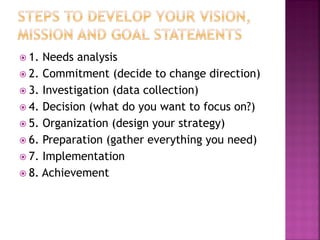
 1. Needs analysis
 2. Commitment (decide to change direction)
 3. Investigation (data collection)
 4. Decision (what do you want to focus on?)
 5. Organization (design your strategy)
 6. Preparation (gather everything you need)
 7. Implementation
 8. Achievement
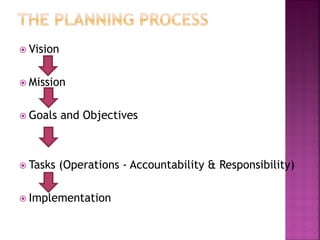
 Vision
 Mission
 Goals and Objectives
 Tasks (Operations - Accountability & Responsibility)
 Implementation
 Develop your Vision Statement, Mission
Statement, Goal Statement for your club
 AJY Clubs are volunteer organizations – club
members + Staff need motivation
Motivation comes out of understanding and
meeting human needs:
Self
Actualization
Esteem
Social
Safety
physiological
Motivating Factors –
1. Achievement
2. Recognition
3. Interest
4. Responsibility
5. Advancement
 Identify 4 major problems in your club, that
cause lack of motivation in individuals –
come up with suggestions of how to motivate
them
 1. Build Relationships
 2. Be a model
 3. Be careful of stereotyping
 4. Provide opportunity for them to take initiative
 5. Involve them in decision making
 6. Make peer influence positive
 7. Provide safe opportunities for risk taking
 8. Develop enthusiasm
 1. Have faith in yourself
 2. Be positive (look for good in them)
 3. Smile
 4. Give yourself
 5. Don’t be let down by obstacles
 6. Rally their friends around you
 7. Give persona

Vision, Mission & Motivation

  • 1.
    Brian Tsikada (MGSeminars 2015)
  • 2.
     What isstrategy? - A method or plan chosen to bring about a desired future, such as achievement of a goal or a solution to a problem (may be developed for a short period – 1 yr, but often for a longer period > 1yr) - In summary : “ Goal Setting & the Planning process” - Strategy typically develops along strengths, opportunities, needs and resources - Reason/objective of developing a strategy: Self Improvement
  • 3.
     Components ofStrategy 1. Vision 2. Mission/Purpose 3. Goals & Objectives 4. Implementation Plan : Motivation
  • 4.
    - An aspirationaldescription of what an organization or individual would like to achieve or accomplish in the future. - It is guide for choosing current and future courses of action (typically 1-2 sentences) - e.g. 1. To be a PF club that excels in all the seven skills areas
  • 5.
     Describes whatthe organization stands for/purpose – it outlines its line of activities, how it differentiates itself and what market it serves (3-4 sentences)  It is the means to get to the Vision e.g. Milton PF club seeks to reach the highest ideals in the Pathfinder Ministry. We will do this by identifying and engaging local and external talented, highly experienced and qualified leaders to train all Staff and club members in all the seven Pathfinder Skill Area
  • 6.
    Goals  Desired outcomesneeded to be accomplished so that the mission is realised  E.g. Certification of Counsellors, Instructors and other staff members Objectives  Specific activities to be done to achieve the goal. Needs to be SMART
  • 7.
     S =Specific  M = Measurable  A = Actioned oriented/Achievable  R = Realistic  T = Time framework e.g. Conduct one 10hr BST program by June 2015 for all Counsellors, Instructors and Staff members
  • 8.
     1. Needsanalysis  2. Commitment (decide to change direction)  3. Investigation (data collection)  4. Decision (what do you want to focus on?)  5. Organization (design your strategy)  6. Preparation (gather everything you need)  7. Implementation  8. Achievement
  • 9.
     Vision  Mission Goals and Objectives  Tasks (Operations - Accountability & Responsibility)  Implementation
  • 10.
     Develop yourVision Statement, Mission Statement, Goal Statement for your club
  • 11.
     AJY Clubsare volunteer organizations – club members + Staff need motivation Motivation comes out of understanding and meeting human needs:
  • 12.
  • 13.
    Motivating Factors – 1.Achievement 2. Recognition 3. Interest 4. Responsibility 5. Advancement
  • 14.
     Identify 4major problems in your club, that cause lack of motivation in individuals – come up with suggestions of how to motivate them
  • 15.
     1. BuildRelationships  2. Be a model  3. Be careful of stereotyping  4. Provide opportunity for them to take initiative  5. Involve them in decision making  6. Make peer influence positive  7. Provide safe opportunities for risk taking  8. Develop enthusiasm
  • 16.
     1. Havefaith in yourself  2. Be positive (look for good in them)  3. Smile  4. Give yourself  5. Don’t be let down by obstacles  6. Rally their friends around you  7. Give persona