Downloaded 66 times
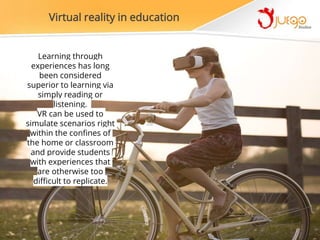
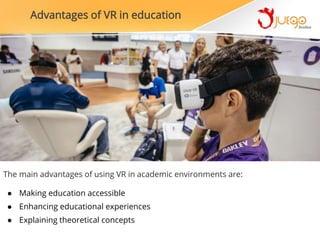
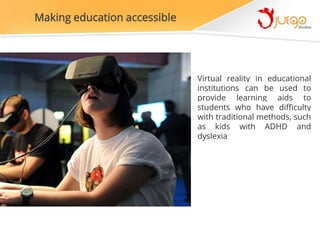
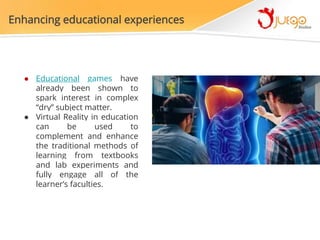
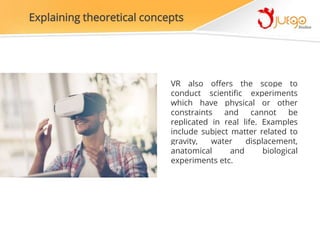
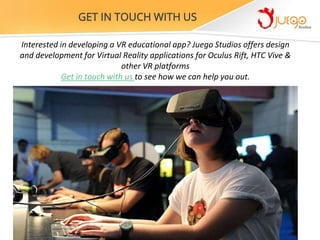


Virtual reality has the potential to enhance education by simulating real-world experiences that may otherwise be difficult or impossible to replicate in a classroom. VR can make learning more engaging and accessible for students with disabilities. It allows complex concepts to be explained through interactive simulations of scientific experiments that cannot be conducted in real life. However, widespread adoption of VR in education faces challenges such as developing localized content for different regions and audiences, targeting popular platforms, and creating effective learning experiences that leverage VR's advantages.


