Virtual Labs
as a Teaching-Learning Tool for
Computer Science
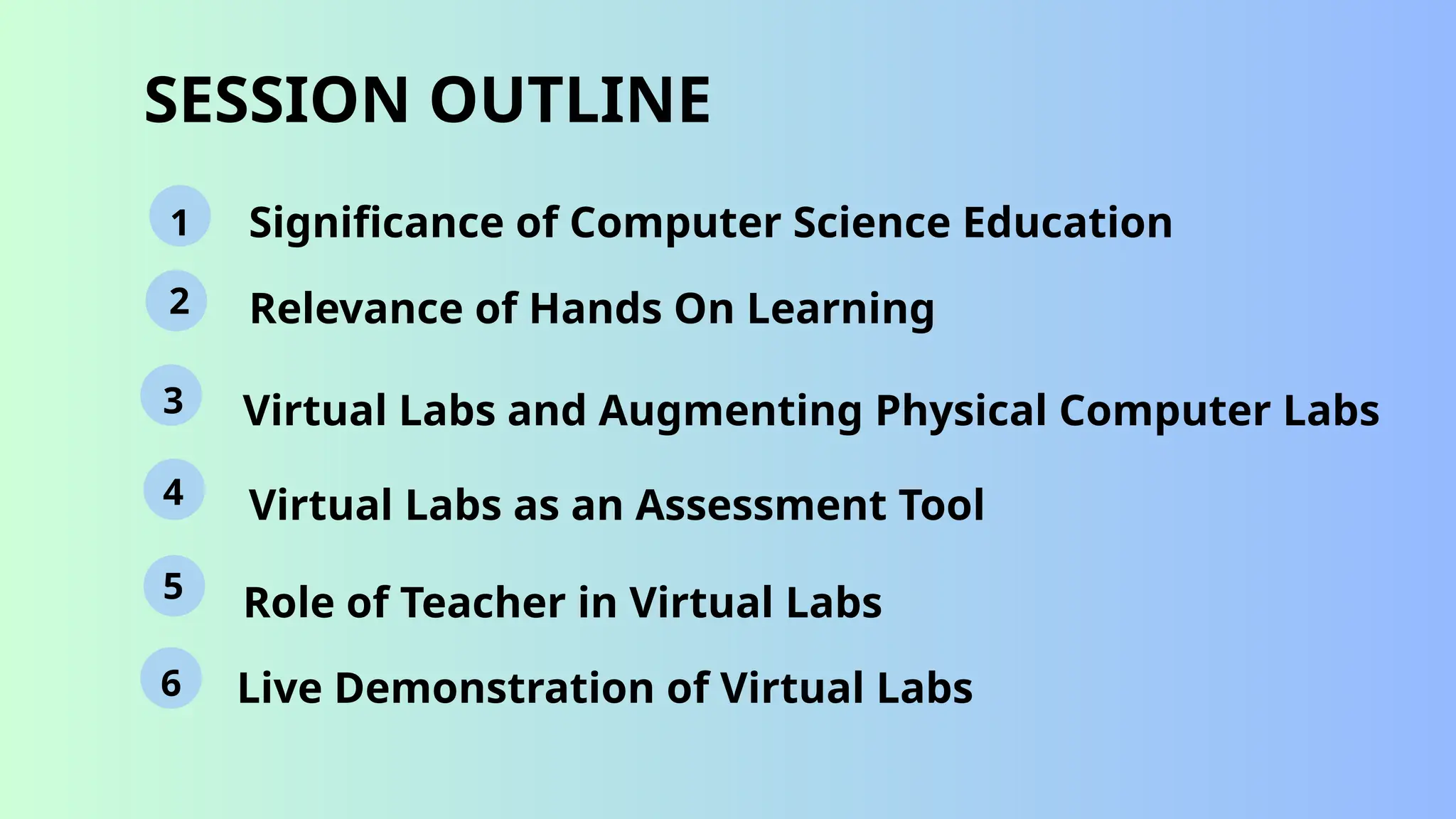
Significance of Computer Science Education
1
Relevance of Hands On Learning
2
4
5
SESSION OUTLINE
Virtual Labs and Augmenting Physical Computer Labs
Virtual Labs as an Assessment Tool
Live Demonstration of Virtual Labs
3
6
Role of Teacher in Virtual Labs
Significance of Computer Science in Education
Computer science is a
branch of engineering
science that studies the
technology and the
principles of Computer
System.
Problem-Solving and Critical
Thinking
Software Engineering and
Development
Data Science and
Analysis
Artificial Intelligence (AI) and
Machine Learning (ML)
Soft Skills Cultivated
Through
Computer Science
Robotics, IoT, Computational Thinking
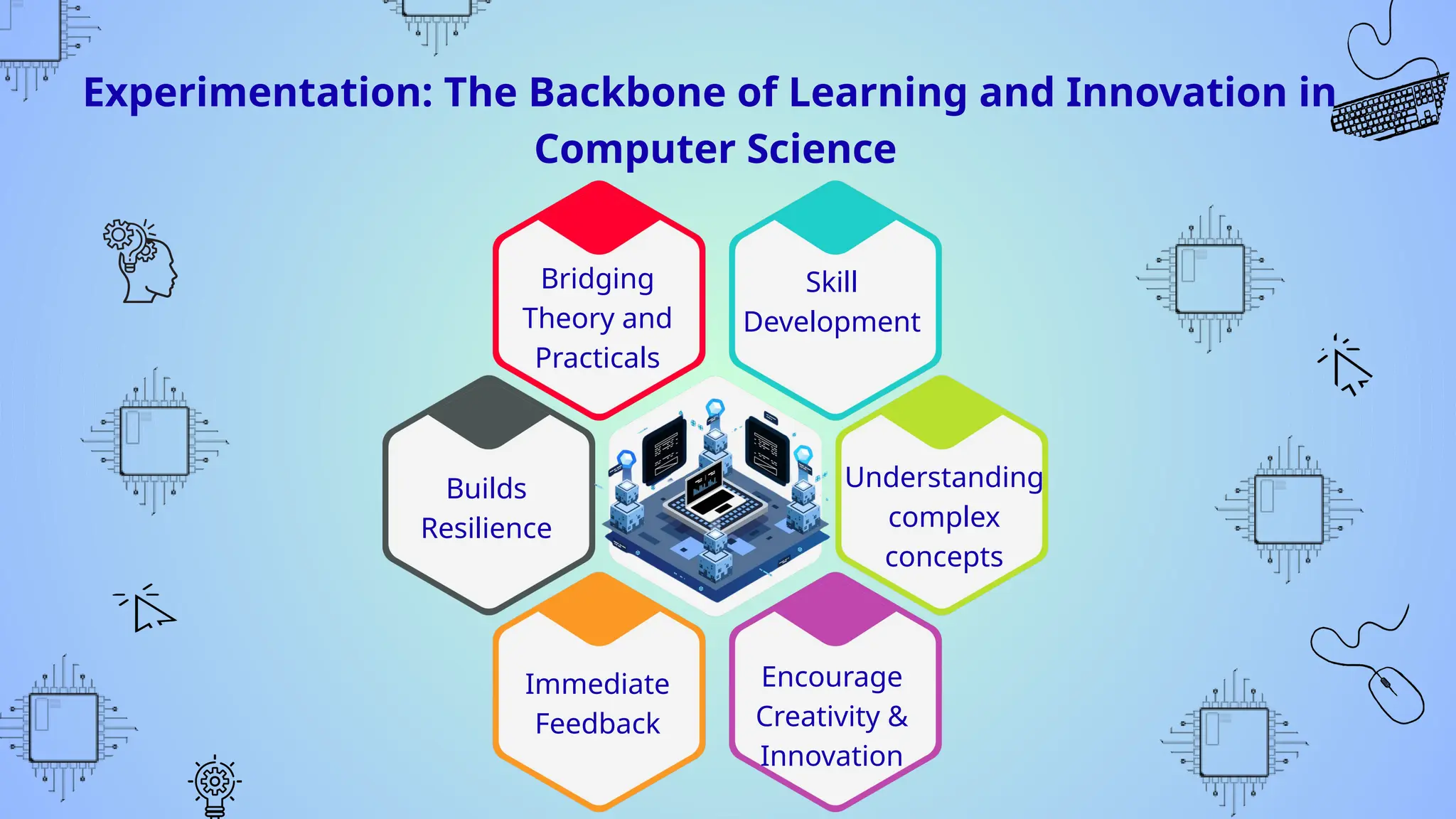
Experimentation: The Backbone of Learning and Innovation in
Computer Science
Bridging
Theory and
Practicals
Skill
Development
Understanding
complex
concepts
Encourage
Creativity &
Innovation
Immediate
Feedback
Builds
Resilience
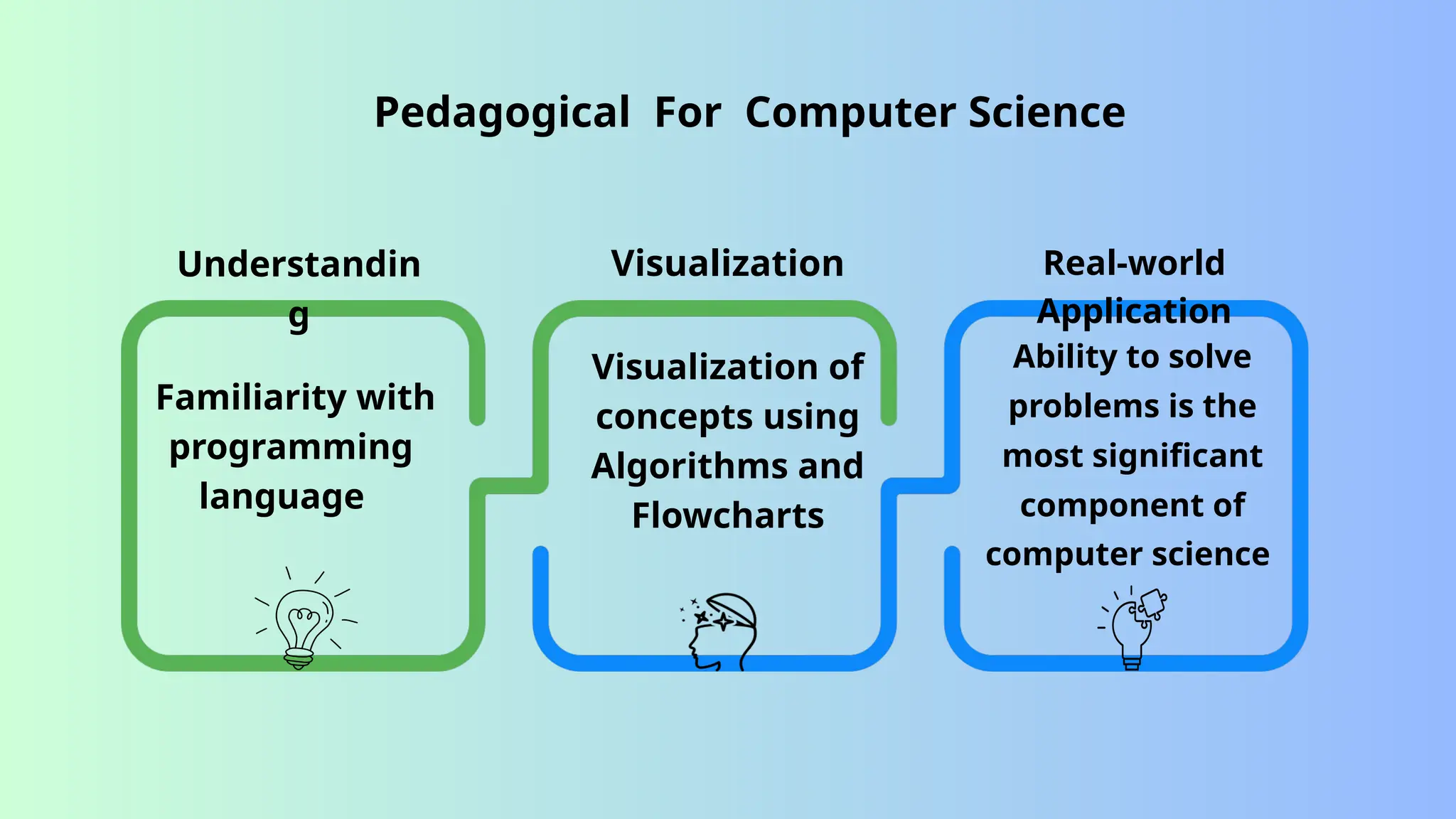
Pedagogical For Computer Science
Understandin
g
Visualization Real-world
Application
Familiarity with
programming
language
Visualization of
concepts using
Algorithms and
Flowcharts
Ability to solve
problems is the
most significant
component of
computer science
Virtual Labs for Computer Science
Virtual labs are
interactive, digital
simulations of activities
that typically take place
in physical laboratory
settings.
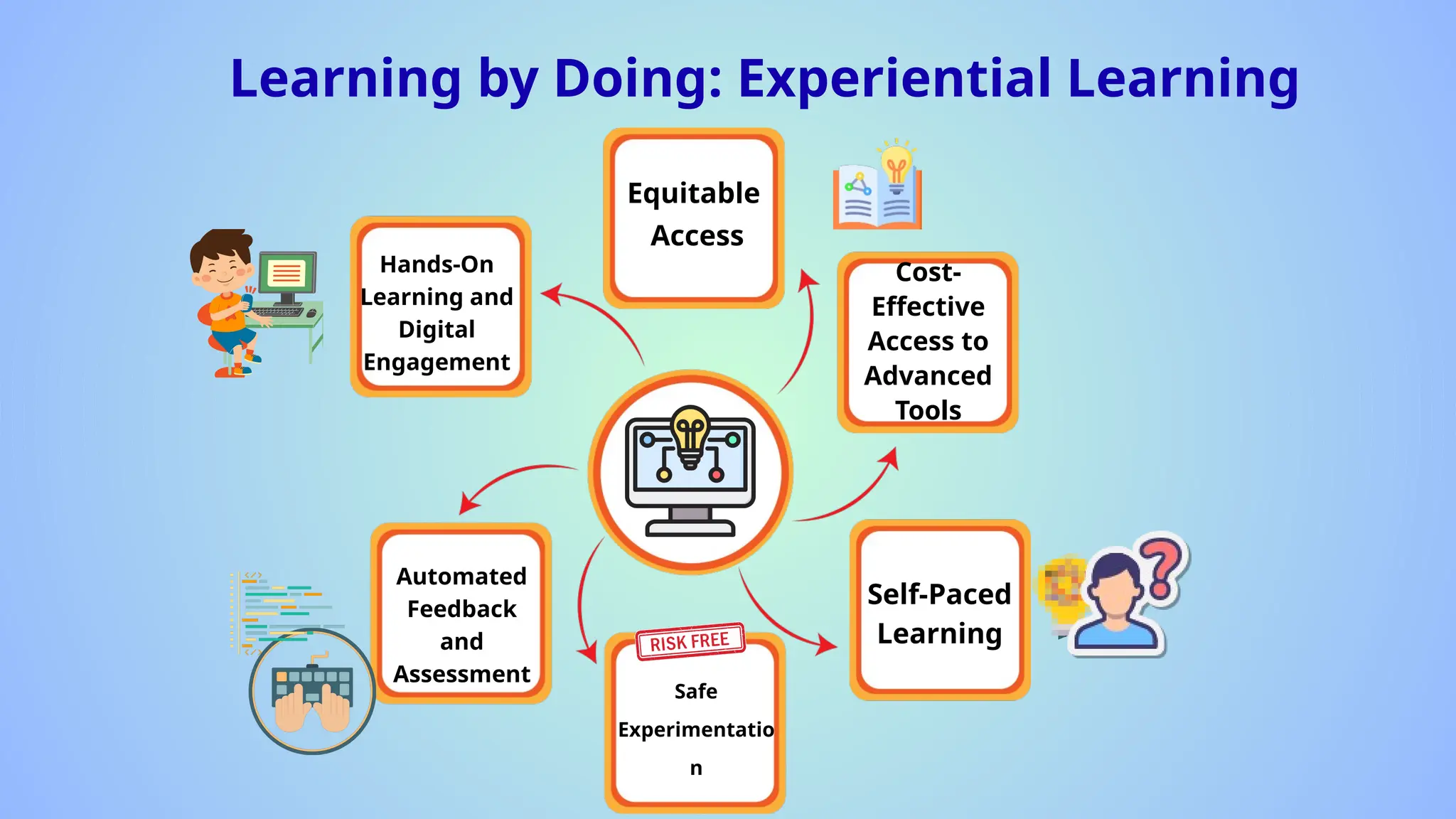
Learning by Doing: Experiential Learning
Hands-On
Learning and
Digital
Engagement
Cost-
Effective
Access to
Advanced
Tools
Self-Paced
Learning
Equitable
Access
Safe
Experimentatio
n
Automated
Feedback
and
Assessment
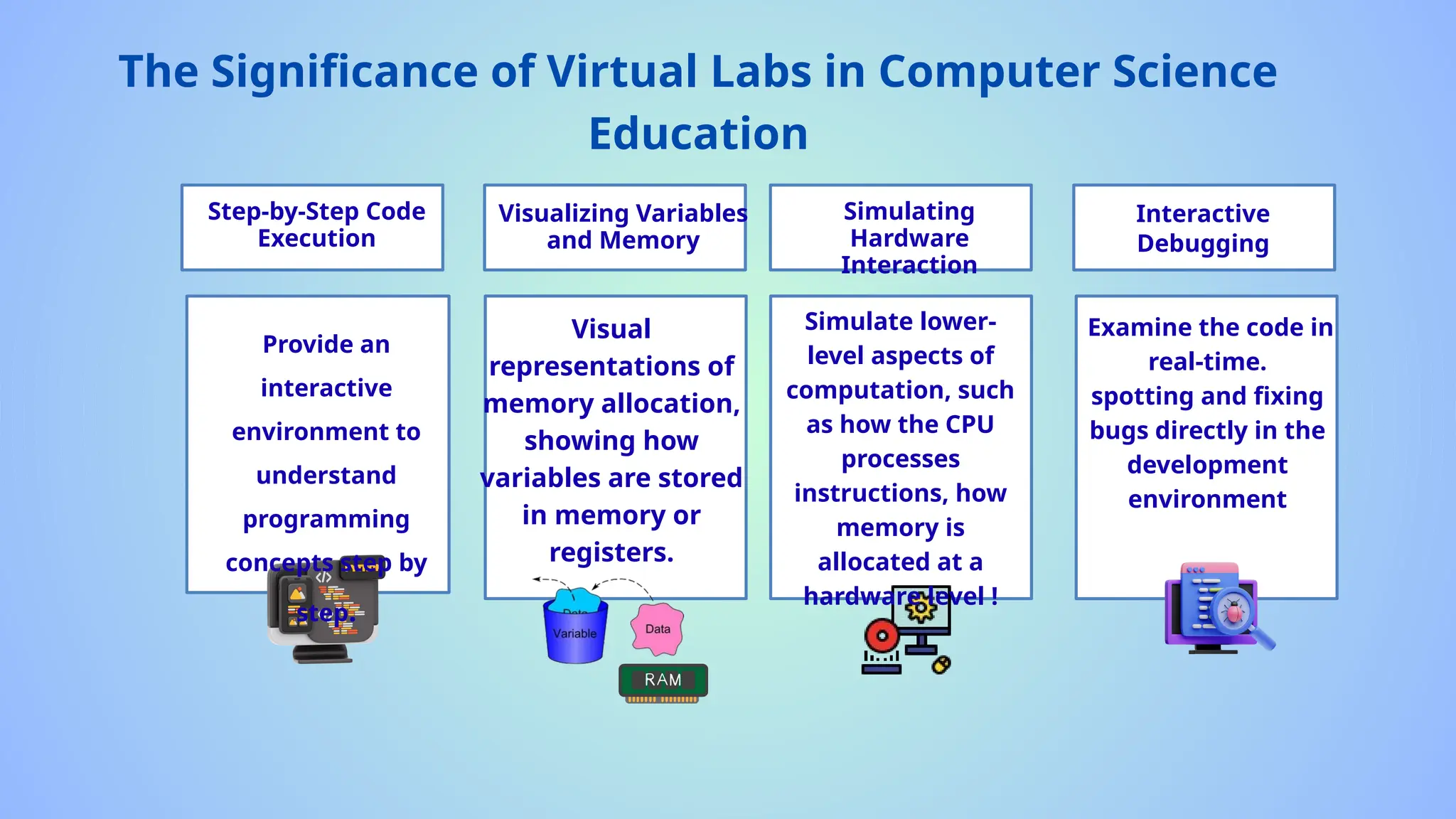
The Significance of Virtual Labs in Computer Science
Education
Step-by-Step Code
Execution
Visualizing Variables
and Memory
Simulating
Hardware
Interaction
Interactive
Debugging
Visual
representations of
memory allocation,
showing how
variables are stored
in memory or
registers.
Simulate lower-
level aspects of
computation, such
as how the CPU
processes
instructions, how
memory is
allocated at a
hardware level !
Provide an
interactive
environment to
understand
programming
concepts step by
step.
Examine the code in
real-time.
spotting and fixing
bugs directly in the
development
environment
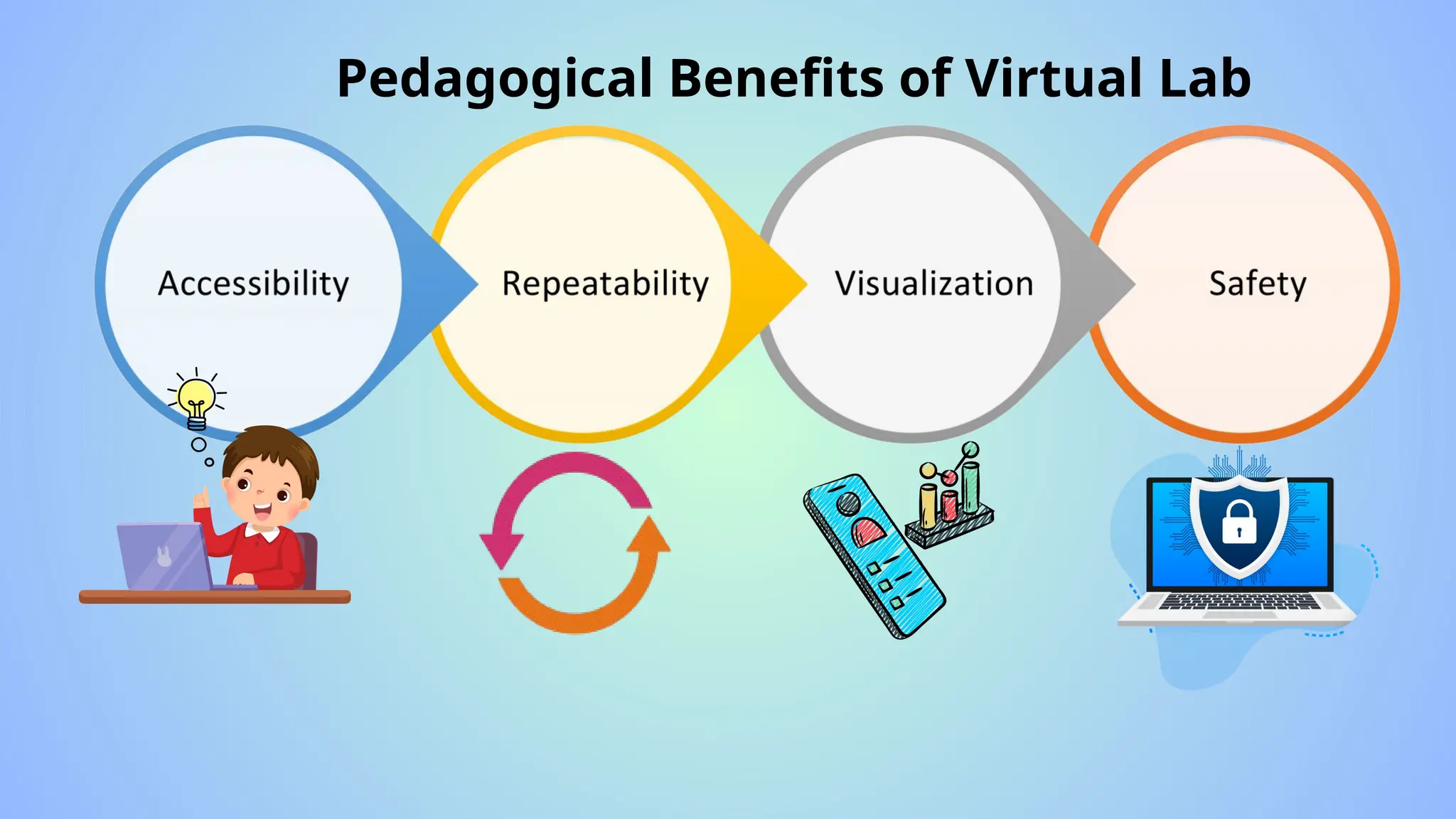
Pedagogical Benefits of Virtual Lab
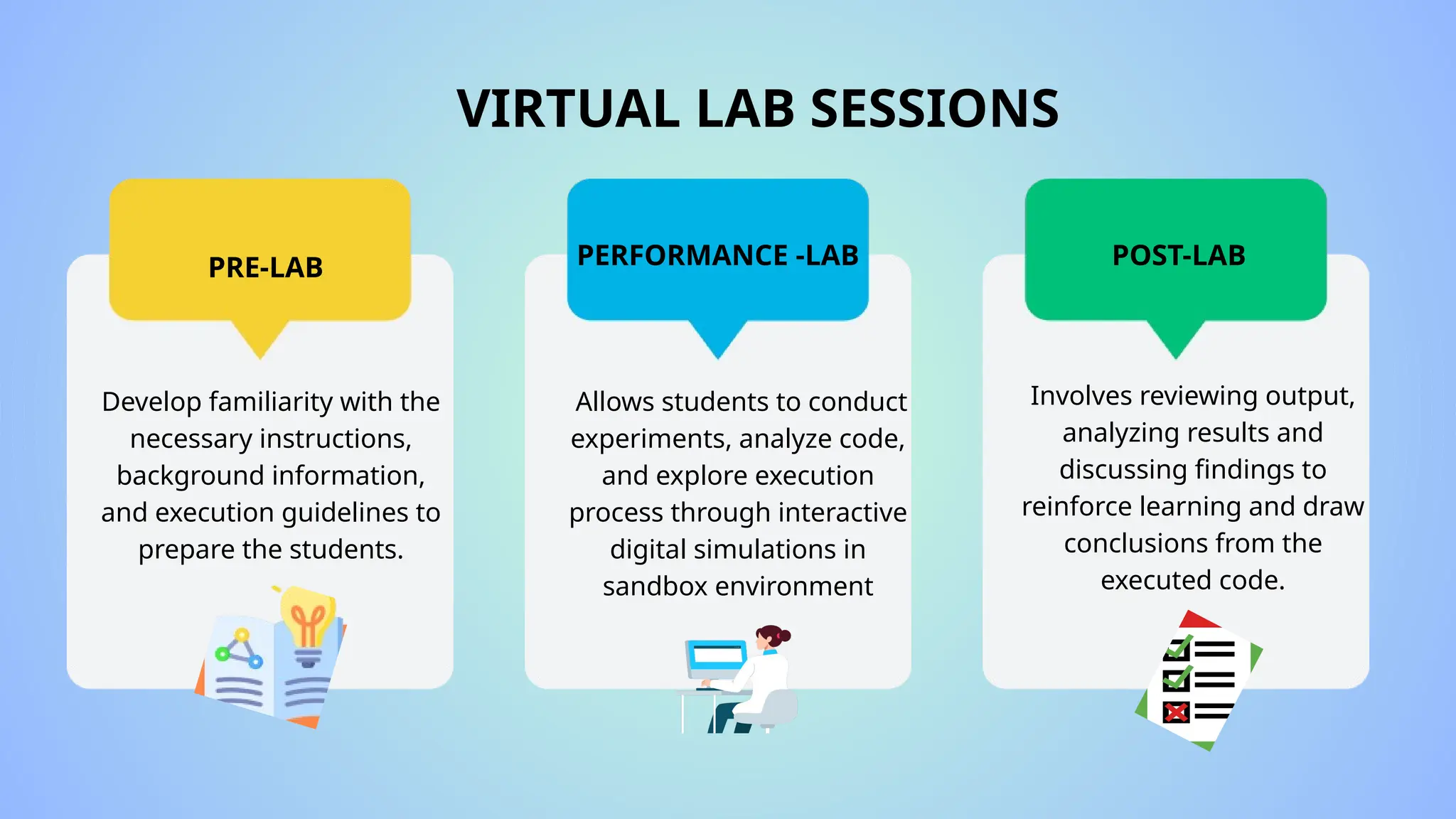
VIRTUAL LAB SESSIONS
PRE-LAB PERFORMANCE -LAB POST-LAB
Develop familiarity with the
necessary instructions,
background information,
and execution guidelines to
prepare the students.
Allows students to conduct
experiments, analyze code,
and explore execution
process through interactive
digital simulations in
sandbox environment
Involves reviewing output,
analyzing results and
discussing findings to
reinforce learning and draw
conclusions from the
executed code.
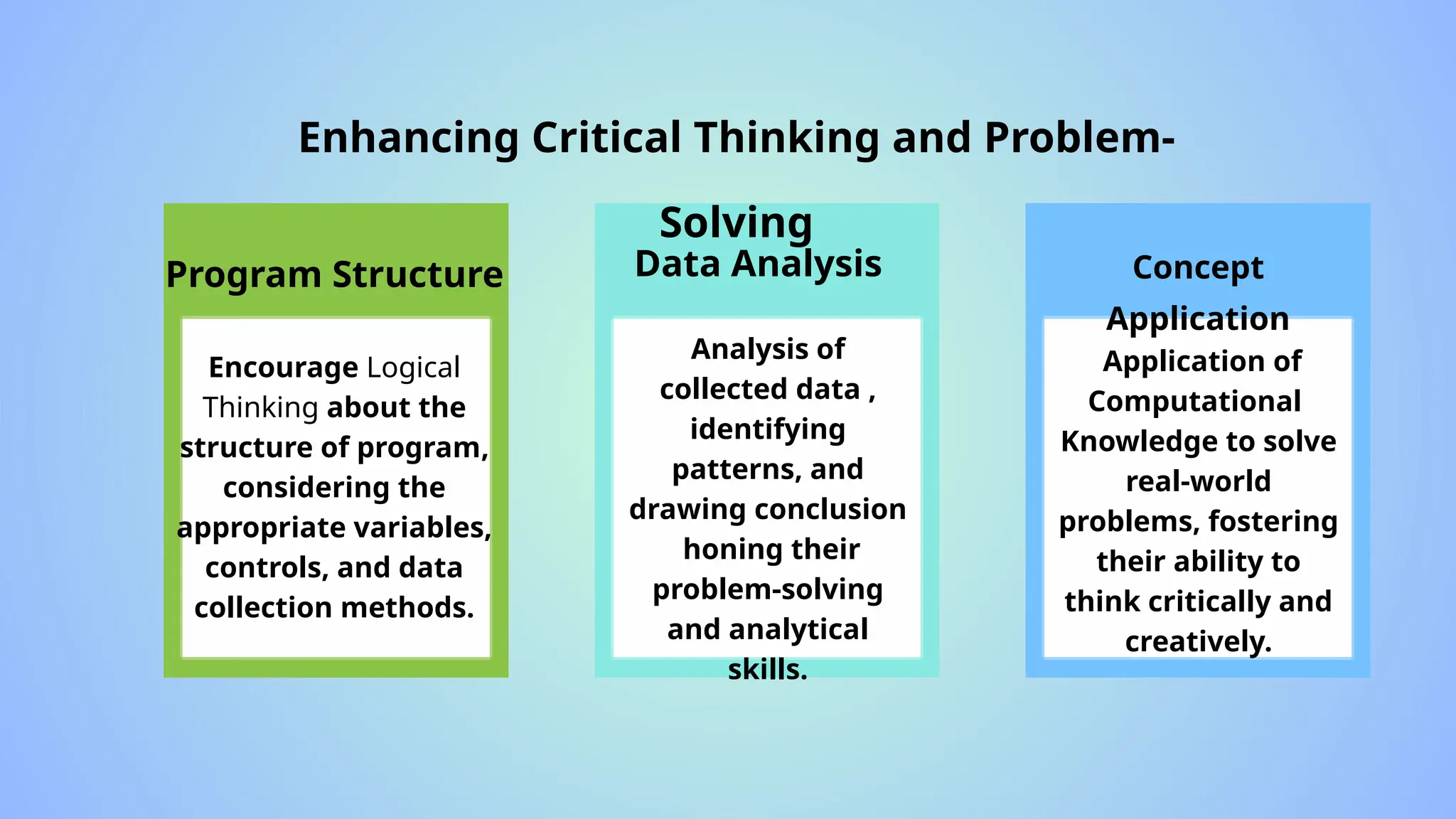
Enhancing Critical Thinking and Problem-
Solving
Program Structure Data Analysis Concept
Application
Encourage Logical
Thinking about the
structure of program,
considering the
appropriate variables,
controls, and data
collection methods.
Analysis of
collected data ,
identifying
patterns, and
drawing conclusion
honing their
problem-solving
and analytical
skills.
Application of
Computational
Knowledge to solve
real-world
problems, fostering
their ability to
think critically and
creatively.
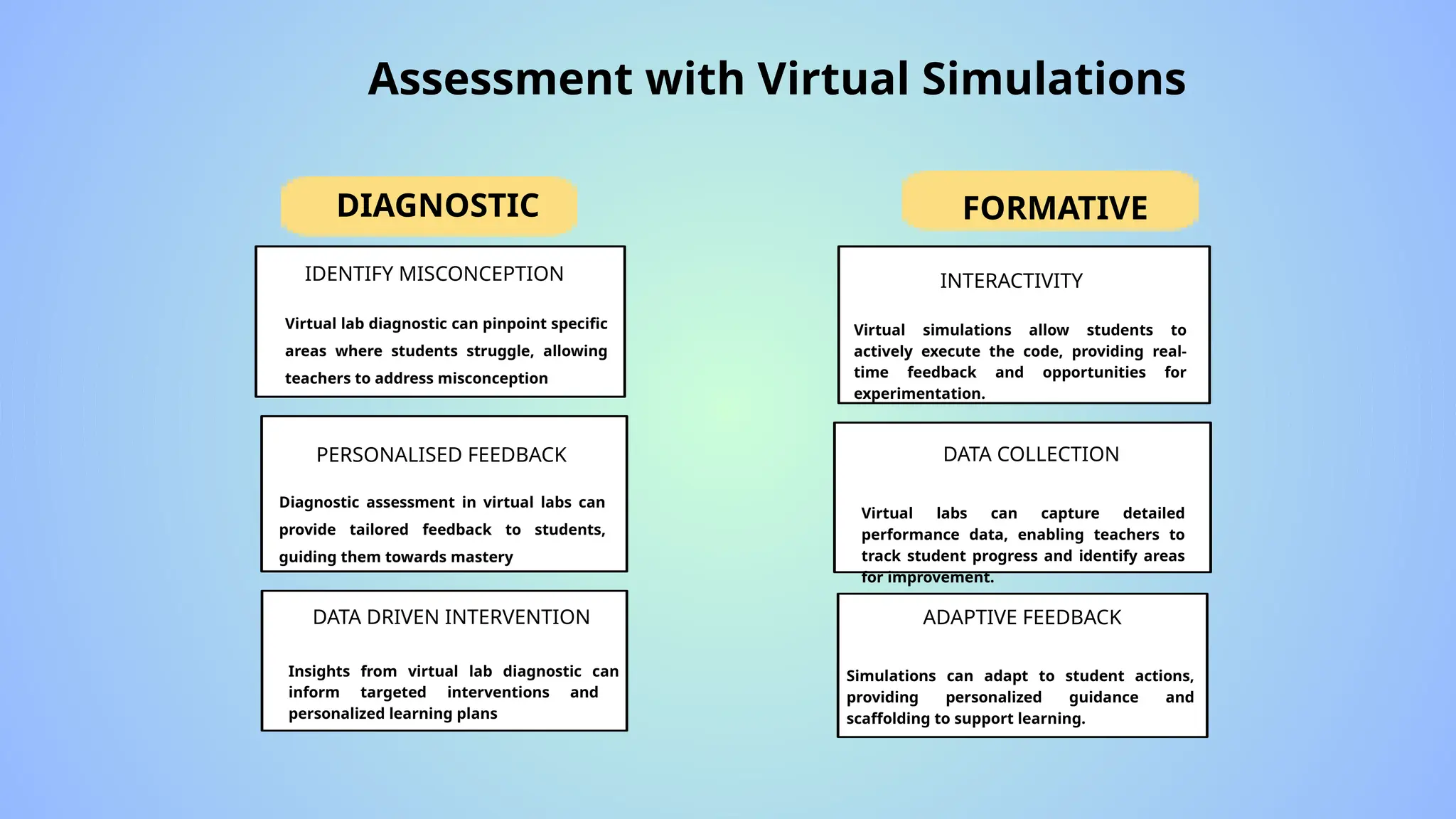
Assessment with Virtual Simulations
DIAGNOSTIC
INTERACTIVITY
Virtual simulations allow students to
actively execute the code, providing real-
time feedback and opportunities for
experimentation.
Virtual labs can capture detailed
performance data, enabling teachers to
track student progress and identify areas
for improvement.
DATA COLLECTION
ADAPTIVE FEEDBACK
Simulations can adapt to student actions,
providing personalized guidance and
scaffolding to support learning.
IDENTIFY MISCONCEPTION
Virtual lab diagnostic can pinpoint specific
areas where students struggle, allowing
teachers to address misconception
PERSONALISED FEEDBACK
Diagnostic assessment in virtual labs can
provide tailored feedback to students,
guiding them towards mastery
DATA DRIVEN INTERVENTION
Insights from virtual lab diagnostic can
inform targeted interventions and
personalized learning plans
FORMATIVE
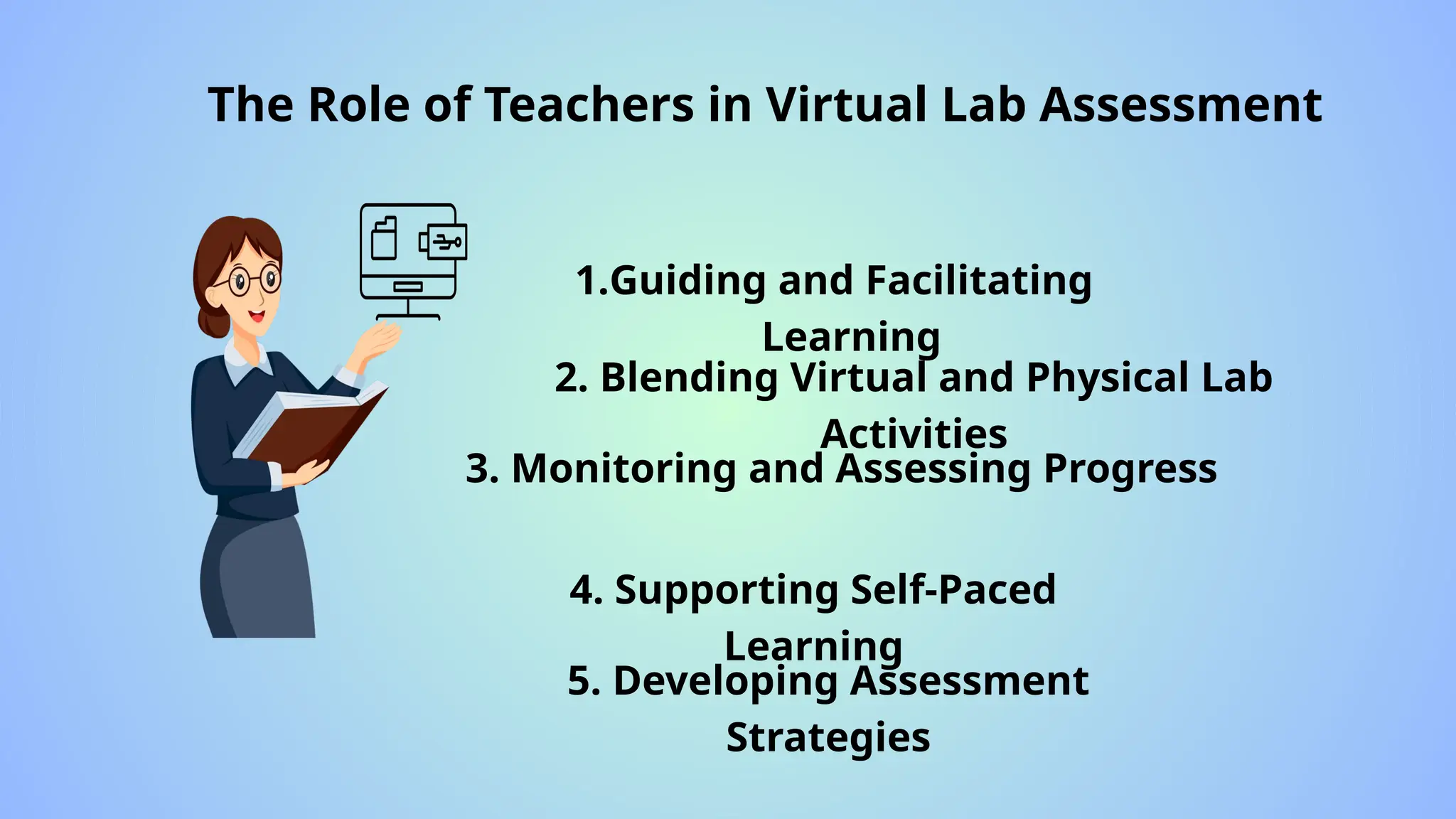
The Role of Teachers in Virtual Lab Assessment
1.Guiding and Facilitating
Learning
2. Blending Virtual and Physical Lab
Activities
3. Monitoring and Assessing Progress
4. Supporting Self-Paced
Learning
5. Developing Assessment
Strategies
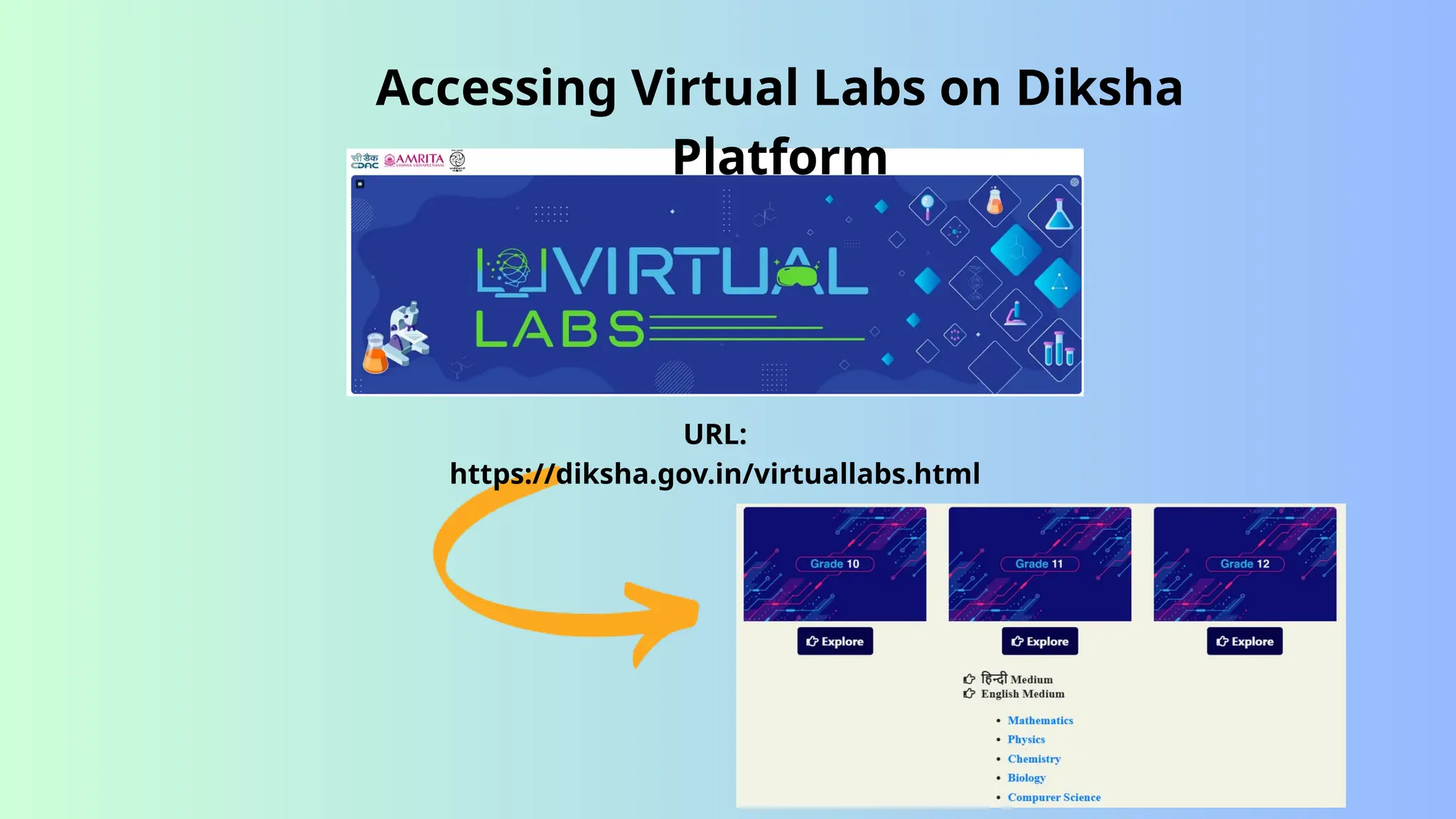
Accessing Virtual Labs on Diksha
Platform
URL:
https://diksha.gov.in/virtuallabs.html
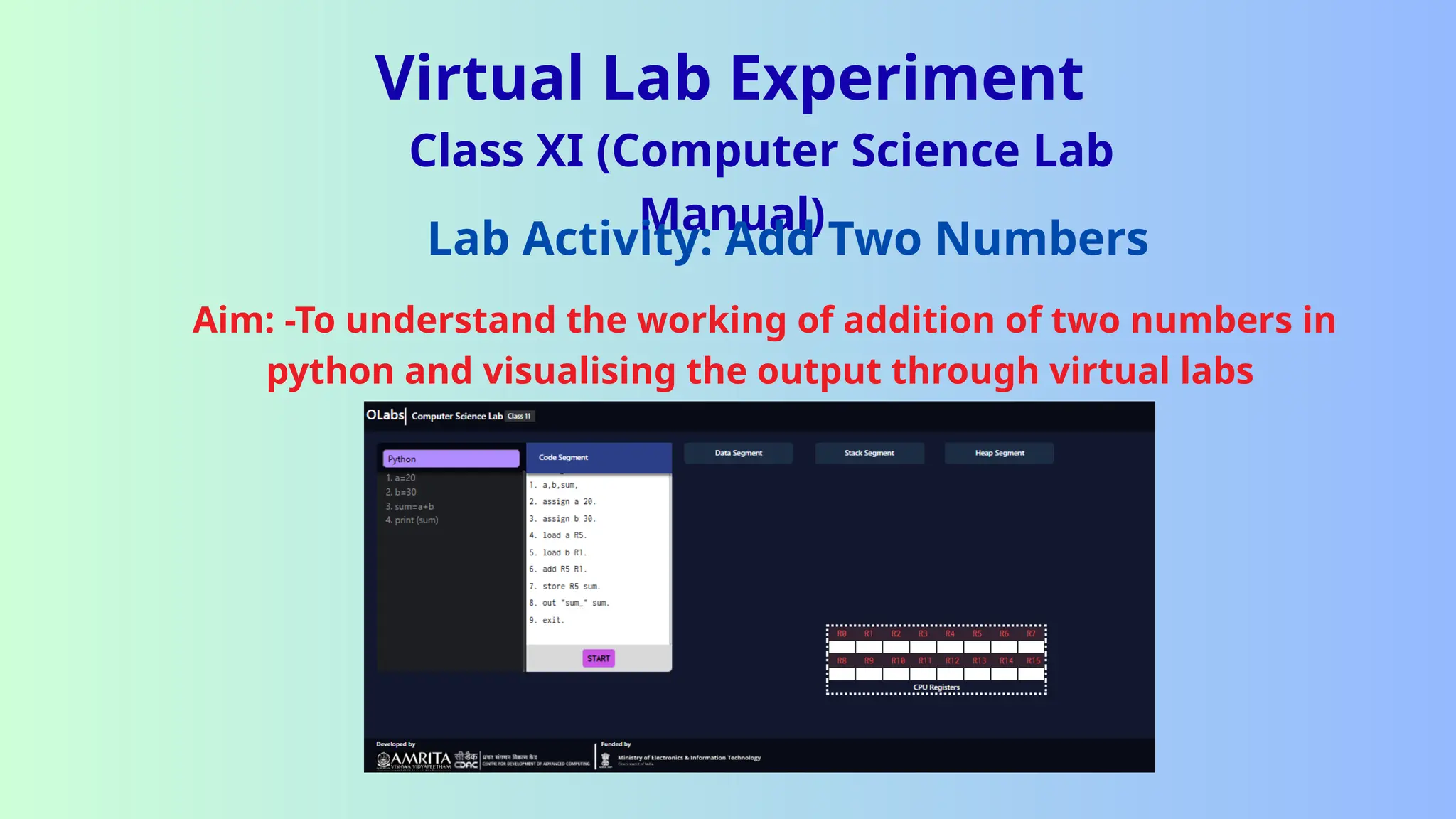
Virtual Lab Experiment
Class XI (Computer Science Lab
Manual)
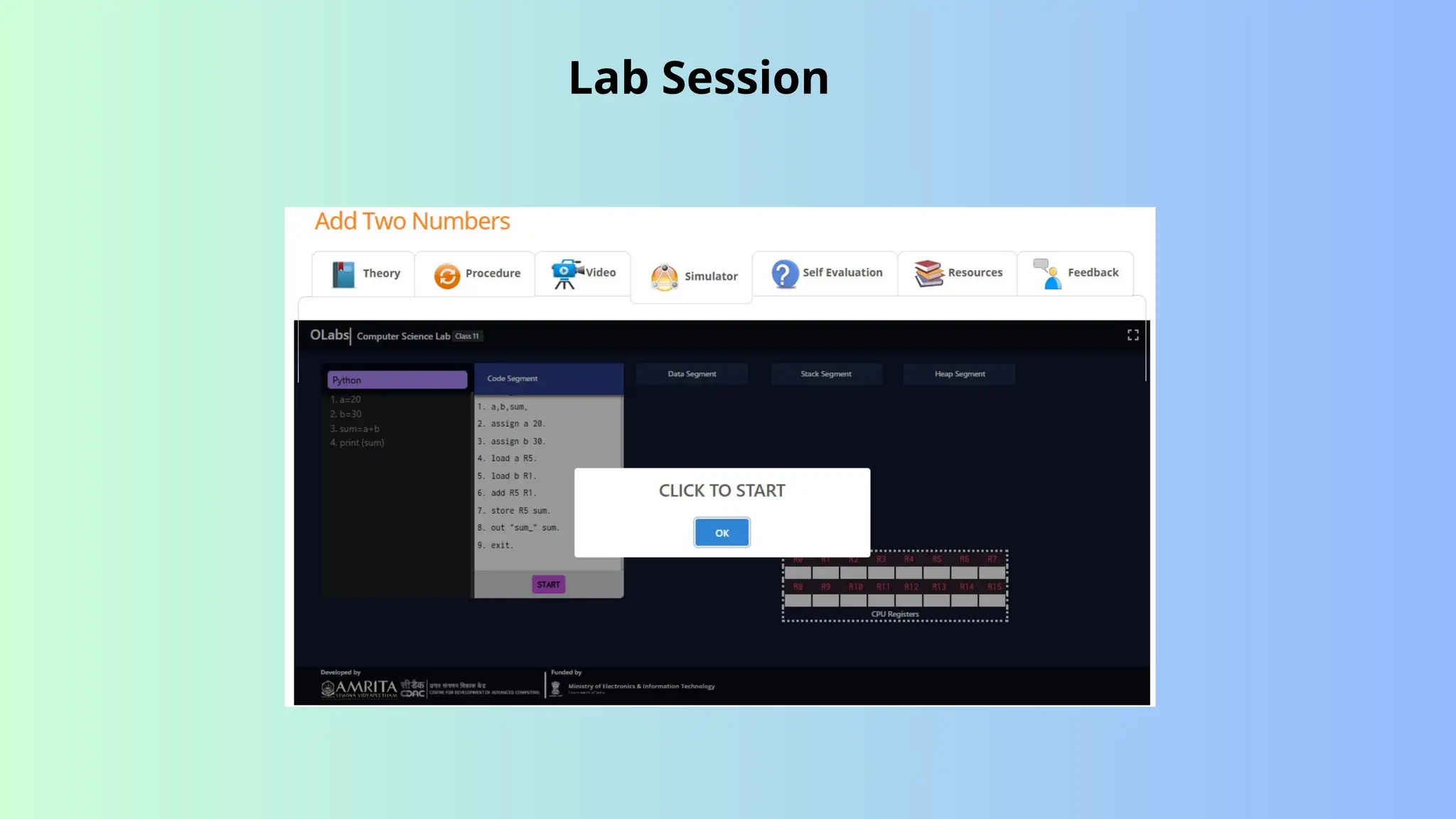
Lab Activity: Add Two Numbers
Aim: -To understand the working of addition of two numbers in
python and visualising the output through virtual labs
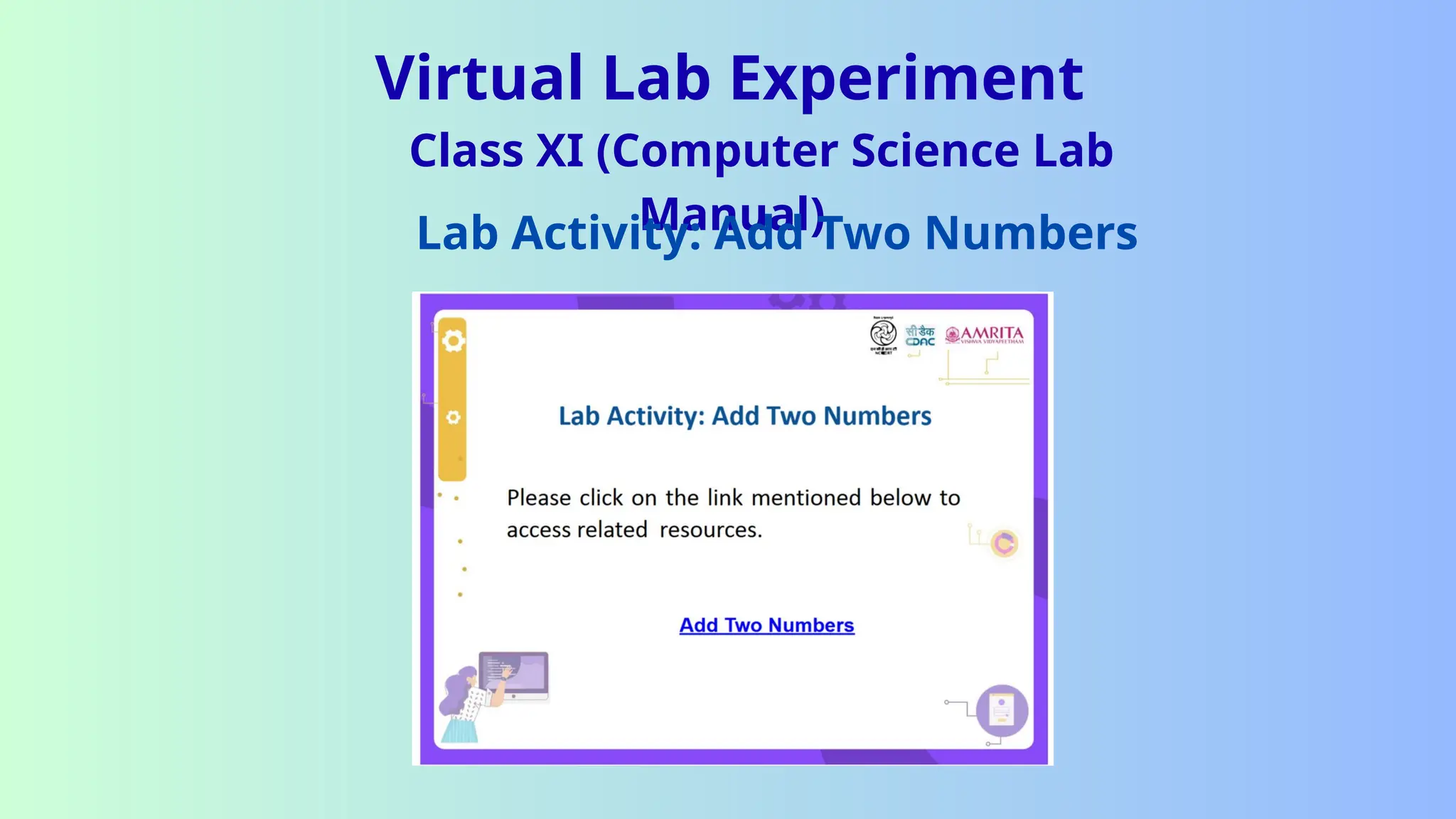
Virtual Lab Experiment
Class XI (Computer Science Lab
Manual)
Lab Activity: Add Two Numbers
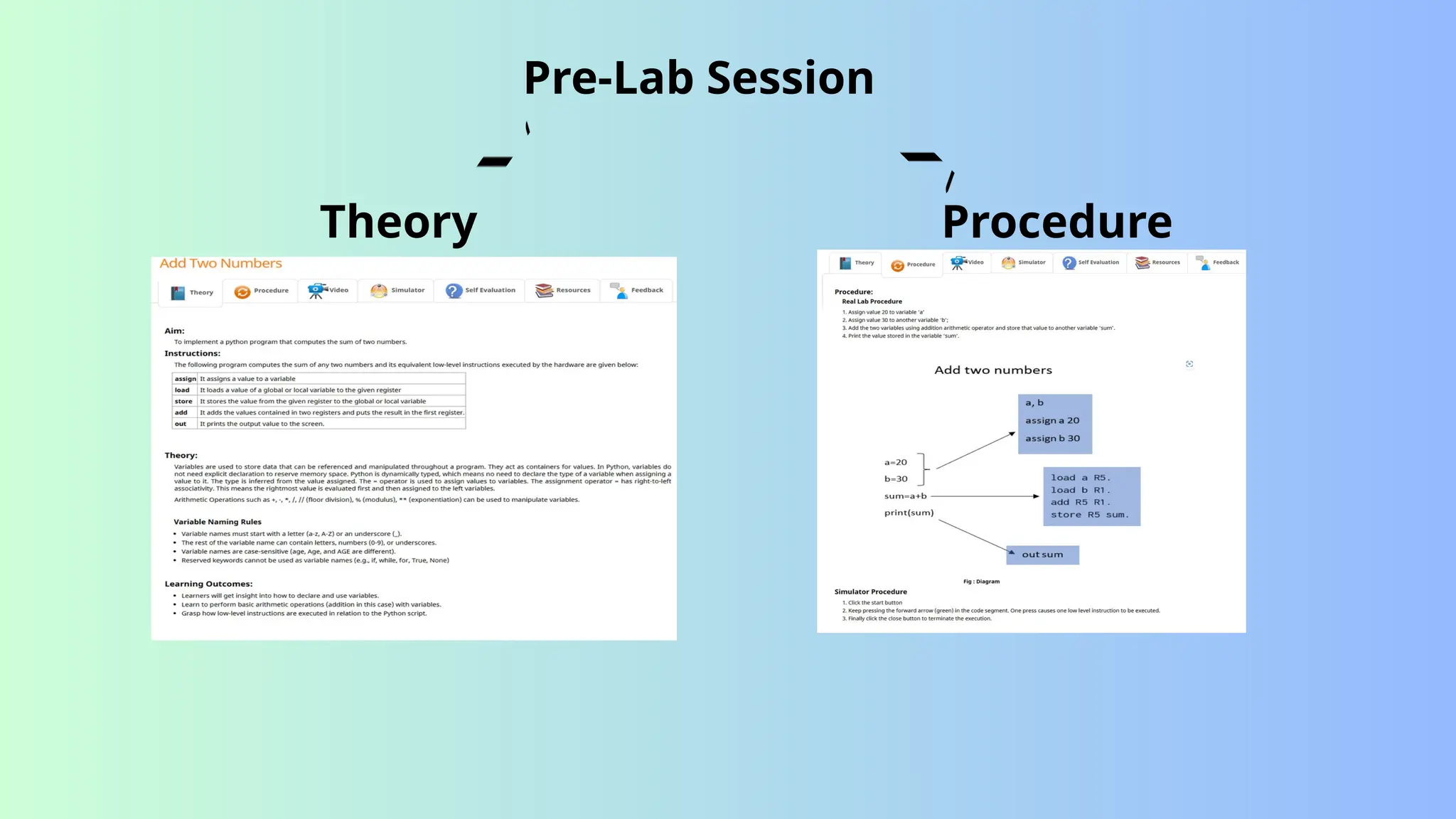
Pre-Lab Session
Theory Procedure
Lab Session
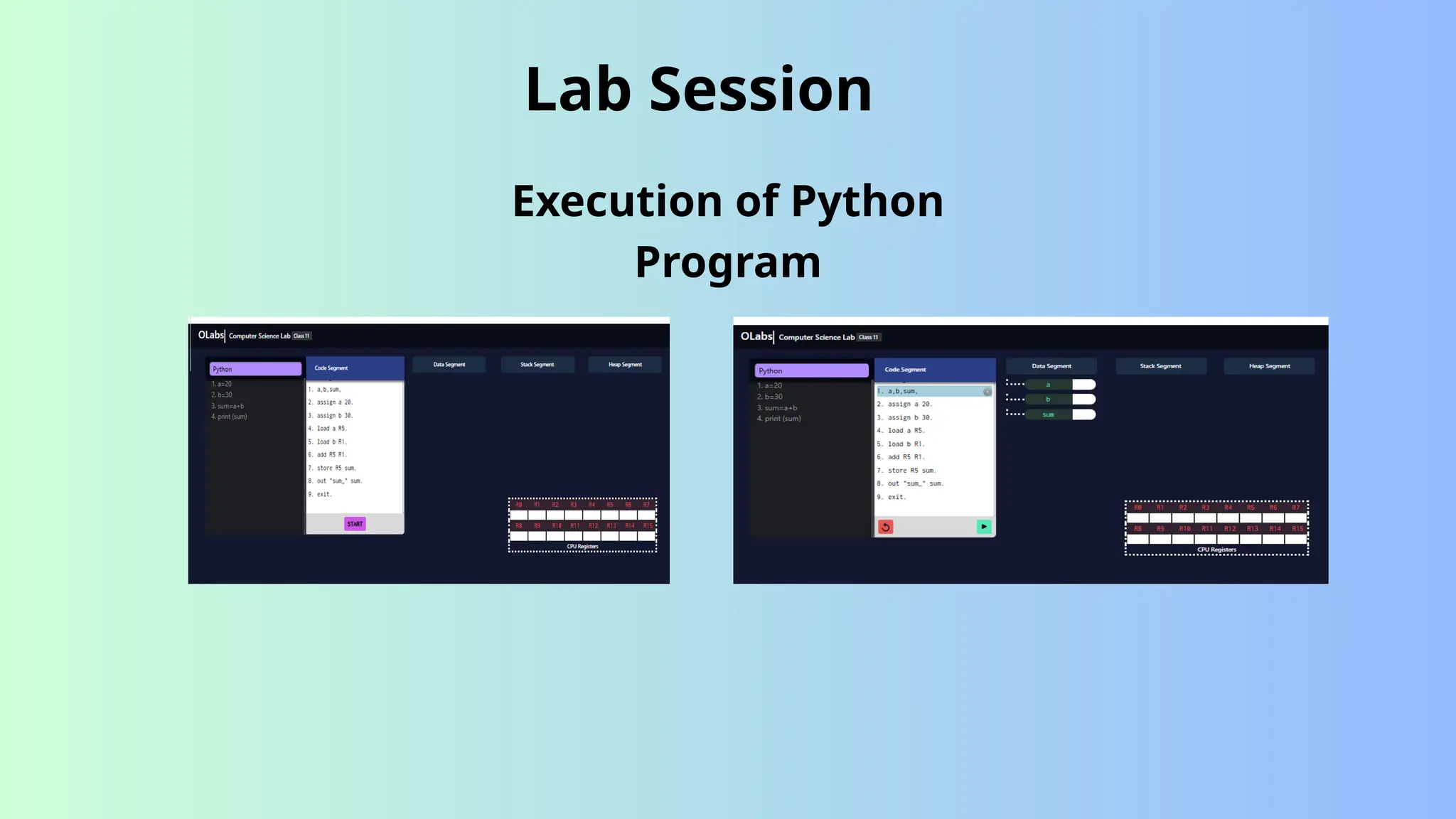
Lab Session
Execution of Python
Program
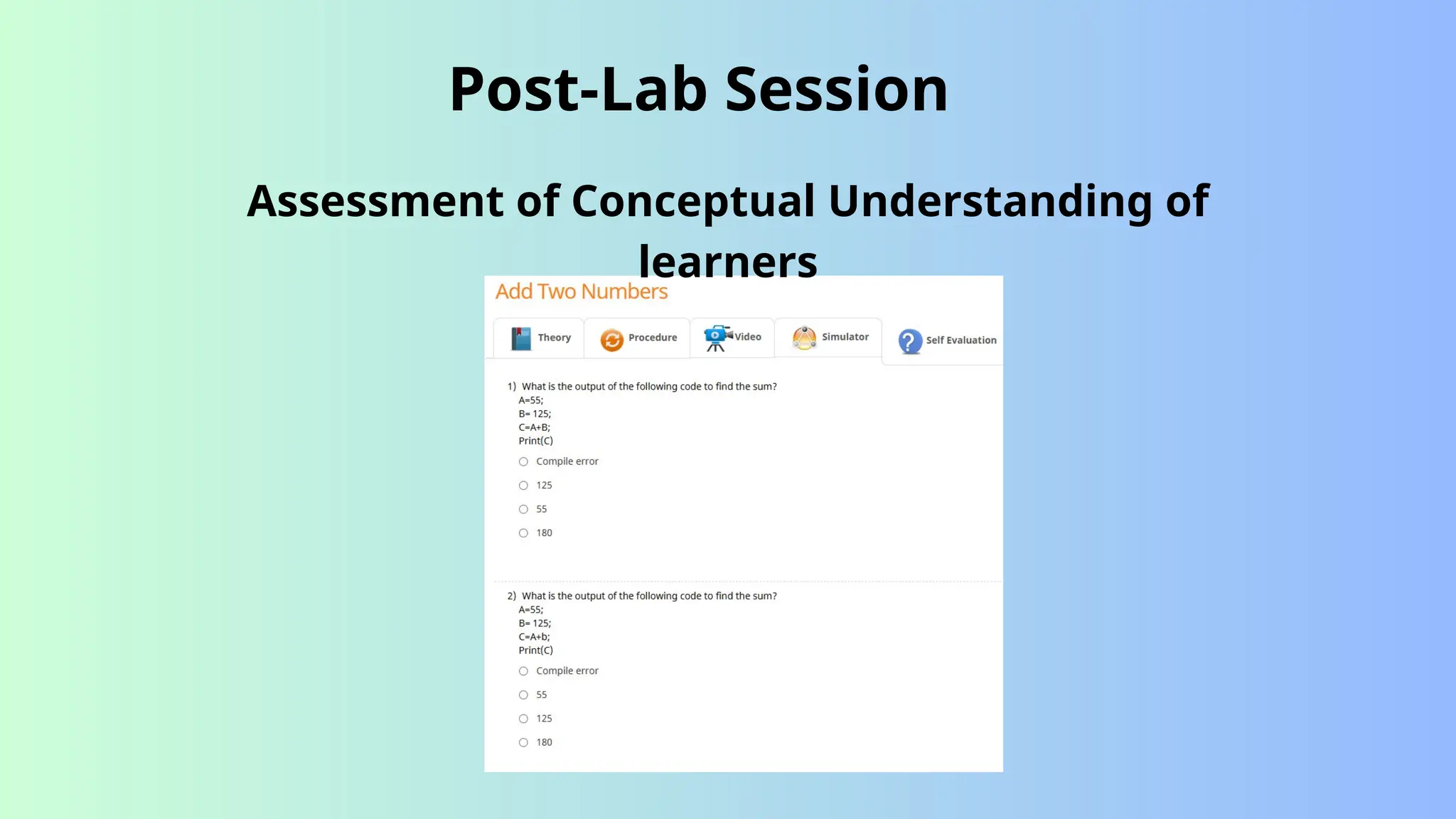
Post-Lab Session
Assessment of Conceptual Understanding of
learners

Virtual Labs for Computer Science ICT.pptx

  • 1.
    Virtual Labs as aTeaching-Learning Tool for Computer Science
  • 2.
    Significance of ComputerScience Education 1 Relevance of Hands On Learning 2 4 5 SESSION OUTLINE Virtual Labs and Augmenting Physical Computer Labs Virtual Labs as an Assessment Tool Live Demonstration of Virtual Labs 3 6 Role of Teacher in Virtual Labs
  • 3.
    Significance of ComputerScience in Education Computer science is a branch of engineering science that studies the technology and the principles of Computer System. Problem-Solving and Critical Thinking Software Engineering and Development Data Science and Analysis Artificial Intelligence (AI) and Machine Learning (ML) Soft Skills Cultivated Through Computer Science Robotics, IoT, Computational Thinking
  • 4.
    Experimentation: The Backboneof Learning and Innovation in Computer Science Bridging Theory and Practicals Skill Development Understanding complex concepts Encourage Creativity & Innovation Immediate Feedback Builds Resilience
  • 5.
    Pedagogical For ComputerScience Understandin g Visualization Real-world Application Familiarity with programming language Visualization of concepts using Algorithms and Flowcharts Ability to solve problems is the most significant component of computer science
  • 6.
    Virtual Labs forComputer Science Virtual labs are interactive, digital simulations of activities that typically take place in physical laboratory settings.
  • 7.
    Learning by Doing:Experiential Learning Hands-On Learning and Digital Engagement Cost- Effective Access to Advanced Tools Self-Paced Learning Equitable Access Safe Experimentatio n Automated Feedback and Assessment
  • 8.
    The Significance ofVirtual Labs in Computer Science Education Step-by-Step Code Execution Visualizing Variables and Memory Simulating Hardware Interaction Interactive Debugging Visual representations of memory allocation, showing how variables are stored in memory or registers. Simulate lower- level aspects of computation, such as how the CPU processes instructions, how memory is allocated at a hardware level ! Provide an interactive environment to understand programming concepts step by step. Examine the code in real-time. spotting and fixing bugs directly in the development environment
  • 9.
  • 10.
    VIRTUAL LAB SESSIONS PRE-LABPERFORMANCE -LAB POST-LAB Develop familiarity with the necessary instructions, background information, and execution guidelines to prepare the students. Allows students to conduct experiments, analyze code, and explore execution process through interactive digital simulations in sandbox environment Involves reviewing output, analyzing results and discussing findings to reinforce learning and draw conclusions from the executed code.
  • 11.
    Enhancing Critical Thinkingand Problem- Solving Program Structure Data Analysis Concept Application Encourage Logical Thinking about the structure of program, considering the appropriate variables, controls, and data collection methods. Analysis of collected data , identifying patterns, and drawing conclusion honing their problem-solving and analytical skills. Application of Computational Knowledge to solve real-world problems, fostering their ability to think critically and creatively.
  • 12.
    Assessment with VirtualSimulations DIAGNOSTIC INTERACTIVITY Virtual simulations allow students to actively execute the code, providing real- time feedback and opportunities for experimentation. Virtual labs can capture detailed performance data, enabling teachers to track student progress and identify areas for improvement. DATA COLLECTION ADAPTIVE FEEDBACK Simulations can adapt to student actions, providing personalized guidance and scaffolding to support learning. IDENTIFY MISCONCEPTION Virtual lab diagnostic can pinpoint specific areas where students struggle, allowing teachers to address misconception PERSONALISED FEEDBACK Diagnostic assessment in virtual labs can provide tailored feedback to students, guiding them towards mastery DATA DRIVEN INTERVENTION Insights from virtual lab diagnostic can inform targeted interventions and personalized learning plans FORMATIVE
  • 13.
    The Role ofTeachers in Virtual Lab Assessment 1.Guiding and Facilitating Learning 2. Blending Virtual and Physical Lab Activities 3. Monitoring and Assessing Progress 4. Supporting Self-Paced Learning 5. Developing Assessment Strategies
  • 14.
    Accessing Virtual Labson Diksha Platform URL: https://diksha.gov.in/virtuallabs.html
  • 15.
    Virtual Lab Experiment ClassXI (Computer Science Lab Manual) Lab Activity: Add Two Numbers Aim: -To understand the working of addition of two numbers in python and visualising the output through virtual labs
  • 16.
    Virtual Lab Experiment ClassXI (Computer Science Lab Manual) Lab Activity: Add Two Numbers
  • 17.
  • 18.
  • 19.
  • 20.
    Post-Lab Session Assessment ofConceptual Understanding of learners