SHAPING AND
CLEANING
OF ROOT
CANALS…..
VIJAYARAGAVAN. P
CRRI
INTRODUCTION:
DEFINITIONS
Removing the pulp tissues and debris from the canal
and shaping the canal to receive an obturation material.
obturation of an improperly cleaned canal would still
lead to an endodontic failure irrespective of the
obturation.
OBJECTIVES
MECHANICAL OBJECTIVES:
1. CONTINUOUS TAPERING CONICAL SHAPE
2. NARROW APICALLY AND WIDEST
CORONALLY
3. CONCEPT OF FLOW (MULTIPLE PLANES)
4. APICAL FORAMEN AS NARROW AS
POSSIBLE
5. AVOID TRANSPORTATION OF APICAL
FORAMEN
BIOLOGICAL OBJECTIVES:
 CONFINEMENT OF INSTRUMENT TO THE ROOTS
 NECROTIC DEBRIS NOT FORCED PERIAPICALLY
 COMPLETE REMOVAL OF TISSUE FROM THE
CANAL SPACE
 CREATION OF SUFFICIENT SPACE FOR
OBTURATING MATERIAL
GOALS OF THE RADICULAR
SPACE
 To eliminate microorganisms on
root canal
 To completely remove pulp tissue
 To increase the capacity of the
root canal to permit irrigation
solution to reach apical third
 To shape root canal to receive
obturation material.
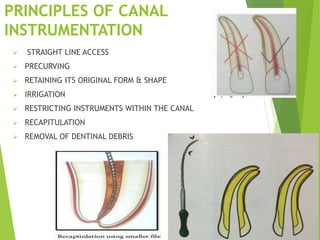
PRINCIPLES OF CANAL
INSTRUMENTATION
 STRAIGHT LINE ACCESS
 PRECURVING
 RETAINING ITS ORIGINAL FORM & SHAPE
 IRRIGATION
 RESTRICTING INSTRUMENTS WITHIN THE CANAL
 RECAPITULATION
 REMOVAL OF DENTINAL DEBRIS
PHASES IN SHAPING OF ROOT CANAL
I. NEGOTIATION (PATENCY FILING)
II. CORONAL PRE-ENLARGEMENT
III. WORKING LENGTH DETERMINATION
IV. SHAPING TECHNIQUES
V. WORKING WIDTH
PATENCY FILING
 the concept of creating a path up to the working
length without altering the original root canal
anatomy.
 It is usually performed with a size 10 or smaller k file
which used in reaming motion.
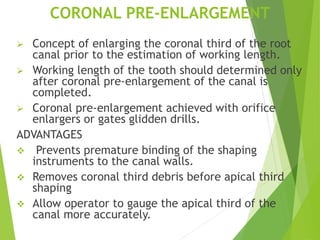
CORONAL PRE-ENLARGEMENT
 Concept of enlarging the coronal third of the root
canal prior to the estimation of working length.
 Working length of the tooth should determined only
after coronal pre-enlargement of the canal is
completed.
 Coronal pre-enlargement achieved with orifice
enlargers or gates glidden drills.
ADVANTAGES
 Prevents premature binding of the shaping
instruments to the canal walls.
 Removes coronal third debris before apical third
shaping
 Allow operator to gauge the apical third of the
canal more accurately.
WORKING LENGTH
DETERMINATIOIN
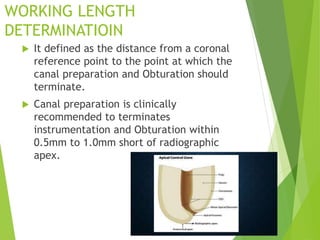
 It defined as the distance from a coronal
reference point to the point at which the
canal preparation and Obturation should
terminate.
 Canal preparation is clinically
recommended to terminates
instrumentation and Obturation within
0.5mm to 1.0mm short of radiographic
apex.
ROOT CANAL SHAPING TECHNIQUES
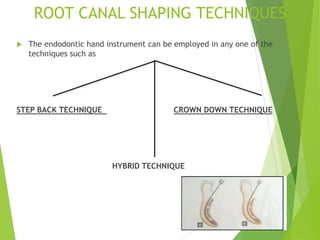
 The endodontic hand instrument can be employed in any one of the
techniques such as
STEP BACK TECHNIQUE CROWN DOWN TECHNIQUE
HYBRID TECHNIQUE
CROWN DOWN TECHNIQUE
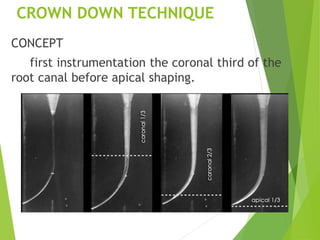
CONCEPT
first instrumentation the coronal third of the
root canal before apical shaping.
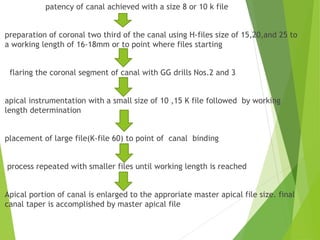
patency of canal achieved with a size 8 or 10 k file
preparation of coronal two third of the canal using H-files size of 15,20,and 25 to
a working length of 16-18mm or to point where files starting
flaring the coronal segment of canal with GG drills Nos.2 and 3
apical instrumentation with a small size of 10 ,15 K file followed by working
length determination
placement of large file(K-file 60) to point of canal binding
process repeated with smaller files until working length is reached
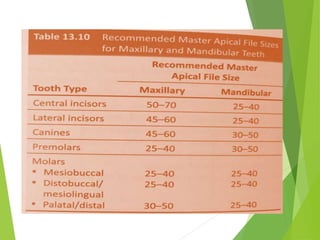
Apical portion of canal is enlarged to the approriate master apical file size. final
canal taper is accomplished by master apical file
ADVANTAGES
 Easier than step back technique
 Removal of coronal obstructions allows removal of
bulk of tissues , debris ,microbes before apical
shaping.
 Minimizes extrusion of debris through apical
foramen
 Better access and control over apical enlarging
instrument
 Allows penetration of irrigants .
 Working length less likely to be change.
Reference
 TEXTBOOK OF ENDODONTICS-GROSSMAN’S
Vijayendo

Vijayendo

  • 1.
  • 2.
    INTRODUCTION: DEFINITIONS Removing the pulptissues and debris from the canal and shaping the canal to receive an obturation material. obturation of an improperly cleaned canal would still lead to an endodontic failure irrespective of the obturation. OBJECTIVES
  • 3.
    MECHANICAL OBJECTIVES: 1. CONTINUOUSTAPERING CONICAL SHAPE 2. NARROW APICALLY AND WIDEST CORONALLY 3. CONCEPT OF FLOW (MULTIPLE PLANES) 4. APICAL FORAMEN AS NARROW AS POSSIBLE 5. AVOID TRANSPORTATION OF APICAL FORAMEN
  • 4.
    BIOLOGICAL OBJECTIVES:  CONFINEMENTOF INSTRUMENT TO THE ROOTS  NECROTIC DEBRIS NOT FORCED PERIAPICALLY  COMPLETE REMOVAL OF TISSUE FROM THE CANAL SPACE  CREATION OF SUFFICIENT SPACE FOR OBTURATING MATERIAL
  • 5.
    GOALS OF THERADICULAR SPACE  To eliminate microorganisms on root canal  To completely remove pulp tissue  To increase the capacity of the root canal to permit irrigation solution to reach apical third  To shape root canal to receive obturation material.
  • 6.
    PRINCIPLES OF CANAL INSTRUMENTATION STRAIGHT LINE ACCESS  PRECURVING  RETAINING ITS ORIGINAL FORM & SHAPE  IRRIGATION  RESTRICTING INSTRUMENTS WITHIN THE CANAL  RECAPITULATION  REMOVAL OF DENTINAL DEBRIS
  • 7.
    PHASES IN SHAPINGOF ROOT CANAL I. NEGOTIATION (PATENCY FILING) II. CORONAL PRE-ENLARGEMENT III. WORKING LENGTH DETERMINATION IV. SHAPING TECHNIQUES V. WORKING WIDTH
  • 8.
    PATENCY FILING  theconcept of creating a path up to the working length without altering the original root canal anatomy.  It is usually performed with a size 10 or smaller k file which used in reaming motion.
  • 9.
    CORONAL PRE-ENLARGEMENT  Conceptof enlarging the coronal third of the root canal prior to the estimation of working length.  Working length of the tooth should determined only after coronal pre-enlargement of the canal is completed.  Coronal pre-enlargement achieved with orifice enlargers or gates glidden drills. ADVANTAGES  Prevents premature binding of the shaping instruments to the canal walls.  Removes coronal third debris before apical third shaping  Allow operator to gauge the apical third of the canal more accurately.
  • 10.
    WORKING LENGTH DETERMINATIOIN  Itdefined as the distance from a coronal reference point to the point at which the canal preparation and Obturation should terminate.  Canal preparation is clinically recommended to terminates instrumentation and Obturation within 0.5mm to 1.0mm short of radiographic apex.
  • 11.
    ROOT CANAL SHAPINGTECHNIQUES  The endodontic hand instrument can be employed in any one of the techniques such as STEP BACK TECHNIQUE CROWN DOWN TECHNIQUE HYBRID TECHNIQUE
  • 12.
    CROWN DOWN TECHNIQUE CONCEPT firstinstrumentation the coronal third of the root canal before apical shaping.
  • 13.
    patency of canalachieved with a size 8 or 10 k file preparation of coronal two third of the canal using H-files size of 15,20,and 25 to a working length of 16-18mm or to point where files starting flaring the coronal segment of canal with GG drills Nos.2 and 3 apical instrumentation with a small size of 10 ,15 K file followed by working length determination placement of large file(K-file 60) to point of canal binding process repeated with smaller files until working length is reached Apical portion of canal is enlarged to the approriate master apical file size. final canal taper is accomplished by master apical file
  • 14.
    ADVANTAGES  Easier thanstep back technique  Removal of coronal obstructions allows removal of bulk of tissues , debris ,microbes before apical shaping.  Minimizes extrusion of debris through apical foramen  Better access and control over apical enlarging instrument  Allows penetration of irrigants .  Working length less likely to be change.
  • 16.
    Reference  TEXTBOOK OFENDODONTICS-GROSSMAN’S