February2007
Ministry of Health and Family Welfare
Government of India
GUIDELINES FOR
AWWs/ASHAs/ANMs/PRIs
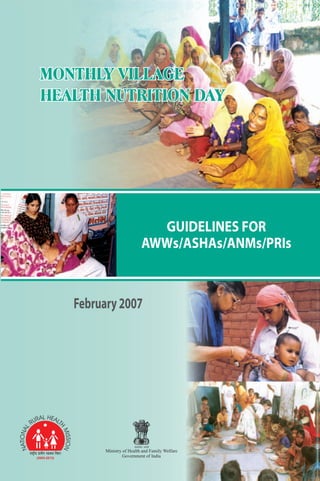
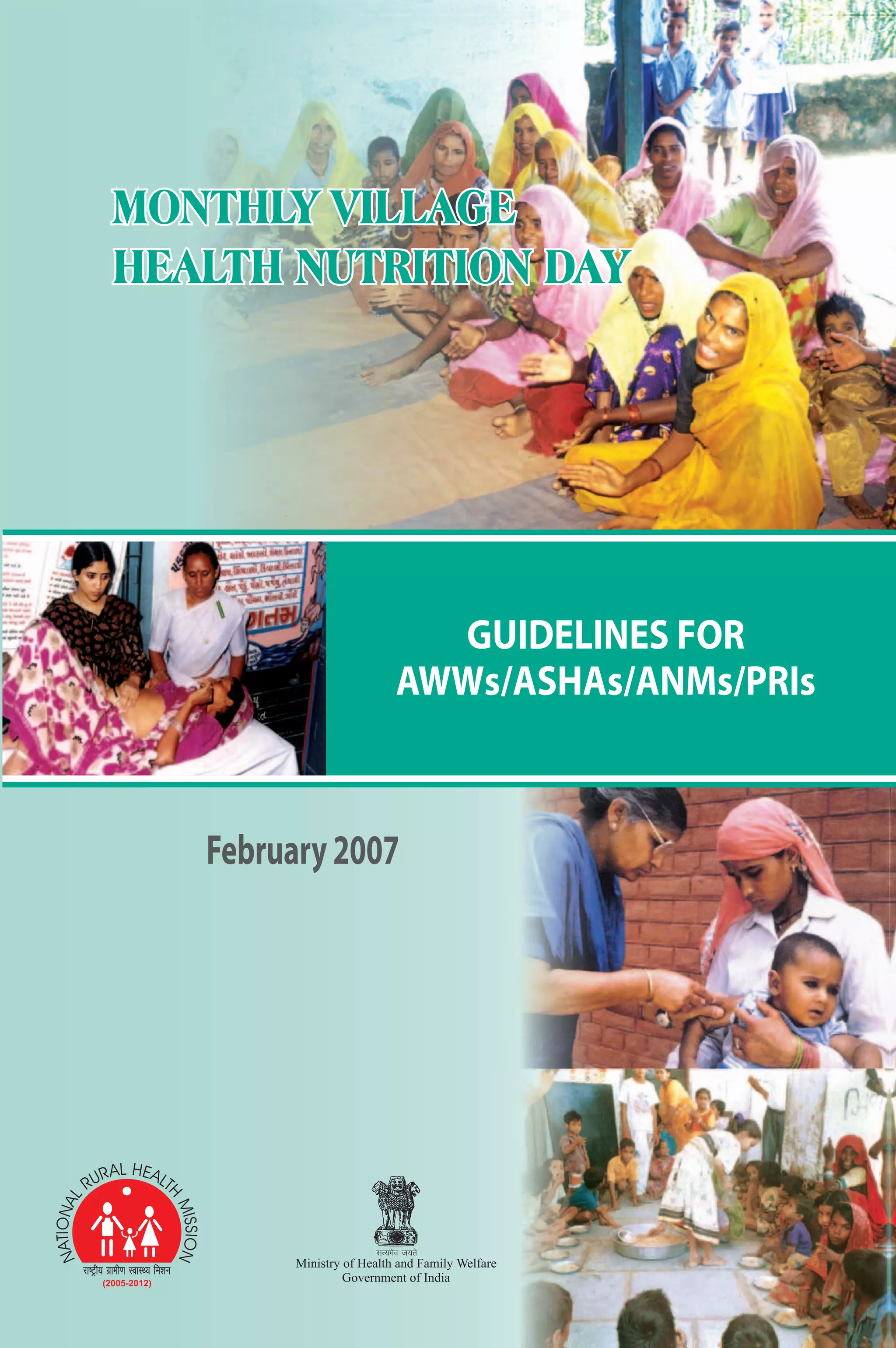
MONTHLY VILLAGE
HEALTH NUTRITION DAY
MONTHLY VILLAGE
HEALTH NUTRITION DAY
MONTHLY VILLAGE
HEALTH NUTRITION DAY
PREFACE
The NRHM guarantees better health outcomes for millions of people in
rural areas, especially those belonging to marginalized and vulnerable
communities. The VHND promises to be an effective platform for
providing first-contact primary health care.
Quite often,programme managers,service providers,community-based
organizations, and PRI representatives do not share a common
understanding about the activities to be undertaken and how these are
to be operationalised while organizing the VHND.This manual provides
information about organizing the VHND in a simple and lucid manner.
It is hoped that this manual will serve the needs of all concerned,
including medical officers, ANMs, MPWs, and ASHAs. A clear
understanding of the relevant procedures and operations will lead to
the effective organization of theVHND,which is an important tool under
NRHMfortheconvergenceofallactivities.Itakethisopportunitytothank
the Maternal Health Division (GOI) and United Nations Population Fund
(UNFPA) for providing technical support in preparation of this document.
S. Jalaja
Additional Secretary and Mission Director,
NRHM
Ministry of Health & Family Welfare
Date: 26 February 2007 Government of India
ABBREVIATIONS
AD Auto Disposable
AIDS Acquired Immunodeficiency Syndrome
ANC Ante Natal Care
ANM Auxiliary Nurse Midwife
ASHA Accredited Social Health Activist
AWC Anganwadi centre
AWW Anganwadi Worker
AYUSH Ayurveda,Yoga & Naturopathy, Unani, Siddha and Homoeopathy
BCC Behaviour Change Communication
BF Blood Film
DPMU District Programme Management Unit
DPT Diphtheria Pertussis and Tetanus
ECP Emergency Contraception Pills
ENBC Essential Newborn Care
GOI Government of India
HIV Human Immunodeficiency Virus
IEC Information, Education and Communication
IFA Iron Folic Acid
JSY Janani Suraksha Yojna
LHV Lady Health Visitor
MCH Mother and Child Health
MO Medical Officer
MP Malarial Parasite
MPW Multi Purpose Worker
MTP Medical Termination of Pregnancy
NRHM National Rural Health Mission
OCP Oral Contraceptive Pills
OPV Oral Polio Vaccine
ORS Oral Rehydration Salt
PHC Primary Health Centre
PPTCT Prevention of Parent-to-Child Transmission
PRI Panchayati Raj Institution
RCH II Reproductive and Child Health Programme-Phase II
RMP Rural/Registered Medical Practitioner
RTI Reproductive Tract Infections
SC Scheduled Castes
ST Scheduled Tribes
STI Sexual Tract Infections
TB Tuberculosis
TBA Traditional Birth Attendant
UNFPA United Nations Population Fund
VCTC Voluntary Counselling and Testing Centre
VHND Village Health Nutrition Day
VHSC Village Health and Sanitation Committee
VVM Vaccine Vial Monitor
CONTENTS
1. INTRODUCTION ............................................................................................. 1
2. WHY ORGANIZE A MONTHLY HEALTH .................................................. 2
NUTRITION DAY IN EVERY VILLAGE
3. CHECKLISTS .................................................................................................... 5
4. SERVICE PACKAGE FOR THE VILLAGE HEALTH NUTRITION DAY... 7
ANNEXURES
1. REQUIREMENTS FOR ORGANIZING VHND ........................................... 12
2. PUBLICITY FOR VHND ................................................................................. 14
3. SUPERVISORY ARRANGEMENTS.............................................................. 15
4. SUPERVISORY CHECKLIST.......................................................................... 17
5. OUTCOMES ..................................................................................................... 18
Guidelines for AWWs/ASHAs/ANMs/PRIs 1
1INTRODUCTION
The VHND is to be organized once every month (preferably on
Wednesdays,and for those villages that have been left out,on any other
day of the same month) at the AWC in the village. This will ensure
uniformity in organizing the VHND.The AWC is identified as the hub for
service provision in the RCH-II, NRHM, and also as a platform for inter-
sectoralconvergence.VHNDisalsotobeseenasaplatformforinterfacing
between the community and the health system.
Keeping in view the significance of holding the VHND, the important
steps that need to be taken while organizing the event have been put
together in this manual.The roles of the ANM,ASHA and AWW should be
well defined.The quality of the VHND needs to be improved, and hence
the outcomes should be measured and monitored.
This document will help AWWs, ASHAs and PRI members to understand
their respective roles in providing their services effectively to the
community during the monthly VHND and will also help in educating
them on matters related to health. VHND if organized regularly and
effectively can bring about the much needed behavioural changes in
the community, and can also induce health-seeking behaviour in the
community leading to better health outcomes.
Programme managers at district/block level should ensure availability
of necessary supplies and expendables in adequate quantities during
the VHNDs. Similarly, supportive supervision by Programme Managers
at different levels will result in improved quality of services.
2 Monthly Village Health Nutrition Day
On the appointed day, ASHAs, AWWs, and others will mobilize the
villagers,especiallywomenandchildren,toassembleatthenearestAWC.
The ANM and other health personnel should be present on time;
otherwise the villagers will be reluctant to attend the following monthly
VHND. On the VHND, the villagers can interact freely with the health
personnel and obtain basic services and information.They can also learn
about the preventive and promotive aspects of health care, which will
encourage them to seek health care at proper facilities.Since the VHND
will be held at a site very close to their habitation, the villagers will not
have to spend money or time on travel.Health services will be provided
at their doorstep. The VHSC comprising the ASHA, the AWW, the ANM,
and the PRI representatives,if fully involved in organizing the event,can
bring about dramatic changes in the way that people perceive health
and health care practices.
A) SERVICES TO BE PROVIDED:
All pregnant women are to be registered.
Registered pregnant women are to be given ANC.
Dropout pregnant women eligible for ANC are to be tracked and
services are to be provided to them.
2WHY ORGANIZE
A MONTHLY HEALTH
NUTRITION DAY
IN EVERY VILLAGE
Guidelines for AWWs/ASHAs/ANMs/PRIs 3
All eligible children below one year are to be given vaccines against
six Vaccine-preventable diseases.
All dropout children who do not receive vaccines as per the
scheduled doses are to be vaccinated.
Vitamin A solution is to be administered, to children.
All children are to be weighed,with the weight being plotted on a
card and managed appropriately in order to combat malnutrition.
Anti-TB drugs are to be given to patients of TB.
All eligible couples are to be given condoms and OCPs as per their
choiceandreferralsareto bemadeforothercontraceptiveservices.
Supplementarynutritionistobeprovidedtounderweightchildren.
B) ISSUES TO BE DISCUSSED WITH THE
COMMUNITY:
Danger signs during pregnancy
Importance of institutional delivery and where to go for delivery
Importance of seeking post-natal care
Counselling on ENBC
Registration for the JSY
Counselling for better nutrition
Exclusive Breastfeeding
Weaning and complementary feeding
Care during diarrhoea and home management
Care during acute respiratory infections
Prevention of malaria,TB, and other communicable diseases
Prevention of HIV/AIDS
Prevention of STIs
Importance of safe drinking water
4 Monthly Village Health Nutrition Day
Personal hygiene
Household sanitation
Education of children
Dangers of sex selection
Age at marriage
Information on RTIs,STIs,HIV and AIDS
Disease outbreak
Disaster management
C) IDENTIFICATION OF CASES THAT NEED
SPECIAL ATTENTION:
Identify children with disabilities.
Identify children with Grade III and Grade IV malnutrition for referral
Identify severe cases of anaemia.
Identify pregnant women who need hospitalization.
Identify cases of malaria,TB, leprosy,and Kala Azar.
Identify problems of the old and the destitute.
Pay special attention to the SC, ST, the minorities, and the weaker
sections of society.
D) COLLECTION OF DATA:
Compile data on the number of children with special needs,
particularly girl children with disabilities.
Report outbreaks of disease.
Report/audit deaths of children and women.
Compile data pertaining to the SCs, the STs, the minorities, and
weaker sections of society that need services.
Guidelines for AWWs/ASHAs/ANMs/PRIs 5
It would be useful to have checklists for ASHAs, AWWs, and ANMs to
ensure that all the activities for which they are responsible are planned
properly and carried out effectively,step by step.The following checklists
are to be used by these workers for organizing the VHND.
ASHA
Actions to be taken before the Village Health and Nutrition Day:
Visit all households and get to know all the families.Make it a point
to visit all poor households,especially SC/ST families.
Make a list of pregnant women.
Make a list of women who need to come for ANC for first time or for
repeat visits.
Make a list of infants who need immunization, were left out or
dropped-out.
Make a list of children who need care for malnutrition.
Makealistofchildrenwhoweremissedduringthepulsepolioround.
Make a list of children with special needs,particularly girl children.
Make a list of TB patients who need anti-TB drugs.
Coordinate with the AWW and the ANM.
On the day:
Ensure that all listed women come for services.
Ensure that all listed children come for services.
3CHECKLISTS
6 Monthly Village Health Nutrition Day
EnsurethatmalnourishedchildrencomeforconsultationwiththeANM.
Ensure supplementary nutrition to children with special needs.
Ensure that all listed TB patients collect their drugs.
Assist the ANM and the AWW.
AWW
Ensure that the AWC is clean.
Ensure availability of clean drinking water during the VHND.
Ensure a place with privacy at the AWC for ANC.
Keep an adequate number of MCH cards.
Coordinate activities with the ASHA and the ANM.
ANM
Ensure that the VHND is held without fail. Make alternative
arrangements in case the ANM is on leave.
Ensure that the supply of vaccines reaches the site well before the
day's activities begin.
Ensure that all instruments, drugs, and other materials as listed in
the annexure are in place.
Carry communication materials.
EnsurethatadequatemoneyisavailablefordisbursementtotheASHA.
Ensure reporting of the VHND to the MO in charge of the PHC.
Coordinate with the ASHA and the AWW.
PRIs
Ensure that the members of the VHSC are available to support the
sessions.
Ensure participation of schoolteachers and PRI members.
Ensure availability of clean drinking water, proper sanitation, and
convenientapproachtotheAWCforparticipatingintheVHNDbyall.
Guidelines for AWWs/ASHAs/ANMs/PRIs 7
MATERNAL HEALTH
Early registration of pregnancies.
Focused ANC.
Referral for women with signs of complications during pregnancy
and those needing emergency care.
Referral for safe abortion to approved MTP centres.
Counselling on:
Education of girls.
Age at marriage.
Care during pregnancy.
Danger signs during pregnancy.
Birth preparedness.
Importance of nutrition.
Institutional delivery.
Identification of referral transport.
Availability of funds under the JSY for referral transport.
Post-natal care.
Breastfeeding and complementary feeding.
Care of a newborn.
Contraception.
4SERVICE PACKAGE
FOR THE VILLAGE HEALTH
NUTRITION DAY
8 Monthly Village Health Nutrition Day
Organizing group discussions on maternal deaths, if any,that have
occurredduringthepreviousmonthinordertoidentifyandanalyse
the possible causes.
CHILD HEALTH
Infants up to 1 year:
Registration of new births.
Counselling for care of newborns and feeding.
Complete routine immunization.
Immunization for dropout children.
First dose of Vitamin A along with measles vaccine.
Weighing.
Children aged 1-3 years:
Booster dose of DPT/OPV.
Second to fifth dose of Vitamin A.
Tablet IFA - (small) to children with clinical anaemia.
Weighing.
Provision of supplementary food for grades of mild malnutrition
and referral for cases of severe malnutrition.
All children below 5 years:
Tracking and vaccination of missed children by ASHA and AWW.
Case management of those suffering from diarrhoea and Acute
Respiratory Infections.
Counselling to all mothers on home management and where to go
in even of complications.
Organizing ORS depots at the session site.
Counselling on nutrition supplementation and balanced diet.
Counselling on and management of worm infestations.
Guidelines for AWWs/ASHAs/ANMs/PRIs 9
FAMILY PLANNING
Information on use of contraceptives.
Distribution - provision of contraceptive counseling and provision
of non-clinic contraceptives such as condoms and OCPs.
Information on compensation for loss of wages resulting from
sterilization and insurance scheme for family planning.
REPRODUCTIVE TRACT INFECTIONS AND
SEXUALLY TRANSMITTED INFECTIONS
Counselling on prevention of RTIs and STIs,including HIV/AIDS,and
referral of cases for diagnosis and treatment.
Counselling for perimenopausal and post-menopausal problems
Communication on causation,transmission,and prevention of HIV/
AIDS and distribution of condoms for dual protection.
Referral forVCTC and PPTCT services to the appropriate institutions.
SANITATION
Identification of households for the construction of sanitary latrines
Guidance on where to go and who to approach for availing of
subsidy for those eligible to get the same under theTotal Sanitation
Campaign.
Avoidance of breeding sites for mosquitoes.
Mobilization of community action for safe disposal of household
refuse and garbage.
COMMUNICABLE DISEASES
Group communication activities for raising awareness about signs
and symptoms of leprosy, suspected cases, and referrals.
Group communication activities for elimination of breeding sites
for mosquitoes, management of fever cases, i.e. importance of
collection of blood film for MP and presumptive treatment.
10 Monthly Village Health Nutrition Day
Awareness generation about symptoms of TB (coughing for more
than three weeks), importance of continued treatment, referral of
symptomatics for sputum examination at the nearest health centre.
Provision of anti-TB drugs to patients.
Reporting of unusual numbers of cases of any disease or disease
outbreak in village.
GENDER
Communication activities for prevention of pre-natal sex selection,
illegality of pre-natal sex selection, and special alert for one-
daughter families.
Communication on the Prevention of Violence against Women,
Domestic Violence Act, 2006.
Age at marriage, especially the importance of raising the age at
marriage for girls.
AYUSH
Home remedies for common ailments based on certain common
herbs and medicinal plants like tulsi found in the locality.
Information related to other AYUSH components, including drugs
for treating conditions like anaemia.
HEALTH PROMOTION
Chronic diseases can be prevented by providing information and
counseling on:
Tobacco chewing
Healthy lifestyle
Proper diet
Proper exercise
Guidelines for AWWs/ASHAs/ANMs/PRIs 11
NUTRITION
Diseases due to nutritional deficiencies can be prevented by
giving information and counseling on:
Healthy food habits.
Hygienic and correct cooking practices.
Checking for anaemia, especially in adolescent girls and pregnant
women; checking, advising, and referring.
Weighing of infants and children.
Importance of iron supplements, vitamins, and micronutrients
Food that can be grown locally.
Focus on adolescent pregnant women and infants aged 6 months
to 2 years.
Please see the following annexures for more details:
Annexure 1: Requirements for Organizing VHND
Annexure 2: Publicity for VHND
Annexure 3: Supervisory Arrangements
Annexure 4: Supervisory Checklist
Annexure 5: Outcomes
12 Monthly Village Health Nutrition Day
REQUIREMENTS FORREQUIREMENTS FORREQUIREMENTS FORREQUIREMENTS FORREQUIREMENTS FOR
ORGORGORGORGORGANIZING VHNDANIZING VHNDANIZING VHNDANIZING VHNDANIZING VHND
WHO ARE NEEDED
ASHA
AWW
PRI member
Helper of AWW
Staff to come from outside the village:
ANMs
Male MPW (if available)
ASHA facilitators (if available)
INSTRUMENTS, EQUIPMENT, AND FURNITURE
Weighing scale-adult, child
Examination table
Bed screen/curtain
Haemoglobin metres, kits for urine examination
Gloves
Slides
Stethoscope and blood pressure instrument
Measuring tape
Foetoscope
Vaccine carrier with ice packs
Iftheseitemsarenotavailable,theirprovisioncouldbearrangedbyusing
the untied fund of Rs 10,000/- available with the ANM or with the VHSC.
These items should be kept under the safe custody of the ANM/ AWW/
ASHA as the case may be.
Annexure 1
Guidelines for AWWs/ASHAs/ANMs/PRIs 13
SUPPLIES
Supplies such as vaccines, IFA tablets, Vitamin A, condoms, OCPs,
(ECPs), ORS, and Cotrimoxazole
Anti-helminthic drug
Chloroquin
Anti-TB drugs
Paracetamol
Stains for fixing BF
AD syringes in sufficient quantity
IEC material for communication and counseling
14 Monthly Village Health Nutrition Day
PUBLICITY FORPUBLICITY FORPUBLICITY FORPUBLICITY FORPUBLICITY FOR VHNDVHNDVHNDVHNDVHND
PUBLICITY
Day and time
Site
Key services
KEY COMMUNICATION OBJECTIVE
To make the community,especially women from vulnerable sections and
other stakeholders in the community, aware of service availability right
in the village on fixed days at AWC.
WHOM TO INVOLVE
PRI members
SHG members
Teachers and other informal leaders
Schoolchildren
All beneficiaries
TBAs and other RMPs
MEDIA AND METHODS
Wall writings in the local language
Hoardings at one or two prominent places in the village
Handbills and pamphlets
Resources for publicity activities can be accessed through the untied
funds available with the VHSC or through the sub-centre joint fund.
Annexure 2
Guidelines for AWWs/ASHAs/ANMs/PRIs 15
SUPERVISORY ARRANGEMENTSSUPERVISORY ARRANGEMENTSSUPERVISORY ARRANGEMENTSSUPERVISORY ARRANGEMENTSSUPERVISORY ARRANGEMENTS
SUPERVISION AND MONITORING
The proper organization of the VHND is the most crucial component of
NRHM for guaranteeing service provision at the village level. Hence, at
all programme meetings at the state,district,and block levels,one should
ensure the review of the VHND and the problems encountered should
be addressed promptly and effectively. Each district and block should
maintain a record of the number of VHNDs planned and the number
actually held.The quality of the services offered and available during the
VHND will depend on the quality of the supervision and leadership.The
LHV and the AWW Supervisor should jointly visit the pre-identified
centres as per the roster and submit their joint report, which will be
discussed at the monthly meeting convened by the MO in charge
of the PHC.
During the supervisory visits, special attention should be given to the
following elements:
1. Women and children from vulnerable communities should come
forward to seek services.
2. ASHAshouldbeavailableat thesessionsiteandshouldbeengaged
in the tracking of women and children, especially those from
vulnerable communities, for complete coverage.
3. All resources (human resources and materials) should be in place.
4. The quality of the services available should be satisfactory.
5. Issues related to the clients' satisfaction with the services should
be addressed properly and promptly.
6. BCC methods should be employed.
Annexure 3
16 Monthly Village Health Nutrition Day
The holding of the VHND should be discussed at the monthly meetings
convened by the MOs at the PHC level at the executive committee
meetings of the District Health Society, of which the District CMO is the
convener.The DPMUs will monitor it,and will also compile data on it.
Guidelines for AWWs/ASHAs/ANMs/PRIs 17
Annexure 4
SUPERVISORY CHECKLISTSUPERVISORY CHECKLISTSUPERVISORY CHECKLISTSUPERVISORY CHECKLISTSUPERVISORY CHECKLIST
SUPERVISORY CHECKLIST
(to be used by the different cadres of supervisors during visits to the
VHND sites)
1. General information: Session site, availability of staff, timings
displayed
2. Cold chain:Vaccine carrier with ice packs, VVM's status on vaccine
vials
3. Availability of essential supplies in adequate quantities
4. Procedure of vaccination, especially injection safety
5. Availability of communication and counselling materials
6. Record review for
a. Women and children from vulnerable communities
b. Immunization for children scheduled to arrive
c. Follow-up activities for ANC
d. Blood films collected for MP
7. Disposal of AD syringes
8. Client satisfaction:Exit interviews with some clients about the dates
of repeat visits for immunization, birth preparedness, and the
institution identified for delivery
9. Disbursement of incentives to ASHA for mobilizing clients to get
immunization
18 Monthly Village Health Nutrition Day
OUTCOMESOUTCOMESOUTCOMESOUTCOMESOUTCOMES
OUTCOMES
The organization of the Village Health and Nutrition Day on a regular
basis as per the guidelines will result in the achievement of the following
outcomes:
Hundred per cent coverage with preventive and promotive
interventions, especially for pregnant women, children, and
adolescents
PreventiveandpromotivecoveragefortheNationalDiseaseControl
Programmes
Increased awareness about the determinants of health such as
nutrition, sanitation, timely care, etc.
Improved knowledge about the services offered under the various
Nutritional Health Programmes
Greater emphasis on the community's role in making the health
system responsive to the health needs of the community and in
demanding and ensuring accountability
Annexure 5
February2007
Ministry of Health and Family Welfare
Government of India
GUIDELINES FOR
AWWs/ASHAs/ANMs/PRIs
MONTHLY VILLAGE
HEALTH NUTRITION DAY
MONTHLY VILLAGE
HEALTH NUTRITION DAY
MONTHLY VILLAGE
HEALTH NUTRITION DAY

VHND guidelines

  • 1.
    February2007 Ministry of Healthand Family Welfare Government of India GUIDELINES FOR AWWs/ASHAs/ANMs/PRIs MONTHLY VILLAGE HEALTH NUTRITION DAY MONTHLY VILLAGE HEALTH NUTRITION DAY MONTHLY VILLAGE HEALTH NUTRITION DAY
  • 3.
    PREFACE The NRHM guaranteesbetter health outcomes for millions of people in rural areas, especially those belonging to marginalized and vulnerable communities. The VHND promises to be an effective platform for providing first-contact primary health care. Quite often,programme managers,service providers,community-based organizations, and PRI representatives do not share a common understanding about the activities to be undertaken and how these are to be operationalised while organizing the VHND.This manual provides information about organizing the VHND in a simple and lucid manner. It is hoped that this manual will serve the needs of all concerned, including medical officers, ANMs, MPWs, and ASHAs. A clear understanding of the relevant procedures and operations will lead to the effective organization of theVHND,which is an important tool under NRHMfortheconvergenceofallactivities.Itakethisopportunitytothank the Maternal Health Division (GOI) and United Nations Population Fund (UNFPA) for providing technical support in preparation of this document. S. Jalaja Additional Secretary and Mission Director, NRHM Ministry of Health & Family Welfare Date: 26 February 2007 Government of India
  • 4.
    ABBREVIATIONS AD Auto Disposable AIDSAcquired Immunodeficiency Syndrome ANC Ante Natal Care ANM Auxiliary Nurse Midwife ASHA Accredited Social Health Activist AWC Anganwadi centre AWW Anganwadi Worker AYUSH Ayurveda,Yoga & Naturopathy, Unani, Siddha and Homoeopathy BCC Behaviour Change Communication BF Blood Film DPMU District Programme Management Unit DPT Diphtheria Pertussis and Tetanus ECP Emergency Contraception Pills ENBC Essential Newborn Care GOI Government of India HIV Human Immunodeficiency Virus IEC Information, Education and Communication IFA Iron Folic Acid JSY Janani Suraksha Yojna LHV Lady Health Visitor MCH Mother and Child Health MO Medical Officer
  • 5.
    MP Malarial Parasite MPWMulti Purpose Worker MTP Medical Termination of Pregnancy NRHM National Rural Health Mission OCP Oral Contraceptive Pills OPV Oral Polio Vaccine ORS Oral Rehydration Salt PHC Primary Health Centre PPTCT Prevention of Parent-to-Child Transmission PRI Panchayati Raj Institution RCH II Reproductive and Child Health Programme-Phase II RMP Rural/Registered Medical Practitioner RTI Reproductive Tract Infections SC Scheduled Castes ST Scheduled Tribes STI Sexual Tract Infections TB Tuberculosis TBA Traditional Birth Attendant UNFPA United Nations Population Fund VCTC Voluntary Counselling and Testing Centre VHND Village Health Nutrition Day VHSC Village Health and Sanitation Committee VVM Vaccine Vial Monitor
  • 7.
    CONTENTS 1. INTRODUCTION .............................................................................................1 2. WHY ORGANIZE A MONTHLY HEALTH .................................................. 2 NUTRITION DAY IN EVERY VILLAGE 3. CHECKLISTS .................................................................................................... 5 4. SERVICE PACKAGE FOR THE VILLAGE HEALTH NUTRITION DAY... 7 ANNEXURES 1. REQUIREMENTS FOR ORGANIZING VHND ........................................... 12 2. PUBLICITY FOR VHND ................................................................................. 14 3. SUPERVISORY ARRANGEMENTS.............................................................. 15 4. SUPERVISORY CHECKLIST.......................................................................... 17 5. OUTCOMES ..................................................................................................... 18
  • 9.
    Guidelines for AWWs/ASHAs/ANMs/PRIs1 1INTRODUCTION The VHND is to be organized once every month (preferably on Wednesdays,and for those villages that have been left out,on any other day of the same month) at the AWC in the village. This will ensure uniformity in organizing the VHND.The AWC is identified as the hub for service provision in the RCH-II, NRHM, and also as a platform for inter- sectoralconvergence.VHNDisalsotobeseenasaplatformforinterfacing between the community and the health system. Keeping in view the significance of holding the VHND, the important steps that need to be taken while organizing the event have been put together in this manual.The roles of the ANM,ASHA and AWW should be well defined.The quality of the VHND needs to be improved, and hence the outcomes should be measured and monitored. This document will help AWWs, ASHAs and PRI members to understand their respective roles in providing their services effectively to the community during the monthly VHND and will also help in educating them on matters related to health. VHND if organized regularly and effectively can bring about the much needed behavioural changes in the community, and can also induce health-seeking behaviour in the community leading to better health outcomes. Programme managers at district/block level should ensure availability of necessary supplies and expendables in adequate quantities during the VHNDs. Similarly, supportive supervision by Programme Managers at different levels will result in improved quality of services.
  • 10.
    2 Monthly VillageHealth Nutrition Day On the appointed day, ASHAs, AWWs, and others will mobilize the villagers,especiallywomenandchildren,toassembleatthenearestAWC. The ANM and other health personnel should be present on time; otherwise the villagers will be reluctant to attend the following monthly VHND. On the VHND, the villagers can interact freely with the health personnel and obtain basic services and information.They can also learn about the preventive and promotive aspects of health care, which will encourage them to seek health care at proper facilities.Since the VHND will be held at a site very close to their habitation, the villagers will not have to spend money or time on travel.Health services will be provided at their doorstep. The VHSC comprising the ASHA, the AWW, the ANM, and the PRI representatives,if fully involved in organizing the event,can bring about dramatic changes in the way that people perceive health and health care practices. A) SERVICES TO BE PROVIDED: All pregnant women are to be registered. Registered pregnant women are to be given ANC. Dropout pregnant women eligible for ANC are to be tracked and services are to be provided to them. 2WHY ORGANIZE A MONTHLY HEALTH NUTRITION DAY IN EVERY VILLAGE
  • 11.
    Guidelines for AWWs/ASHAs/ANMs/PRIs3 All eligible children below one year are to be given vaccines against six Vaccine-preventable diseases. All dropout children who do not receive vaccines as per the scheduled doses are to be vaccinated. Vitamin A solution is to be administered, to children. All children are to be weighed,with the weight being plotted on a card and managed appropriately in order to combat malnutrition. Anti-TB drugs are to be given to patients of TB. All eligible couples are to be given condoms and OCPs as per their choiceandreferralsareto bemadeforothercontraceptiveservices. Supplementarynutritionistobeprovidedtounderweightchildren. B) ISSUES TO BE DISCUSSED WITH THE COMMUNITY: Danger signs during pregnancy Importance of institutional delivery and where to go for delivery Importance of seeking post-natal care Counselling on ENBC Registration for the JSY Counselling for better nutrition Exclusive Breastfeeding Weaning and complementary feeding Care during diarrhoea and home management Care during acute respiratory infections Prevention of malaria,TB, and other communicable diseases Prevention of HIV/AIDS Prevention of STIs Importance of safe drinking water
  • 12.
    4 Monthly VillageHealth Nutrition Day Personal hygiene Household sanitation Education of children Dangers of sex selection Age at marriage Information on RTIs,STIs,HIV and AIDS Disease outbreak Disaster management C) IDENTIFICATION OF CASES THAT NEED SPECIAL ATTENTION: Identify children with disabilities. Identify children with Grade III and Grade IV malnutrition for referral Identify severe cases of anaemia. Identify pregnant women who need hospitalization. Identify cases of malaria,TB, leprosy,and Kala Azar. Identify problems of the old and the destitute. Pay special attention to the SC, ST, the minorities, and the weaker sections of society. D) COLLECTION OF DATA: Compile data on the number of children with special needs, particularly girl children with disabilities. Report outbreaks of disease. Report/audit deaths of children and women. Compile data pertaining to the SCs, the STs, the minorities, and weaker sections of society that need services.
  • 13.
    Guidelines for AWWs/ASHAs/ANMs/PRIs5 It would be useful to have checklists for ASHAs, AWWs, and ANMs to ensure that all the activities for which they are responsible are planned properly and carried out effectively,step by step.The following checklists are to be used by these workers for organizing the VHND. ASHA Actions to be taken before the Village Health and Nutrition Day: Visit all households and get to know all the families.Make it a point to visit all poor households,especially SC/ST families. Make a list of pregnant women. Make a list of women who need to come for ANC for first time or for repeat visits. Make a list of infants who need immunization, were left out or dropped-out. Make a list of children who need care for malnutrition. Makealistofchildrenwhoweremissedduringthepulsepolioround. Make a list of children with special needs,particularly girl children. Make a list of TB patients who need anti-TB drugs. Coordinate with the AWW and the ANM. On the day: Ensure that all listed women come for services. Ensure that all listed children come for services. 3CHECKLISTS
  • 14.
    6 Monthly VillageHealth Nutrition Day EnsurethatmalnourishedchildrencomeforconsultationwiththeANM. Ensure supplementary nutrition to children with special needs. Ensure that all listed TB patients collect their drugs. Assist the ANM and the AWW. AWW Ensure that the AWC is clean. Ensure availability of clean drinking water during the VHND. Ensure a place with privacy at the AWC for ANC. Keep an adequate number of MCH cards. Coordinate activities with the ASHA and the ANM. ANM Ensure that the VHND is held without fail. Make alternative arrangements in case the ANM is on leave. Ensure that the supply of vaccines reaches the site well before the day's activities begin. Ensure that all instruments, drugs, and other materials as listed in the annexure are in place. Carry communication materials. EnsurethatadequatemoneyisavailablefordisbursementtotheASHA. Ensure reporting of the VHND to the MO in charge of the PHC. Coordinate with the ASHA and the AWW. PRIs Ensure that the members of the VHSC are available to support the sessions. Ensure participation of schoolteachers and PRI members. Ensure availability of clean drinking water, proper sanitation, and convenientapproachtotheAWCforparticipatingintheVHNDbyall.
  • 15.
    Guidelines for AWWs/ASHAs/ANMs/PRIs7 MATERNAL HEALTH Early registration of pregnancies. Focused ANC. Referral for women with signs of complications during pregnancy and those needing emergency care. Referral for safe abortion to approved MTP centres. Counselling on: Education of girls. Age at marriage. Care during pregnancy. Danger signs during pregnancy. Birth preparedness. Importance of nutrition. Institutional delivery. Identification of referral transport. Availability of funds under the JSY for referral transport. Post-natal care. Breastfeeding and complementary feeding. Care of a newborn. Contraception. 4SERVICE PACKAGE FOR THE VILLAGE HEALTH NUTRITION DAY
  • 16.
    8 Monthly VillageHealth Nutrition Day Organizing group discussions on maternal deaths, if any,that have occurredduringthepreviousmonthinordertoidentifyandanalyse the possible causes. CHILD HEALTH Infants up to 1 year: Registration of new births. Counselling for care of newborns and feeding. Complete routine immunization. Immunization for dropout children. First dose of Vitamin A along with measles vaccine. Weighing. Children aged 1-3 years: Booster dose of DPT/OPV. Second to fifth dose of Vitamin A. Tablet IFA - (small) to children with clinical anaemia. Weighing. Provision of supplementary food for grades of mild malnutrition and referral for cases of severe malnutrition. All children below 5 years: Tracking and vaccination of missed children by ASHA and AWW. Case management of those suffering from diarrhoea and Acute Respiratory Infections. Counselling to all mothers on home management and where to go in even of complications. Organizing ORS depots at the session site. Counselling on nutrition supplementation and balanced diet. Counselling on and management of worm infestations.
  • 17.
    Guidelines for AWWs/ASHAs/ANMs/PRIs9 FAMILY PLANNING Information on use of contraceptives. Distribution - provision of contraceptive counseling and provision of non-clinic contraceptives such as condoms and OCPs. Information on compensation for loss of wages resulting from sterilization and insurance scheme for family planning. REPRODUCTIVE TRACT INFECTIONS AND SEXUALLY TRANSMITTED INFECTIONS Counselling on prevention of RTIs and STIs,including HIV/AIDS,and referral of cases for diagnosis and treatment. Counselling for perimenopausal and post-menopausal problems Communication on causation,transmission,and prevention of HIV/ AIDS and distribution of condoms for dual protection. Referral forVCTC and PPTCT services to the appropriate institutions. SANITATION Identification of households for the construction of sanitary latrines Guidance on where to go and who to approach for availing of subsidy for those eligible to get the same under theTotal Sanitation Campaign. Avoidance of breeding sites for mosquitoes. Mobilization of community action for safe disposal of household refuse and garbage. COMMUNICABLE DISEASES Group communication activities for raising awareness about signs and symptoms of leprosy, suspected cases, and referrals. Group communication activities for elimination of breeding sites for mosquitoes, management of fever cases, i.e. importance of collection of blood film for MP and presumptive treatment.
  • 18.
    10 Monthly VillageHealth Nutrition Day Awareness generation about symptoms of TB (coughing for more than three weeks), importance of continued treatment, referral of symptomatics for sputum examination at the nearest health centre. Provision of anti-TB drugs to patients. Reporting of unusual numbers of cases of any disease or disease outbreak in village. GENDER Communication activities for prevention of pre-natal sex selection, illegality of pre-natal sex selection, and special alert for one- daughter families. Communication on the Prevention of Violence against Women, Domestic Violence Act, 2006. Age at marriage, especially the importance of raising the age at marriage for girls. AYUSH Home remedies for common ailments based on certain common herbs and medicinal plants like tulsi found in the locality. Information related to other AYUSH components, including drugs for treating conditions like anaemia. HEALTH PROMOTION Chronic diseases can be prevented by providing information and counseling on: Tobacco chewing Healthy lifestyle Proper diet Proper exercise
  • 19.
    Guidelines for AWWs/ASHAs/ANMs/PRIs11 NUTRITION Diseases due to nutritional deficiencies can be prevented by giving information and counseling on: Healthy food habits. Hygienic and correct cooking practices. Checking for anaemia, especially in adolescent girls and pregnant women; checking, advising, and referring. Weighing of infants and children. Importance of iron supplements, vitamins, and micronutrients Food that can be grown locally. Focus on adolescent pregnant women and infants aged 6 months to 2 years. Please see the following annexures for more details: Annexure 1: Requirements for Organizing VHND Annexure 2: Publicity for VHND Annexure 3: Supervisory Arrangements Annexure 4: Supervisory Checklist Annexure 5: Outcomes
  • 20.
    12 Monthly VillageHealth Nutrition Day REQUIREMENTS FORREQUIREMENTS FORREQUIREMENTS FORREQUIREMENTS FORREQUIREMENTS FOR ORGORGORGORGORGANIZING VHNDANIZING VHNDANIZING VHNDANIZING VHNDANIZING VHND WHO ARE NEEDED ASHA AWW PRI member Helper of AWW Staff to come from outside the village: ANMs Male MPW (if available) ASHA facilitators (if available) INSTRUMENTS, EQUIPMENT, AND FURNITURE Weighing scale-adult, child Examination table Bed screen/curtain Haemoglobin metres, kits for urine examination Gloves Slides Stethoscope and blood pressure instrument Measuring tape Foetoscope Vaccine carrier with ice packs Iftheseitemsarenotavailable,theirprovisioncouldbearrangedbyusing the untied fund of Rs 10,000/- available with the ANM or with the VHSC. These items should be kept under the safe custody of the ANM/ AWW/ ASHA as the case may be. Annexure 1
  • 21.
    Guidelines for AWWs/ASHAs/ANMs/PRIs13 SUPPLIES Supplies such as vaccines, IFA tablets, Vitamin A, condoms, OCPs, (ECPs), ORS, and Cotrimoxazole Anti-helminthic drug Chloroquin Anti-TB drugs Paracetamol Stains for fixing BF AD syringes in sufficient quantity IEC material for communication and counseling
  • 22.
    14 Monthly VillageHealth Nutrition Day PUBLICITY FORPUBLICITY FORPUBLICITY FORPUBLICITY FORPUBLICITY FOR VHNDVHNDVHNDVHNDVHND PUBLICITY Day and time Site Key services KEY COMMUNICATION OBJECTIVE To make the community,especially women from vulnerable sections and other stakeholders in the community, aware of service availability right in the village on fixed days at AWC. WHOM TO INVOLVE PRI members SHG members Teachers and other informal leaders Schoolchildren All beneficiaries TBAs and other RMPs MEDIA AND METHODS Wall writings in the local language Hoardings at one or two prominent places in the village Handbills and pamphlets Resources for publicity activities can be accessed through the untied funds available with the VHSC or through the sub-centre joint fund. Annexure 2
  • 23.
    Guidelines for AWWs/ASHAs/ANMs/PRIs15 SUPERVISORY ARRANGEMENTSSUPERVISORY ARRANGEMENTSSUPERVISORY ARRANGEMENTSSUPERVISORY ARRANGEMENTSSUPERVISORY ARRANGEMENTS SUPERVISION AND MONITORING The proper organization of the VHND is the most crucial component of NRHM for guaranteeing service provision at the village level. Hence, at all programme meetings at the state,district,and block levels,one should ensure the review of the VHND and the problems encountered should be addressed promptly and effectively. Each district and block should maintain a record of the number of VHNDs planned and the number actually held.The quality of the services offered and available during the VHND will depend on the quality of the supervision and leadership.The LHV and the AWW Supervisor should jointly visit the pre-identified centres as per the roster and submit their joint report, which will be discussed at the monthly meeting convened by the MO in charge of the PHC. During the supervisory visits, special attention should be given to the following elements: 1. Women and children from vulnerable communities should come forward to seek services. 2. ASHAshouldbeavailableat thesessionsiteandshouldbeengaged in the tracking of women and children, especially those from vulnerable communities, for complete coverage. 3. All resources (human resources and materials) should be in place. 4. The quality of the services available should be satisfactory. 5. Issues related to the clients' satisfaction with the services should be addressed properly and promptly. 6. BCC methods should be employed. Annexure 3
  • 24.
    16 Monthly VillageHealth Nutrition Day The holding of the VHND should be discussed at the monthly meetings convened by the MOs at the PHC level at the executive committee meetings of the District Health Society, of which the District CMO is the convener.The DPMUs will monitor it,and will also compile data on it.
  • 25.
    Guidelines for AWWs/ASHAs/ANMs/PRIs17 Annexure 4 SUPERVISORY CHECKLISTSUPERVISORY CHECKLISTSUPERVISORY CHECKLISTSUPERVISORY CHECKLISTSUPERVISORY CHECKLIST SUPERVISORY CHECKLIST (to be used by the different cadres of supervisors during visits to the VHND sites) 1. General information: Session site, availability of staff, timings displayed 2. Cold chain:Vaccine carrier with ice packs, VVM's status on vaccine vials 3. Availability of essential supplies in adequate quantities 4. Procedure of vaccination, especially injection safety 5. Availability of communication and counselling materials 6. Record review for a. Women and children from vulnerable communities b. Immunization for children scheduled to arrive c. Follow-up activities for ANC d. Blood films collected for MP 7. Disposal of AD syringes 8. Client satisfaction:Exit interviews with some clients about the dates of repeat visits for immunization, birth preparedness, and the institution identified for delivery 9. Disbursement of incentives to ASHA for mobilizing clients to get immunization
  • 26.
    18 Monthly VillageHealth Nutrition Day OUTCOMESOUTCOMESOUTCOMESOUTCOMESOUTCOMES OUTCOMES The organization of the Village Health and Nutrition Day on a regular basis as per the guidelines will result in the achievement of the following outcomes: Hundred per cent coverage with preventive and promotive interventions, especially for pregnant women, children, and adolescents PreventiveandpromotivecoveragefortheNationalDiseaseControl Programmes Increased awareness about the determinants of health such as nutrition, sanitation, timely care, etc. Improved knowledge about the services offered under the various Nutritional Health Programmes Greater emphasis on the community's role in making the health system responsive to the health needs of the community and in demanding and ensuring accountability Annexure 5
  • 28.
    February2007 Ministry of Healthand Family Welfare Government of India GUIDELINES FOR AWWs/ASHAs/ANMs/PRIs MONTHLY VILLAGE HEALTH NUTRITION DAY MONTHLY VILLAGE HEALTH NUTRITION DAY MONTHLY VILLAGE HEALTH NUTRITION DAY