Verbs, Objects and
Subject
Complements
Learning to Swim
Unit 3, Lesson 2
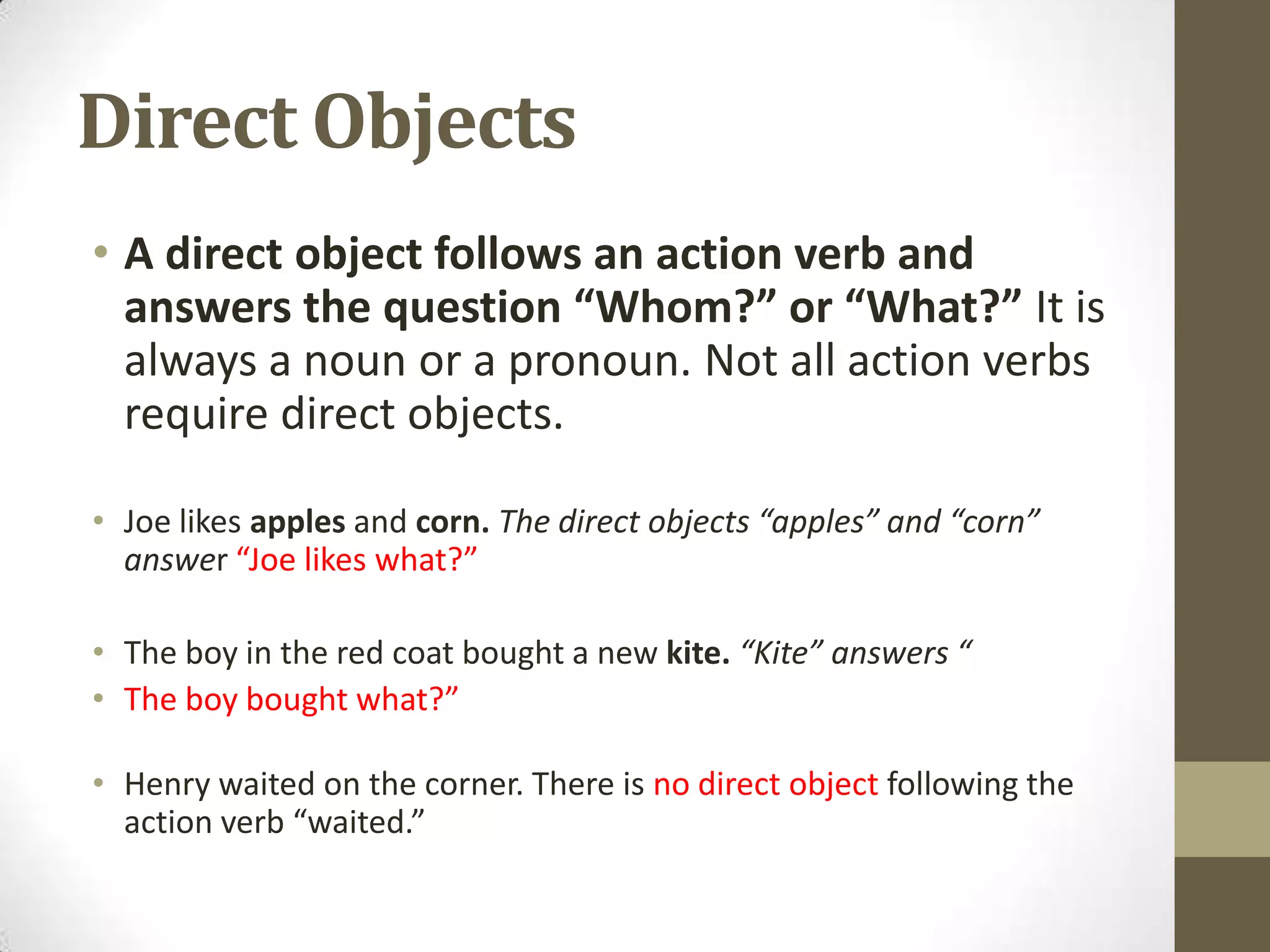
Direct Objects
• A direct object follows an action verb and
  answers the question “Whom?” or “What?” It is
  always a noun or a pronoun. Not all action verbs
  require direct objects.

• Joe likes apples and corn. The direct objects “apples” and “corn”
  answer “Joe likes what?”

• The boy in the red coat bought a new kite. “Kite” answers “
• The boy bought what?”

• Henry waited on the corner. There is no direct object following the
  action verb “waited.”
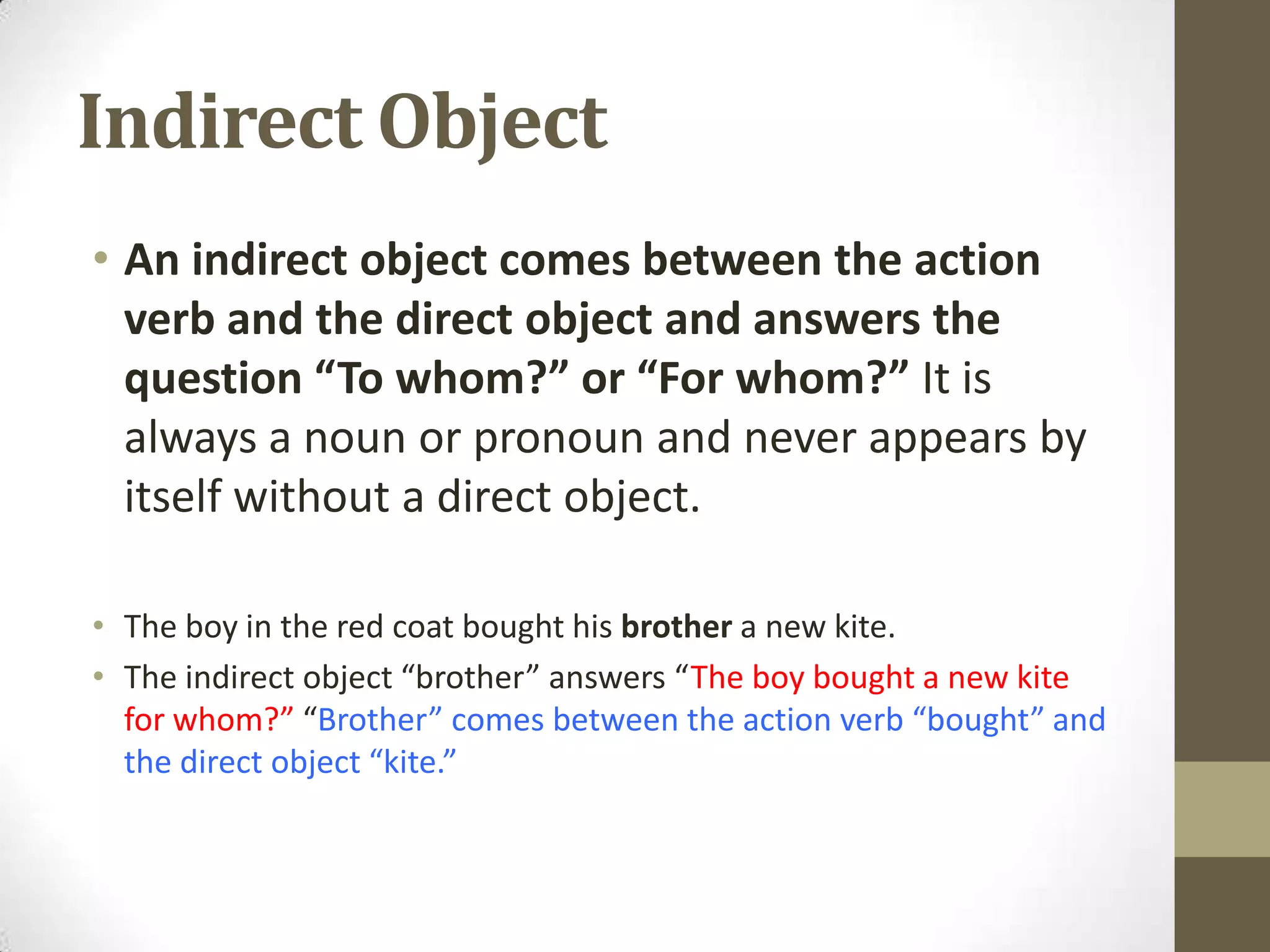
Indirect Object
• An indirect object comes between the action
  verb and the direct object and answers the
  question “To whom?” or “For whom?” It is
  always a noun or pronoun and never appears by
  itself without a direct object.

• The boy in the red coat bought his brother a new kite.
• The indirect object “brother” answers “The boy bought a new kite
  for whom?” “Brother” comes between the action verb “bought” and
  the direct object “kite.”
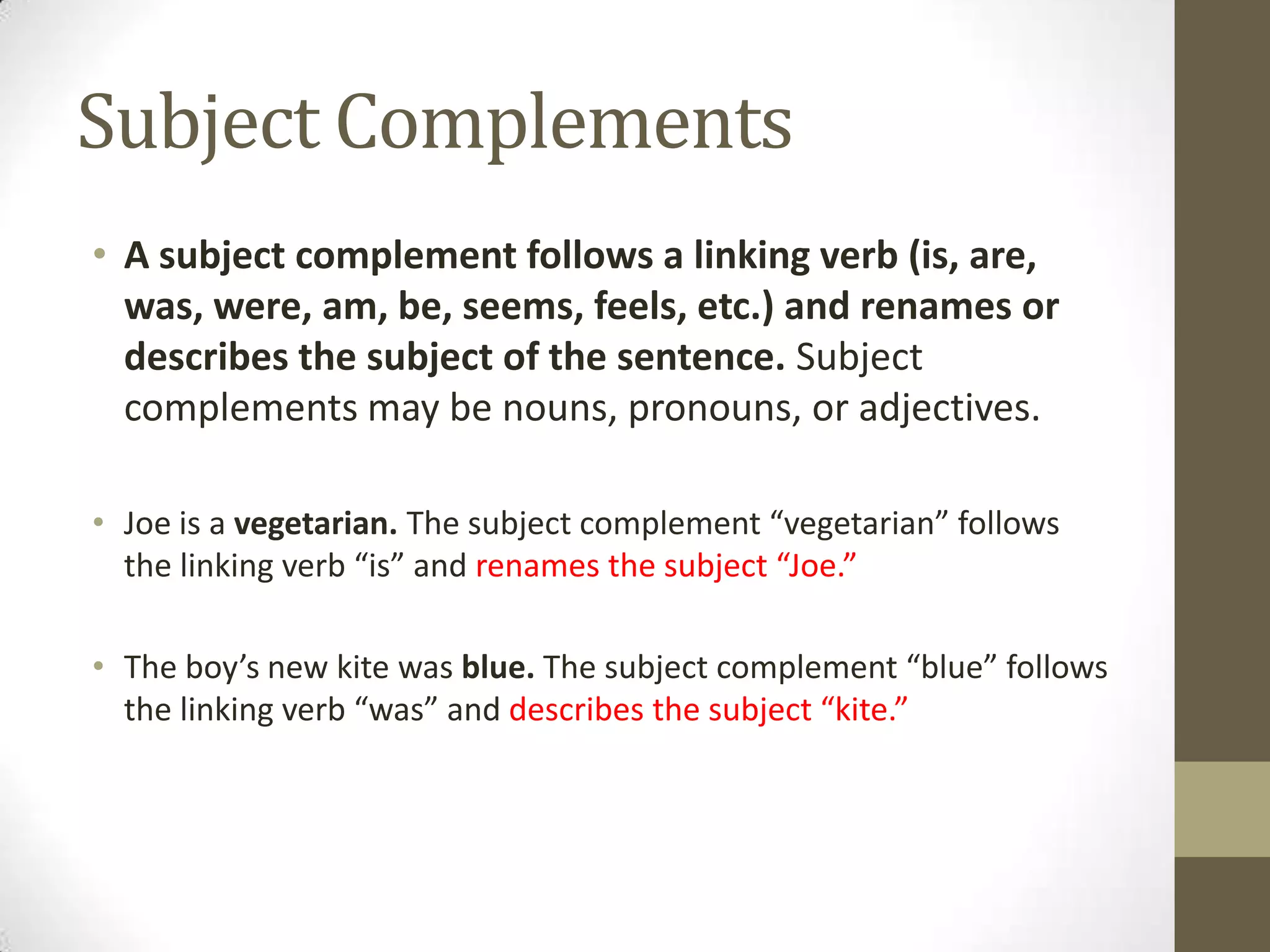
Subject Complements
• A subject complement follows a linking verb (is, are,
  was, were, am, be, seems, feels, etc.) and renames or
  describes the subject of the sentence. Subject
  complements may be nouns, pronouns, or adjectives.

• Joe is a vegetarian. The subject complement “vegetarian” follows
  the linking verb “is” and renames the subject “Joe.”

• The boy’s new kite was blue. The subject complement “blue” follows
  the linking verb “was” and describes the subject “kite.”

Verbs, objects and subject complements

  • 1.
  • 2.
    Direct Objects • Adirect object follows an action verb and answers the question “Whom?” or “What?” It is always a noun or a pronoun. Not all action verbs require direct objects. • Joe likes apples and corn. The direct objects “apples” and “corn” answer “Joe likes what?” • The boy in the red coat bought a new kite. “Kite” answers “ • The boy bought what?” • Henry waited on the corner. There is no direct object following the action verb “waited.”
  • 3.
    Indirect Object • Anindirect object comes between the action verb and the direct object and answers the question “To whom?” or “For whom?” It is always a noun or pronoun and never appears by itself without a direct object. • The boy in the red coat bought his brother a new kite. • The indirect object “brother” answers “The boy bought a new kite for whom?” “Brother” comes between the action verb “bought” and the direct object “kite.”
  • 4.
    Subject Complements • Asubject complement follows a linking verb (is, are, was, were, am, be, seems, feels, etc.) and renames or describes the subject of the sentence. Subject complements may be nouns, pronouns, or adjectives. • Joe is a vegetarian. The subject complement “vegetarian” follows the linking verb “is” and renames the subject “Joe.” • The boy’s new kite was blue. The subject complement “blue” follows the linking verb “was” and describes the subject “kite.”