COMPLEMENTS
English 7th Grade
Prof. Dario VanHorne
COMPLEMENTS: Overview
• A. A complement is a word or word
group that completes the meaning of
a verb.
• Every sentence has a subject and a
verb. But some sentences need
complements in order to be complete.
– Dr. Charles Drew made [made what?]
– Dr. Charles Drew made advances in the
study of blood plasma.
COMPLEMENTS: Overview
– Medical societies honored [honored whom?]
– Medical societies honored him.
– Dr. Drew’s research was [was what?]
– Dr. Drew’s research was important.
An adverb is never a complement.
– The package is here. [not a complement
because here is modifying the verb is]
– The package is heavy. [complement]
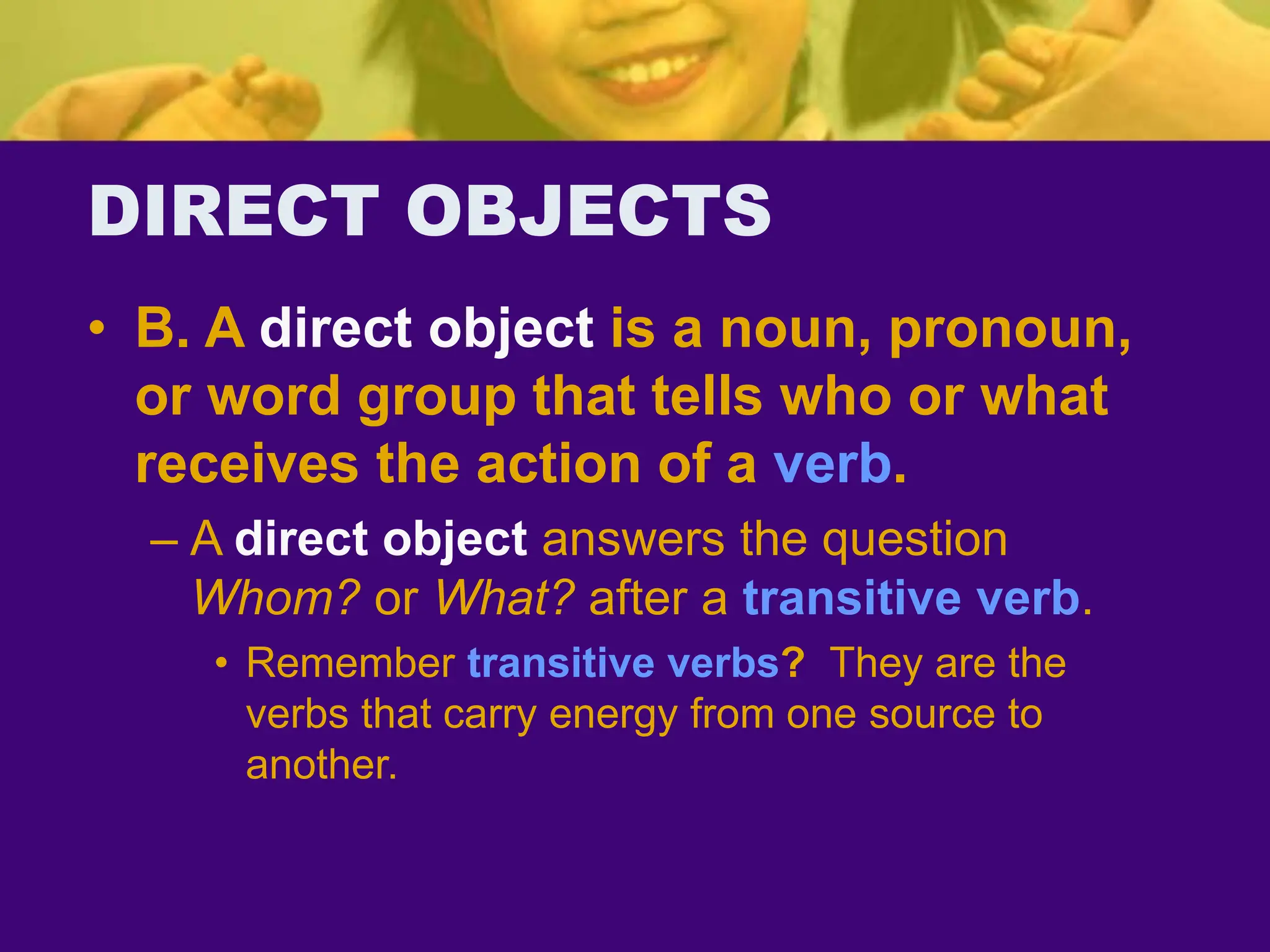
DIRECT OBJECTS
• B. A direct object is a noun, pronoun,
or word group that tells who or what
receives the action of a verb.
– A direct object answers the question
Whom? or What? after a transitive verb.
• Remember transitive verbs? They are the
verbs that carry energy from one source to
another.
DIRECT OBJECTS
• You can think of a direct object as the thing
into which the verb carries the energy.
– I punched a wall. [punched what?]
– I punched a wall.
– I met Dr. Mason. [met whom?]
– I met Dr. Mason.
– My uncle repairs engines and sells them. [repairs
what? and sells what?]
– My uncle repairs engines and
sells them.
DIRECT OBJECTS
• Linking verbs express no action, so they never
take direct objects.
– She was a sculptor. [sculptor is NOT the direct
object of was—was carries no energy]
• Direct objects are never in prepositional
phrases.
– She worked with the clay. [no direct object,
because with the clay is a prepositional phrase]
– She worked the clay. [now clay is the direct object
of the transitive verb worked]
INDIRECT OBJECTS
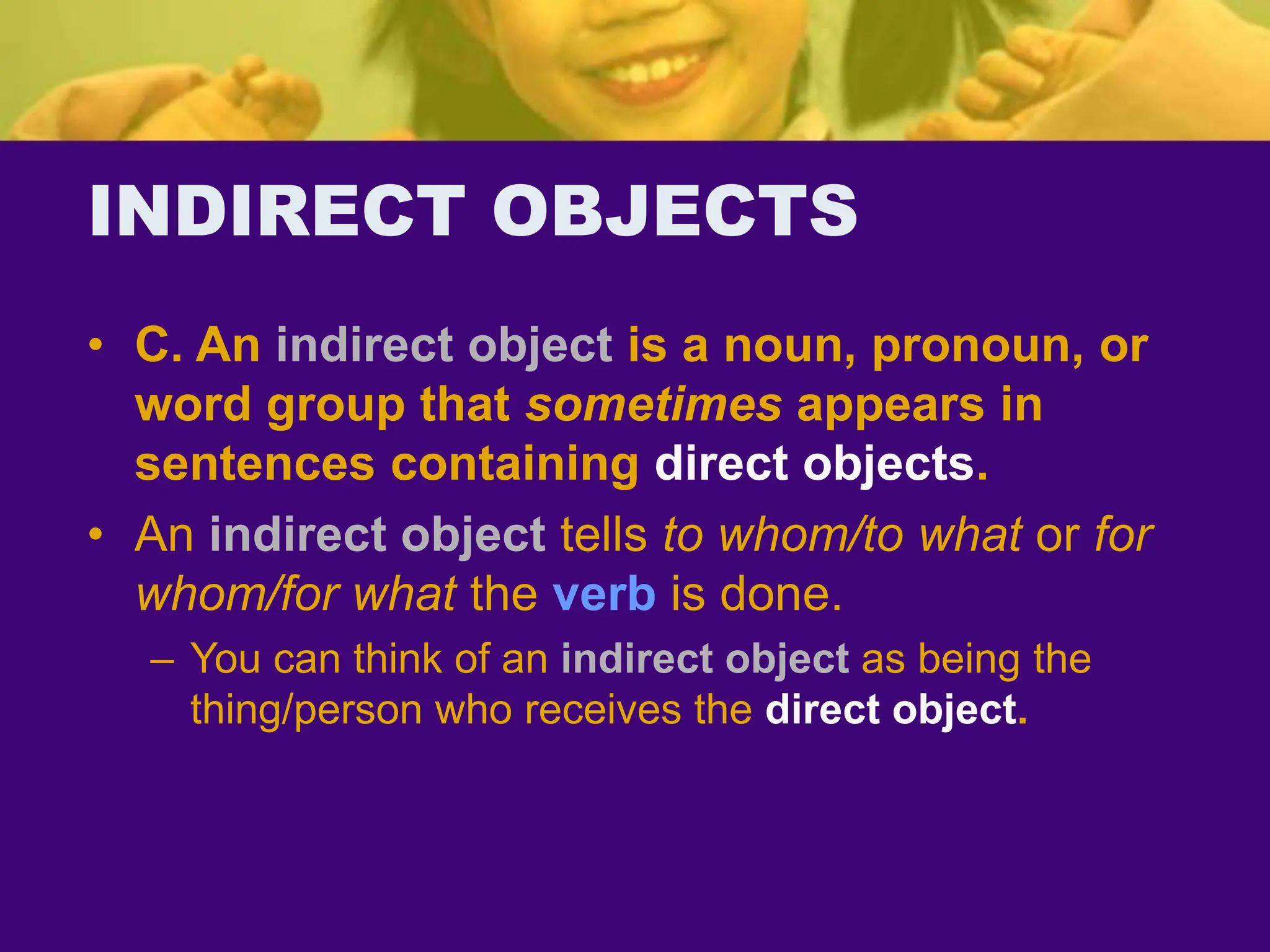
• C. An indirect object is a noun, pronoun, or
word group that sometimes appears in
sentences containing direct objects.
• An indirect object tells to whom/to what or for
whom/for what the verb is done.
– You can think of an indirect object as being the
thing/person who receives the direct object.
INDIRECT OBJECTS
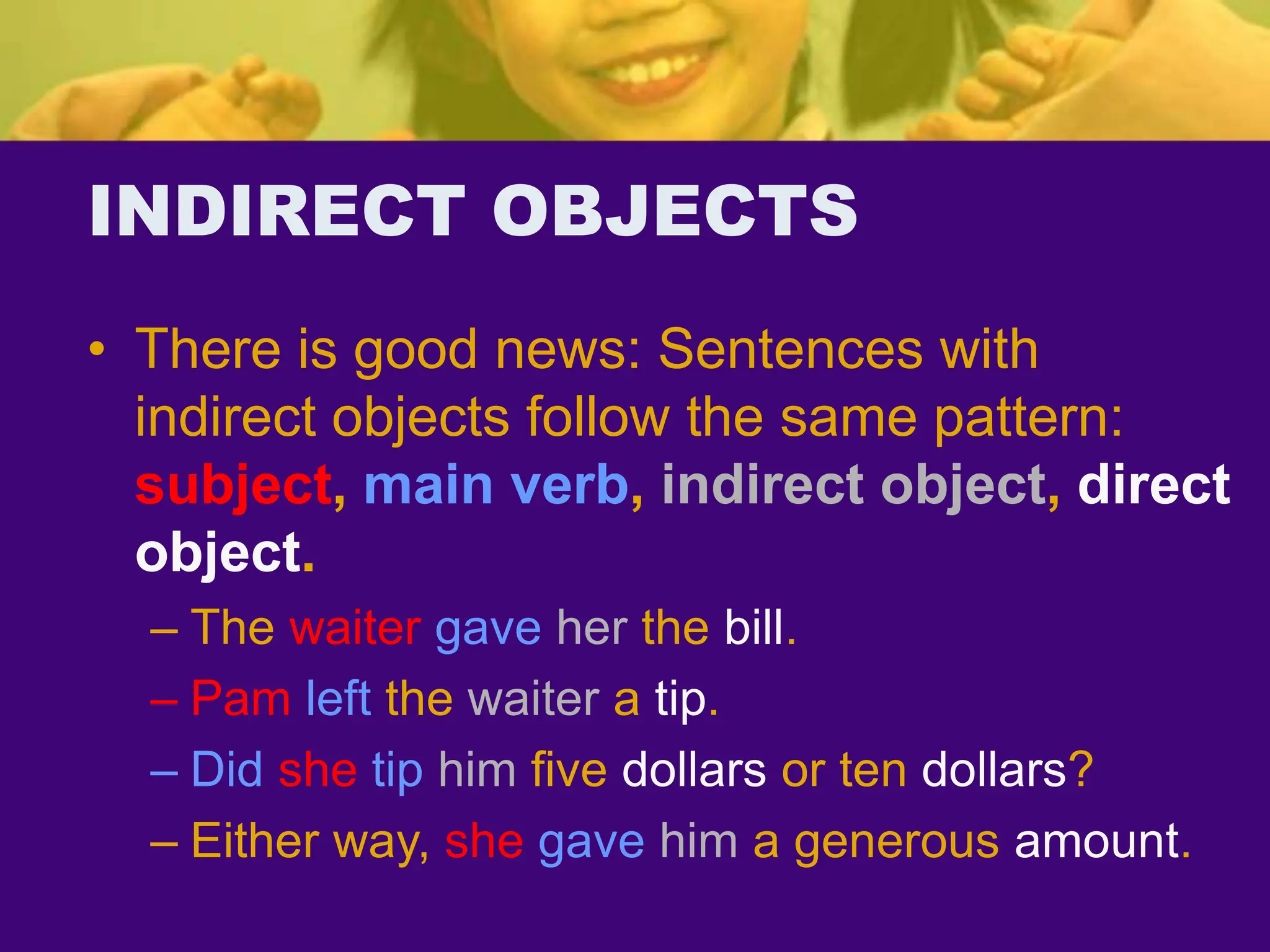
• There is good news: Sentences with
indirect objects follow the same pattern:
subject, main verb, indirect object, direct
object.
– The waiter gave her the bill.
– Pam left the waiter a tip.
– Did she tip him five dollars or ten dollars?
– Either way, she gave him a generous amount.
INDIRECT OBJECTS
• Just like direct objects, indirect objects
cannot appear in prepositional phrases.
– The captain gave the crew orders. [crew is the
indirect object]
– The captain gave orders to the crew. [no indirect
object, because to the crew is a prepositional
phrase]
– Mom made us lasagna. [us is the indirect object]
– Mom made lasagna for us. [no indirect object—for
is the beginning of a prepositional phrase]
Okay, so…
• If direct objects and
indirect objects can’t
follow linking verbs,
what can?
• Subject compliments!
• D. A subject
compliment is a word
or word group in the
predicate that
identifies or describes
the subject.
SUBJECT COMPLEMENTS
• E. A predicate nominative is a word or word
group that is in the predicate and that
identifies the subject.
• Predicate nominatives complete linking
verbs (remember, direct objects couldn’t).
– A dictionary is a valuable tool. [tool is a predicate
nominative that identifies the subject, dictionary.]
– The winner of the race was she. [she is a
predicate nominative identifying the subject,
winner.]
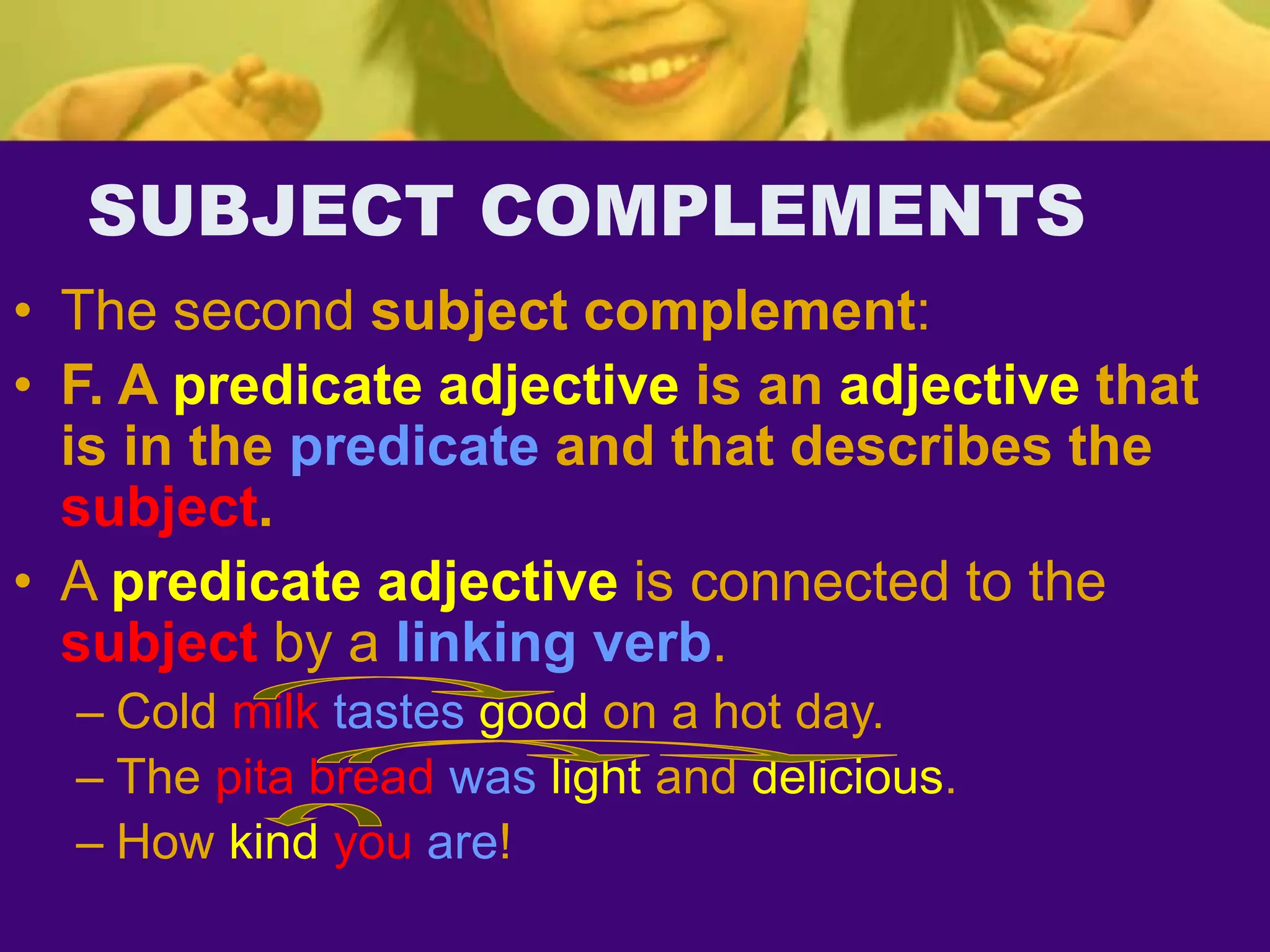
• The second subject complement:
• F. A predicate adjective is an adjective that
is in the predicate and that describes the
subject.
• A predicate adjective is connected to the
subject by a linking verb.
– Cold milk tastes good on a hot day.
– The pita bread was light and delicious.
– How kind you are!
SUBJECT COMPLEMENTS
FIN

holt-handbook-ch.-4-complements.ppt

  • 1.
  • 2.
    COMPLEMENTS: Overview • A.A complement is a word or word group that completes the meaning of a verb. • Every sentence has a subject and a verb. But some sentences need complements in order to be complete. – Dr. Charles Drew made [made what?] – Dr. Charles Drew made advances in the study of blood plasma.
  • 3.
    COMPLEMENTS: Overview – Medicalsocieties honored [honored whom?] – Medical societies honored him. – Dr. Drew’s research was [was what?] – Dr. Drew’s research was important. An adverb is never a complement. – The package is here. [not a complement because here is modifying the verb is] – The package is heavy. [complement]
  • 4.
    DIRECT OBJECTS • B.A direct object is a noun, pronoun, or word group that tells who or what receives the action of a verb. – A direct object answers the question Whom? or What? after a transitive verb. • Remember transitive verbs? They are the verbs that carry energy from one source to another.
  • 5.
    DIRECT OBJECTS • Youcan think of a direct object as the thing into which the verb carries the energy. – I punched a wall. [punched what?] – I punched a wall. – I met Dr. Mason. [met whom?] – I met Dr. Mason. – My uncle repairs engines and sells them. [repairs what? and sells what?] – My uncle repairs engines and sells them.
  • 6.
    DIRECT OBJECTS • Linkingverbs express no action, so they never take direct objects. – She was a sculptor. [sculptor is NOT the direct object of was—was carries no energy] • Direct objects are never in prepositional phrases. – She worked with the clay. [no direct object, because with the clay is a prepositional phrase] – She worked the clay. [now clay is the direct object of the transitive verb worked]
  • 7.
    INDIRECT OBJECTS • C.An indirect object is a noun, pronoun, or word group that sometimes appears in sentences containing direct objects. • An indirect object tells to whom/to what or for whom/for what the verb is done. – You can think of an indirect object as being the thing/person who receives the direct object.
  • 8.
    INDIRECT OBJECTS • Thereis good news: Sentences with indirect objects follow the same pattern: subject, main verb, indirect object, direct object. – The waiter gave her the bill. – Pam left the waiter a tip. – Did she tip him five dollars or ten dollars? – Either way, she gave him a generous amount.
  • 9.
    INDIRECT OBJECTS • Justlike direct objects, indirect objects cannot appear in prepositional phrases. – The captain gave the crew orders. [crew is the indirect object] – The captain gave orders to the crew. [no indirect object, because to the crew is a prepositional phrase] – Mom made us lasagna. [us is the indirect object] – Mom made lasagna for us. [no indirect object—for is the beginning of a prepositional phrase]
  • 10.
    Okay, so… • Ifdirect objects and indirect objects can’t follow linking verbs, what can? • Subject compliments! • D. A subject compliment is a word or word group in the predicate that identifies or describes the subject.
  • 11.
    SUBJECT COMPLEMENTS • E.A predicate nominative is a word or word group that is in the predicate and that identifies the subject. • Predicate nominatives complete linking verbs (remember, direct objects couldn’t). – A dictionary is a valuable tool. [tool is a predicate nominative that identifies the subject, dictionary.] – The winner of the race was she. [she is a predicate nominative identifying the subject, winner.]
  • 12.
    • The secondsubject complement: • F. A predicate adjective is an adjective that is in the predicate and that describes the subject. • A predicate adjective is connected to the subject by a linking verb. – Cold milk tastes good on a hot day. – The pita bread was light and delicious. – How kind you are! SUBJECT COMPLEMENTS
  • 13.