Forms of the Noun
Nominals include
  substantives (nouns),
adjectives, and numbers.
They are the same in form
        and use.
Absolute & Construct
1.       Absolute State
          The form memorized as vocabulary word
          Fully accented
2.       Construct State
          Related closely to the word that follows
          Weakly accented
Two or more nominals are moved
  so closely to one another that
they form a linguistic unit and at
the same time also express a unit
           of meaning.
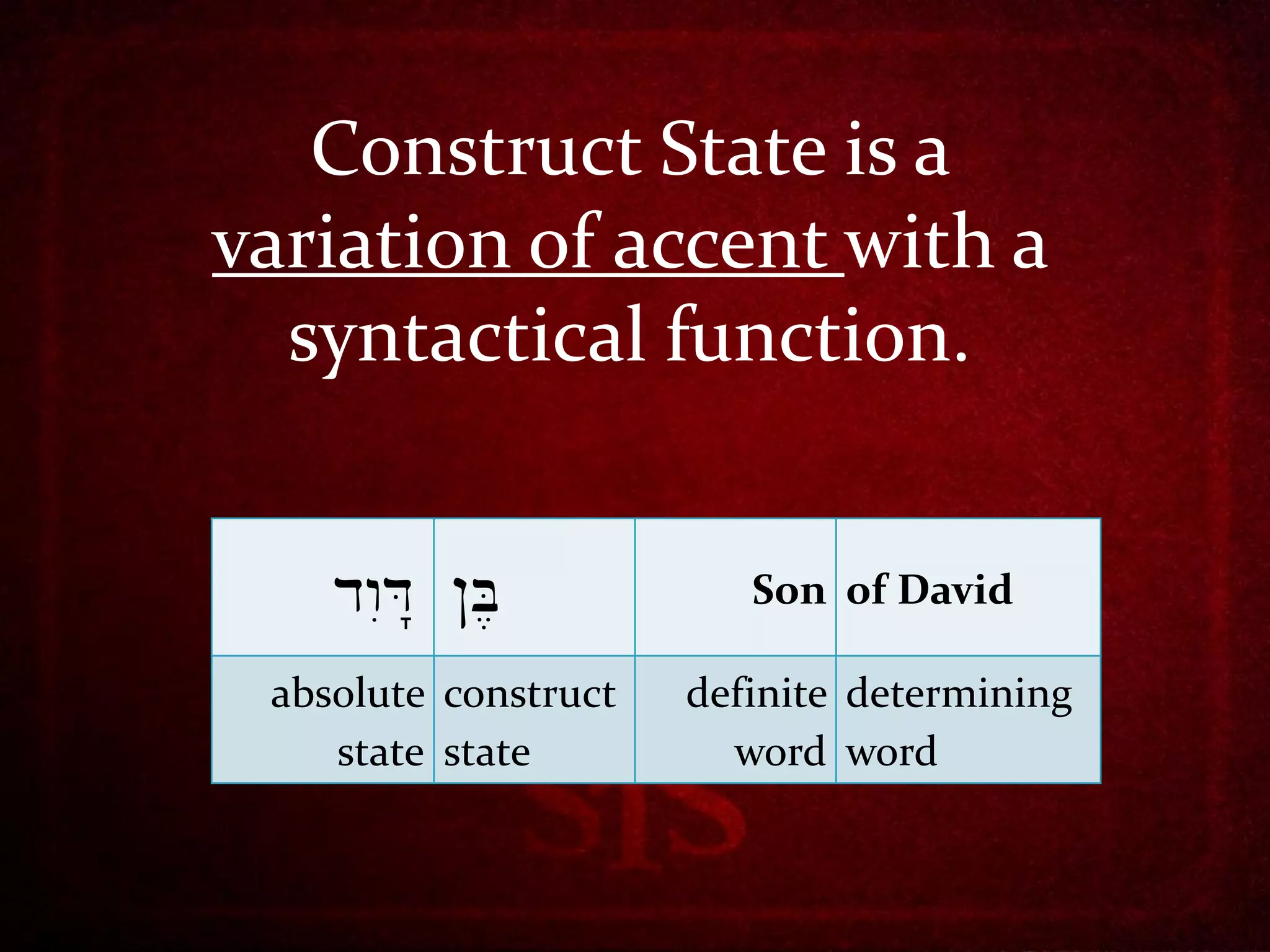
Construct State is a
variation of accent with a
  syntactical function.


    dwID" !B,            Son of David

 absolute construct   definite determining
    state state         word word
Most of the time we can use
 “of” to connect the two
 words that make up the
     construct chain.
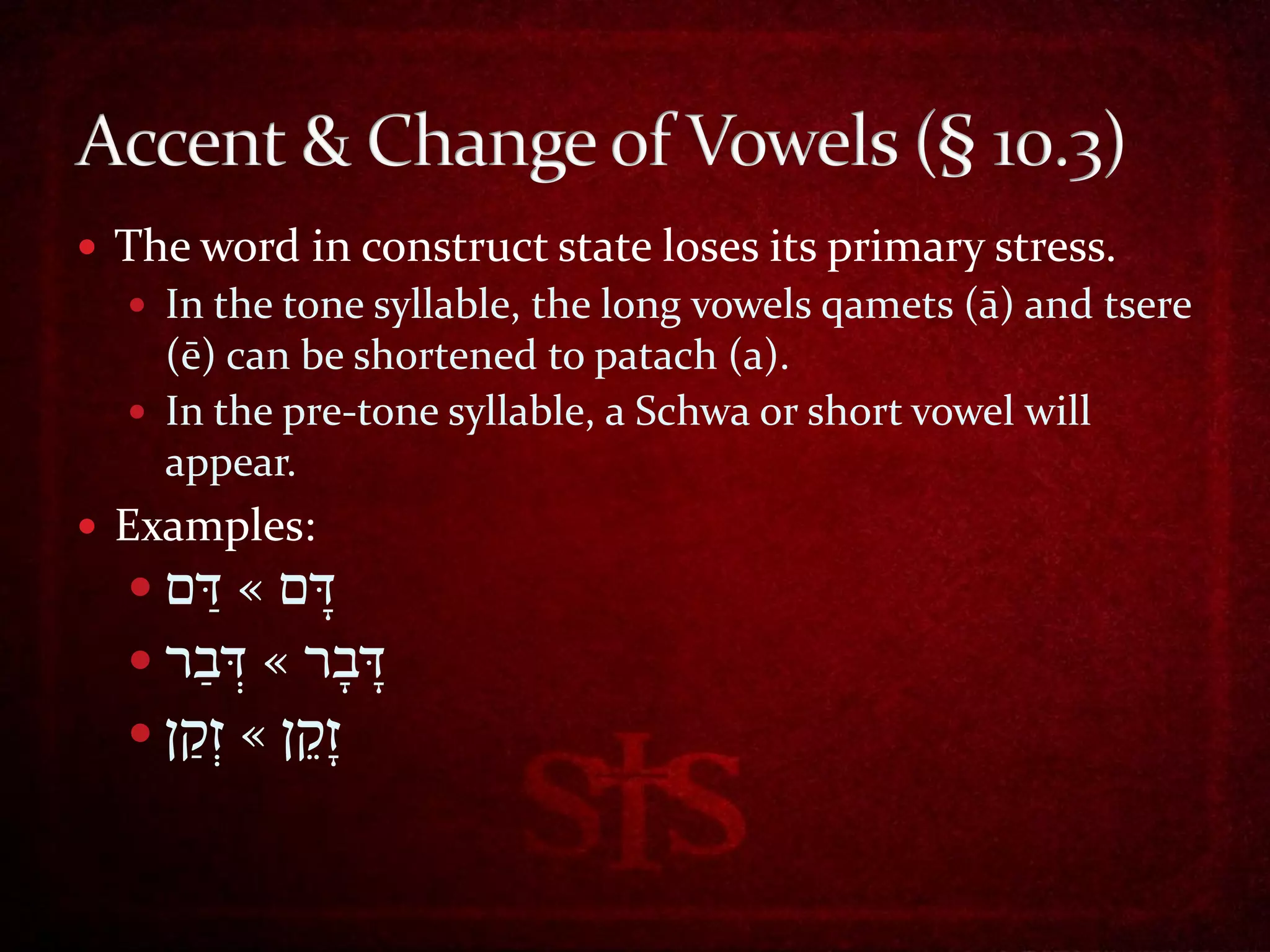
 The word in construct state loses its primary stress.
   In the tone syllable, the long vowels qamets (ā) and tsere
    (ē) can be shortened to patach (a).
   In the pre-tone syllable, a Schwa or short vowel will
    appear.
 Examples:
   ‫דם » דם‬
     ָּ   ָּ
   ‫דברָּ» ְּדבר‬
   ‫זקן » זְּ קן‬
     ָּ       ָּ
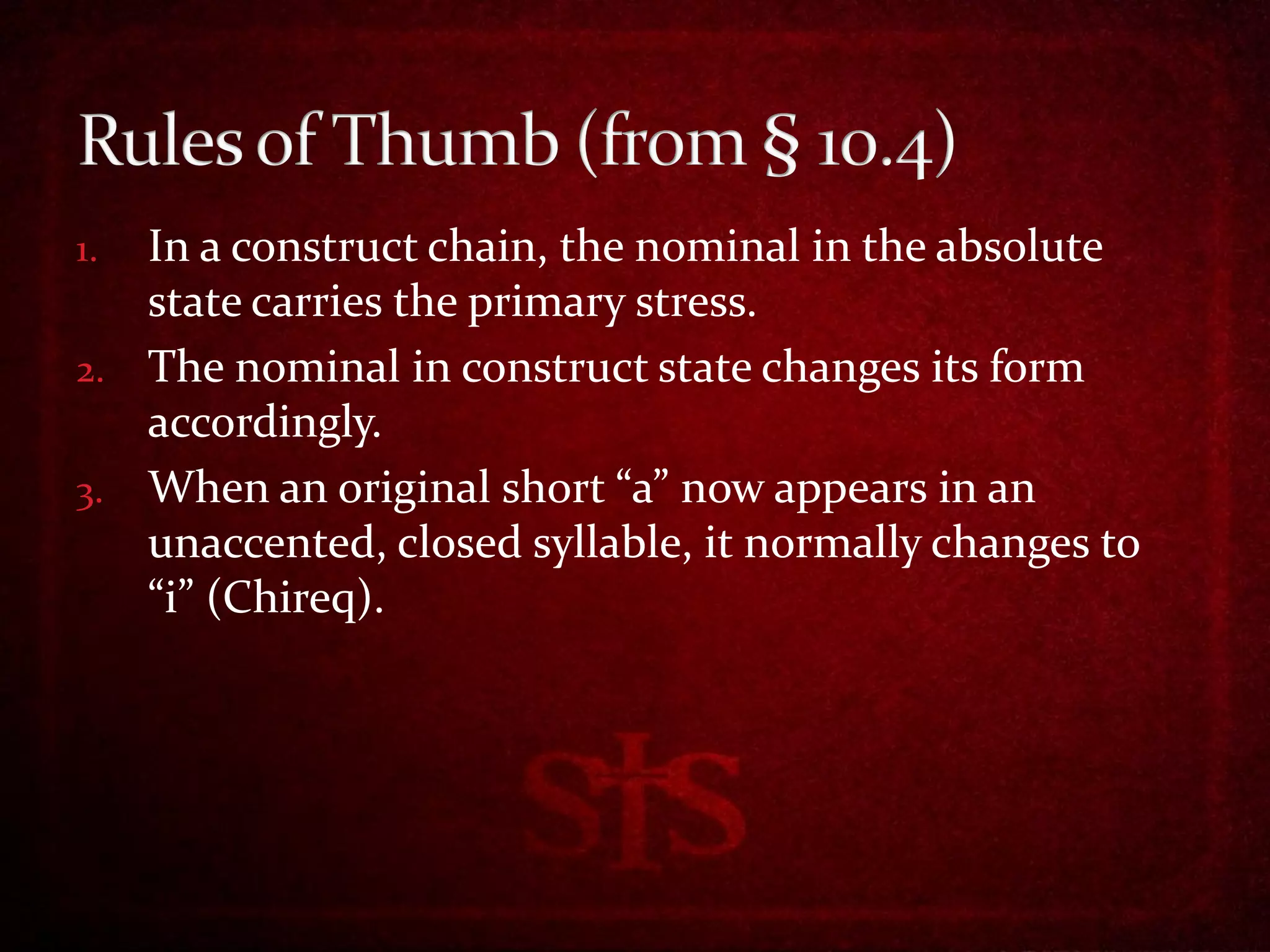
1. In a construct chain, the nominal in the absolute
   state carries the primary stress.
2. The nominal in construct state changes its form
   accordingly.
3. When an original short “a” now appears in an
   unaccented, closed syllable, it normally changes to
   “i” (Chireq).
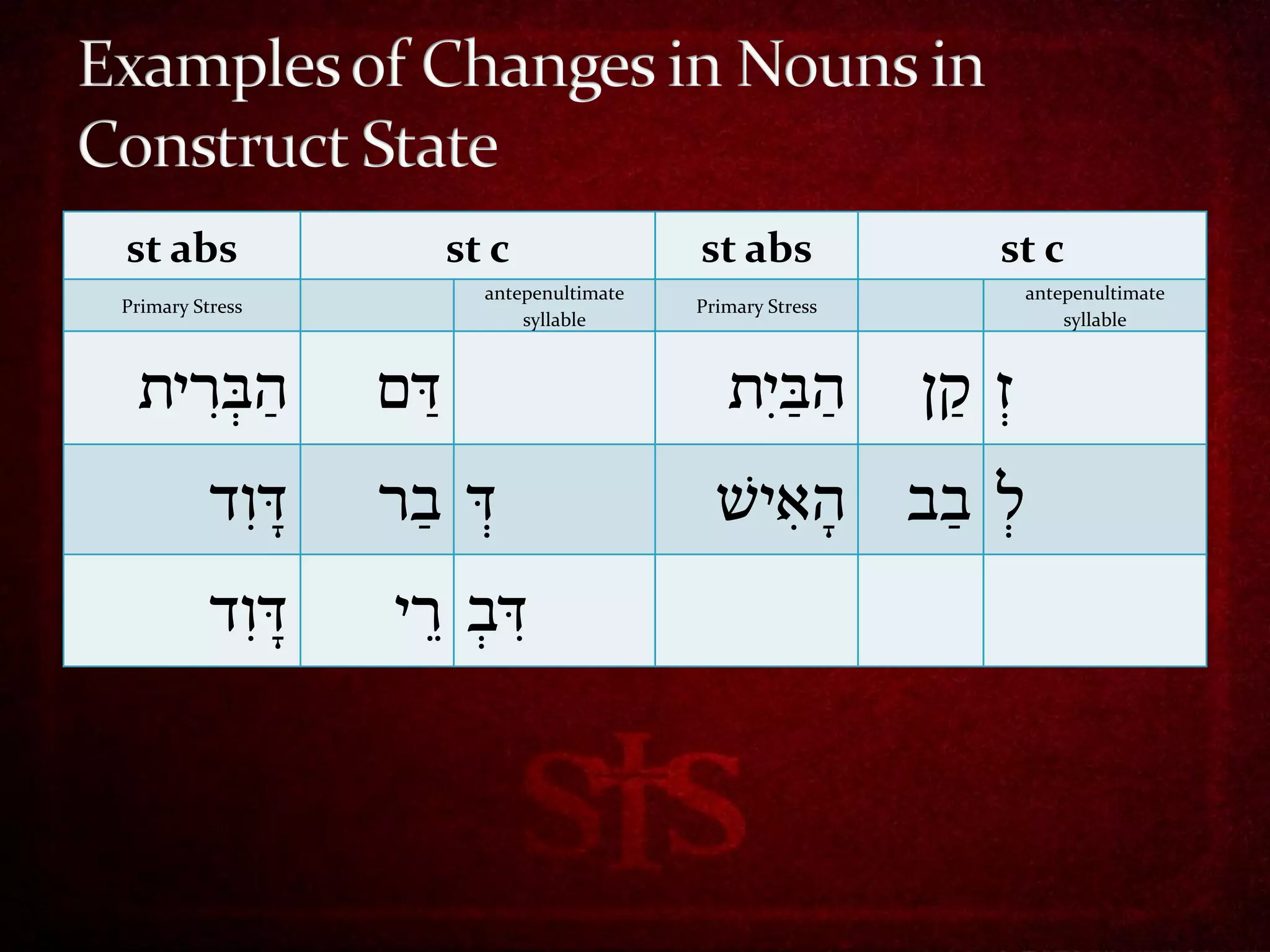
st abs                 st c                st abs                 st c
                         antepenultimate                               antepenultimate
Primary Stress                             Primary Stress
                             syllable                                      syllable


 ‫הב ִרית‬
      ְּ          ‫דם‬                          ‫הביִ ת‬        ‫זְָּּ קן‬
          ‫דוִ ד‬   ‫ד בר‬
                     ְָּּ                    ‫ְָּּ בב האיׁש‬
                                                 ִ    ‫ל‬
          ‫דוִ ד‬   ‫ִד ְָּּ רי‬
                     ‫ב‬
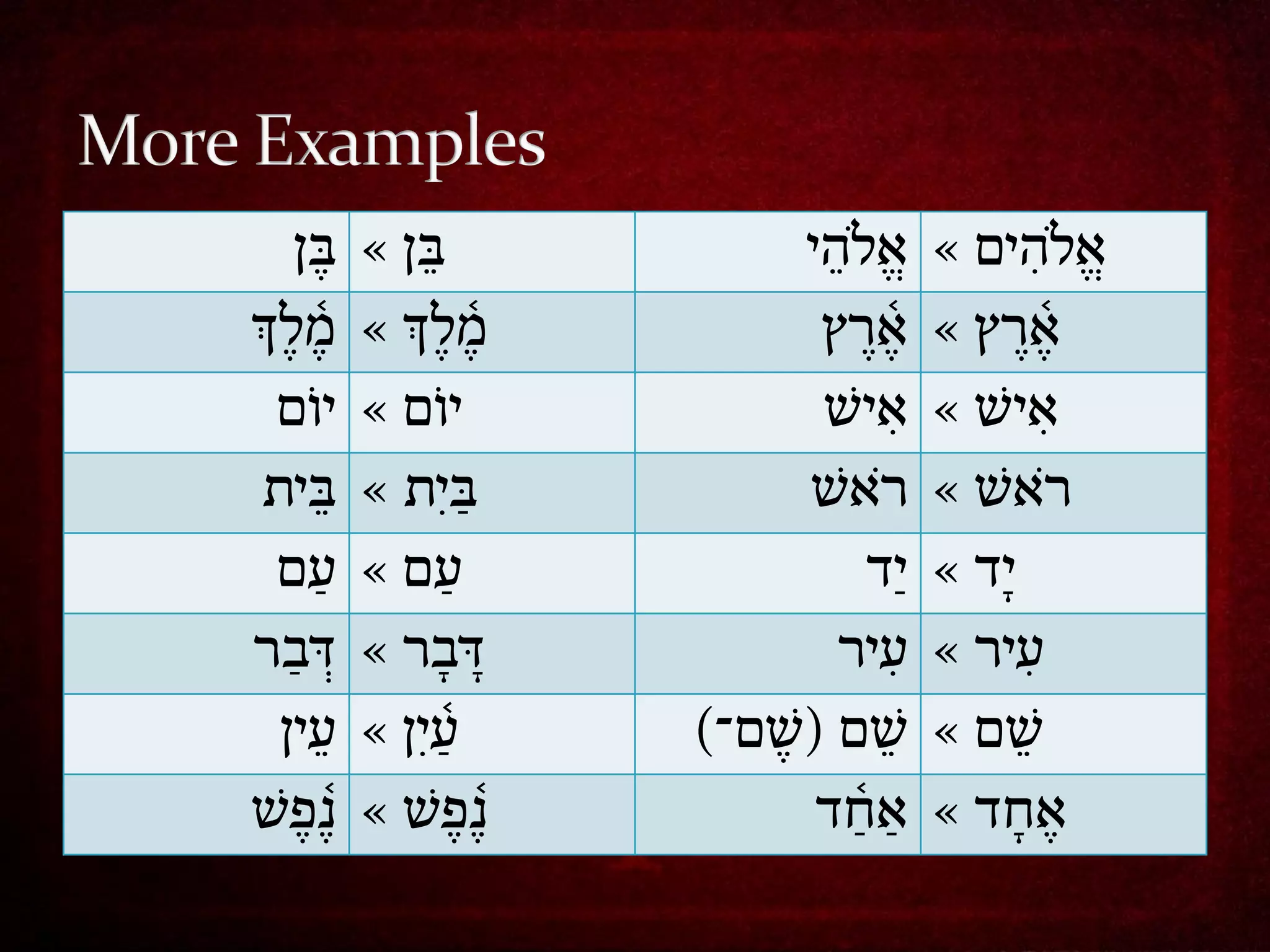
‫ָּן‬
     ‫ב‬    ‫ָּן »‬
              ‫ב‬               ‫אהֹלהי‬  ‫ָּ‬    ‫אהֹלהים »‬
                                                 ‫ָּ ִ ָּ‬
‫מ ְָּך‬
  ‫ֶ֫ ל‬    ‫מ ְָּךָּ»‬
                 ‫ֶ֫ ל‬          ‫ארץ‬
                                ‫ֶָּ֫ ָּ‬     ‫א ָּץ »‬
                                                ‫ֶָּ֫ר‬
  ‫יום‬‫ָּ‬   ‫יום »‬  ‫ָּ‬            ‫איׁש‬   ‫ִָּ‬   ‫איׁש »‬  ‫ִָּ‬
 ‫בית‬      ‫ביִ תָּ»‬            ‫ראׁש‬
                                ‫ָּ ָּ‬       ‫ראׁשָּ»‬
                                                  ‫ָּ ָּ‬
  ‫ָּם‬‫ע‬    ‫ָּם »‬  ‫ע‬                  ‫יד‬      ‫ידָּ»‬
‫ְּדבר‬     ‫דבר »‬                 ‫עיר‬   ‫ִָּ‬   ‫עירָּ»‬‫ִָּ‬
  ‫עין‬‫ָּ‬   ‫עיִָּן »‬
                 ‫ֶָּ֫‬   ‫ׁשם (ׁשם־)‬
                           ‫ָּ‬        ‫ָּ‬     ‫ָּם »‬‫ׁש‬
‫ֶ֫נפׁש‬    ‫ֶ֫נפׁש »‬             ‫אחד‬‫ָּ ֶ֫‬     ‫אחדָּ»‬    ‫ָּ‬
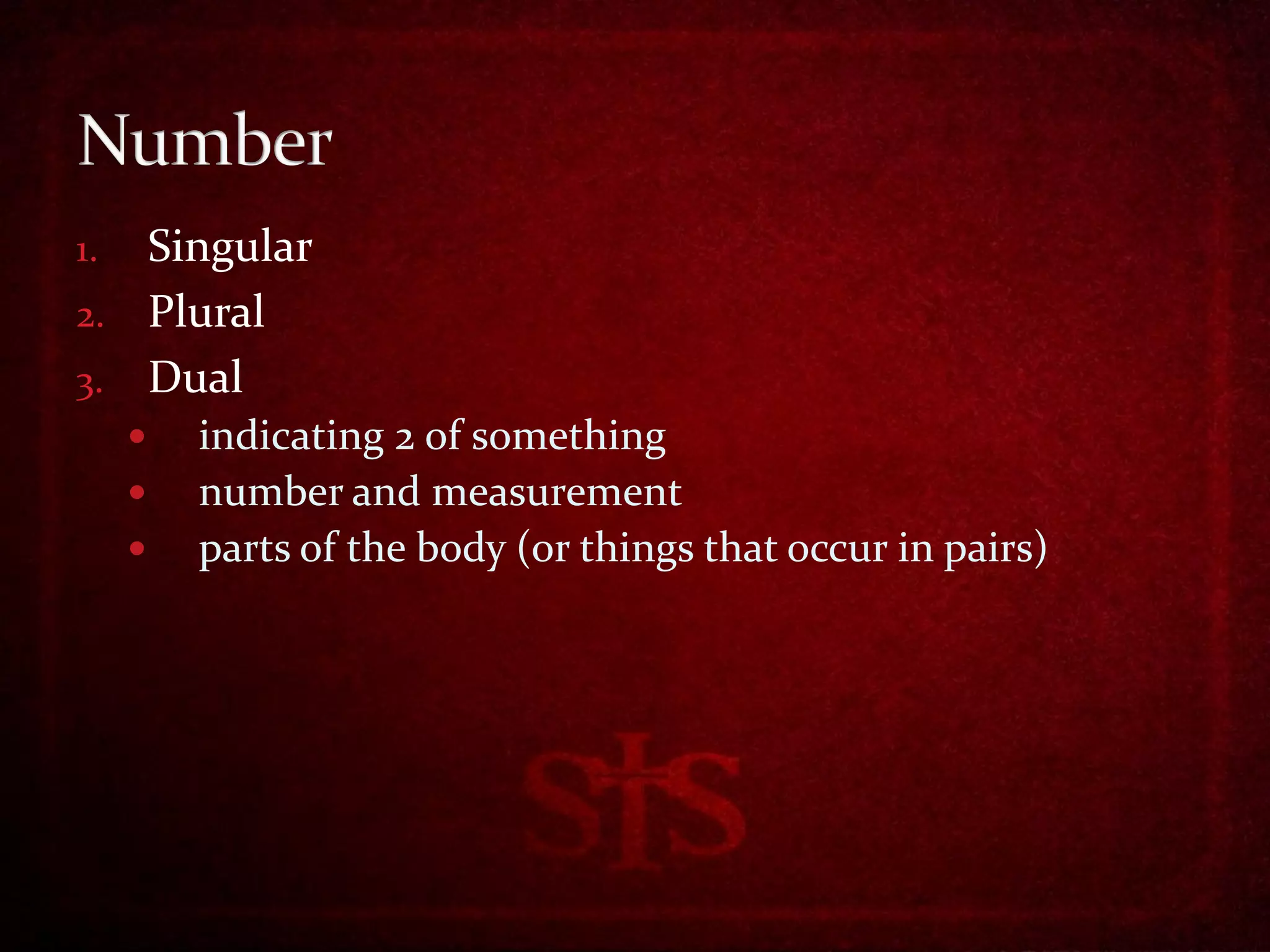
1. Singular
2. Plural
3. Dual
        indicating 2 of something
        number and measurement
        parts of the body (or things that occur in pairs)
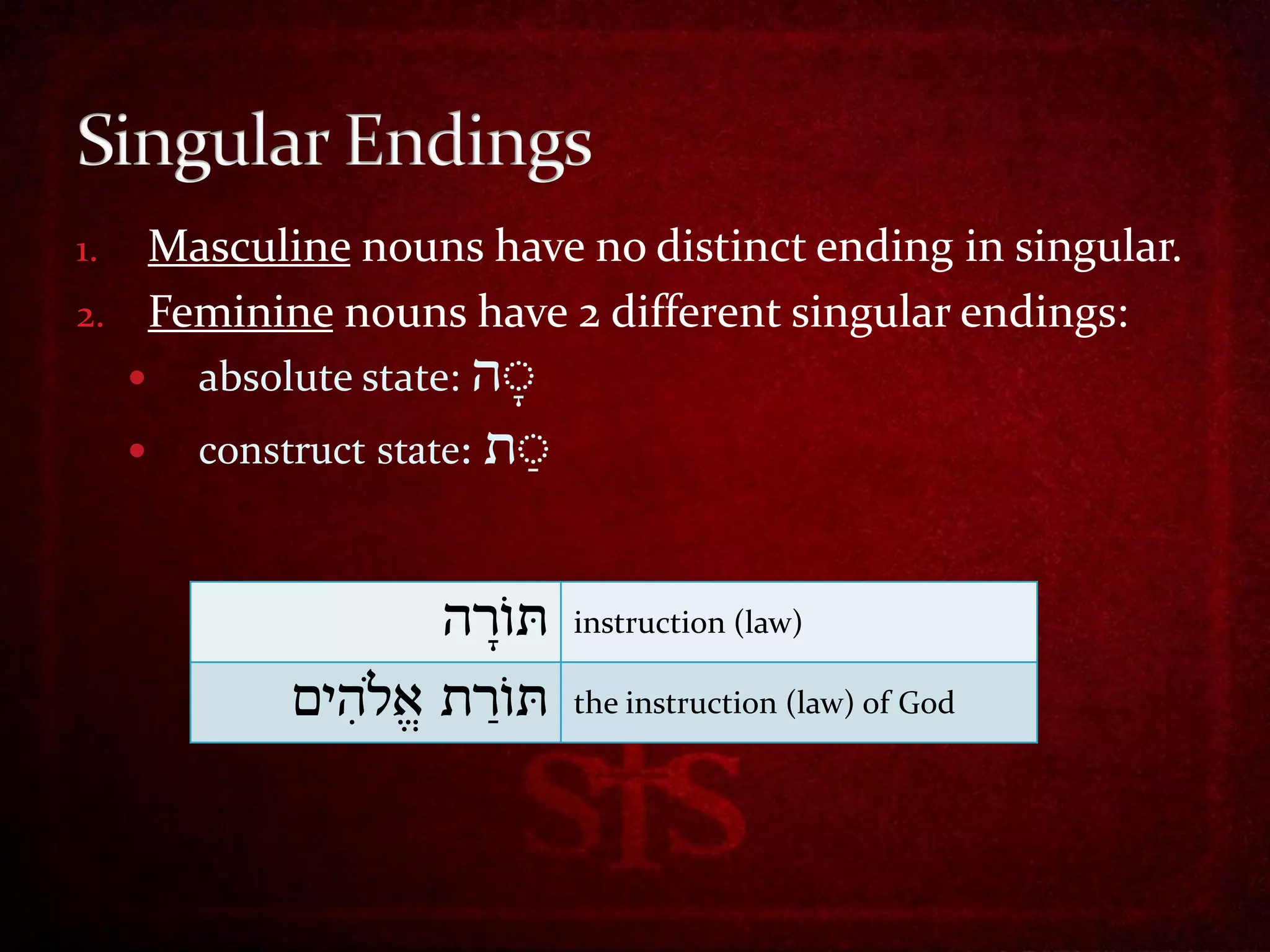
1. Masculine nouns have no distinct ending in singular.
2. Feminine nouns have 2 different singular endings:
        absolute state: ‫ָה‬
        construct state: ‫ָת‬


                       ‫ּתורה‬   instruction (law)

              ‫ּתורתָּאהֹלהים‬
               ָּ ִ ָּ         the instruction (law) of God
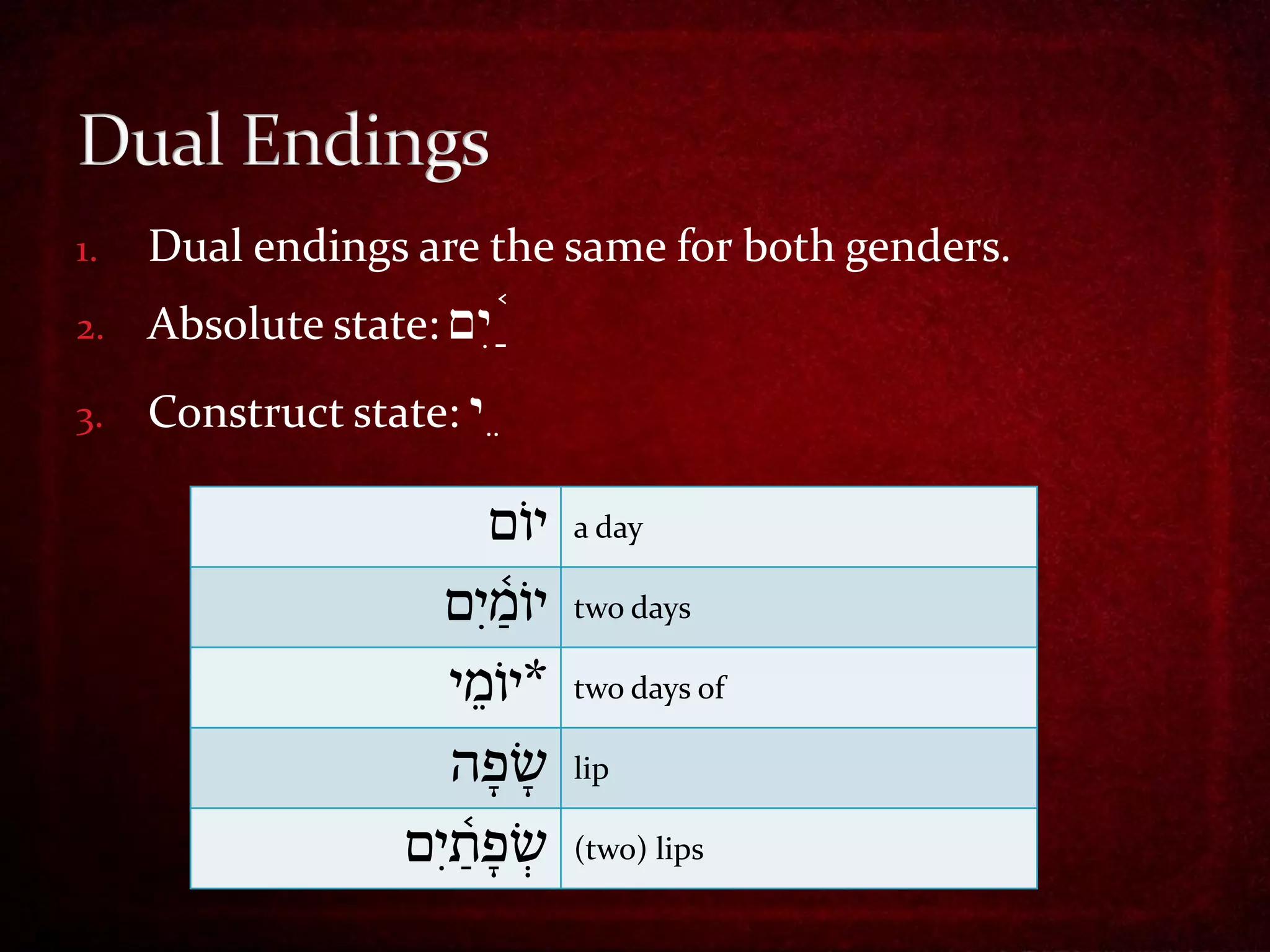
1.   Dual endings are the same for both genders.
2.   Absolute state: ~yI         ;ñ
3.   Construct state: y      e
                            ‫יום‬ ָּ    a day

                       ‫יומִָּים‬
                             ֶ֫       two days

                        ‫*יומי‬         two days of

                        ‫שפה‬           lip

                   ‫שפתִָּים‬
                         ֶ֫ ְּ        (two) lips
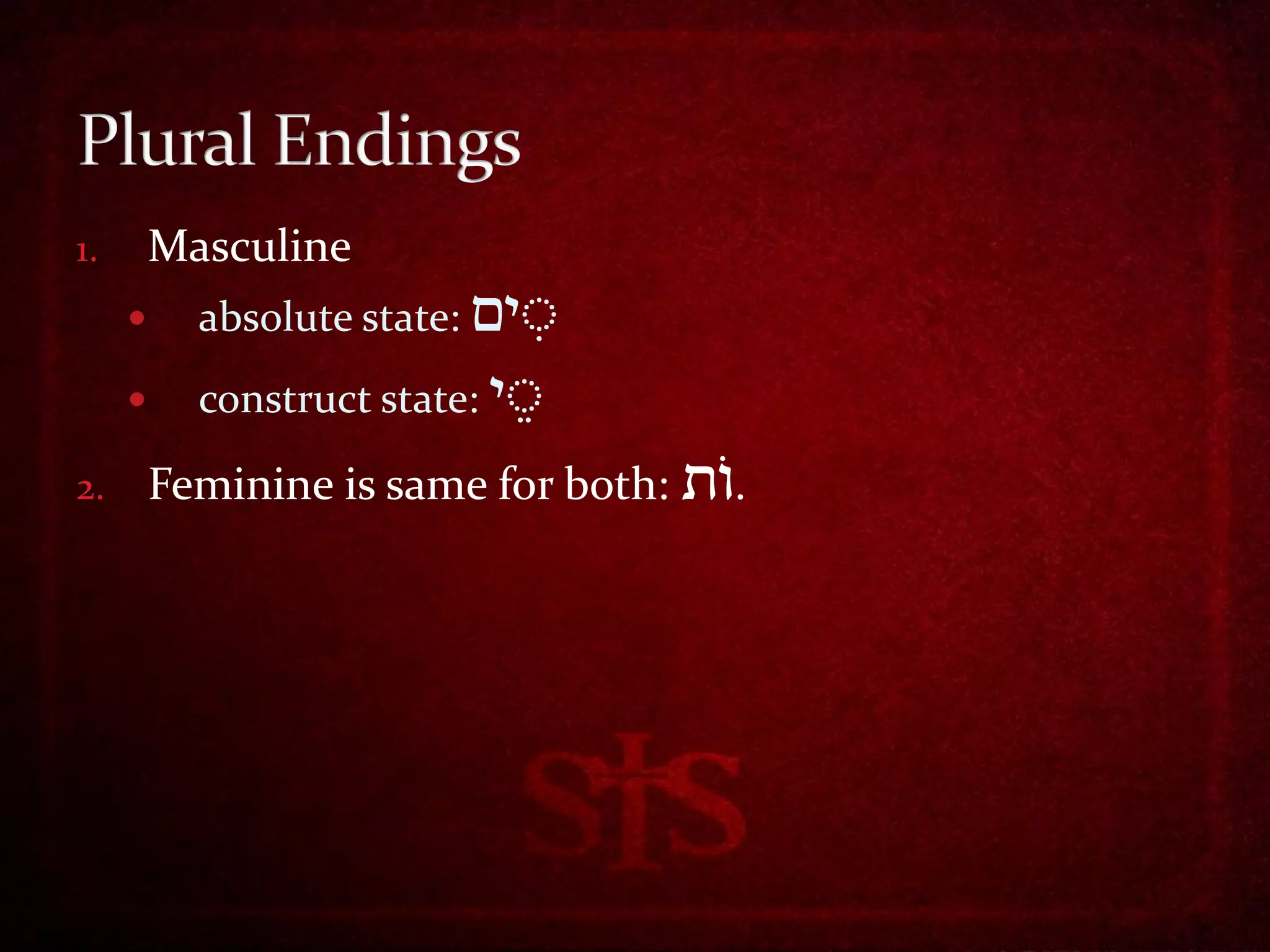
1.       Masculine
          absolute state: ‫ָים‬
                            ָּ ִ
          construct state: ‫ָי‬

2.       Feminine is same for both: ‫.ות‬
‫סּוס‬   a horse

‫סּוסים‬
  ָּ ִ     horses

  ‫סּוסי‬    horses of …

 ‫סּוסה‬     mare

‫סּוסות‬     mares [or mares of …]
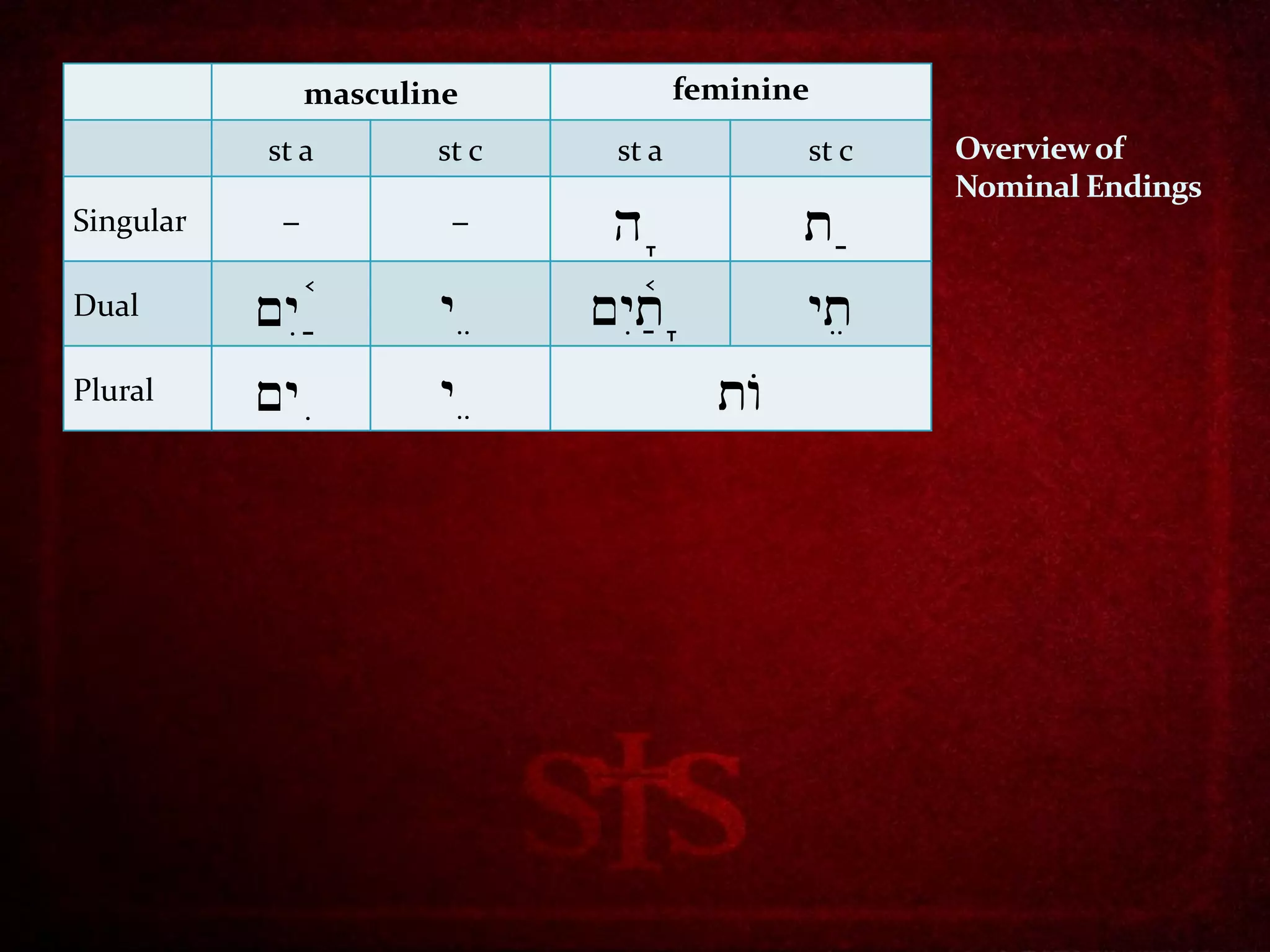
masculine              feminine
           st a         st c     st a          st c   Overview of
                                                      Nominal Endings
Singular     –           –      h'             t;
Dual       ~yI ;ñ        ye    ~yIt;ñ '        yte
Plural     ~y i          ye               tA
As a result of a shift in the tone
   syllable, the vowels often
 change with the addition of
       endings on nouns.
            See § 10.
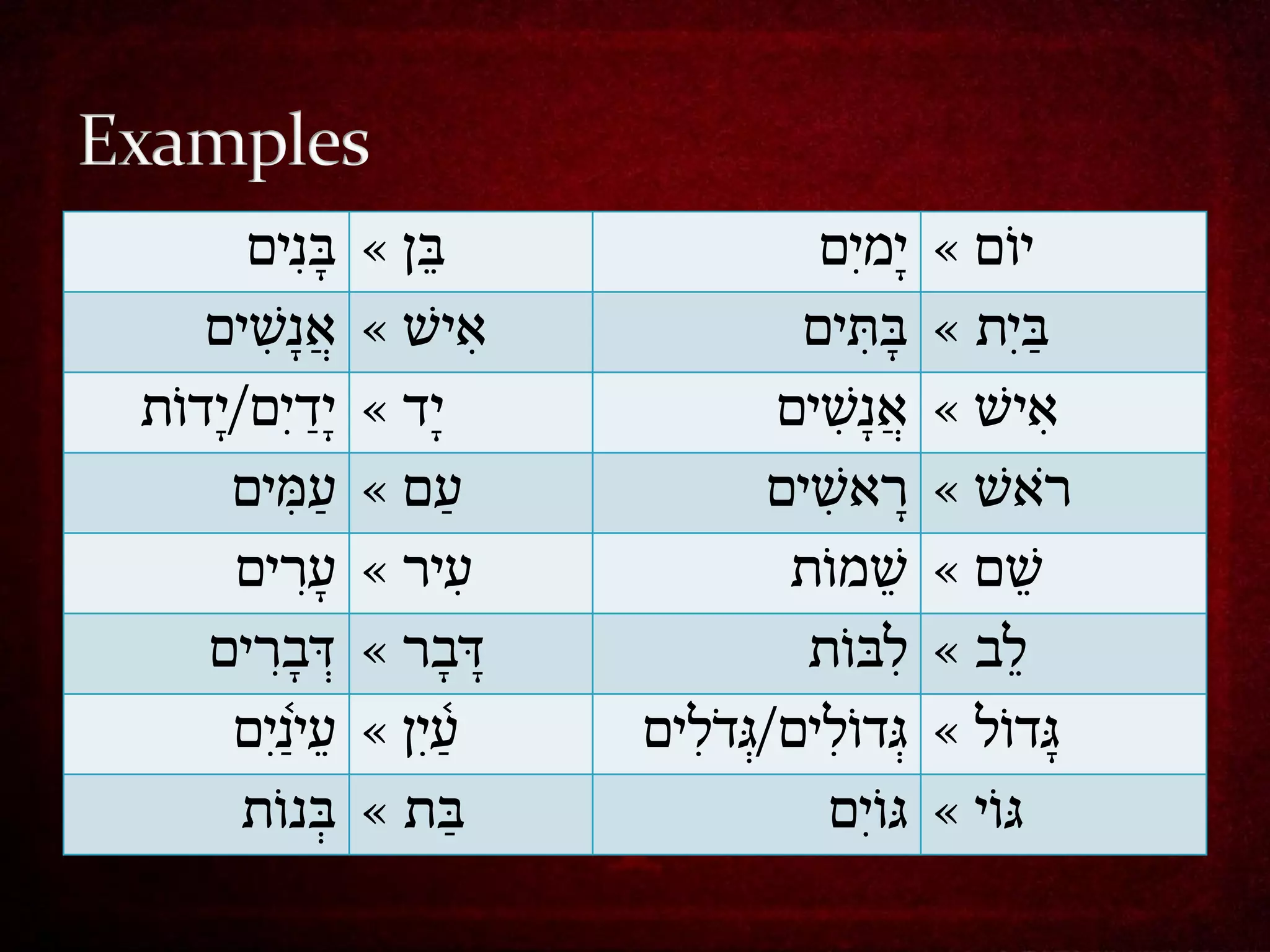
‫ב ִנים‬
          ‫ָּ‬         ‫ָּן »‬
                         ‫ב‬                          ‫ימים‬‫ִָּ‬     ‫יום »‬‫ָּ‬
   ‫אנׁשים‬
    ‫ָּ ִ ָּ‬          ‫איׁשָּ»‬     ‫ִָּ‬              ‫בּתים‬
                                                      ‫ִ ָּ‬      ‫ביִ תָּ»‬
‫ידִָּים/ידות‬         ‫ידָּ»‬                      ‫אנׁשים‬
                                                  ‫ָּ ִ ָּ‬       ‫איׁש »‬  ‫ִָּ‬
    ‫ָּמים‬
        ‫ע ִ ָּ‬       ‫ָּם »‬  ‫ע‬                  ‫ראׁשים‬
                                                 ‫ָּ ָּ ִ ָּ‬     ‫ראׁשָּ»‬
                                                                      ‫ָּ ָּ‬
    ‫ָּ ִרים‬
        ‫ע ָּ‬         ‫עירָּ»‬   ‫ִָּ‬               ‫ׁשמות‬           ‫ָּם »‬‫ׁש‬
   ‫ְּדב ִרים‬
     ‫ָּ‬              ‫דבר »‬                        ‫לבות‬      ‫ִ‬   ‫לבָּ»‬
    ‫עינִָּים‬
           ‫ָּ ֶ֫‬     ‫עיִָּן »‬
                            ‫ֶָּ֫‬       ‫ְּגדולים/ ְּגדלים‬
                                        ‫ִ ָּ‬       ‫ִ ָּ‬         ‫גדולָּ»‬
     ‫בנות‬       ‫ְּ‬   ‫בתָּ»‬                           ‫גוִָּים‬    ‫גויָּ»‬
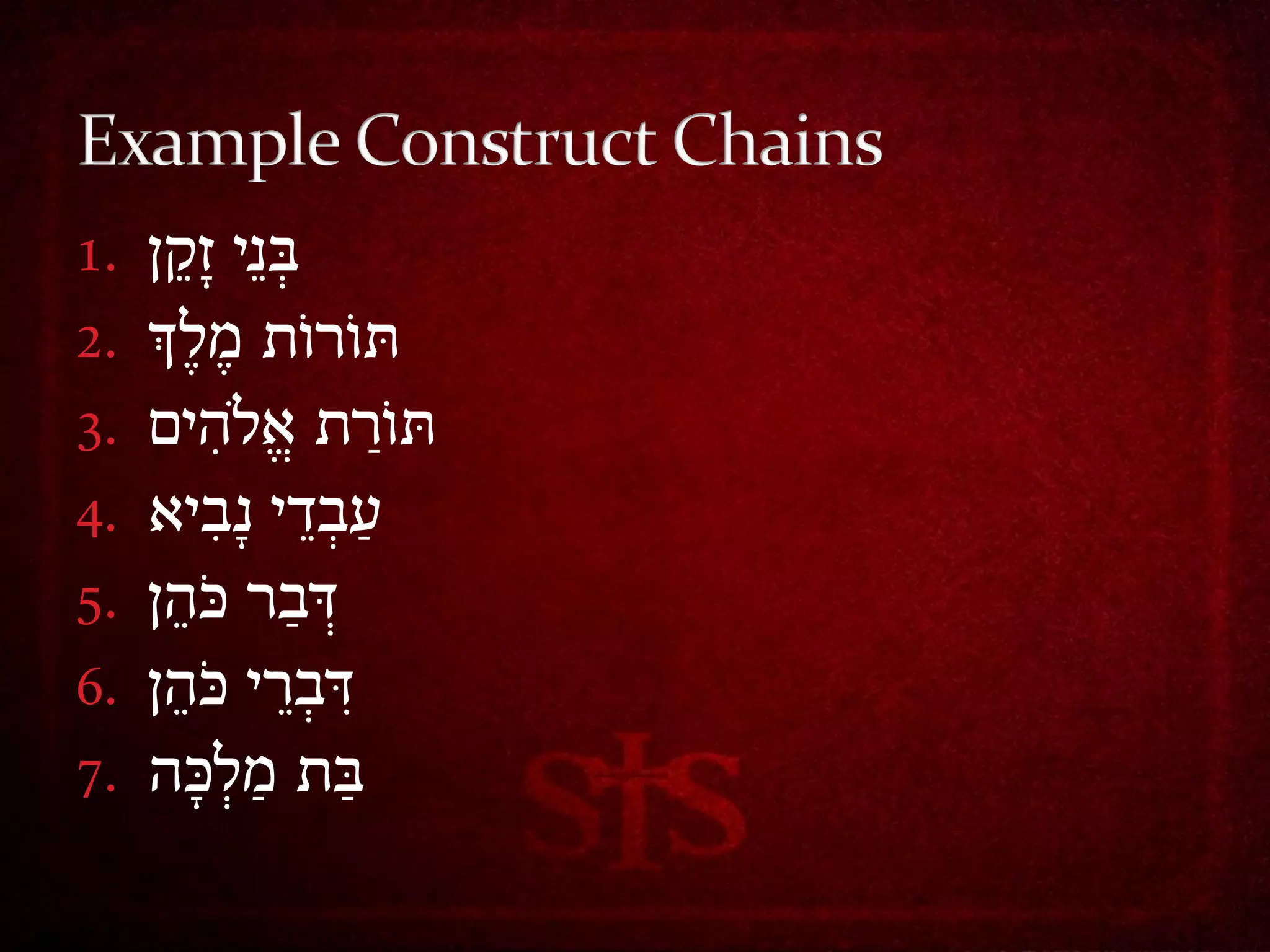
‫בניָּזקן .1‬
    ‫ָּ‬    ‫ְּ‬
‫ּתורותָּמ ְָּך .2‬
     ‫ל‬
‫ּתורתָּאהֹלהים .3‬
    ‫ָּ ִ ָּ‬
‫עבדיָּנביא .4‬
      ‫ִ‬     ‫ָּ ְּ‬
‫ְּדברָּכהן .5‬
    ‫ָּ‬
‫ִדבריָּכהן .6‬
    ‫ָּ‬     ‫ְּ‬
‫בתָּמלכה .7‬
      ‫ְּ‬
Schneider: Section 16 Forms of the Noun

Schneider: Section 16 Forms of the Noun

  • 1.
  • 2.
    Nominals include substantives (nouns), adjectives, and numbers. They are the same in form and use.
  • 3.
  • 4.
    1. Absolute State  The form memorized as vocabulary word  Fully accented 2. Construct State  Related closely to the word that follows  Weakly accented
  • 5.
    Two or morenominals are moved so closely to one another that they form a linguistic unit and at the same time also express a unit of meaning.
  • 6.
    Construct State isa variation of accent with a syntactical function. dwID" !B, Son of David absolute construct definite determining state state word word
  • 7.
    Most of thetime we can use “of” to connect the two words that make up the construct chain.
  • 8.
     The wordin construct state loses its primary stress.  In the tone syllable, the long vowels qamets (ā) and tsere (ē) can be shortened to patach (a).  In the pre-tone syllable, a Schwa or short vowel will appear.  Examples:  ‫דם » דם‬ ָּ ָּ  ‫דברָּ» ְּדבר‬  ‫זקן » זְּ קן‬ ָּ ָּ
  • 9.
    1. In aconstruct chain, the nominal in the absolute state carries the primary stress. 2. The nominal in construct state changes its form accordingly. 3. When an original short “a” now appears in an unaccented, closed syllable, it normally changes to “i” (Chireq).
  • 10.
    st abs st c st abs st c antepenultimate antepenultimate Primary Stress Primary Stress syllable syllable ‫הב ִרית‬ ְּ ‫דם‬ ‫הביִ ת‬ ‫זְָּּ קן‬ ‫דוִ ד‬ ‫ד בר‬ ְָּּ ‫ְָּּ בב האיׁש‬ ִ ‫ל‬ ‫דוִ ד‬ ‫ִד ְָּּ רי‬ ‫ב‬
  • 11.
    ‫ָּן‬ ‫ב‬ ‫ָּן »‬ ‫ב‬ ‫אהֹלהי‬ ‫ָּ‬ ‫אהֹלהים »‬ ‫ָּ ִ ָּ‬ ‫מ ְָּך‬ ‫ֶ֫ ל‬ ‫מ ְָּךָּ»‬ ‫ֶ֫ ל‬ ‫ארץ‬ ‫ֶָּ֫ ָּ‬ ‫א ָּץ »‬ ‫ֶָּ֫ר‬ ‫יום‬‫ָּ‬ ‫יום »‬ ‫ָּ‬ ‫איׁש‬ ‫ִָּ‬ ‫איׁש »‬ ‫ִָּ‬ ‫בית‬ ‫ביִ תָּ»‬ ‫ראׁש‬ ‫ָּ ָּ‬ ‫ראׁשָּ»‬ ‫ָּ ָּ‬ ‫ָּם‬‫ע‬ ‫ָּם »‬ ‫ע‬ ‫יד‬ ‫ידָּ»‬ ‫ְּדבר‬ ‫דבר »‬ ‫עיר‬ ‫ִָּ‬ ‫עירָּ»‬‫ִָּ‬ ‫עין‬‫ָּ‬ ‫עיִָּן »‬ ‫ֶָּ֫‬ ‫ׁשם (ׁשם־)‬ ‫ָּ‬ ‫ָּ‬ ‫ָּם »‬‫ׁש‬ ‫ֶ֫נפׁש‬ ‫ֶ֫נפׁש »‬ ‫אחד‬‫ָּ ֶ֫‬ ‫אחדָּ»‬ ‫ָּ‬
  • 13.
    1. Singular 2. Plural 3.Dual  indicating 2 of something  number and measurement  parts of the body (or things that occur in pairs)
  • 14.
    1. Masculine nounshave no distinct ending in singular. 2. Feminine nouns have 2 different singular endings:  absolute state: ‫ָה‬  construct state: ‫ָת‬ ‫ּתורה‬ instruction (law) ‫ּתורתָּאהֹלהים‬ ָּ ִ ָּ the instruction (law) of God
  • 15.
    1. Dual endings are the same for both genders. 2. Absolute state: ~yI ;ñ 3. Construct state: y e ‫יום‬ ָּ a day ‫יומִָּים‬ ֶ֫ two days ‫*יומי‬ two days of ‫שפה‬ lip ‫שפתִָּים‬ ֶ֫ ְּ (two) lips
  • 16.
    1. Masculine  absolute state: ‫ָים‬ ָּ ִ  construct state: ‫ָי‬ 2. Feminine is same for both: ‫.ות‬
  • 17.
    ‫סּוס‬ a horse ‫סּוסים‬ ָּ ִ horses ‫סּוסי‬ horses of … ‫סּוסה‬ mare ‫סּוסות‬ mares [or mares of …]
  • 18.
    masculine feminine st a st c st a st c Overview of Nominal Endings Singular – – h' t; Dual ~yI ;ñ ye ~yIt;ñ ' yte Plural ~y i ye tA
  • 19.
    As a resultof a shift in the tone syllable, the vowels often change with the addition of endings on nouns. See § 10.
  • 20.
    ‫ב ִנים‬ ‫ָּ‬ ‫ָּן »‬ ‫ב‬ ‫ימים‬‫ִָּ‬ ‫יום »‬‫ָּ‬ ‫אנׁשים‬ ‫ָּ ִ ָּ‬ ‫איׁשָּ»‬ ‫ִָּ‬ ‫בּתים‬ ‫ִ ָּ‬ ‫ביִ תָּ»‬ ‫ידִָּים/ידות‬ ‫ידָּ»‬ ‫אנׁשים‬ ‫ָּ ִ ָּ‬ ‫איׁש »‬ ‫ִָּ‬ ‫ָּמים‬ ‫ע ִ ָּ‬ ‫ָּם »‬ ‫ע‬ ‫ראׁשים‬ ‫ָּ ָּ ִ ָּ‬ ‫ראׁשָּ»‬ ‫ָּ ָּ‬ ‫ָּ ִרים‬ ‫ע ָּ‬ ‫עירָּ»‬ ‫ִָּ‬ ‫ׁשמות‬ ‫ָּם »‬‫ׁש‬ ‫ְּדב ִרים‬ ‫ָּ‬ ‫דבר »‬ ‫לבות‬ ‫ִ‬ ‫לבָּ»‬ ‫עינִָּים‬ ‫ָּ ֶ֫‬ ‫עיִָּן »‬ ‫ֶָּ֫‬ ‫ְּגדולים/ ְּגדלים‬ ‫ִ ָּ‬ ‫ִ ָּ‬ ‫גדולָּ»‬ ‫בנות‬ ‫ְּ‬ ‫בתָּ»‬ ‫גוִָּים‬ ‫גויָּ»‬
  • 21.
    ‫בניָּזקן .1‬ ‫ָּ‬ ‫ְּ‬ ‫ּתורותָּמ ְָּך .2‬ ‫ל‬ ‫ּתורתָּאהֹלהים .3‬ ‫ָּ ִ ָּ‬ ‫עבדיָּנביא .4‬ ‫ִ‬ ‫ָּ ְּ‬ ‫ְּדברָּכהן .5‬ ‫ָּ‬ ‫ִדבריָּכהן .6‬ ‫ָּ‬ ‫ְּ‬ ‫בתָּמלכה .7‬ ‫ְּ‬