6. Leisure at the local scale:
tourism
• tourism management in urban areas
For one named city or large town:
• describe the distribution and location of
primary and secondary tourist resources
• discuss the strategies designed to manage
tourist demands, maximize capacity and
minimize conflicts between local residents and
visitors and avoid environmental damage.
What is a Primary & Secondary Tourist Resource?
• Tourism is dependent upon the attractive power of the destination’s
primary resources:
*Natural resources (climate, landscape, ecosystems);
*Cultural resources (urban heritage, arts, archaeological values, traditions,
*Social resources (potential tourism developers with socio-demographic
characteristics, abilities, financial capital, knowledge)
• Moreover tourist destinations provide secondary resources:
*Accommodation sector (hotel, motel, camping, guest house etc.);
*Catering sector (café, restaurants, bistro etc.);
*Travel organisation sector (agencies, tour operators etc.);
*Transportation sector (air, boat, train, bus, etc.);
*Entertainment sector (Gambling, disco, etc.);
*Information sector (tourism information network);
*Supplementary services, facilities and service infrastructure
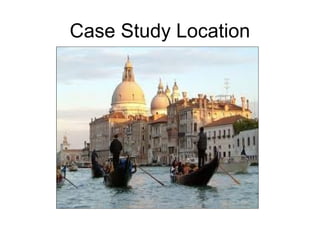
Case Study Location
Mapping Primary Tourist
Resources
Use the following link:
http://www.lonelyplanet.com/italy/venice
Map out the main attractions in Venice. Click
on ‘Sights’ (Primary) and comment on the
location and spread around Venice. Take a
screen shot and add the image to your word
document underneath your description.
Annotate other Primary Resources onto your map
of Venice.
Secondary Resources in Venice
• Using the same website, one by one,
overlay shopping, restaurants and
entertainment to the map.
• Take a screen shot of each and comment
on the distribution and location of these
features in relation to the primary features.
Watch the Following Video
Venice – Loved to Death?
• http://www.youtube.com/watch?v=P_676XCs3Qo
• Watch the video carefully and take notes on the
content.
• Read over the case study on Venice and use a
highlighter to make a note of any relevant
management strategies.
• Discuss the strategies designed to manage
tourist demands, maximize capacity and
minimize conflicts between local residents and
visitors and avoid environmental damage in
Venice (15)
Watch the Following Video
Venice – Loved to Death?
• http://www.youtube.com/watch?v=P_676XCs3Qo
• Watch the video carefully and take notes on the
content.
• Read over the case study on Venice and use a
highlighter to make a note of any relevant
management strategies.
• Discuss the strategies designed to manage
tourist demands, maximize capacity and
minimize conflicts between local residents and
visitors and avoid environmental damage in
Venice (15)

Venice loved to death

  • 1.
    6. Leisure atthe local scale: tourism • tourism management in urban areas For one named city or large town: • describe the distribution and location of primary and secondary tourist resources • discuss the strategies designed to manage tourist demands, maximize capacity and minimize conflicts between local residents and visitors and avoid environmental damage.
  • 2.
    What is aPrimary & Secondary Tourist Resource? • Tourism is dependent upon the attractive power of the destination’s primary resources: *Natural resources (climate, landscape, ecosystems); *Cultural resources (urban heritage, arts, archaeological values, traditions, *Social resources (potential tourism developers with socio-demographic characteristics, abilities, financial capital, knowledge) • Moreover tourist destinations provide secondary resources: *Accommodation sector (hotel, motel, camping, guest house etc.); *Catering sector (café, restaurants, bistro etc.); *Travel organisation sector (agencies, tour operators etc.); *Transportation sector (air, boat, train, bus, etc.); *Entertainment sector (Gambling, disco, etc.); *Information sector (tourism information network); *Supplementary services, facilities and service infrastructure
  • 3.
  • 4.
    Mapping Primary Tourist Resources Usethe following link: http://www.lonelyplanet.com/italy/venice Map out the main attractions in Venice. Click on ‘Sights’ (Primary) and comment on the location and spread around Venice. Take a screen shot and add the image to your word document underneath your description. Annotate other Primary Resources onto your map of Venice.
  • 5.
    Secondary Resources inVenice • Using the same website, one by one, overlay shopping, restaurants and entertainment to the map. • Take a screen shot of each and comment on the distribution and location of these features in relation to the primary features.
  • 6.
    Watch the FollowingVideo Venice – Loved to Death? • http://www.youtube.com/watch?v=P_676XCs3Qo • Watch the video carefully and take notes on the content. • Read over the case study on Venice and use a highlighter to make a note of any relevant management strategies. • Discuss the strategies designed to manage tourist demands, maximize capacity and minimize conflicts between local residents and visitors and avoid environmental damage in Venice (15)
  • 7.
    Watch the FollowingVideo Venice – Loved to Death? • http://www.youtube.com/watch?v=P_676XCs3Qo • Watch the video carefully and take notes on the content. • Read over the case study on Venice and use a highlighter to make a note of any relevant management strategies. • Discuss the strategies designed to manage tourist demands, maximize capacity and minimize conflicts between local residents and visitors and avoid environmental damage in Venice (15)