A Comparison Between FTC Energy’s Vertical Axis
     Wind Turbine System And A Standard Three-
         bladed Horizontal Axis Wind Turbine
    A Layman’s Perspective
                          By Joe Shepard, Chairman, C.E.O. FTC Energy, Inc.


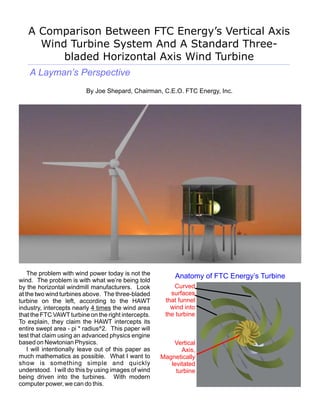
    The problem with wind power today is not the           Anatomy of FTC Energy’s Turbine
wind. The problem is with what we’re being told
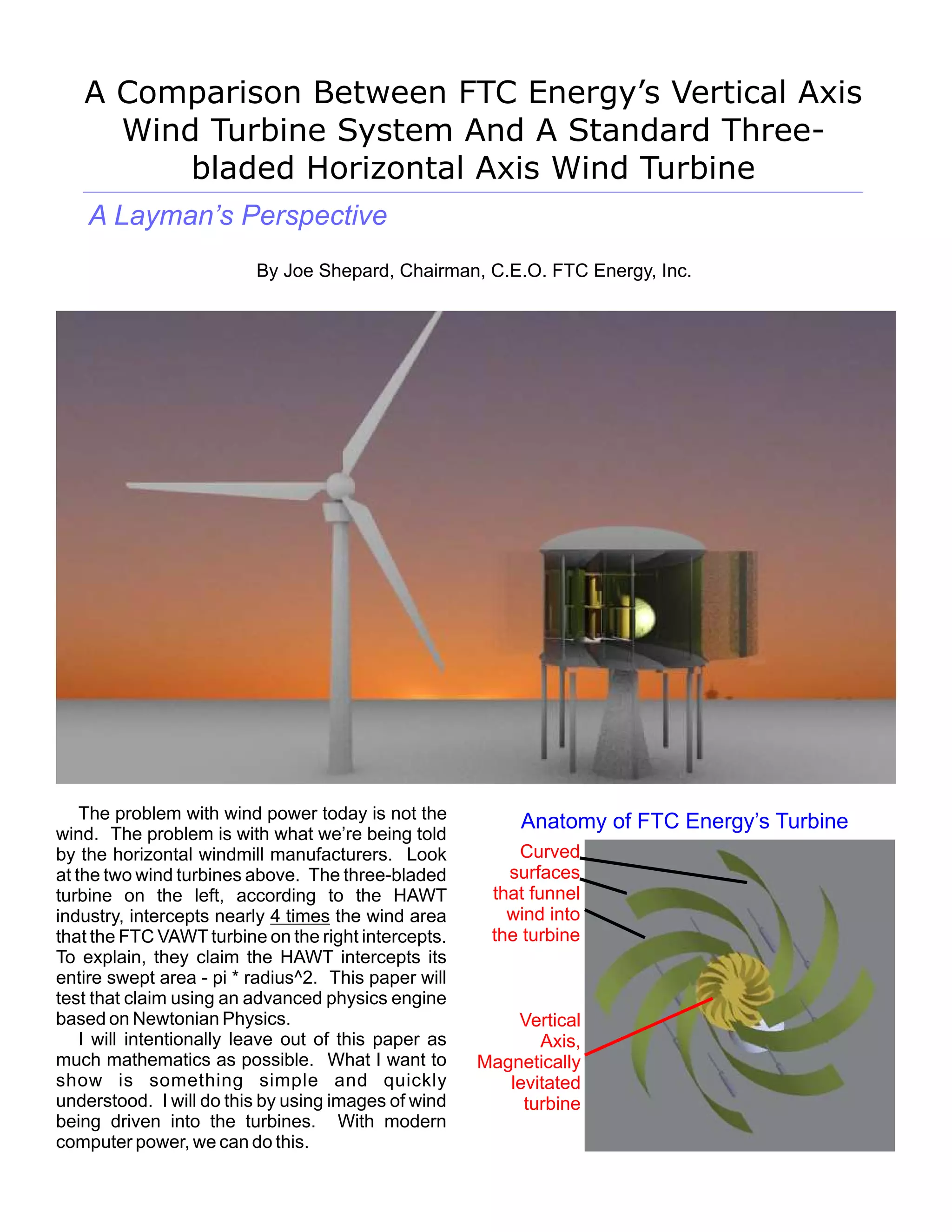
by the horizontal windmill manufacturers. Look            Curved
at the two wind turbines above. The three-bladed         surfaces
turbine on the left, according to the HAWT             that funnel
industry, intercepts nearly 4 times the wind area        wind into
that the FTC VAWT turbine on the right intercepts.     the turbine
To explain, they claim the HAWT intercepts its
entire swept area - pi * radius^2. This paper will
test that claim using an advanced physics engine
based on Newtonian Physics.                               Vertical
    I will intentionally leave out of this paper as          Axis,
much mathematics as possible. What I want to          Magnetically
show is something simple and quickly                     levitated
understood. I will do this by using images of wind         turbine
being driven into the turbines. With modern
computer power, we can do this.
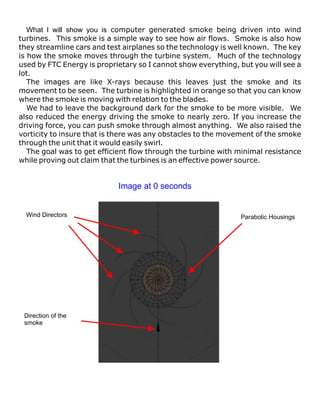
What I will show you is computer generated smoke being driven into wind
turbines. This smoke is a simple way to see how air flows. Smoke is also how
they streamline cars and test airplanes so the technology is well known. The key
is how the smoke moves through the turbine system. Much of the technology
used by FTC Energy is proprietary so I cannot show everything, but you will see a
lot.
   The images are like X-rays because this leaves just the smoke and its
movement to be seen. The turbine is highlighted in orange so that you can know
where the smoke is moving with relation to the blades.
   We had to leave the background dark for the smoke to be more visible. We
also reduced the energy driving the smoke to nearly zero. If you increase the
driving force, you can push smoke through almost anything. We also raised the
vorticity to insure that is there was any obstacles to the movement of the smoke
through the unit that it would easily swirl.
   The goal was to get efficient flow through the turbine with minimal resistance
while proving out claim that the turbines is an effective power source.


                            Image at 0 seconds


  Wind Directors                                               Parabolic Housings


 Direction of the
 smoke
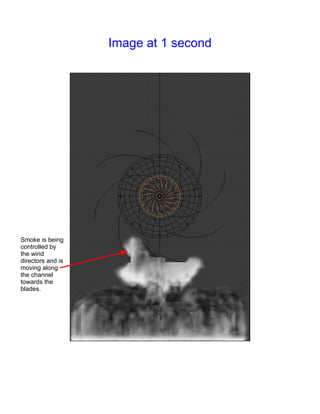
Image at 1 second


Smoke is being
controlled by
the wind
directors and is
moving along
the channel
towards the
blades.
Image at 2 seconds


                                       Smoke has
                                       already
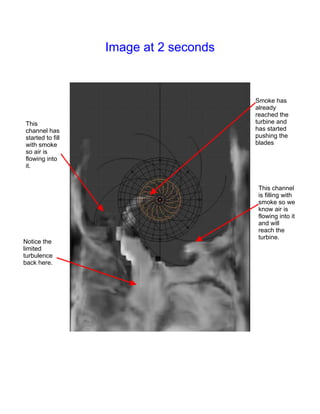
                                       reached the
This                                   turbine and
channel has                            has started
started to fill                        pushing the
with smoke                             blades
so air is
flowing into
it.


                                        This channel
                                        is filling with
                                        smoke so we
                                        know air is
                                        flowing into it
                                        and will
                                        reach the
                                        turbine.
Notice the
limited
turbulence
back here.
Image at 3 seconds


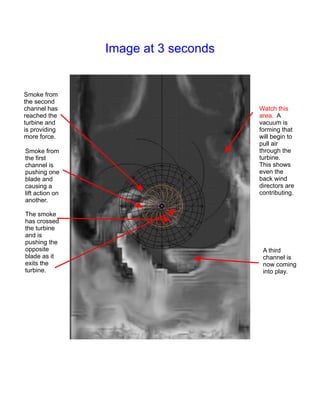
Smoke from
the second
channel has                           Watch this
reached the                           area. A
turbine and                           vacuum is
is providing                          forming that
more force.                           will begin to
                                      pull air
Smoke from                            through the
the first                             turbine.
channel is                            This shows
pushing one                           even the
blade and                             back wind
causing a                             directors are
lift action on                        contributing.
another.

The smoke
has crossed
the turbine
and is
pushing the
opposite                               A third
blade as it                            channel is
exits the                              now coming
turbine.                               into play.
Image at 4 seconds


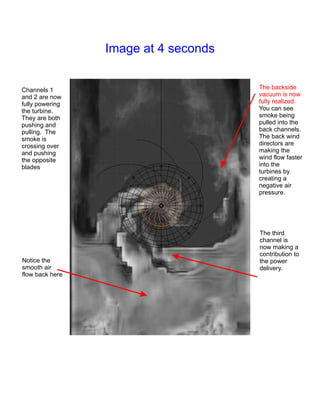
Channels 1                            The backside
and 2 are now                         vacuum is now
fully powering                        fully realized.
the turbine.                          You can see
They are both                         smoke being
pushing and                           pulled into the
pulling. The                          back channels.
smoke is                              The back wind
crossing over                         directors are
and pushing                           making the
the opposite                          wind flow faster
blades                                into the
                                      turbines by
                                      creating a
                                      negative air
                                      pressure.


                                      The third
                                      channel is
                                      now making a
                                      contribution to
Notice the                            the power
smooth air                            delivery.
flow back here
Image at 5 seconds


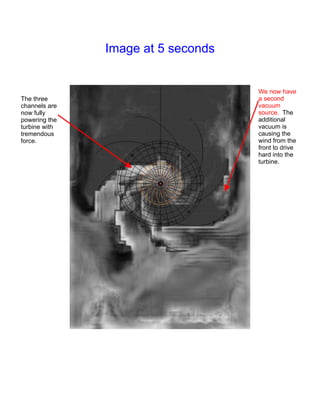
                                    We now have
The three                           a second
channels are                        vacuum
now fully                           source. The
powering the                        additional
turbine with                        vacuum is
tremendous                          causing the
force.                              wind from the
                                    front to drive
                                    hard into the
                                    turbine.
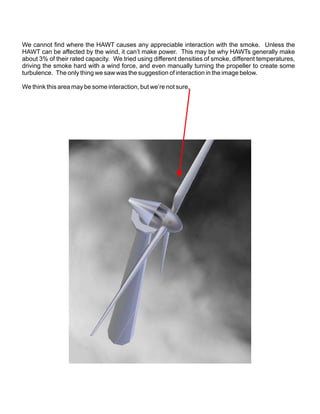
We cannot find where the HAWT causes any appreciable interaction with the smoke. Unless the
HAWT can be affected by the wind, it can’t make power. This may be why HAWTs generally make
about 3% of their rated capacity. We tried using different densities of smoke, different temperatures,
driving the smoke hard with a wind force, and even manually turning the propeller to create some
turbulence. The only thing we saw was the suggestion of interaction in the image below.

We think this area may be some interaction, but we’re not sure.
Conclusion:

Wind power does work when properly used. We cannot find where HAWTs are useful
for wind power based on our simulations.

               Copyright 2011, FTC Energy, Inc. All Rights Reserved.

Vawt and Hawt comparison

  • 1.
    A Comparison BetweenFTC Energy’s Vertical Axis Wind Turbine System And A Standard Three- bladed Horizontal Axis Wind Turbine A Layman’s Perspective By Joe Shepard, Chairman, C.E.O. FTC Energy, Inc. The problem with wind power today is not the Anatomy of FTC Energy’s Turbine wind. The problem is with what we’re being told by the horizontal windmill manufacturers. Look Curved at the two wind turbines above. The three-bladed surfaces turbine on the left, according to the HAWT that funnel industry, intercepts nearly 4 times the wind area wind into that the FTC VAWT turbine on the right intercepts. the turbine To explain, they claim the HAWT intercepts its entire swept area - pi * radius^2. This paper will test that claim using an advanced physics engine based on Newtonian Physics. Vertical I will intentionally leave out of this paper as Axis, much mathematics as possible. What I want to Magnetically show is something simple and quickly levitated understood. I will do this by using images of wind turbine being driven into the turbines. With modern computer power, we can do this.
  • 2.
    What I willshow you is computer generated smoke being driven into wind turbines. This smoke is a simple way to see how air flows. Smoke is also how they streamline cars and test airplanes so the technology is well known. The key is how the smoke moves through the turbine system. Much of the technology used by FTC Energy is proprietary so I cannot show everything, but you will see a lot. The images are like X-rays because this leaves just the smoke and its movement to be seen. The turbine is highlighted in orange so that you can know where the smoke is moving with relation to the blades. We had to leave the background dark for the smoke to be more visible. We also reduced the energy driving the smoke to nearly zero. If you increase the driving force, you can push smoke through almost anything. We also raised the vorticity to insure that is there was any obstacles to the movement of the smoke through the unit that it would easily swirl. The goal was to get efficient flow through the turbine with minimal resistance while proving out claim that the turbines is an effective power source. Image at 0 seconds Wind Directors Parabolic Housings Direction of the smoke
  • 3.
    Image at 1second Smoke is being controlled by the wind directors and is moving along the channel towards the blades.
  • 4.
    Image at 2seconds Smoke has already reached the This turbine and channel has has started started to fill pushing the with smoke blades so air is flowing into it. This channel is filling with smoke so we know air is flowing into it and will reach the turbine. Notice the limited turbulence back here.
  • 5.
    Image at 3seconds Smoke from the second channel has Watch this reached the area. A turbine and vacuum is is providing forming that more force. will begin to pull air Smoke from through the the first turbine. channel is This shows pushing one even the blade and back wind causing a directors are lift action on contributing. another. The smoke has crossed the turbine and is pushing the opposite A third blade as it channel is exits the now coming turbine. into play.
  • 6.
    Image at 4seconds Channels 1 The backside and 2 are now vacuum is now fully powering fully realized. the turbine. You can see They are both smoke being pushing and pulled into the pulling. The back channels. smoke is The back wind crossing over directors are and pushing making the the opposite wind flow faster blades into the turbines by creating a negative air pressure. The third channel is now making a contribution to Notice the the power smooth air delivery. flow back here
  • 7.
    Image at 5seconds We now have The three a second channels are vacuum now fully source. The powering the additional turbine with vacuum is tremendous causing the force. wind from the front to drive hard into the turbine.
  • 8.
    We cannot findwhere the HAWT causes any appreciable interaction with the smoke. Unless the HAWT can be affected by the wind, it can’t make power. This may be why HAWTs generally make about 3% of their rated capacity. We tried using different densities of smoke, different temperatures, driving the smoke hard with a wind force, and even manually turning the propeller to create some turbulence. The only thing we saw was the suggestion of interaction in the image below. We think this area may be some interaction, but we’re not sure.
  • 9.
    Conclusion: Wind power doeswork when properly used. We cannot find where HAWTs are useful for wind power based on our simulations. Copyright 2011, FTC Energy, Inc. All Rights Reserved.