Validity and
Reliability
Understanding the concepts of validity and reliability is essential for
conducting credible research. Validity refers to the accuracy of a
measurement, while reliability focuses on the consistency of
measurements.
by Maryjoy Poquiz
Concept of Validity in Research
Validity refers to the extent to which a research instrument measures what it is
intended to measure.
1 Essential For Credibility
Ensuring validity is crucial for
establishing the credibility and
trustworthiness of research
findings.
2 Multiple Types
There are different types of
validity, each focusing on specific
aspects of measurement
accuracy.
3 Influences Interpretation
Understanding validity helps
researchers interpret results
accurately and draw meaningful
conclusions.
4 Underlying Concept
Validity is a foundational concept
in research methodology, guiding
the design and interpretation of
studies.
Types of Validity
Different types of validity address specific aspects of measurement accuracy, ensuring research instruments capture the
intended constructs.
Content Validity
Measures how well the content of a
test represents the domain it aims to
assess.
Construct Validity
Measures how well a test measures the
underlying theoretical construct it is
designed to assess.
Criterion Validity
Measures how well a test predicts or
correlates with an external criterion or
measure.
Content Validity
Content validity is crucial for ensuring a test accurately reflects the
knowledge or skills it aims to assess.
Relevance to Domain
The items on the test should be
relevant to the specific content
or skills being measured.
Representative Sampling
The test should include a
representative sample of the
content domain.
Expert Judgement
Content validity is often assessed by experts in the field who evaluate
the relevance and comprehensiveness of the test items.
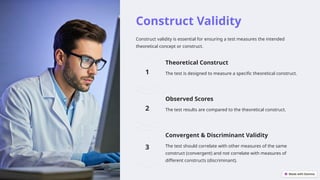
Construct Validity
Construct validity is essential for ensuring a test measures the intended
theoretical concept or construct.
Theoretical Construct
The test is designed to measure a specific theoretical construct.
Observed Scores
The test results are compared to the theoretical construct.
Convergent & Discriminant Validity
The test should correlate with other measures of the same
construct (convergent) and not correlate with measures of
different constructs (discriminant).
Criterion Validity
Criterion validity is essential for ensuring a test can accurately predict or
correlate with an external criterion.
Predictive Validity Measures how well a test
predicts future performance on
a related criterion.
Concurrent Validity Measures how well a test
correlates with a current
criterion measure.
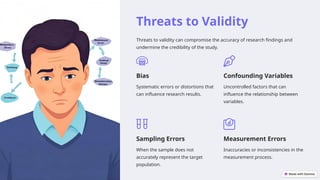
Threats to Validity
Threats to validity can compromise the accuracy of research findings and
undermine the credibility of the study.
Bias
Systematic errors or distortions that
can influence research results.
Confounding Variables
Uncontrolled factors that can
influence the relationship between
variables.
Sampling Errors
When the sample does not
accurately represent the target
population.
Measurement Errors
Inaccuracies or inconsistencies in the
measurement process.
Concept of Reliability
Reliability refers to the consistency and stability of a measurement instrument
over time and across different situations.
1 Test-Retest Reliability
Consistency of scores over repeated administrations of the
same test.
2 Internal Consistency
Consistency of scores across different items within a single
test.
3 Inter-Rater Reliability
Consistency of scores obtained by different raters or
observers.
Conclusion
Validity and reliability are fundamental concepts in research. They ensure
the accuracy and consistency of research findings, enhancing the
credibility and trustworthiness of research outcomes.

Validity-and-Reliability for research ppt

  • 1.
    Validity and Reliability Understanding theconcepts of validity and reliability is essential for conducting credible research. Validity refers to the accuracy of a measurement, while reliability focuses on the consistency of measurements. by Maryjoy Poquiz
  • 2.
    Concept of Validityin Research Validity refers to the extent to which a research instrument measures what it is intended to measure. 1 Essential For Credibility Ensuring validity is crucial for establishing the credibility and trustworthiness of research findings. 2 Multiple Types There are different types of validity, each focusing on specific aspects of measurement accuracy. 3 Influences Interpretation Understanding validity helps researchers interpret results accurately and draw meaningful conclusions. 4 Underlying Concept Validity is a foundational concept in research methodology, guiding the design and interpretation of studies.
  • 3.
    Types of Validity Differenttypes of validity address specific aspects of measurement accuracy, ensuring research instruments capture the intended constructs. Content Validity Measures how well the content of a test represents the domain it aims to assess. Construct Validity Measures how well a test measures the underlying theoretical construct it is designed to assess. Criterion Validity Measures how well a test predicts or correlates with an external criterion or measure.
  • 4.
    Content Validity Content validityis crucial for ensuring a test accurately reflects the knowledge or skills it aims to assess. Relevance to Domain The items on the test should be relevant to the specific content or skills being measured. Representative Sampling The test should include a representative sample of the content domain. Expert Judgement Content validity is often assessed by experts in the field who evaluate the relevance and comprehensiveness of the test items.
  • 5.
    Construct Validity Construct validityis essential for ensuring a test measures the intended theoretical concept or construct. Theoretical Construct The test is designed to measure a specific theoretical construct. Observed Scores The test results are compared to the theoretical construct. Convergent & Discriminant Validity The test should correlate with other measures of the same construct (convergent) and not correlate with measures of different constructs (discriminant).
  • 6.
    Criterion Validity Criterion validityis essential for ensuring a test can accurately predict or correlate with an external criterion. Predictive Validity Measures how well a test predicts future performance on a related criterion. Concurrent Validity Measures how well a test correlates with a current criterion measure.
  • 7.
    Threats to Validity Threatsto validity can compromise the accuracy of research findings and undermine the credibility of the study. Bias Systematic errors or distortions that can influence research results. Confounding Variables Uncontrolled factors that can influence the relationship between variables. Sampling Errors When the sample does not accurately represent the target population. Measurement Errors Inaccuracies or inconsistencies in the measurement process.
  • 8.
    Concept of Reliability Reliabilityrefers to the consistency and stability of a measurement instrument over time and across different situations. 1 Test-Retest Reliability Consistency of scores over repeated administrations of the same test. 2 Internal Consistency Consistency of scores across different items within a single test. 3 Inter-Rater Reliability Consistency of scores obtained by different raters or observers.
  • 9.
    Conclusion Validity and reliabilityare fundamental concepts in research. They ensure the accuracy and consistency of research findings, enhancing the credibility and trustworthiness of research outcomes.