Section A
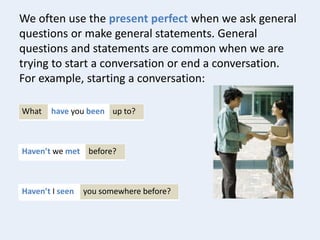
What up to?have you been
We often use the present perfect when we ask general
questions or make general statements. General
questions and statements are common when we are
trying to start a conversation or end a conversation.
For example, starting a conversation:
before?Haven’t we met
you somewhere before?Haven’t I seen
good to talk to you.It’s been
Ending a conversation:
talking with you.I’ve enjoyed
great seeing you again.It’s been
Section B
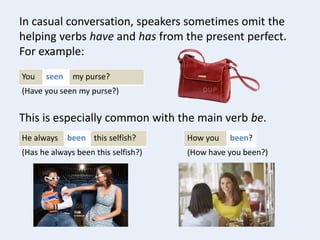
You my purse?seen
In casual conversation, speakers sometimes omit the
helping verbs have and has from the present perfect.
For example:
(Have you seen my purse?)
He always this selfish?been
This is especially common with the main verb be.
(Has he always been this selfish?)
How you been?
(How have you been?)
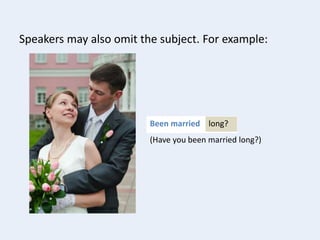
long?Been married
Speakers may also omit the subject. For example:
(Have you been married long?)
Section C
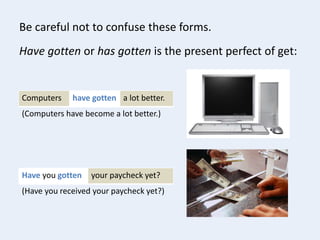
Be careful not to confuse these forms.
Have gotten or has gotten is the present perfect of get:
Computers a lot better.have gotten
(Computers have become a lot better.)
your paycheck yet?Have you gotten
(Have you received your paycheck yet?)
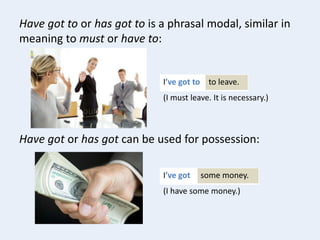
Have got to or has got to is a phrasal modal, similar in
meaning to must or have to:
to leave.I’ve got to
(I must leave. It is necessary.)
some money.I’ve got
(I have some money.)
Have got or has got can be used for possession:

Using Perfect Forms in Speaking

  • 1.
  • 2.
    What up to?haveyou been We often use the present perfect when we ask general questions or make general statements. General questions and statements are common when we are trying to start a conversation or end a conversation. For example, starting a conversation: before?Haven’t we met you somewhere before?Haven’t I seen
  • 3.
    good to talkto you.It’s been Ending a conversation: talking with you.I’ve enjoyed great seeing you again.It’s been
  • 4.
  • 5.
    You my purse?seen Incasual conversation, speakers sometimes omit the helping verbs have and has from the present perfect. For example: (Have you seen my purse?) He always this selfish?been This is especially common with the main verb be. (Has he always been this selfish?) How you been? (How have you been?)
  • 6.
    long?Been married Speakers mayalso omit the subject. For example: (Have you been married long?)
  • 7.
  • 8.
    Be careful notto confuse these forms. Have gotten or has gotten is the present perfect of get: Computers a lot better.have gotten (Computers have become a lot better.) your paycheck yet?Have you gotten (Have you received your paycheck yet?)
  • 9.
    Have got toor has got to is a phrasal modal, similar in meaning to must or have to: to leave.I’ve got to (I must leave. It is necessary.) some money.I’ve got (I have some money.) Have got or has got can be used for possession: