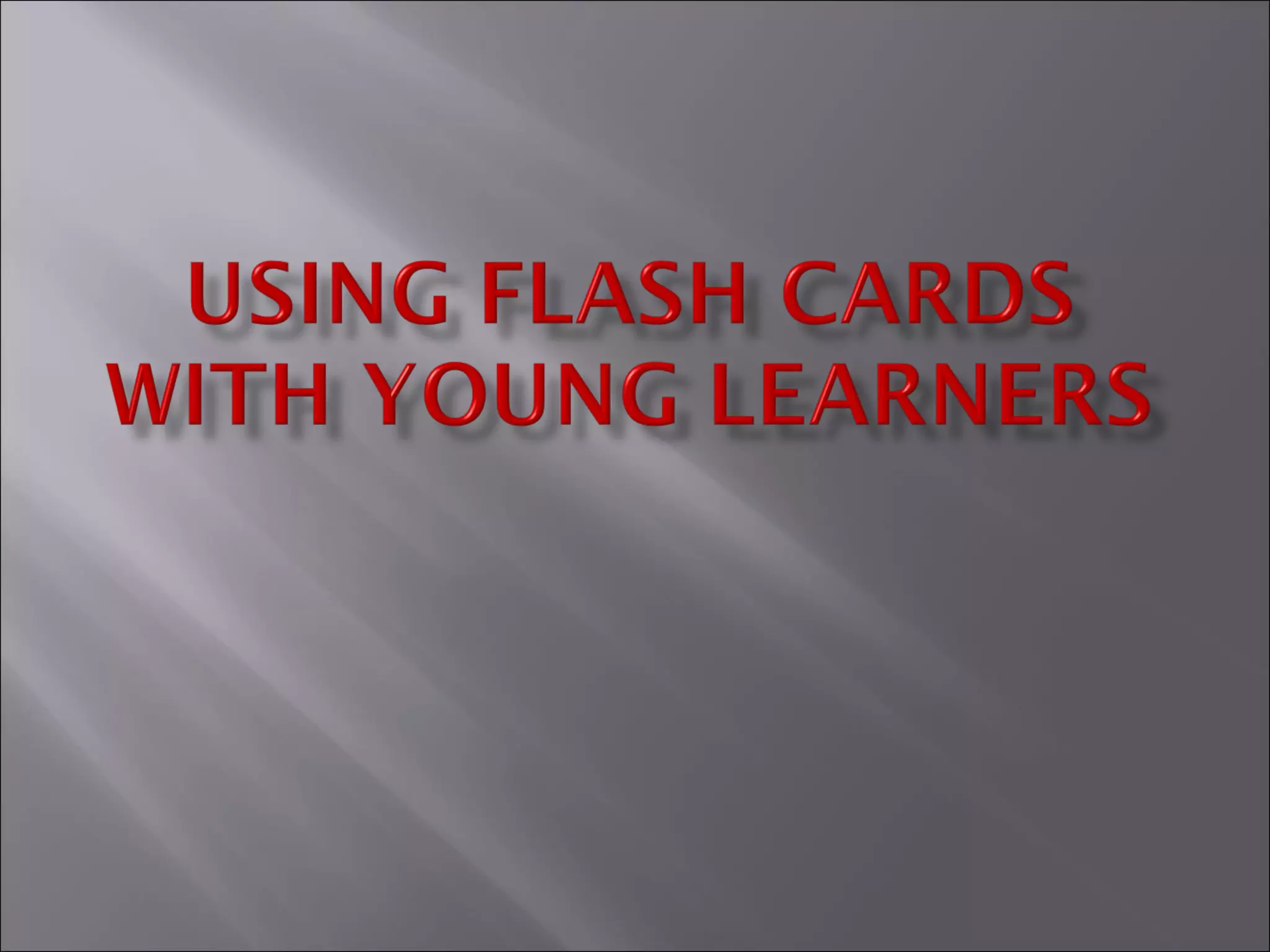
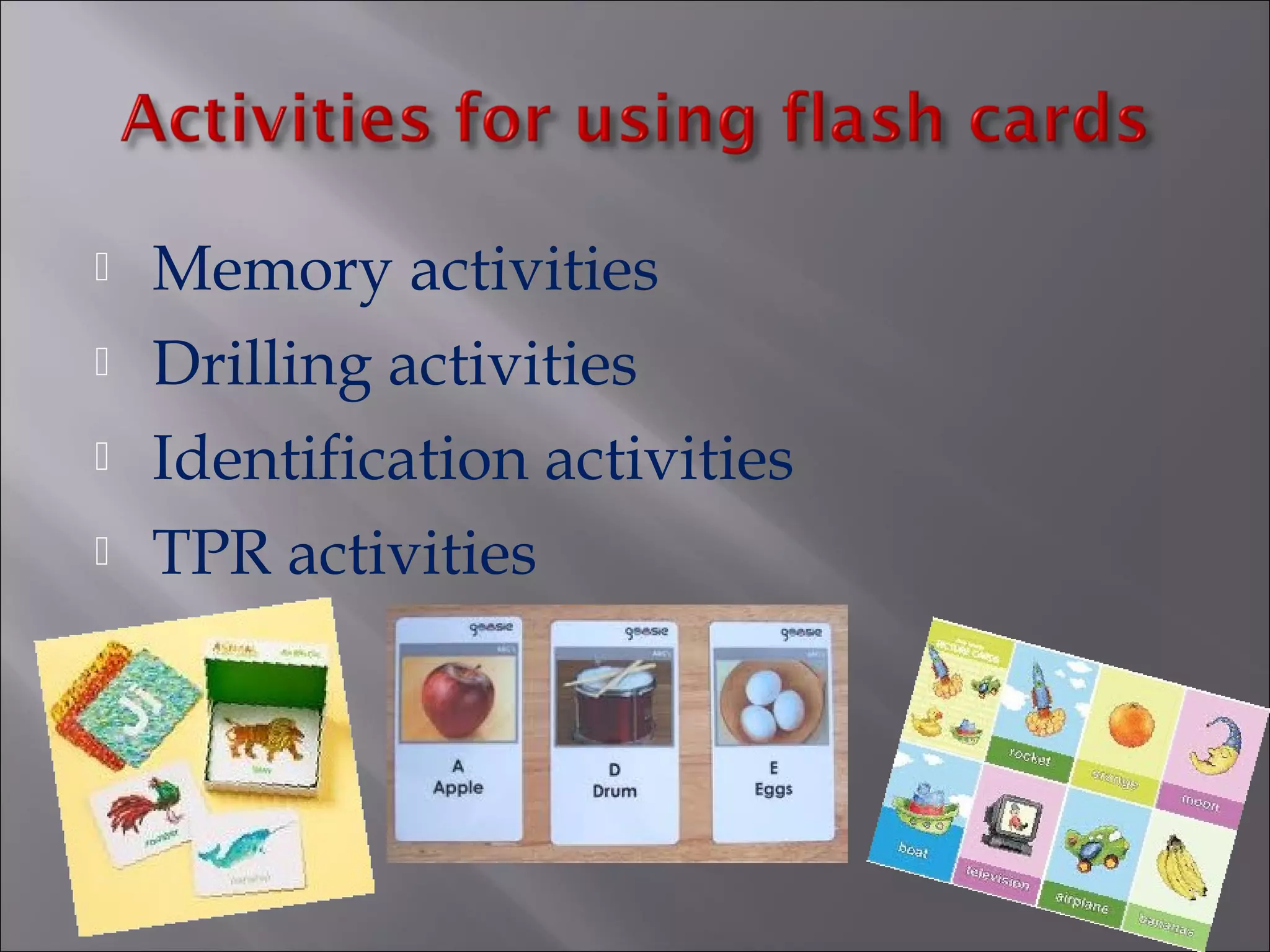
   Flash cards are a simple,
    versatile, yet often
    underexploited resource.
    There are some reasons
    for using flash cards and a
    selection of activities for
    use in the Young Learner
    classroom, although some
    of the activities could also
    be used with fun-loving,
    lower level adult classes.
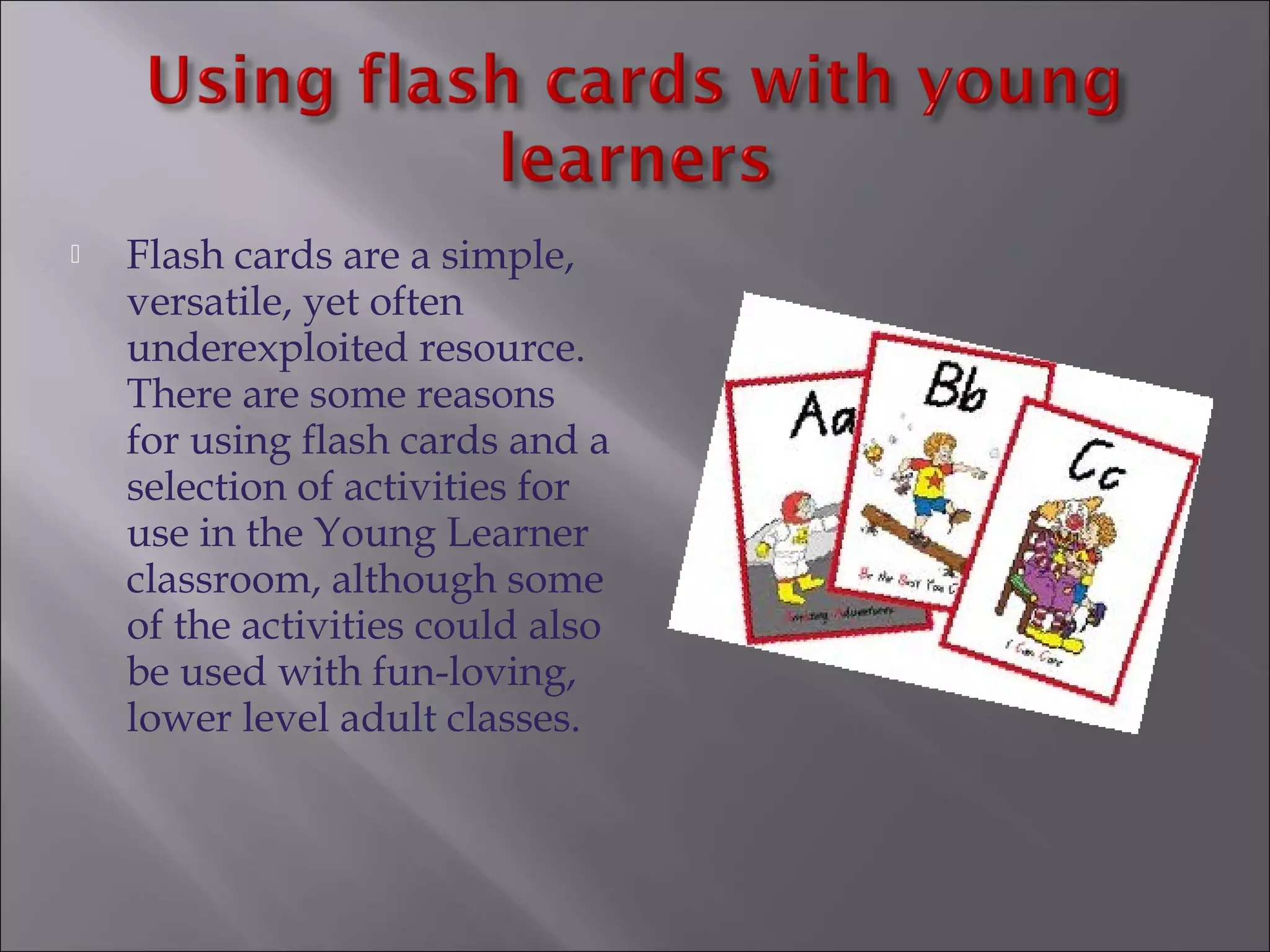
   It is particularly important to appeal to visual
    learners, as a very high proportion of learners
    have this type of intelligence. Flash cards can be
    bright and colorful and make a real impact on
    visual learners.
   For children at reading age, flash cards can be
    used in conjunction with word cards. These are
    simply cards that display the written word.
    Word cards should be introduced well after the
    pictorial cards so as not to interfere with correct
    pronunciation.
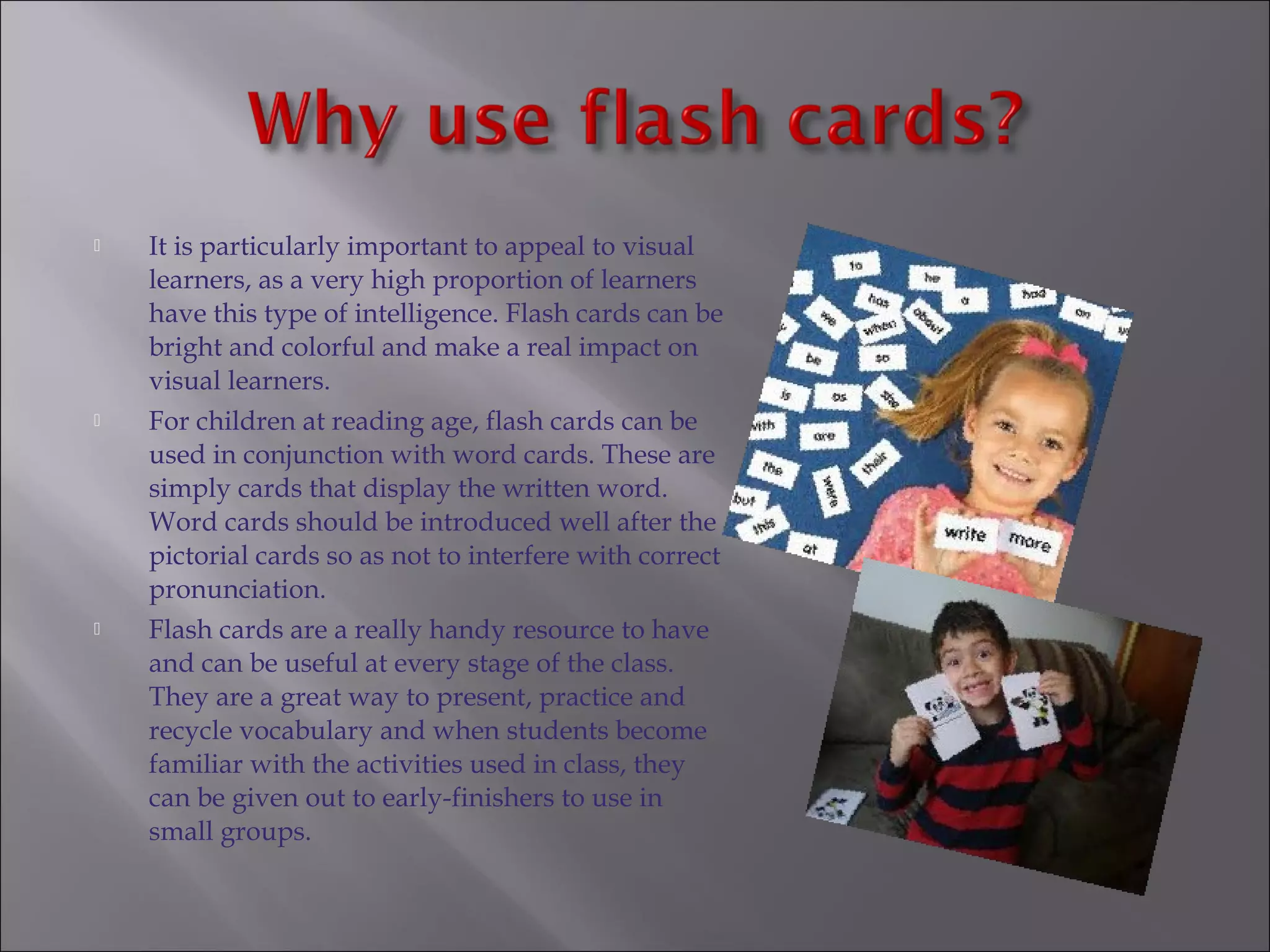
   Flash cards are a really handy resource to have
    and can be useful at every stage of the class.
    They are a great way to present, practice and
    recycle vocabulary and when students become
    familiar with the activities used in class, they
    can be given out to early-finishers to use in
    small groups.
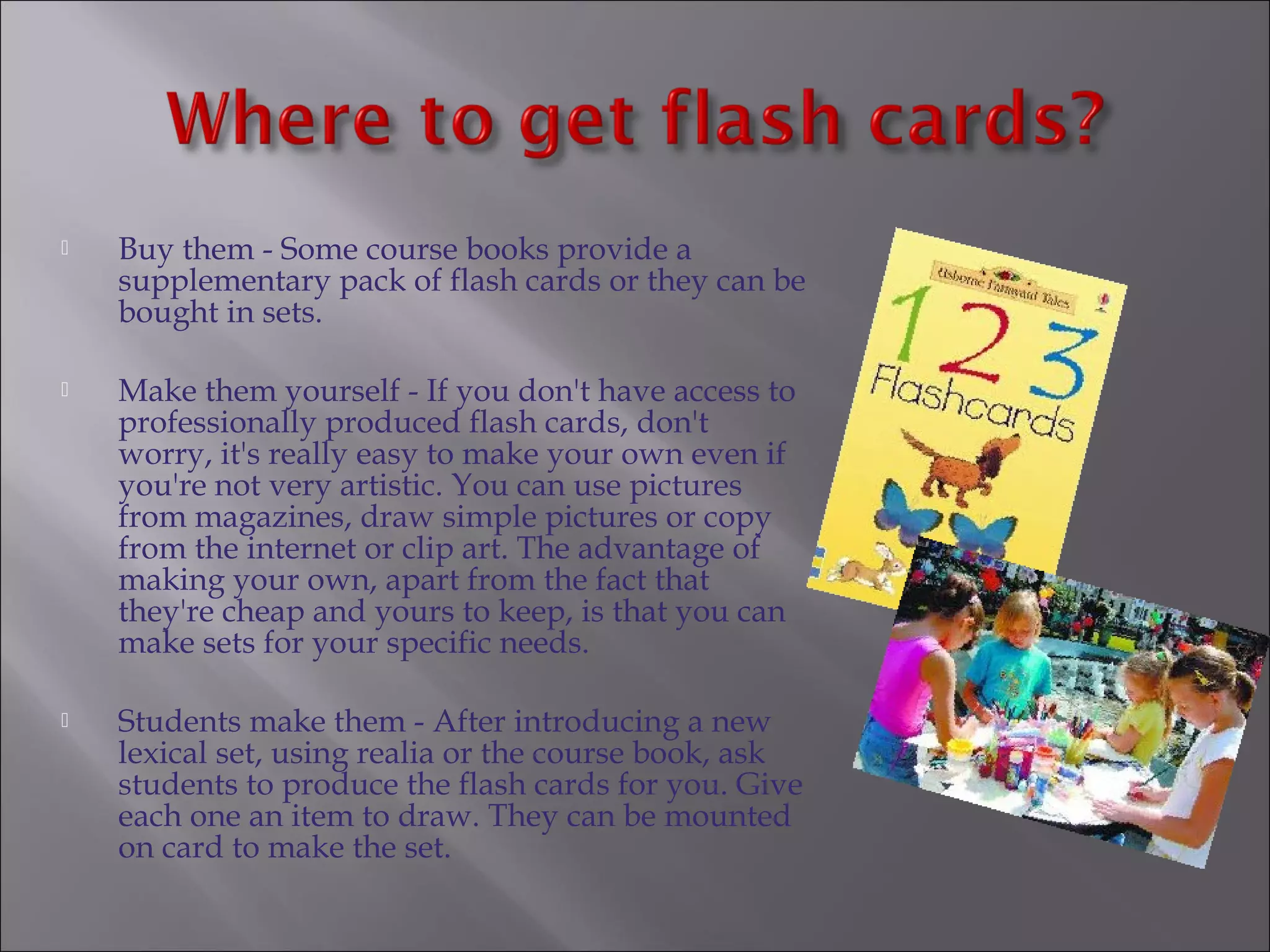
   Buy them - Some course books provide a
    supplementary pack of flash cards or they can be
    bought in sets.

   Make them yourself - If you don't have access to
    professionally produced flash cards, don't
    worry, it's really easy to make your own even if
    you're not very artistic. You can use pictures
    from magazines, draw simple pictures or copy
    from the internet or clip art. The advantage of
    making your own, apart from the fact that
    they're cheap and yours to keep, is that you can
    make sets for your specific needs.

   Students make them - After introducing a new
    lexical set, using realia or the course book, ask
    students to produce the flash cards for you. Give
    each one an item to draw. They can be mounted
    on card to make the set.
   Memory activities
   Drilling activities
   Identification activities
   TPR activities
Game 1                         Game 2
 Place a selection of flash    Give each group of learners a
  cards on the floor in a        set of flashcards with two
  circle.                        copies of each card.
 Students have one
                                Ask them to place them, one
                                 by one, face down on the
  minute to memorize the         table. In turn, each player
  cards.                         turns up two cards and says
 In groups, they have           what they are.
  two minutes to write as       If they turn up the same
  many of the names as           card, they keep them and
  they can remember.             have another go. If the cards
                                 are different, they replace
                                 them and the next player has
                                 a go. The player with the
                                 most pairs is the winner.
A What?
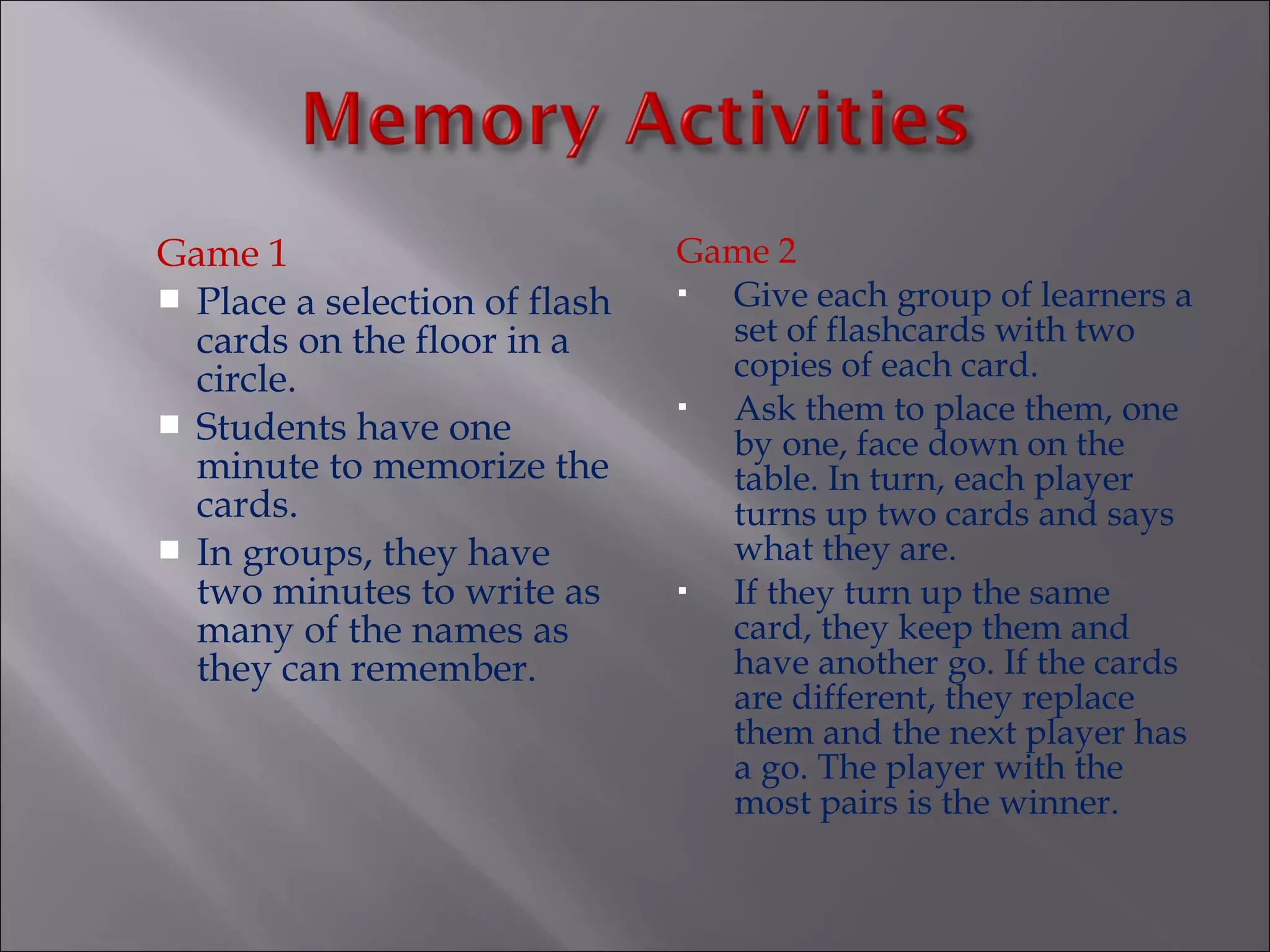
   Students sit in a circle.
   You show a flash card to Student 1 and say
    "This is a hamster."
   Student 1 looks at the flash card and asks you
    "a what?"
   The teacher replies "a hamster" and passes the
    flash card on.
   Student 1 passes the flash card on to Student 2
    and says "this is a hamster".
   Student 2 asks Student 1 "a what?" and Student
    1 asks the teacher "a what?" the teacher replies
    to Student 1 "a hamster" and Student 1 replies
    to Student 2 "a hamster" and so it goes on until
    the flash card travels full circle.
   When the group has mastered it, 2 flash cards
    can go around the circle in opposite directions.
    They will cross over mid circle.
   When students know the game, choose one of
    them to do the teacher's role.
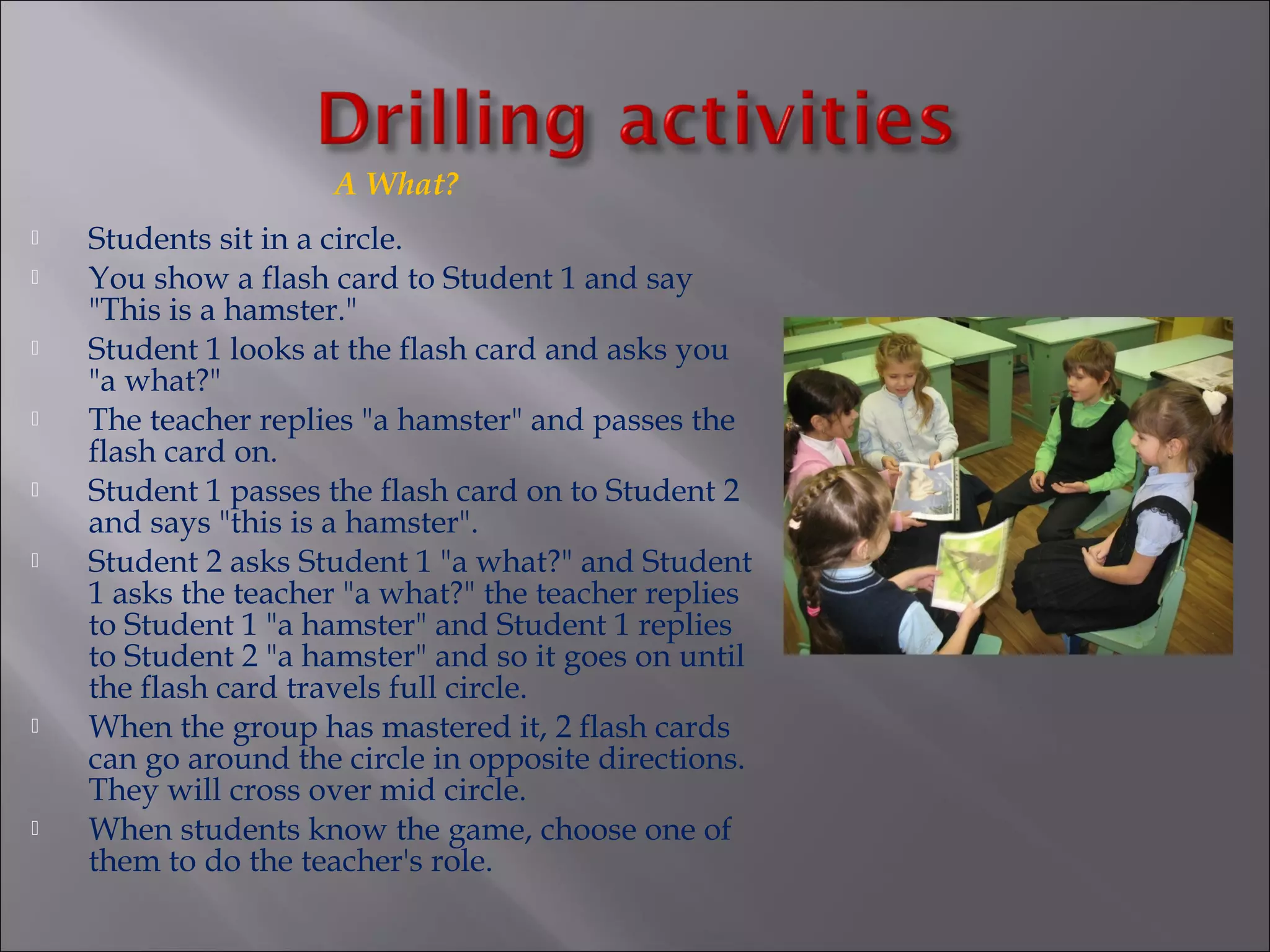
Noughts and crosses!
   Select 9 animal flashcards and
    number them 1-9.
   Draw a grid on the board,
    numbering each square 1-9.
   Divide your learners into two teams,
    noughts (0) and crosses (X). In turn,
    each team chooses a number
    between 1 and 9. If noughts chooses
    square 5, for example, show them
    flashcard 5 and ask them what it is.
    If they can correctly identify the
    card, draw (0) in the square.
   Each team should try to choose
    squares that block the other from
    making three in a row, horizontally,
    vertically or diagonally.
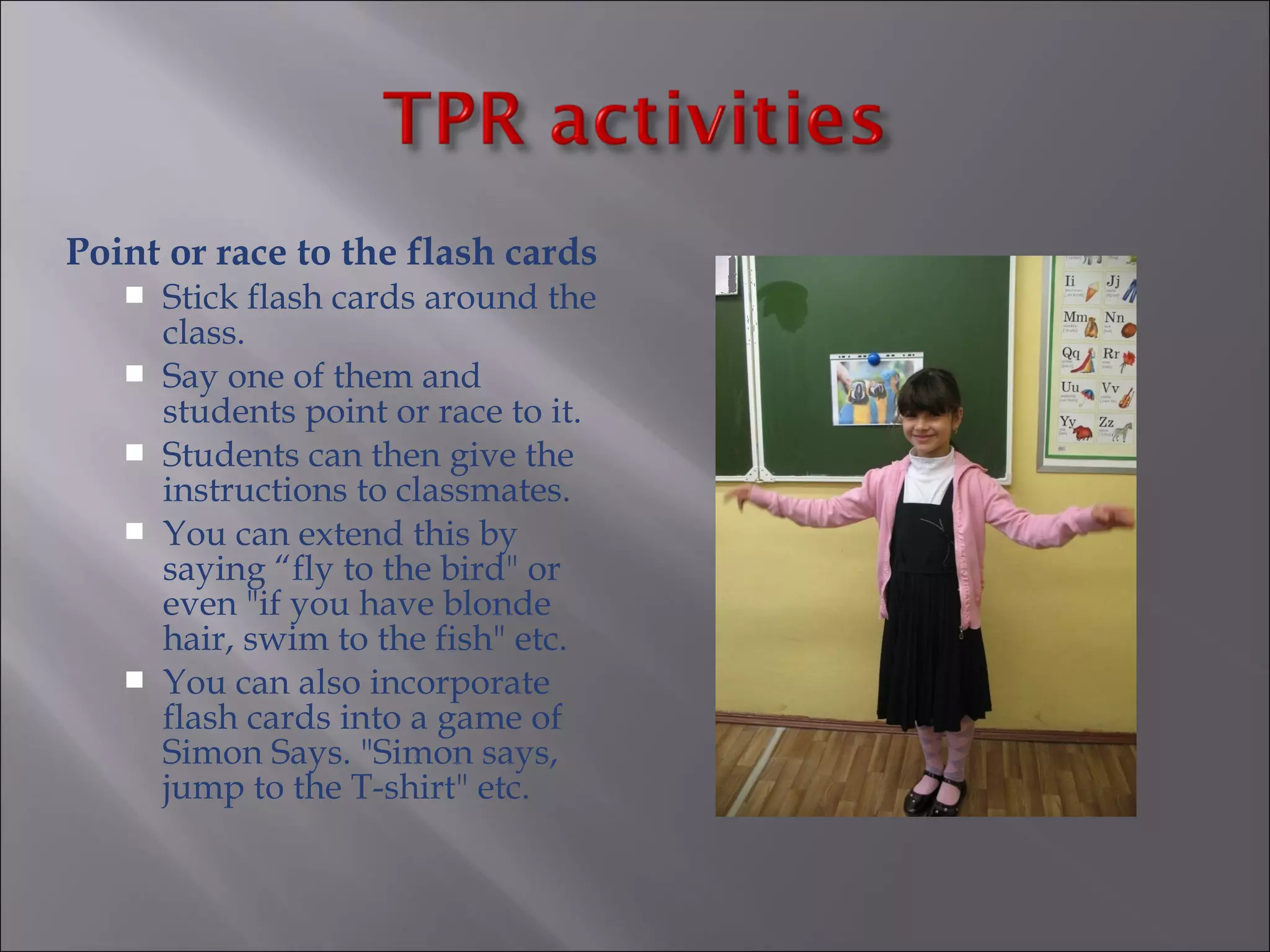
Point or race to the flash cards
      Stick flash cards around the
       class.
      Say one of them and
       students point or race to it.
      Students can then give the
       instructions to classmates.
      You can extend this by
       saying “fly to the bird" or
       even "if you have blonde
       hair, swim to the fish" etc.
      You can also incorporate
       flash cards into a game of
       Simon Says. "Simon says,
       jump to the T-shirt" etc.

Using flash cards with young learners

  • 2.
    Flash cards are a simple, versatile, yet often underexploited resource. There are some reasons for using flash cards and a selection of activities for use in the Young Learner classroom, although some of the activities could also be used with fun-loving, lower level adult classes.
  • 3.
    It is particularly important to appeal to visual learners, as a very high proportion of learners have this type of intelligence. Flash cards can be bright and colorful and make a real impact on visual learners.  For children at reading age, flash cards can be used in conjunction with word cards. These are simply cards that display the written word. Word cards should be introduced well after the pictorial cards so as not to interfere with correct pronunciation.  Flash cards are a really handy resource to have and can be useful at every stage of the class. They are a great way to present, practice and recycle vocabulary and when students become familiar with the activities used in class, they can be given out to early-finishers to use in small groups.
  • 4.
    Buy them - Some course books provide a supplementary pack of flash cards or they can be bought in sets.  Make them yourself - If you don't have access to professionally produced flash cards, don't worry, it's really easy to make your own even if you're not very artistic. You can use pictures from magazines, draw simple pictures or copy from the internet or clip art. The advantage of making your own, apart from the fact that they're cheap and yours to keep, is that you can make sets for your specific needs.  Students make them - After introducing a new lexical set, using realia or the course book, ask students to produce the flash cards for you. Give each one an item to draw. They can be mounted on card to make the set.
  • 5.
    Memory activities  Drilling activities  Identification activities  TPR activities
  • 6.
    Game 1 Game 2  Place a selection of flash  Give each group of learners a cards on the floor in a set of flashcards with two circle. copies of each card.  Students have one  Ask them to place them, one by one, face down on the minute to memorize the table. In turn, each player cards. turns up two cards and says  In groups, they have what they are. two minutes to write as  If they turn up the same many of the names as card, they keep them and they can remember. have another go. If the cards are different, they replace them and the next player has a go. The player with the most pairs is the winner.
  • 7.
    A What?  Students sit in a circle.  You show a flash card to Student 1 and say "This is a hamster."  Student 1 looks at the flash card and asks you "a what?"  The teacher replies "a hamster" and passes the flash card on.  Student 1 passes the flash card on to Student 2 and says "this is a hamster".  Student 2 asks Student 1 "a what?" and Student 1 asks the teacher "a what?" the teacher replies to Student 1 "a hamster" and Student 1 replies to Student 2 "a hamster" and so it goes on until the flash card travels full circle.  When the group has mastered it, 2 flash cards can go around the circle in opposite directions. They will cross over mid circle.  When students know the game, choose one of them to do the teacher's role.
  • 8.
    Noughts and crosses!  Select 9 animal flashcards and number them 1-9.  Draw a grid on the board, numbering each square 1-9.  Divide your learners into two teams, noughts (0) and crosses (X). In turn, each team chooses a number between 1 and 9. If noughts chooses square 5, for example, show them flashcard 5 and ask them what it is. If they can correctly identify the card, draw (0) in the square.  Each team should try to choose squares that block the other from making three in a row, horizontally, vertically or diagonally.
  • 9.
    Point or raceto the flash cards  Stick flash cards around the class.  Say one of them and students point or race to it.  Students can then give the instructions to classmates.  You can extend this by saying “fly to the bird" or even "if you have blonde hair, swim to the fish" etc.  You can also incorporate flash cards into a game of Simon Says. "Simon says, jump to the T-shirt" etc.