Using the CQ Researcher
Database to Initiate Presearch
Presented by Ann Westrick
Funded by a grant from the Jerome Library
Bowling Green State University
Bowling Green, Ohio, USA
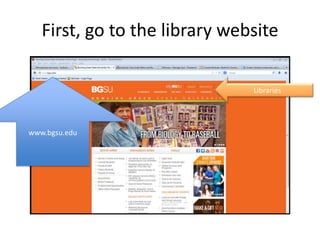
First, go to the library website
Libraries
www.bgsu.edu
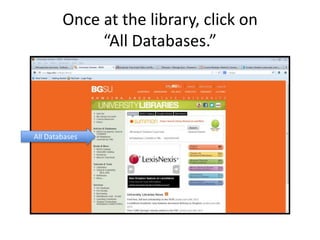
Once at the library, click on
“All Databases.”
All Databases
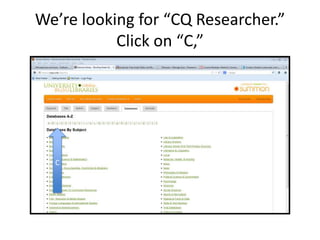
We’re looking for “CQ Researcher.”
Click on “C,”
C
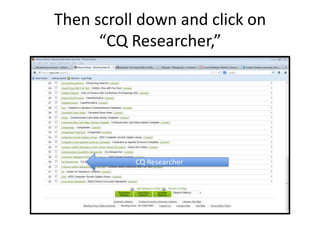
Then scroll down and click on
“CQ Researcher,”
CQ Researcher
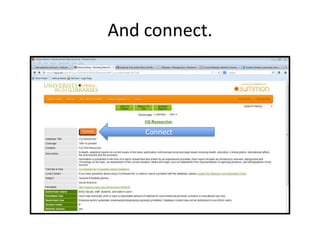
And connect.
Connect
IMPORTANT!
Before going any further, ask your
instructor if s/he has any banned
topics. For example, many GSW
instructors will not allow students to
write about abortion or gun control.
Why?
Banning over-used issues requires
students to discover new and
interesting arguments to which they
can add something new. So your goal
when finding a topic should be to find
something that is interesting and
significant whose conversation you can
add to.
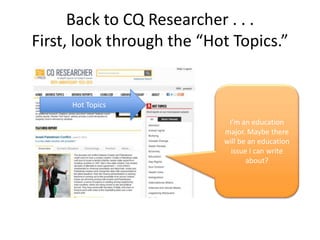
Back to CQ Researcher . . .
First, look through the “Hot Topics.”
I’m an education
major. Maybe there
will be an education
issue I can write
about?
Hot Topics
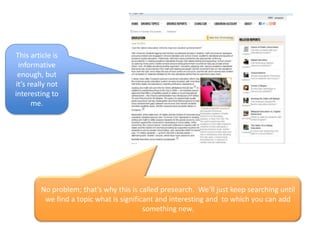
This article is
informative
enough, but
it’s really not
interesting to
me.
No problem; that’s why this is called presearch. We’ll just keep searching until
we find a topic what is significant and interesting and to which you can add
something new.
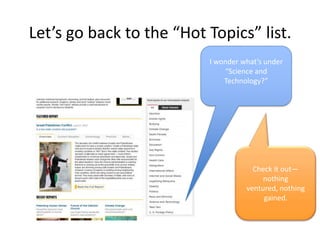
Let’s go back to the “Hot Topics” list.
I wonder what’s under
“Science and
Technology?”
Check it out—
nothing
ventured, nothing
gained.
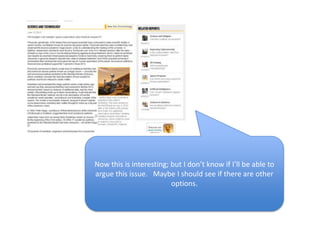
Now this is interesting; but I don’t know if I’ll be able to
argue this issue. Maybe I should see if there are other
options.
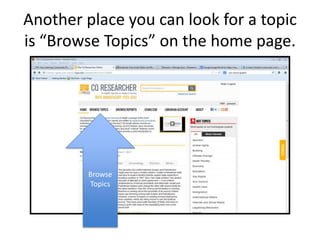
Another place you can look for a topic
is “Browse Topics” on the home page.
Browse
Topics
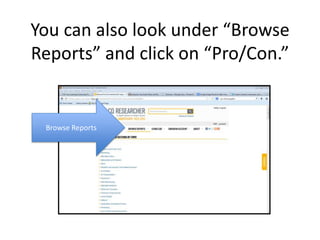
You can also look under “Browse
Reports” and click on “Pro/Con.”
Browse Reports
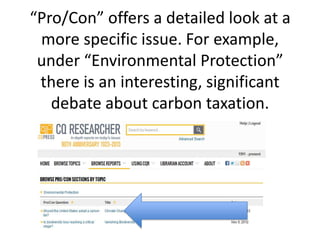
“Pro/Con” offers a detailed look at a
more specific issue. For example,
under “Environmental Protection”
there is an interesting, significant
debate about carbon taxation.
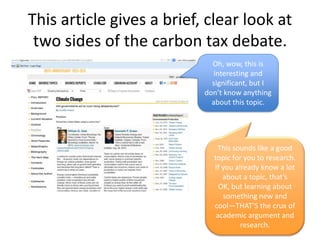
This article gives a brief, clear look at
two sides of the carbon tax debate.
Oh, wow, this is
interesting and
significant, but I
don’t know anything
about this topic.
This sounds like a good
topic for you to research.
If you already know a lot
about a topic, that’s
OK, but learning about
something new and
cool—THAT’S the crux of
academic argument and
research.
Remember: Presearch does NOT take the
place of research.
Presearch allows you to:
• begin to understand the issues involved in your research
question
• understand multiple sides of an argument
• get an overview of theories related to the topic
• see possible answers to your research question
• decide what issues/information you need to continue
researching.
Continue presearching until you
find an issue that is significant,
relevant and arguable.
If you need to stop and start over
or backtrack—THAT’S FINE.
Keep in mind that presearch is
supposed to pique your interest and
get the research process started.
Once you have found your interesting,
significant, debatable issue then the
search for current, credible, academic
sources begins.
Using cq researcher for presearch

Using cq researcher for presearch

  • 1.
    Using the CQResearcher Database to Initiate Presearch Presented by Ann Westrick Funded by a grant from the Jerome Library Bowling Green State University Bowling Green, Ohio, USA
  • 2.
    First, go tothe library website Libraries www.bgsu.edu
  • 3.
    Once at thelibrary, click on “All Databases.” All Databases
  • 4.
    We’re looking for“CQ Researcher.” Click on “C,” C
  • 5.
    Then scroll downand click on “CQ Researcher,” CQ Researcher
  • 6.
  • 7.
    IMPORTANT! Before going anyfurther, ask your instructor if s/he has any banned topics. For example, many GSW instructors will not allow students to write about abortion or gun control.
  • 8.
    Why? Banning over-used issuesrequires students to discover new and interesting arguments to which they can add something new. So your goal when finding a topic should be to find something that is interesting and significant whose conversation you can add to.
  • 9.
    Back to CQResearcher . . . First, look through the “Hot Topics.” I’m an education major. Maybe there will be an education issue I can write about? Hot Topics
  • 10.
    This article is informative enough,but it’s really not interesting to me. No problem; that’s why this is called presearch. We’ll just keep searching until we find a topic what is significant and interesting and to which you can add something new.
  • 11.
    Let’s go backto the “Hot Topics” list. I wonder what’s under “Science and Technology?” Check it out— nothing ventured, nothing gained.
  • 12.
    Now this isinteresting; but I don’t know if I’ll be able to argue this issue. Maybe I should see if there are other options.
  • 13.
    Another place youcan look for a topic is “Browse Topics” on the home page. Browse Topics
  • 14.
    You can alsolook under “Browse Reports” and click on “Pro/Con.” Browse Reports
  • 15.
    “Pro/Con” offers adetailed look at a more specific issue. For example, under “Environmental Protection” there is an interesting, significant debate about carbon taxation.
  • 16.
    This article givesa brief, clear look at two sides of the carbon tax debate. Oh, wow, this is interesting and significant, but I don’t know anything about this topic. This sounds like a good topic for you to research. If you already know a lot about a topic, that’s OK, but learning about something new and cool—THAT’S the crux of academic argument and research.
  • 17.
    Remember: Presearch doesNOT take the place of research. Presearch allows you to: • begin to understand the issues involved in your research question • understand multiple sides of an argument • get an overview of theories related to the topic • see possible answers to your research question • decide what issues/information you need to continue researching.
  • 18.
    Continue presearching untilyou find an issue that is significant, relevant and arguable. If you need to stop and start over or backtrack—THAT’S FINE.
  • 19.
    Keep in mindthat presearch is supposed to pique your interest and get the research process started. Once you have found your interesting, significant, debatable issue then the search for current, credible, academic sources begins.