
Use of Piezoelectric Energy
to Automate the Lighting
System Inside Railway
Tunnel
• Vivek Mahesh Naik
• B.E Mechanical
• Mumbai University
Table of Content
• Problem statement
• Solution to problem
• Limitation of existing technology
• Advantages of concept
• Piezo Mat
• Observation of tests over Mat
• Conclusion
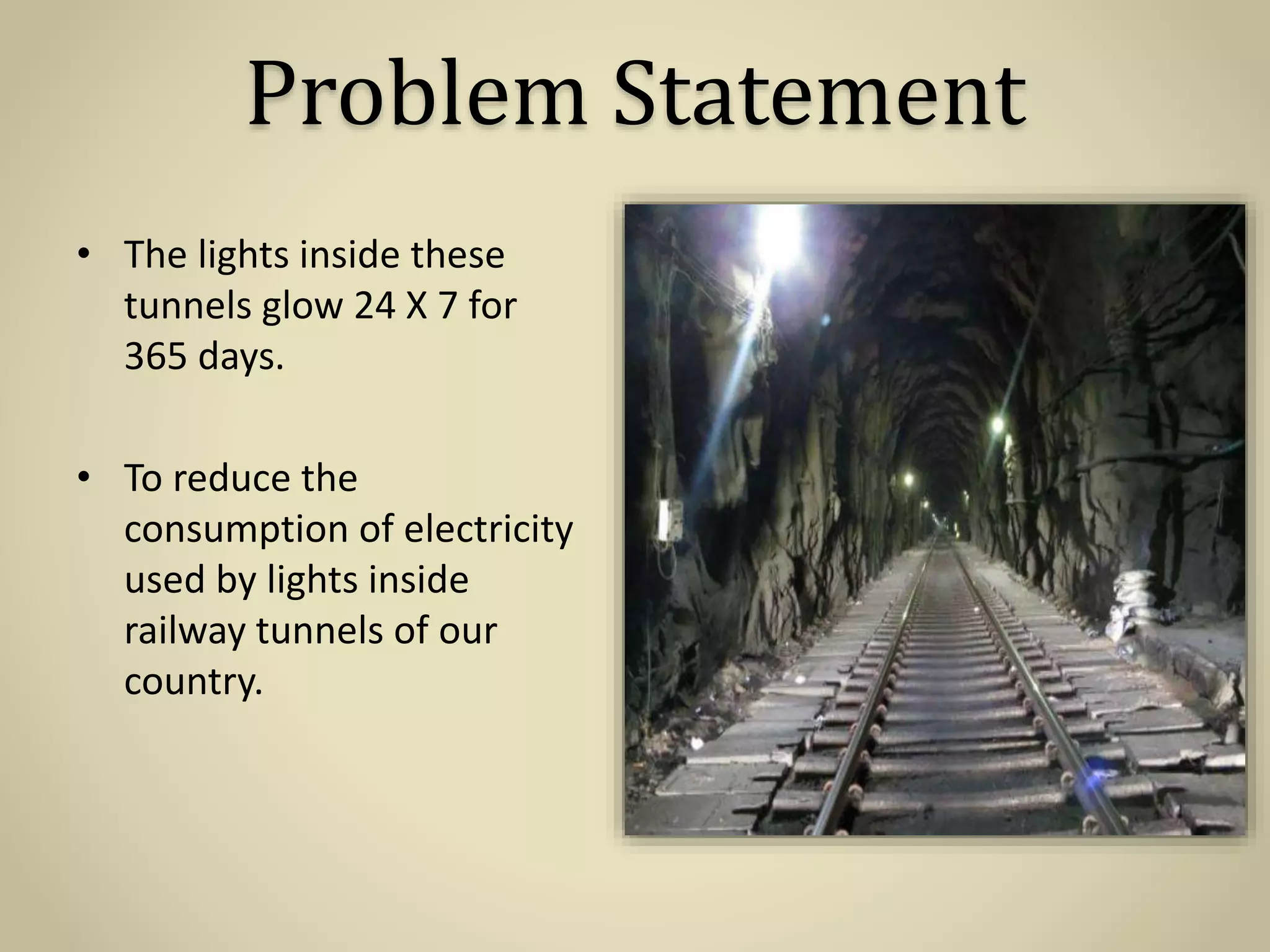
Problem Statement
• The lights inside these
tunnels glow 24 X 7 for
365 days.
• To reduce the
consumption of electricity
used by lights inside
railway tunnels of our
country.
Solution to Problem
• Use of piezoelectric material.
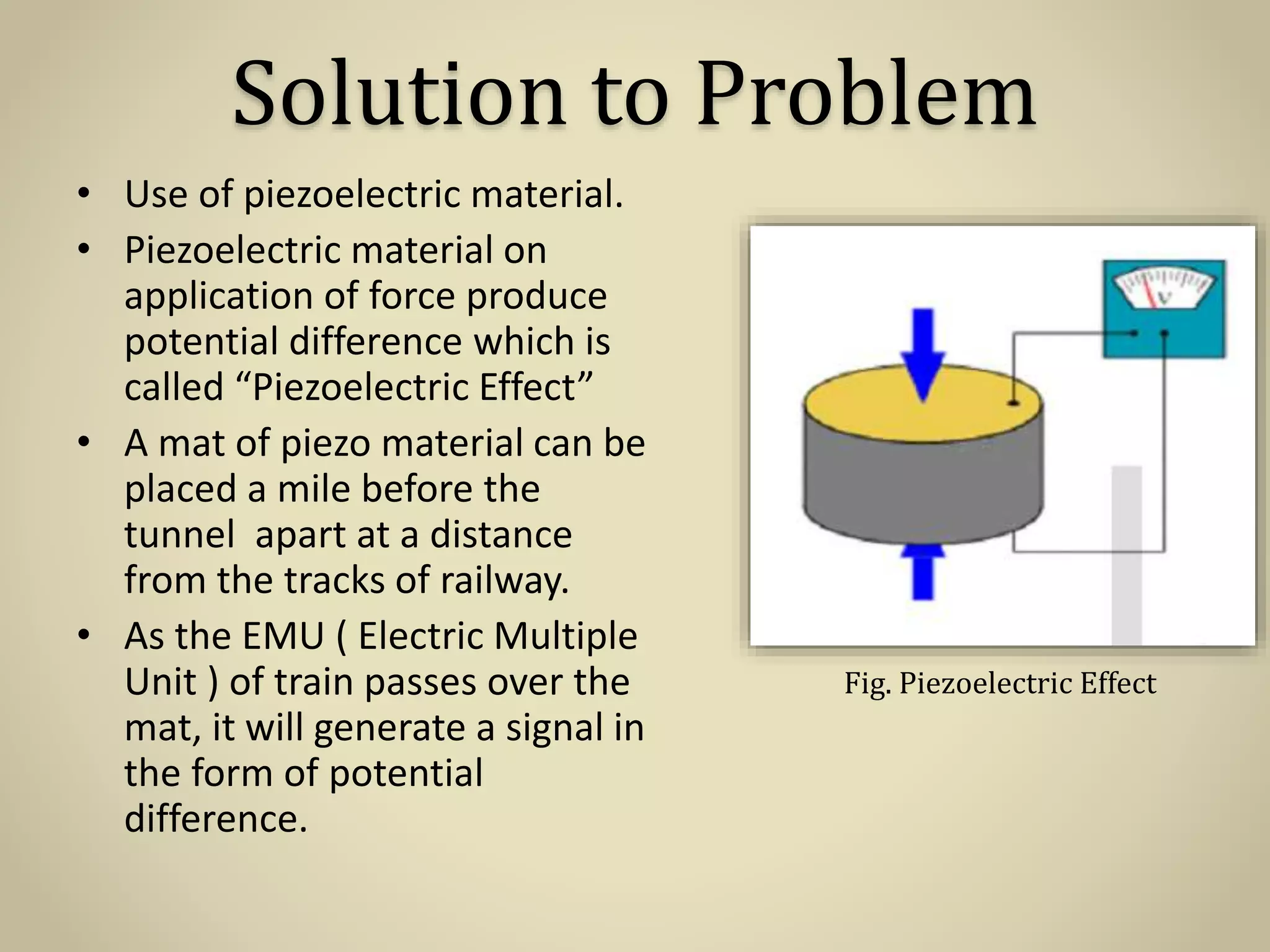
• Piezoelectric material on
application of force produce
potential difference which is
called “Piezoelectric Effect”
• A mat of piezo material can be
placed a mile before the
tunnel apart at a distance
from the tracks of railway.
• As the EMU ( Electric Multiple
Unit ) of train passes over the
mat, it will generate a signal in
the form of potential
difference.
Fig. Piezoelectric Effect
Solution (cont.)
• The amount of potential difference produced will be
dependent on the force exerted by train.
Force Imparted = Potential Difference Developed
• After receiving the threshold signal a program will run which
will turn ON the lights of tunnel.
• Thus the lights of tunnel will turn ON before the train enters
the tunnel and the program can be timed to turn OFF the
lights after particular time period.
Limitation of existing
technology
• The lights of tunnels remain ON for 24 hours and 365 days.
• Due to which a large amount of wastage of electricity takes
place.
• Also air inside the tunnel gets heated.
• Increases the carbon footprints in atmosphere.
Advantages of the concept
• Reduced consumption of electricity.
• Due to above reduction, generous amount of electricity will
be available for lighting the dark homes of villagers.
• Reduced pressure on fossil fuel for generation of electricity
• Reduction in carbon footprints from the atmosphere.
• No external power supply for triggering
• Maintenance cost of piezo materials is less.
• Increased life of bulbs.
• Increased monetary savings of railway treasury.
Coal, 61.51
Hydroelectricit
y, 15.42
Renewable
Energy, 11.84
Natural Gas,
8.61
Nuclear, 2.16
Oil, 0.44
Coal
Hydroelectricity
Renewable Energy
Natural Gas
Nuclear
Oil
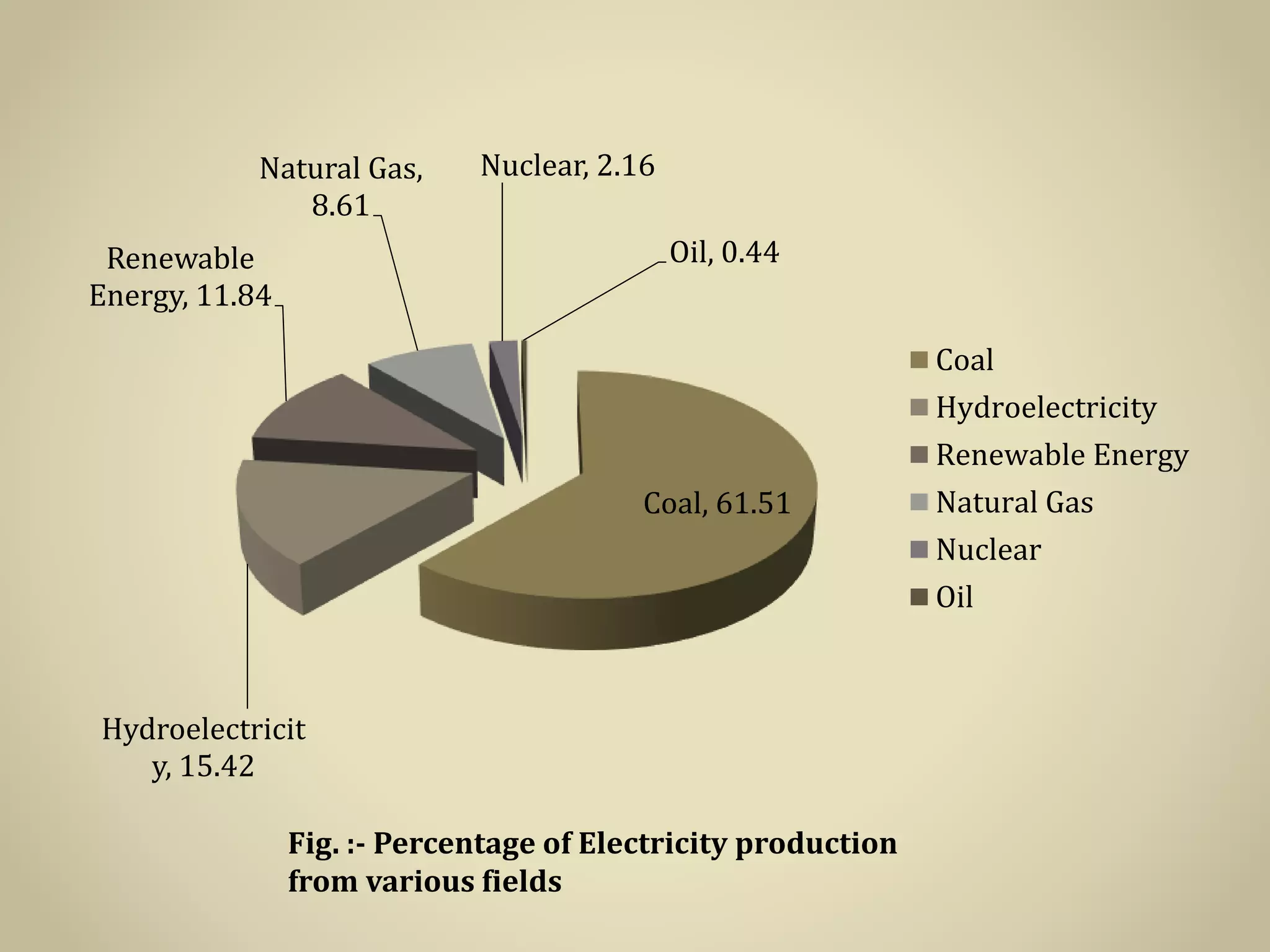
Fig. :- Percentage of Electricity production
from various fields
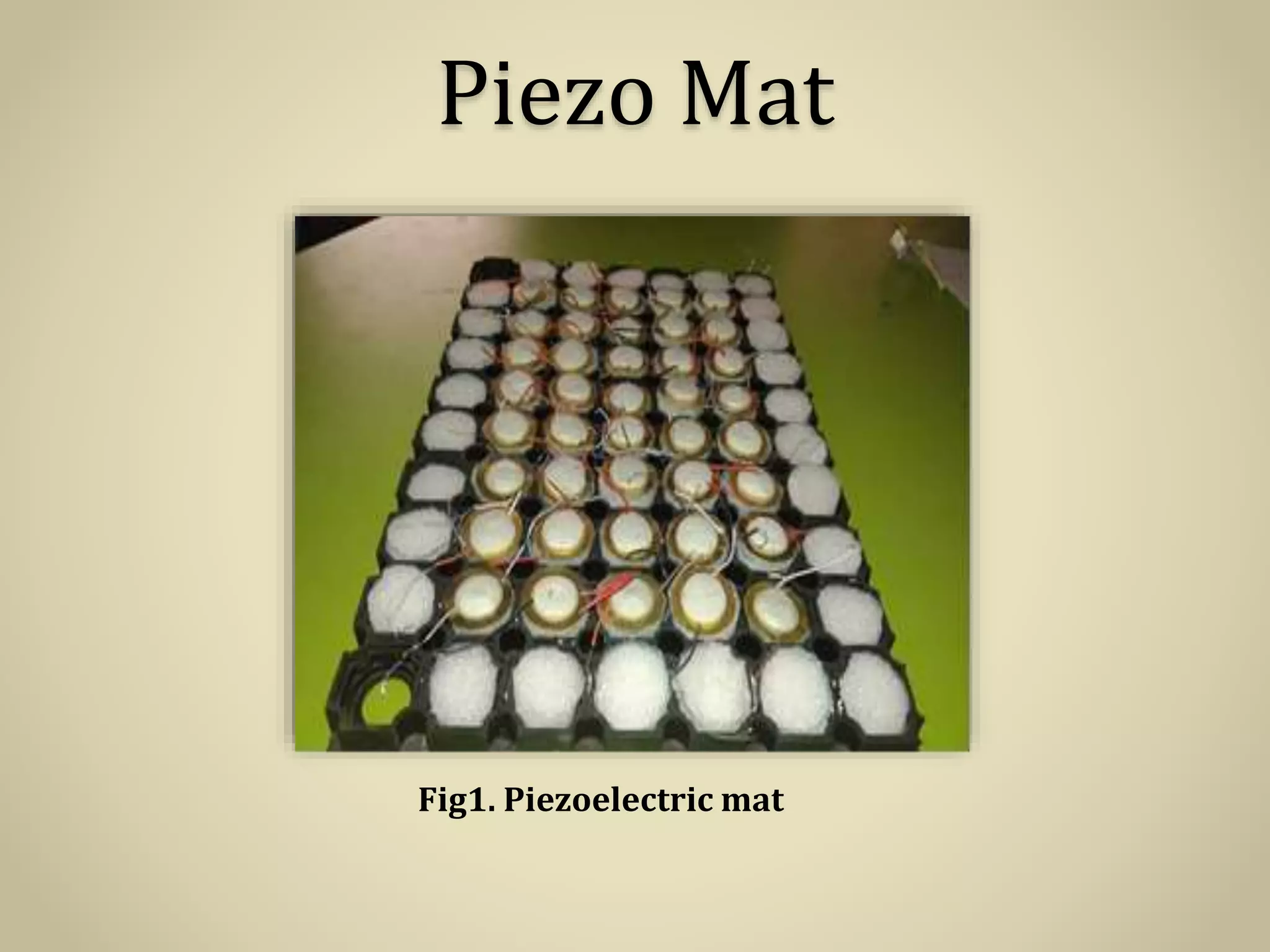
Piezo Mat
Fig1. Piezoelectric mat
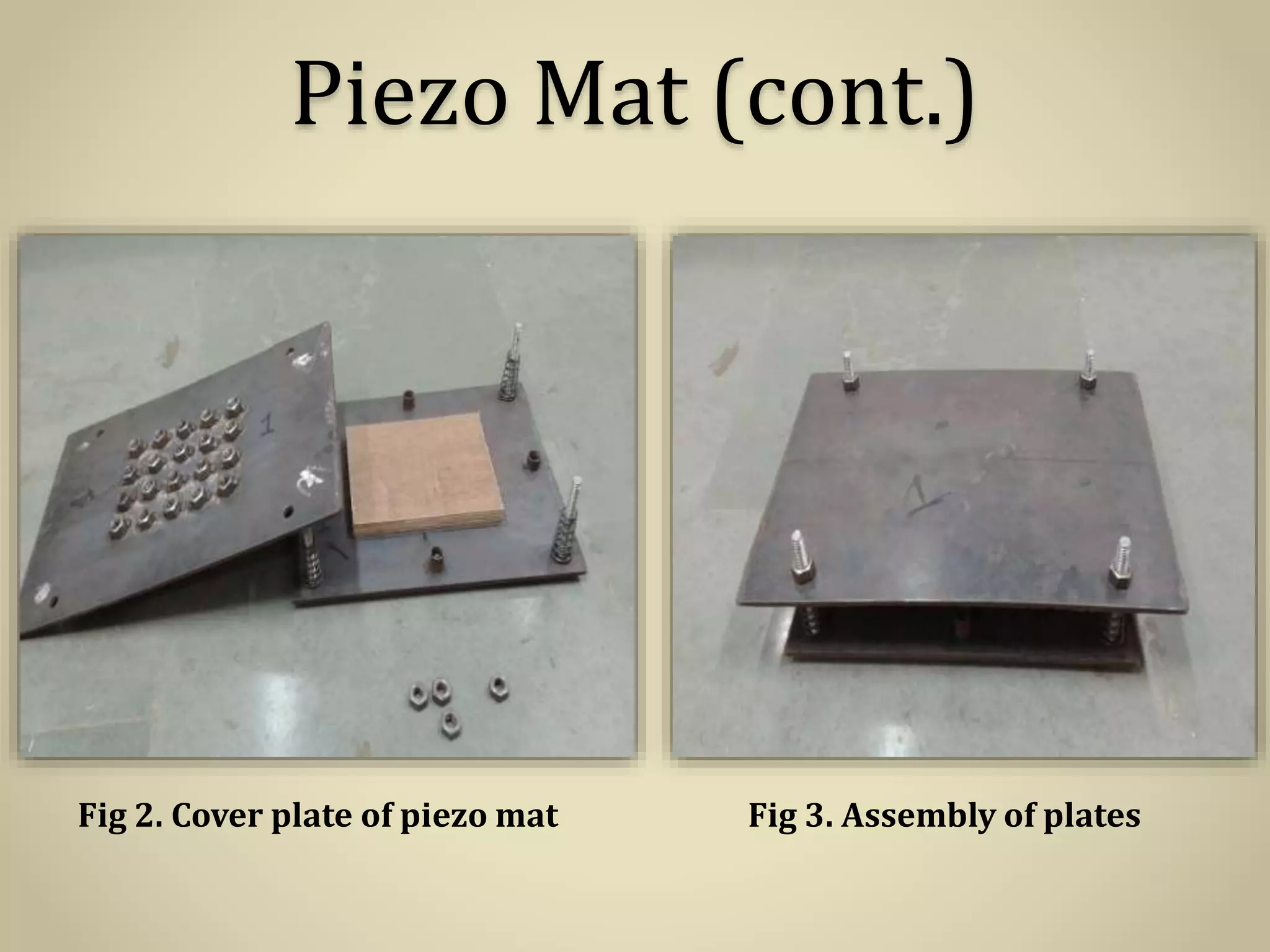
Piezo Mat (cont.)
Fig 2. Cover plate of piezo mat Fig 3. Assembly of plates
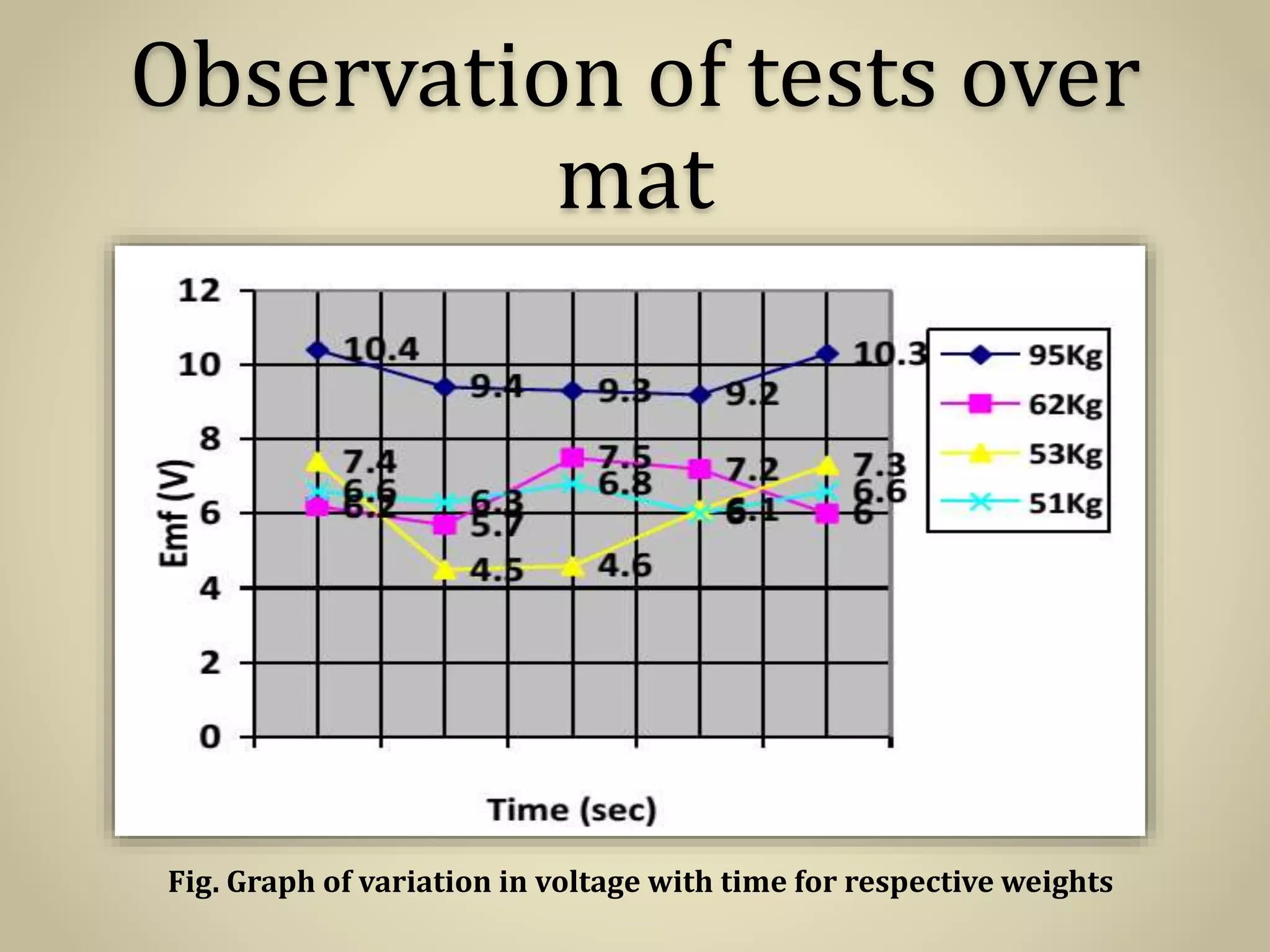
Observation of tests over
mat
Fig. Graph of variation in voltage with time for respective weights
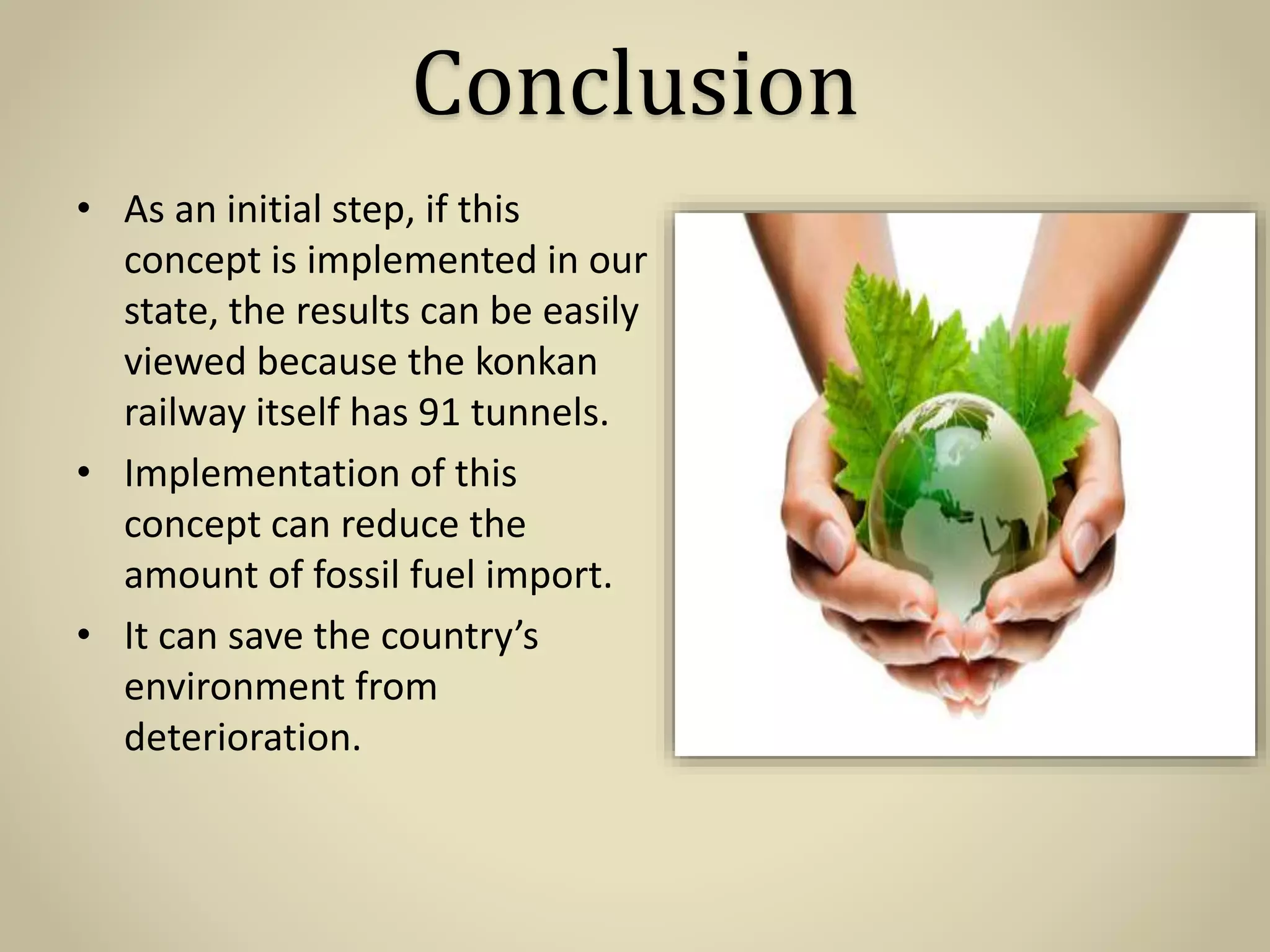
Conclusion
• As an initial step, if this
concept is implemented in our
state, the results can be easily
viewed because the konkan
railway itself has 91 tunnels.
• Implementation of this
concept can reduce the
amount of fossil fuel import.
• It can save the country’s
environment from
deterioration.
References
• www.walkthroughindia.com
• www.wikipedia.org.in
• www.timesofindia.com
• www.indianrailways.info.org
Use of piezoelectric energy to automate the lighting inside railway tunnel

Use of piezoelectric energy to automate the lighting inside railway tunnel

  • 1.
    Use of PiezoelectricEnergy to Automate the Lighting System Inside Railway Tunnel • Vivek Mahesh Naik • B.E Mechanical • Mumbai University
  • 2.
    Table of Content •Problem statement • Solution to problem • Limitation of existing technology • Advantages of concept • Piezo Mat • Observation of tests over Mat • Conclusion
  • 3.
    Problem Statement • Thelights inside these tunnels glow 24 X 7 for 365 days. • To reduce the consumption of electricity used by lights inside railway tunnels of our country.
  • 4.
    Solution to Problem •Use of piezoelectric material. • Piezoelectric material on application of force produce potential difference which is called “Piezoelectric Effect” • A mat of piezo material can be placed a mile before the tunnel apart at a distance from the tracks of railway. • As the EMU ( Electric Multiple Unit ) of train passes over the mat, it will generate a signal in the form of potential difference. Fig. Piezoelectric Effect
  • 5.
    Solution (cont.) • Theamount of potential difference produced will be dependent on the force exerted by train. Force Imparted = Potential Difference Developed • After receiving the threshold signal a program will run which will turn ON the lights of tunnel. • Thus the lights of tunnel will turn ON before the train enters the tunnel and the program can be timed to turn OFF the lights after particular time period.
  • 6.
    Limitation of existing technology •The lights of tunnels remain ON for 24 hours and 365 days. • Due to which a large amount of wastage of electricity takes place. • Also air inside the tunnel gets heated. • Increases the carbon footprints in atmosphere.
  • 7.
    Advantages of theconcept • Reduced consumption of electricity. • Due to above reduction, generous amount of electricity will be available for lighting the dark homes of villagers. • Reduced pressure on fossil fuel for generation of electricity • Reduction in carbon footprints from the atmosphere. • No external power supply for triggering • Maintenance cost of piezo materials is less. • Increased life of bulbs. • Increased monetary savings of railway treasury.
  • 8.
    Coal, 61.51 Hydroelectricit y, 15.42 Renewable Energy,11.84 Natural Gas, 8.61 Nuclear, 2.16 Oil, 0.44 Coal Hydroelectricity Renewable Energy Natural Gas Nuclear Oil Fig. :- Percentage of Electricity production from various fields
  • 9.
  • 10.
    Piezo Mat (cont.) Fig2. Cover plate of piezo mat Fig 3. Assembly of plates
  • 11.
    Observation of testsover mat Fig. Graph of variation in voltage with time for respective weights
  • 12.
    Conclusion • As aninitial step, if this concept is implemented in our state, the results can be easily viewed because the konkan railway itself has 91 tunnels. • Implementation of this concept can reduce the amount of fossil fuel import. • It can save the country’s environment from deterioration.
  • 13.
    References • www.walkthroughindia.com • www.wikipedia.org.in •www.timesofindia.com • www.indianrailways.info.org

Editor's Notes

  • #9 These statistics are as per March 2015 survey.