Electricity Angsts:
Were They EPIRA-Created?
Bienvenido “Nonoy” Oplas Jr.
Presentation at the forum,
“Electricity on the Go: An Assessment of EPIRA”
College of Engineering Theater, UP Diliman
Sponsored by UP ETC applicants Datigan
06 March 2014
Outline
I. Public dissatisfaction: What caused
recent power rate hikes? Brown outs in
Mindanao?
II. Rate Hike, the Numbers
III. EPIRA Creations
IV. Conclusions
I. Dissatisfaction and curiousity
• High power rate hikes of Dec. 2013
(P4.56/kwh) and January 2014 (P3.44/kwh)
• There was collusion by DUs and Gencos?
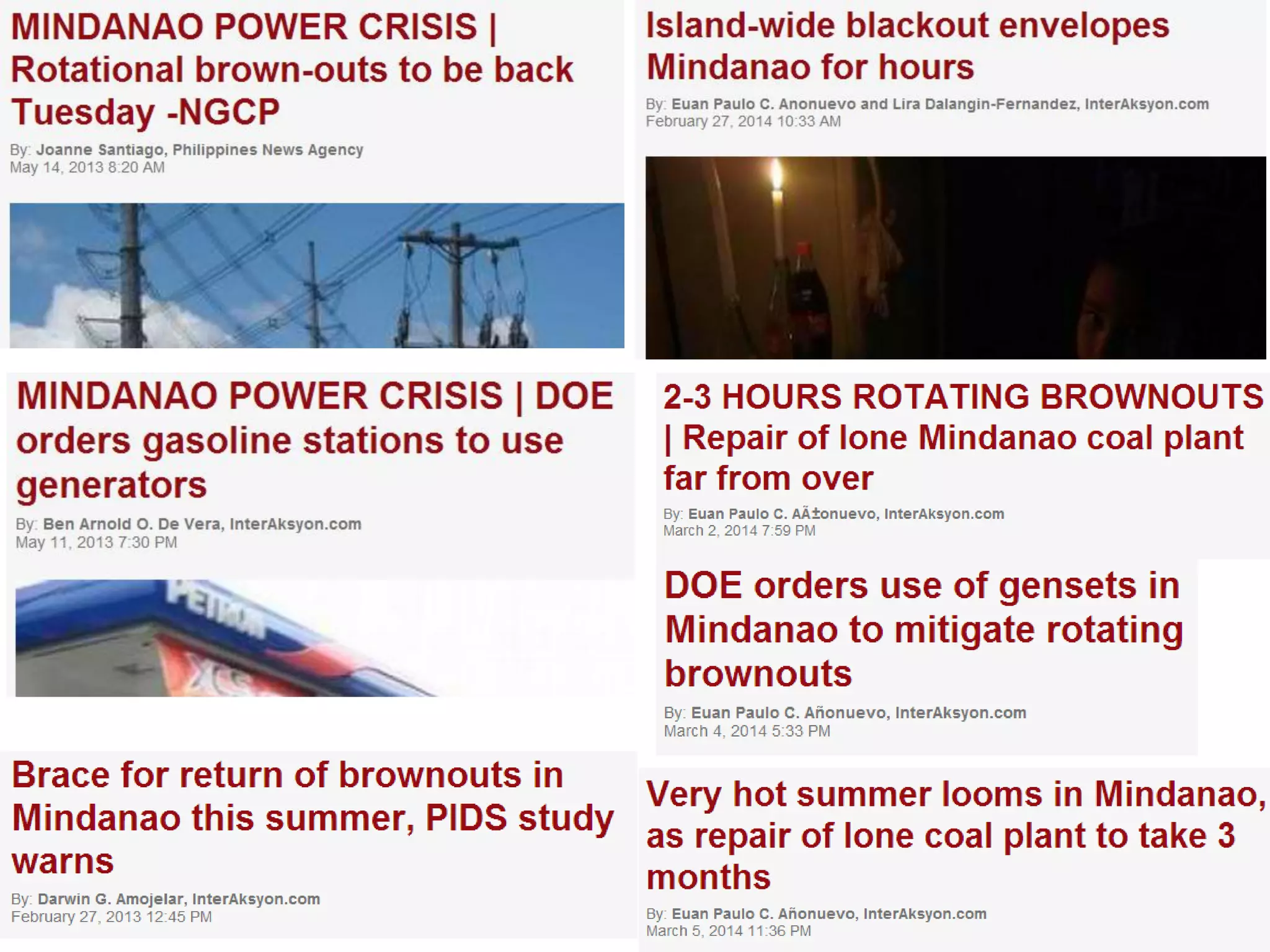
• What caused almost daily “Earth Hour” in
portions of Mindanao, some in Visayas?
• Impending rotating brown outs in M.Manila
and other Meralco areas soon?
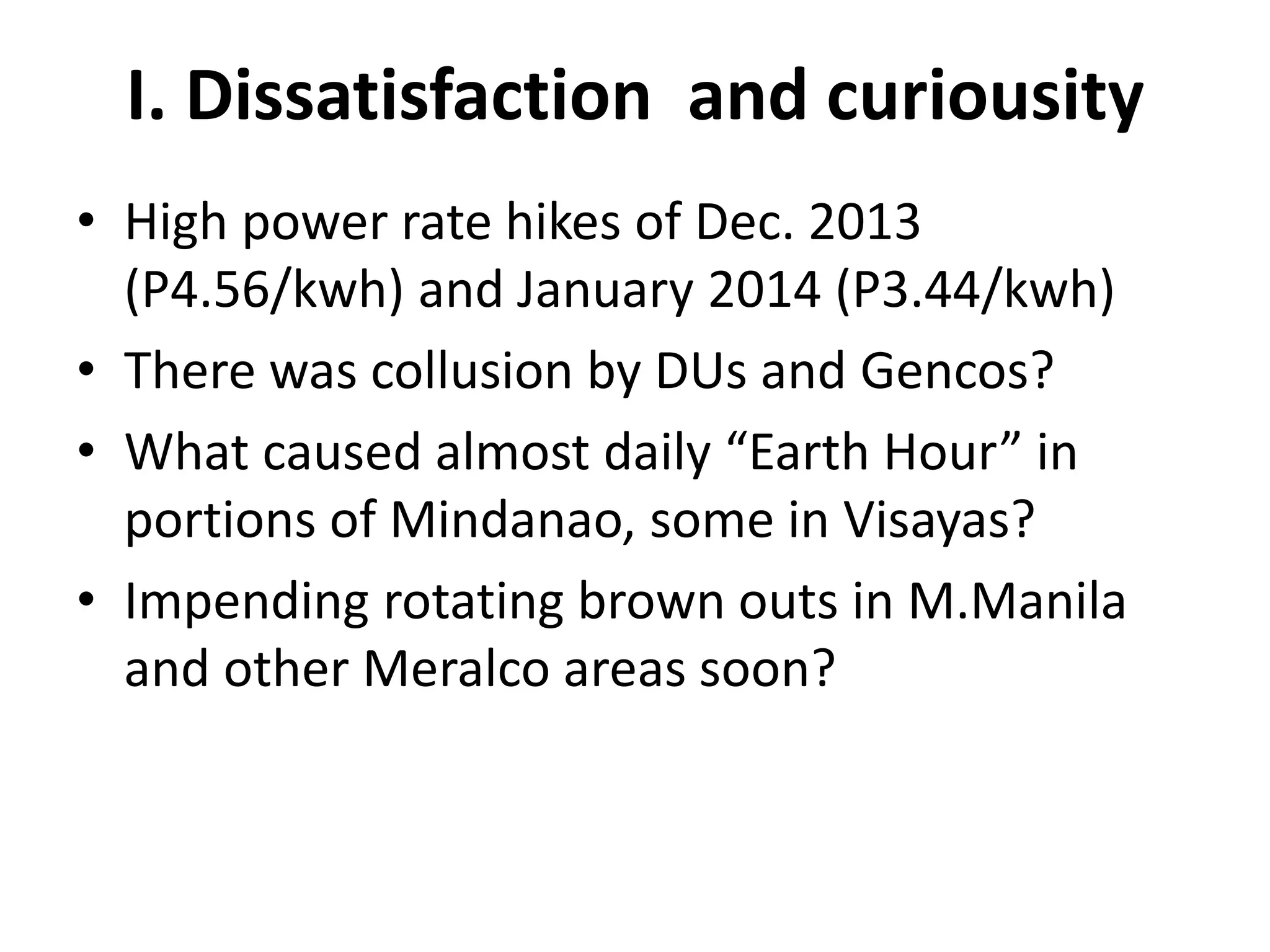
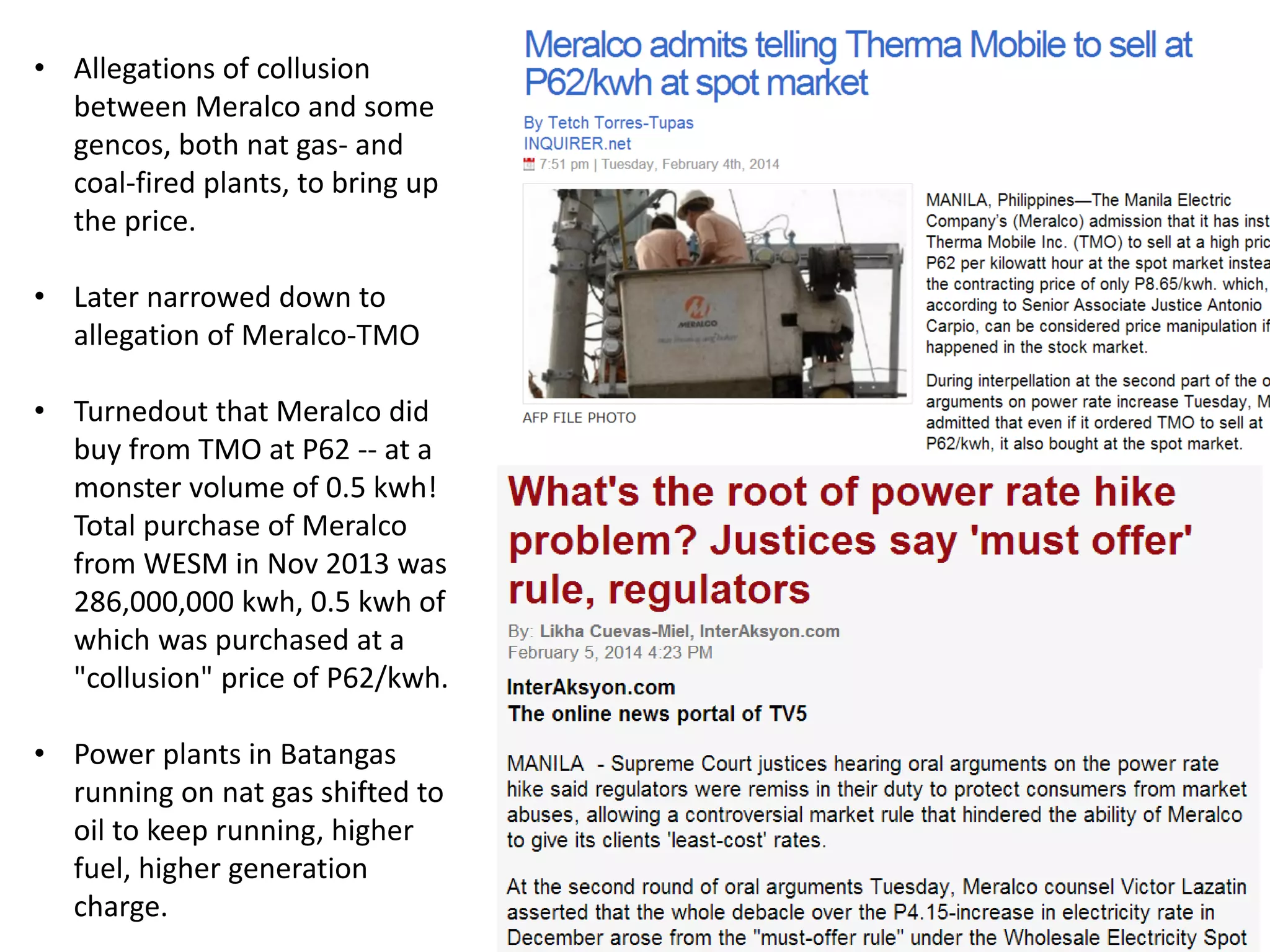
• Allegations of collusion
between Meralco and some
gencos, both nat gas- and
coal-fired plants, to bring up
the price.
• Later narrowed down to
allegation of Meralco-TMO
• Turnedout that Meralco did
buy from TMO at P62 -- at a
monster volume of 0.5 kwh!
Total purchase of Meralco
from WESM in Nov 2013 was
286,000,000 kwh, 0.5 kwh of
which was purchased at a
"collusion" price of P62/kwh.

• Power plants in Batangas
running on nat gas shifted to
oil to keep running, higher
fuel, higher generation
charge.
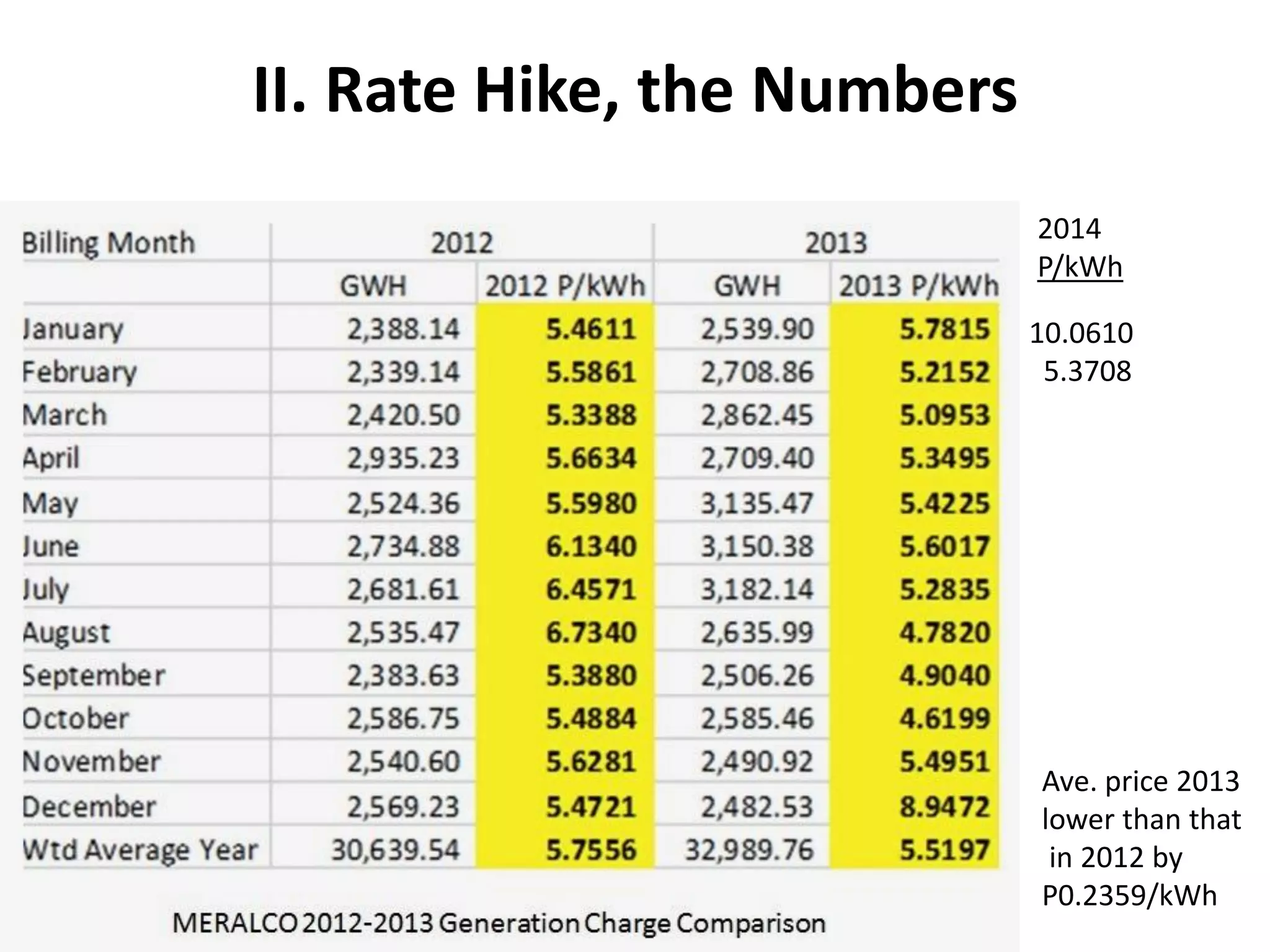
II. Rate Hike, the Numbers
2014
P/kWh

10.0610
5.3708

Ave. price 2013
lower than that
in 2012 by
P0.2359/kWh
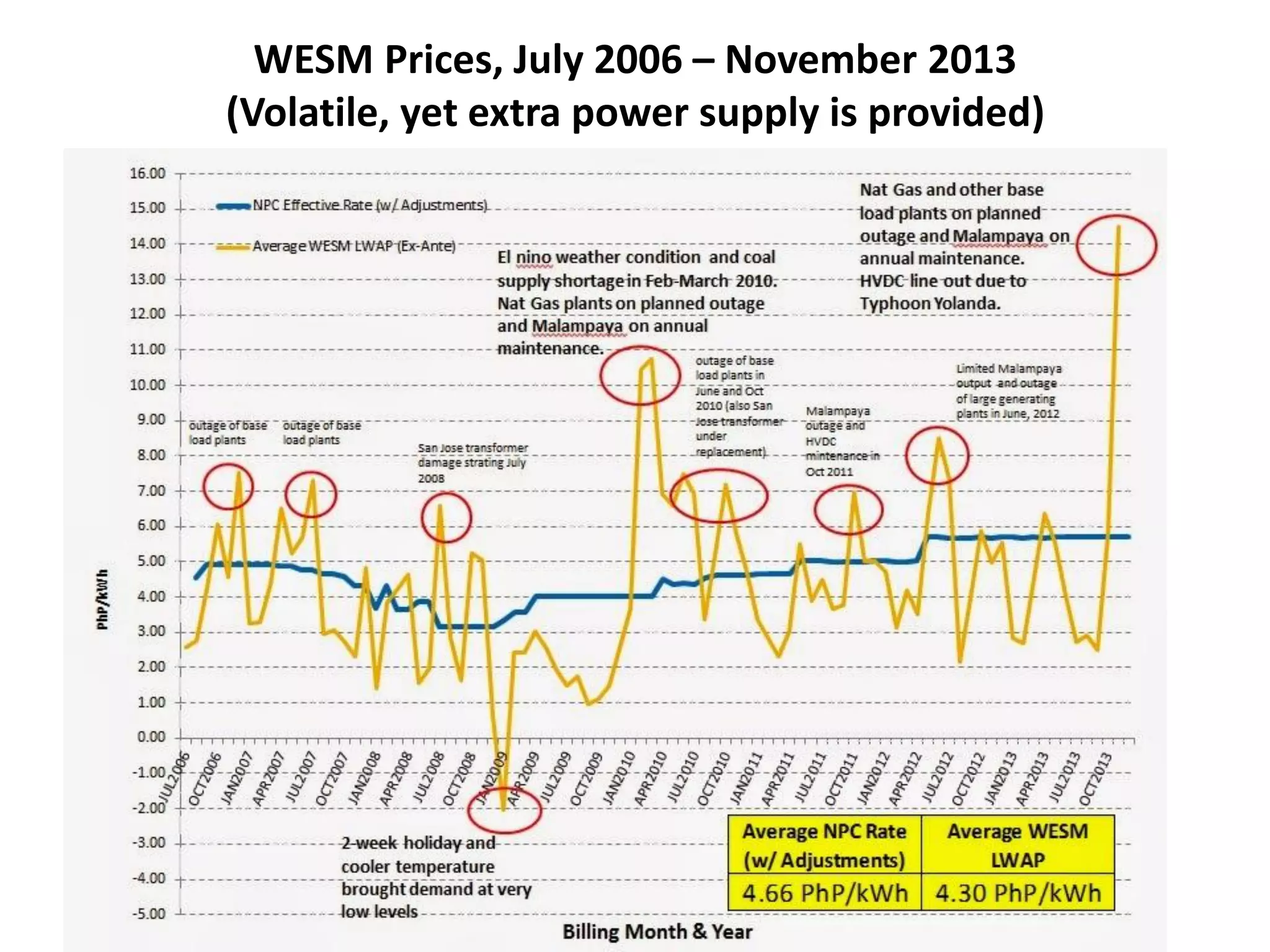
WESM Prices, July 2006 – November 2013
(Volatile, yet extra power supply is provided)
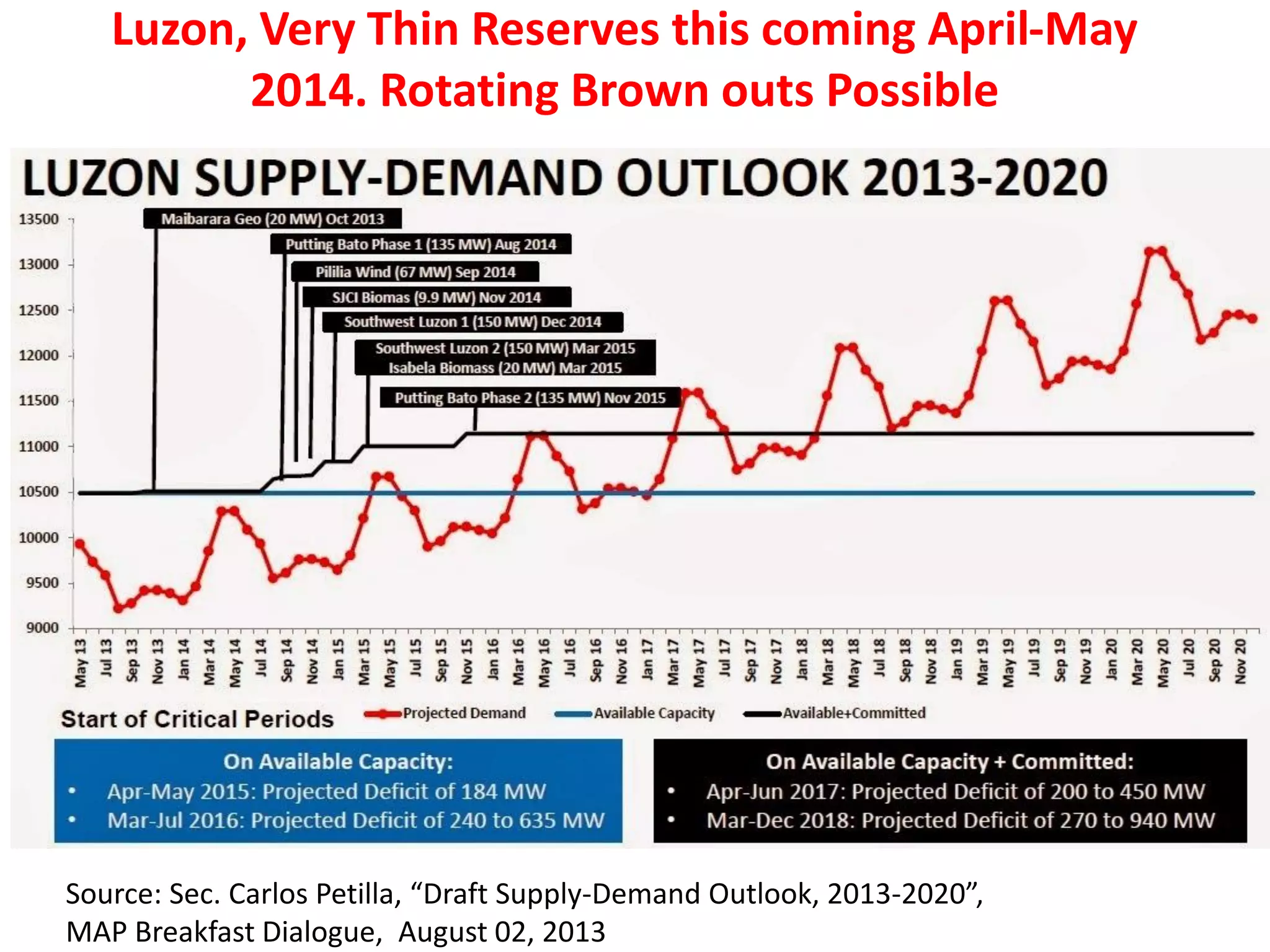
Luzon, Very Thin Reserves this coming April-May
2014. Rotating Brown outs Possible

Source: Sec. Carlos Petilla, “Draft Supply-Demand Outlook, 2013-2020”,
MAP Breakfast Dialogue, August 02, 2013
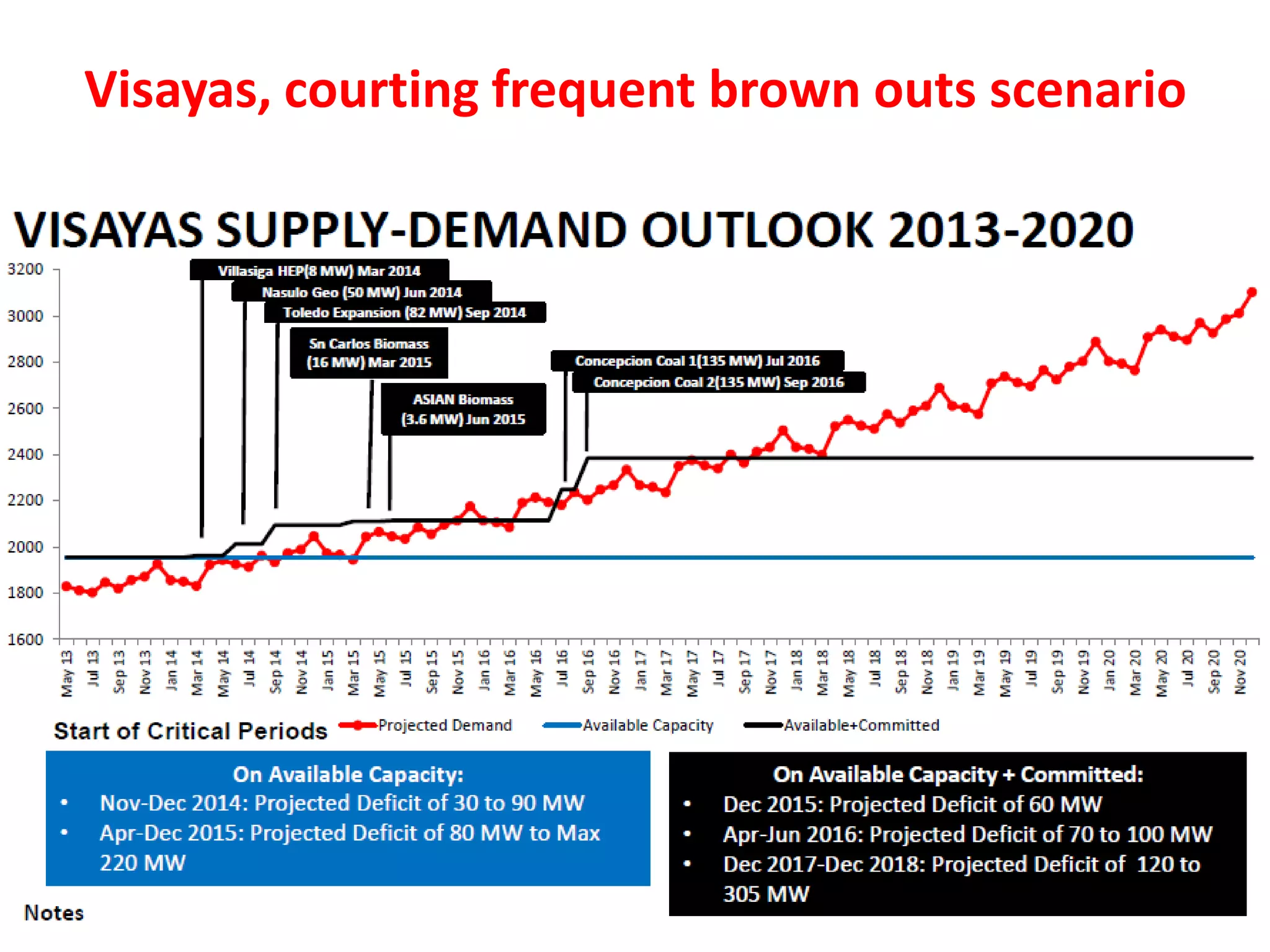
Visayas, courting frequent brown outs scenario
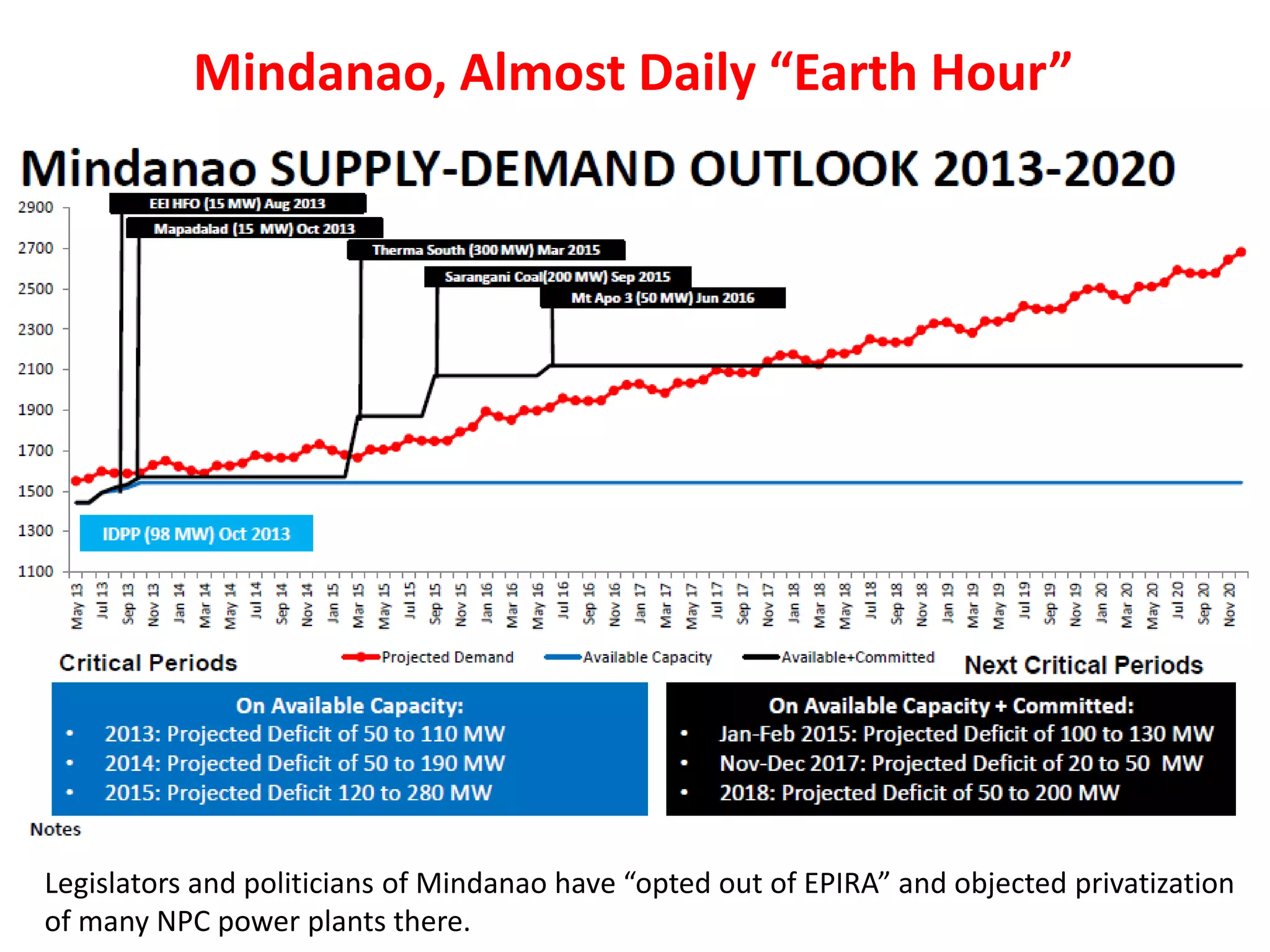
Mindanao, Almost Daily “Earth Hour”

Legislators and politicians of Mindanao have “opted out of EPIRA” and objected privatization
of many NPC power plants there.
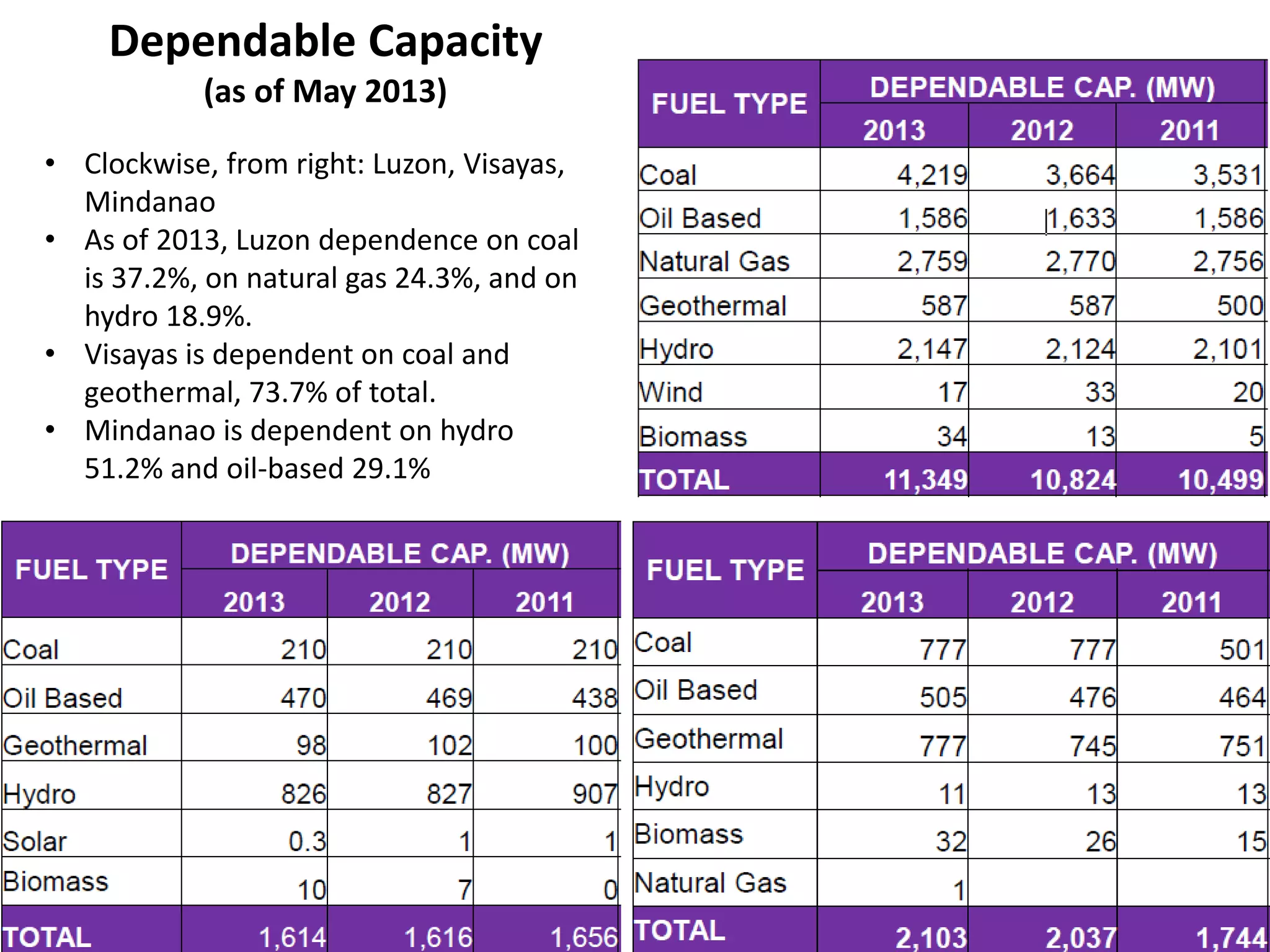
Dependable Capacity
(as of May 2013)
• Clockwise, from right: Luzon, Visayas,
Mindanao
• As of 2013, Luzon dependence on coal
is 37.2%, on natural gas 24.3%, and on
hydro 18.9%.
• Visayas is dependent on coal and
geothermal, 73.7% of total.
• Mindanao is dependent on hydro
51.2% and oil-based 29.1%
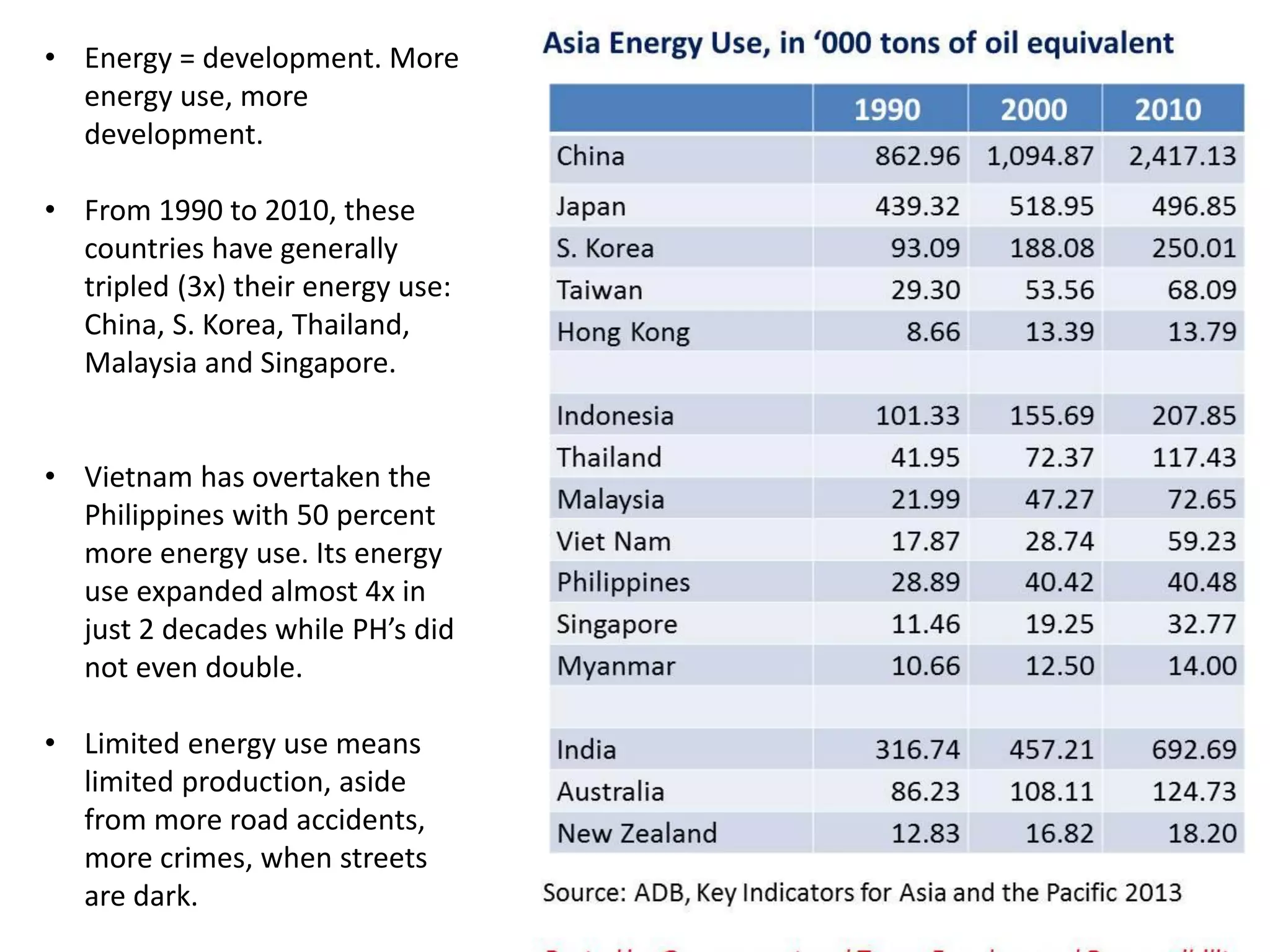
• Energy = development. More
energy use, more
development.
• From 1990 to 2010, these
countries have generally
tripled (3x) their energy use:
China, S. Korea, Thailand,
Malaysia and Singapore.
• Vietnam has overtaken the
Philippines with 50 percent
more energy use. Its energy
use expanded almost 4x in
just 2 decades while PH’s did
not even double.

• Limited energy use means
limited production, aside
from more road accidents,
more crimes, when streets
are dark.
III. EPIRA Creations
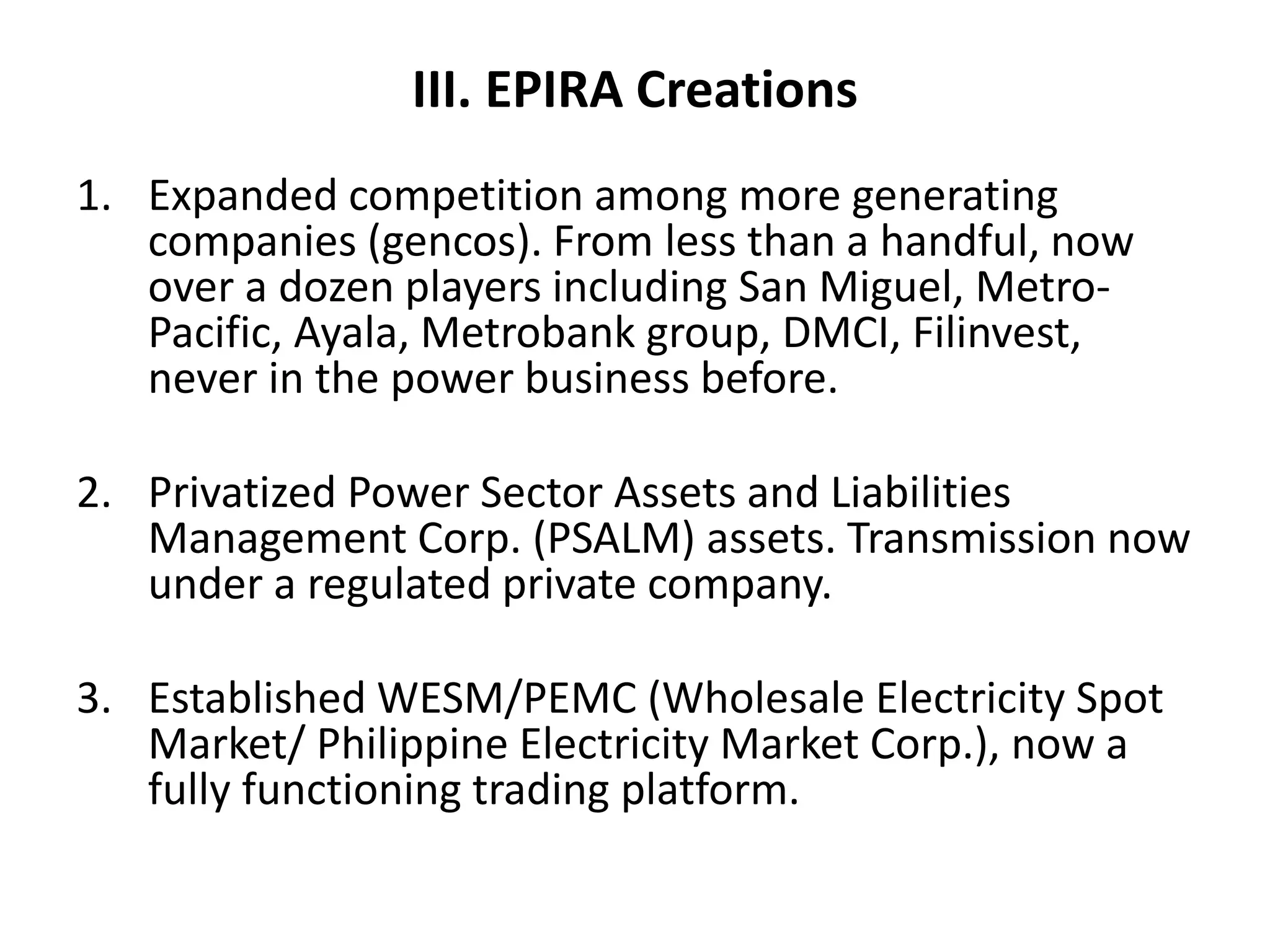
1. Expanded competition among more generating
companies (gencos). From less than a handful, now
over a dozen players including San Miguel, MetroPacific, Ayala, Metrobank group, DMCI, Filinvest,
never in the power business before.
2. Privatized Power Sector Assets and Liabilities
Management Corp. (PSALM) assets. Transmission now
under a regulated private company.
3. Established WESM/PEMC (Wholesale Electricity Spot
Market/ Philippine Electricity Market Corp.), now a
fully functioning trading platform.
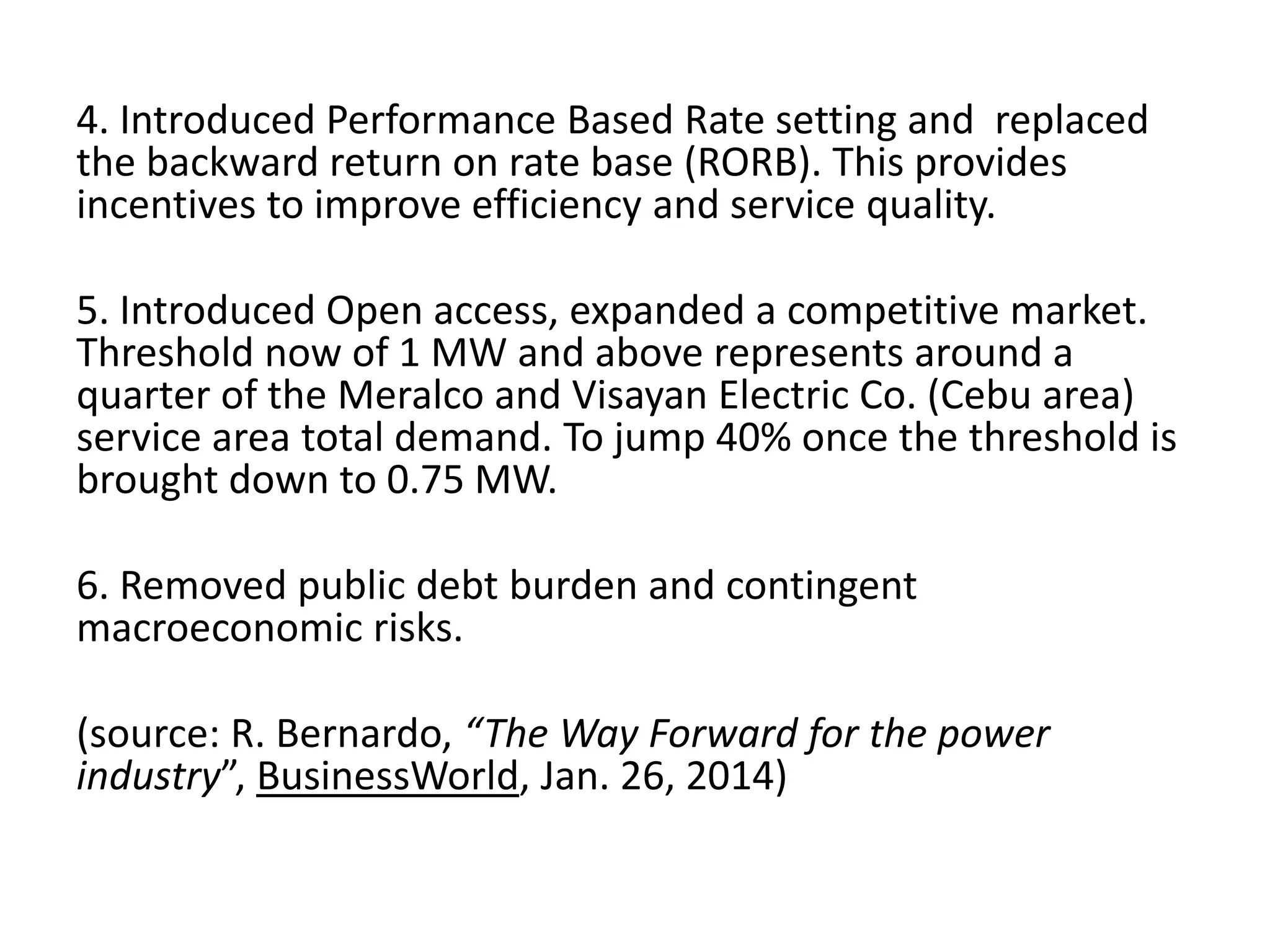
4. Introduced Performance Based Rate setting and replaced
the backward return on rate base (RORB). This provides
incentives to improve efficiency and service quality.

5. Introduced Open access, expanded a competitive market.
Threshold now of 1 MW and above represents around a
quarter of the Meralco and Visayan Electric Co. (Cebu area)
service area total demand. To jump 40% once the threshold is
brought down to 0.75 MW.
6. Removed public debt burden and contingent
macroeconomic risks.
(source: R. Bernardo, “The Way Forward for the power
industry”, BusinessWorld, Jan. 26, 2014)
IV. Concluding Notes
1.

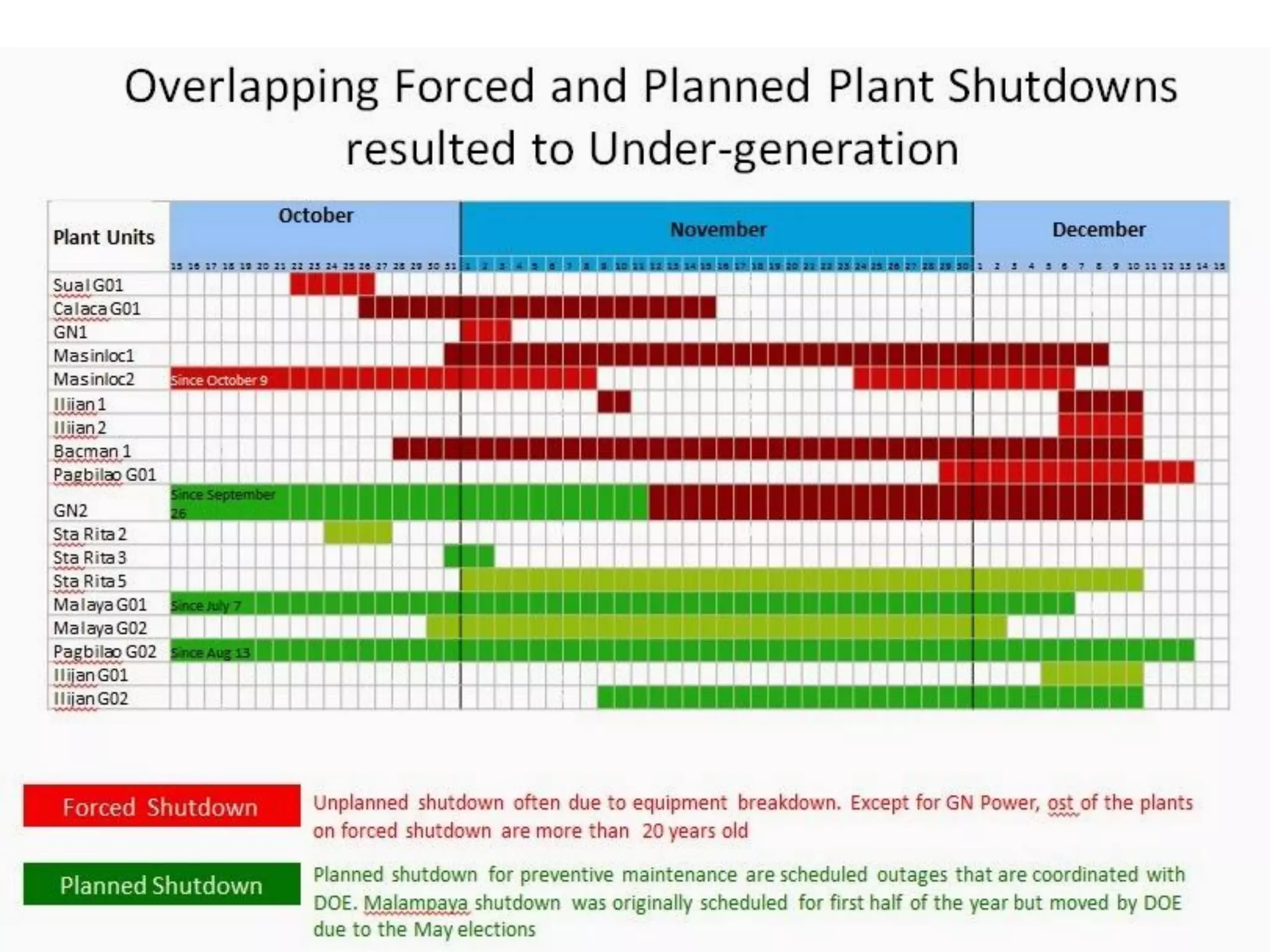
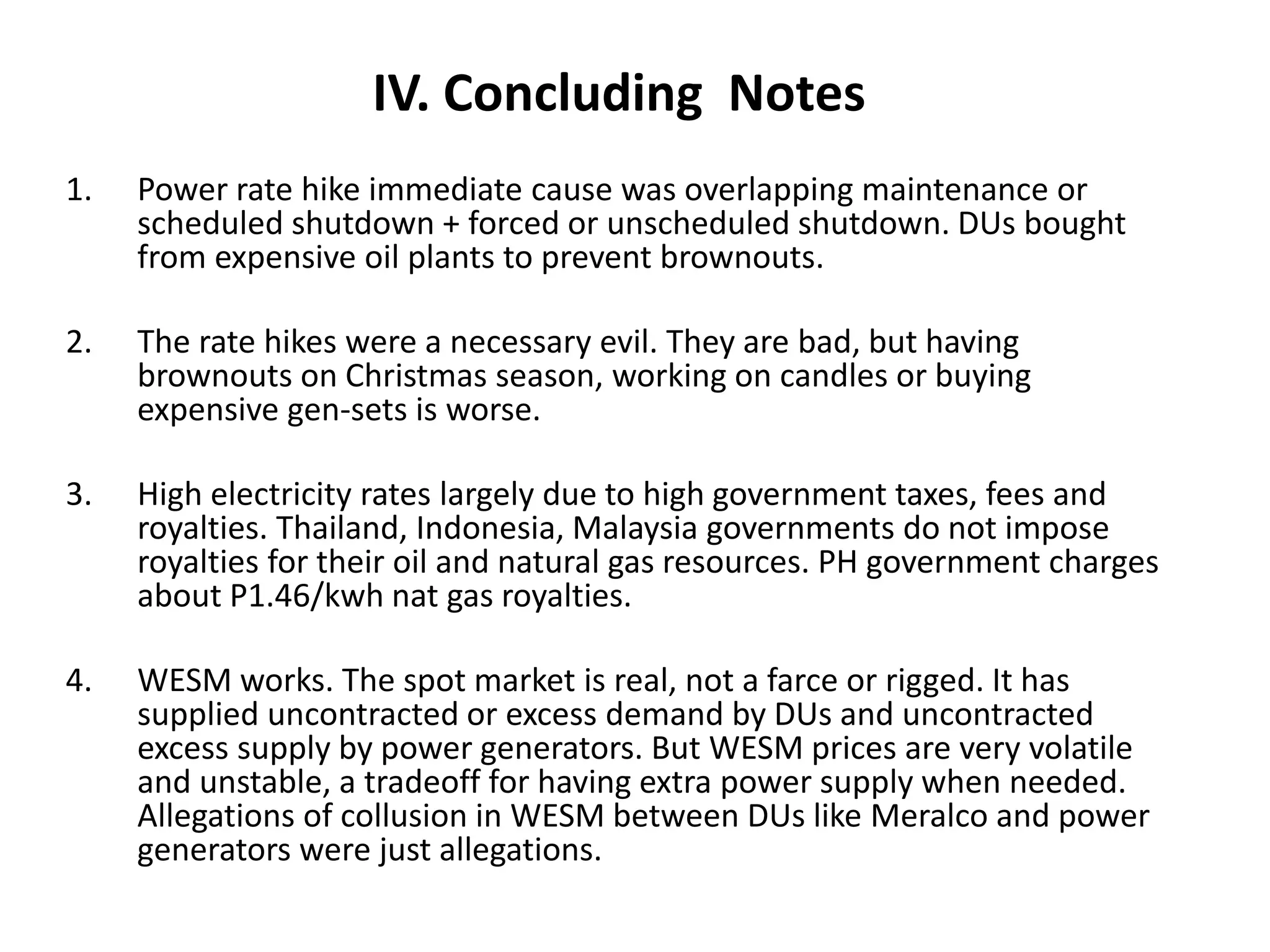
Power rate hike immediate cause was overlapping maintenance or
scheduled shutdown + forced or unscheduled shutdown. DUs bought
from expensive oil plants to prevent brownouts.

2.

The rate hikes were a necessary evil. They are bad, but having
brownouts on Christmas season, working on candles or buying
expensive gen-sets is worse.

3.

High electricity rates largely due to high government taxes, fees and
royalties. Thailand, Indonesia, Malaysia governments do not impose
royalties for their oil and natural gas resources. PH government charges
about P1.46/kwh nat gas royalties.

4.

WESM works. The spot market is real, not a farce or rigged. It has
supplied uncontracted or excess demand by DUs and uncontracted
excess supply by power generators. But WESM prices are very volatile
and unstable, a tradeoff for having extra power supply when needed.
Allegations of collusion in WESM between DUs like Meralco and power
generators were just allegations.
5. EPIRA works. It has delivered many of its promises. Move on, do not
backpedal or repeal the law. Structural problems like DU monopolies , high
taxes and royalties for oil and nat gas, are Constitution- and/or Congresscreation, not EPIRA’s.
6. To lower electricity prices in this country:
a. Have more power plants, have more competition among gencos;
Old power plants, proper or better maintenance , especially those that are
above 20 years old.
b. To encourage more gencos and players, government bureaucracy, permits
and regulations should shrink and decline.
c. Reduce taxes, fees, royalties on oil and natural gas. Better yet, abolish
royalties.
d. Lower further the threshold of Open Access. Electricity consumers can
choose their own power suppliers; small but many power
suppliers/generators can compete for end users/consumers, by-pass
distribution utilities (DUs) like Meralco which are all monopolies.
Government-created monopolies.

Electricity Angsts: Were They EPIRA-Created?

  • 1.
    Electricity Angsts: Were TheyEPIRA-Created? Bienvenido “Nonoy” Oplas Jr. Presentation at the forum, “Electricity on the Go: An Assessment of EPIRA” College of Engineering Theater, UP Diliman Sponsored by UP ETC applicants Datigan 06 March 2014
  • 2.
    Outline I. Public dissatisfaction:What caused recent power rate hikes? Brown outs in Mindanao? II. Rate Hike, the Numbers III. EPIRA Creations IV. Conclusions
  • 3.
    I. Dissatisfaction andcuriousity • High power rate hikes of Dec. 2013 (P4.56/kwh) and January 2014 (P3.44/kwh) • There was collusion by DUs and Gencos? • What caused almost daily “Earth Hour” in portions of Mindanao, some in Visayas? • Impending rotating brown outs in M.Manila and other Meralco areas soon?
  • 4.
    • Allegations ofcollusion between Meralco and some gencos, both nat gas- and coal-fired plants, to bring up the price. • Later narrowed down to allegation of Meralco-TMO • Turnedout that Meralco did buy from TMO at P62 -- at a monster volume of 0.5 kwh! Total purchase of Meralco from WESM in Nov 2013 was 286,000,000 kwh, 0.5 kwh of which was purchased at a "collusion" price of P62/kwh. • Power plants in Batangas running on nat gas shifted to oil to keep running, higher fuel, higher generation charge.
  • 5.
    II. Rate Hike,the Numbers 2014 P/kWh 10.0610 5.3708 Ave. price 2013 lower than that in 2012 by P0.2359/kWh
  • 7.
    WESM Prices, July2006 – November 2013 (Volatile, yet extra power supply is provided)
  • 8.
    Luzon, Very ThinReserves this coming April-May 2014. Rotating Brown outs Possible Source: Sec. Carlos Petilla, “Draft Supply-Demand Outlook, 2013-2020”, MAP Breakfast Dialogue, August 02, 2013
  • 9.
    Visayas, courting frequentbrown outs scenario
  • 10.
    Mindanao, Almost Daily“Earth Hour” Legislators and politicians of Mindanao have “opted out of EPIRA” and objected privatization of many NPC power plants there.
  • 12.
    Dependable Capacity (as ofMay 2013) • Clockwise, from right: Luzon, Visayas, Mindanao • As of 2013, Luzon dependence on coal is 37.2%, on natural gas 24.3%, and on hydro 18.9%. • Visayas is dependent on coal and geothermal, 73.7% of total. • Mindanao is dependent on hydro 51.2% and oil-based 29.1%
  • 13.
    • Energy =development. More energy use, more development. • From 1990 to 2010, these countries have generally tripled (3x) their energy use: China, S. Korea, Thailand, Malaysia and Singapore. • Vietnam has overtaken the Philippines with 50 percent more energy use. Its energy use expanded almost 4x in just 2 decades while PH’s did not even double. • Limited energy use means limited production, aside from more road accidents, more crimes, when streets are dark.
  • 14.
    III. EPIRA Creations 1.Expanded competition among more generating companies (gencos). From less than a handful, now over a dozen players including San Miguel, MetroPacific, Ayala, Metrobank group, DMCI, Filinvest, never in the power business before. 2. Privatized Power Sector Assets and Liabilities Management Corp. (PSALM) assets. Transmission now under a regulated private company. 3. Established WESM/PEMC (Wholesale Electricity Spot Market/ Philippine Electricity Market Corp.), now a fully functioning trading platform.
  • 15.
    4. Introduced PerformanceBased Rate setting and replaced the backward return on rate base (RORB). This provides incentives to improve efficiency and service quality. 5. Introduced Open access, expanded a competitive market. Threshold now of 1 MW and above represents around a quarter of the Meralco and Visayan Electric Co. (Cebu area) service area total demand. To jump 40% once the threshold is brought down to 0.75 MW. 6. Removed public debt burden and contingent macroeconomic risks. (source: R. Bernardo, “The Way Forward for the power industry”, BusinessWorld, Jan. 26, 2014)
  • 16.
    IV. Concluding Notes 1. Powerrate hike immediate cause was overlapping maintenance or scheduled shutdown + forced or unscheduled shutdown. DUs bought from expensive oil plants to prevent brownouts. 2. The rate hikes were a necessary evil. They are bad, but having brownouts on Christmas season, working on candles or buying expensive gen-sets is worse. 3. High electricity rates largely due to high government taxes, fees and royalties. Thailand, Indonesia, Malaysia governments do not impose royalties for their oil and natural gas resources. PH government charges about P1.46/kwh nat gas royalties. 4. WESM works. The spot market is real, not a farce or rigged. It has supplied uncontracted or excess demand by DUs and uncontracted excess supply by power generators. But WESM prices are very volatile and unstable, a tradeoff for having extra power supply when needed. Allegations of collusion in WESM between DUs like Meralco and power generators were just allegations.
  • 17.
    5. EPIRA works.It has delivered many of its promises. Move on, do not backpedal or repeal the law. Structural problems like DU monopolies , high taxes and royalties for oil and nat gas, are Constitution- and/or Congresscreation, not EPIRA’s. 6. To lower electricity prices in this country: a. Have more power plants, have more competition among gencos; Old power plants, proper or better maintenance , especially those that are above 20 years old. b. To encourage more gencos and players, government bureaucracy, permits and regulations should shrink and decline. c. Reduce taxes, fees, royalties on oil and natural gas. Better yet, abolish royalties. d. Lower further the threshold of Open Access. Electricity consumers can choose their own power suppliers; small but many power suppliers/generators can compete for end users/consumers, by-pass distribution utilities (DUs) like Meralco which are all monopolies. Government-created monopolies.