The Mighty Immune
System
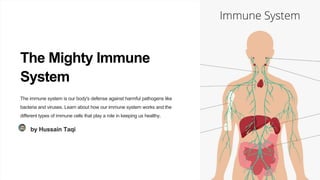
The immune system is our body's defense against harmful pathogens like
bacteria and viruses. Learn about how our immune system works and the
different types of immune cells that play a role in keeping us healthy.
by Hussain Taqi
The First Line of Defense
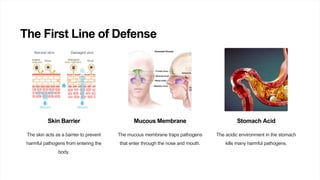
Skin Barrier
The skin acts as a barrier to prevent
harmful pathogens from entering the
body.
Mucous Membrane
The mucous membrane traps pathogens
that enter through the nose and mouth.
Stomach Acid
The acidic environment in the stomach
kills many harmful pathogens.
Behind the Scenes
B cells
B cells create antibodies that bind to
specific pathogens and mark them
for destruction by other immune
cells.
T cells
T cells recognize and attack infected
cells, preventing the infection from
spreading.
Macrophages
Macrophages can engulf and destroy
pathogens through a process called
phagocytosis.
Natural Killer Cells
Natural killer cells are essential in detecting and destroying virally-infected cells and even tumor cells.
Adaptive Immune Response
1 Activation
Antigen-presenting cells like dendritic cells activate T
cells by presenting them with pieces of the pathogen.
2
Proliferation
Activated T cells proliferate and differentiate into
effector T cells, which destroy infected cells.
3 Memory
Some effector T cells remain as memory T cells that
can rapidly respond to the same pathogen in the
future.
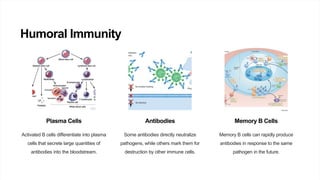
Humoral Immunity
Plasma Cells
Activated B cells differentiate into plasma
cells that secrete large quantities of
antibodies into the bloodstream.
Antibodies
Some antibodies directly neutralize
pathogens, while others mark them for
destruction by other immune cells.
Memory B Cells
Memory B cells can rapidly produce
antibodies in response to the same
pathogen in the future.
Immunodeficiency Disorders
1 HIV/AIDS
HIV infects and kills T cells,
weakening the immune
system and making it more
susceptible to other
infections.
2 SCID
SCID is a rare genetic
disorder that results in a
severely weakened immune
system, leaving the
individual vulnerable to life-
threatening infections.
3 Cancer
Cancer cells can disrupt the immune system by producing
substances that suppress immune cells or by hiding from the immune
system.
Immune System Boosters
Eat Well
A healthy diet rich in fruits and
vegetables can provide the body with
essential vitamins and minerals that
support immune function.
Exercise Regularly
Regular physical activity can help
reduce the risk of chronic diseases and
strengthen the immune system.
Reduce Stress
Stress can weaken the immune system,
so find ways to manage stress through
techniques like meditation or yoga.
Immunizations
Benefits
Immunizations can protect
individuals from serious and even
deadly infections by training the
immune system to recognize and
fight specific pathogens.
Herd Immunity
When a significant proportion of the
population is immunized against a
pathogen, it can prevent the
pathogen from circulating and protect
even those who cannot receive
certain vaccines.
Risks
Vaccines can cause side effects, but
serious or life-threatening reactions
are rare.

Untitled.pptx

  • 1.
    The Mighty Immune System Theimmune system is our body's defense against harmful pathogens like bacteria and viruses. Learn about how our immune system works and the different types of immune cells that play a role in keeping us healthy. by Hussain Taqi
  • 2.
    The First Lineof Defense Skin Barrier The skin acts as a barrier to prevent harmful pathogens from entering the body. Mucous Membrane The mucous membrane traps pathogens that enter through the nose and mouth. Stomach Acid The acidic environment in the stomach kills many harmful pathogens.
  • 3.
    Behind the Scenes Bcells B cells create antibodies that bind to specific pathogens and mark them for destruction by other immune cells. T cells T cells recognize and attack infected cells, preventing the infection from spreading. Macrophages Macrophages can engulf and destroy pathogens through a process called phagocytosis. Natural Killer Cells Natural killer cells are essential in detecting and destroying virally-infected cells and even tumor cells.
  • 4.
    Adaptive Immune Response 1Activation Antigen-presenting cells like dendritic cells activate T cells by presenting them with pieces of the pathogen. 2 Proliferation Activated T cells proliferate and differentiate into effector T cells, which destroy infected cells. 3 Memory Some effector T cells remain as memory T cells that can rapidly respond to the same pathogen in the future.
  • 5.
    Humoral Immunity Plasma Cells ActivatedB cells differentiate into plasma cells that secrete large quantities of antibodies into the bloodstream. Antibodies Some antibodies directly neutralize pathogens, while others mark them for destruction by other immune cells. Memory B Cells Memory B cells can rapidly produce antibodies in response to the same pathogen in the future.
  • 6.
    Immunodeficiency Disorders 1 HIV/AIDS HIVinfects and kills T cells, weakening the immune system and making it more susceptible to other infections. 2 SCID SCID is a rare genetic disorder that results in a severely weakened immune system, leaving the individual vulnerable to life- threatening infections. 3 Cancer Cancer cells can disrupt the immune system by producing substances that suppress immune cells or by hiding from the immune system.
  • 7.
    Immune System Boosters EatWell A healthy diet rich in fruits and vegetables can provide the body with essential vitamins and minerals that support immune function. Exercise Regularly Regular physical activity can help reduce the risk of chronic diseases and strengthen the immune system. Reduce Stress Stress can weaken the immune system, so find ways to manage stress through techniques like meditation or yoga.
  • 8.
    Immunizations Benefits Immunizations can protect individualsfrom serious and even deadly infections by training the immune system to recognize and fight specific pathogens. Herd Immunity When a significant proportion of the population is immunized against a pathogen, it can prevent the pathogen from circulating and protect even those who cannot receive certain vaccines. Risks Vaccines can cause side effects, but serious or life-threatening reactions are rare.